Burma Part IV : Mandalay and Mingun

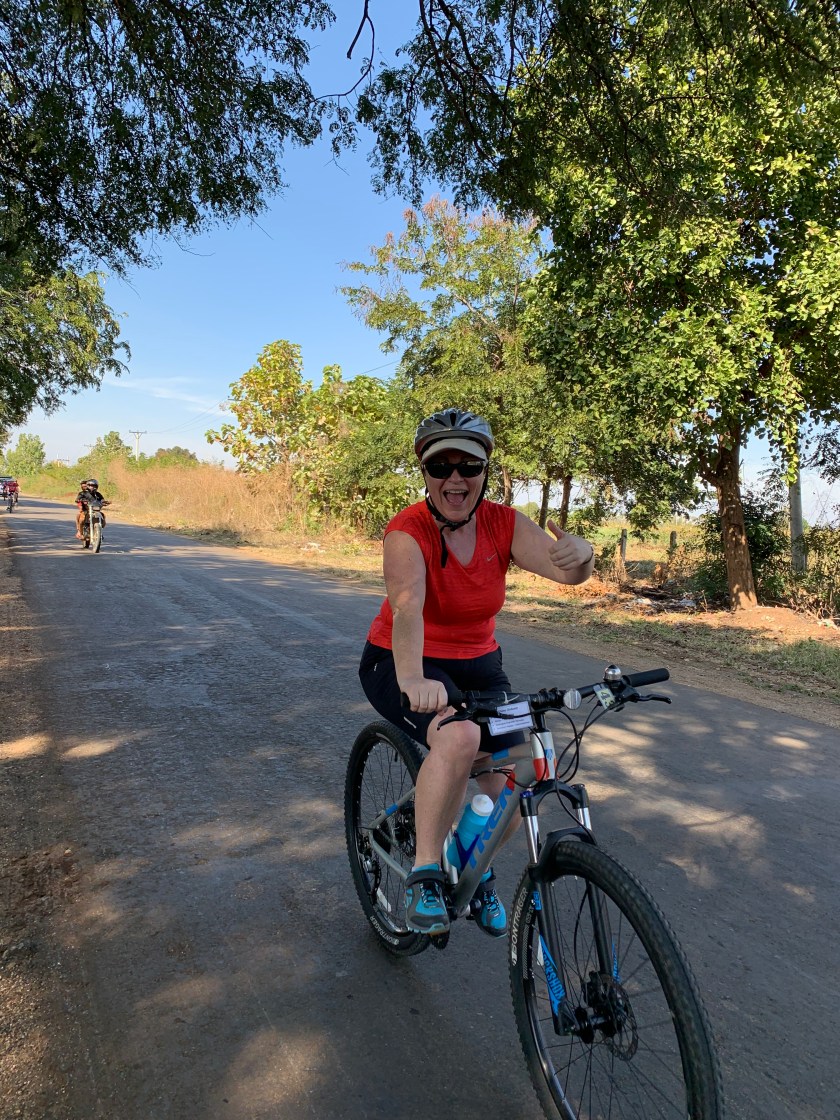
Day 6: Another long day of cycling today – 83km. We are literally “on the road to Mandalay” which was a song, a book, a movie and a poem! Apparently Rudyard Kipling, who’s poem called Mandalay was inspired on a visit to Burma was deeply impressed by all he saw and a particular girl he encountered. I read the poem with high hopes but it did nothing for me! Ah well, back to the cycling…
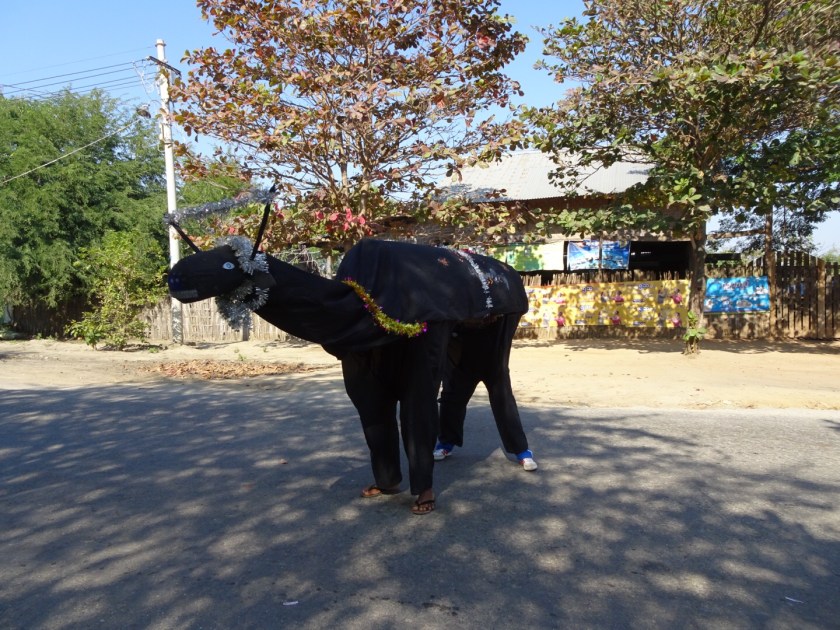
We pass this guy blocking the road which is fun – he’s collecting money for the local monks and he does a little dance for us!
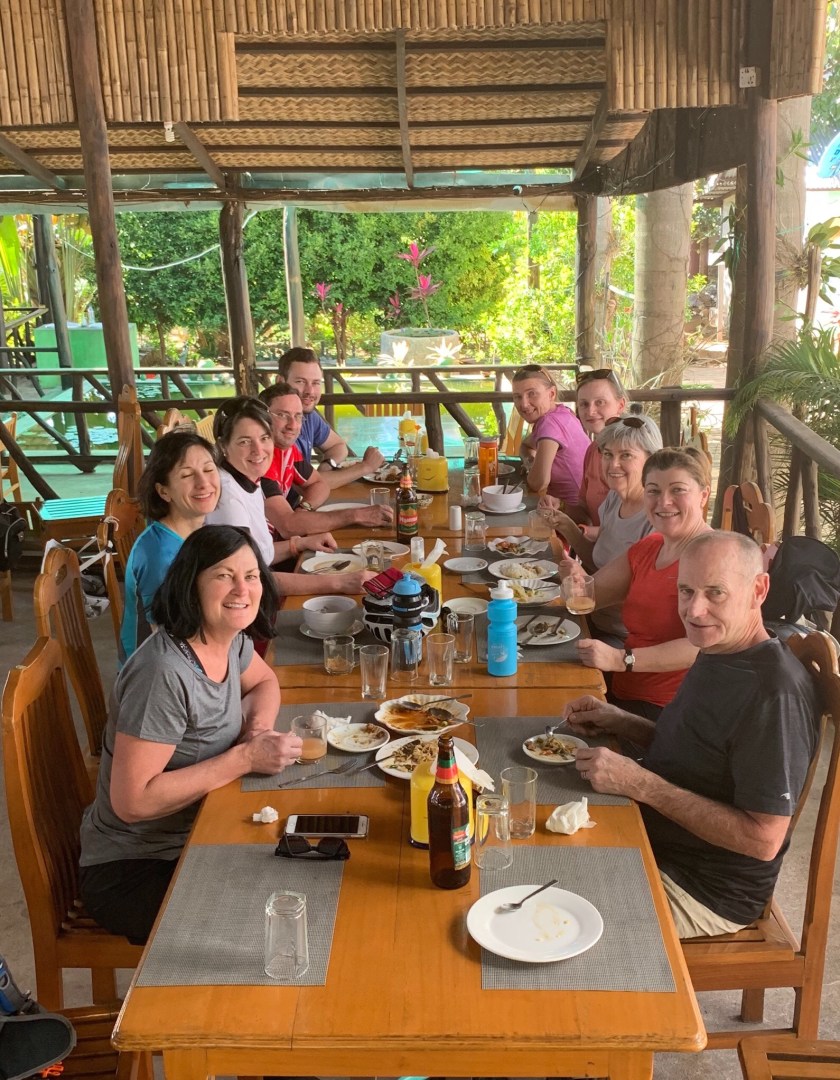
Lunch is at a beautiful open air restaurant and then it’s back on the bikes….
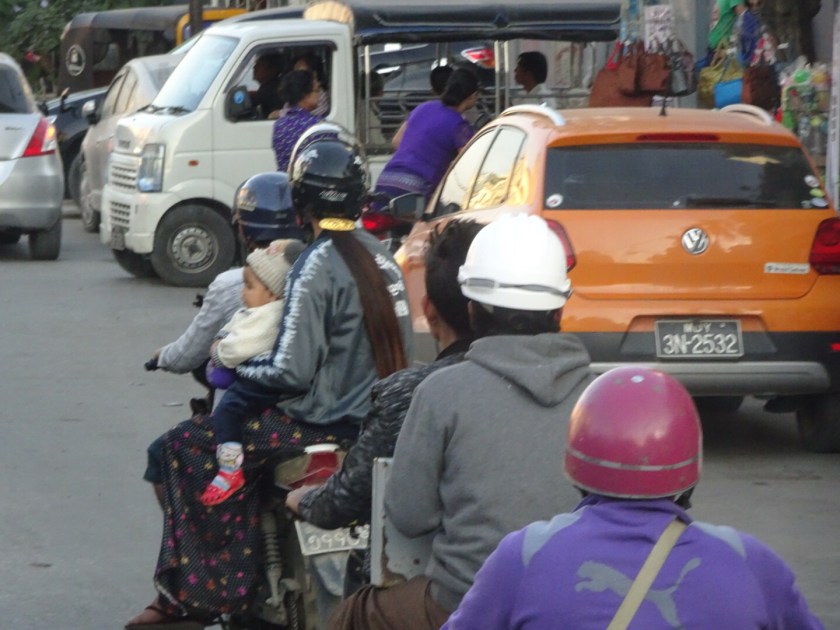
After a brief rest from the long day cycling we jump on the bus to go for a traditional meal. They call Mandalay one of Burma’s motorcycle towns and I can see why… it’s very busy and there are lots of motorcycles. You can see monks, nuns, babies and sometimes whole families on the back of a motorcycle here.
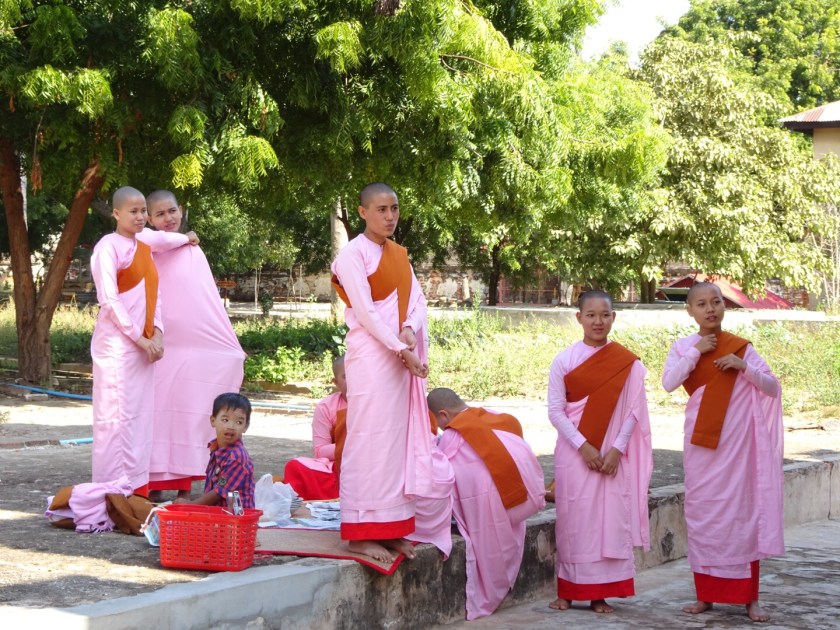
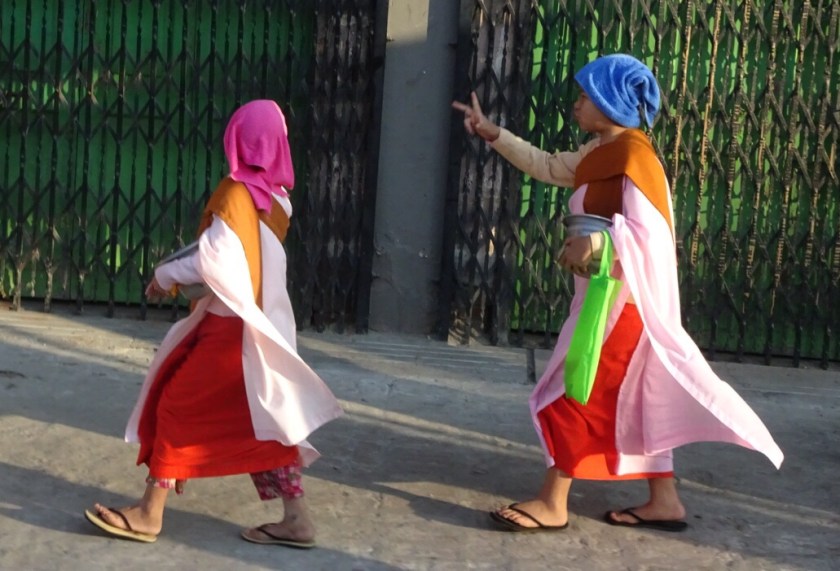
There are lots of Buddhist nuns around. They wear pink robes and have shaved heads, they look cool especially when on motorbikes!
We get a brief view of Mandalay palace which is huge. The walls around it measure two kilometers on each of the four sides and it has a moat all the way round too. The palace buildings were home to the last independent rulers of Burma and were restored in the 1990s. We don’t get to go inside, it’s not on the Intrepid tour for cultural and possibly political reasons (from what I can gather).

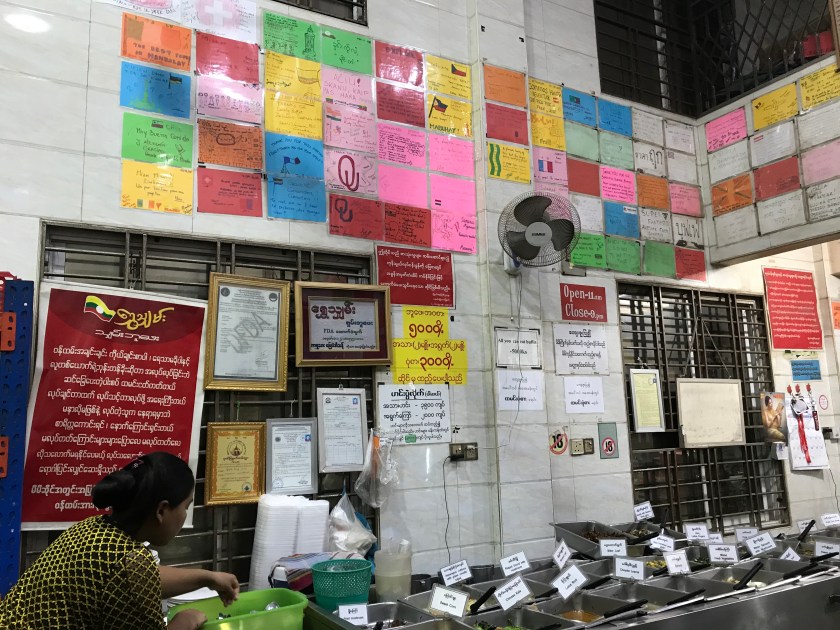
Our dinner is in a very basic looking restaurant but the food is fantastic. It’s buffet style so we can try whatever we like….
Day 7: We set out from the hotel and cycle away from Mandalay toward Amarapura and the U-Bein bridge which was, at one point, the longest teak bridge in the world. The Chinese may have recently built a bigger one but it certainly holds the record for being oldest at approximately three hundred years.
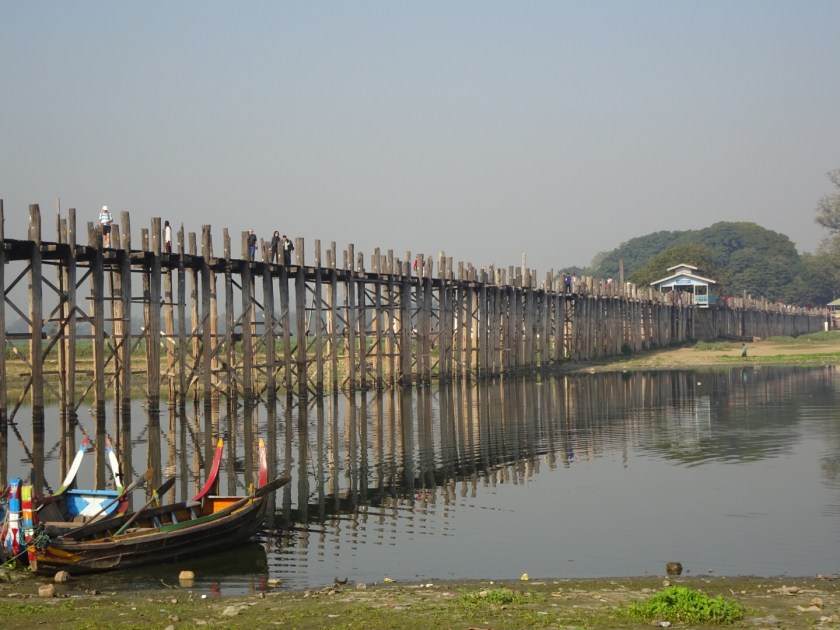
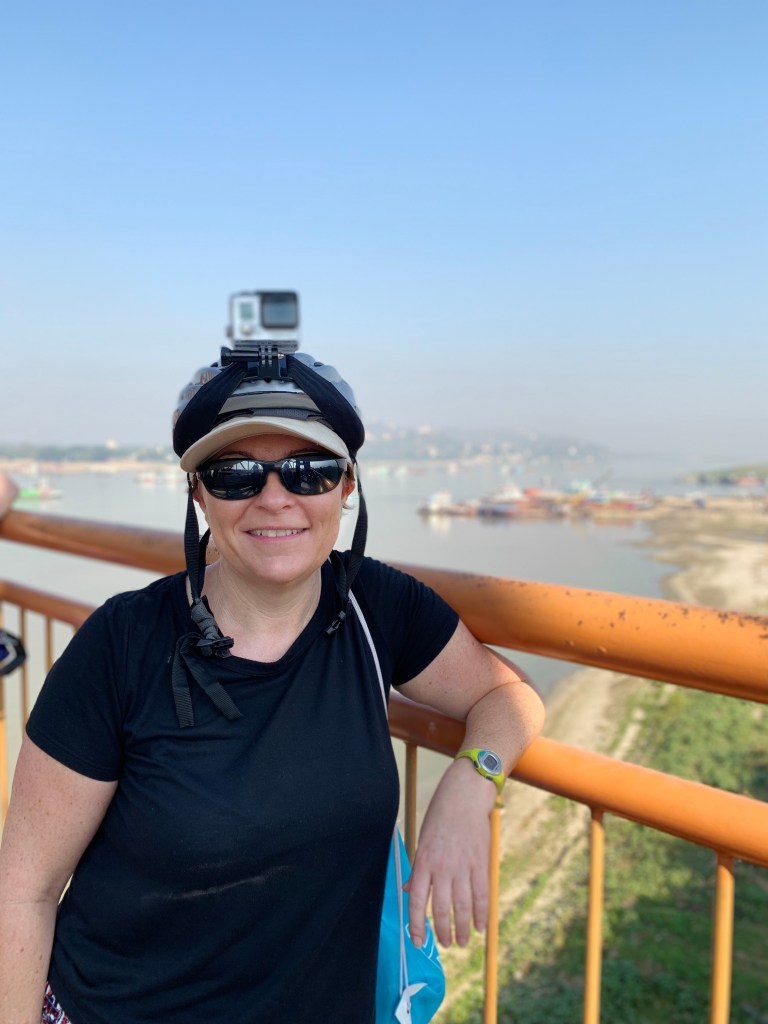
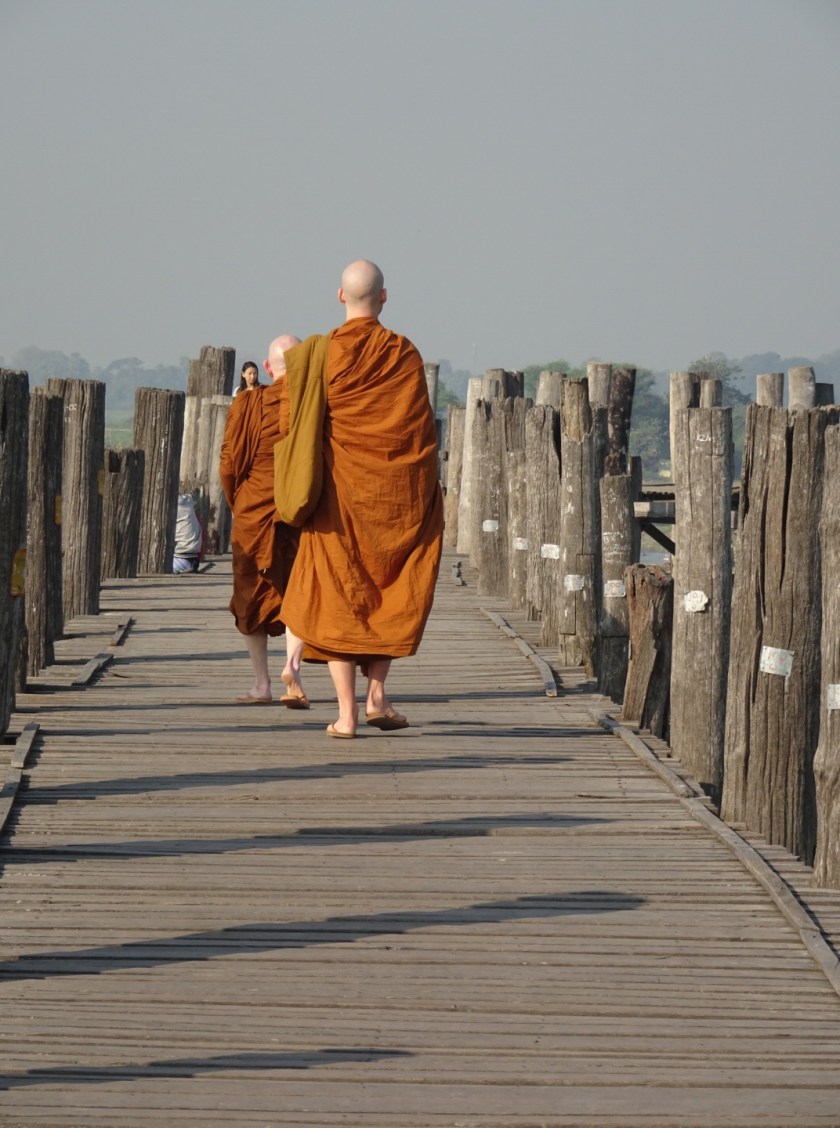
It’s 1.2km in length and we have time to walk the full length and back. It’s not crowded but there are a mixture of tourists, locals and monks..
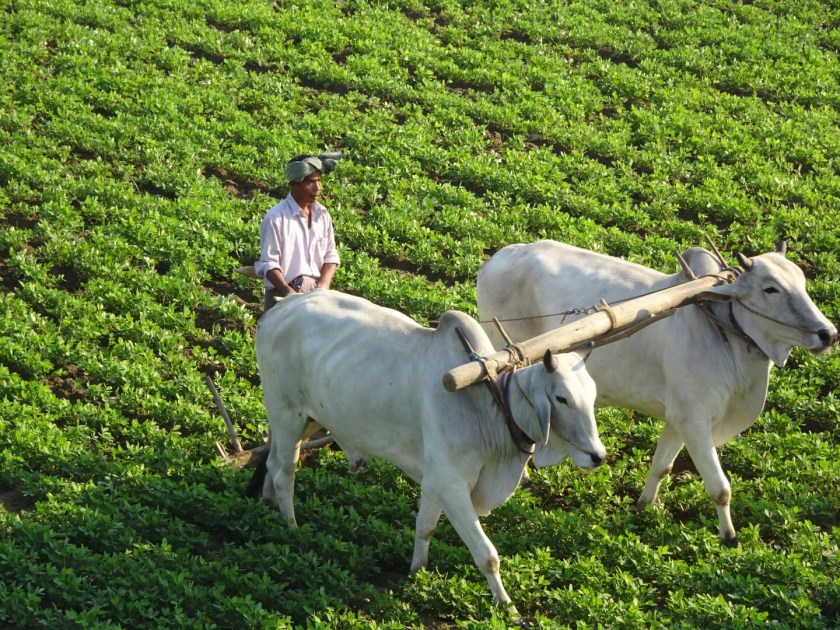
We see workers in the fields on either side.
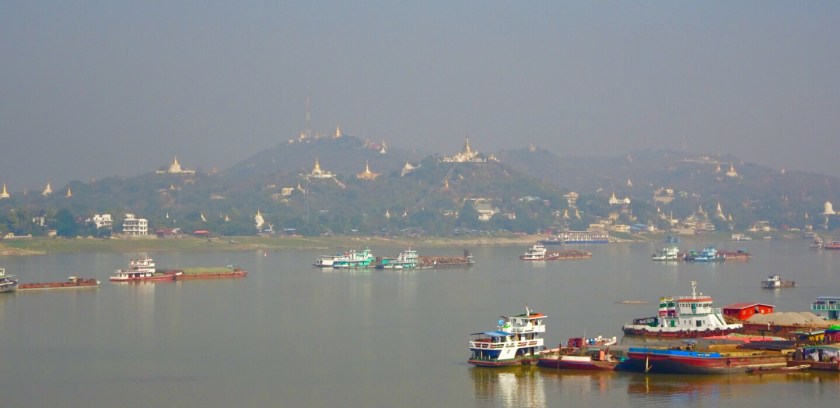
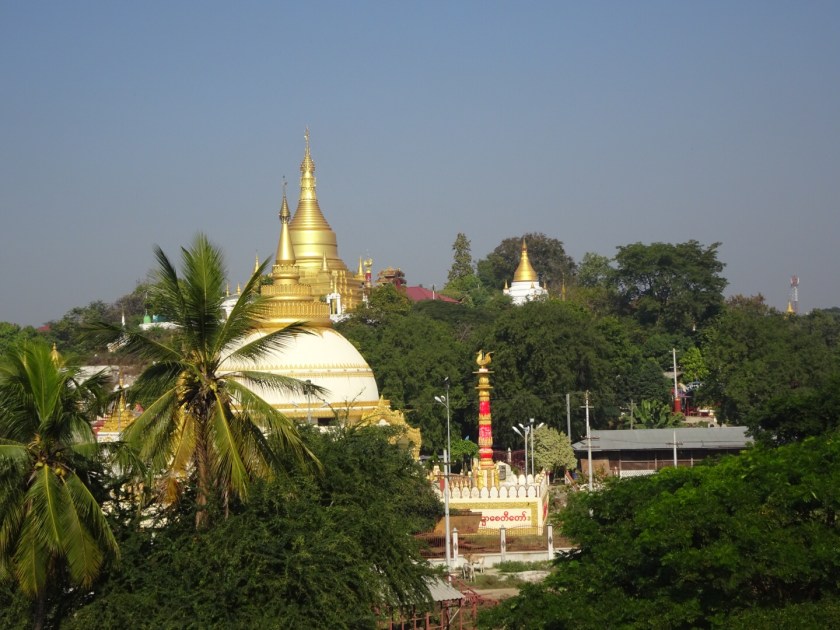
Although we don’t get to stop there, we get a view of Sagaing hill which is spectacularly covered in magnificent golden spires and white temples. Although it’s a bit misty it’s really impressive as we cycle by.
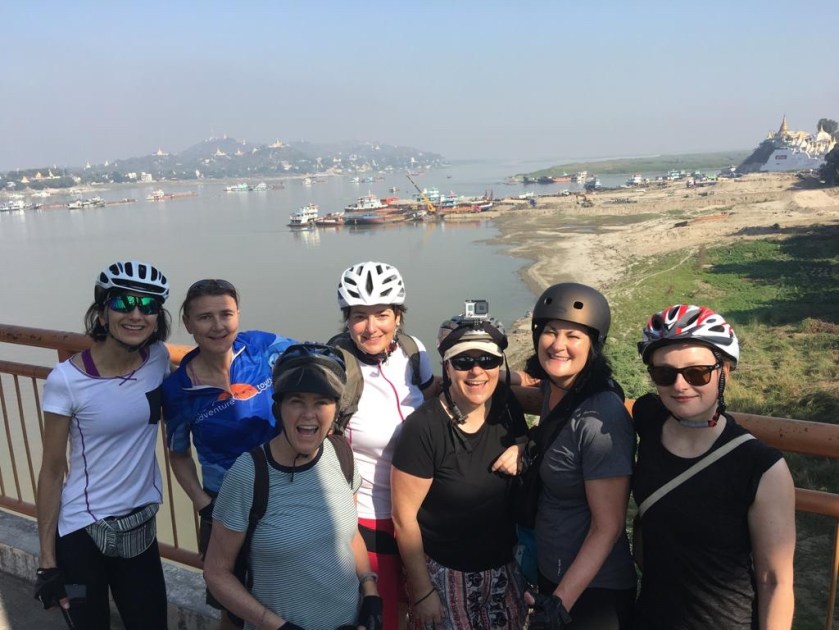
We stop on the bridge for a quick photo
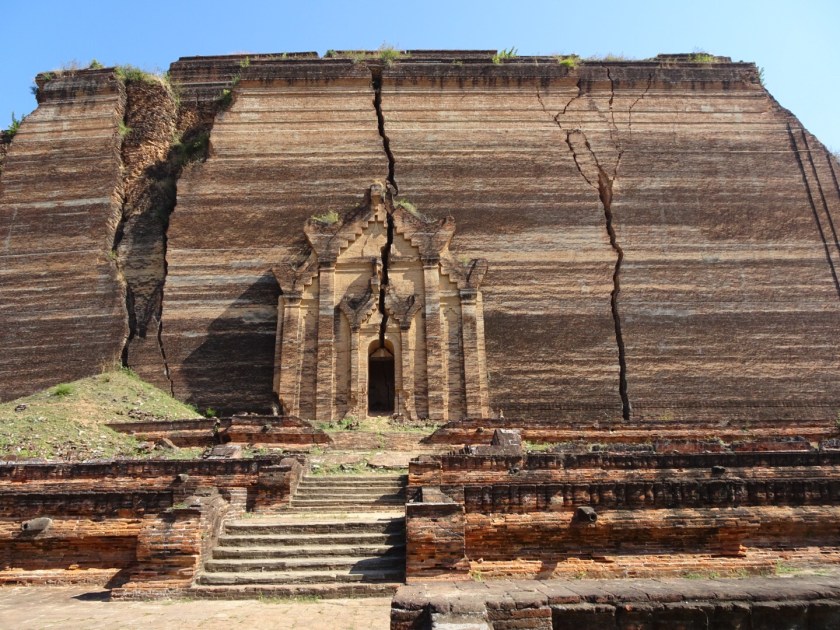
Continuing on our bikes we reach Mingun, a river village famous for having an unfinished pagoda which would have been the largest in the world. The story goes that the king was told in a premonition (or maybe by a holy monk or Buddha I can’t quite remember!) that if the pagoda was finished it would signify the end of the kingdom so they stopped working on it! In reality it seems he ran out of funds and labor… and then he died!
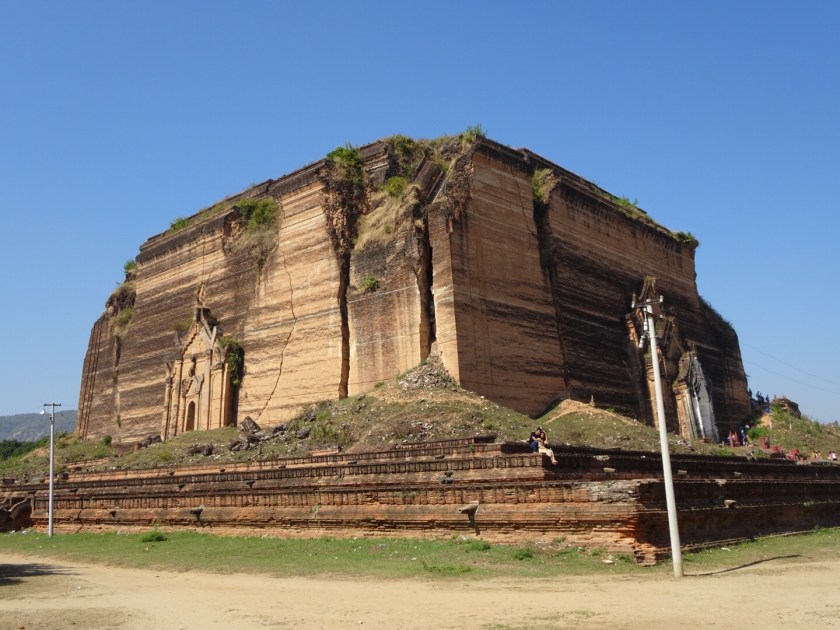
Considering what you see is only the first third, it certainly would have been huge. It also suffered damage in a number of earthquakes and you can see the cracks.
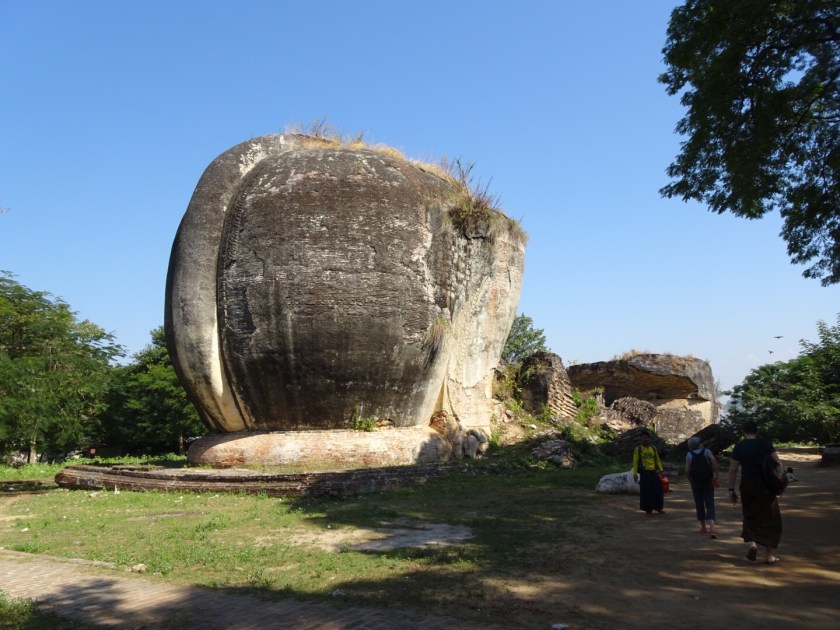
Across the road lie two huge brick ruins. These are the remains of what would have been giant protectors of the pagoda. They are called chinthe, which are half lion, half dragon guardian deities.
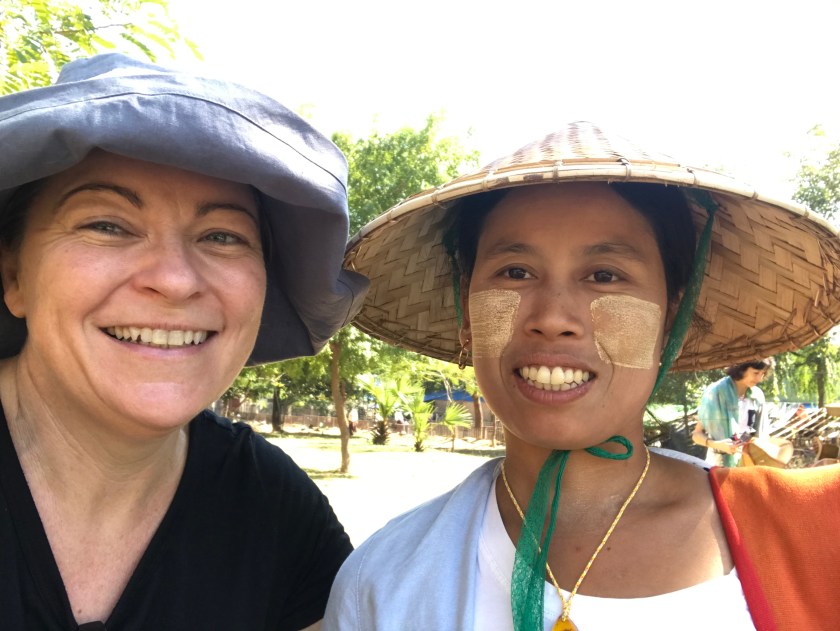
There are plenty of sellers around the area and I decide to buy a bracelet from this lovely lady who chatted to us for ages and had great English.
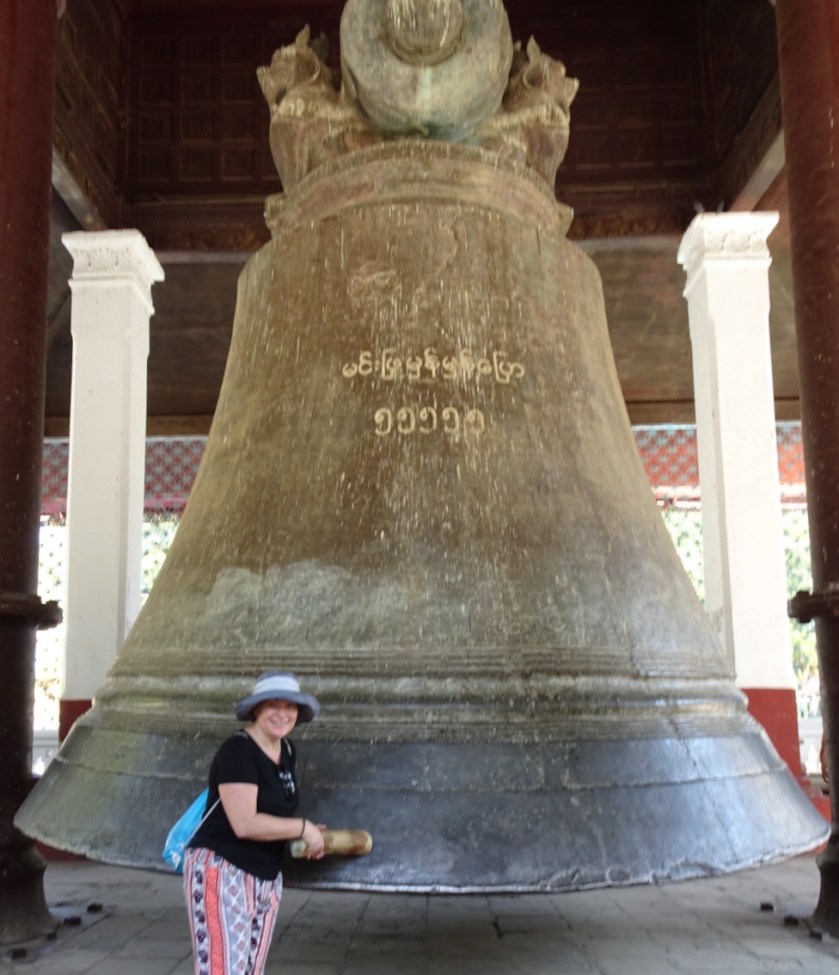
Next on the list is the Mingun bell. Continuing the “biggest in the world” theme the Mingun bell, when commissioned in 1808 was the largest of its kind. (It’s now surpassed by a bell in China!). It’s 13 ft high and 16ft wide at the lip and the biggest bell that’s actually ringable. I give it a thump with some wood and get a good sound out of it.
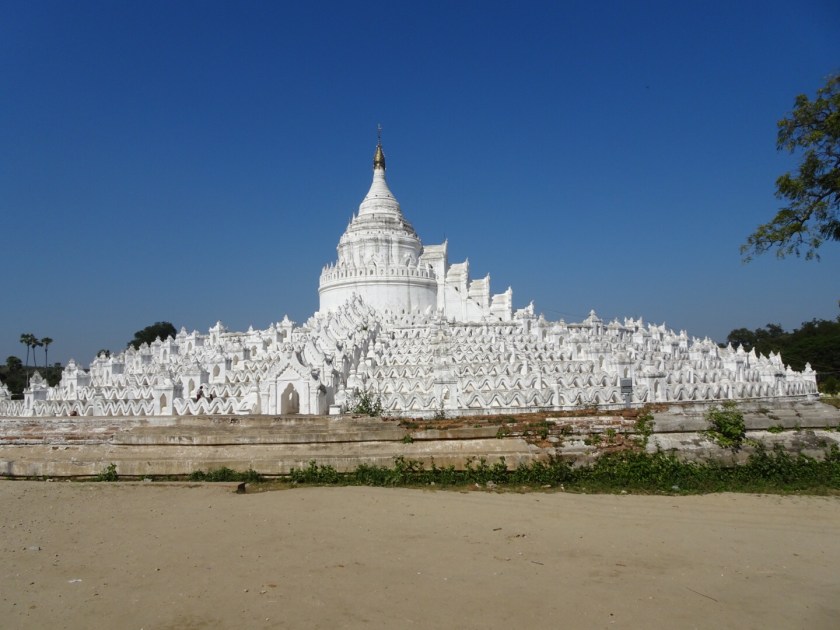
Next is a beautiful white temple called Hsinbyume pagoda:
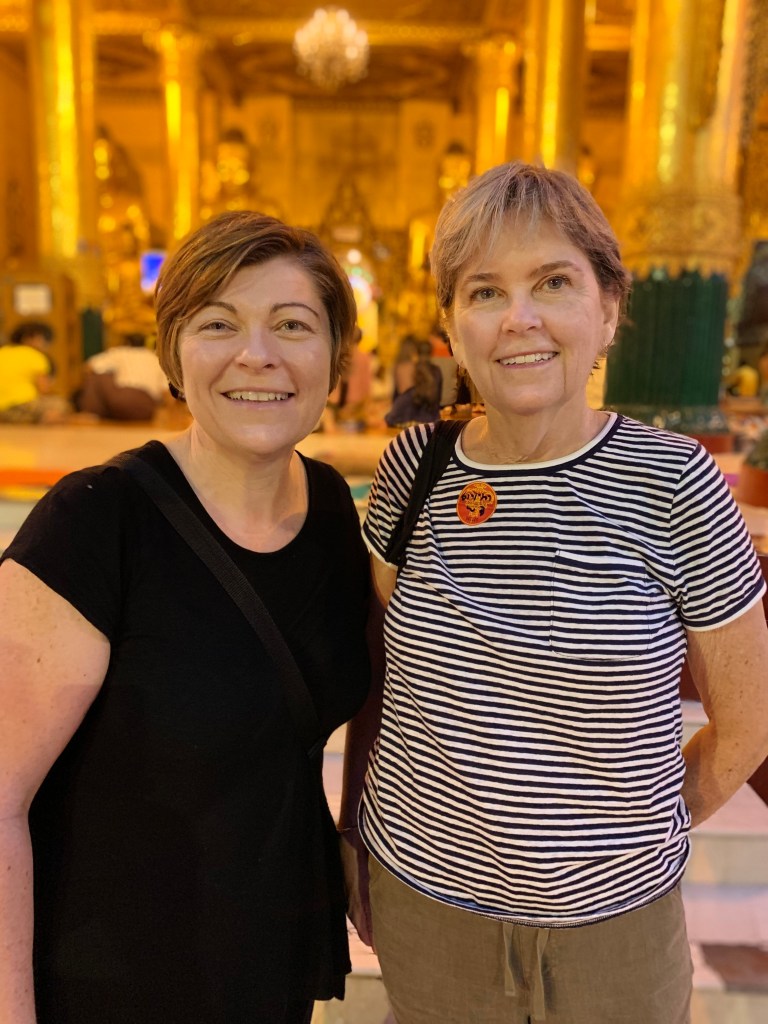
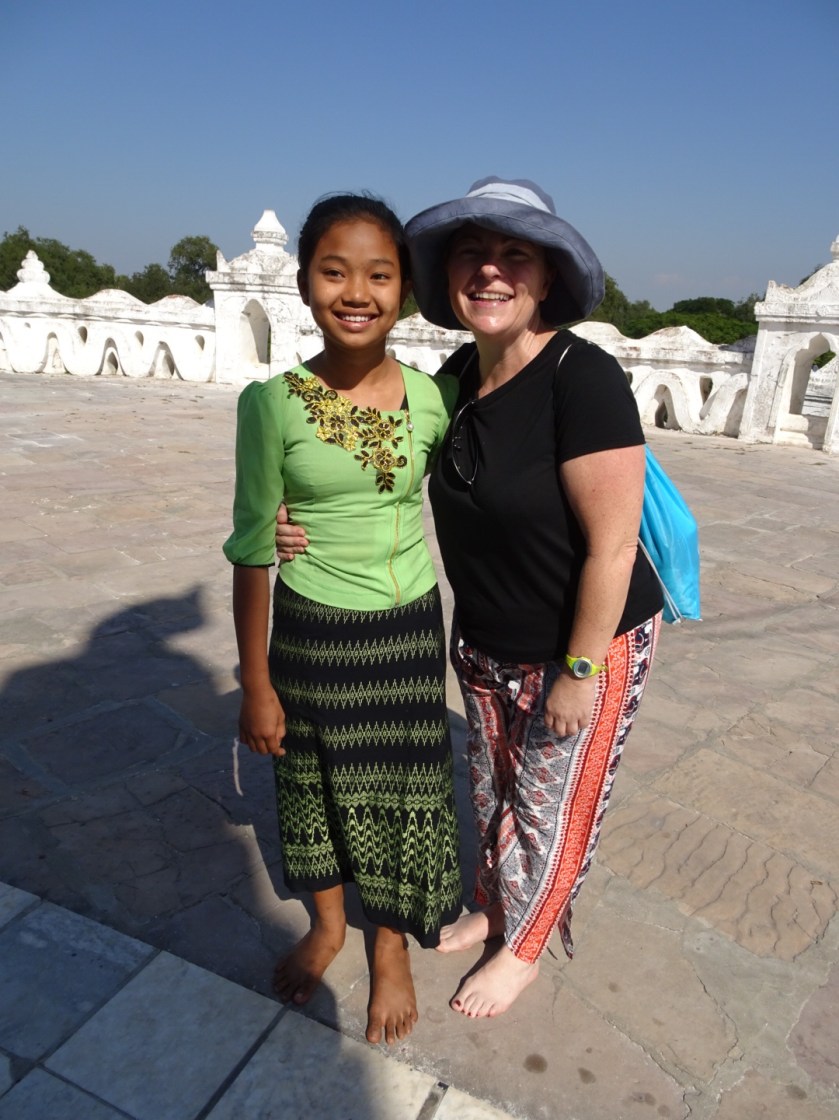
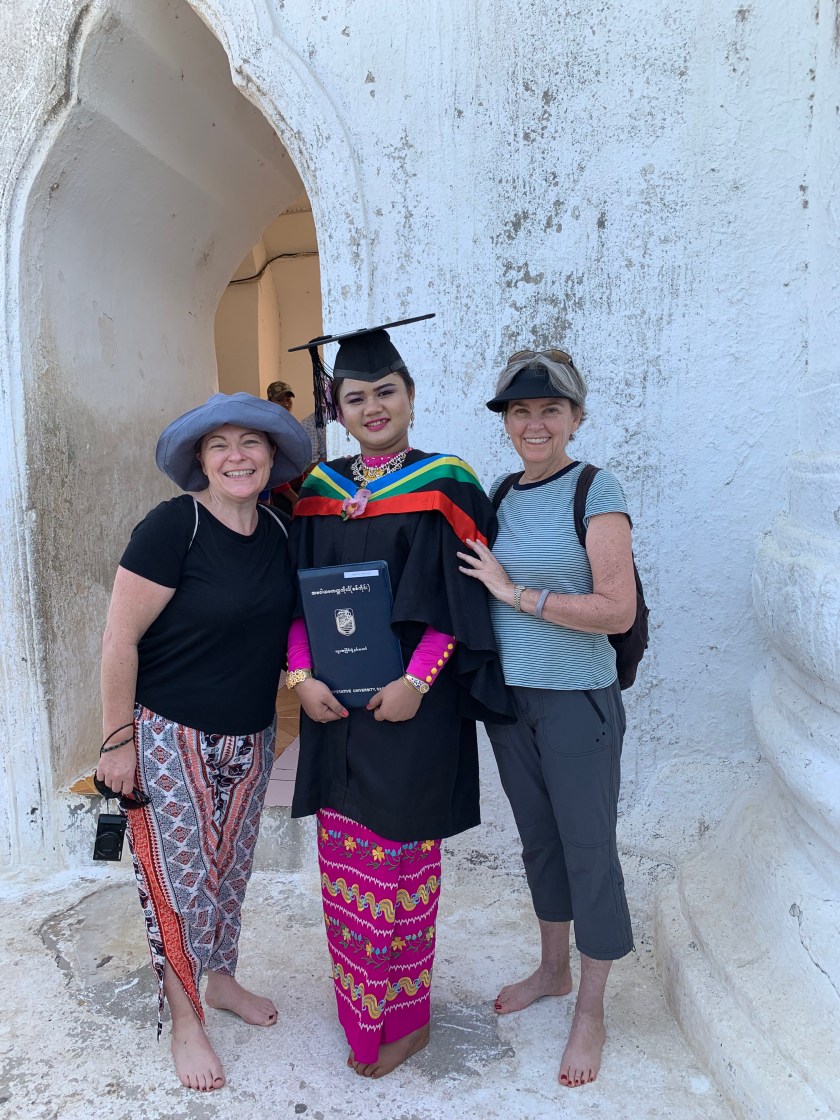
Suzanne and I are like celebrities here as many locals want to take photos with us.. it’s great fun!
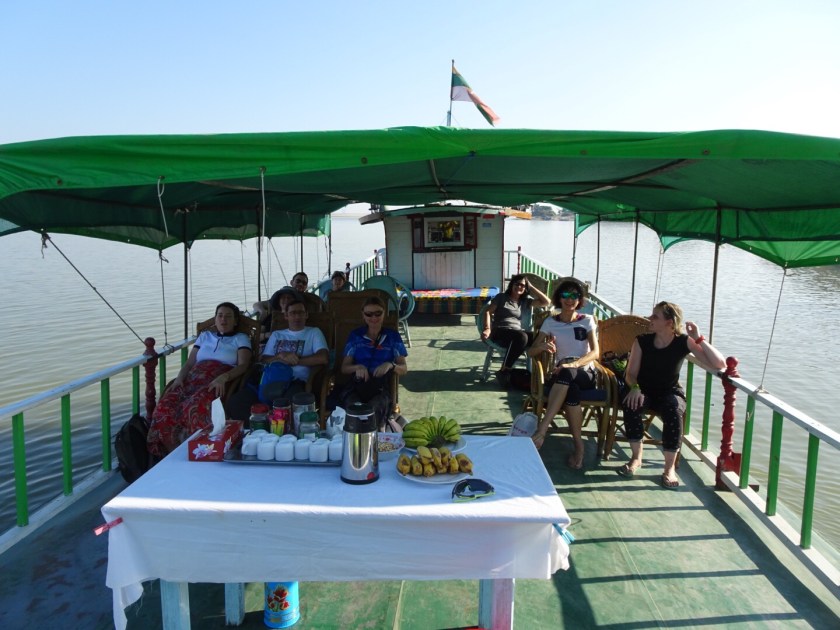
After a beautiful outdoor lunch by the river, it’s time for a cruise on the Ayeyarwady river to get us back to Mandalay. It’s a relaxing boat ride and we even get to do some shopping with the crew!
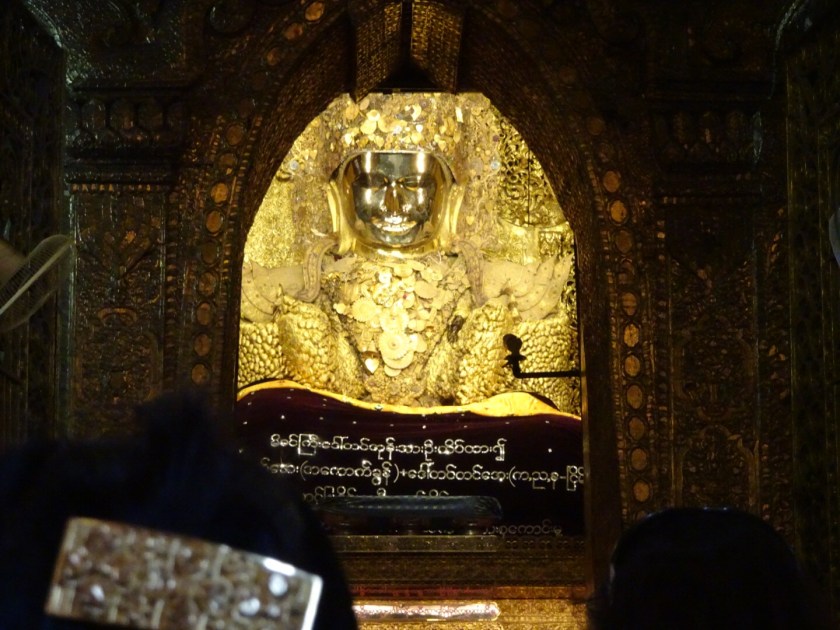
We continue to move at a fast pace and meet up with our yellow bus to continue our tour of Mandalay. Onwards to another temple….. Mahamuni temple is second only to Shwedagon in it’s importance to the Burmese people. It’s odd in that you can’t get too close to the Buddha, in particular ladies are not allowed into the inner section and lots of people pray in front of the large television screens that show the Buddha statue. The statue is thirteen feet high and some believe it to be two thousand years old and one of the few statues made in the correct likeness to Buddha himself!! It has been covered so much with gold leaf that large pieces of solid gold have formed.
The next stop is truly a drive by as we are pushed for time. We stop at the gold leaf factory to see how they make gold leaf. We stay all of about ten minutes but it’s just enough time to see the stuff!

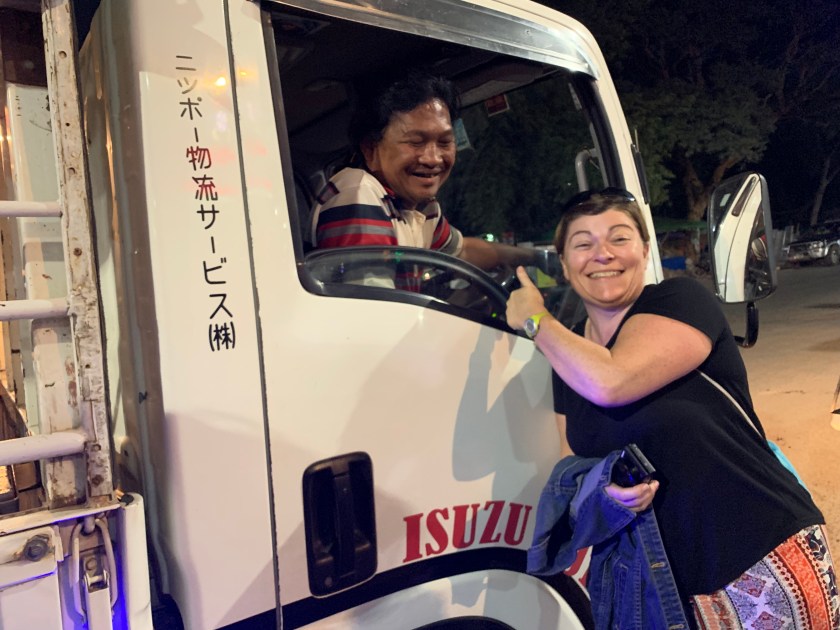
We are running out of time to make it up Mandalay hill for sunset but the tuk tuk driver takes it serious and tears up the hill at top speed to get us there. It’s like being on a rollercoaster the way he takes the corners and I honestly have a moment where I think we’re going over. He gets us there in one piece, if a little shook though and I even get a photo with the lunatic!!!
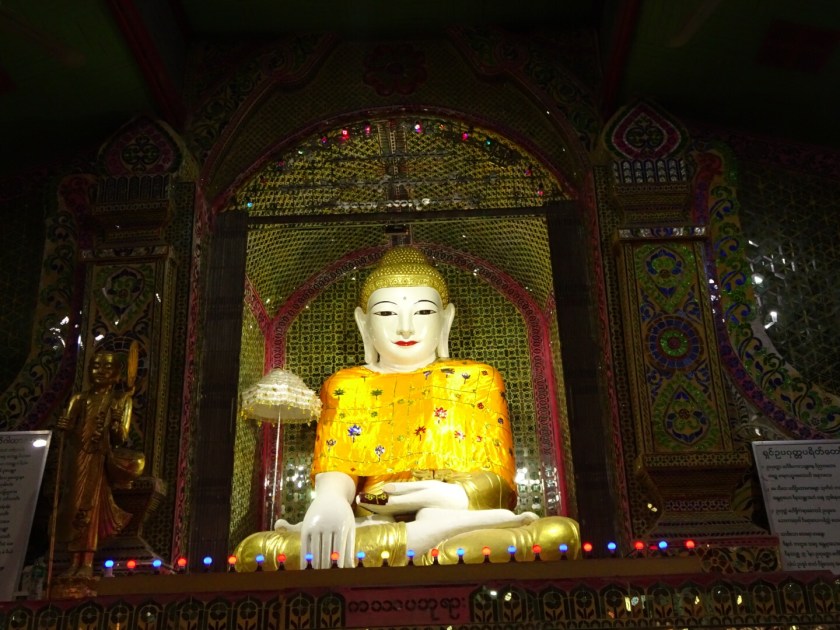
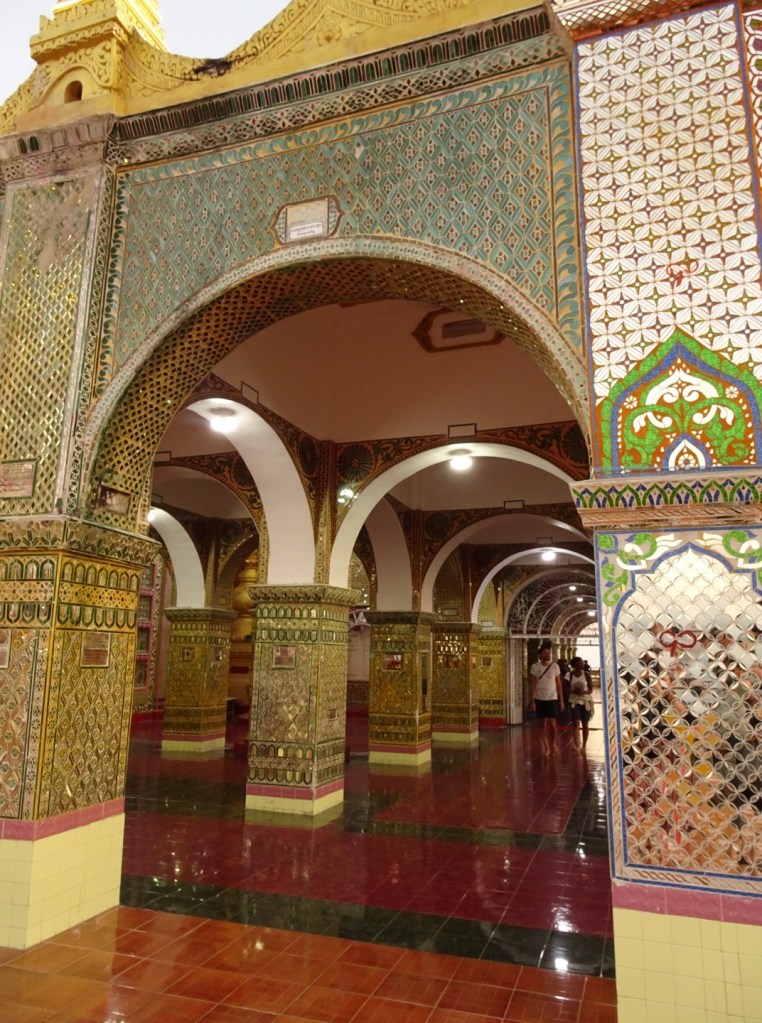
At the top of the hill is Su Taung Pyan pagoda. It is said that Buddha visited Mandalay hill and again a beautiful temple is built in his honor.
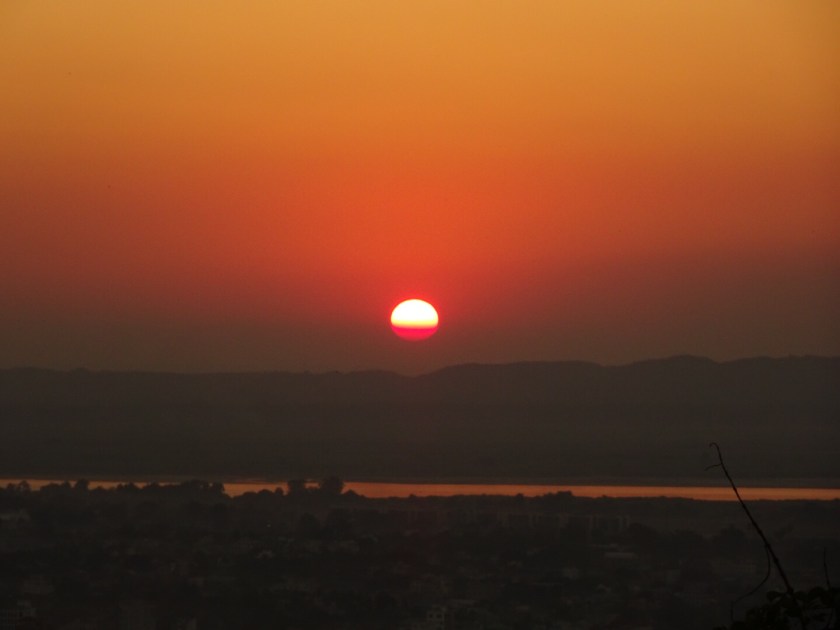
We watch a very nice sunset from the hill along with lots of other tourists (it’s the first time we’ve seen a lot of tourists).
It’s been a long day out so we have an easy meal back at the hotel and call it a day.
Burma Part III : Mount Popa and Myingan

Day 4 : Post balloon ride we cycle approximately 50km to Mount Popa which is over fifteen hundred meters above sea level and is actually a volcano.

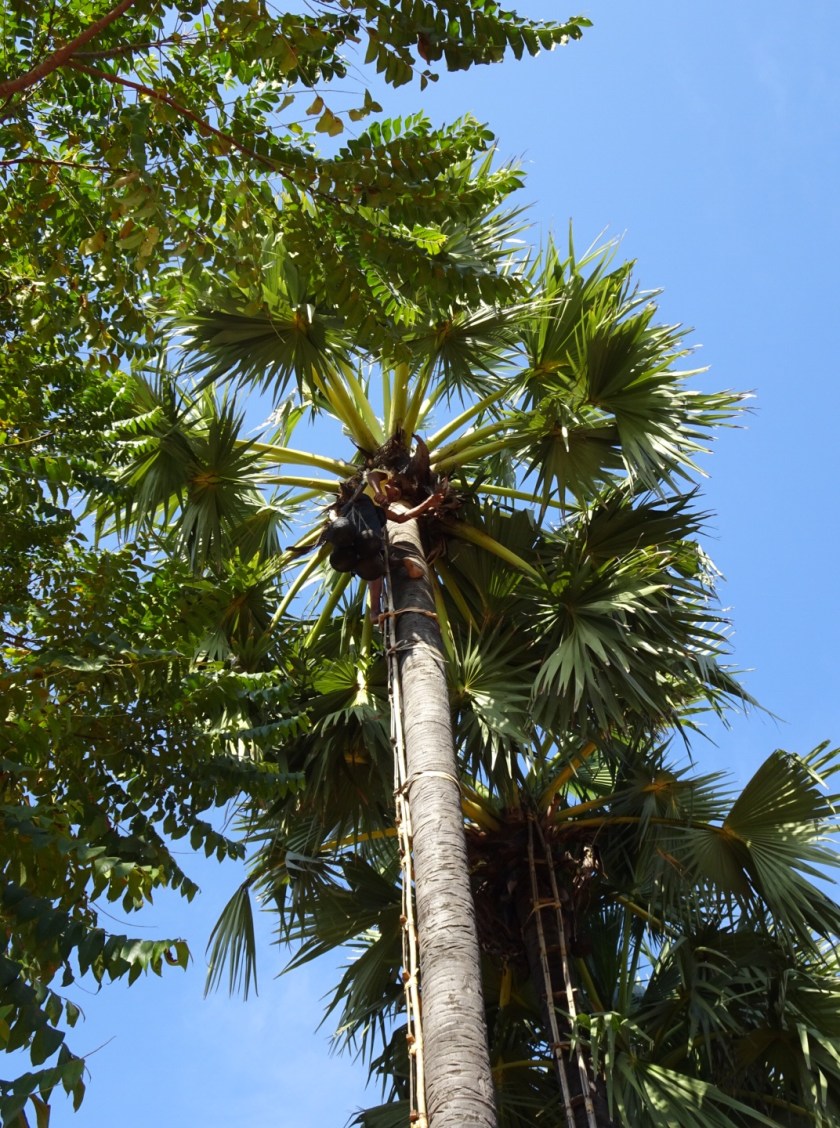
On the way we cycle through many palm trees and we stop at a palm tree oil “factory” and see a man climb a tree to collect the palm oil in pots that he put there earlier this morning.

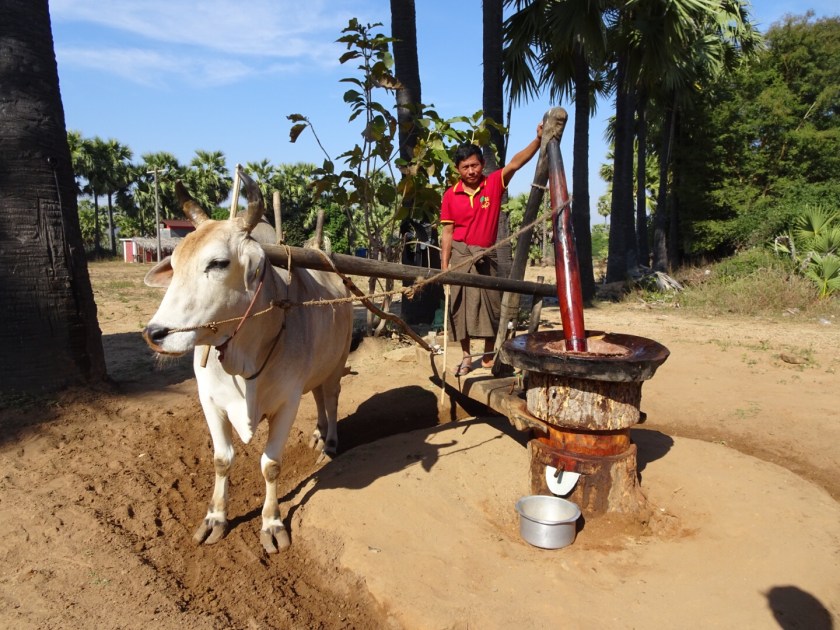
We also see a man grinding peanuts for oil in a very traditional way:

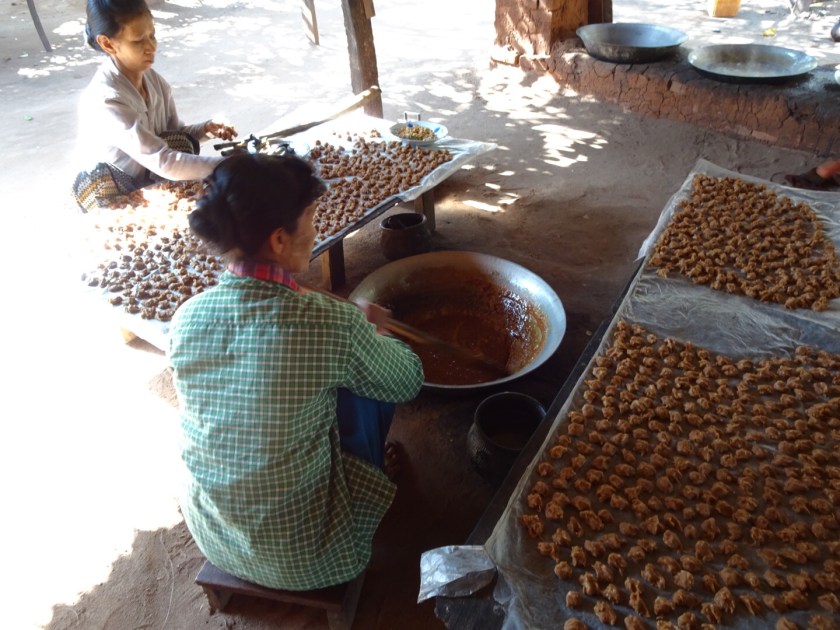
There are lots of workers making sweets with the palm oil and adding different flavors. We get to try a lot of them and all are really good. In particular I like the coconut ones and Suzanne likes the tamarind. They also use the oil to distill liquor but we don’t get to try that.. no doubt it’s rocket fuel!

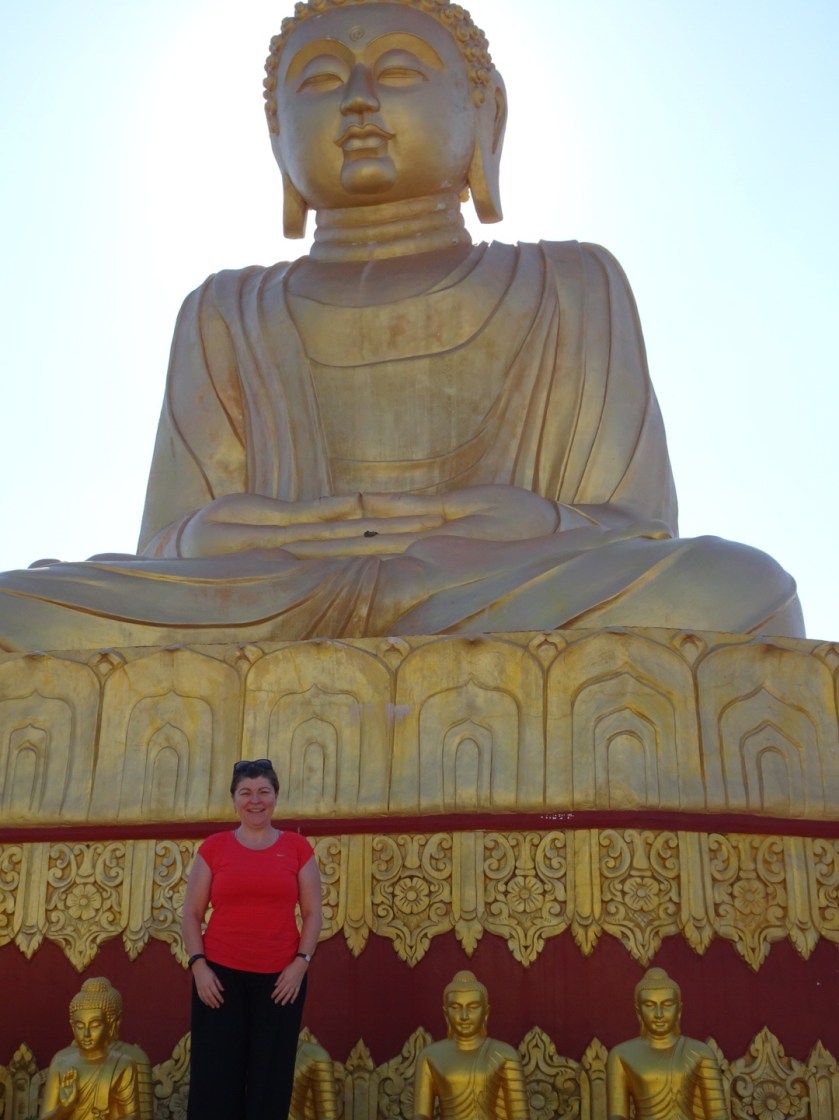
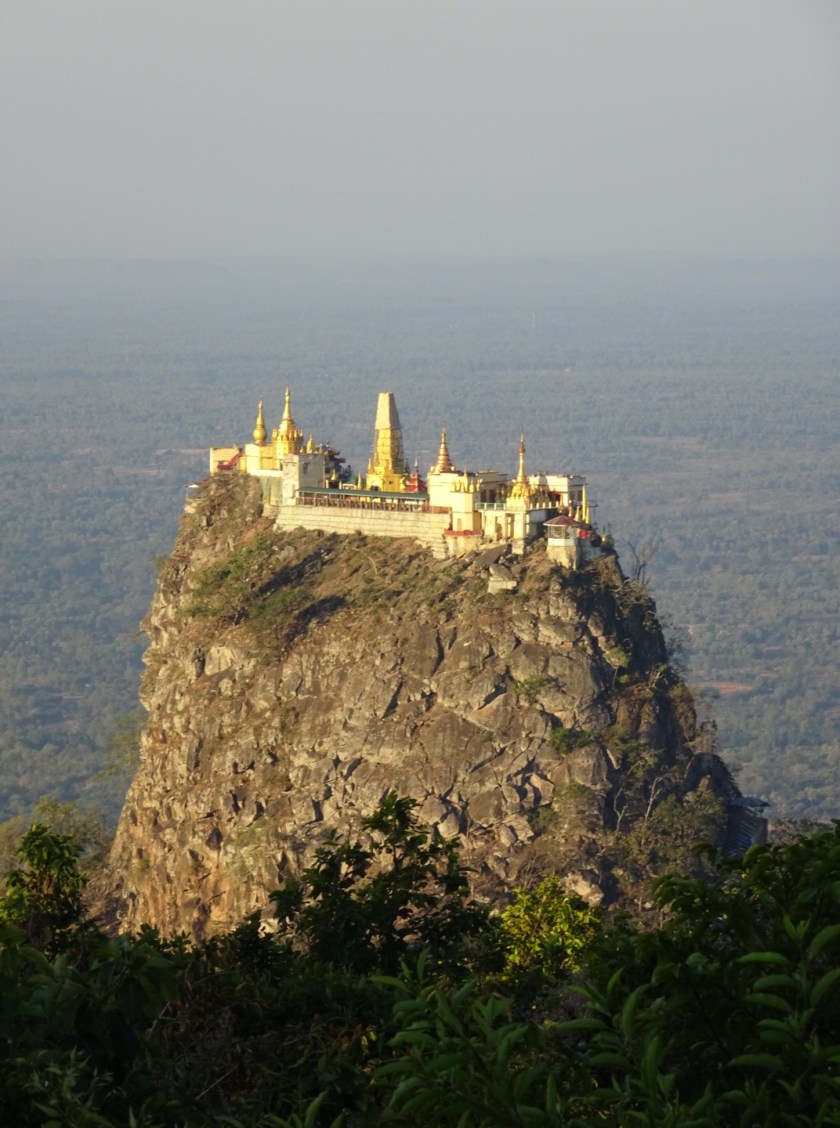
We continue to Mt Popa which is considered holy as it is believed to be home to Burma’s thirty-seven spirits or nats as the Burmese call them. We stop at a view point that has an impressive Buddha statue – I really can’t resist a good Buddha:

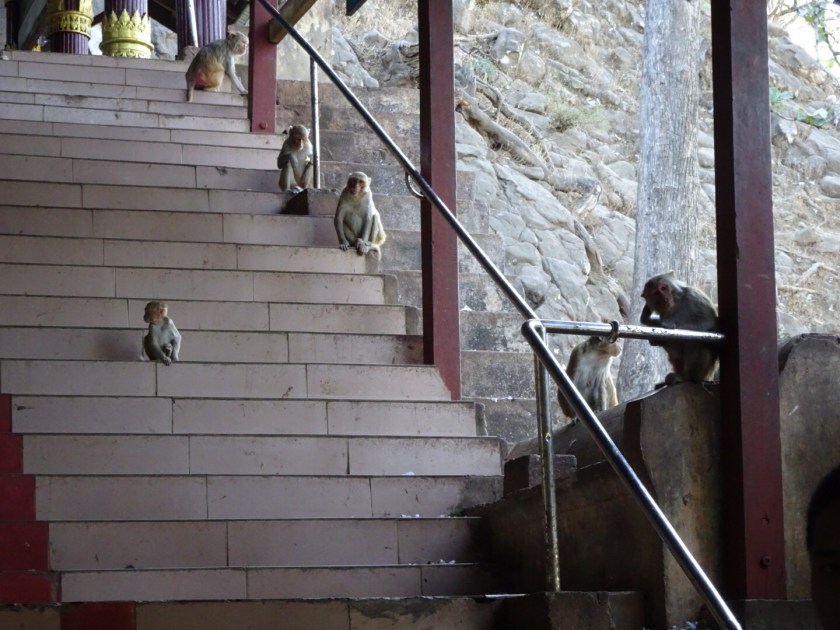
On arrival at the base, we get ready to climb a covered stairway with over 700 steps, some very steep at the top. We must climb the steps in bare feet and as the place is overrun by monkeys (macaques) there is monkey poo all over the place… it’s not pleasant. Not only is it hard to avoid walking in but it’s on the railing!! Not loving this!

We’ve been told by the guide to be careful of our belongings as the monkeys are quick to steal glasses from your head, cameras out of your hands etc.. [flashback to the monkeys in Gibraltar Angela O’Doherty!] so we are all on red alert. But low and behold while our Austrian friend sits for a moment to take off his shoes a monkey pounces and swipes his prescription glasses right off his face… Gannot (not the correct spelling but I think he’ll let me away with it!) swiped at the monkey to try to retrieve them and the monkey tumbled into a summersault and ran off. After quite a bit of investigating our guide found the monkey and the glasses were retrieved – cheeky monkey indeed!

It’s quite stressful on the ascent to the top as the monkeys are very threatening looking and they keep fighting with each other. At one point they’re completely blocking the stairwell and no one is sure if we can get through. A worker who cleans the steps for donations shoos them away and we make a run for it… it’s proper Planet of The Apes stuff…… well ok, not quite, but a bit scary all the same! I’m afraid to get my camera out in case I get pounced on so I don’t have hard evidence of the scale of these scary monkeys!

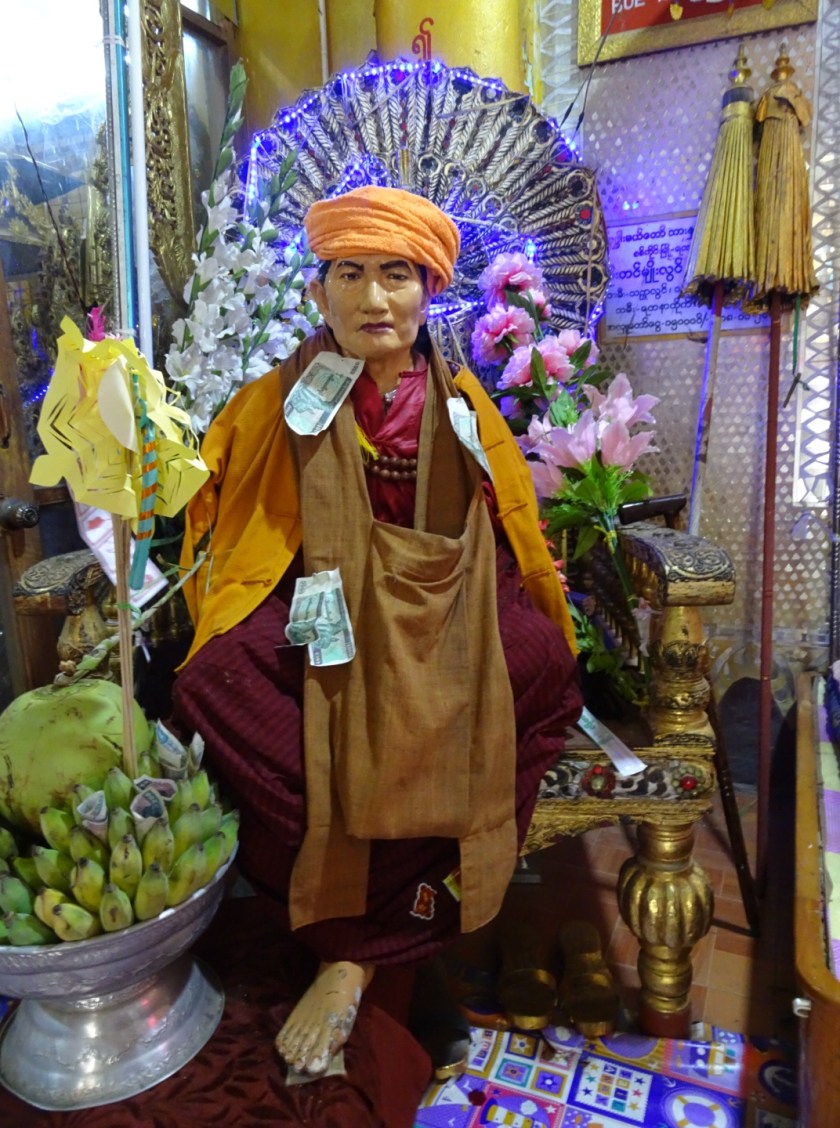
Finally we manage to reach the summit and honestly I’m not all that sure it was worth it. There’s a statue of a monk known as the Burmese Superman who was apparently a great man, although he looks like was never in a good mood:

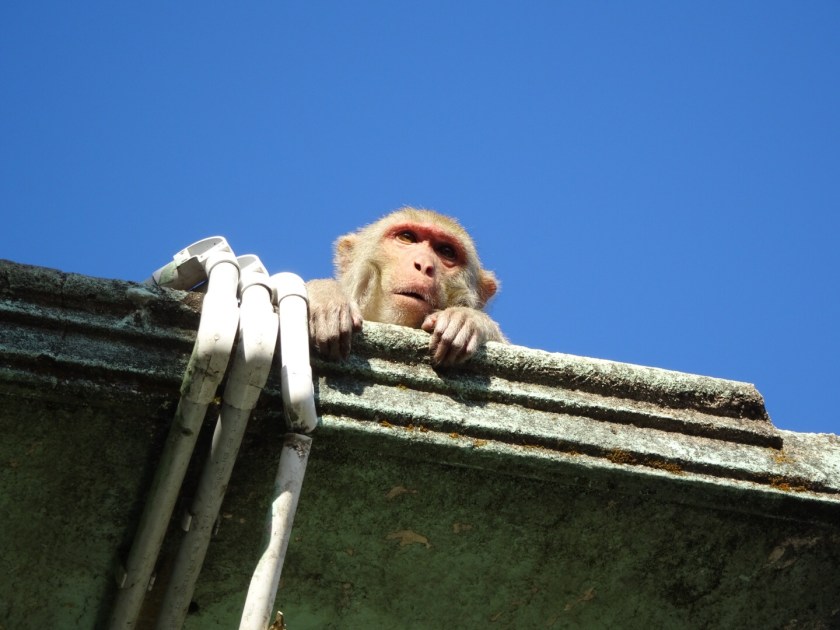
The views are nice from up here but it’s hard to relax and look around in case a monkey strikes… this guy was definitely checking me out:

Around the temple there are lists of names of people who have made donations. Big and bold we see one Donald Trump who made a donation in 2015 of 25,000 ks which is not even twenty US dollars… the miserable swine!

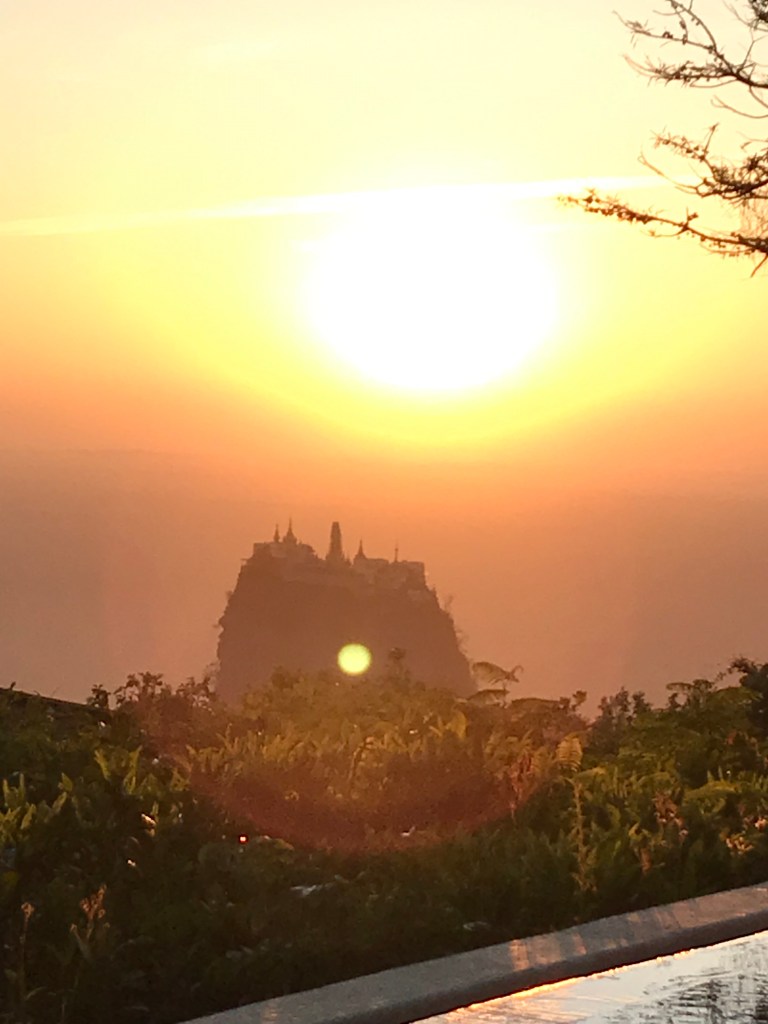
Happy to get away from the monkeys, we make our way to Popa Mountain Resort, which is built into the side of a mountain and overlooking the temple and monastery. We watch the sun set over it with a little sundowner beverage! It’s way better looking at it from afar than being up there!

It’s hard to believe how cold it is after the heat of the day but it is really chilly and windy up here. After an amazing and well earned shower, we have another drink and spend a pleasant evening with our group before calling it a night.

Day 5 : After a fantastic buffet breakfast and one last look back at Mt Popa we start an 85km day of cycling.

We head downhill from the resort so there’s a lot of freewheeling and speed. Now anyone who has cycled with me before knows this is my least favorite thing to do on a bike. I break and scream (if not out loud then on the inside) my way down a bumpy and a little bit windy (not as bad as the downhill day in Sri Lanka) road. I’m so glad when we get down and actually prefer the undulating terrain ahead.

We have plenty of stops along the way and the Intrepid crew are brilliant. They are always waiting ahead with snacks for us and they guide us to our stopping point and make sure we’re safe.

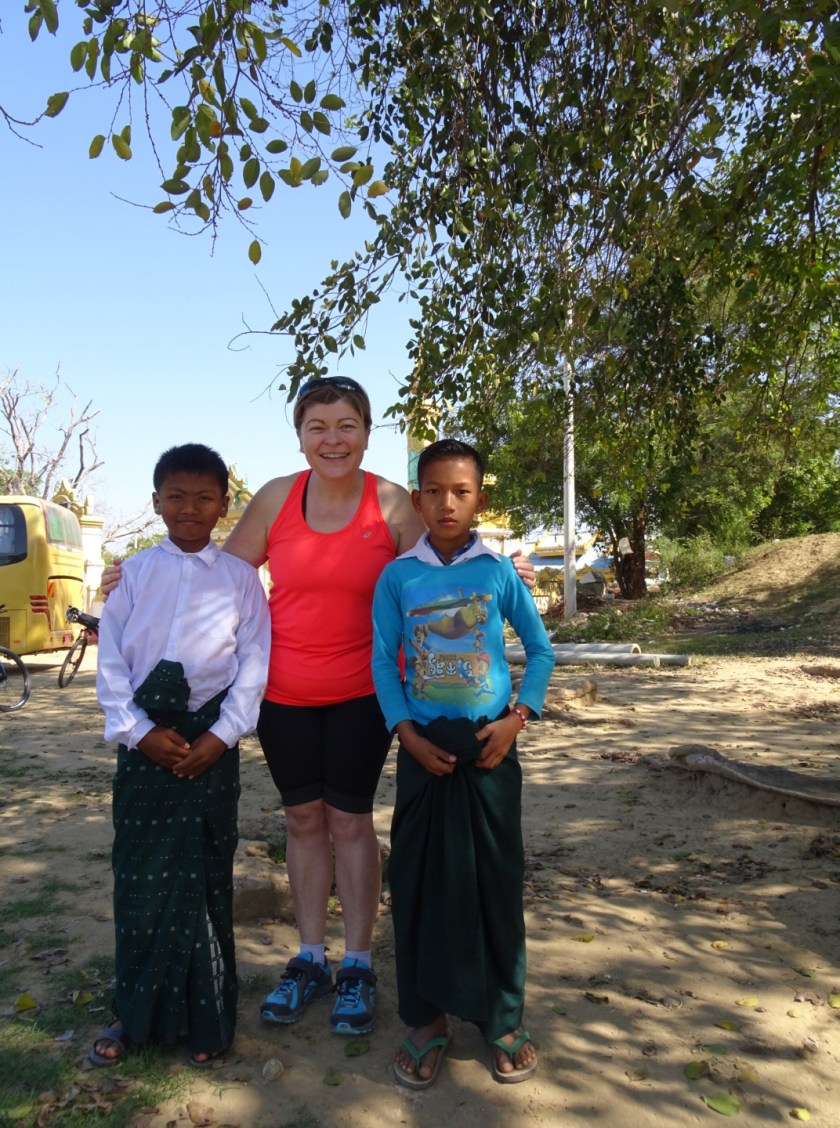
We are a bit of an attraction for the locals and lots of people want to talk to us and find out what we’re up to. In particular we make friends with lots of kids

Hello in Burmese is “mingalarbar” and I just love saying it to people as I whizz by (yes I’m whizzing my way around here). Everyone is really smiley and friendly and shouts mingalarbar back and sometimes I even get a hello or a “what country you from?”. It’s great fun.

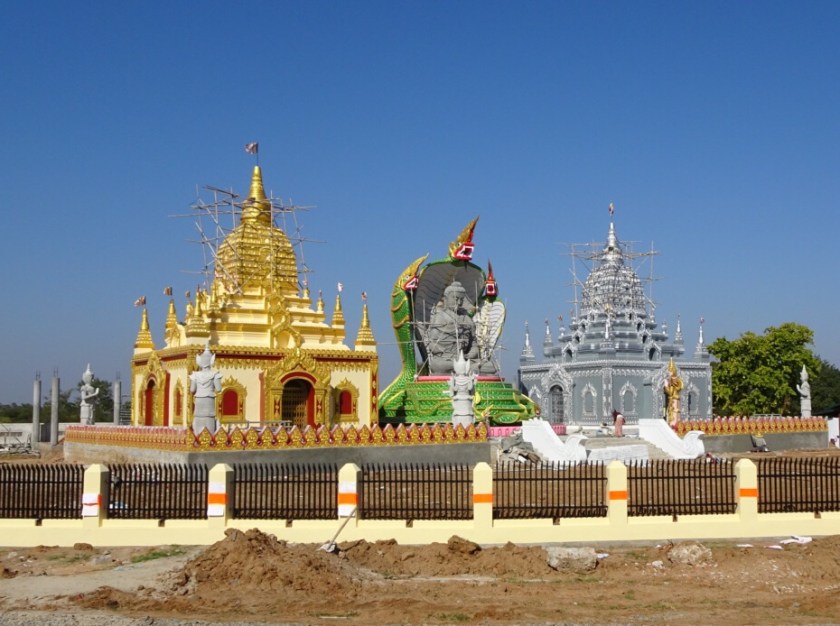
You’re never too far from a stupa or temple and I stop to take a photo of this new one getting built:

Towards the end of the 85km there is one kilometer of a very steep winding hill so the challenge is on… most of the group make it but it’s not easy and it’s gear one for most of the way which means it’s hard to stay on the bike. I’m sure I’d walk it faster but I won’t be defeated. We are all delighted to get to the top in one piece and it’s been a great day of cycling.

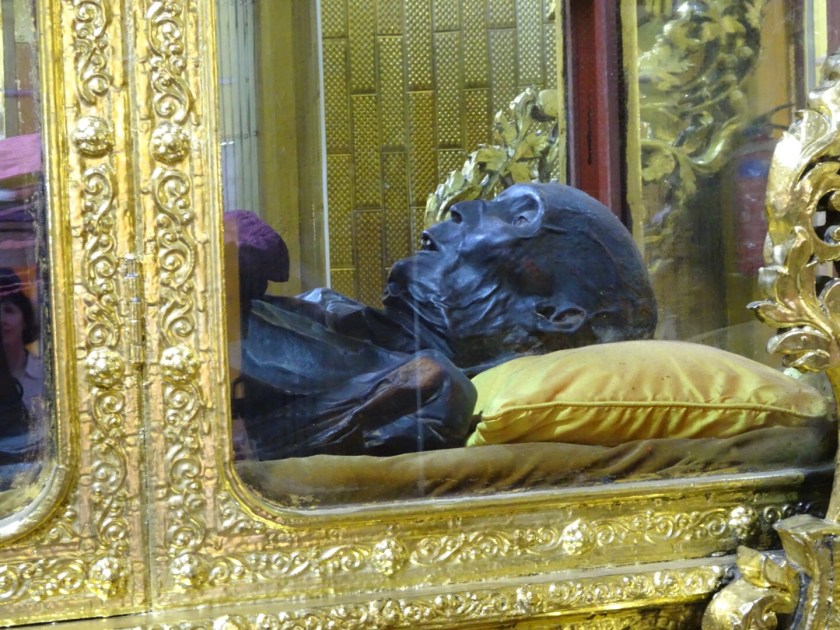
The shower at the hotel after that long hot day is glorious and feels like a treat for us. In this small town called Myingyan there’s not a whole lot but there is a famous monk who lived and died here and guess what… he is incorrupt.. gasp!!!!! Yes, an incorrupt Buddhist monk – I have to see him.

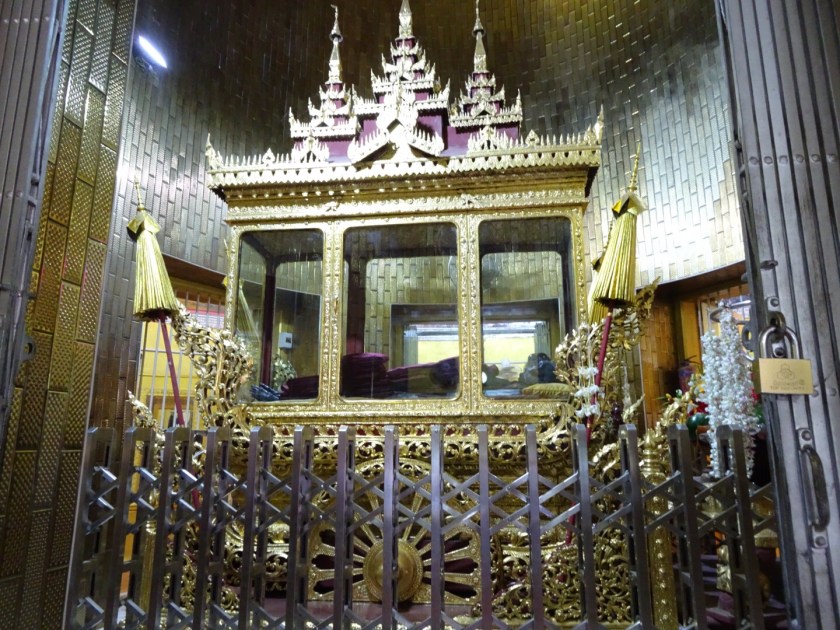
So his name is Sun Lun Sayadaw U Kavi and he lived til he was 75. The dates are different to our calendar so it gets a bit confusing but I think he died in the 50’s and he decided that he wanted his body to be put on display. He is on display in this gold carriage type thing:

And close up looks like this:

Strange!

There are nice grounds around the temple of the dead monk..

Happy to have seen it we retire to a small restaurant beside our hotel ready for an early night and another early start tomorrow.

Burma Part II : Bagan

Day 3 : We have a 5am departure from our hotel to catch a flight to Bagan. This getting up in the middle of the night doesn’t make me happy but I soldier on and we take a small plane for the one hour journey.

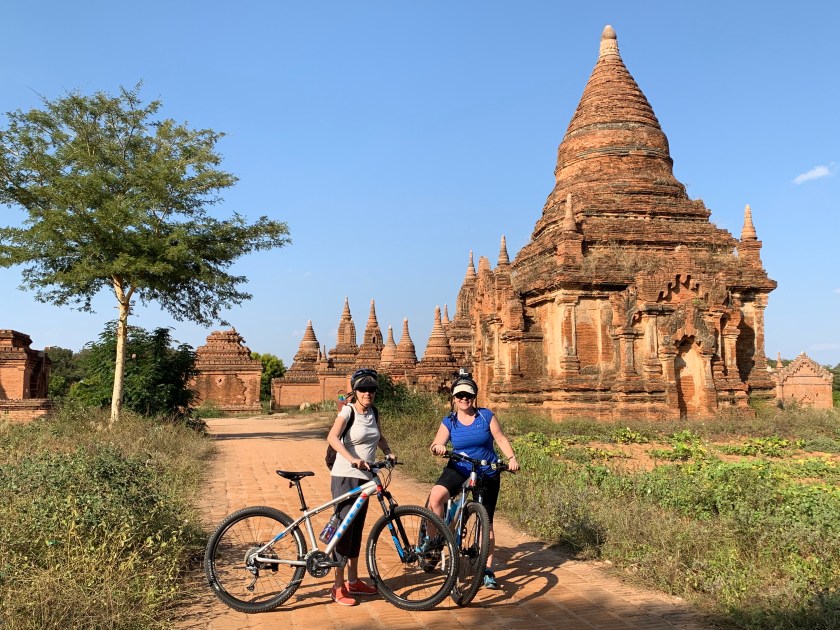
We arrive by 8am and take a look around the local market at Nyaung Oo until we can check into our hotel and get our cycling gear on. We meet our second guide who is also the bike mechanic, get our bikes sorted and we’re off to explore the archeological zone of Bagan.

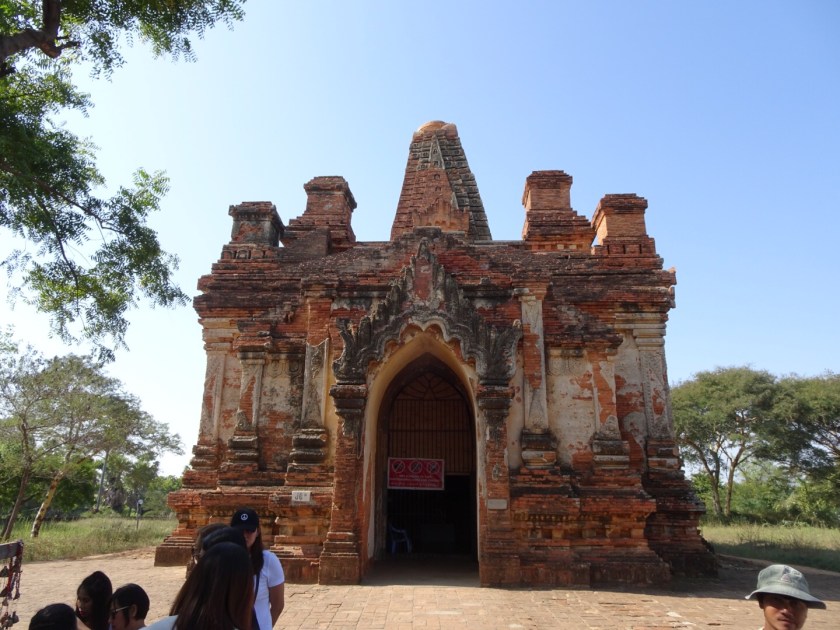
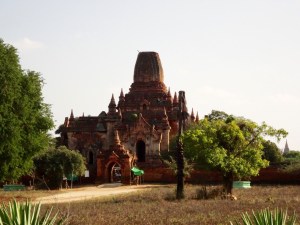
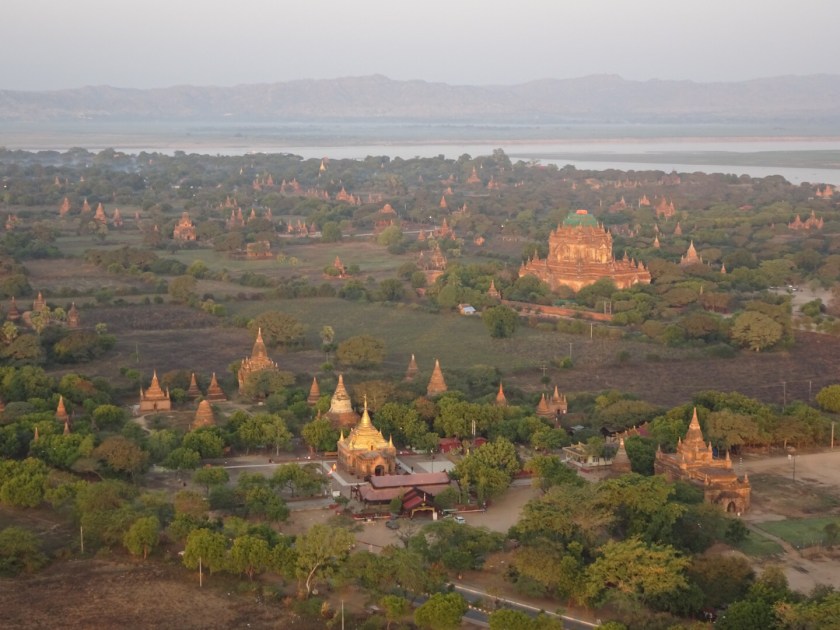
To give you a little context, Bagan was an imperial capital ruled by kings who gradually promoted Theravada Buddhism. They built many temples, monasteries, shrines and stupas and many of these are still standing today. This area is truly amazing. There are more than three thousand temples and cycling is a great way to get around and see them.

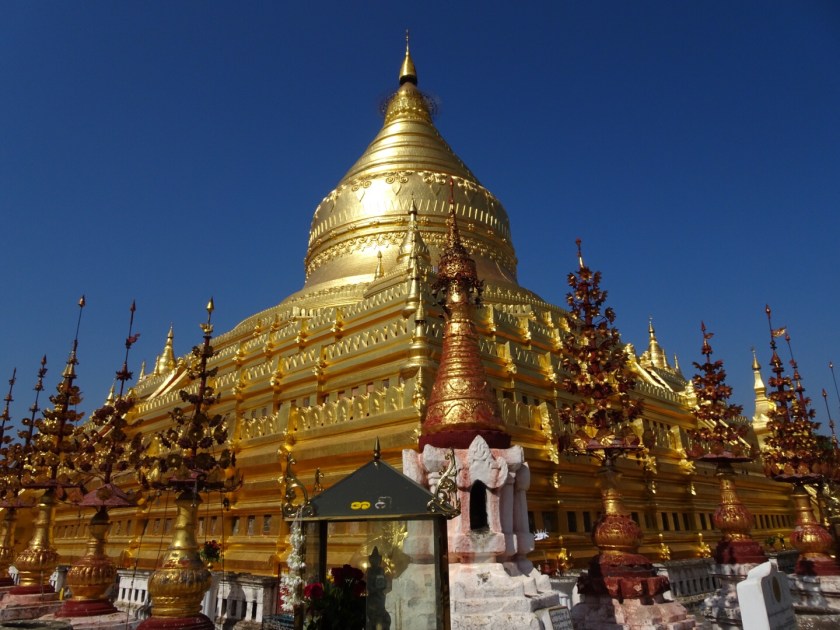
We visit Shwezigon pagoda which was built in the 11th century by the king who was the founder of the Bagan empire. It is 160ft high and 160ft wide, with four smaller stupas on each corner. Covered in gold, it is dazzlingly impressive:

While walking around the grounds we come across some Buddhist nuns:

Next is a smaller pagoda built in the 13th century called Gubyaukghi. It has many murals inside, all original.

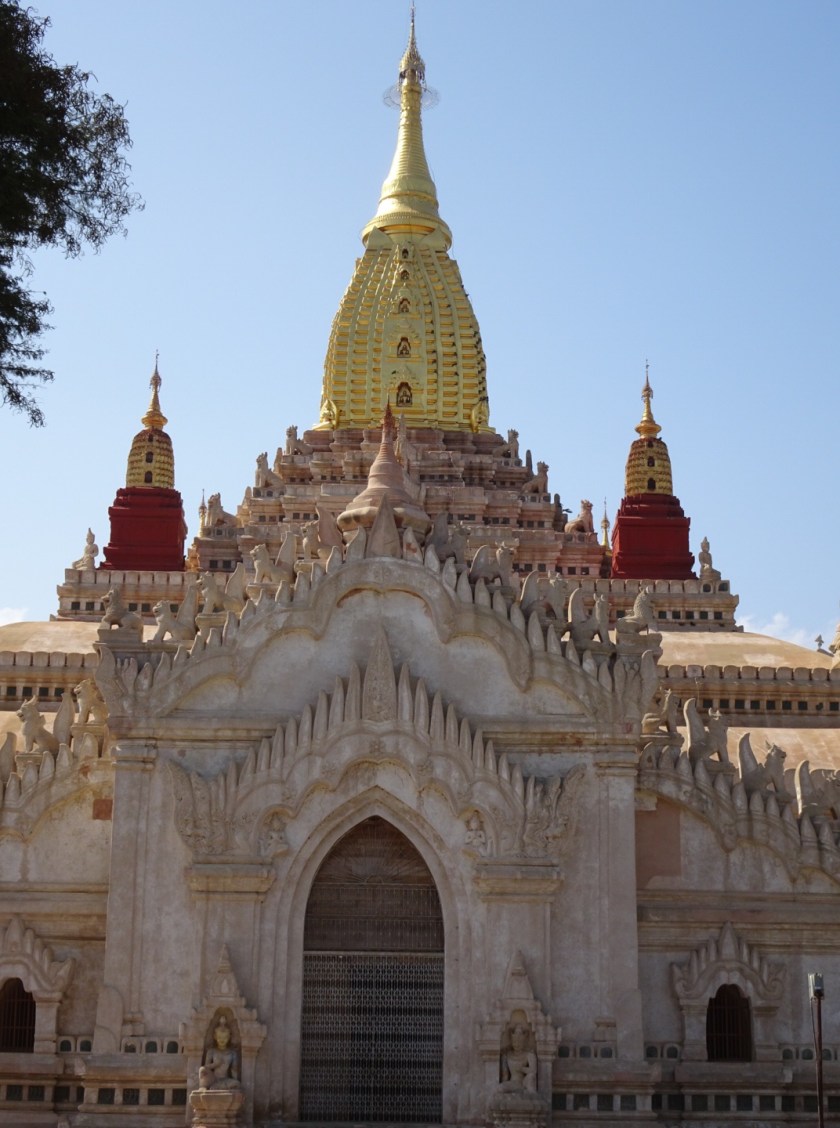
Ananda temple is considered the most magnificent in the area and we visit that next. Commissioned in 1105, it remains the most revered temple by Burmese Buddhists. Its golden spire differentiates it from the many other temples.

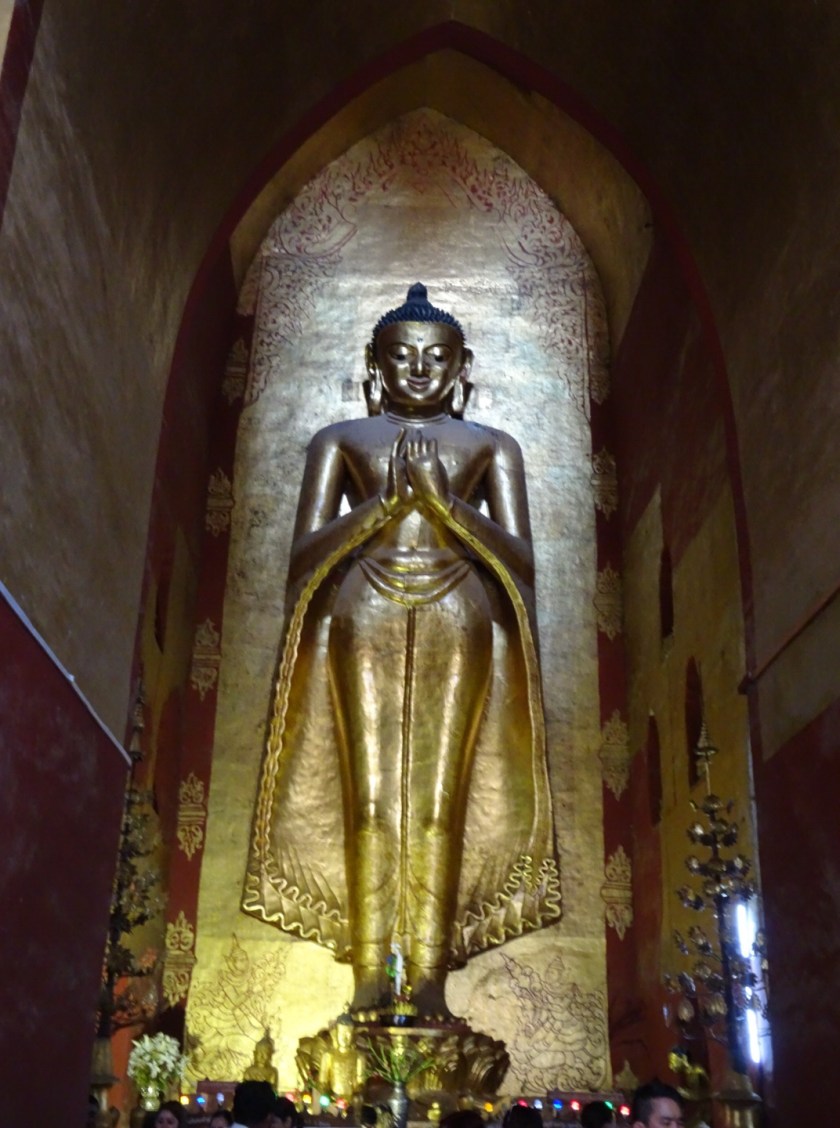
It has four giant standing Buddha statues, each one facing north, south, east and west. They are carved from wood and are gold gilded. They are all different with varying mudra hand positions. A couple of the statues are remodels as they were destroyed by fires but the one pictured below is the original dating to approximately 12th century.

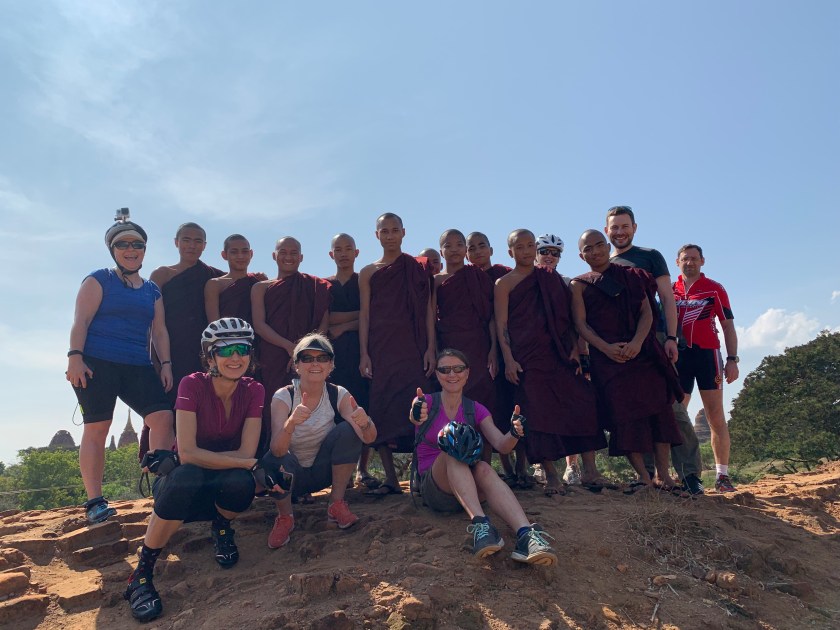
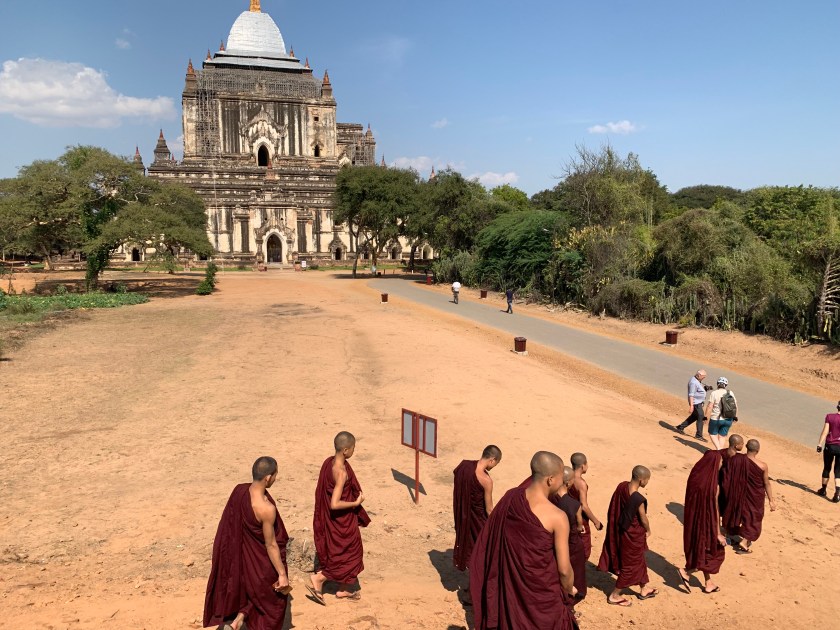
We do a quick “drive by” Thatbyinnyu temple, the tallest in the archeological site and a group of monks are also visiting. They seem happy enough to get a photo with us.

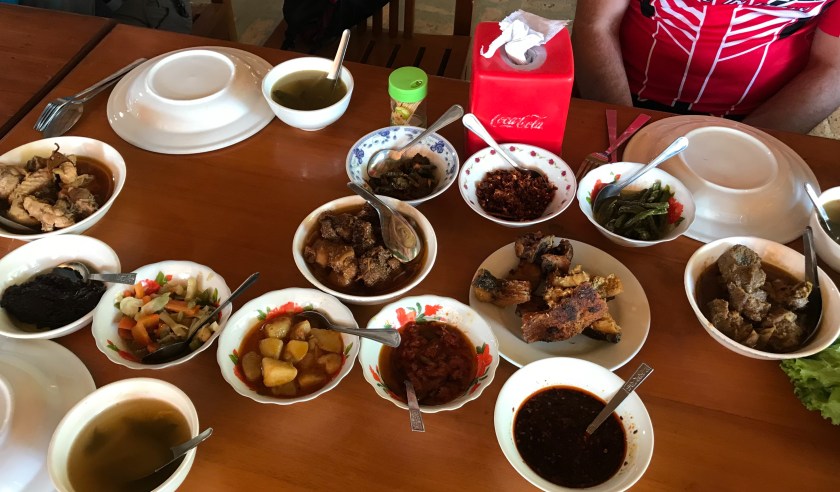
Next is our lunch stop and it’s a feast of small plates of traditional Burmese food – there’s fried pork, goat curry, chicken curry, fried fish and a host of vegetables and spices. It’s an interesting buffet of sorts!

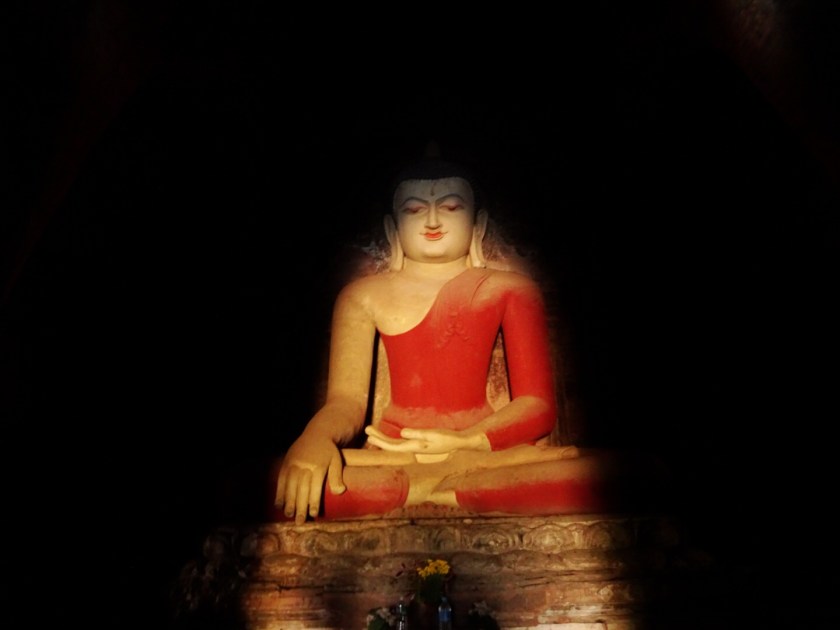
Not quite ready to go back to the hotel, some of us opt for another temple visit. This one is called Patho-Htat-mya Hpaya and is really dark with very few visitors. It has a beautiful Buddha that is lit by the sun coming in through the arched temple door:

On the ride back to the hotel there are multiple stops to view more pagodas and take some photos.. we only have one day here but I think I’d easily manage two or three.

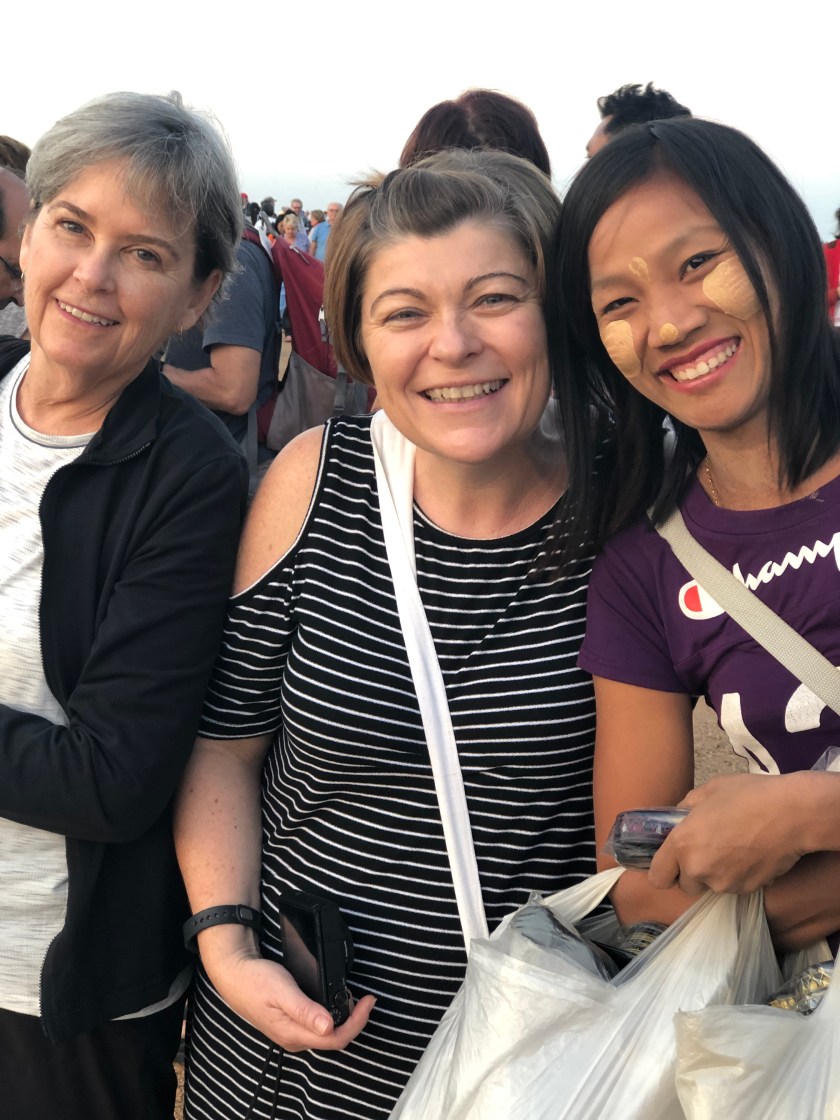
Later in the evening we visit a lacquer factory to see how they make bowls and all sorts and then we drive to a spot for sunset. Watching the sun set takes second place to chatting to some of the girls trying to sell us clothes.. in fact I kind of missEd it all together making friends with this lovely lady!

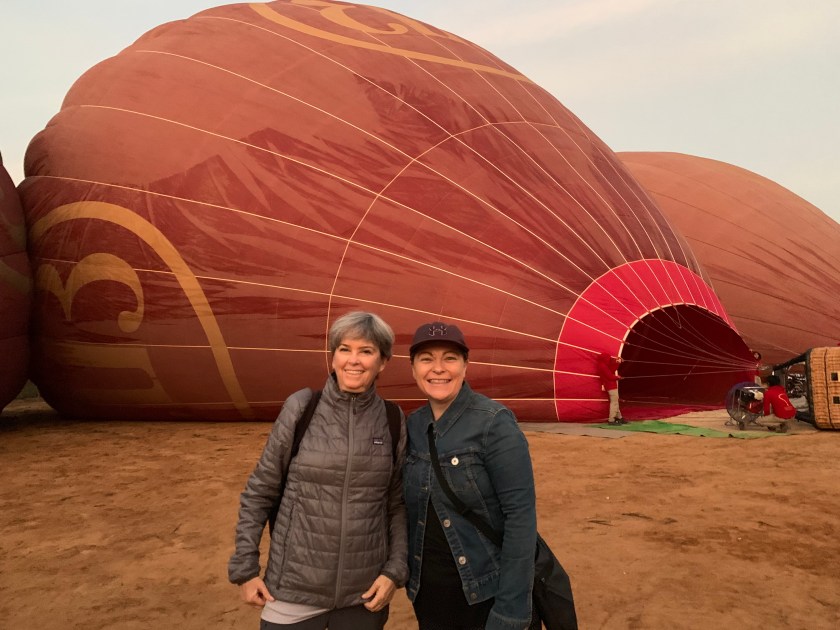
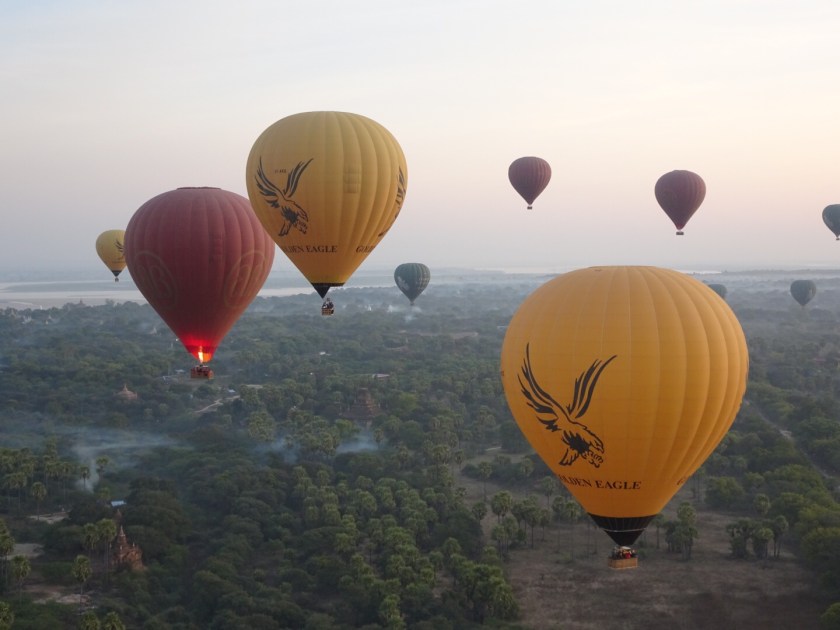
We get to relax over another delicious Thai/Burmese meal then get to bed early. Next morning we have another 5am start as we’re going in a hot air ballon… Baloons over Bagan – woo hoo, we’re very excited. It’s surprisingly chilly and we start with a cup of tea and a safety briefing before watching the ballon inflate:

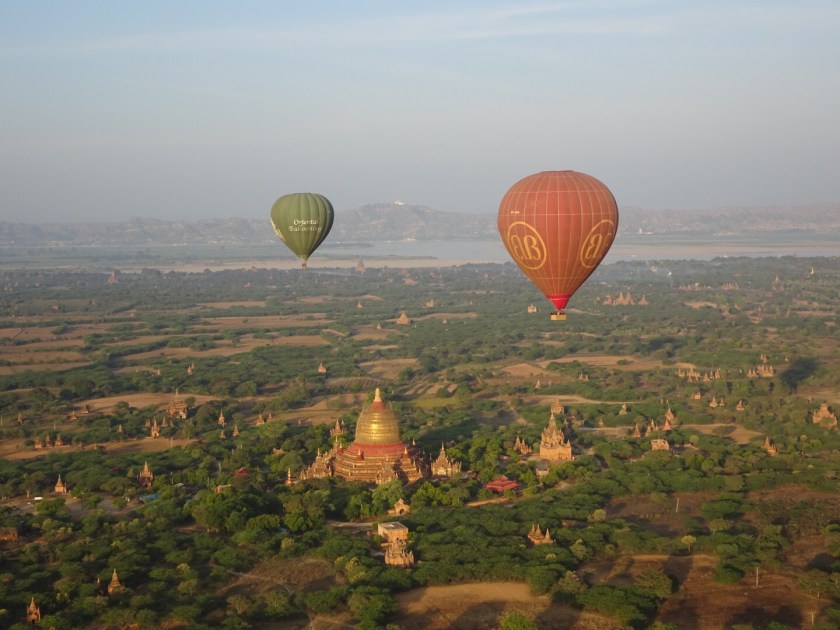
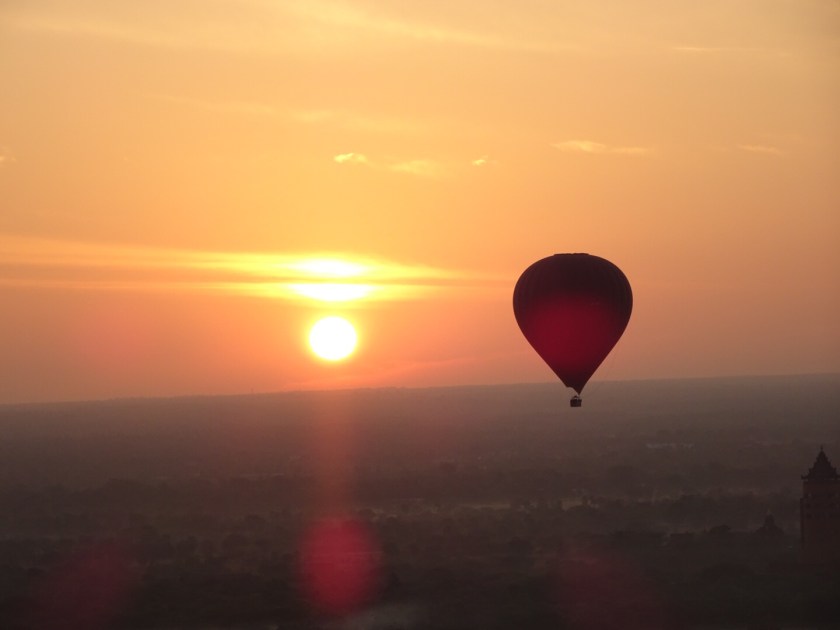
Once it’s up we climb into the basket, where there’s room for sixteen people in total – eight on each side of the pilots middle “cockpit” and four in each half of the basket. we see the whole area and so many pagodas and it’s cool to see other balloons in the air too

We get dropped back to the hotel by 8:30am to officially start day 4 of our trip………

Burma Part I : Arrival and Yangon

So I’m off on my travels again, back to cover another country in Asia, this time Burma or as it’s currently and officially known – Myanmar. I’m going to call it Burma though. I’m flying direct to Hong Kong on Cathay Pacific, who just recently started flying out of Dublin and from there it’s just over three hours to Yangon which used to be the capital but is now called the second capital (the official being Naypyidaw).

By way of introduction and general orientation…. Burma is in Southeast Asia and borders India and Bangladesh in the West, China in the North and Thailand and Laos in the East. Since 1989 It’s official name is the Republic of the Union of Myanmar but it is still called Burma by many people around the world and in the country itself and even by some other countries. It has had, and continues to have a lot of political instability. Currently there is a democratic government in place (hooray!).

So I arrive in Hong Kong and Suzanne has arrived from California and is waiting at the gate. We have a long layover and try to stay busy, and warm (although it’s about 25 degrees outside the airport is freezing!) by walking around the airport, finding a place to nap and of course eating. My two weeks of Asian cuisine gets off to a good start with a nice bowl of Ramen. Finally it’s time for the 3+ hour flight to Burma.

After the cold of the airport in HK the heat hits as soon as the plane lands in Yangon. We get through immigration which is easy and manned by very pleasant females. It’s about a thirty minute journey to the hotel and we arrive just in time for our welcome meeting. But there seems to be a problem… the lady at the reception desk has no booking for me. She has a list of nine people on the Intrepid “Cycle Myanmar” trip including Suzanne but not me! The guide appears to sort it out but even he has no record of me being on this trip… oh dear, this doesn’t bode well. Anyway we get on with meeting the rest of the group and our guide – Naing (pronounced like nigh) puts a call in to the Intrepid office to figure out what’s happened and hopefully book me into all the hotels and flights for the coming days, oh yeah and get me a bike!!!

So we are a group of ten (now that I’m here!) plus the guide. We have a couple from Canada, a couple from Austria, two ladies from Germany, a guy from Germany, and a lady from London. Everyone seems very nice and it doesn’t appear to be a group of hardcore professional cyclists (phew!), although I’m sure there’s a few among us! After the meeting and getting checked into our room (thankfully there was space for me), we head to a restaurant for some dinner. It’s a Thai restaurant and I order a spicy pork dish which is really tasty and really spicey. The Myanmar beer helps wash it down.

I’m absolutely shattered by the time we get back to the hotel and I fall into bed in need of sleep.

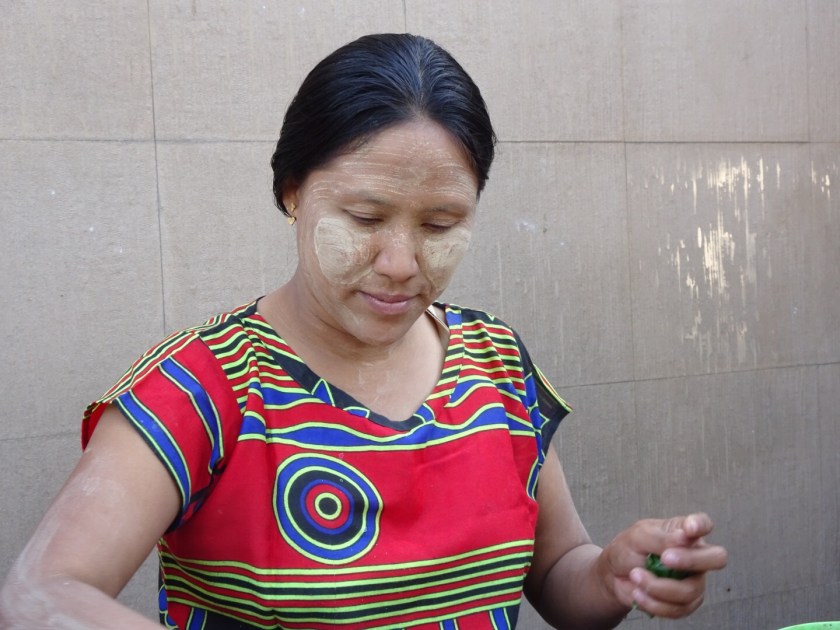
Day 2 : Arrival day is considered day one of our thirteen day cycle tour so we wake this morning ready to get started and see the city. We meet at 8am for a walking tour which takes us around the streets not far from our hotel. We see street vendors and stop to see a lady preparing betel nut to sell. This is the horrible red stuff that most local men chew. We saw a lot of people eat it in Bhutan and it seems to be as popular here. Those who chew it spit a lot which leaves red marks all over the ground… yuck! They also sell cigarettes very cheaply at these stalls, even single ones and there’s no legal age to buy (I feel a national campaign coming on!!!). The lady at the stall is lovely and she demonstrates how she makes the betel nut. She’s wearing a powder on her face that’s very popular here – it’s called thanakha and it’s both for beauty and sun protection.

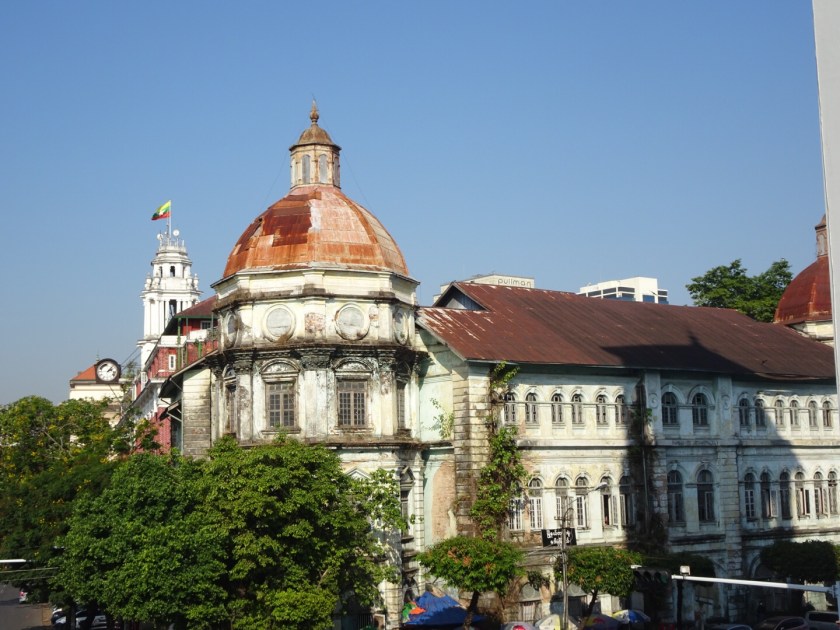
We walk further and see lots of colonial buildings built by the British when they ruled here from 1824 to 1948.

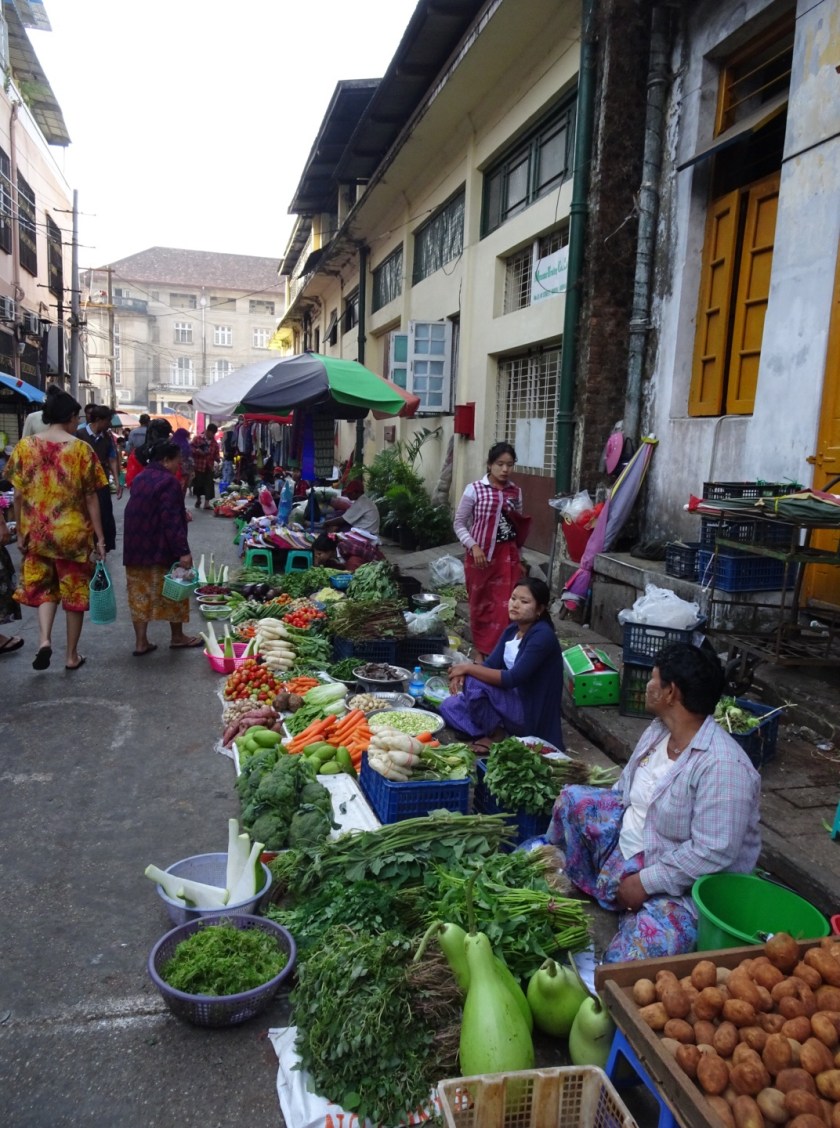
We walk through the street market which is fascinating and see all different types of fruit and vegetables being sold.

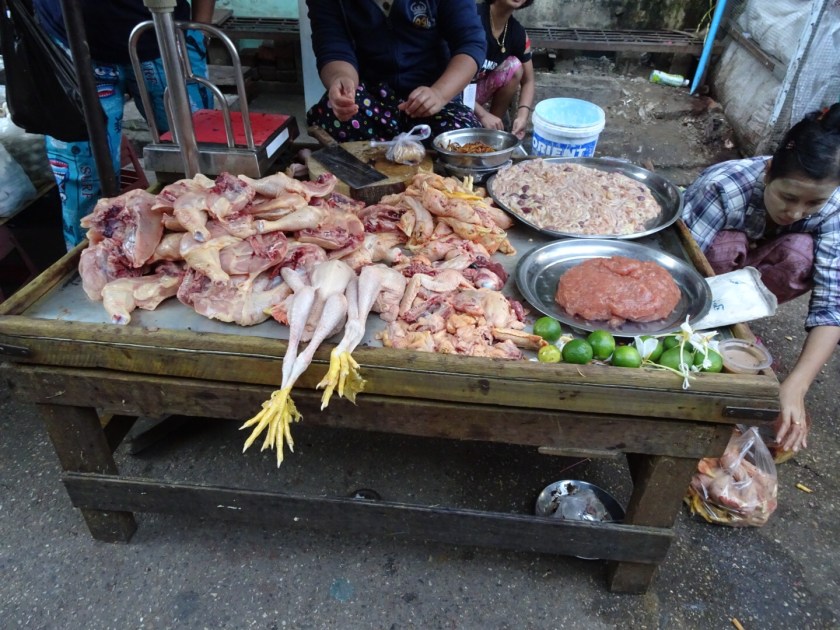
Not sure I’d buy my chicken or fish from here… in the heat with flies landing on it.. no thanks!

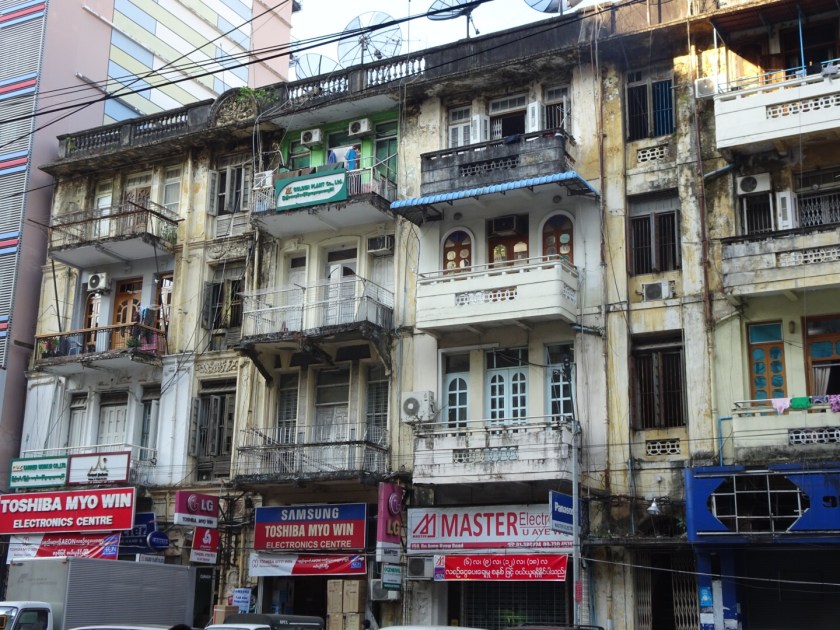
Walking through the market there are children in monks robes and Ni tells us that sometimes these kids looking for money are fake monks. They don’t hassle us at all and they seem to be looked after by the locals but it seems funny that they might be “fake” monks. We see a lot of dilapidated buildings housing most of the inner city population, this was by no means the worst we saw:

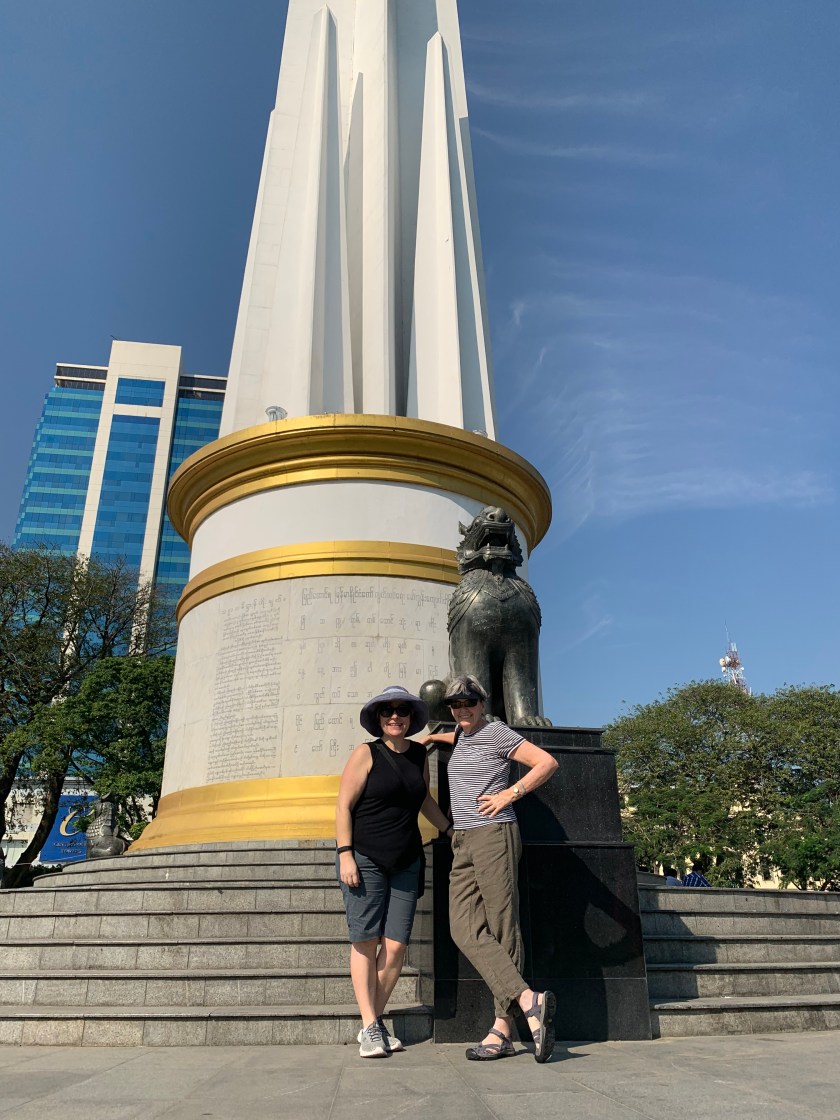
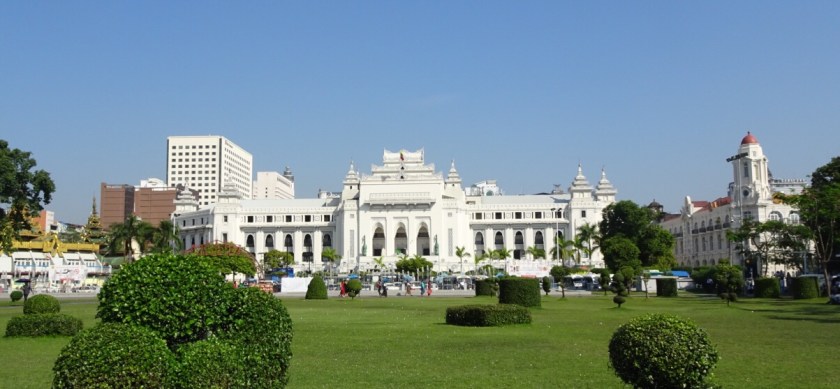
We visit Mahabandula garden which is a memorial square with a monument at its centre:

From here we can see City Hall and the High Court.

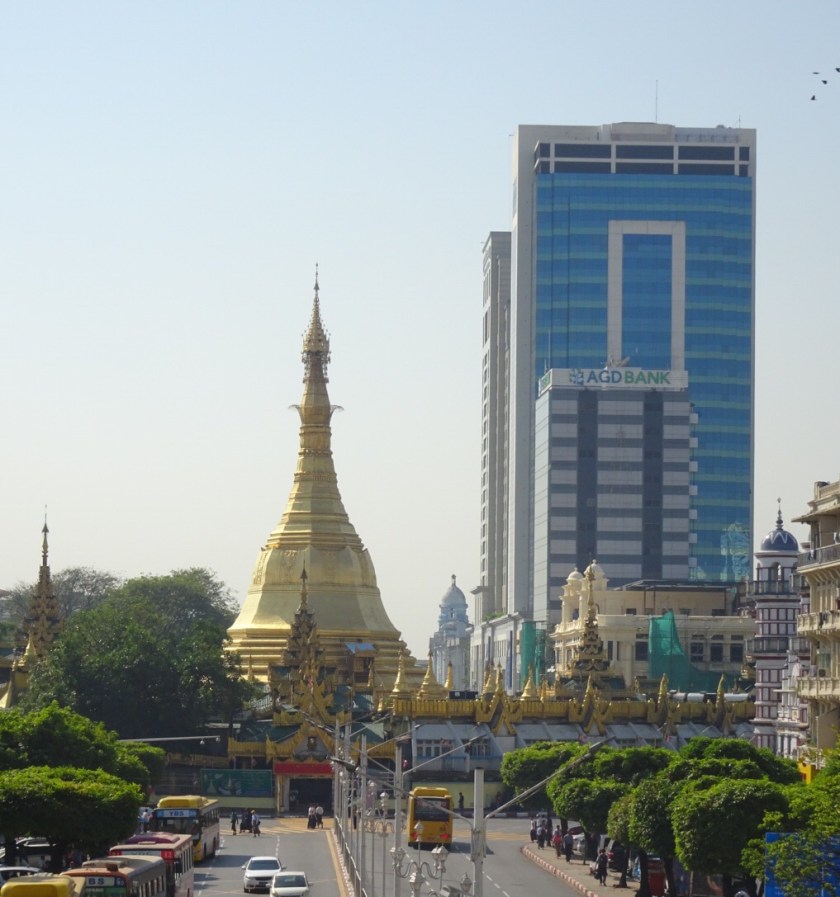
We also pass Sule pagoda which is across the street from a mosque and our guide tells us how so many different religions live in peace together in Burma. Not quite the story we’re learning about of late.

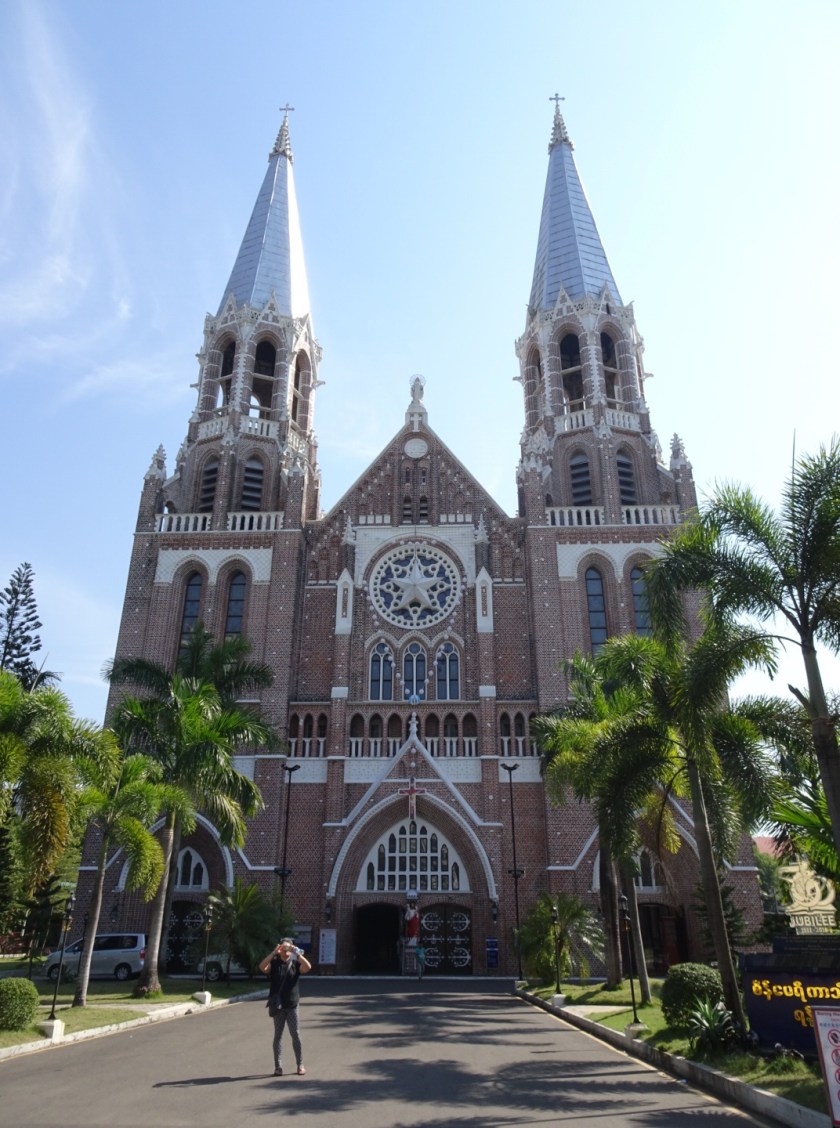
We have a quick stop at St Mary’s cathedral which has unusual colors inside and some really stained glass windows.

The tour ends and we are left to our own devices for the middle part of the day. There is so much to see in this city so we don’t hang around… I have a list of pagodas and Buddha’s that I’d like to see – we won’t get to them all so we pick the top two, negotiate a taxi and we’re on our way.

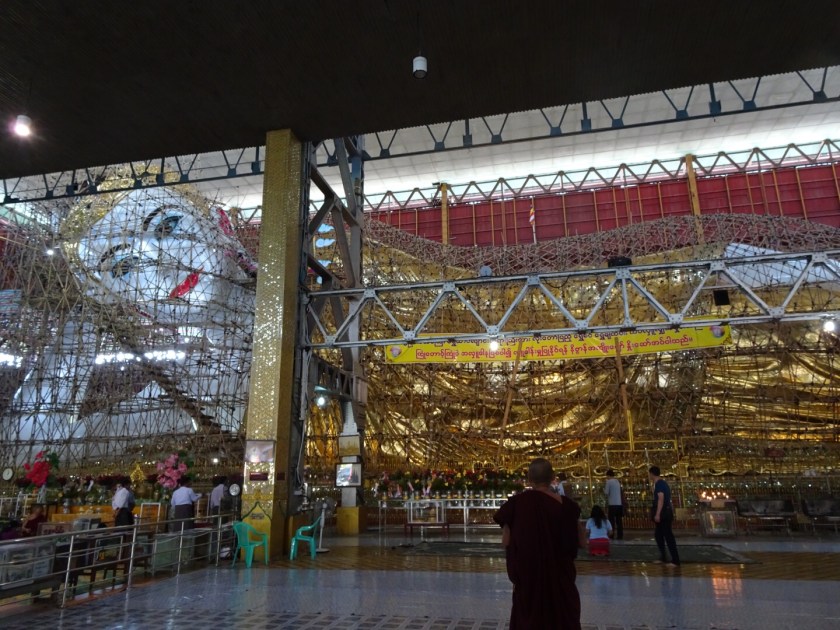
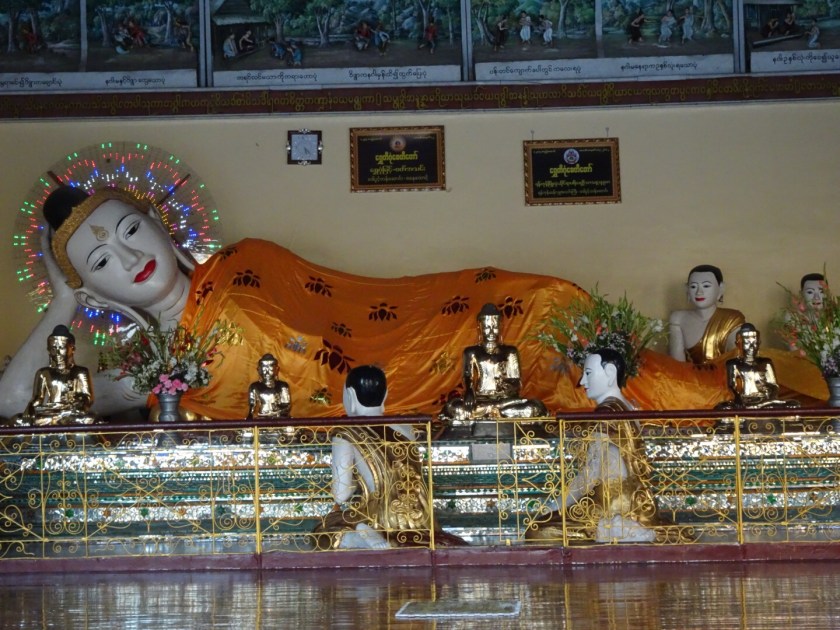
The first pagoda is called Kyauk Htat Gyi and has a huge reclining Buddha. Alas the Buddha is currently being “touched up” so he’s covered in scaffolding but it’s really cool to see:

The huge hall which is actually a giant tin shed has lots of other interesting statues and around the big Buddha there are forty small Buddha statues showing various mudras. [you might remember, although I doubt it, from the Bhutan trip that a mudra is the hand position of the buddha].

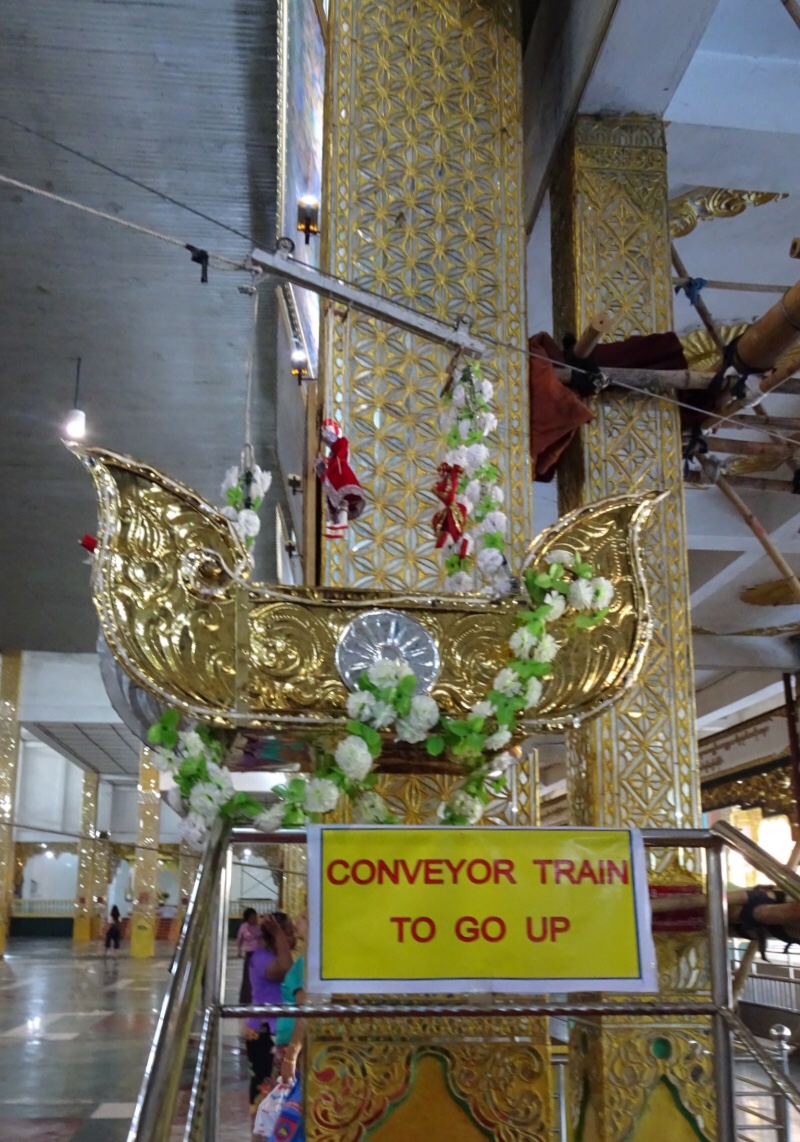
There’s a golden carriage (called a conveyor train) that we see glide across a line to an opening in the Buddha which we believe is for large donations made.. very bizarre looking!

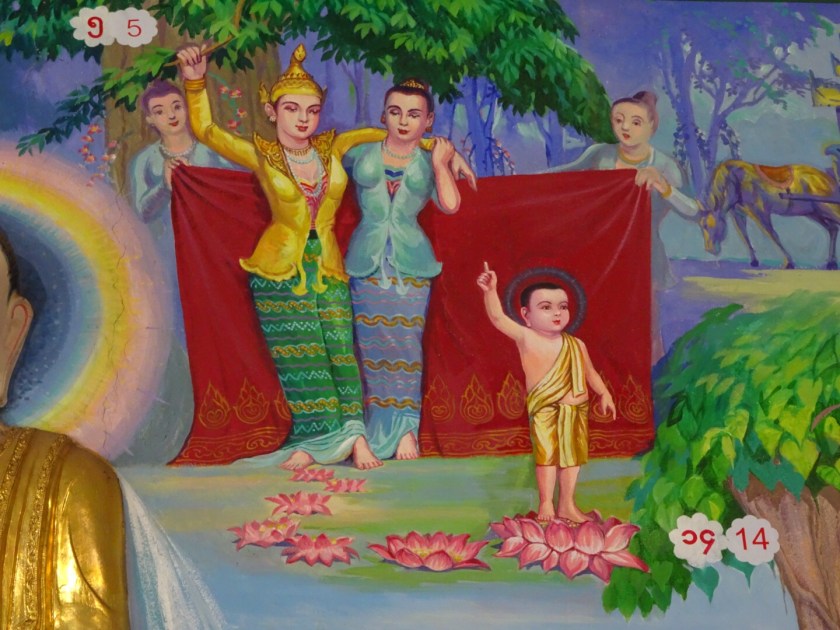
There’s a number of other interesting statues around the place, presumably of famous monks but there’s not much English to tell us about them. Around the walls are the story of Guatum Buddha – the first Buddha. They’re beautifully painted and illustrated.

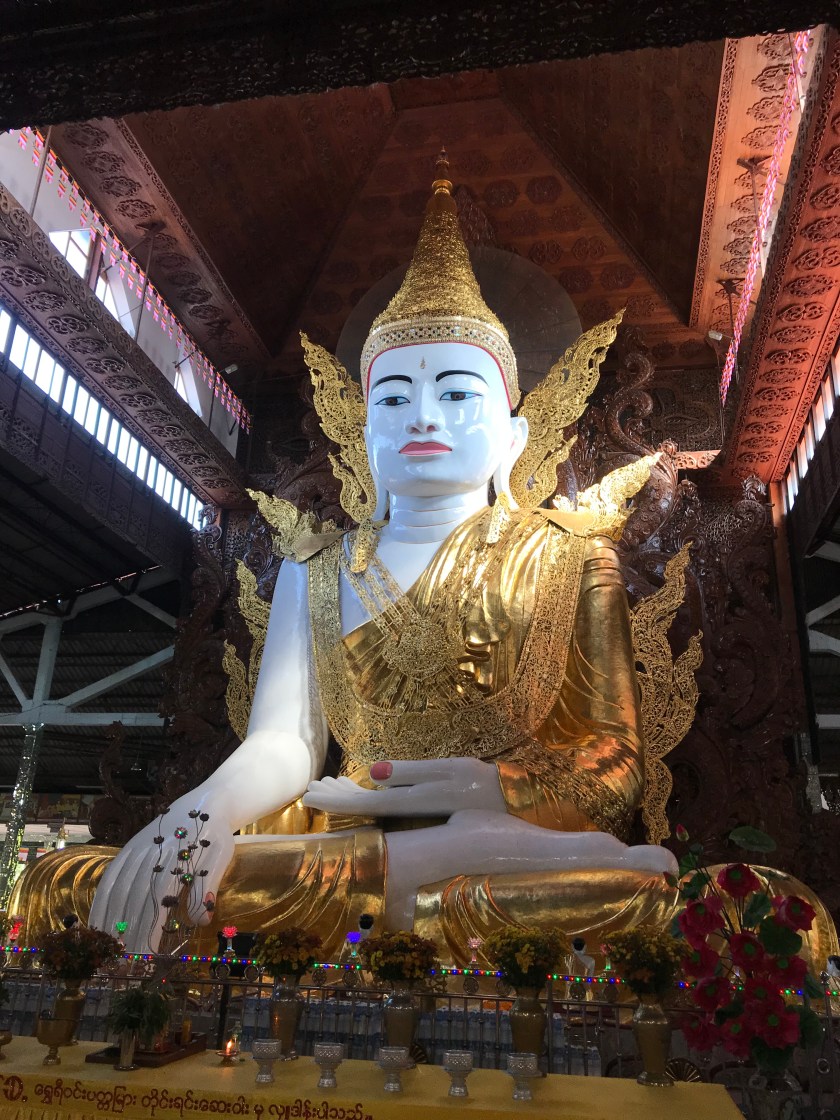
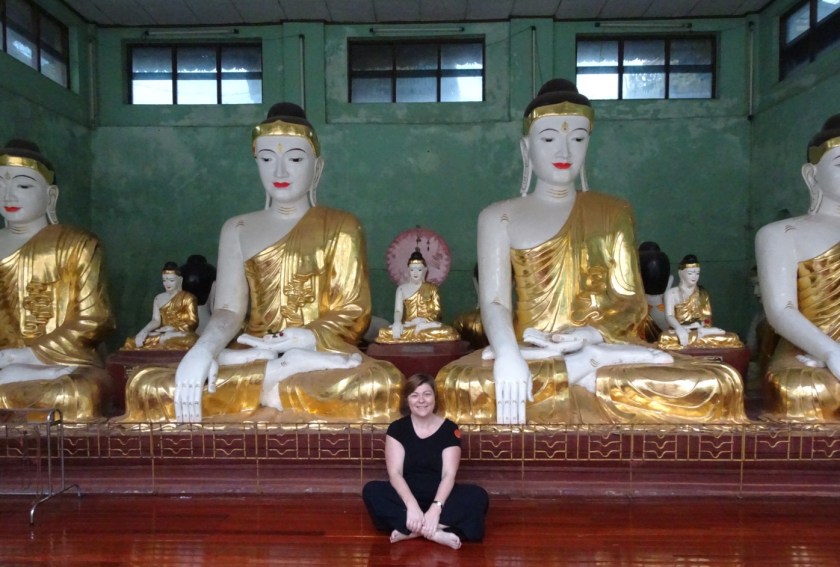
Next we visit Nga Htat Gyi pagoda where there is a large seated Buddha. It’s just up the street but we have to cross a busy road which is no mean feat but we manage it and we’re delighted with ourselves as this Buddha is beautiful.

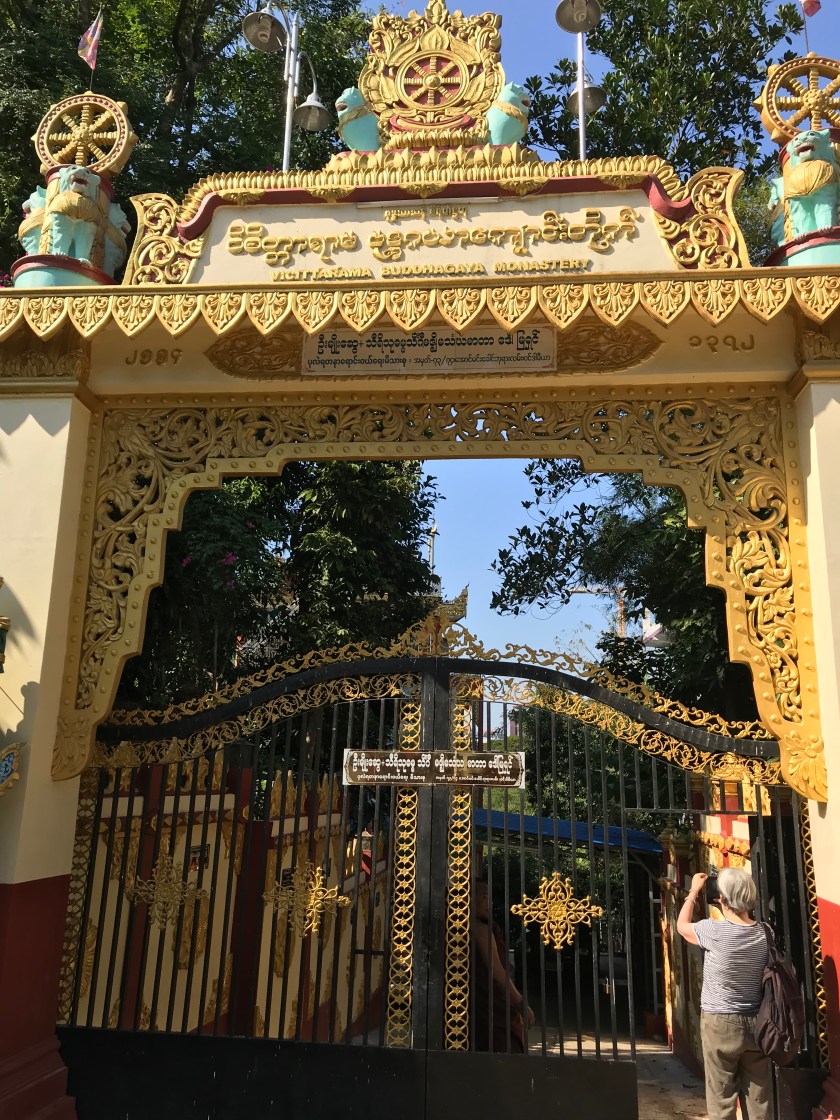
On our way out a monk greets us and tells us we should take a look at an old monastery at the back of the pagoda. As we start to walk with him another old man joins us who has good English and starts to tell us some history of the place. There’s no one else around and they are guiding us up a back street with derelict looking buildings and I get a little uncomfortable thinking maybe this is where we get kidnapped or murdered, or maybe just robbed. I look to Suzanne, who doesn’t look too concerned, and mention that if things turn ugly I could definitely take the old guy!!! As it turns out, they really do just want to show a couple of foreigners the old monastery and grounds around the pagoda so they can get a small donation from us. There’s very little crime here and I don’t think there’s any risk of us being led up a dark alley to be murdered or robbed, the worst that can happen is to be asked for some money and honestly it feels like good karma to handover a few dollars which is literally all they’re looking for.

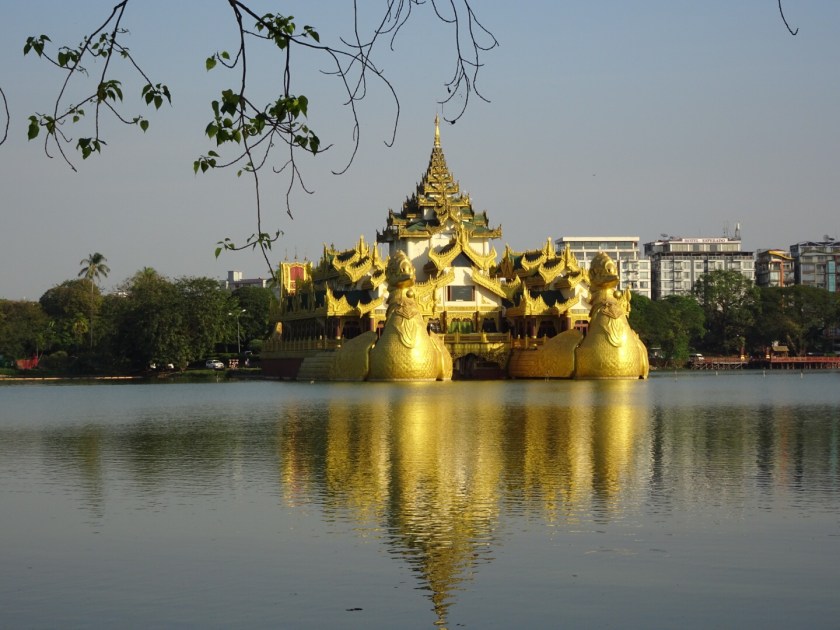
After that adventure we get back to the hotel for a short rest before meeting up with the rest of the group for the afternoon part of our tour. We start with a visit to Kandawgyi lake. Here we see the replica of the floating Karaweik palace which was built in the 70’s and resembles royal barges that the kings of Burma used to travel on the Ayayerwady river.

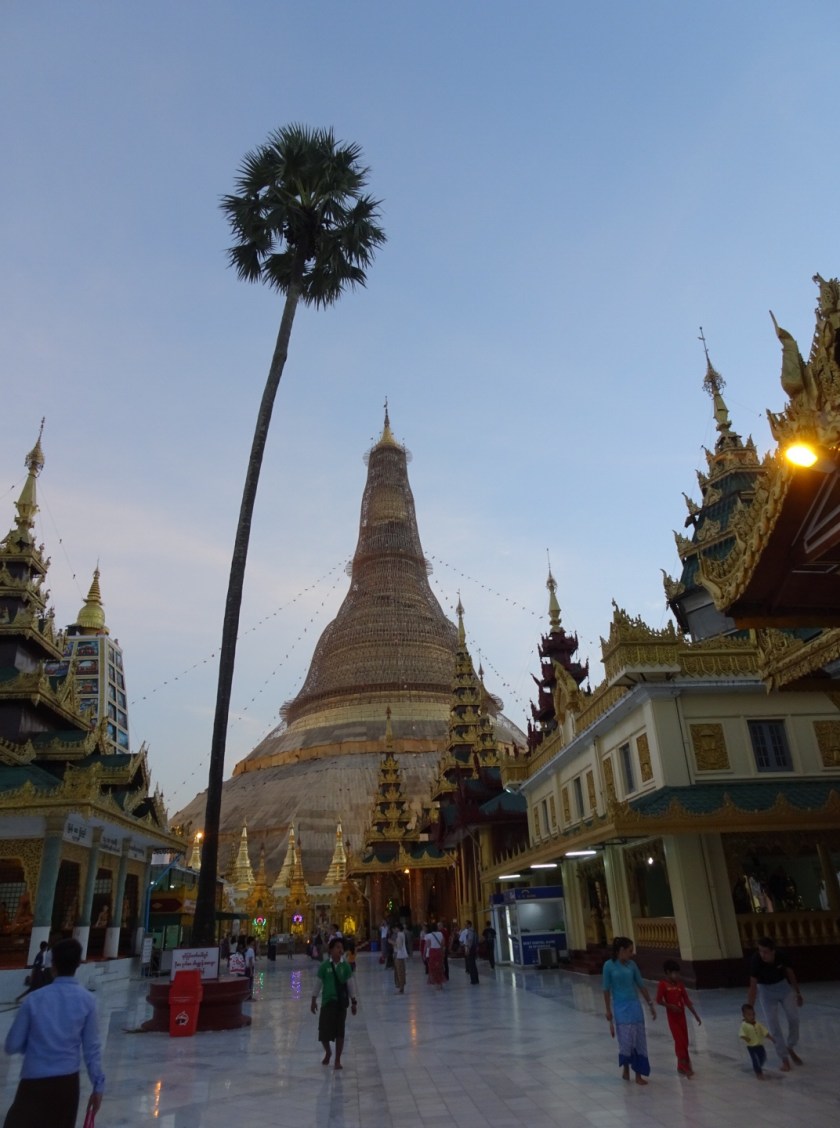
Next is the big draw… the shwedagon pagoda – this is on lots of “must see” lists and is being considered as a UNESCO world heritage site but hasn’t yet made it which I find hard to believe. It is insanely impressive and definitely the best complex of temples and Buddha’s I’ve ever seen. I’m thrilled. We walk around checking the various temples and admiring lots of Buddha statues.

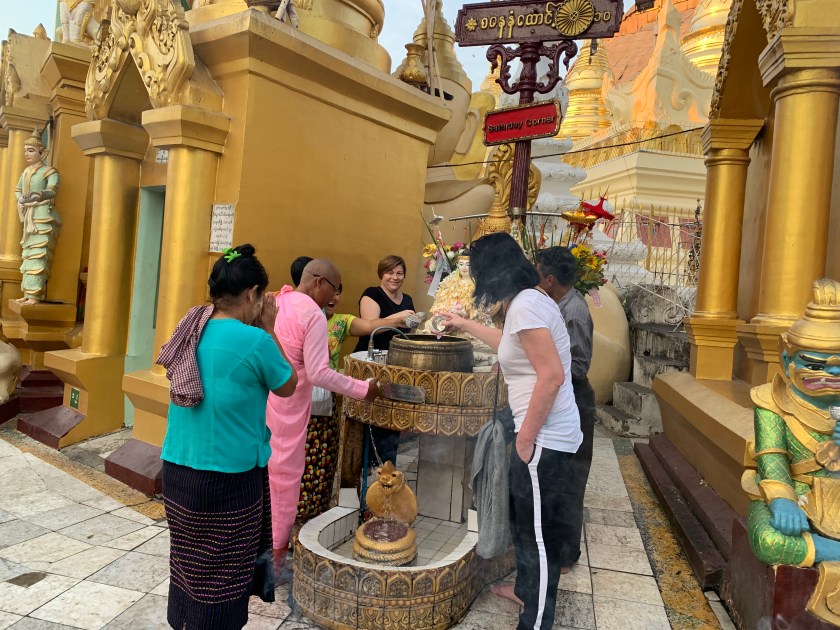
There is a “corner” for each day of the week and a tradition of pouring water on the statue for the day of the week you were born. While pouring the water you are supposed to make a wish.

Unfortunately we happen to be here when the main pagoda is being cleaned. It only happens every five years so we are a little unlucky. It’s gold gilded and studded with diamonds and gems but today it’s covered in bamboo scaffolding. It is said to hold eight hairs of Buddha and that there is a secret entrance that has been blocked up for years.

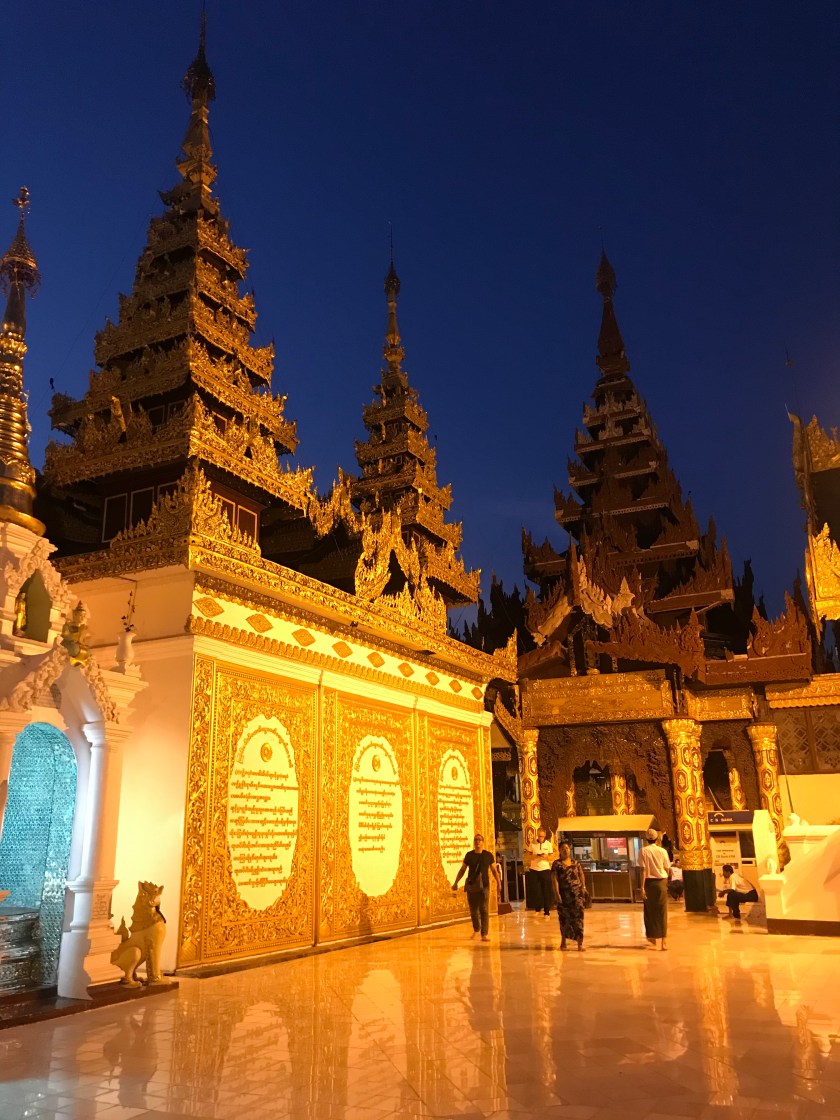
We stay at the complex until the sun sets and it is even more beautiful in this light.

It’s hard to walk away from this beautiful site and I continue to take photos until the last possible chance. I would love to return here and spend more time walking around as it’s so big you couldn’t possibly see it all in the hour and a half that we spent. But for now it’s goodbye and on to dinner.

Ni takes us to an outdoor local restaurant where we are the only tourists. The food is a mixture of Thai, Chinese and Burmese. I go for another spicey dish called kanchin which is from northern Burma and it’s very tasty. On the way back to the hotel he breaks the news that we have a very early start tomorrow morning which will mean a 4:30 wake up call so it’s straight to bed for us!

Here’s the Thing About Japan

  • Japan is made up of 47 prefectures or states.
  • The people are so polite and friendly. All the train staff give you a big smile and thank you when you show your ticket. They even bow and announce themselves when they come into the carriage and bow and thank you as they leave.
  • I can’t say enough about the people – they’re so considerate and want to help you and make sure you have what you need or get what you want. (Ok I’ll stop now!)
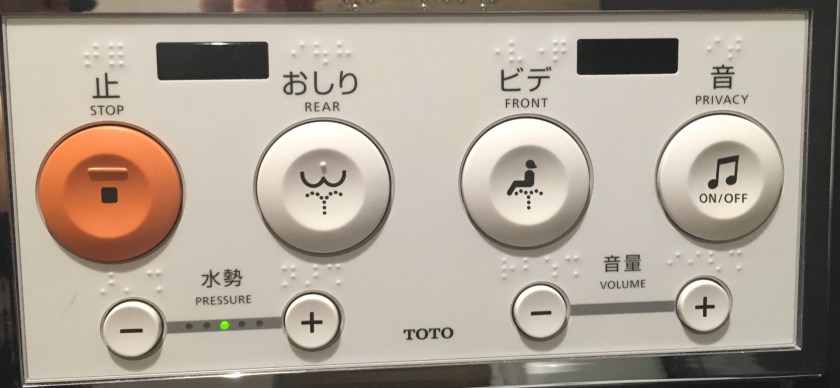
  • The toilets – WOW!! They’ve got to be the best toilets in the world. Even your most basic public toilet has a heated seat and then when you get to nicer ones in hotels and restaurants they have options for privacy which means sounds or music playing and an array of bidet type functions…. front, back spray, soft pressure, strong pressure… some of them even have dryers! No wonder the Japanese spend a long time in the bathroom!! Toilet control panel:
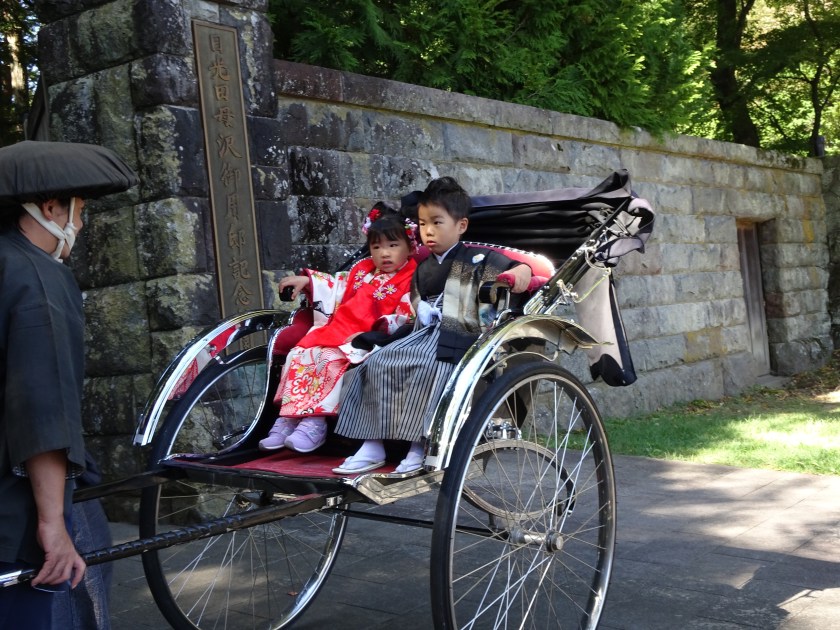
  • There’s a tradition for young kids to get a blessing at the temple when they are aged between three and six. They dress up in the beautiful traditional costumes and we saw quite a few on our travels
  • Some women wear the traditional kimono dress and it’s really striking when you see them walking around the bustling cities.
  • No one talks on their phone on the trains, it’s so lovely. There are actually announcements asking that you put your phone on silent and refrain from talking on them – love it! We did witness one lady answer a call while in her seat on the Shinkansen and the lady sitting beside politely tipped her and told her to go out in the hall between the carriages! 😲
  • There’s a lot of smoking but at least it’s in dedicated areas. You won’t see people walking down the street smoking – they stop and smoke in designated areas like bus stops on the side of streets or in rooms if it’s inside a building or on the train. There is however still smoking in bars and some restaurants.. yuck!
  • For such big cities with so many people it is oddly quiet.. cars don’t seem to beep their horns.
  • You can drink the water… one of the few Asian countries where it’s safe for us to do so.
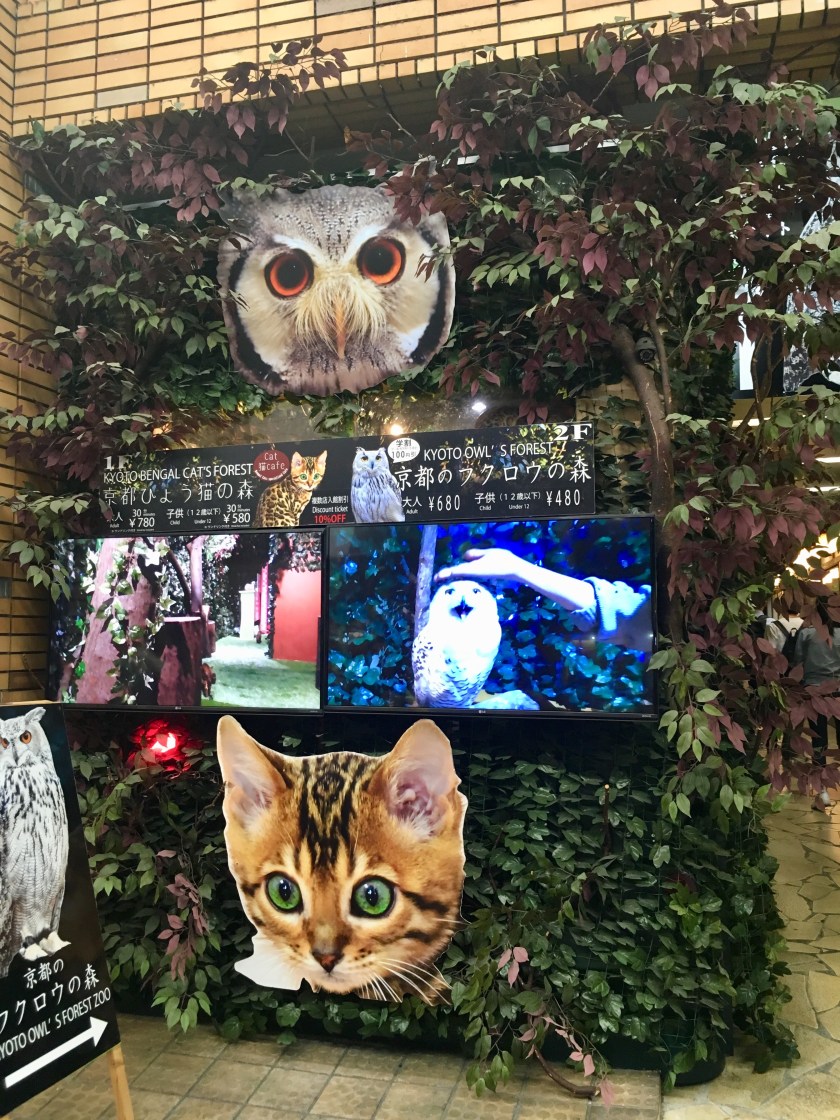
  • Cat and owl cafes are a thing here. You actually pay to go into a “cafe” and play with a cat or rub an owl…yuck!
  • There are also a lot of shops selling dogs and dog friendly restaurants where you see dogs sitting on the chairs while their owners have their meal!
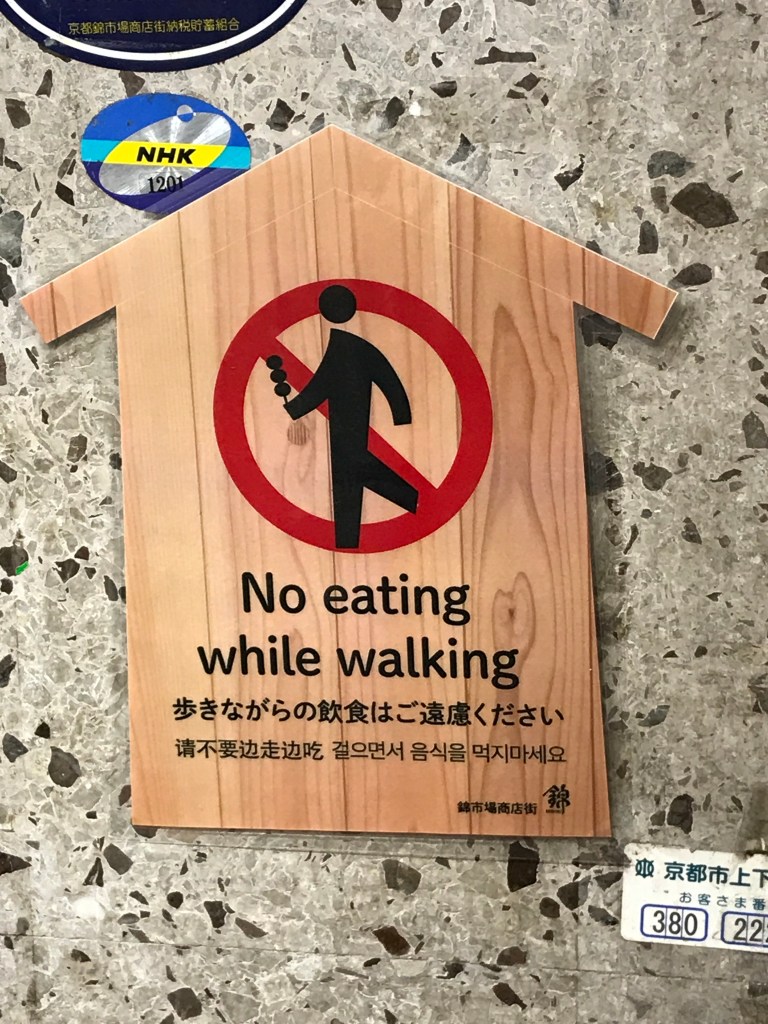
  • It’s considered rude to eat or drink while walking. All of our guides moved at a very relaxed pace and everyone seems to stop for coffee or tea – no drinking it on the go!
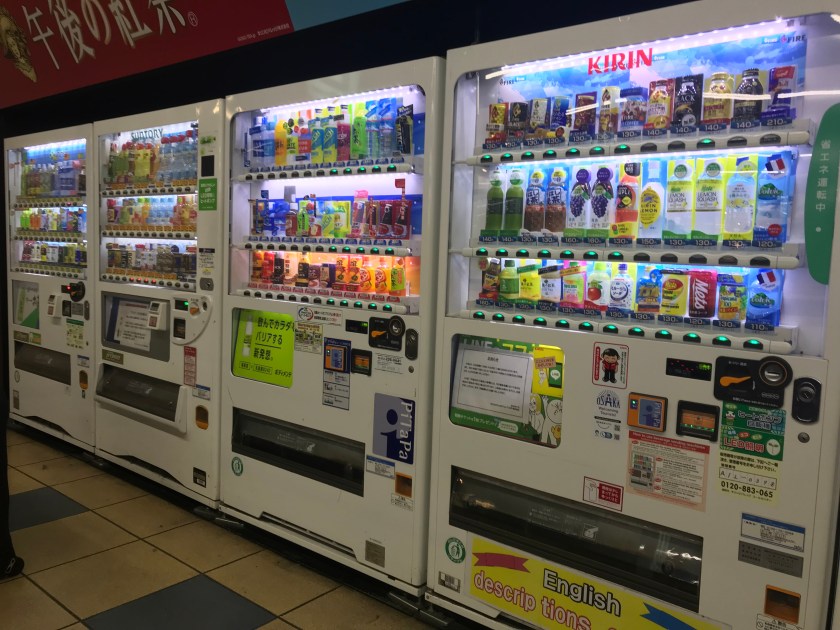
  • You can get almost anything from a vending machine including a hot tea or coffee or a beer. We once got chips… not crisps…. chips! (Dodgy microwaved ones but still!)
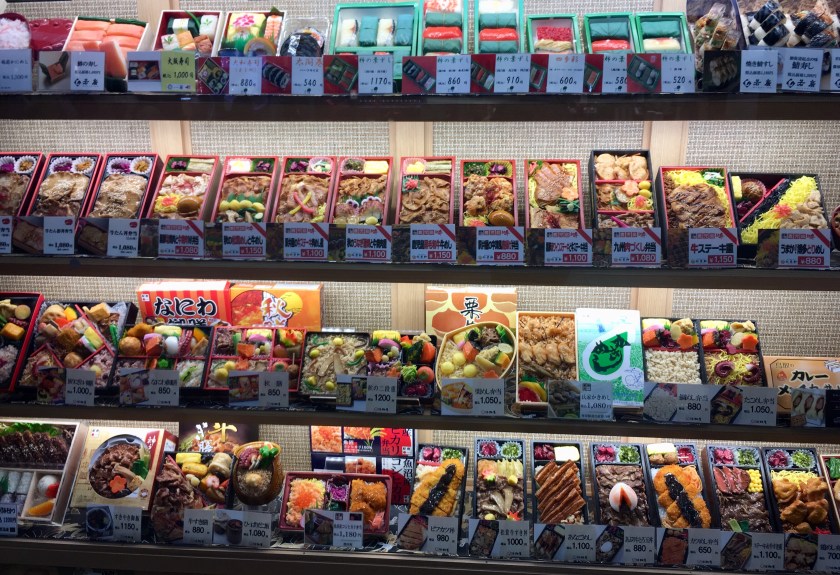
  • The window displays of plastic food to show you what you can order are amazing:

  • In the train stations there’s often very sudden, loud announcements and it really does sound like the announcer is angrily shouting at everyone.
  • Sometimes there’s a service charge built into your restaurant bill (mostly higher end restaurants) but not regularly. Tipping is not the norm and you’re expected to take all your change, even the coins. 
  • You cannot enter a home or temple or ryokan with your shoes on, they must be left outside. In the ryokans you’re given indoor slippers for getting to your room and these are not allowed to be worn in your room. There are also different slippers to be worn in the bathroom…. it’s a lot of on/off with footwear to remember!
  • The taxis in Kyoto are distinguishable by what looks like a shamrock and I’m wondering if there’s an Irish connection but apparently it’s Japanese clover.
  • Taxi doors open and close automatically. It’s hard to get used to. The door will automatically open to let you in and once inside you just sit there and the driver will hit a button for it to close. On arrival at your destination it’ll automatically open to let you out!
  • There’s nowhere to put your rubbish… very few bins other than plastic bottles by the vending machines and yet there’s no litter.
  • I was on roughly 25 trains and not once was there any delay. They are never late. The trick is to be lined up at the right carriage before you get on. If you’re not at the right reserved carriage or an unreserved carriage the trains move so fast it’s difficult to move with baggage to get through the carriages
  • You will see swastikas on hills or on maps. They represent an area for a temple or holy site.. not anything fascist.

  • The Japanese for yes is “hi” so you hear this a lot.
  • I don’t think I’ll ever forget the following two dates which I heard and read so many times on this trip. 6th August 1945, the first atomic bomb dropped on the city of Hiroshima. 9th August 1945, the second and hopefully the last atomic bomb ever, dropped on the city of Nagasaki.

Japan Part VIII : One Final Night in Tokyo

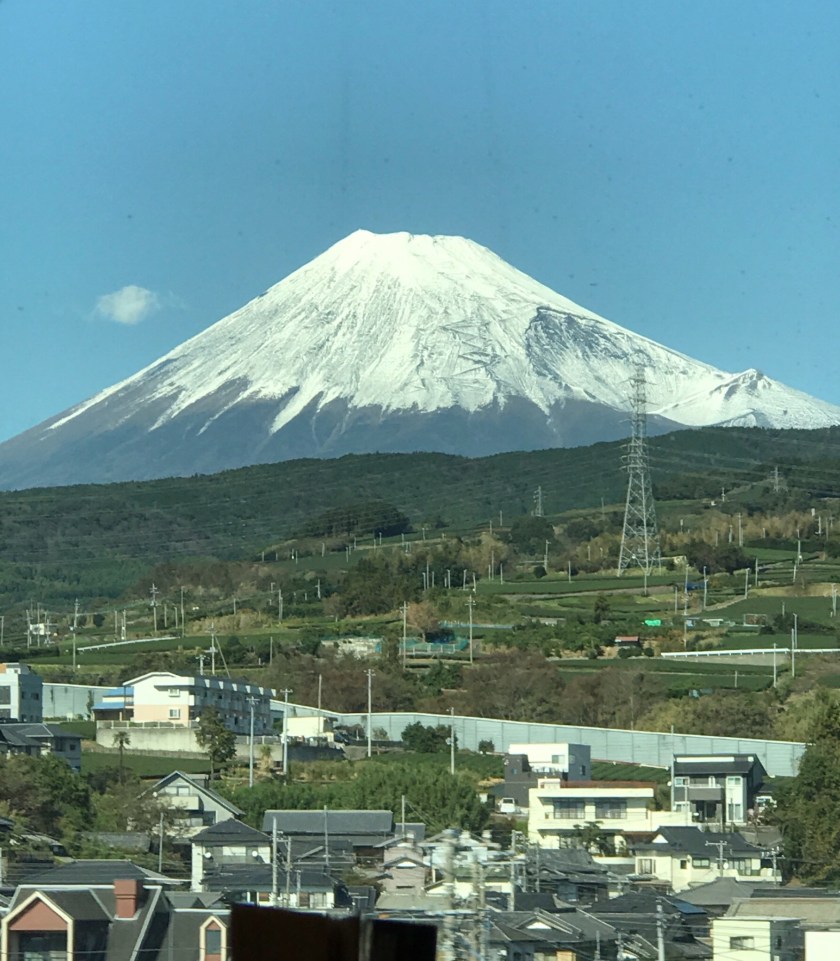
On the train from Hiroshima back to Tokyo we get an even better view of Mt. Fuji than we did leaving the city nearly three weeks ago… love seeing this again :

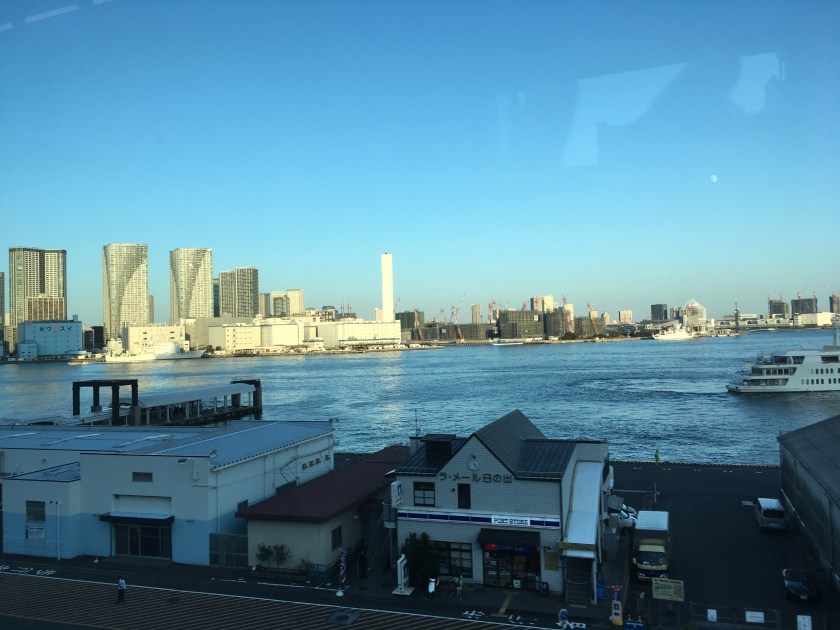
I leave Megan at the train station and manage very successfully (if I do say so myself) to get to my hotel. Delighted at my first lone journey in the big smoke I decide to head off for the evening. I get the monorail (Yurikamome) to Odaiba which is an artificial island in Tokyo bay. The train travels over the rainbow bridge and there’s great views of the bay.

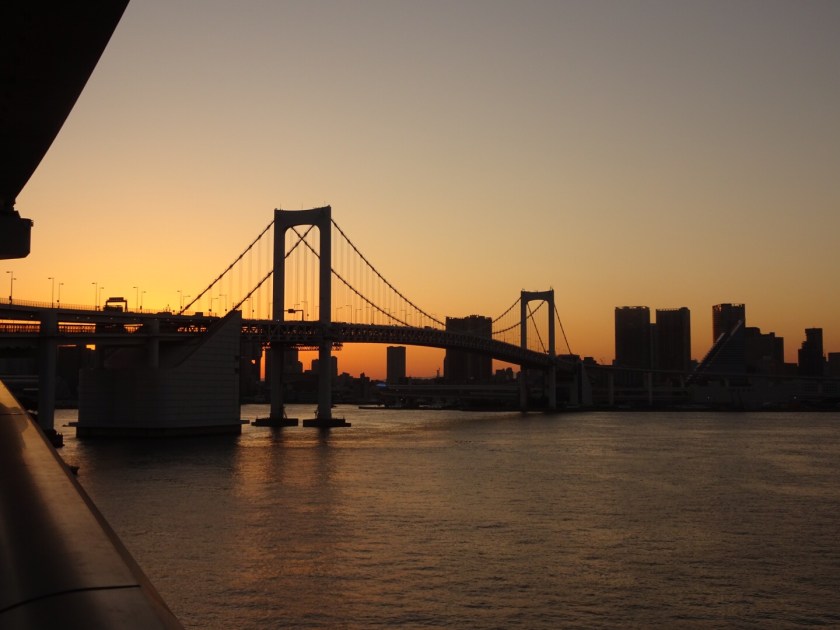
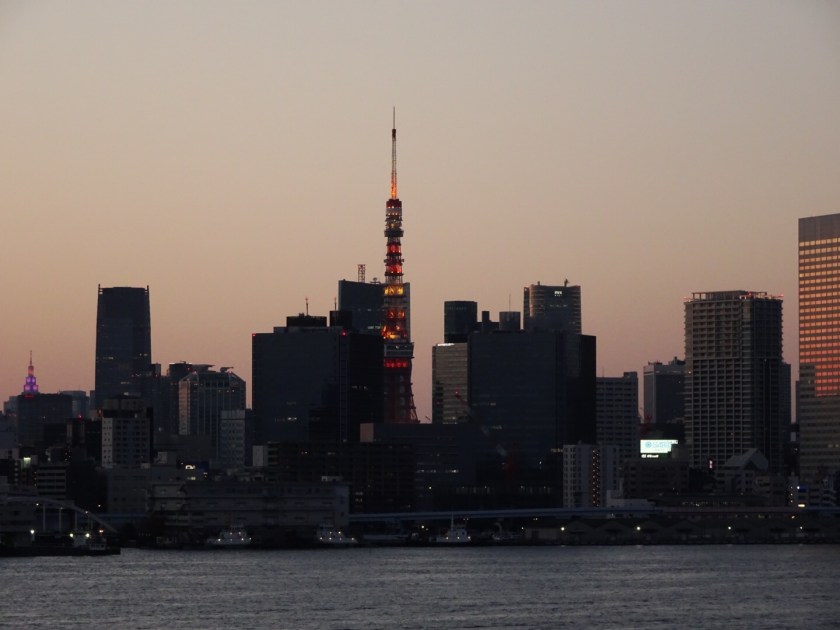
When I get to Odaiba there’s a walkway along the beach toward the rainbow bridge. It’s a popular spot for picnics and sunset walks. I take the bridge walkway on the north side, looking back on the city as the sun is setting

Tokyo tower is just starting to light up….

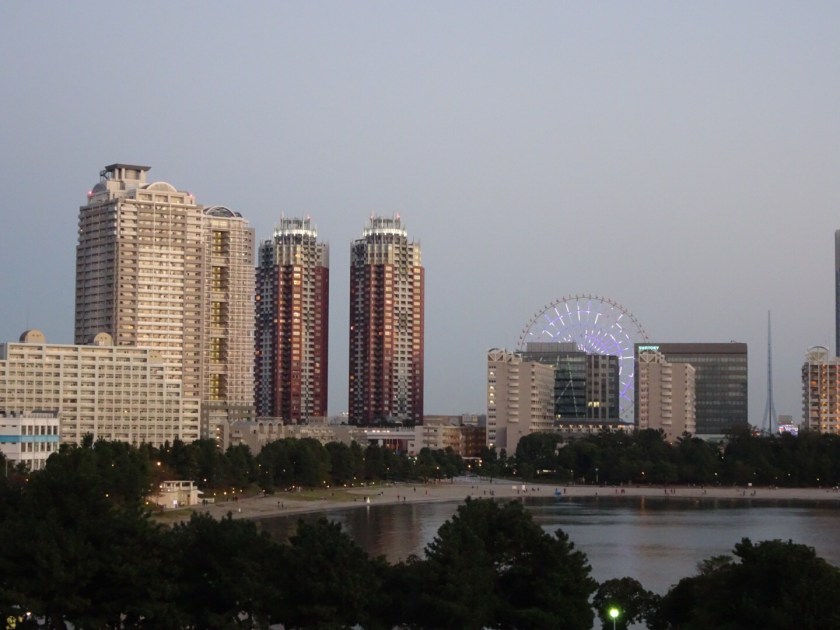
I walk back on the south side for a different view looking back to the beach and Odaiba island.

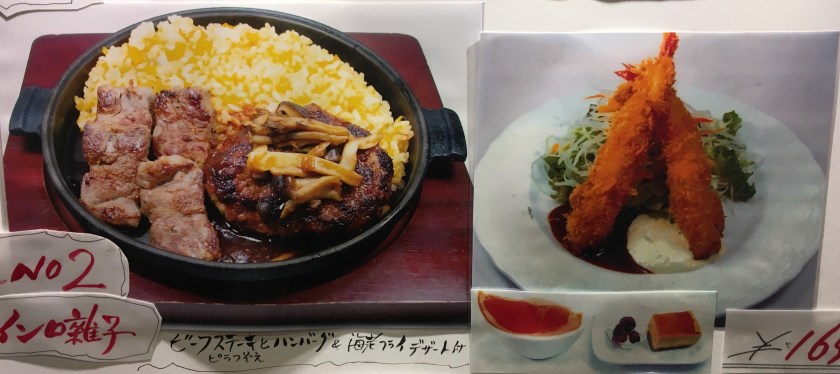
Ready for dinner, I go to a shopping and restaurant complex called Decks and order from the picture in the menu!

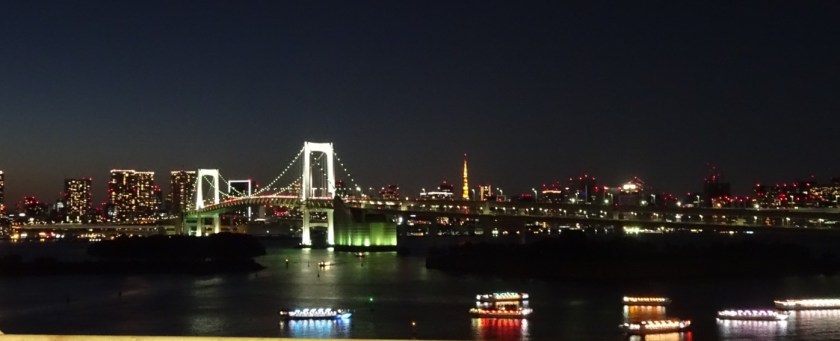
It’s tasty enough for my final Japanese meal and I have one last glass of wine but the highlight of this evening is looking out at the view:

I’d like to tell you that I got myself back to the hotel without a hitch but alas it’s not the case. Having walked around in circles a little bit, two young ladies helped me find the hotel and insisted on walking me to the hotel building – they are so kind if you ask for help. 😀

So that’s the end of my Japan adventure. The past three weeks have been fantastic and it’s hard to pick a highlight. I’m delighted I’ve got to see this country and would happily return here in the future.

Japan Part VII : Nagasaki and Hiroshima

Our last stop on the island of Kyushu is Nagasaki. Nagasaki sits on the northwest coast and is a harbour city with lots of hills. We arrive by lunchtime and have a list of places to tick off our list. We start of course, with lunch, this time at a famous Chinese restaurant called Shikairo. This restaurant is considered to be the place where champon (a signature local ramen dish) was invented. It’s really tasty and we also check out the small museum they have, showing the history of the restaurant from the late 19th century.

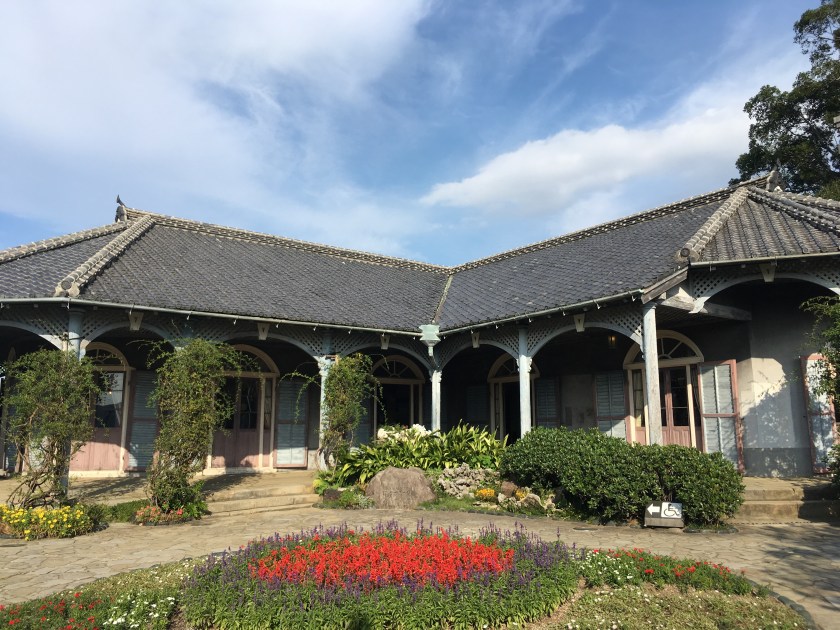
Moving on to our list of must-see’s we start with a trip to Glover Gardens which is an open air museum of western houses built for foreign merchants in the 19th century. Thomas Glover was Scottish and came to Nagasaki at the age of 21. He is considered as the man who brought western technology (such as mining and shipbuilding) to Japan and therefore a very important historical figure. The Glover house is the oldest western style wooden building in Japan and has recently been listed by UNESCO as world heritage site. It was just far enough away from the hypocenter of the atomic bomb not to get damaged (more on that tomorrow).

A very interesting side story on Thomas Glover is that Puccini’s Madame Butterfly, which is set in Nagasaki, is actually modeled on the story of Glover and his Japanese wife (or possibly another woman who bore him a son.. the story got a bit confusing). She was known as “Madame Chrysantheme”. There were some interesting exhibits regarding the opera when it was performed in Nagasaki by a famous Japanese opera singer, but it was all in Japanese so we couldn’t figure it out. We did see an original signed score by Puccini though.

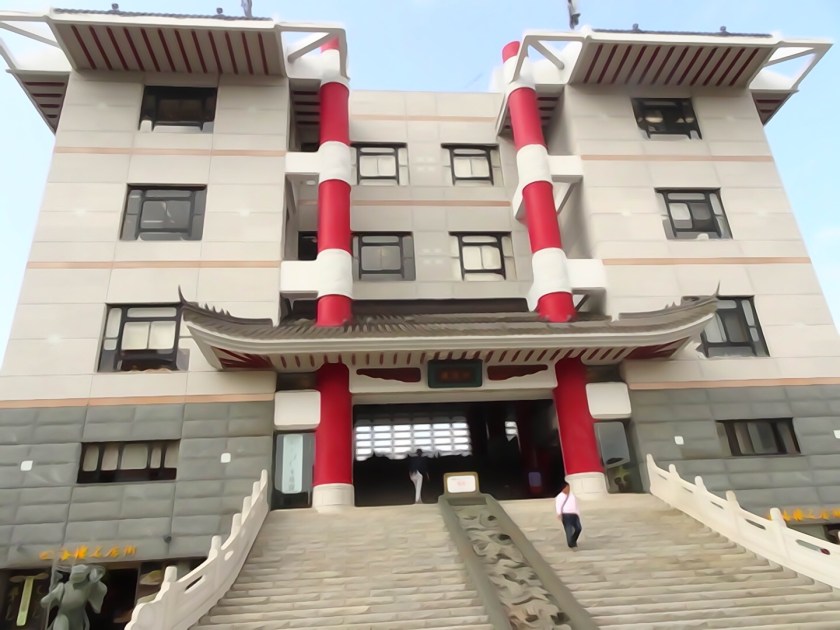
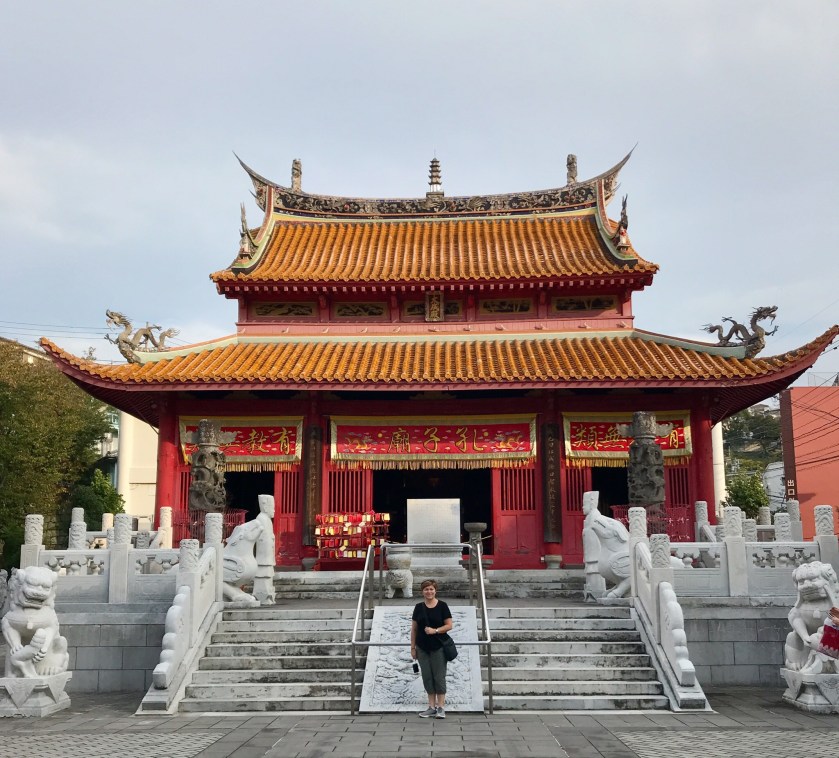
Our next place to visit is the Confucius shrine:

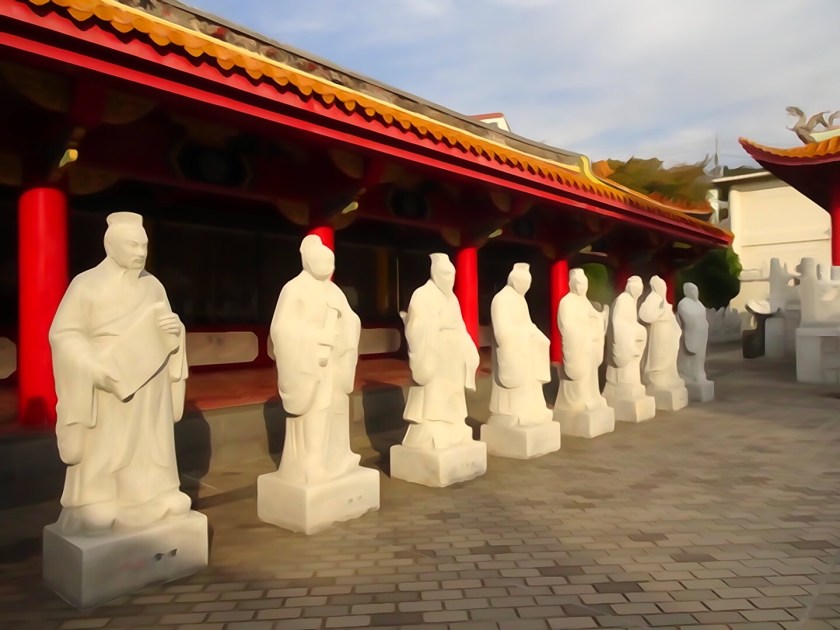
I love this place. Lest we forget, Confucius was a teacher, philosopher and politician and he really did have a lot of wise words to say. Every so often it might be good to look up a few of those. One of my favorites is “real knowledge is to know the extent of ones ignorance”. Love it!! The temple is flanked by seventy-two sages who at some point were students of Confucius.

As the sun goes down we make our way to the Ropeway cable car up Mount Inasa for a wonderful view of the city… allegedly voted third best in the world (alongside Monaco and Hong Kong) in 2012!!!! 😏

We finish the evening with yes you’ve guessed it, wine and of course food, this time at an outdoor place on the water called “delicious restaurant attic” – how could you pass by with a name like that!

Day 2 we have a guide and we hope to get the low-down on Nagasaki. Yukiko doesn’t disappoint. She not only gives us the history of the places we visit but she answers all sorts of questions we have and tells us all sorts about Japan and the Japanese people. I think we saved the best guide til last.

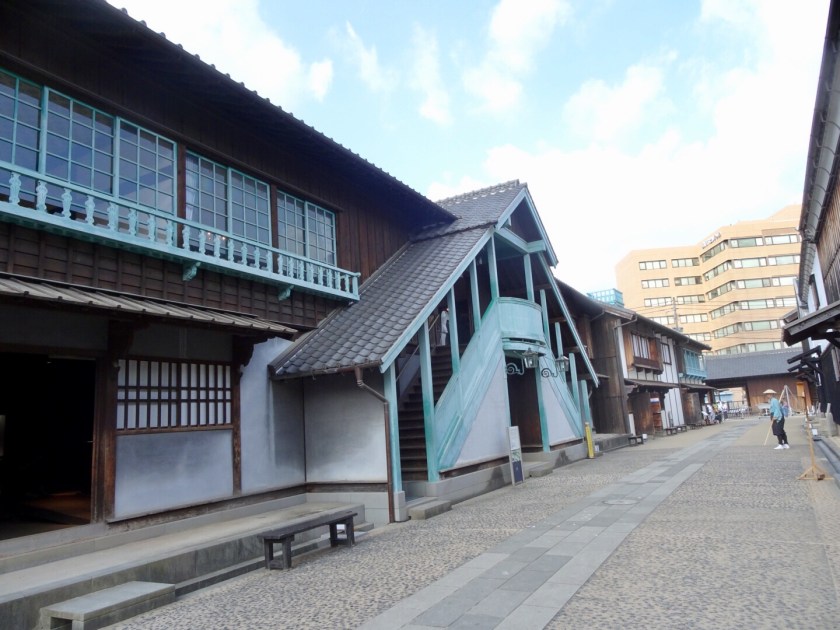
We start by visiting Dejima which was an island built in 1636 to isolate Christians and restrict the spread of Christianity. It ended up being a place where the Dutch and Portuguese managed foreign trade in and out of Japan.

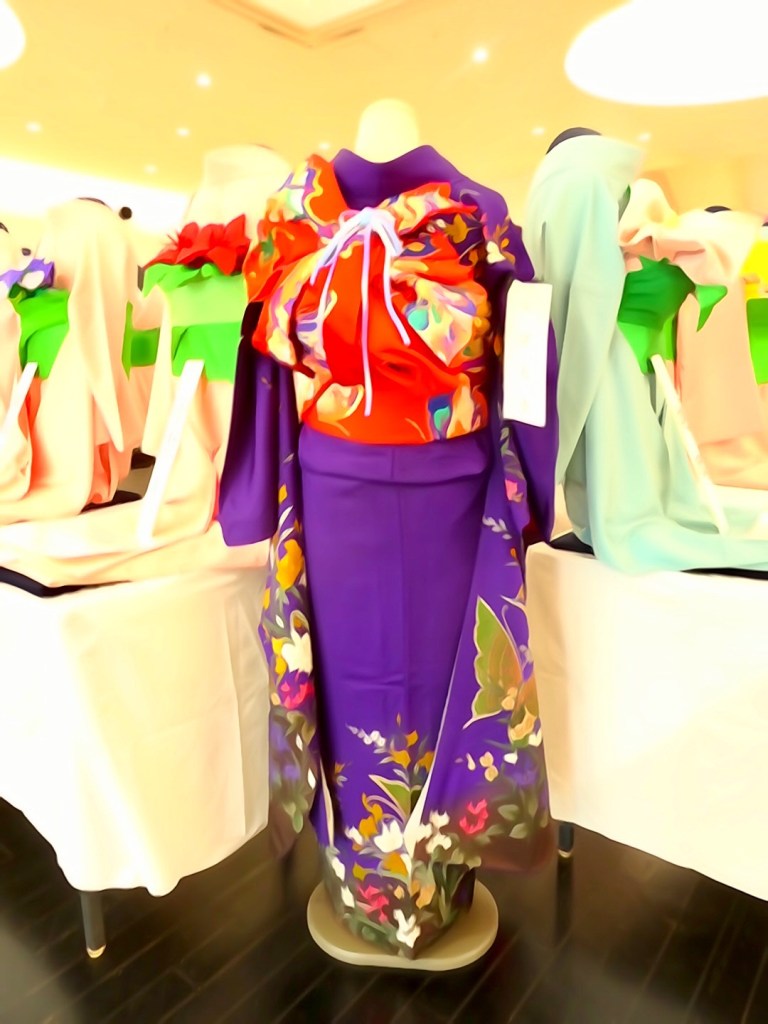
Next we visit the Nagasaki Museum of History and Culture to learn more about old Nagasaki. As we enter there’s a display of kimonos which is amazing:

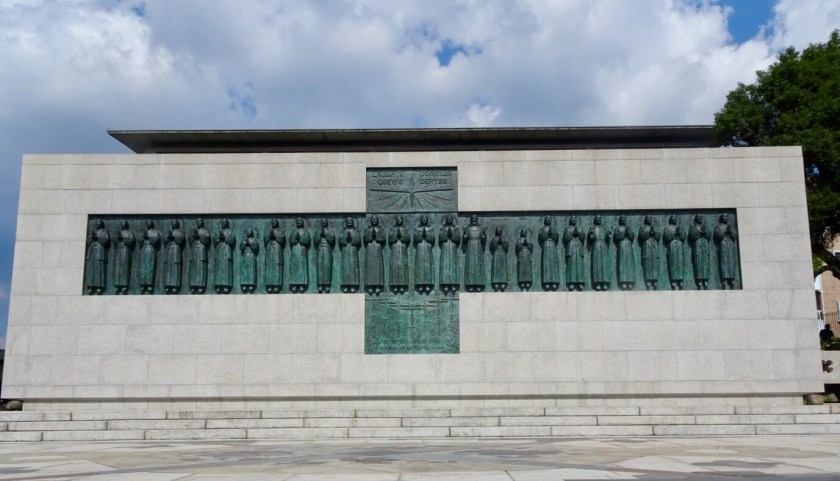
From here it’s a quick stop for lunch in China town and a quick stop at the site of the twenty-six martyrs monument. In 1597 these 26 Christians were walked here from Kyoto and crucified on this hill to act as a warning to others against the Christian faith. The monument was built to commemorate their canonization as catholic saints.

The afternoon is dedicated to the WW2 history. We start by visiting the Nagasaki Atomic Bomb Museum. It’s really well laid out and gives a timeline of the key activities in WW2 as well as some background on other conflicts building up to it. It explains how the atom bomb exploded and shows many pictures of Nagasaki before and after. It’s very factual and there’s no sense of blame or hatred just an obvious appetite for peace. One of the striking things is how quickly the city built itself back up. Within just ten years the city was starting to flourish. Walking around now we didn’t see any homeless or beggars… you’d wonder how some countries can make things happen where others cannot.

I learned quite a bit about how the immediate burst of heat, light and radiation affected people and buildings when the atomic bomb exploded and one really fascinating thing was the shadows that it created. Apparently the intense heat and UV radiation that vaporized both people and objects, depending on proximity to the hypocenter, left shadows behind.

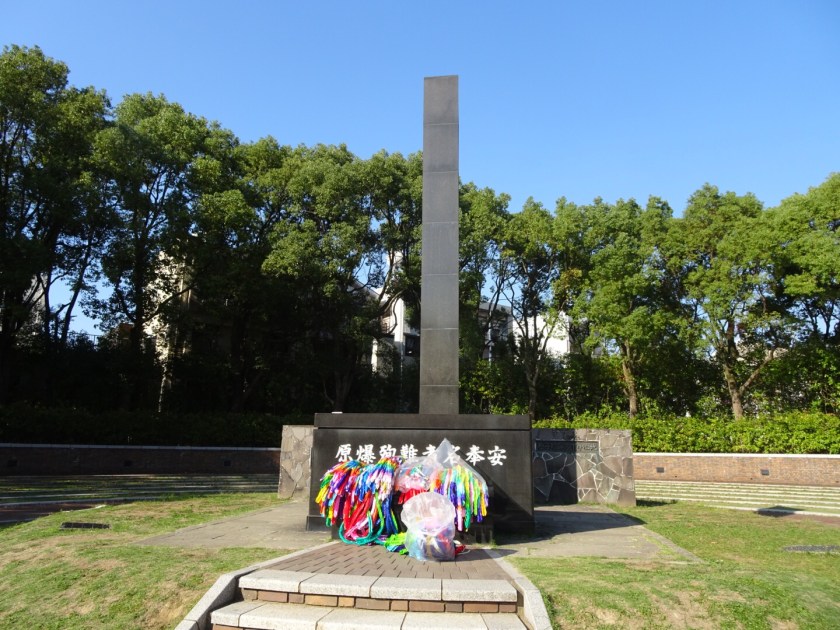
It’s a short walk from the museum to the peace park where a monolith draped with garlands marks the exact spot (i.e. hypocenter) where the bomb went off:

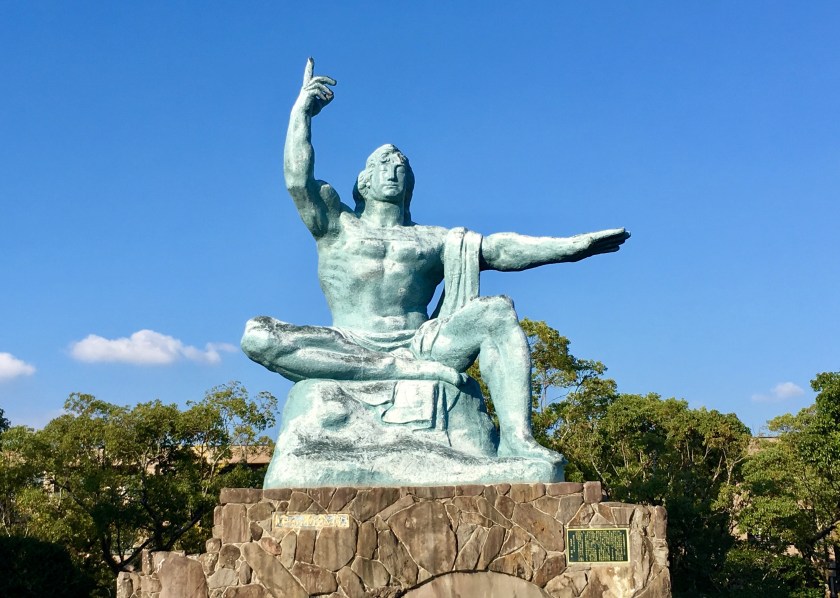
We walk around the gardens and see many monuments that have been donated by countries all over the world. Ultimately we arrive at the peace statue with its right hand pointing skywards (warning of the bomb) and the left hand stretching out horizontally to symbolize world peace.

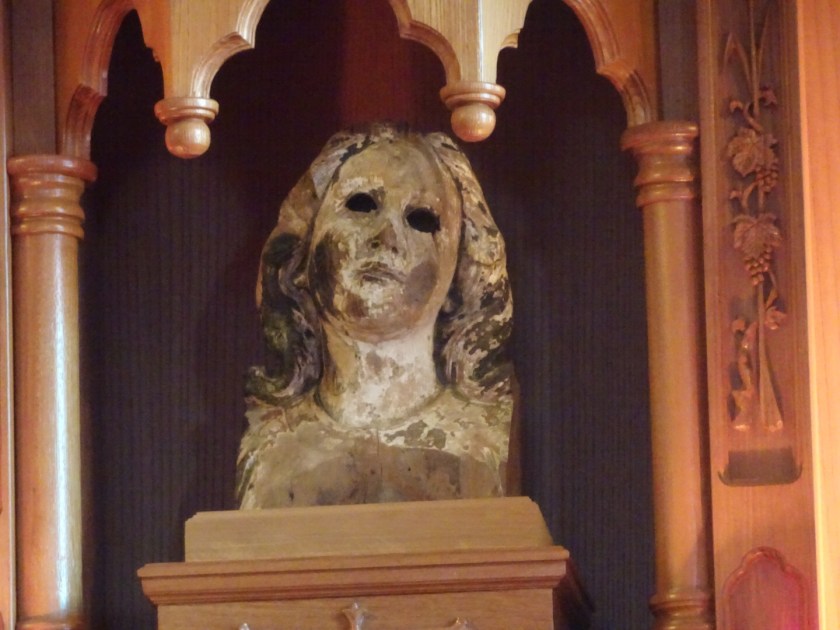
After the peace park we walk to Urakami cathedral which houses a statue of our lady which was damaged in the bomb. There’s a replica in the main church but our guide gets us into a small chapel to see the actual remain.. it’s quite eerie:

It’s been a full day and we’re ready to switch from somber thoughts to a lighter mood.

It’s a Chinatown dinner for us tonight which works out surprisingly well as we stumble into an Italian!!! Strange how that happened but we go with it as it’s cozy and they have decent wine!!

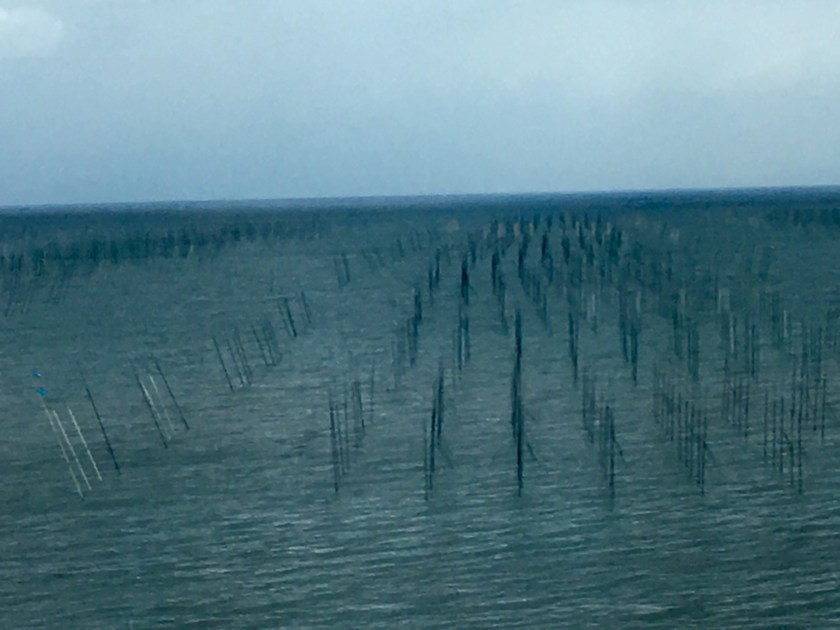
Next morning we set off for Hiroshima (back on the island of Honshu), the town famous for having the first atomic bomb hit in 1945. (If I didn’t mention it already Nagasaki was the site of the second bomb, three days after Hiroshima). Two days in a row of WW2 history but it has to be done when visiting these places. It’s a fairly scenic train journey and along the coast we see what I think are fishing poles…

Yet again we arrive at lunchtime and we decide to go for the Hiroshima style okonomiyaki pancake… aka obiwankinobe! It’s quite different to the one we had in Kyoto and is served on a hot plate in front of us. They give us a spatula to cut and then eat it from. It’s quite an experience

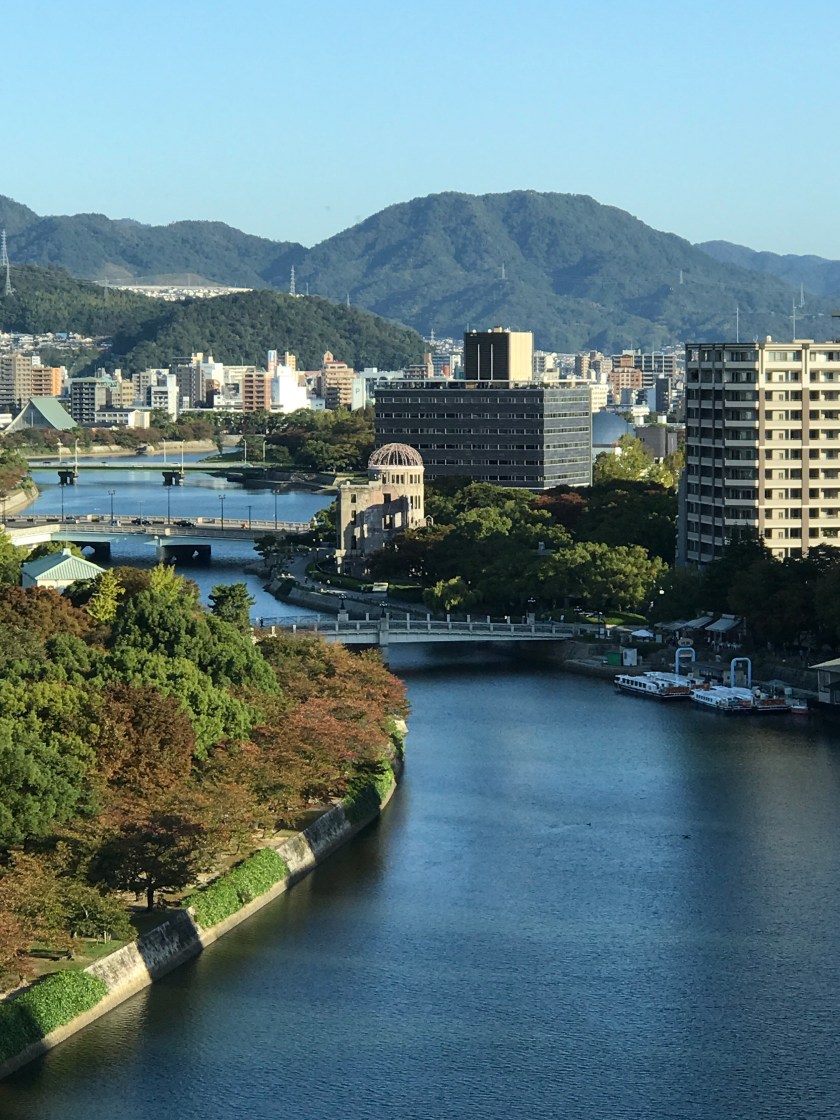
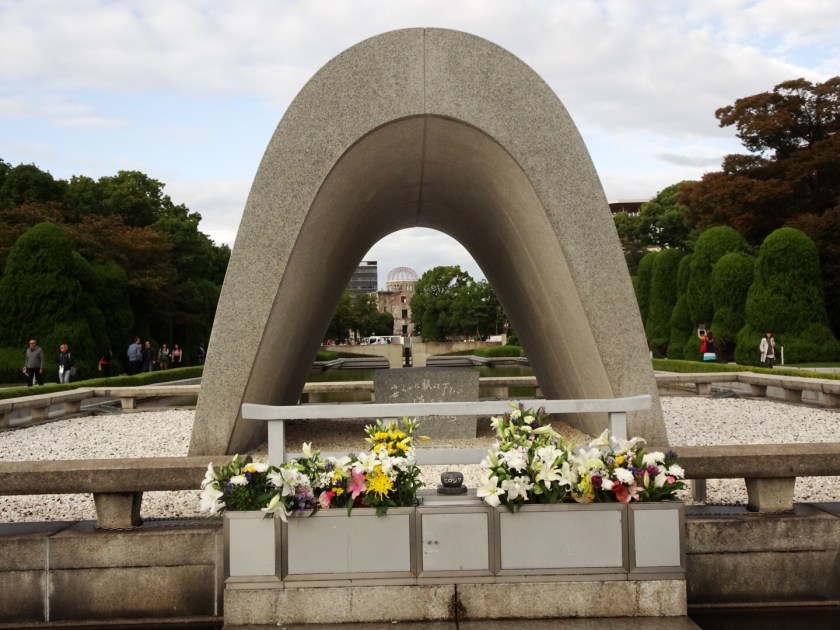
Bellies full (again!) we head toward the peace park. The official Hiroshima Peace Memorial is known as the Atomic Bomb Dome or Genbaku dome. This was a government building that was devastated during the atomic bomb but part of the structure remained standing. Because of its proximity to the bomb exploding (150 metres away) everyone in the building was killed instantly. The building was the only thing left standing among the ruins and although it was a controversial decision, it was preserved as a reminder of the devastation caused.

We have a great view from our hotel of the city and the dome:

We continue walking through the peace park where there are multiple monuments (as in Nagasaki)

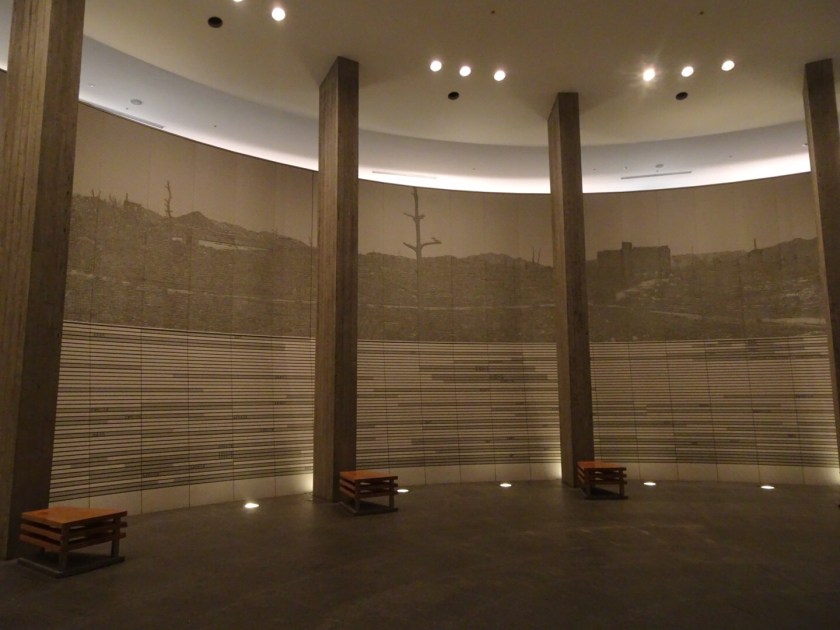
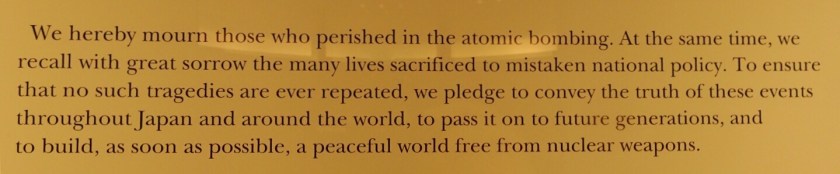
We spend some time in The Hall of Remembrance which is a very powerful exhibit in memory of the victims. 70,000 people were killed instantly and by the end of 1945 it was as many as 140,000. In this hall there’s a 360 panorama of the bombed city as seen from the hypocenter (which was a hospital). It’s made with 140,000 tiles representing each victim and on the bottom are the names of the bombed neighborhoods, placed lower on the wall the closer to the hypocenter. It was hard to capture on camera and was definitely a place to quietly contemplate

From here we visit the museum and learn more about the specifics of the bombing and some of the personal stories. As with Nagasaki the over arching message is to try to live in a world of peace without nuclear weapons …

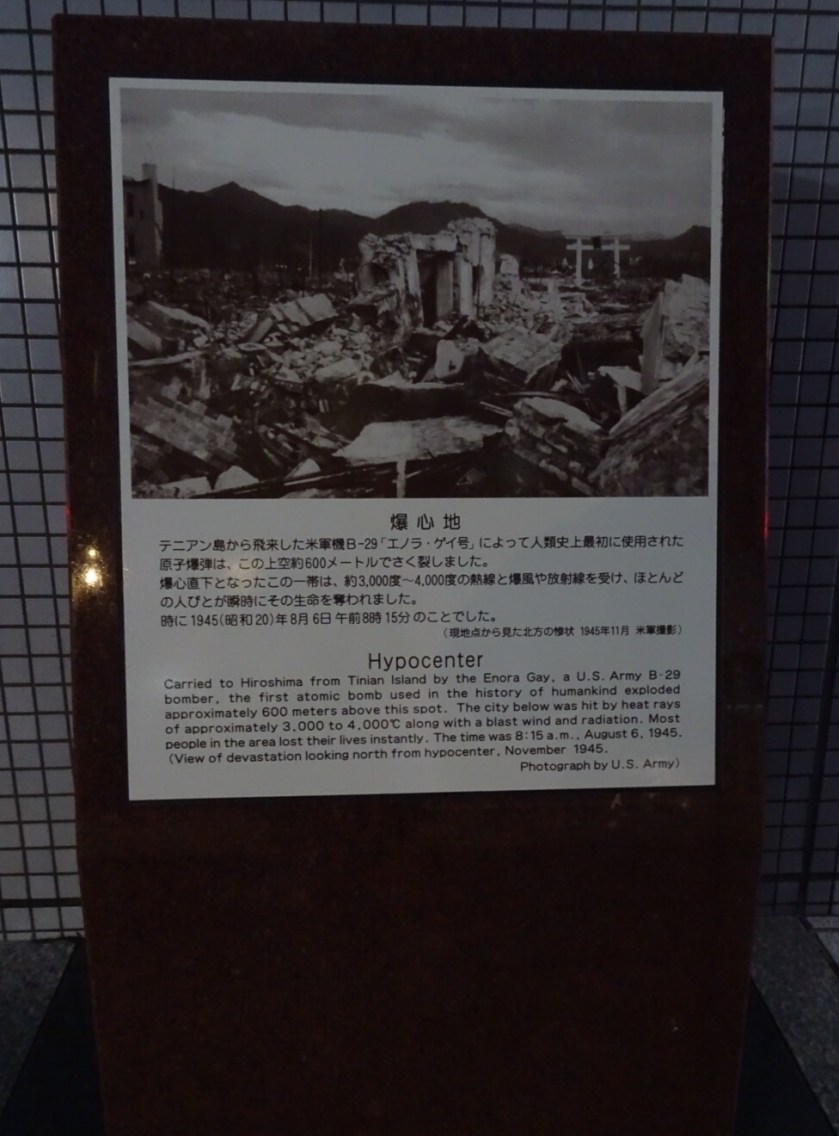
We walk to the hypocenter of the bomb, a few metres away and find it’s marked with a small plaque on the side of a backstreet.

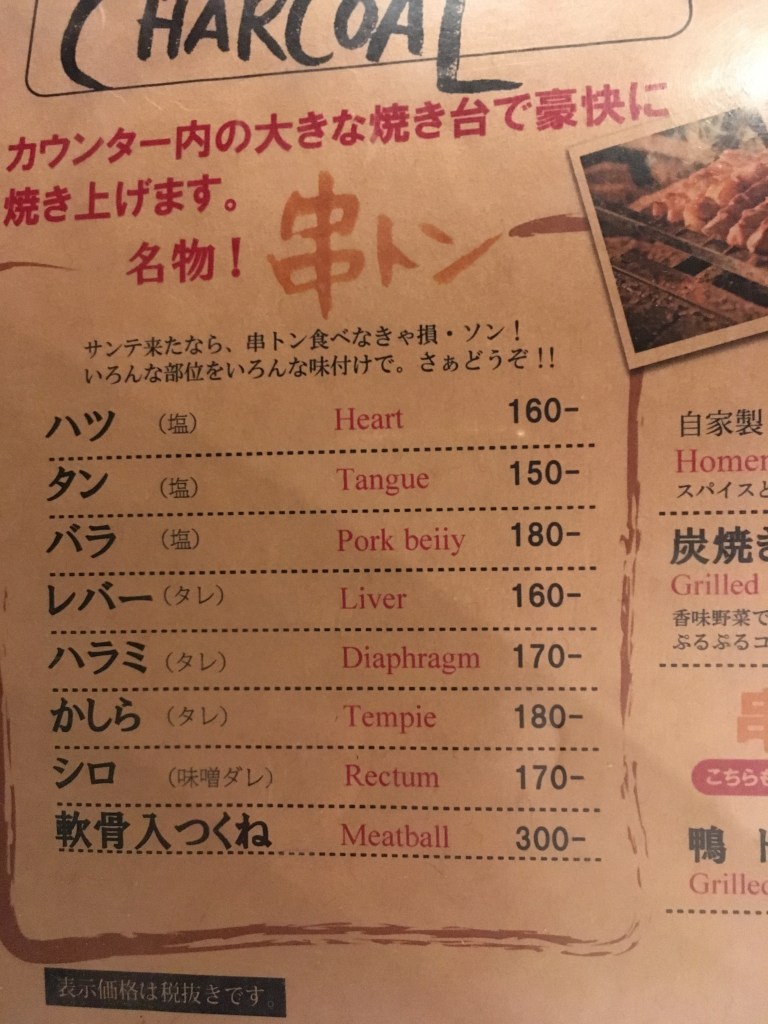
It’s quite tiring on your brain and emotions so we call it a day. After a very successful spot of shopping (the Japanese backpack is a must-have here) we go into a restaurant not far from our hotel and it seems we’ve stumbled into a really cool local spot. The wine is great and we order tapas style from a very interesting menu. All of the following are from the pig… we were only brave enough to try the meatball!
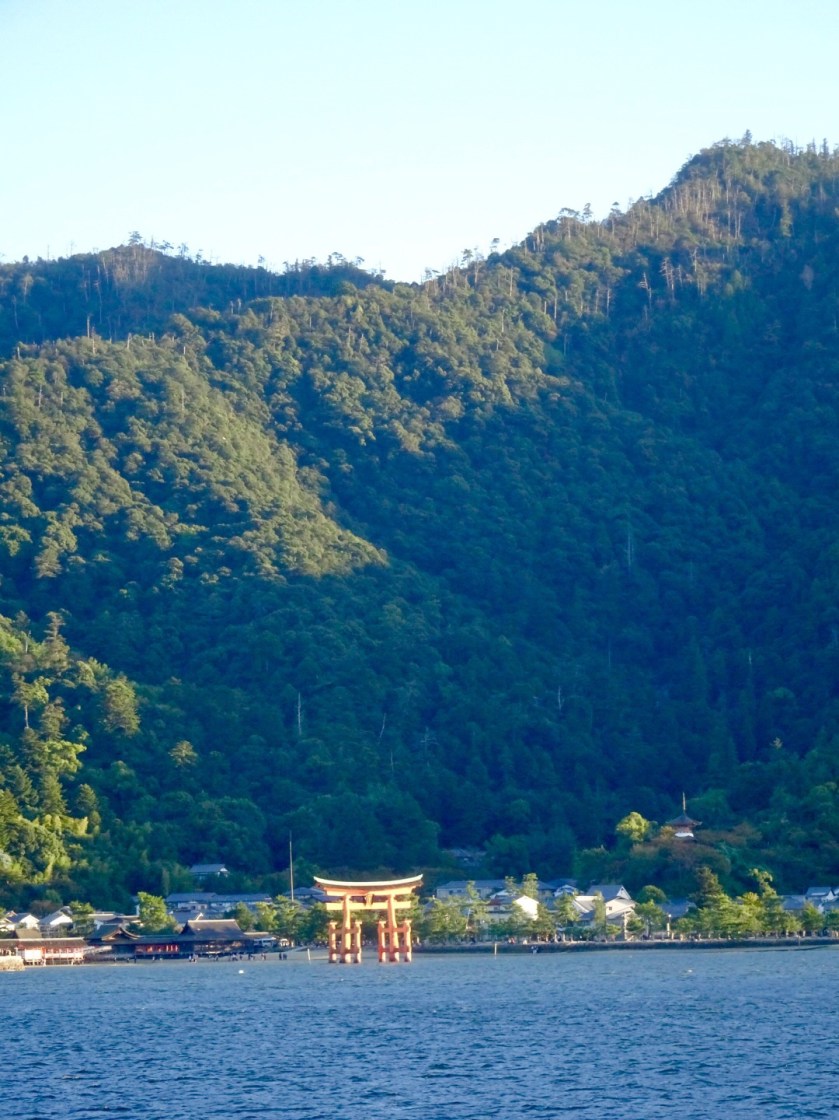
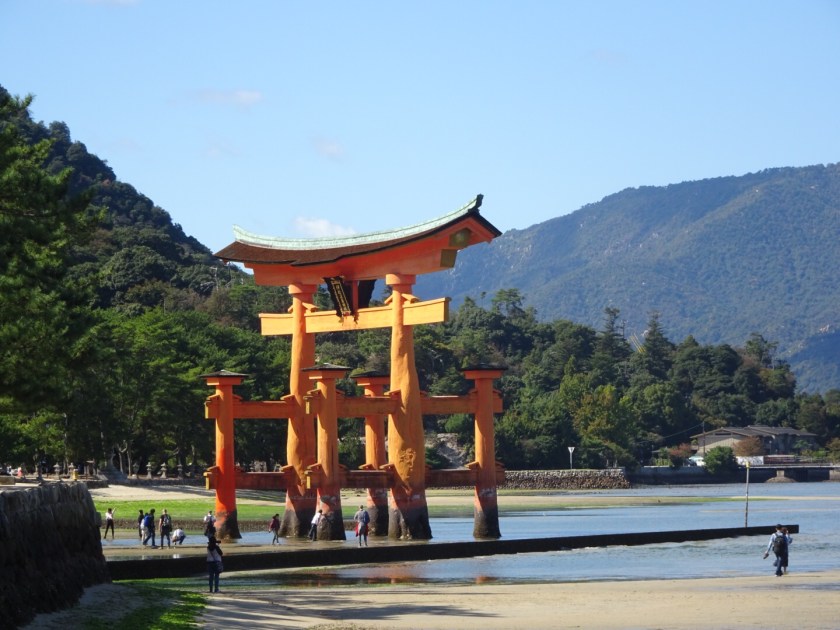
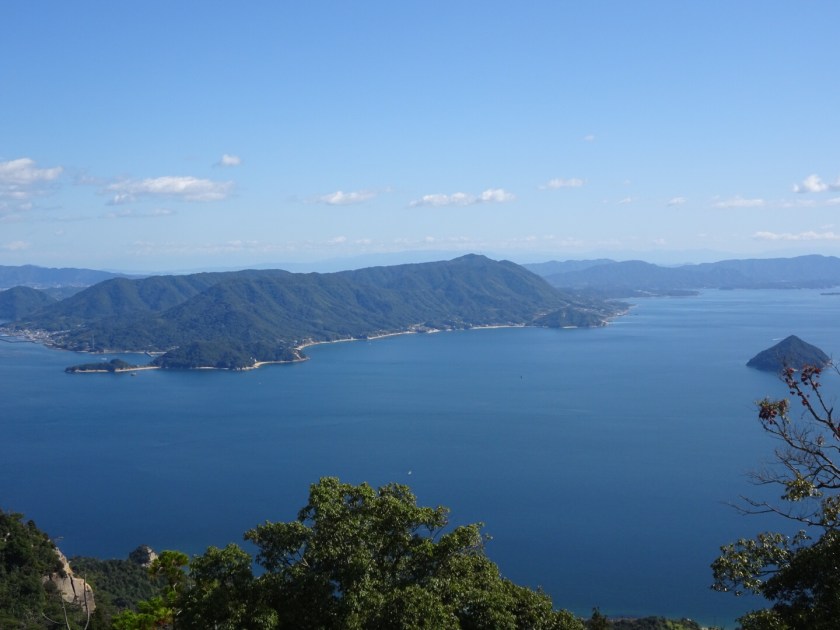
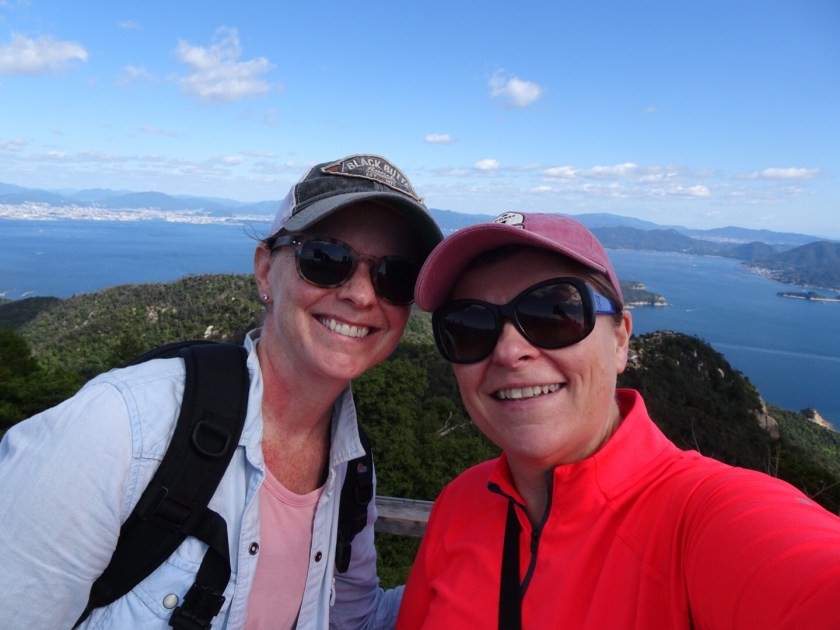
Our second day in Hiroshima is dedicated to visiting Miyajima island and hiking to the top of Mount Mizen. We set off with a packed lunch from the bakery and take a half hour train journey to the ferry. From the ferry we get a good view of the famous O-Torii gate which sits in water and depending on the tide can look like it’s floating
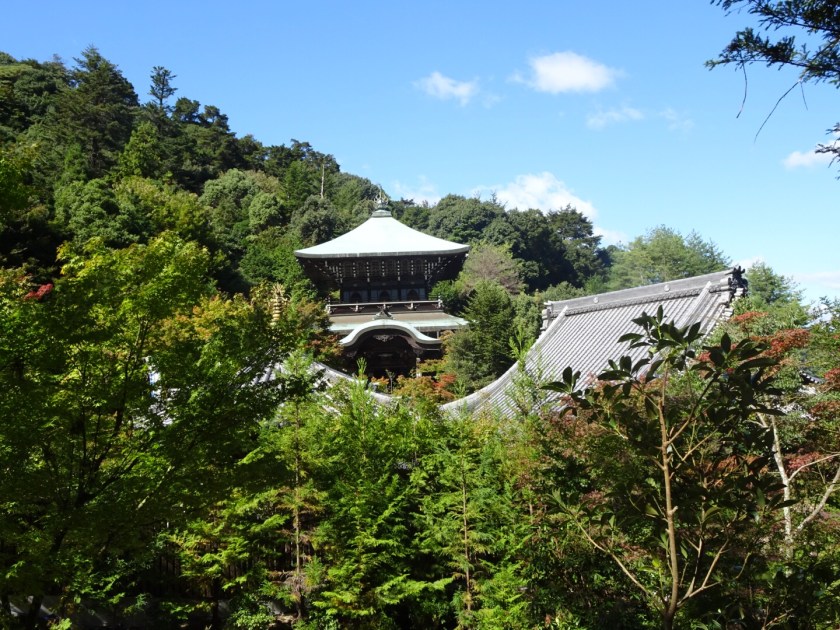
We visit Itsukushima shrine, the five story pagoda and Daishoin temple before tackling the steep climb up Mt Misen.
It’s a lovely hike with beautiful views from the top:

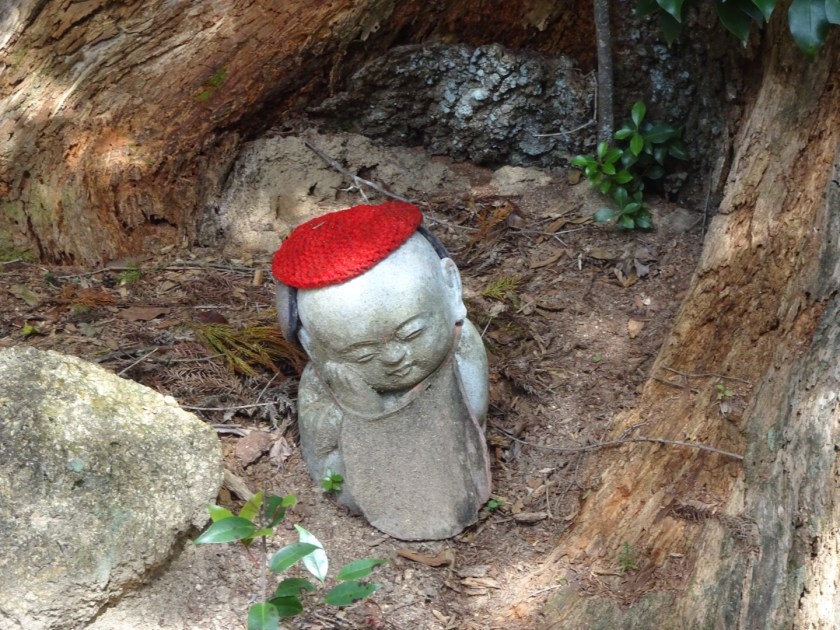
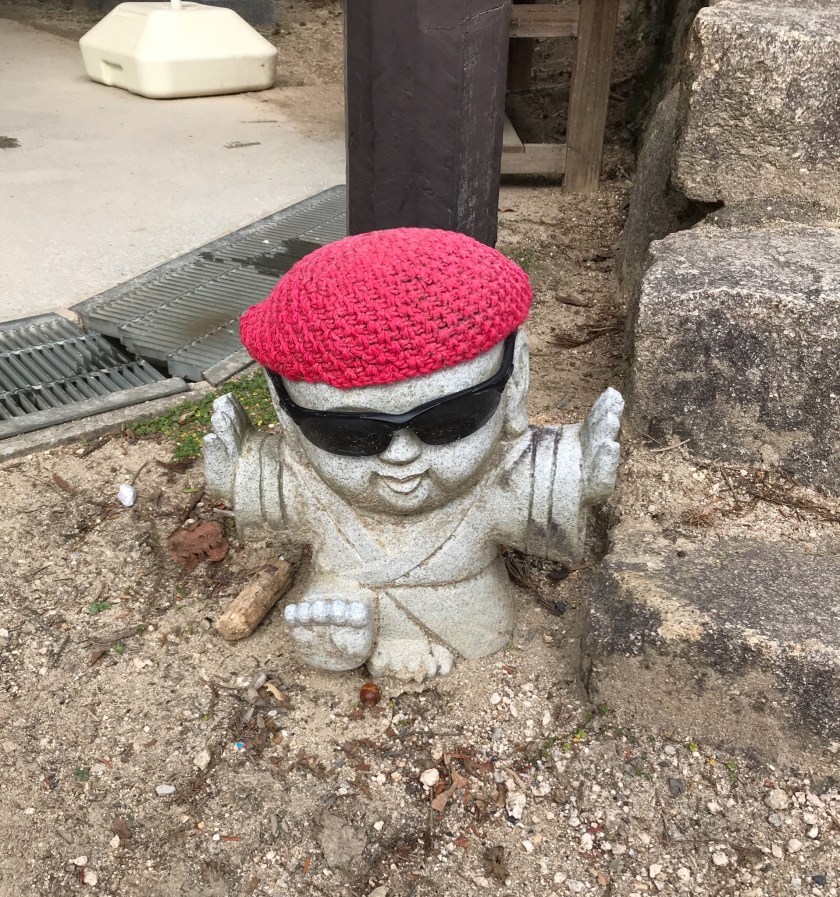
These little guys pop up along the climb and in various places around the island

Back on the ferry, train to hotel, shower and then it’s our last hoorah! We end up in kind of a sports bar, run by a guy from Nepal serving Japanese style burgers.. basically that means with the sauce from the obiwankinobe pancake!!! It’s really tasty but it’s busy and the food is delayed so before we get to eat, we’ve finished our bottle of wine.. oh dear! Another couple of glasses and a game of pool with some expats and we bring our Japan adventure to an end. Tomorrow morning we’re Tokyo bound where I say goodbye to Megan … sob sob but what a great trip. I’ve one night left solo, don’t know how I’m going to navigate this without my map reader extraordinaire.

Japan Part VI : Kyushu Island – Beppu, Fukuoka and Kumamoto

This morning we say goodbye to Molly 😪 and Megan and I leave the island of Honshu and head south to the next island – Kyushu. Kyushu is a volcanic island known as the “land of fire”. We’ll spend the first night in a place called Beppu and then two nights in Fukuoka. It’s another Shinkansen train journey and the countryside whizzes by so fast it’s hard to watch… plus the sun is shining in the window… plus there’s lots of tunnels… plus a delayed hangover seems to be setting in!

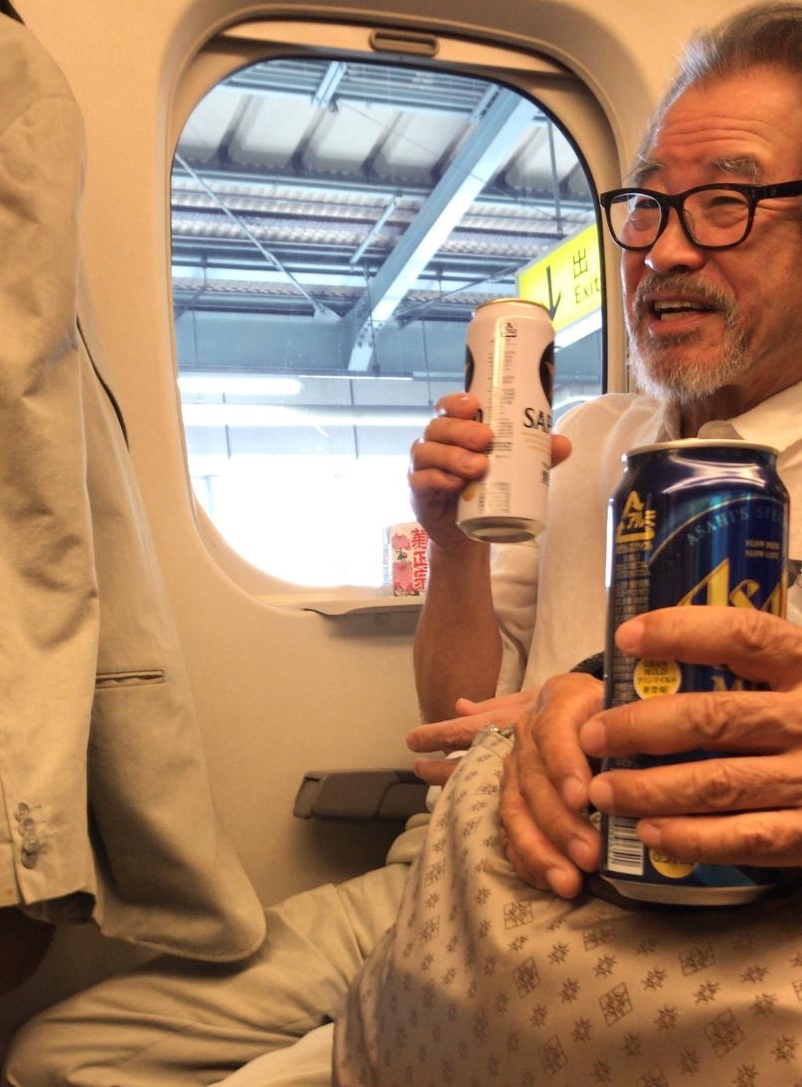
We’re sitting beside four men who seem to be very excited about their trip and they open up beers – it’s 10am!! The loud burping is extremely funny considering blowing your nose in public is considered rude! 🤭

On arrival at Beppu train station we are greeted by the father of Beppu tourism, who apparently was the first person to introduce female bus conductors. There must be a rugby match on as the statue is all dressed up in the gear!

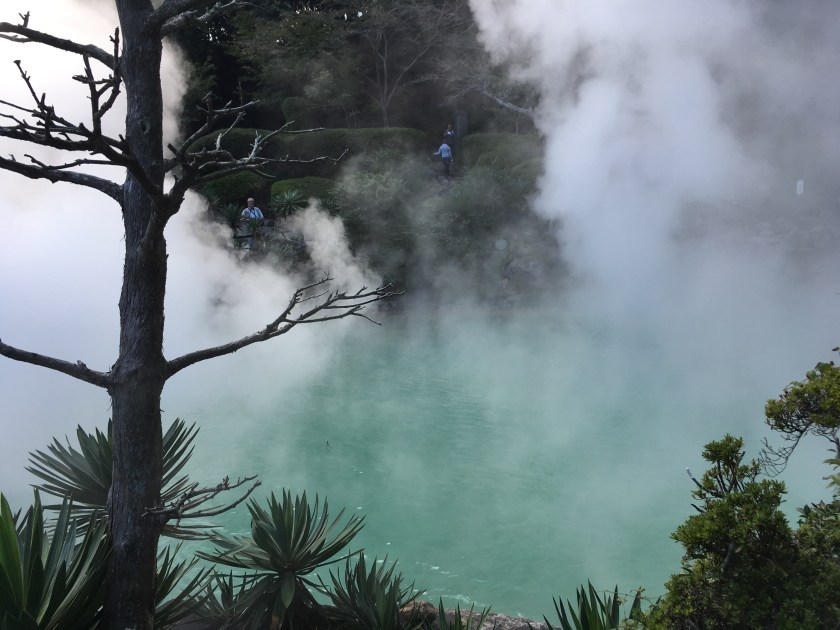
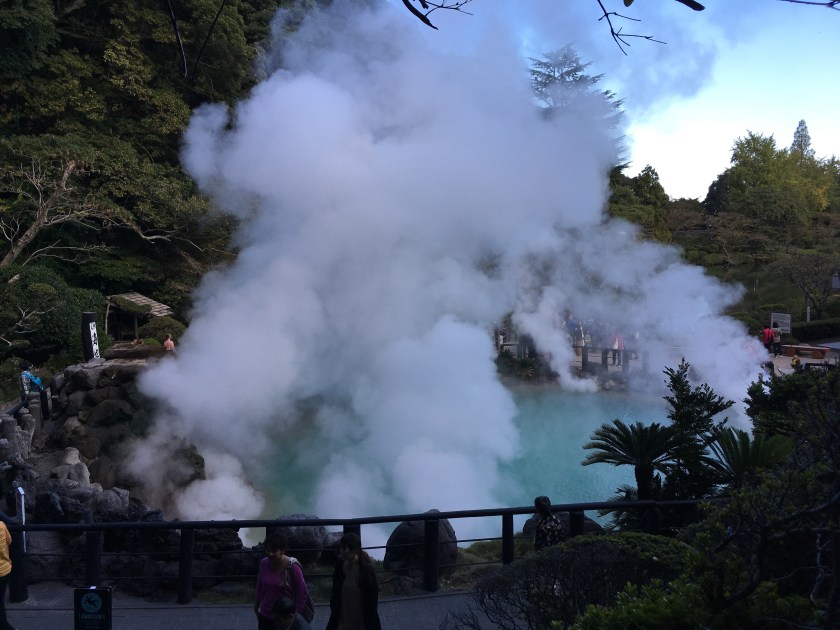
The main thing to see in Beppu are the hot springs so after a quick lunch of toriten (a local cuisine- essentially fried chicken), we get straight to it. As we travel a few kilometers out of town we see steam rising continuously from various small vents and larger springs. I expected the smell to be really strong but it’s not (nothing like the smell in Rotorua in NZ). The springs are called jigoku which literally means “boiling hell”. The most famous is called Ocean hell because of its beautiful blue colour which you can just about see through the steam.

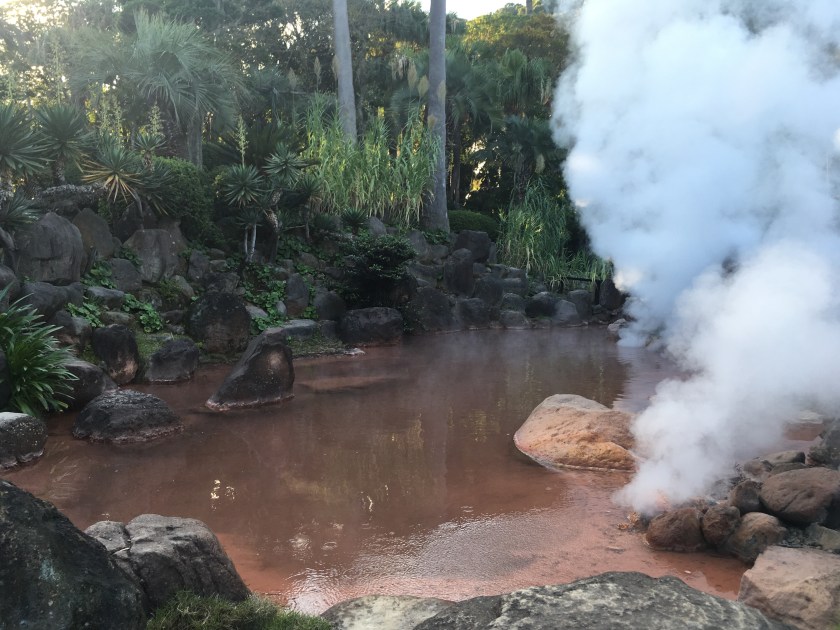
We also see one that has boiling red clay

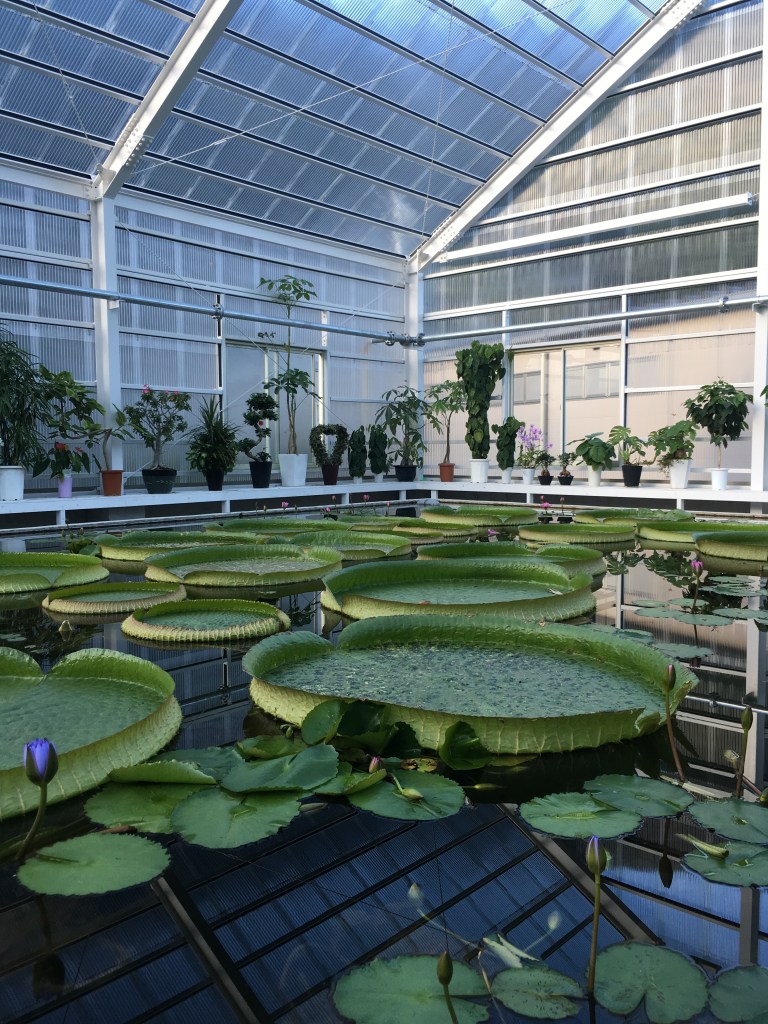
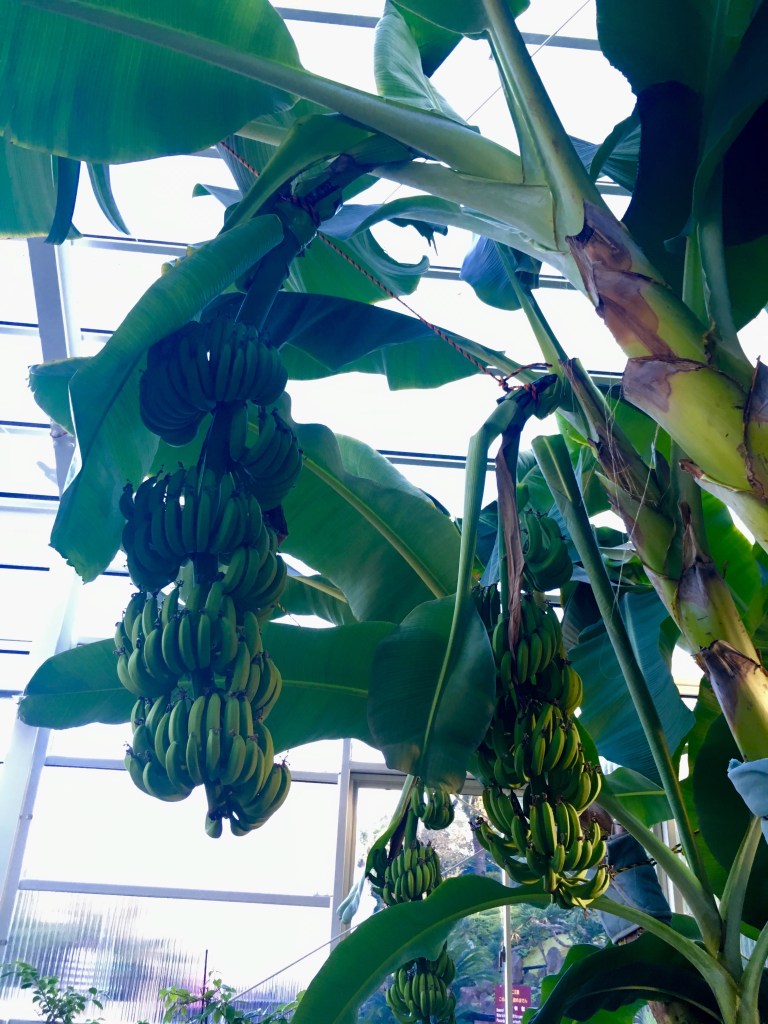
There’s a green house with huge lily ponds and banana trees and we check out a small museum with some cool old photos of what looks like famous people visiting the springs, of course we don’t know who they are!

Next on our list is to have a bath in an onsen. The onsens in this town, as you can imagine are all fueled from these natural hot springs. We opt for the one at our hotel and it’s a relaxing outdoor experience involving more new robes. Delightful!

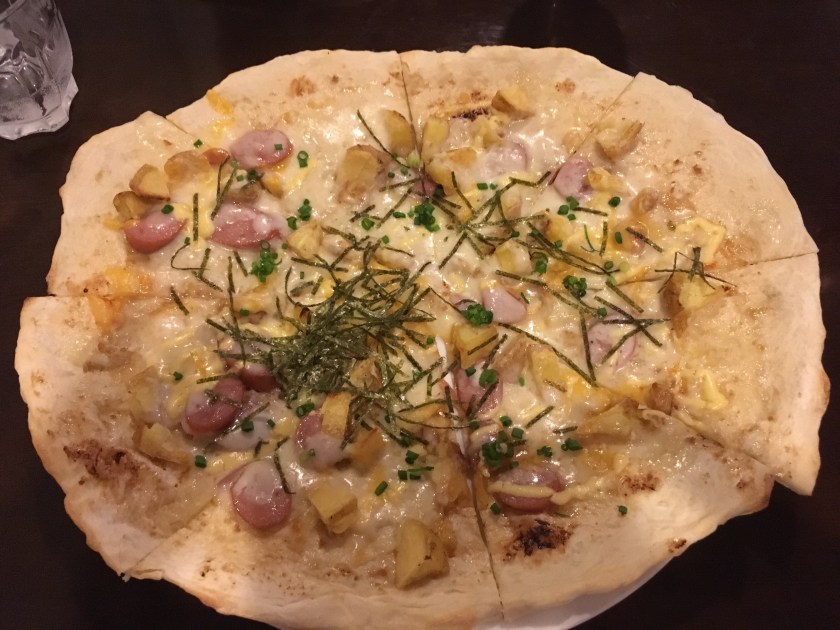
We need a little change of cuisine tonight, two weeks of Japanese food is starting to take its toll so we opt for pizza. Trying to keep it somewhat authentic I order “Japanese style teriyaki pizza” but what I get doesn’t resemble teriyaki at all… it has sausage and potato – tasty though!

Next morning we’re off on the train again and heading toward Fukuoka. We have two nights here so a bit of a rest from the constant moving around. Fukuoka is considered one of the most multicultural cities in Japan as it is so close to to the rest of Asia. It’s less than 200 miles from South Korea.

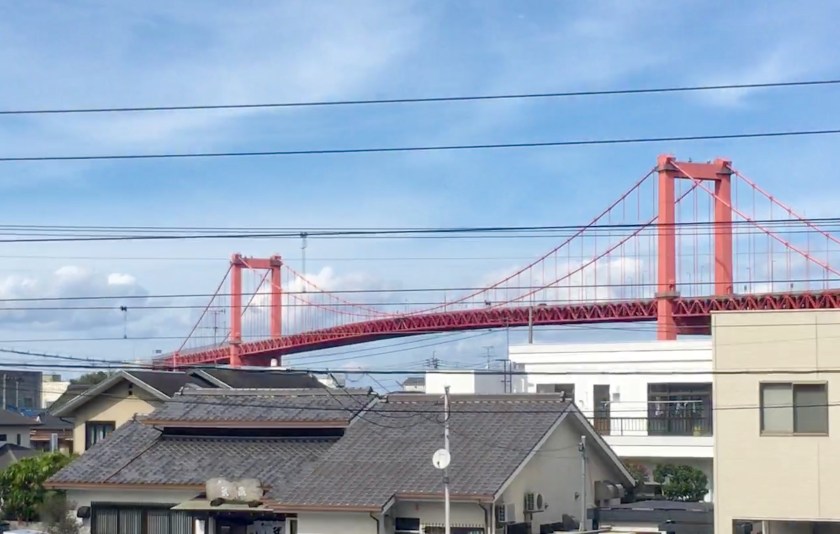
En route we pass what can only be a tribute to the Golden Gate Bridge!

We spend the afternoon exploring the city and our first stop is for lunch at “Ramen Stadium”. Ramen is a local specially and there are about eight ramen restaurants beside each other in this food court. It’s hard to choose so we pick the one that seems the most popular (it has the longest line) and by the time we figure out what we want and key our order into the machine the line is gone. It’s really good ramen:

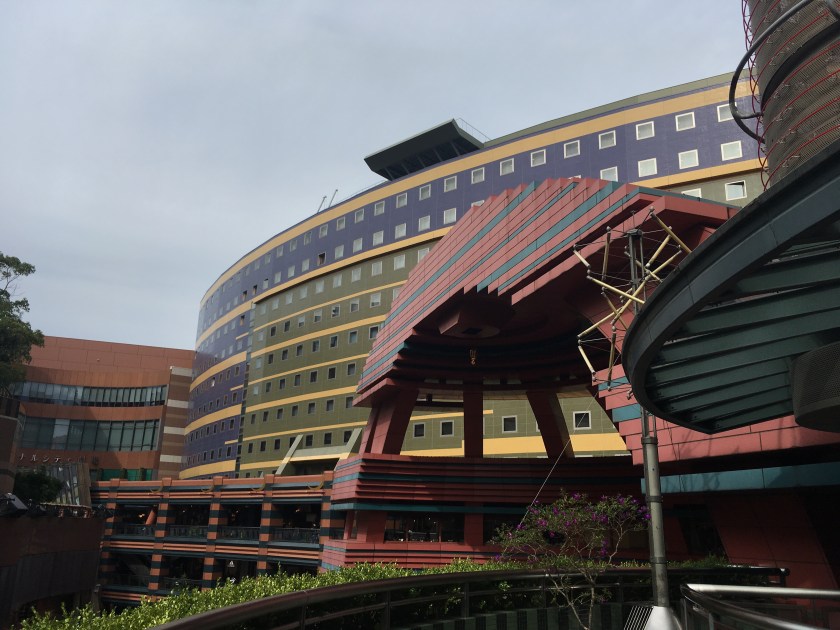
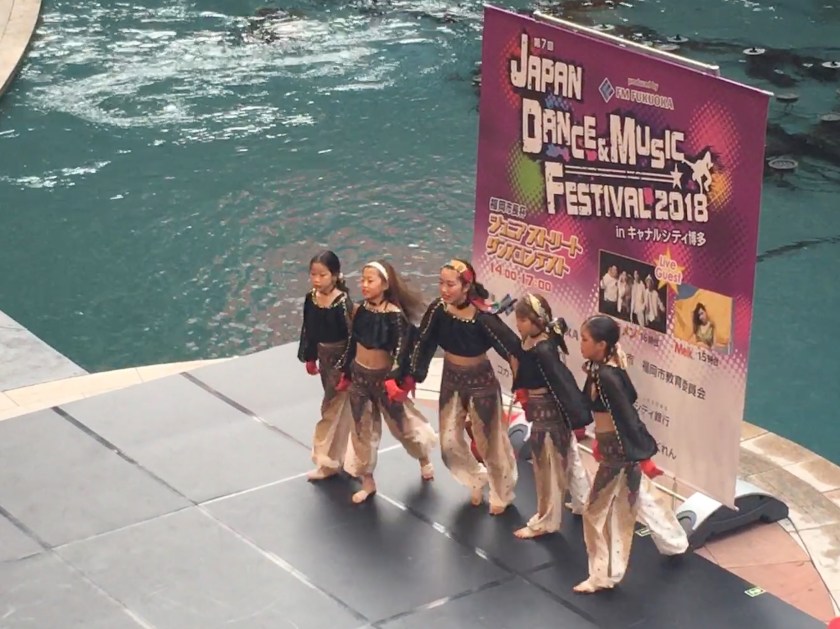
We explore Canal City which is a huge shopping and entertainment complex built around an artificial canal. It has shops, restaurants, theaters and the canal running through the middle has a regular fountain show and events to watch.

When we are there we catch a bit of a dance competition:

Next we take a walk through the Tenjin area which is definitely the cool hip and happening neighborhood. It’s clear everywhere we’ve been, that the Japanese have their own individual sense of style but I notice it particularly here. They’re definitely very fashion aware and it’s so interesting to see all the different styles.

We settle for a low key evening which we’d hoped might involve takeout and a movie but it seems the Japanese don’t really do takeaways and the “pay tv” at the hotel doesn’t have any English movies!! Ah well, we settle for gyoza and beer. And then wine.. 😀

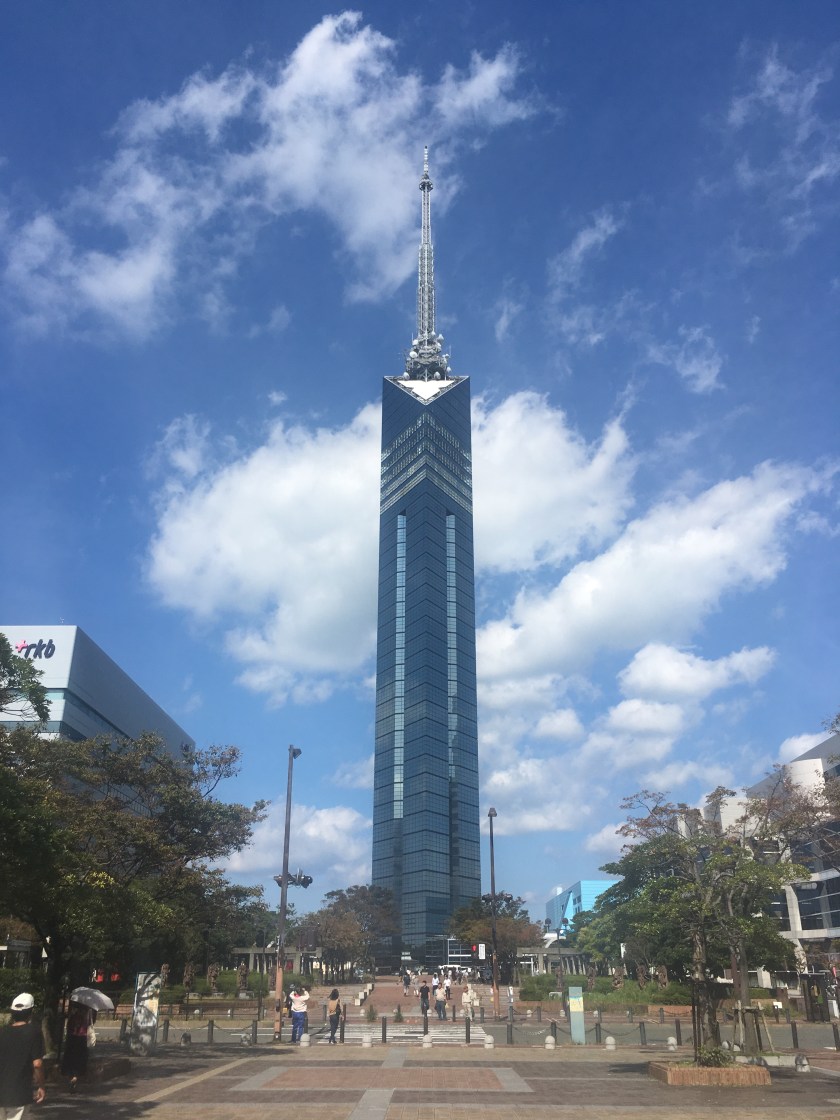
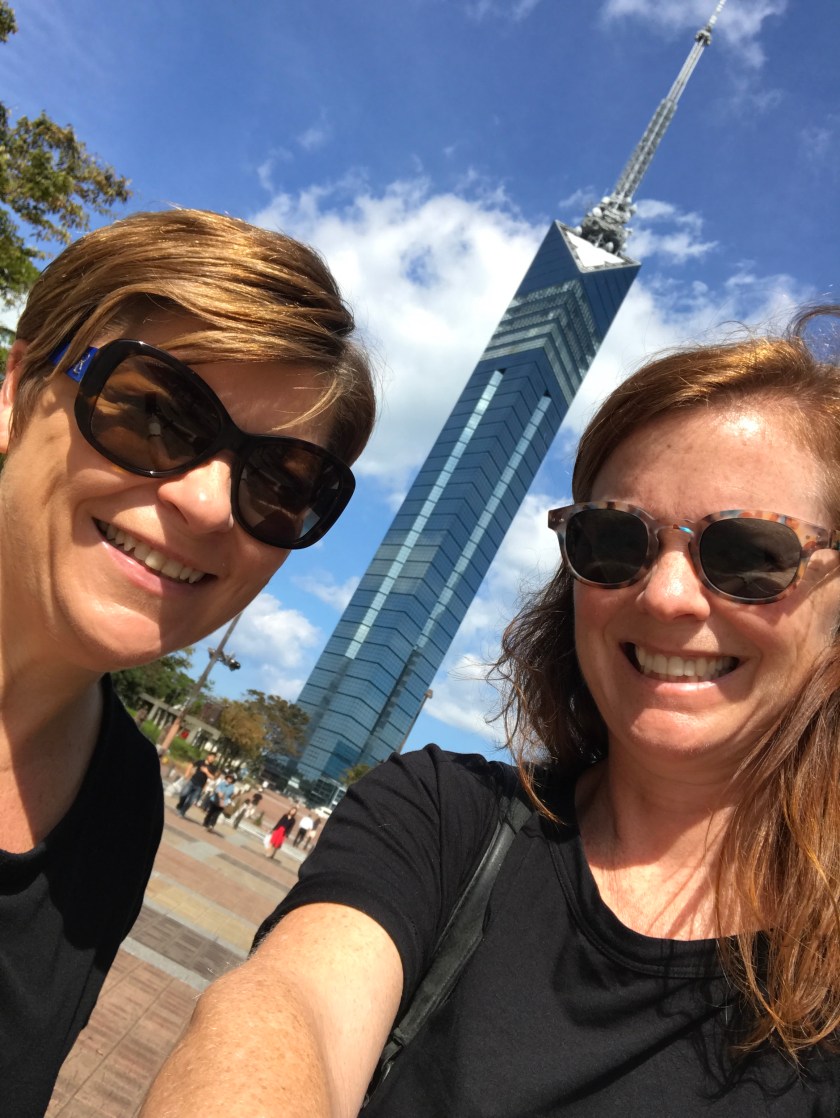
Next day we have a full agenda of site-seeing. We start with Fukuoka tower:

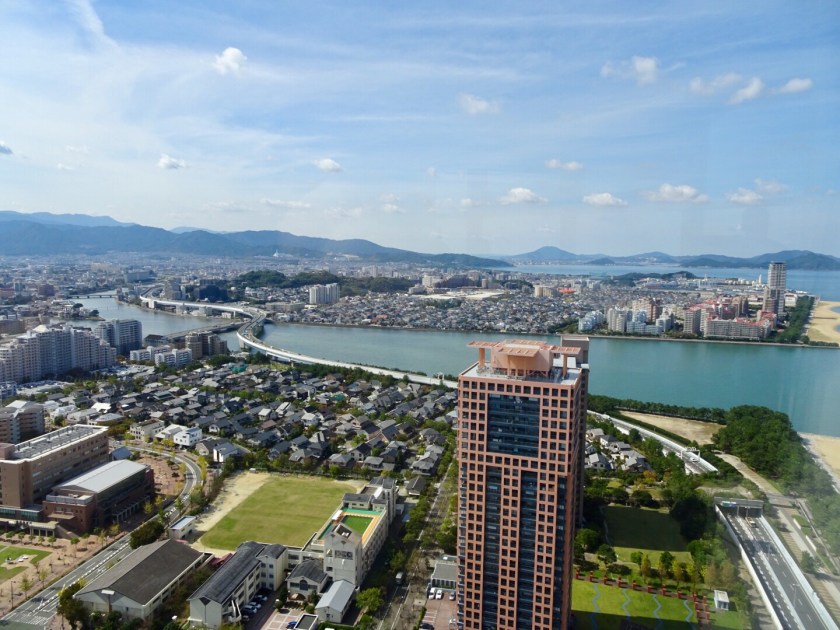
There’s a great view from the top of the city….

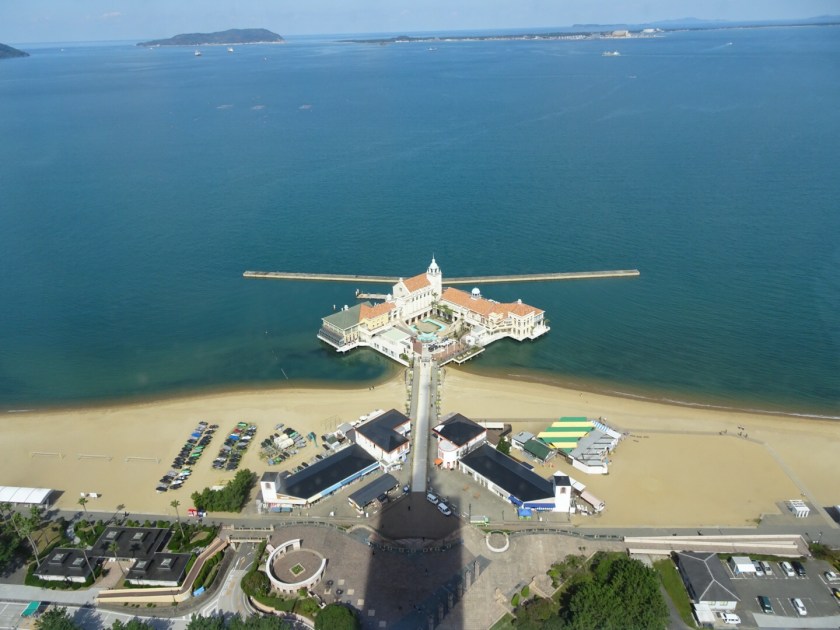
And the sea beyond this man made beach and resort…

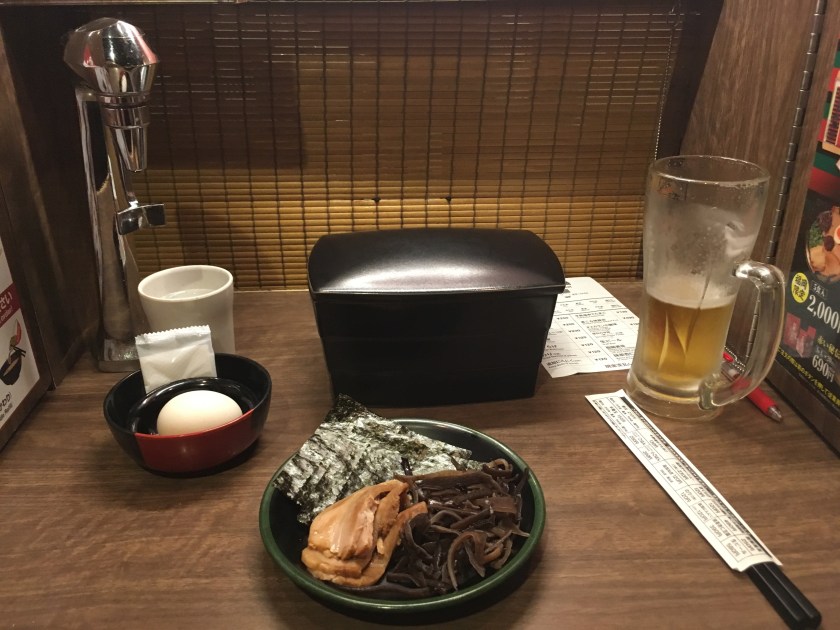
We walk around the Tenjin area again and try a popular and highly recommended ramen place called Ichiran – this may be the best ramen yet. You sit at a counter in your own private booth and the food is served from the other side. They pull down a blind once served so you can enjoy your food in private. It’s served in a dish that looks like a miniature coffin and you choose the spiciness of the broth, firmness of the noodles, richness of the sauce, any extras.. it’s fantastic

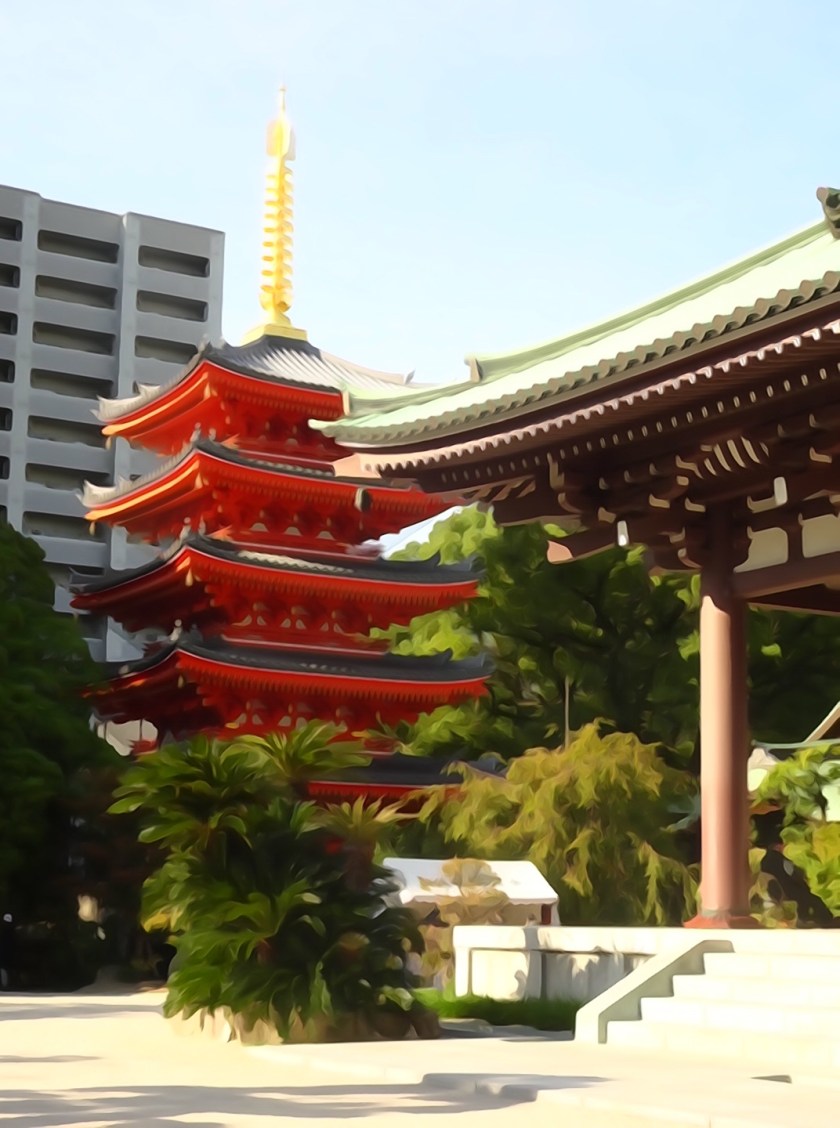
Next it’s on to Tochoji temple which has a number of shrines, the tomb of a shogun and a huge wooden Buddha (no photo of the Buddha allowed)

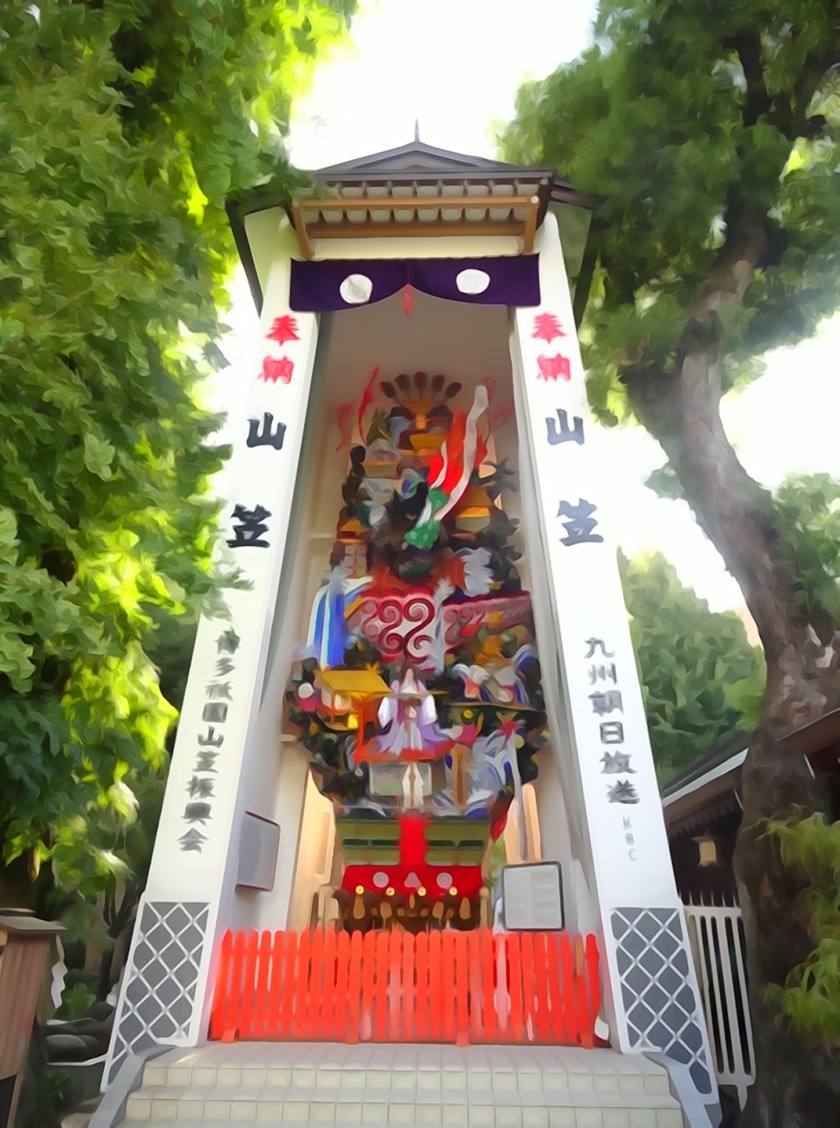
You could literally visit temples and shrines all day long but we pick one more – the Kushida shrine. This is a very popular one with the locals as it’s involved in an annual festival and some of the floats are kept here on show. These are carried by men in the festival… very impressive:

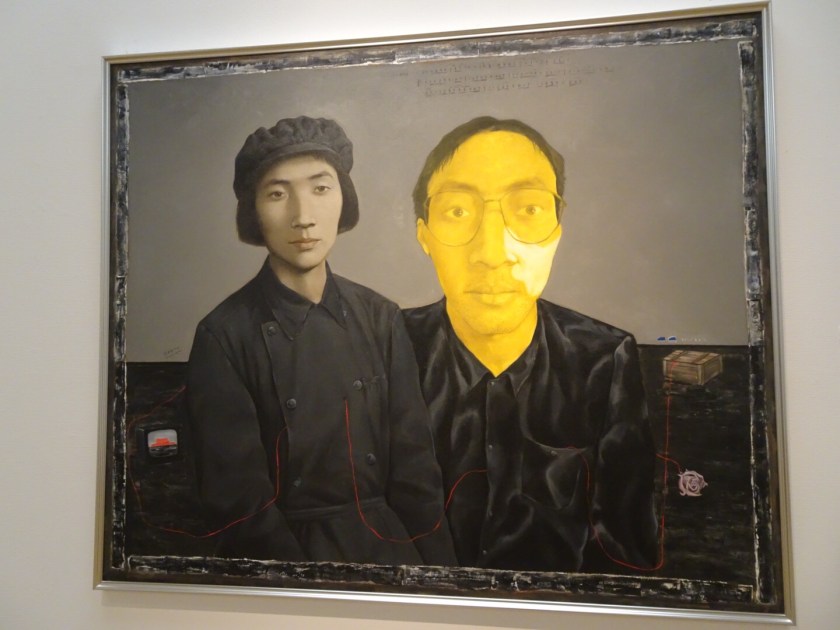
Having reached our quota of temples we decide to hit the Asian art museum. It’s reasonably small so doesn’t need a huge time commitment and charges only a $2 admission. It’s got a wide variety of art from all over Asia and across various time periods. I particularly like this painting by a Chinese artist called Zheng Xiaogang “Painter with Mother as a young Woman”:

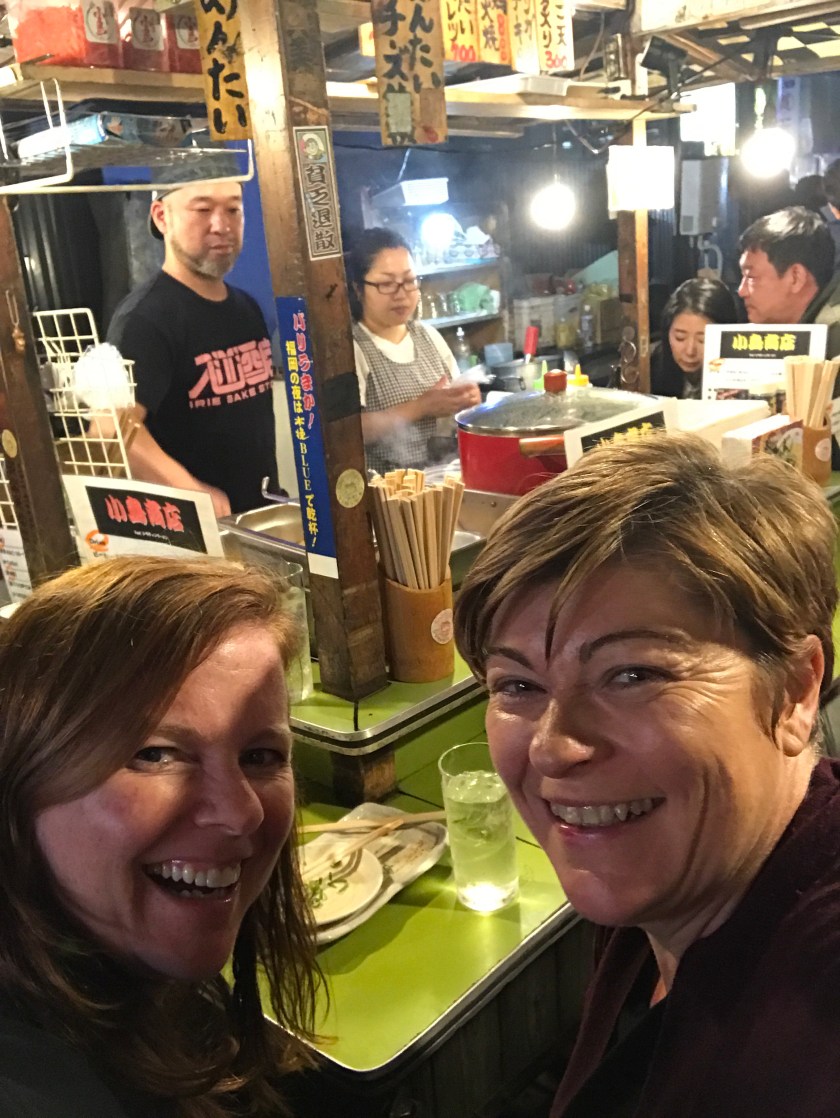
For dinner tonight we are very excited to try the open air food stalls called “Yatai”. We walk along the river and suss out a long line of them trying to choose which one. The choice becomes obvious when we see some very delicious looking meat and some English words on one menu. We are told to sit on high stools crammed in beside others and decide to order beef, salted pork, fish cake and a cheese, potato and mentai bake. Mentai is pollock roe and we’ve seen it at the breakfast buffet, where we weren’t tempted to try it, but now it’s on this baked cheesey thing that looks delicious… which it is. We order shochu to drink and we’re happy out.

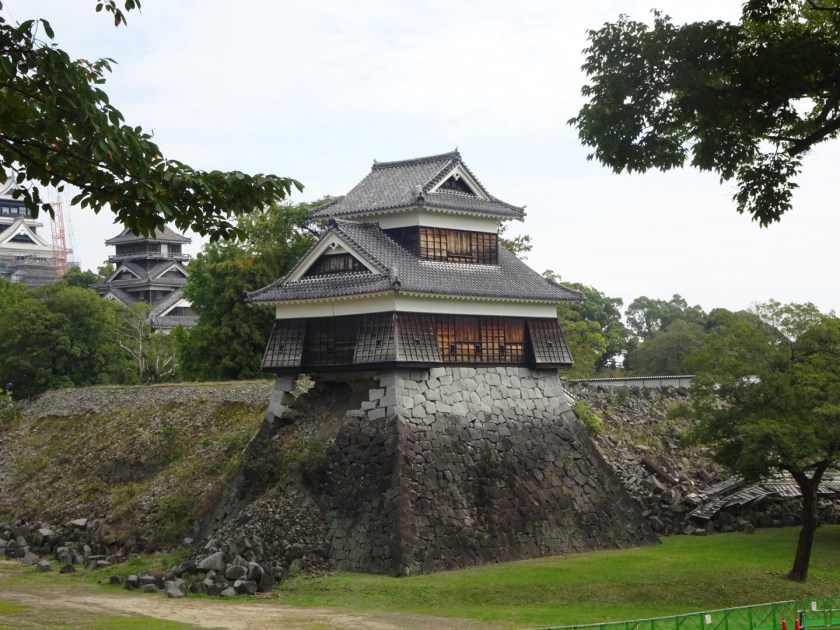
Next morning we’re off again. This time to Kumamto. It’s another one night stay and feels like a very short drive-by visit. The main draw of this city is the castle so we head there shortly after arriving. Unfortunately the castle was very badly damaged in an earthquake in 2016 and is being rebuilt. The reconstruction is estimated to be completed in 2037!

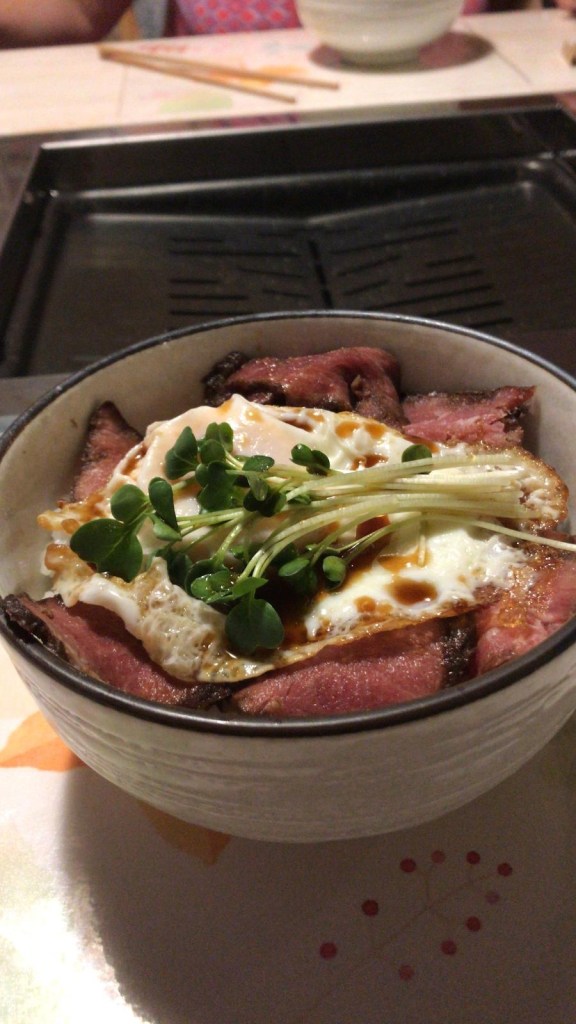
After a wander around we decide to try a Japanese massage which is just what the doctor ordered … they give you a pair of jammies and then massage the acupressure points – it’s thirty minutes of heaven. We end our brief encounter with Kumamoto by eating a wagyu beef rice bowl at a really nice little restaurant downtown:

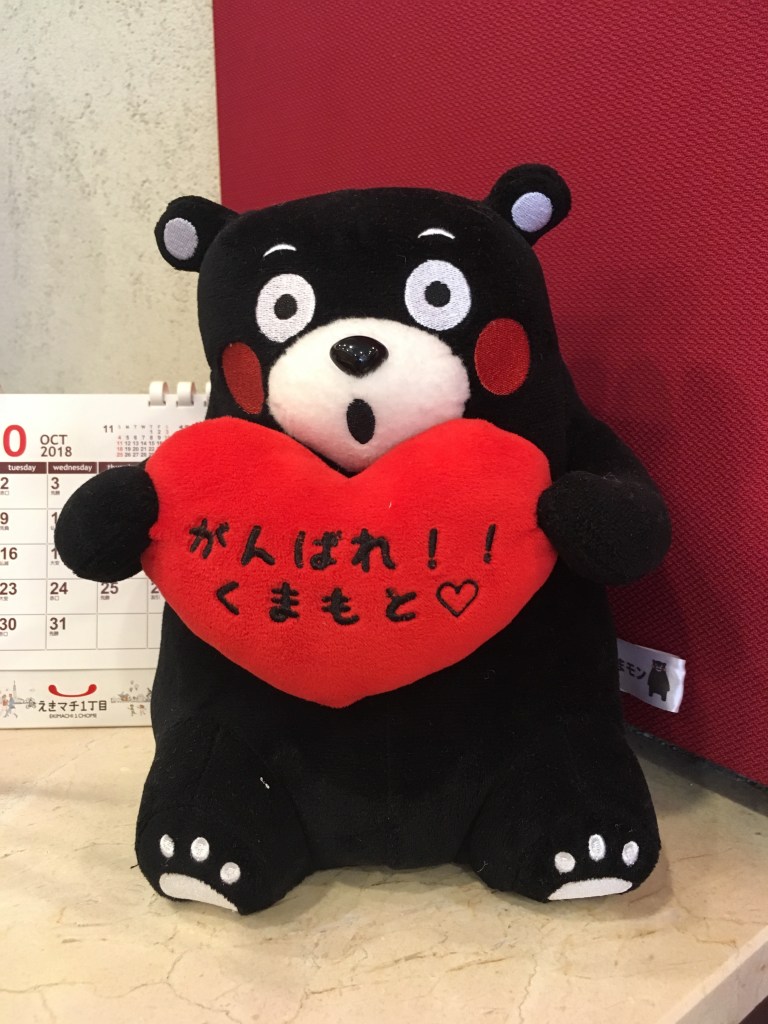
Throughout the day we’ve seen this little guy everywhere and apparently he’s called Kumamo, the mascot of Kumamoto.

Japan Part V : Osaka

We have one final night together (Molly goes home tomorrow… sob sob) and we are spending it in Osaka. So another train journey, this time four hours which is actually nice to relax and look out the window or post on social media!

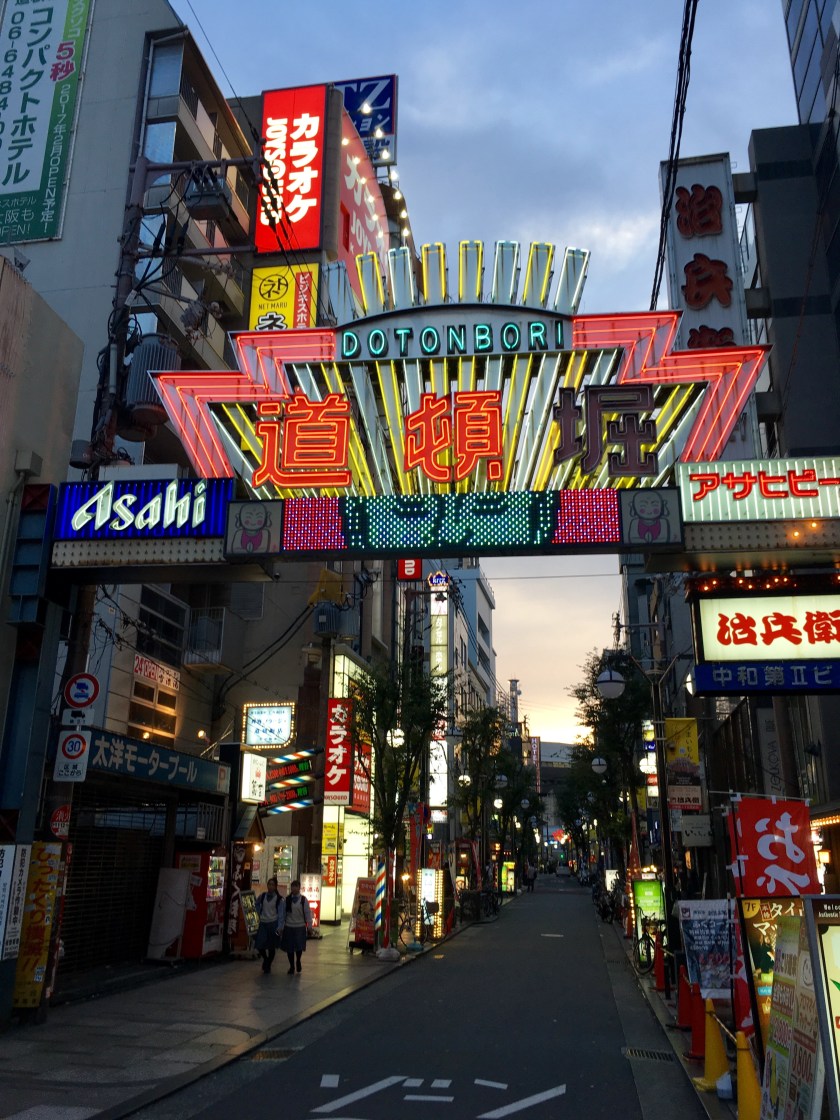
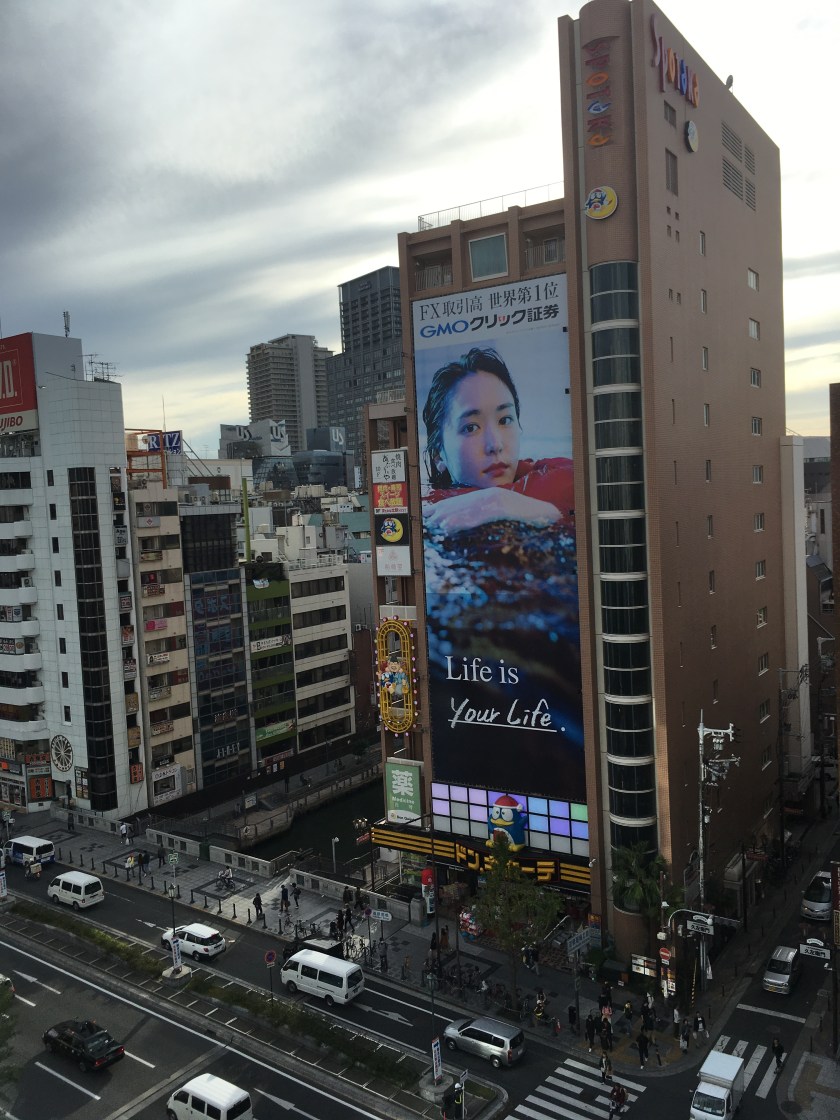
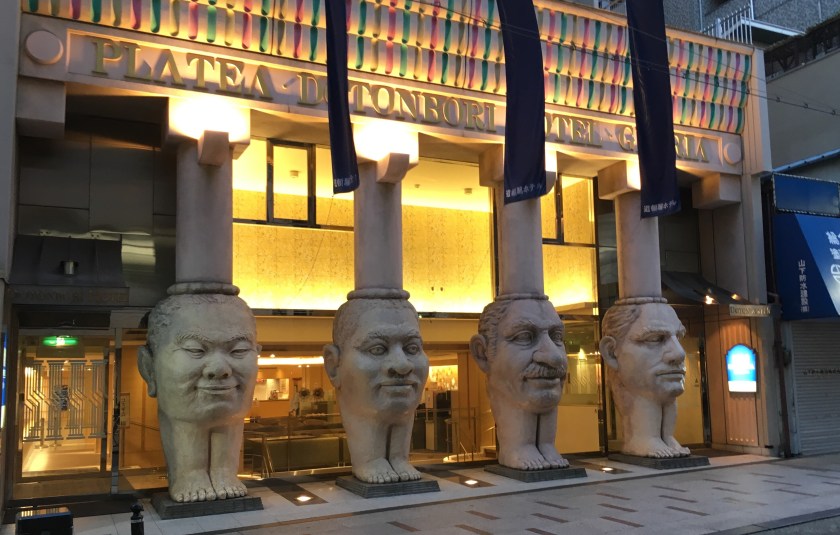
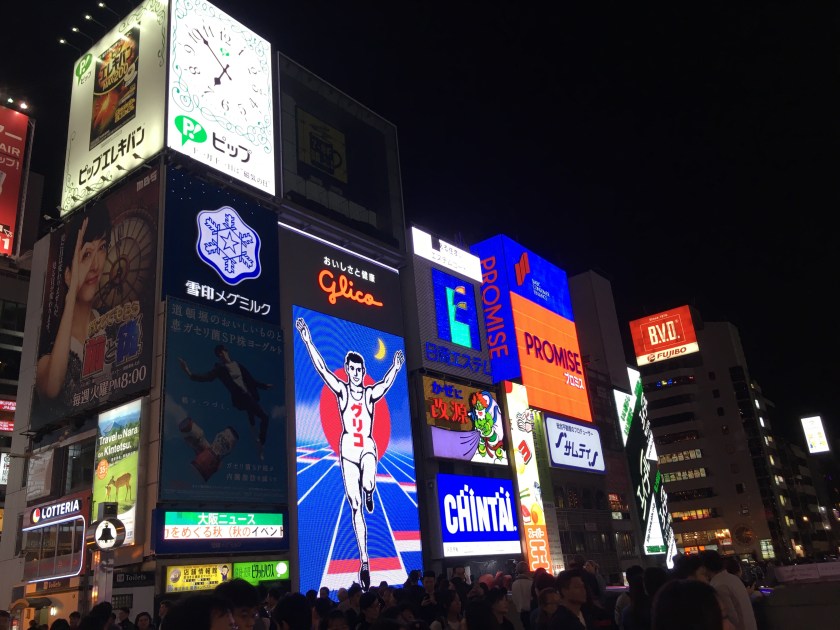
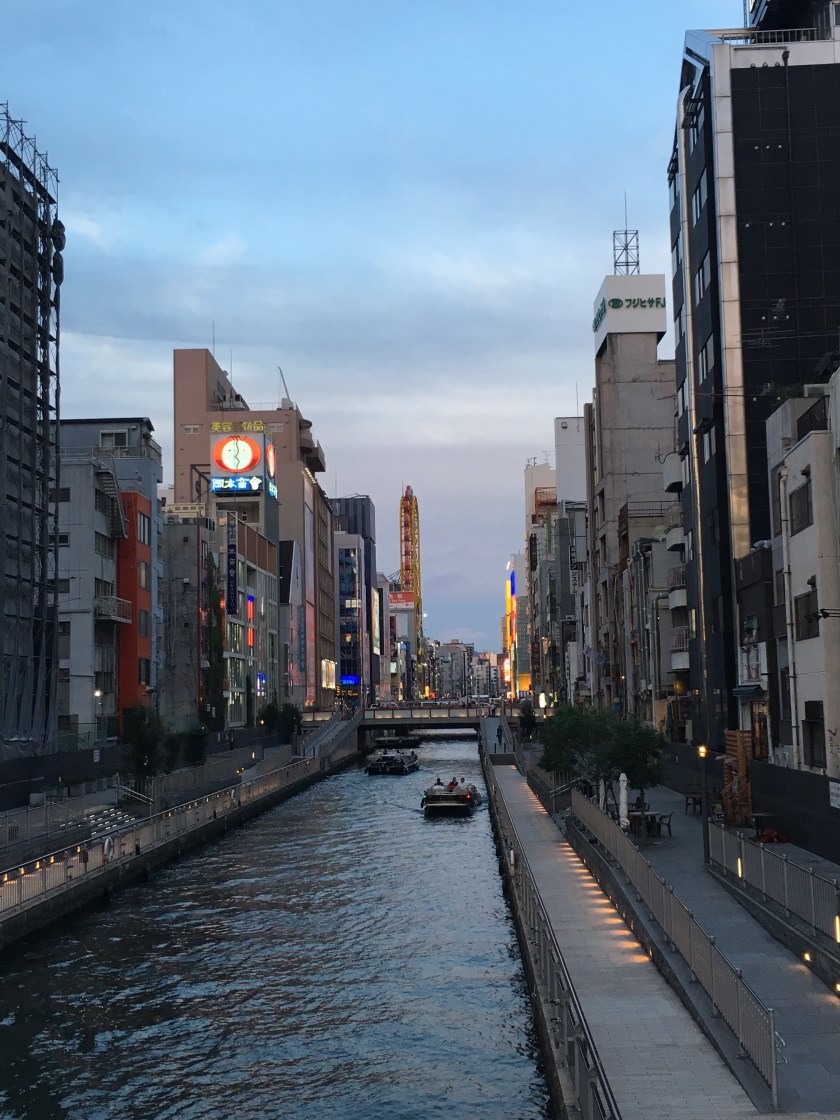
We arrive in the afternoon and are staying in a great location right in the heart of Dotonbori and beside a shopping area called Shinsaibashi.

The view from our hotel:

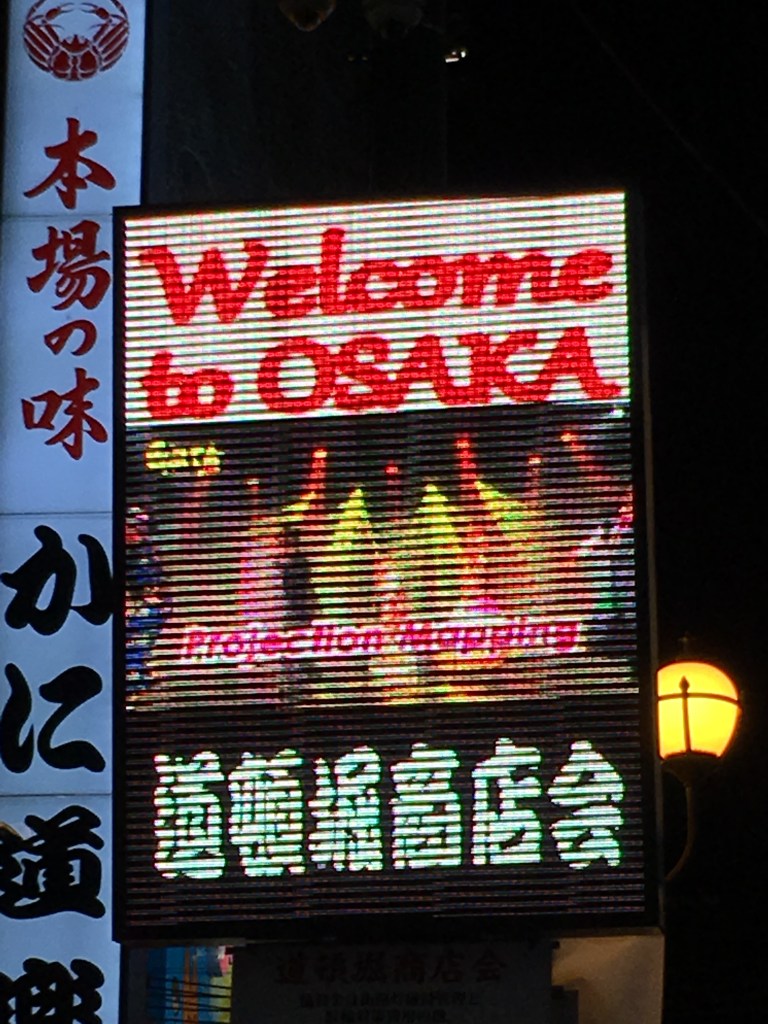
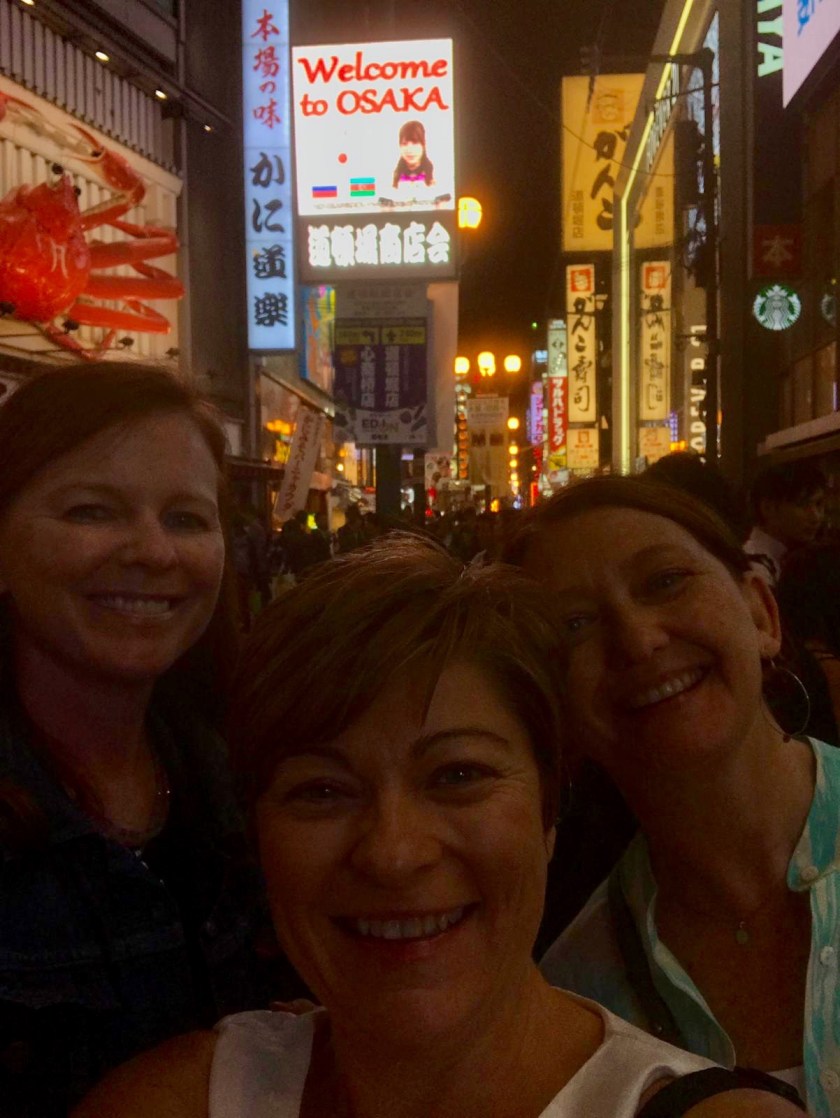
We walk around and it’s sensory overload. There is so much to see in the way of people, shops, buildings and the smells of different food is amazing – so much choice. I wasn’t expecting such a cool place and would have loved more time here.

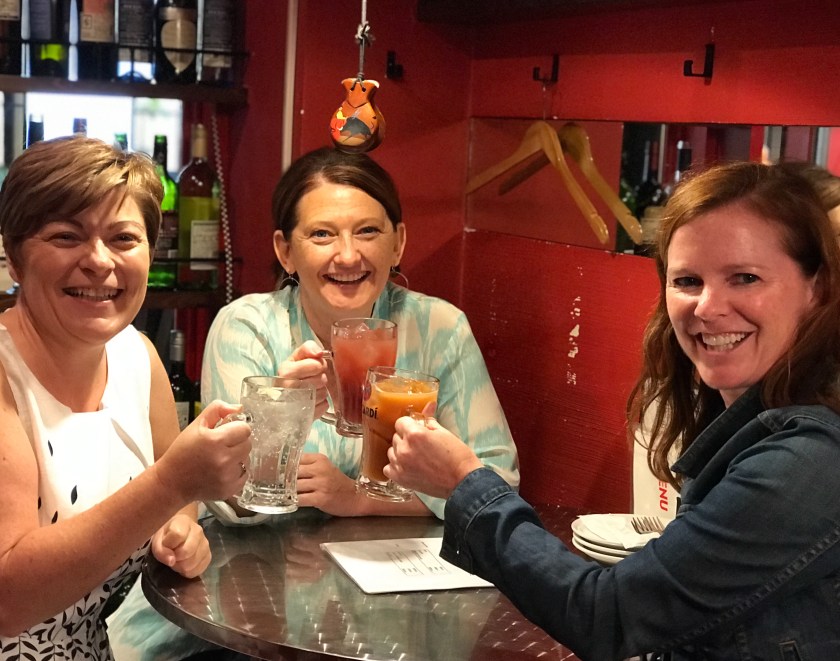
We ramble around taking it all in and then stop for a pre dinner cocktail:

I wonder what goes on in this establishment!!!

Anyway back to our night…… It’s time we had some Kobe beef. We’ve reserved a table at a really nice restaurant, not too far to walk to, but when we get there they tell us we are at the wrong location. Megan is ready to get directions and find our way there [side bar: Megan is great with maps. She’s been the chief map reader on this whole trip and has been a superstar in getting us around], but the waitress/host tells us she will take us there. She actually walks with us for ten minutes and brings us right into the restaurant. She says they do it all the time!

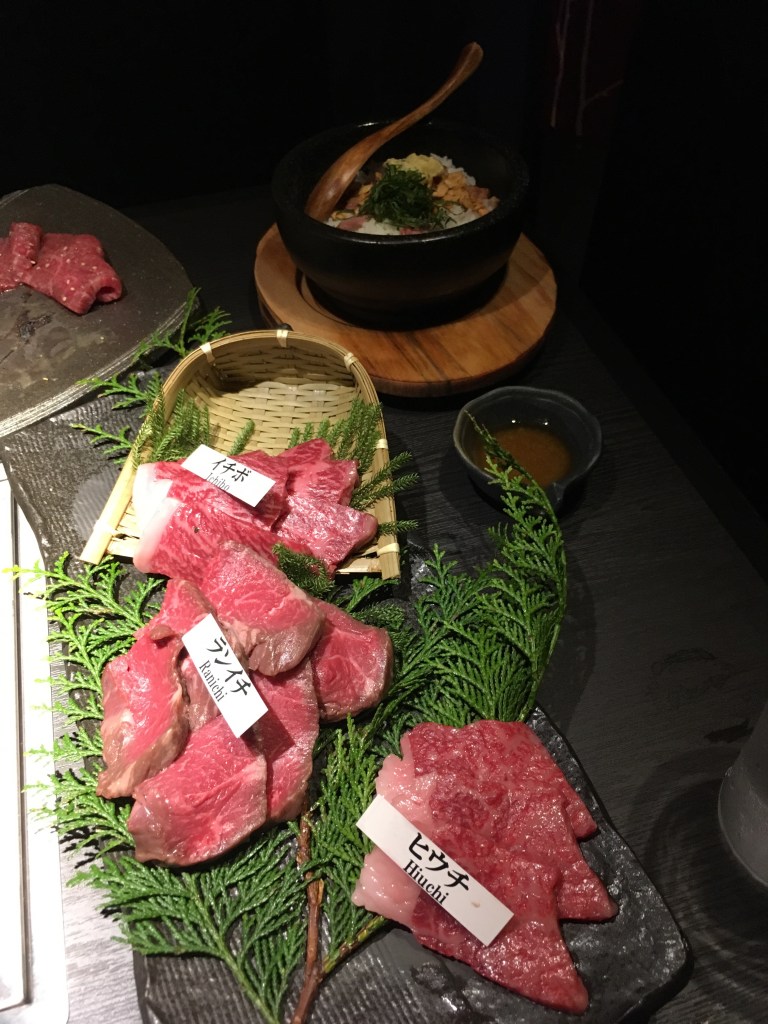
So having been handed over to the new place, we are shown to a private dining room (it’s a popular thing in Japan), with a grill in the middle where the waiter/chef will cook our meat. All the cuts of meat we try are delicious

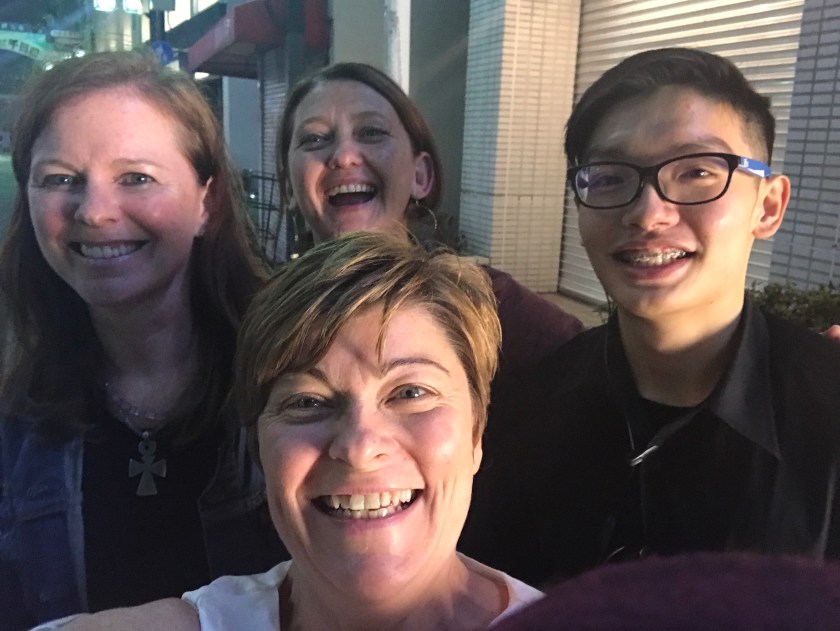
Our waiter is from Indonesia and is living in Japan for a year learning the language. He is really cute and chatty and we have great fun with him.. selfie called for!

After more rambling around and random stops….

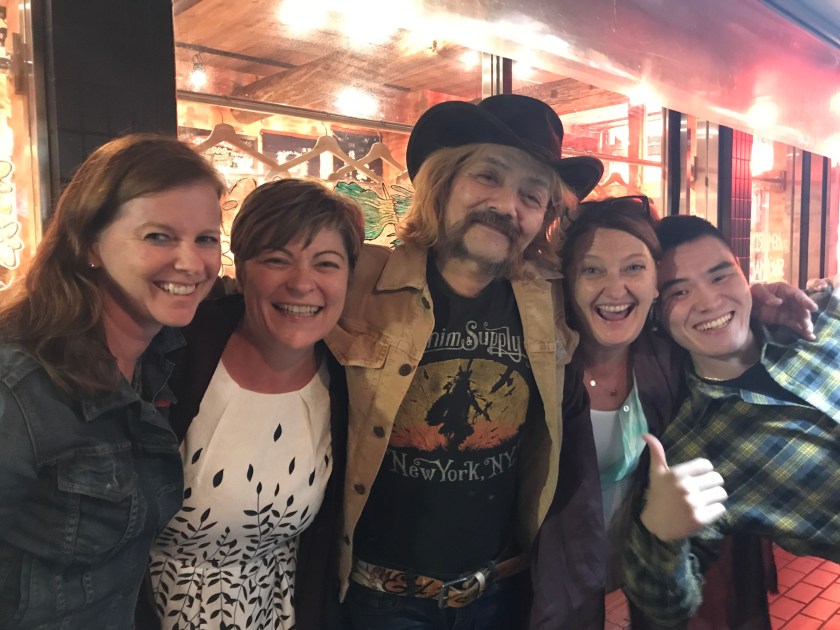
… we find a crazy little bar that fits about six people. We order some drinks and get chatting to the locals. The barman, who fancies himself as a bit of a cowboy, is well impressed that the girls are from California and that we’re singing along to his American tunes.

We have a few drinks, great chat and are happy to have stumbled upon such a quirky spot.

Osaka has been a short stop but great fun was had. Adios!

Japan Part IV : The Kumano Kodo

The Kumano Koda is a pilgrim trail on the Kii peninsula on the southeast coast of Honshu island. It is a UNESCO world heritage site similar to the Camino in Spain. There are three main routes, one of which is the Nakahechi imperial route. This is the most popular and the one we are attempting on this four-day walking adventure.

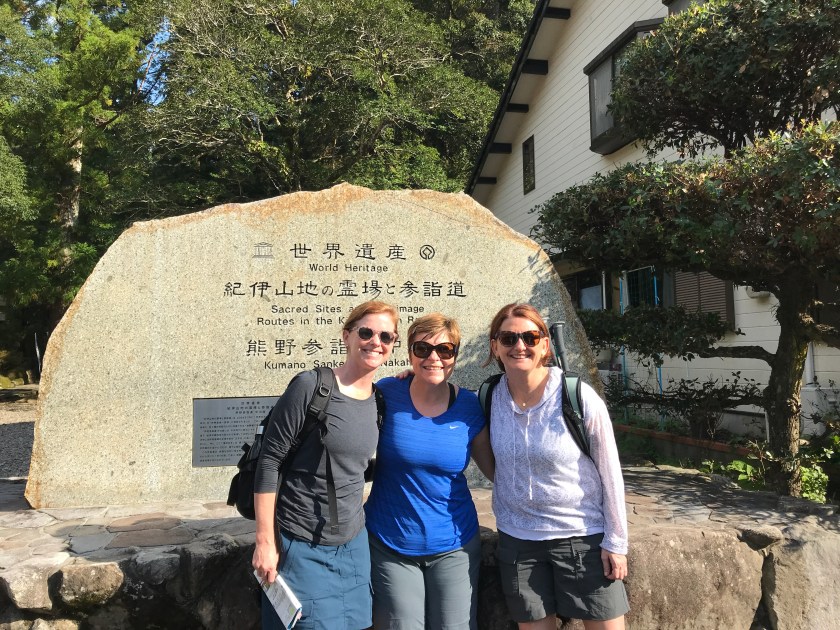
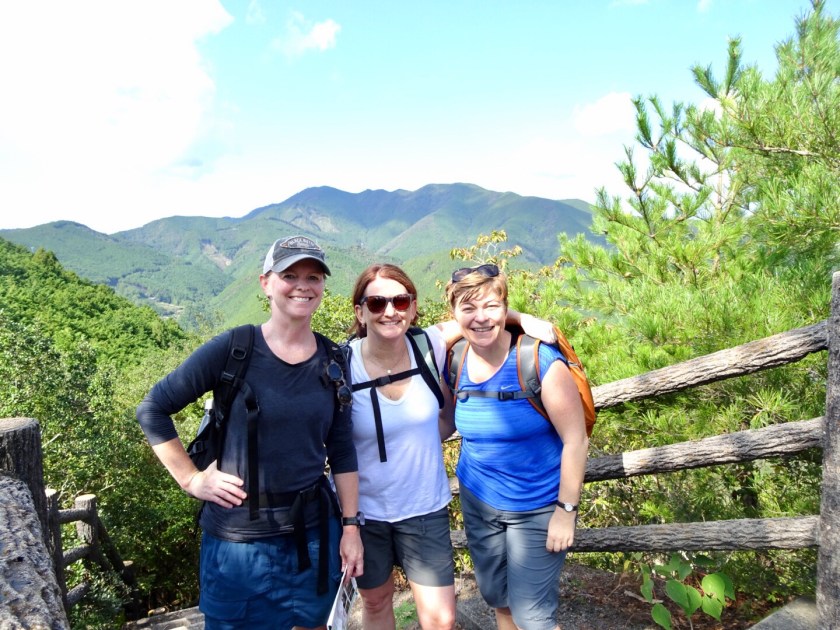
Day 1 : We set off from Kii-Tanabe on a 40 minute bus journey to Takijiri which is the start of the trek. We’ve left our cases behind and we’re in our boots with minor hangovers and our packed lunch in our day backpacks:

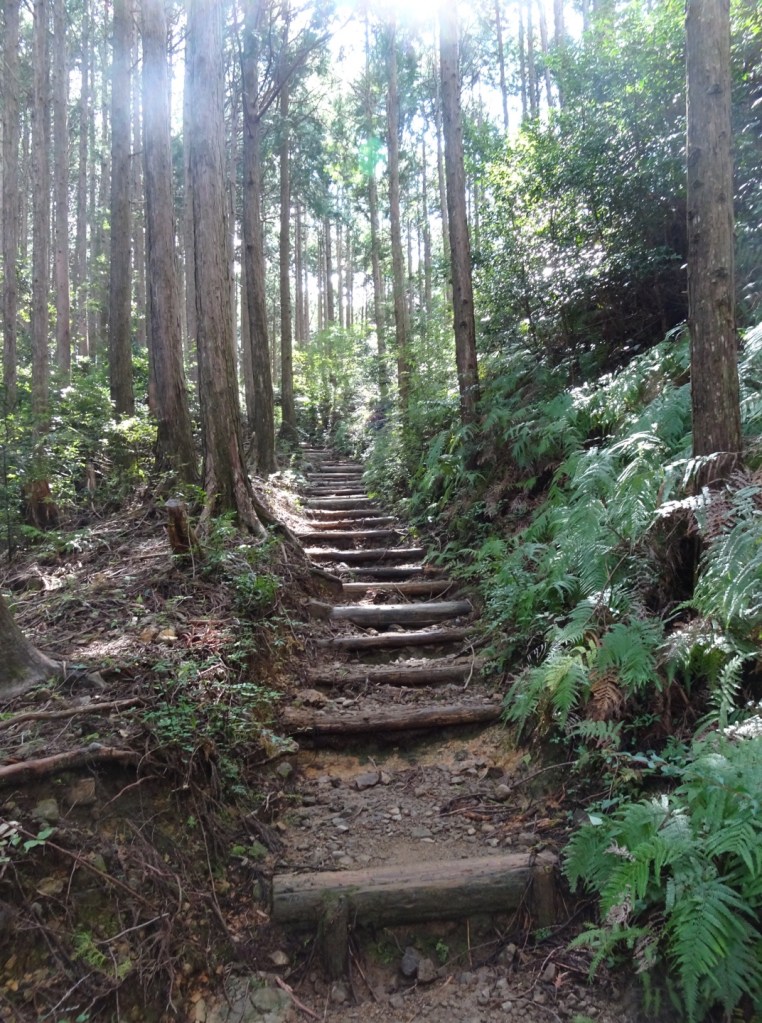
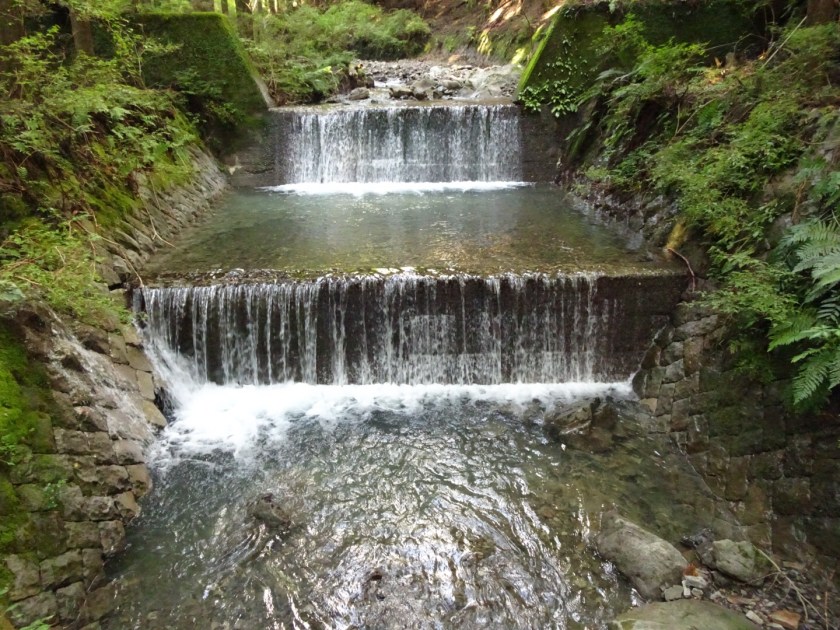
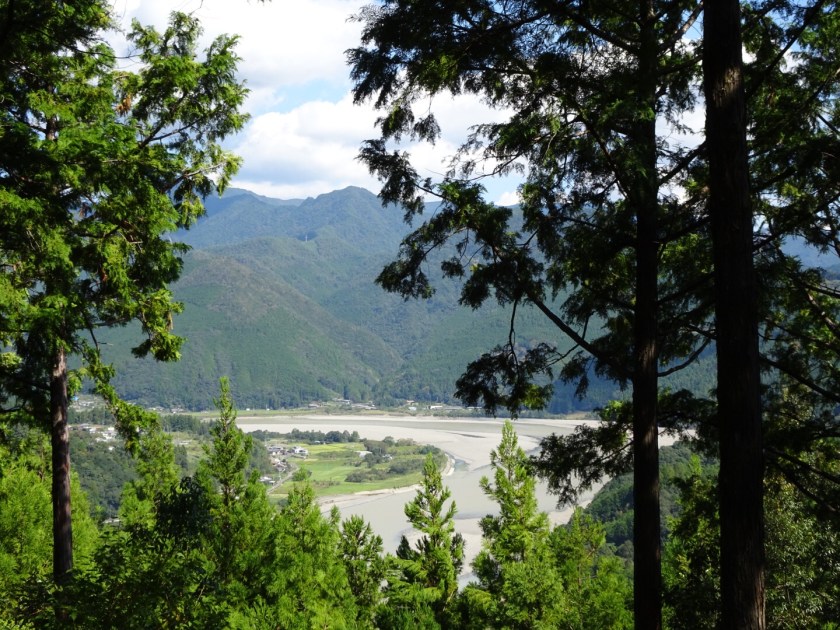
There’s a steep climb which more or less goes on all day but lots of beautiful scenery to see along the way:

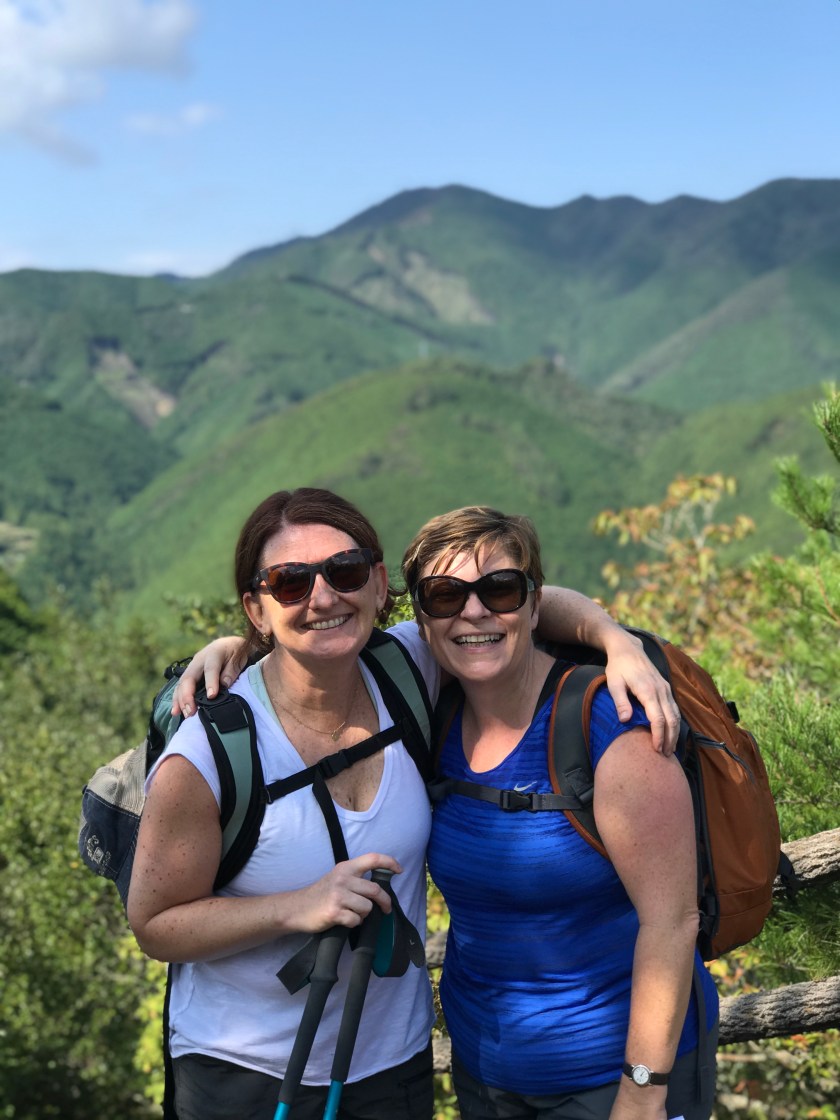
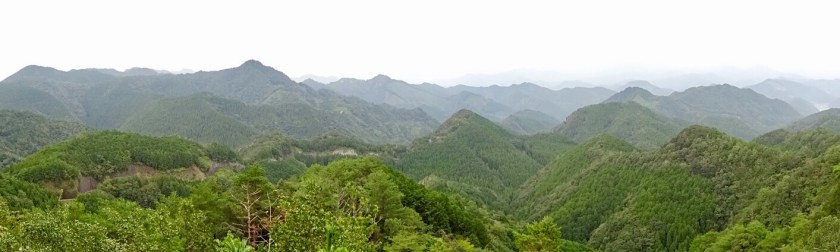
There are a number of look out points over the mountains and it really is spectacular.

It’s hot and very humid with minimal downhill and lots and lots of uphill.

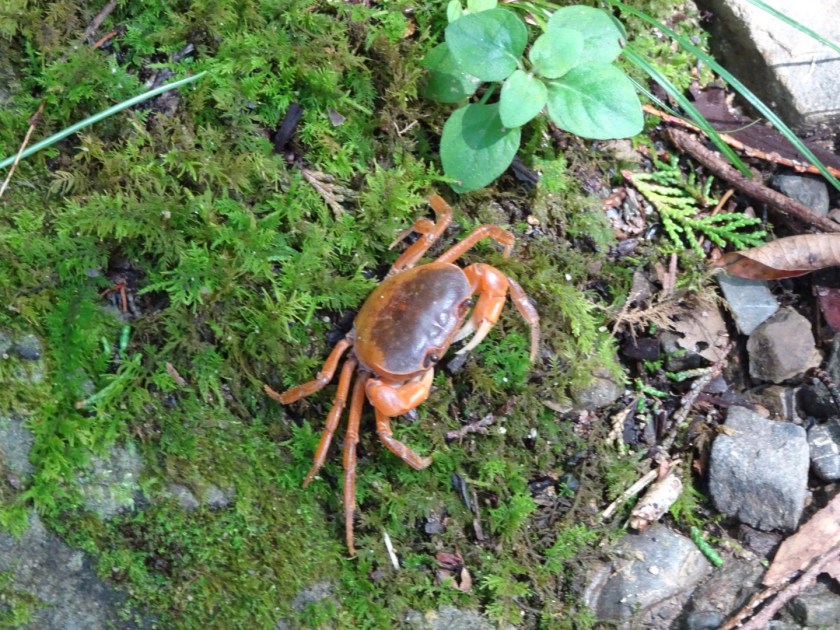
This little fella was actually nowhere near any water… strange!

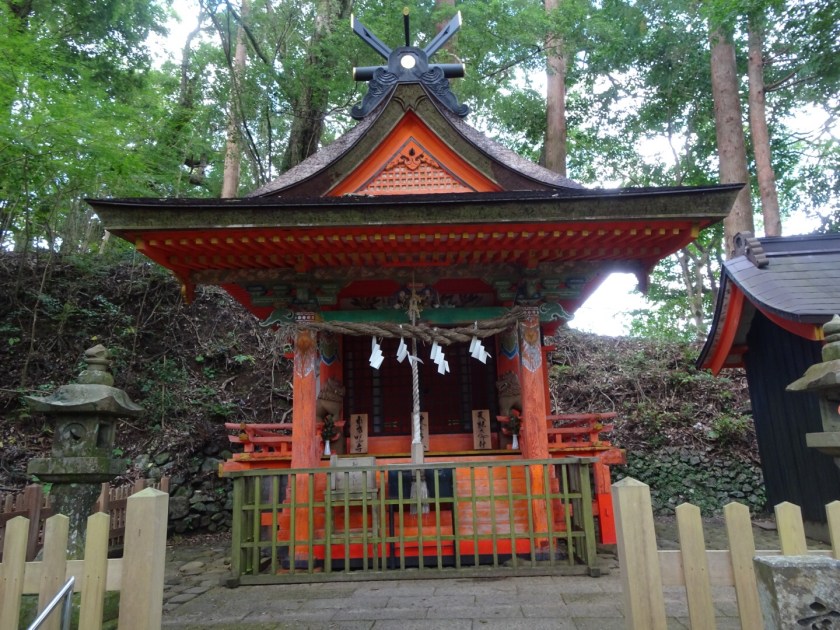
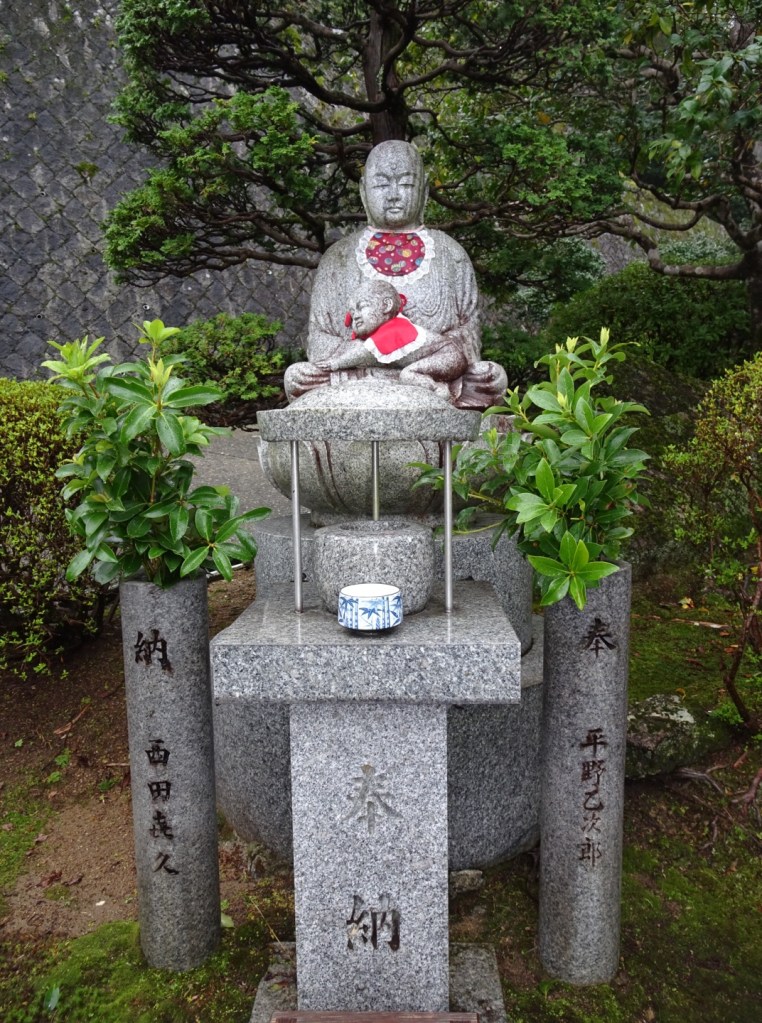
Lots of little temples and statues along the way…

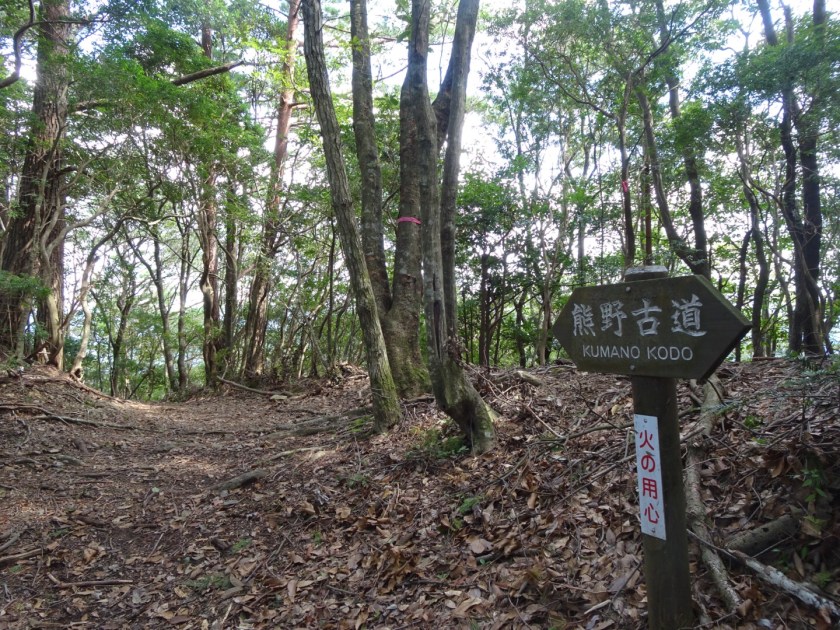
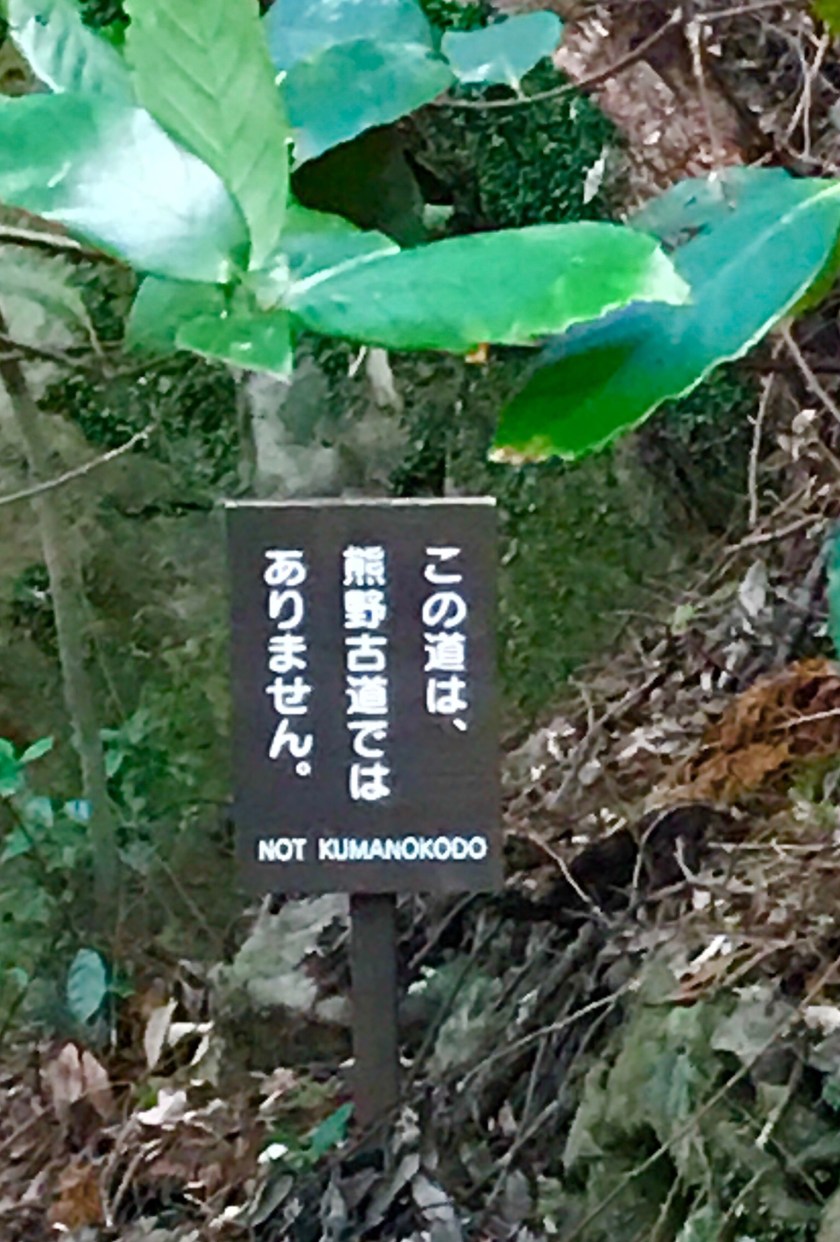
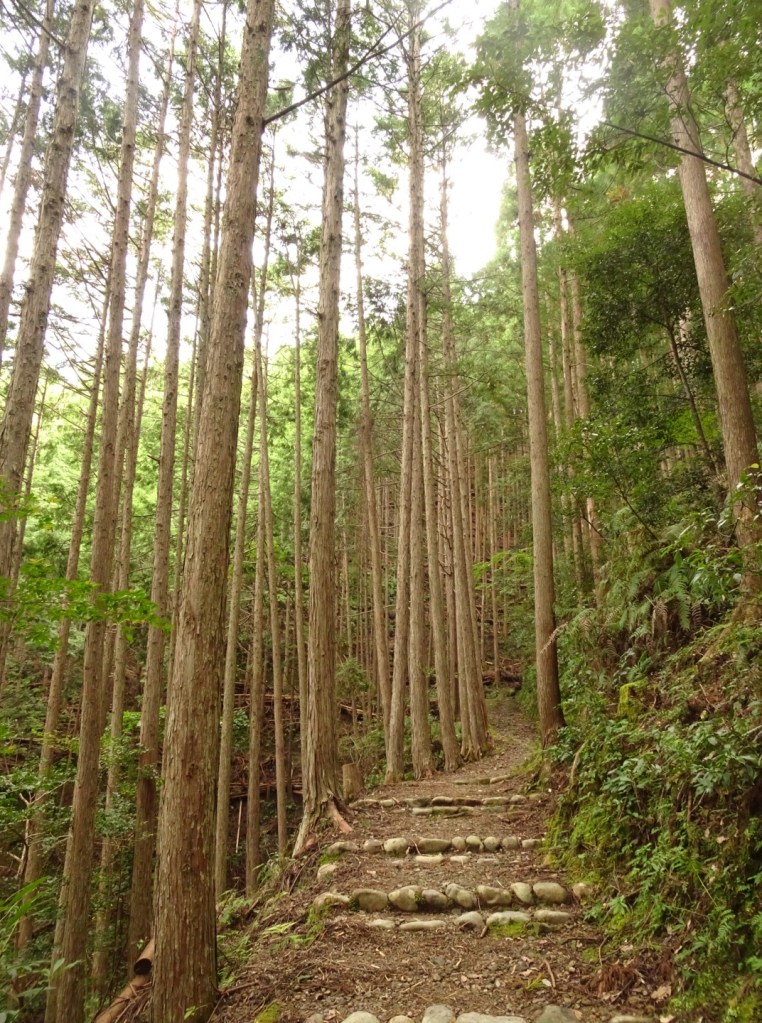
One of the things I was a little anxious about before setting off was the possibility of getting lost but on this trail I think it’s near impossible. It is so well signposted – they have markers every 500 metres and not only regular”Kumano Kodo” signposts but wherever there’s a chance of taking a wrong path they have “not Kumano Kodo” signposts. Fantastic!

We walk through Takahara and onwards to Chikatsuyu where most people end today’s walking.

We have a bit extra to get to our accommodation and we continue on to a place called Tsugizakura-oji. In total we clock up 19km and it’s been a tough walk so we’re delighted to get to our ryokan and get washed up and into the robes provided.

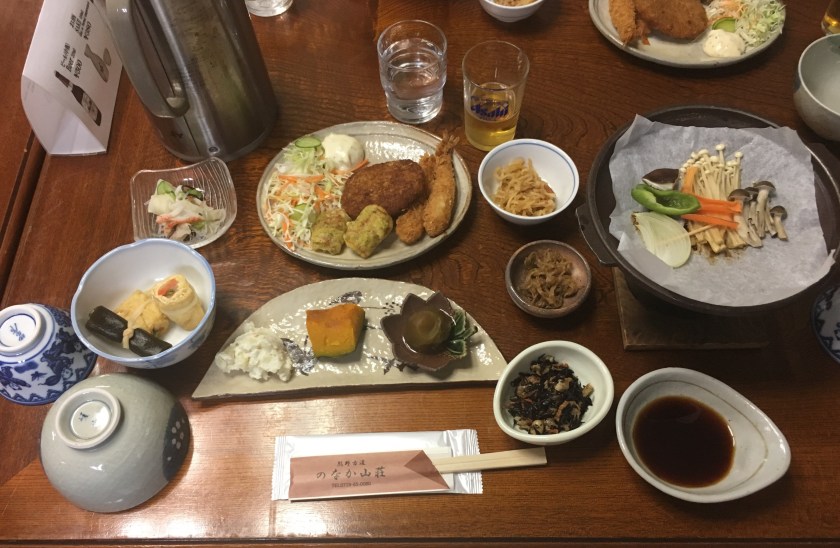
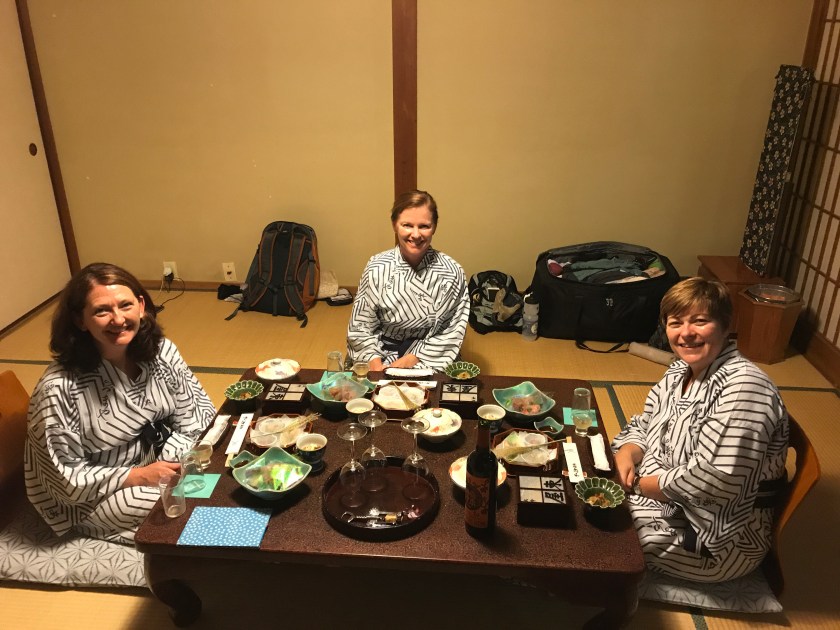
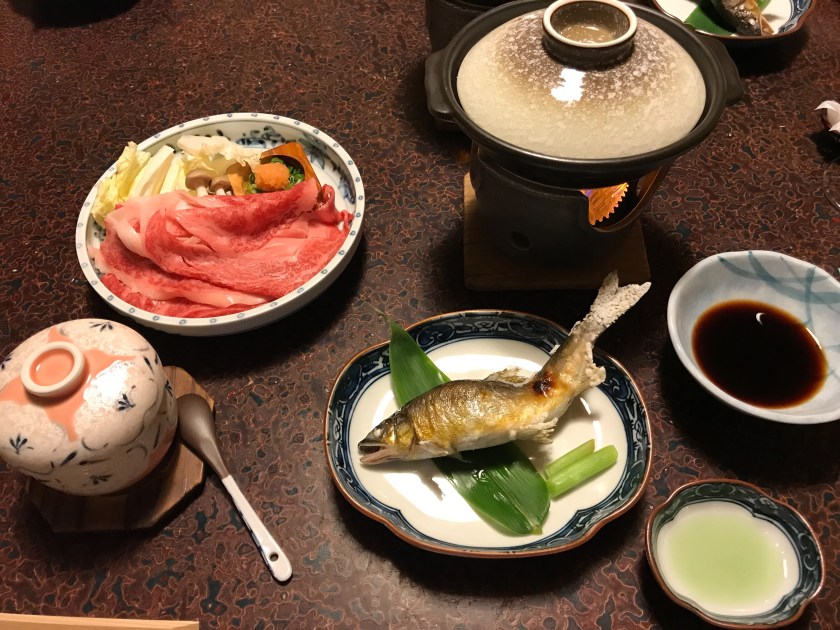
Our ryokan is called Minshuku Nonaka Sanso and it’s a small family run ryokan with shared bathrooms (that’s fast becoming the standard) and set meals with yes, you’ve guessed it, futons on the floor and a rice pillow! The lady of the house gets very excited when I turn up for dinner in my recently purchased kimono and insists on getting a photo with me! Dinner tonight is one of the better set meals we’ve had and we can buy beer so yet again we are happy out!

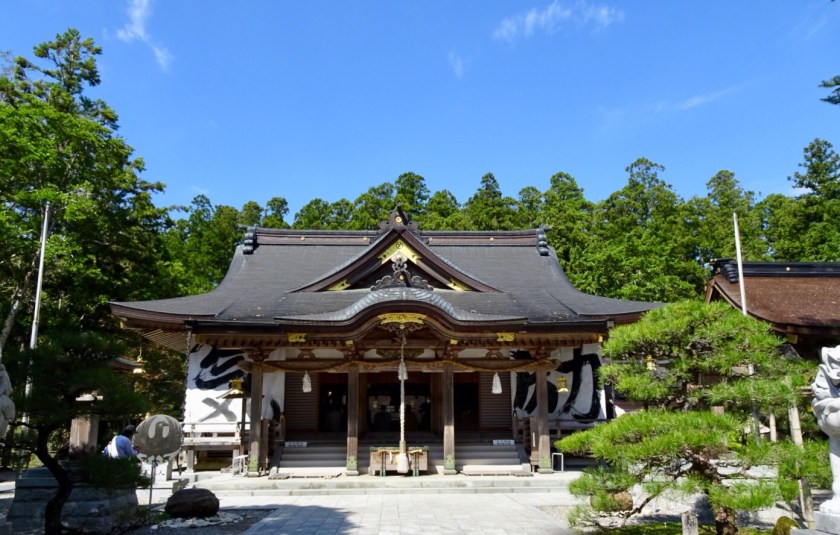
Day 2 : Today we walk 13km from Hosshinmon-oji to Yunomine-oji. On the way we pass one of the grand shrines on the pilgrimage – Kumano Hongu Taisha:

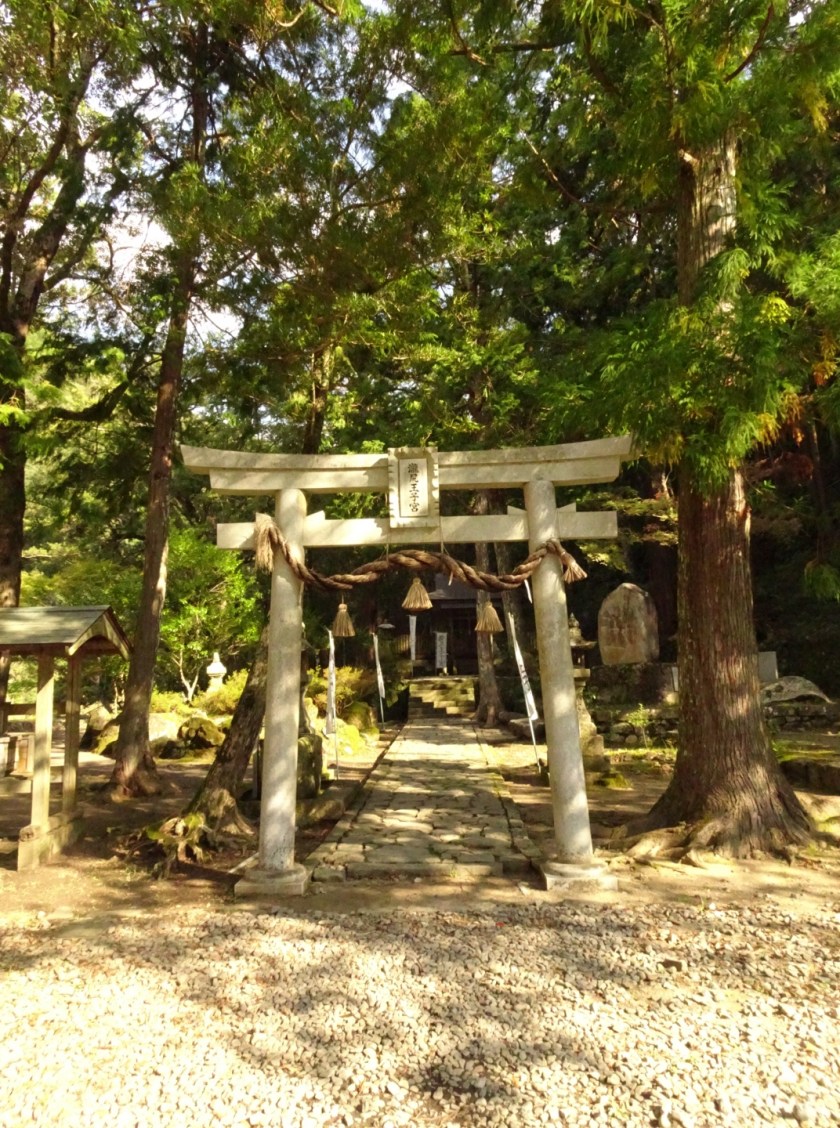
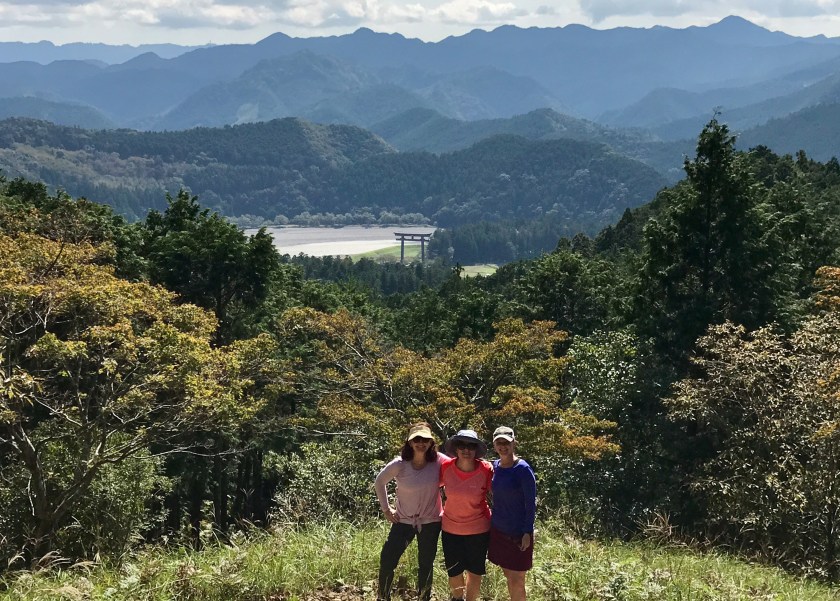
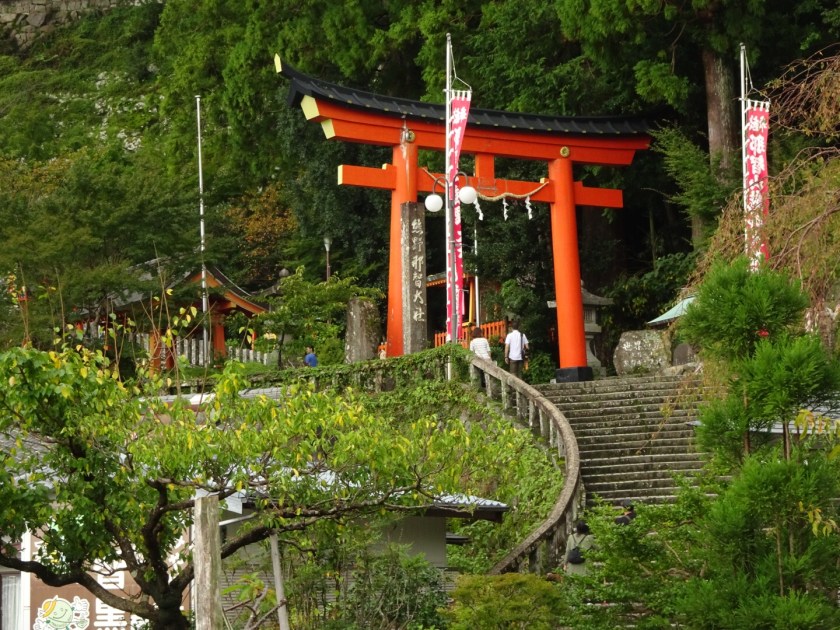
We also see the largest tori gate in Japan, first from a distance and then close up as we go through the town of Hongu:

There’s not as much climbing as yesterday but it’s still undulating. We’re happy with the shorter walking day and the views continue to please:

I’m fascinated by the tree roots that we are walking over:

At certain points along the route we pick up stamps:

Tonight we stay at Ryokan Adumaya which is one of the main traditional inns in Yunomine Onsen, a hot spring village. We can smell the sulphur as we arrive into town and are looking forward to our onsen bath. We are not disappointed as we have an indoor and outdoor and once we get used to the heat (they’re so hot), the relaxing (naked!) soak is delightful!

Post bath and in our robes, tonights dinner is served in our room. There are a lot of courses and overall it’s really good. This place is my favorite so far.

Error
This video doesn’t exist

Day 3 : Ukegawa to Koguchi approximately 14km. We set off on more uphill paths through trees:

We pass through a small area of private homes and a lot of them leave food to buy in small stalls at the end of their properties. You can pick up some fruit or a power bar and leave some money.
At 660 metres the following lookout is known as the 3,600 peaks of the Kumano but it really just means many peaks – it’s not supposed to be an exact number:

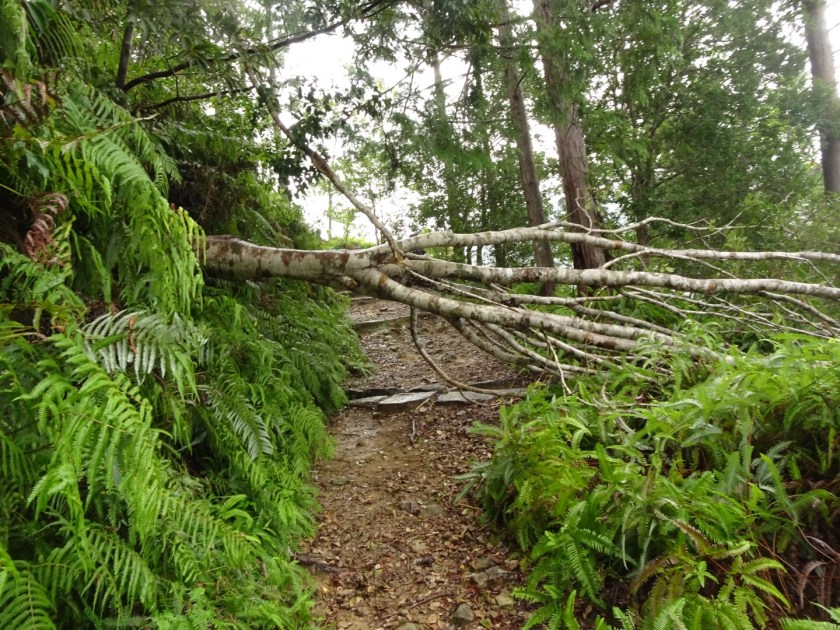
And we see more evidence of the recent typhoon with a number of trees down on our path

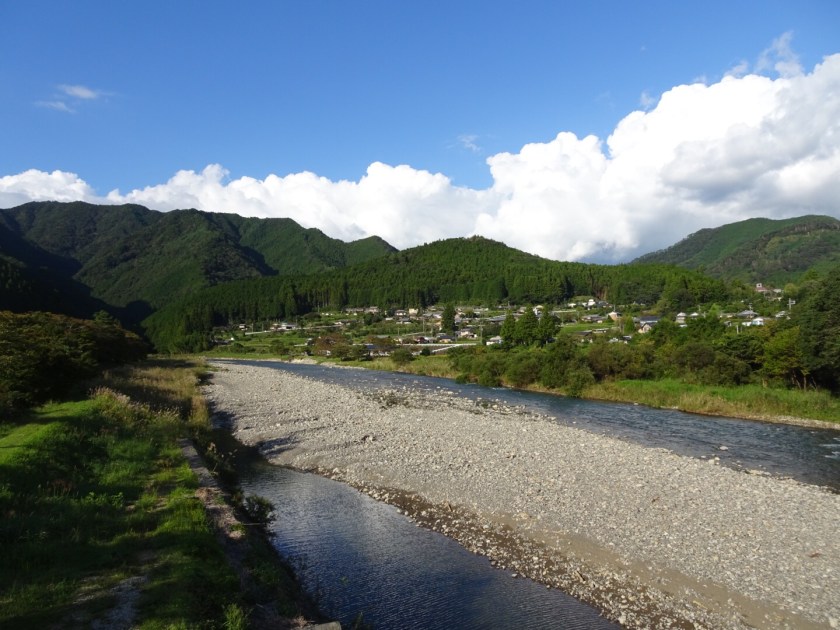
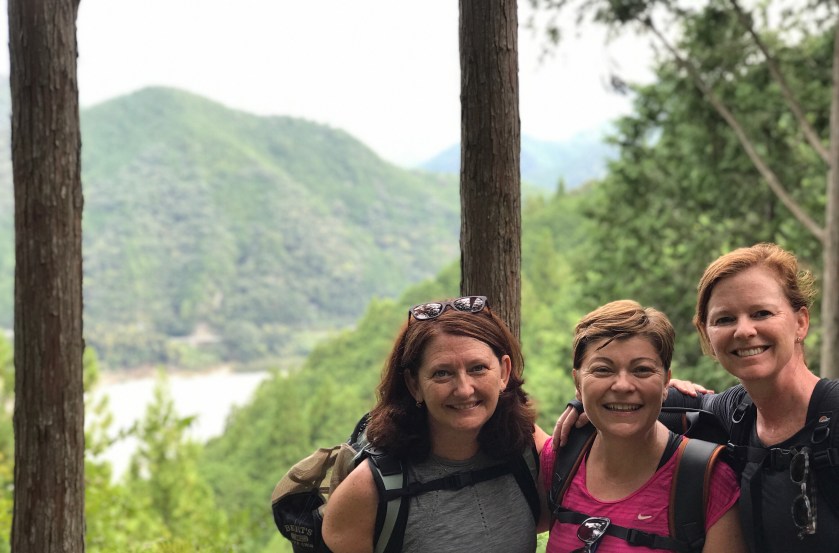
It’s so lush and green everywhere you look, and it’s so peaceful. We have chats and some giggles along the way but also a lot of quiet time just enjoying the sounds of our surroundings. Although we’ve met some people along the trail it’s very quiet and feels like we have the trail to ourselves.

Tonight we stay at Koguchi Shizen no le which was previously a school and you can tell from the corridors and dining hall. It’s not our favorite meal of the trip but we manage to fill up somewhat (mostly on rice and soy sauce). Tonight’s a laundry night and definitely the night the second bottle of smuggled red wine is coming out!

Day 4 : Kogushi to Naschi, the end of the pilgrimage.

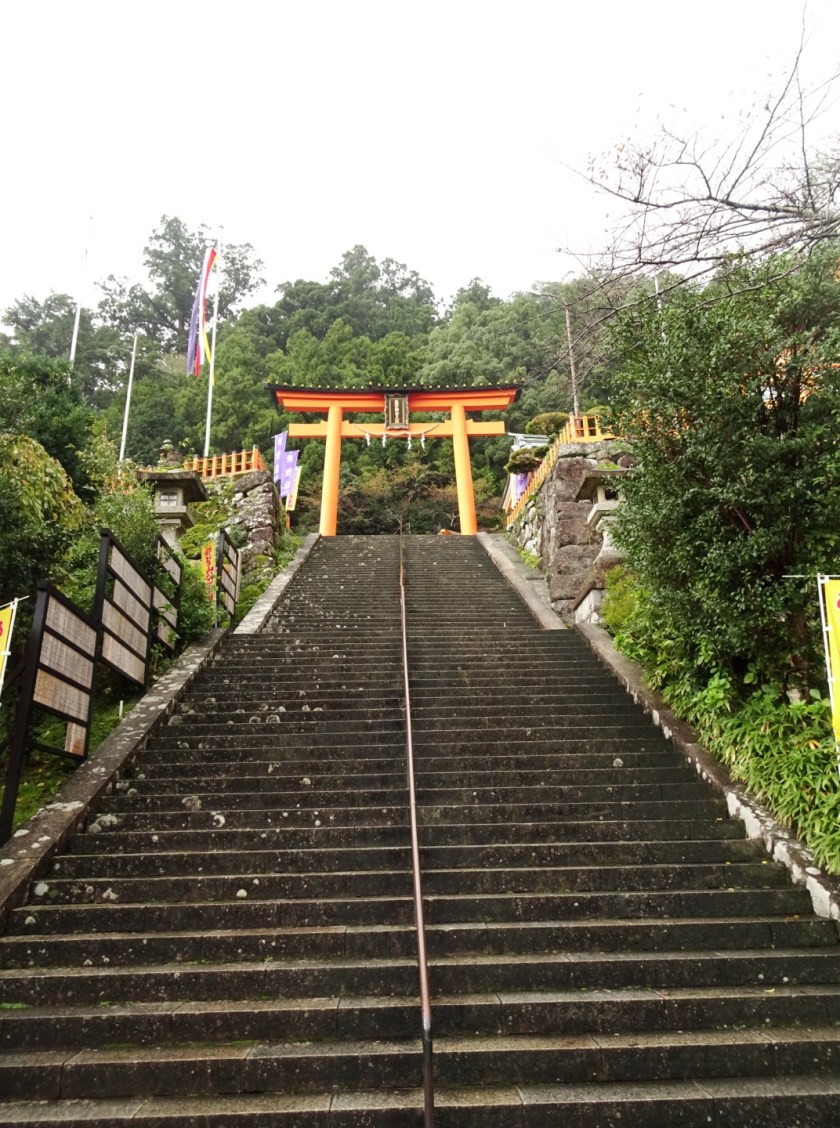
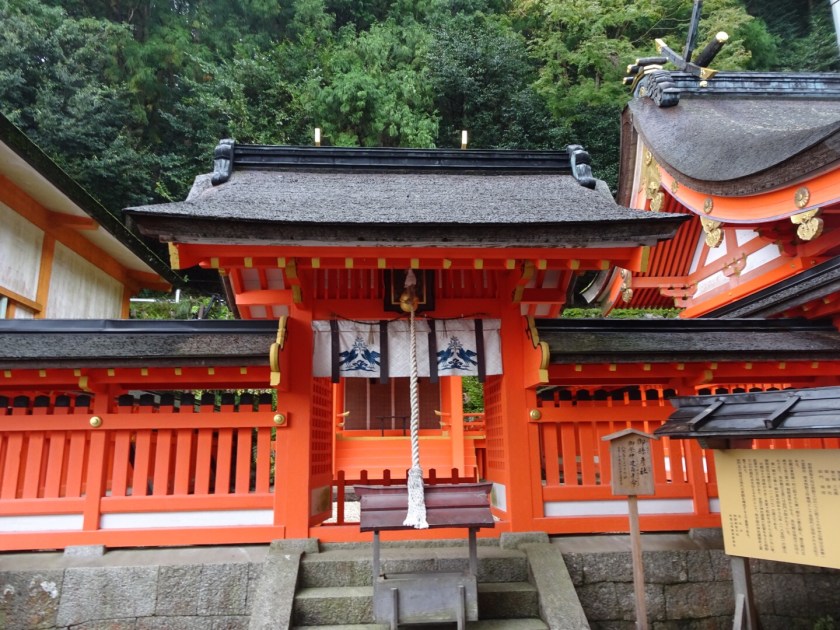
Well unfortunately today we are unable to walk. The last part of yesterday’s walk involved some very slippery steps and a couple of falls so we’re opting for the bus to the end of the pilgrim trail. It’s a rainy day and the mountains are full of cloud so a lot of people have opted not to walk. We arrive at Naschi shrine and climb hundreds of steps to explore the many shrines and temples.

The grand shrine:

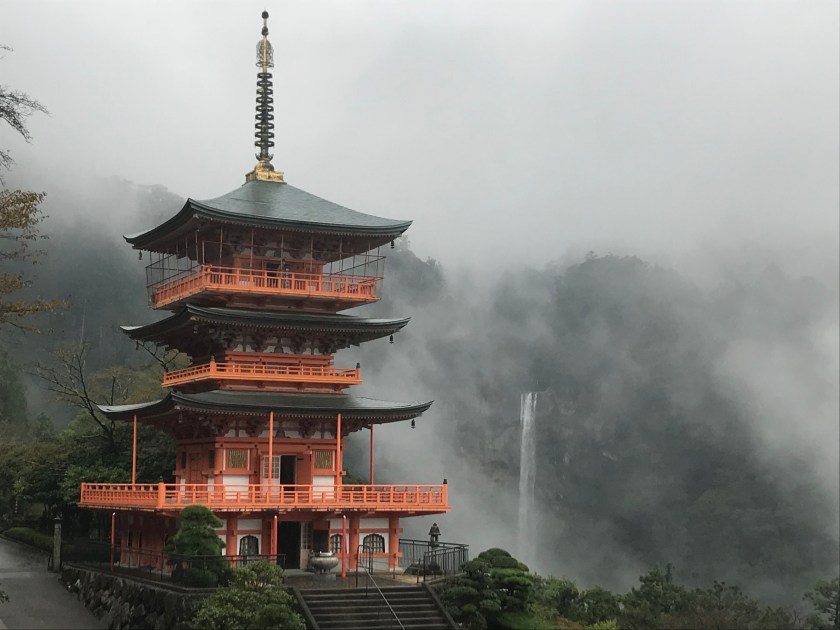
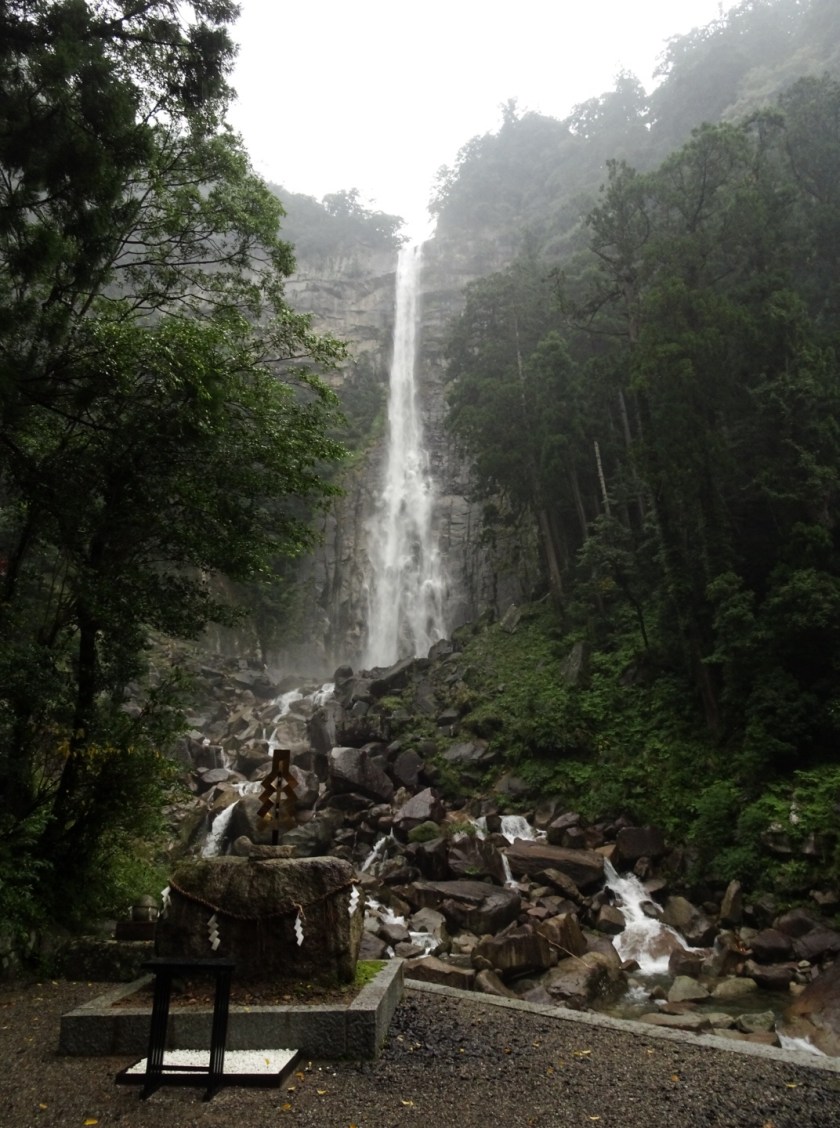
The money shot is the five tier pagoda with the gushing Naschi waterfall beside it. The clouds were rolling in so we were lucky to capture a shot, as a few minutes later you couldn’t see the waterfall at all

We get closer to Naschi falls, the biggest waterfalls in Japan:

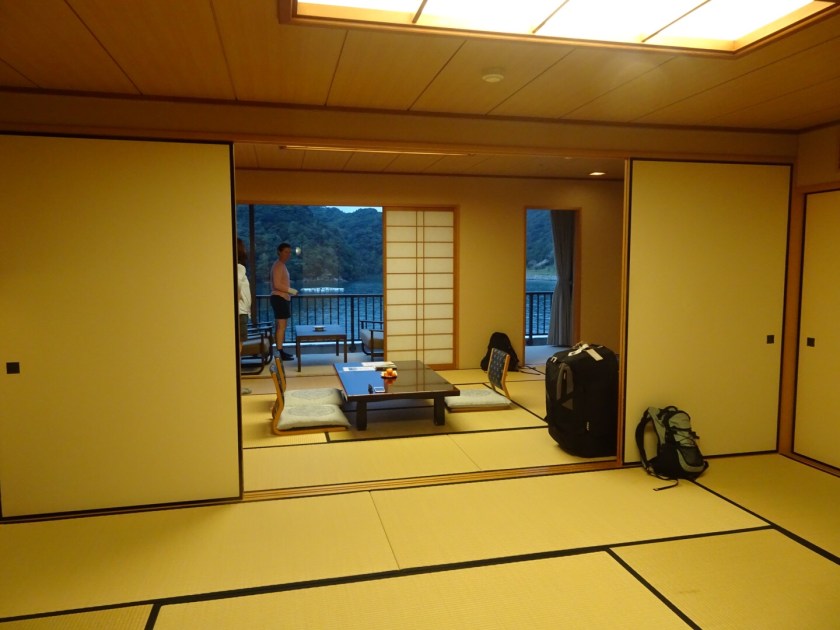
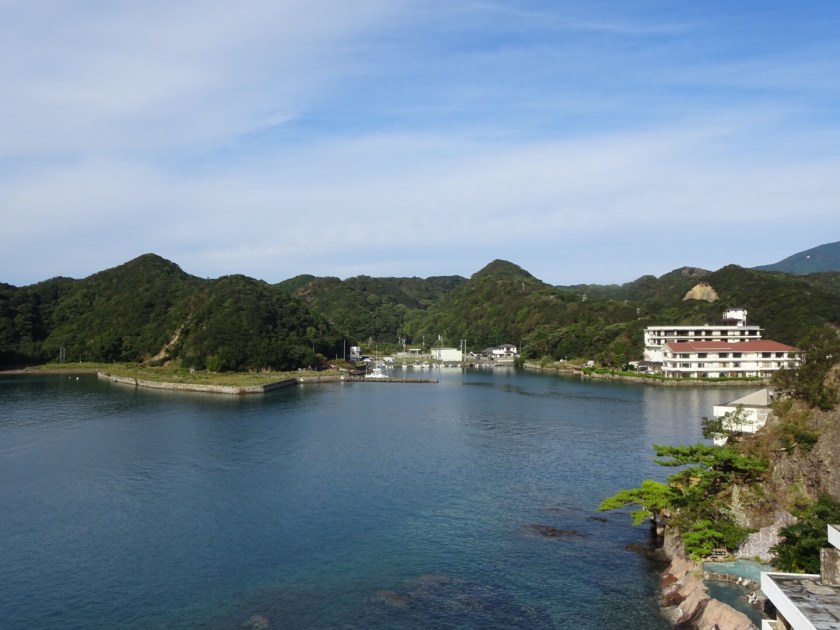
Tonight’s ryokan is actually a hotel resort (still ryokan style) but a lot fancier and spacious and we have our own bathroom with a shower – woo hoo!! It’s called Hotel Nakanoshima and it’s on a private island that we take a ferry to. It’s gorgeous! We have two rooms – one with a table for taking tea and another where the futons will be laid out later and we’ve a view out to the water which is just lovely.

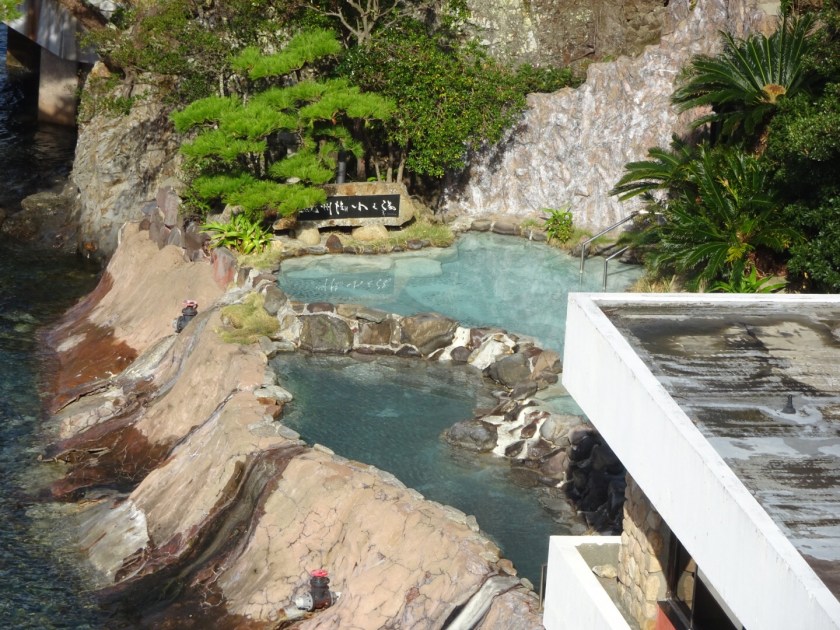
There are a number of onsens on the property both indoor and outdoor and we try a couple before getting into our robes for dinner. This is a view of the outdoor onsen from the top floor of the hotel (taken early morning when no one was in there otherwise I’d have been in trouble!):

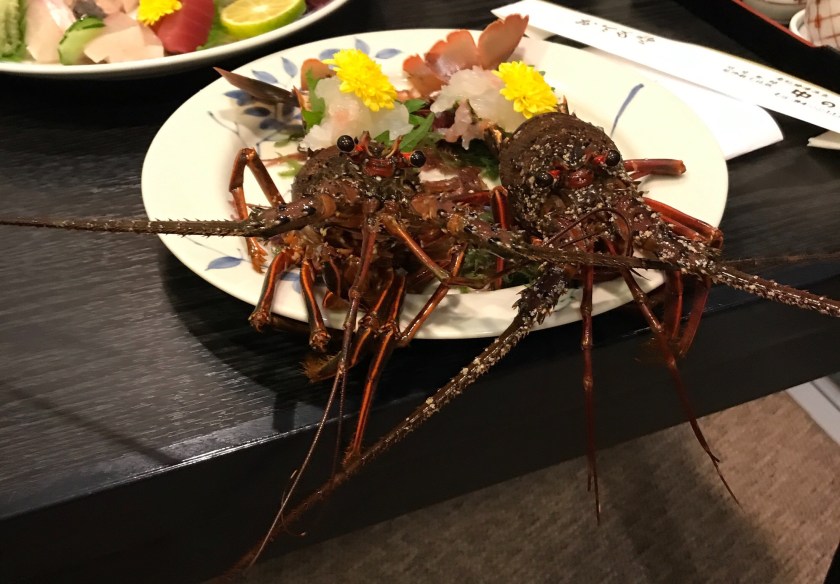
Tonight’s dinner is a bit of a challenge as the waitress doesn’t seem to have any English and she insists on talking to us very loudly in Japanese as we try to communicate and answer her questions. It’s a bit embarrassing but very funny. Eventually we manage to get wine, water and chose a selection of tempura. Again there’s a lot of courses served including salad, sashimi, hot pot, tempura, beef tepanyaki, tofu, lots of different pickles and bits of fish and sashimi lobster… which is still moving when brought to our table.

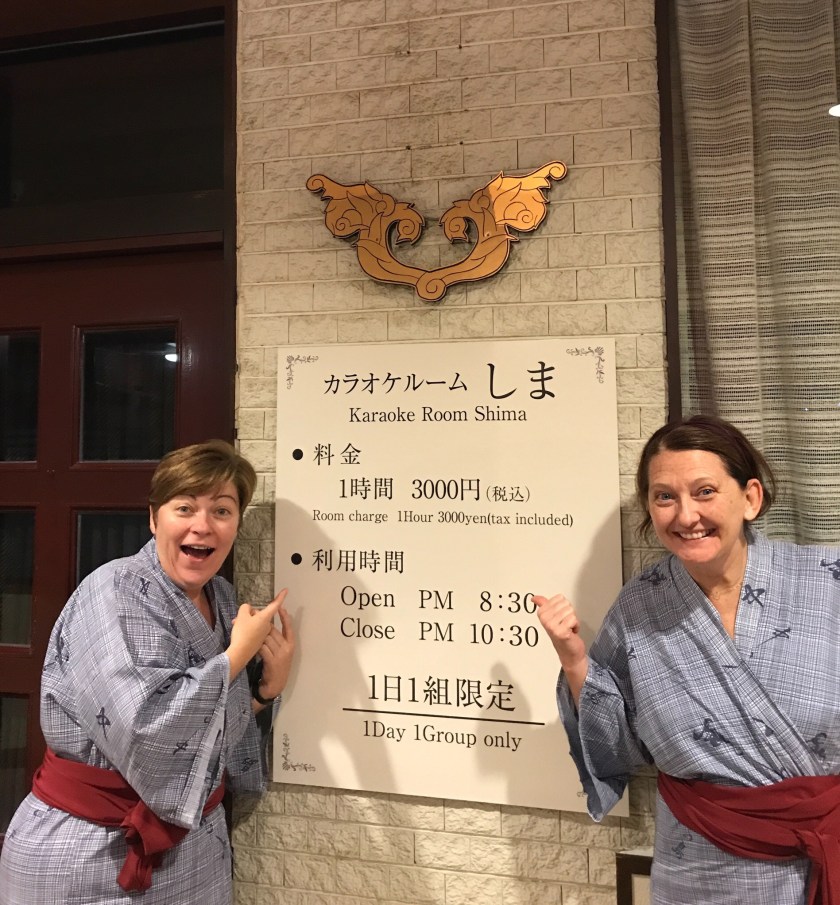
After dinner we have a little wander around the hotel and find a karaoke room but all is quiet. Check out our nice robes though:

Next morning we start the day with a walk around the island. There’s some very nice views out to the water:

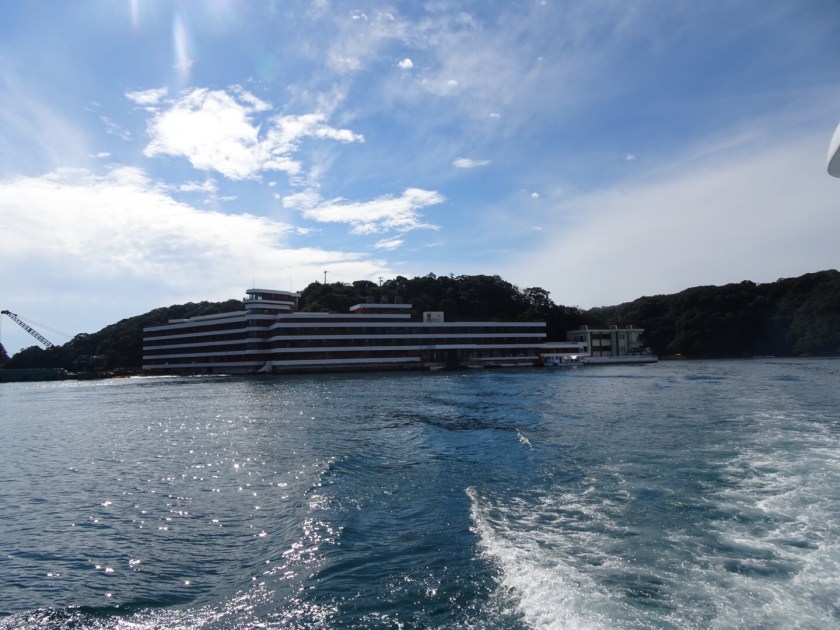
Then after a quick not so “western” breakfast, we bid farewell and get the ferry back to Katsura town for our four hour train journey to Osaka.

The Kumano Kodo has been a wonderful experience and we’re all pleased we’ve done it.