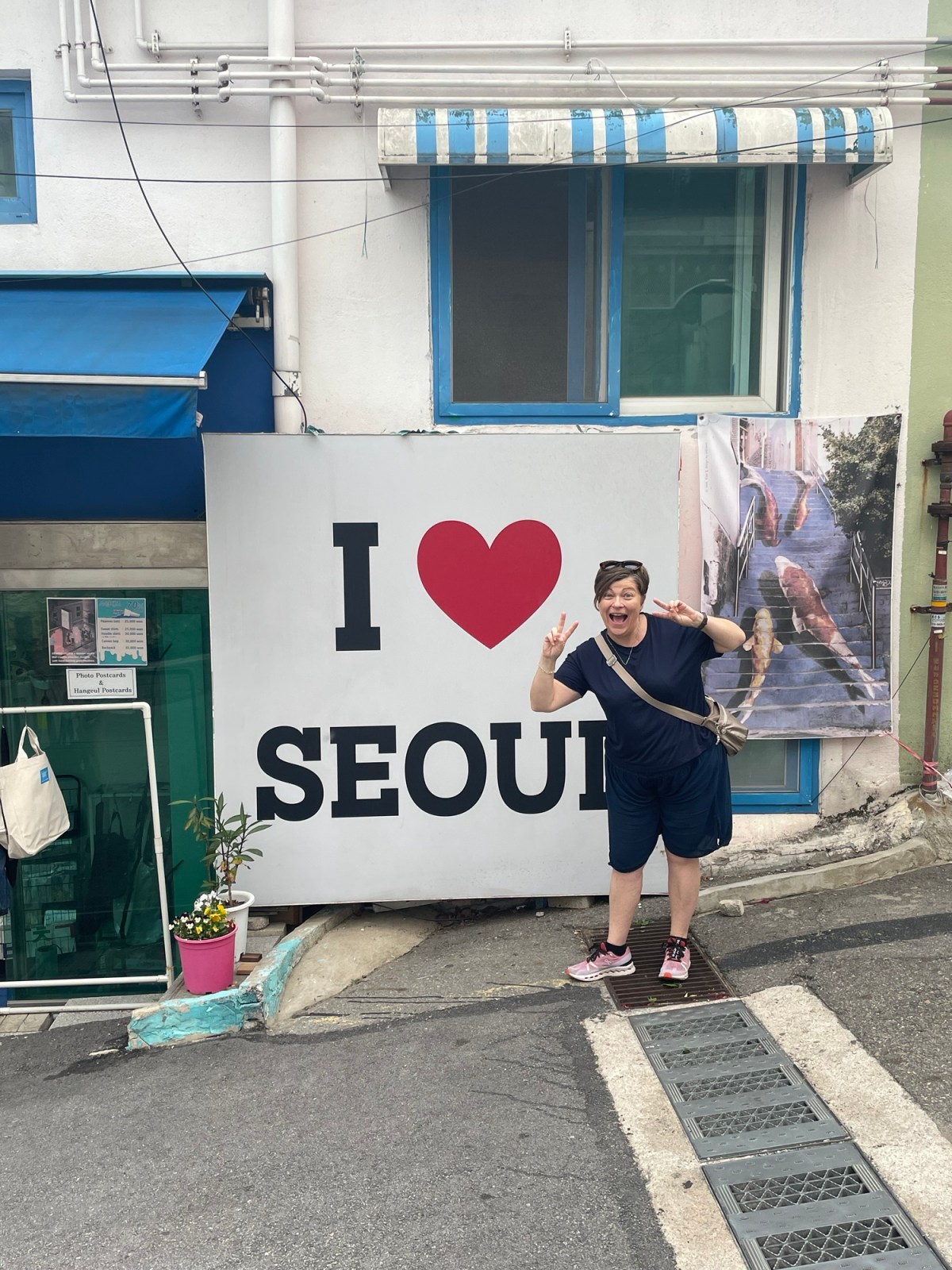
It’s only 2.5 hours on the plane back to Seoul and this time we take the train into the city which is really easy. It’s about 45 minutes and takes us straight to the station close by our hotel. Tonight we’re staying in Hongdae at a funky hotel called L7. Hongdae is a university area so there’s lots of action here and lots of young people milling around … sure we fit right it!! There are lots of bars so we have “one” in what was definitely the most apt for himself!!

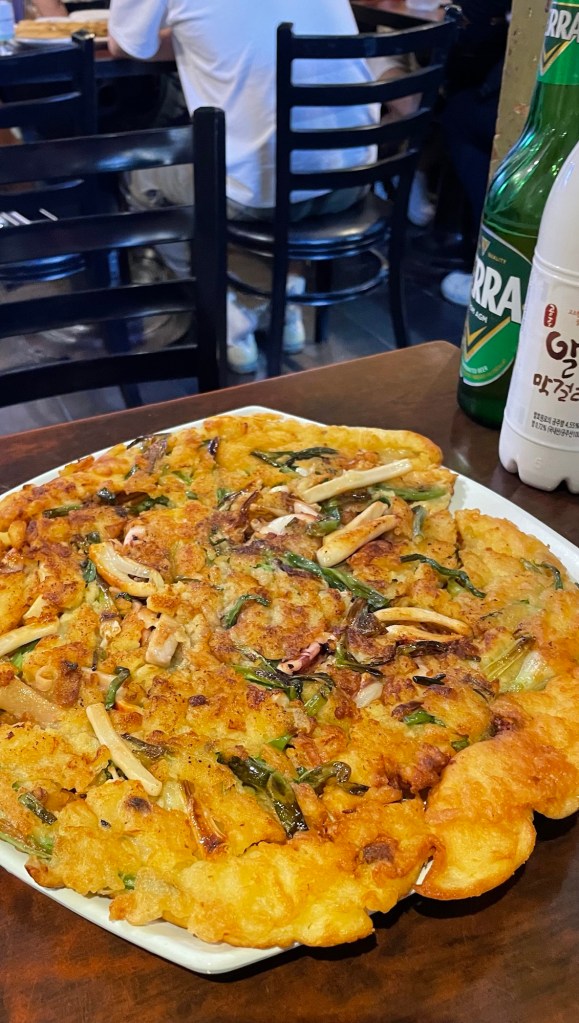
For dinner we chose a really cool looking restaurant which specialises in pancakes that are being cooked out front and are definitely a selling point to invite us in. We chose a seafood pancake (we’ve had so much meat in Mongolia it seems the right choice!) and sea snails. The pancake is huge and we are not able to finish it. We actually get chatting to some girls from Hong Kong who have opted for the pancake selection. It is served on a huge platter and they haven’t a hope of finishing it – they try to convince us to have some of theirs and we try to convince them to have some of ours!
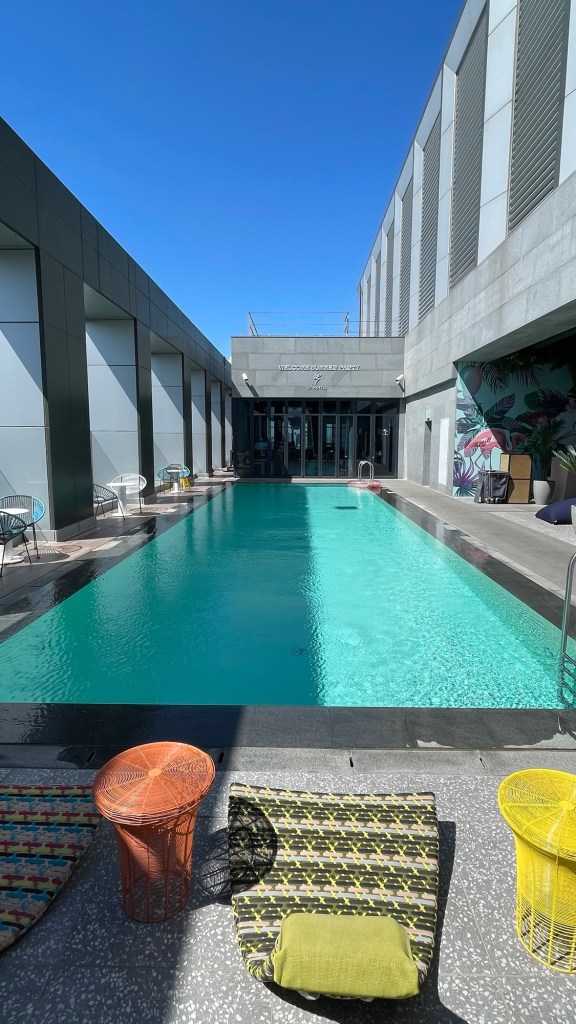
Our hotel, although we don’t have much time to enjoy it, is really cool and has a nice rooftop pool. Unfortunately it doesn’t open until 10am so I don’t get a chance to use it as we are off this morning to catch the train to Jeonju.
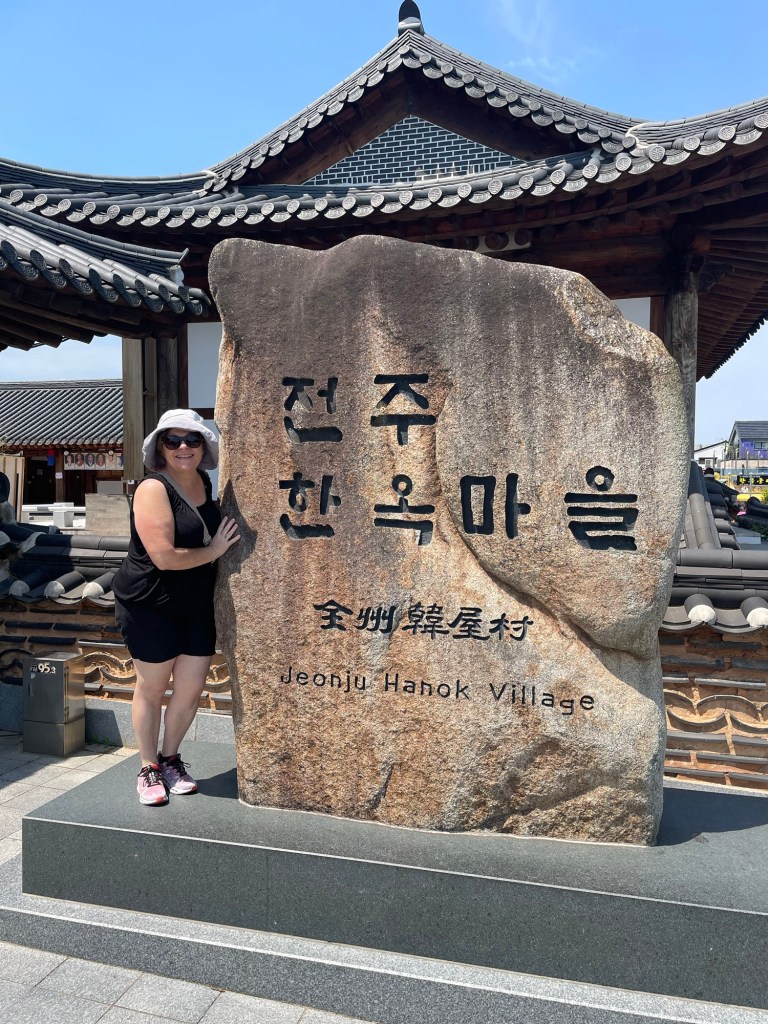
We take a two hour train journey to Jeonju, the largest Hanok Village in Korea, with about 700 Hanok (traditional Korean house) buildings around Pungnam-dong. It is the only Hanok complex in a downtown area in Korea. It holds important cultural heritage including the Gyeonggijeon shrine, Omokdae, and Confucian School. Other cultural facilities are dispersed in every corner showcasing Korean food, Korean paper, Korean songs, Korean costumes, and oriental medicine. We are staying in a beautiful hanok and it is gorgeous…

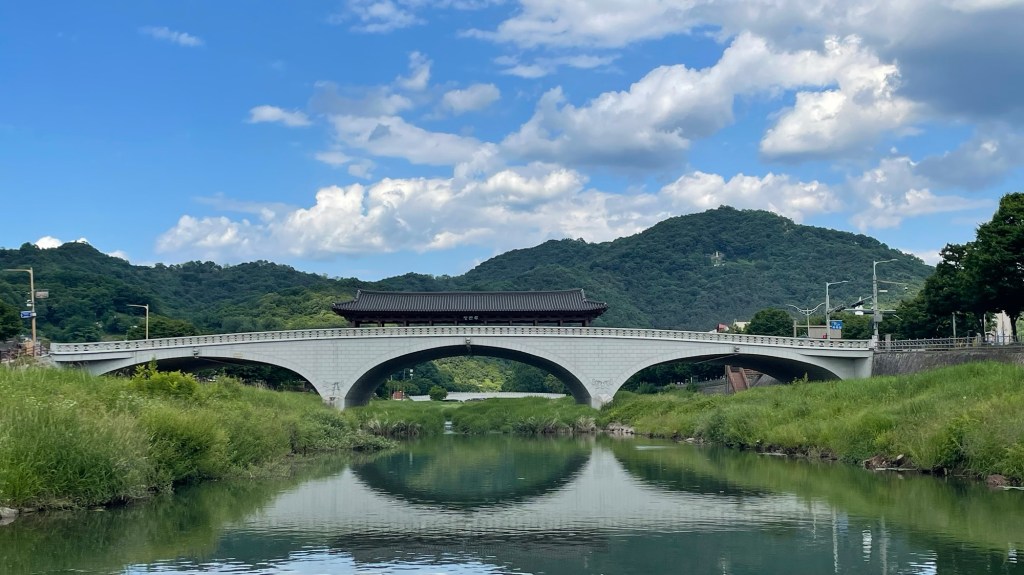
Jeonju is also known as the slow city because of its relaxed pace. We head out for a walk and are soon by the river which has a number of picturesque bridges – this one is called 5 rainbows.
We walk through the market area and it’s very quiet. A man walking by says hello to Shane and seems very keen for a chat – we reckon he might be the local crazy! He asks Shane where he’s from (in some very broken English) and shouts “handsome” at him. I’m not getting a look in by the way! He points to Shane’s nose and says “oooh handsome”… we are in stitches. He gives us a wave and a big happy “bye bye” as we get to a crossing and off he goes. Hilarious!
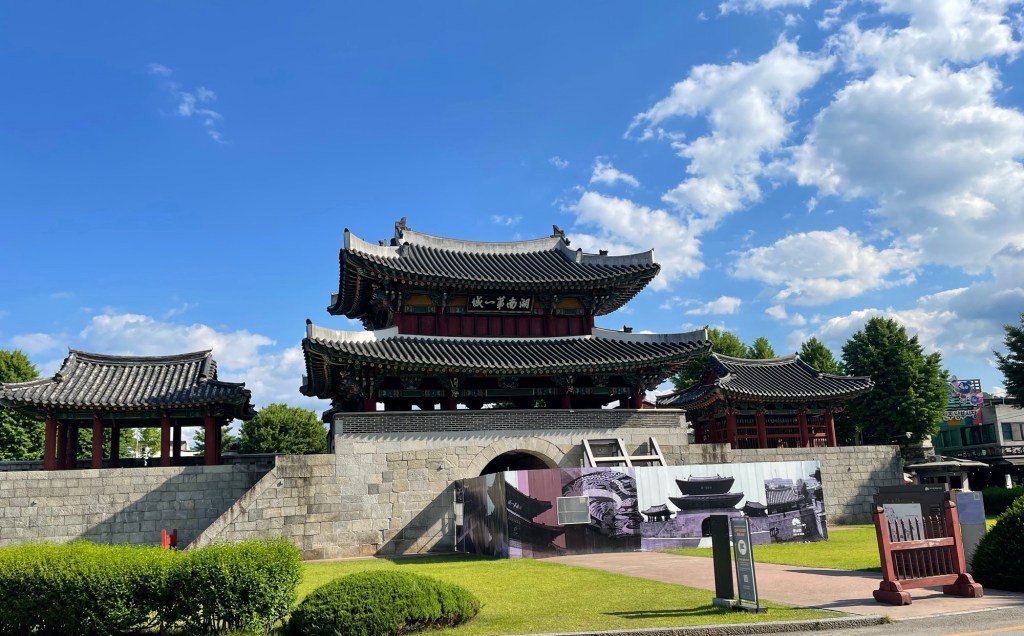
We continue to the East gate of the city – Pungnamdong gate which is the only remaining of the original four.
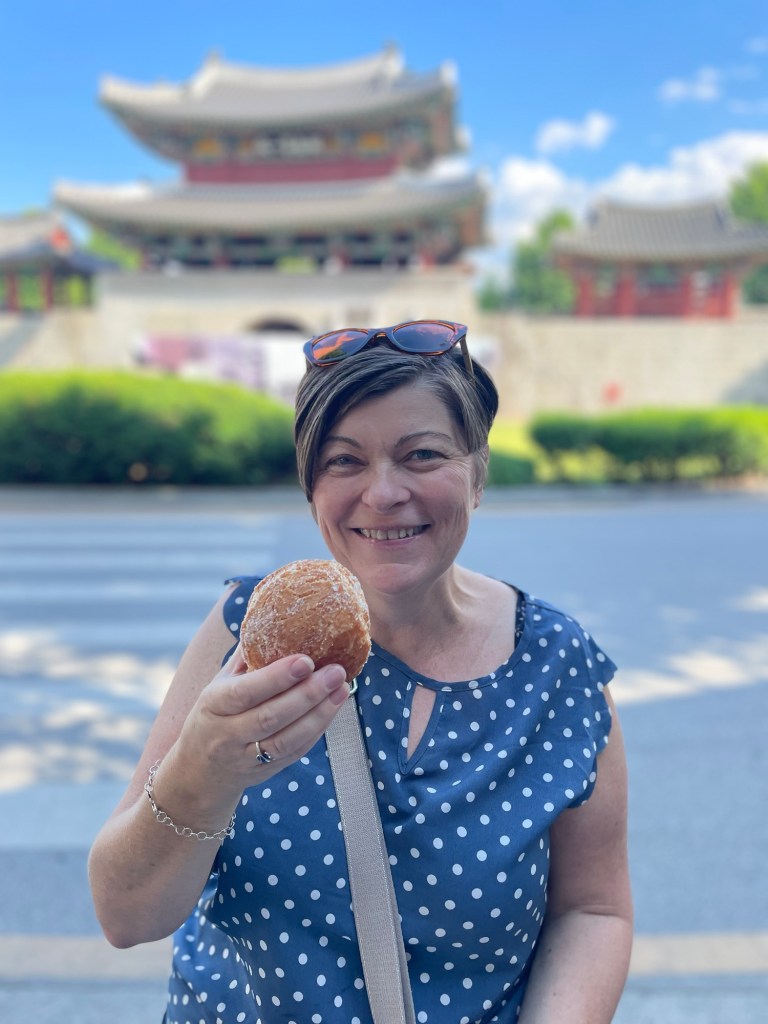
Jeonju is a UNESCO listed city of gastronomy so when we pass a shop that has a bunch of large round donut looking baked goods, I have to try one! All the writing is in Korean so there’s a risk it could be filled with bean paste (not my favourite thing) but I risk it …. OMG an amazing light sugary, airy old school donut – love it!!
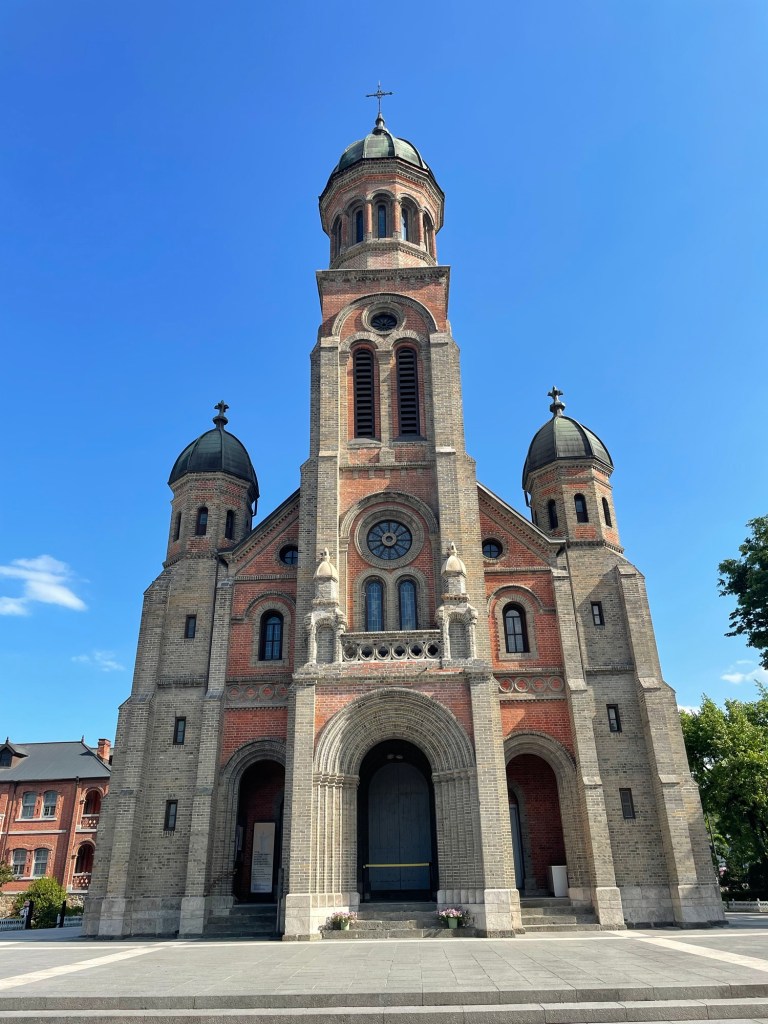
Next up is Jeondong Catholic Church, the site where Blessed Martrys Paul Yun Ji-chung & James Kwon Sang-yeon were beheaded on December 8, 1791, during the Shinhae Persecution. They were the first martyrs of the Catholic Church in Korea. In 1801, during the Shinyu Persecution, three brothers were martyred by dismemberment. Then, later, two more people beheaded. Among these martyrs, three were beatified by Pope Francis in 2014.
In 1908 the new church construction began using stones from the Jeonju fortress wall as cornerstones and it is said that some of the stones would bear the marks of some of the martyrs as their decapitated heads hung along the fortress wall. Many faithful from the town, as well as from surrounding areas helped with the construction which was completed by 1914. Jeondong Catholic Church was the first western-style building in the region.
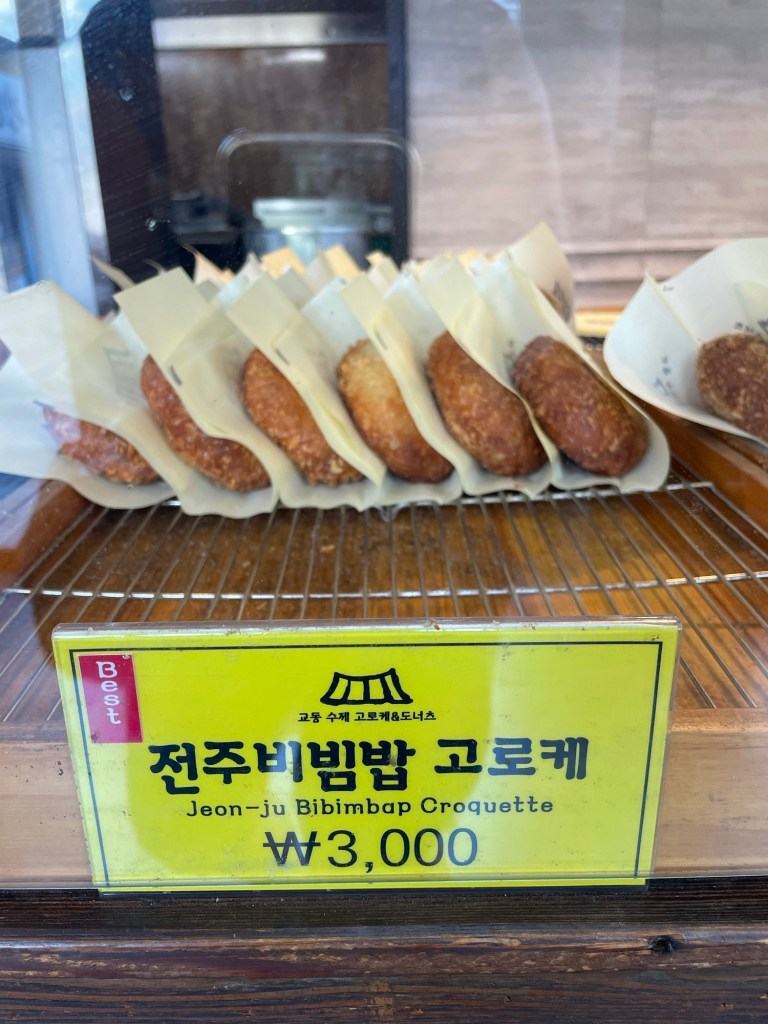
There’s a lot of potential for snacking in this town and a lot of things on our list that we want to try. When we pass a window filled with pastries I insist on trying the bibimpap one… I thought it was the famous bibimbap bread but its actually a croquette – tasty all the same.
The streets are all beautiful, everywhere we look there are hanoks with the beautiful roofs. It’s like going back in time. After building up a fairly decent step count in the heat we stop for a little rest.

Back to the hanok for a wee rest before dinner, I need it as I’m becoming a beer drinker!!! I love the door into our private courtyard:

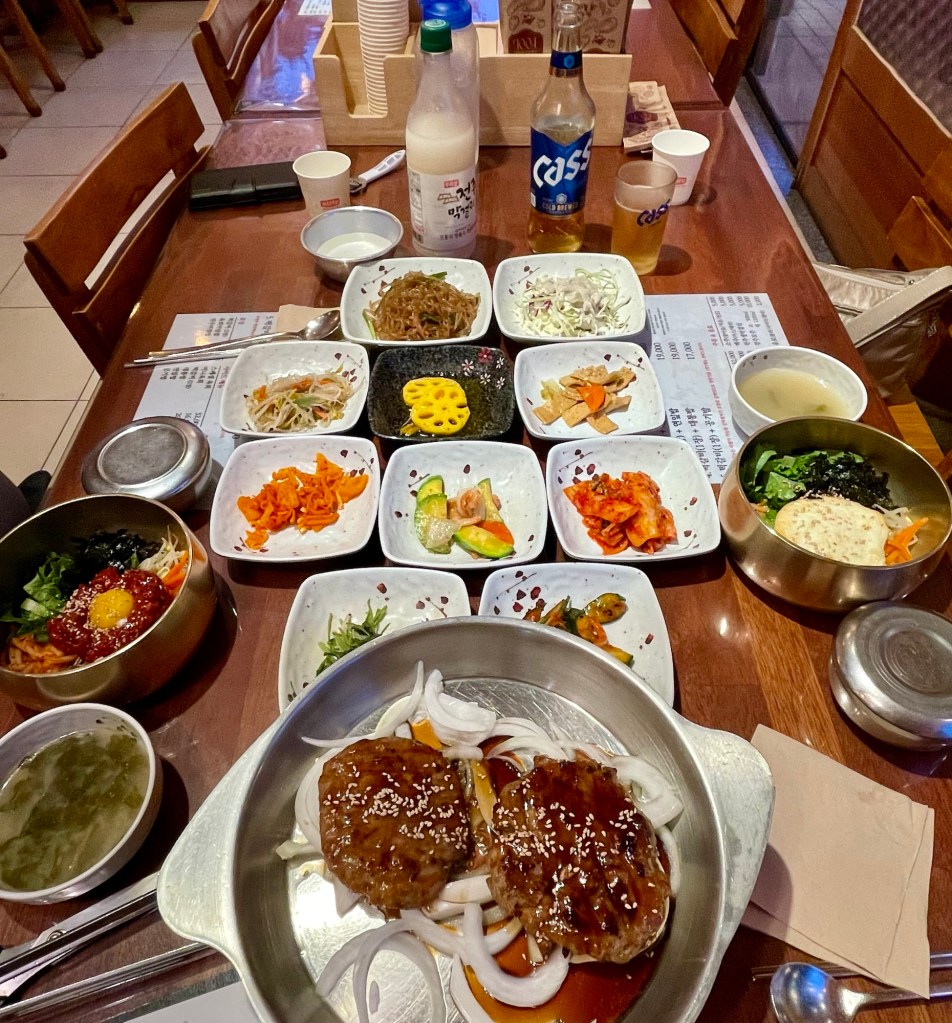
We head to a restaurant for the traditional Jeonju bibibap [reminder: this is the bowl with rice and various veg served with an egg on top], which is served with pork patties that are cooked at the table. The spread that comes out when we both just ordered one thing from the menu is quite remarkable.
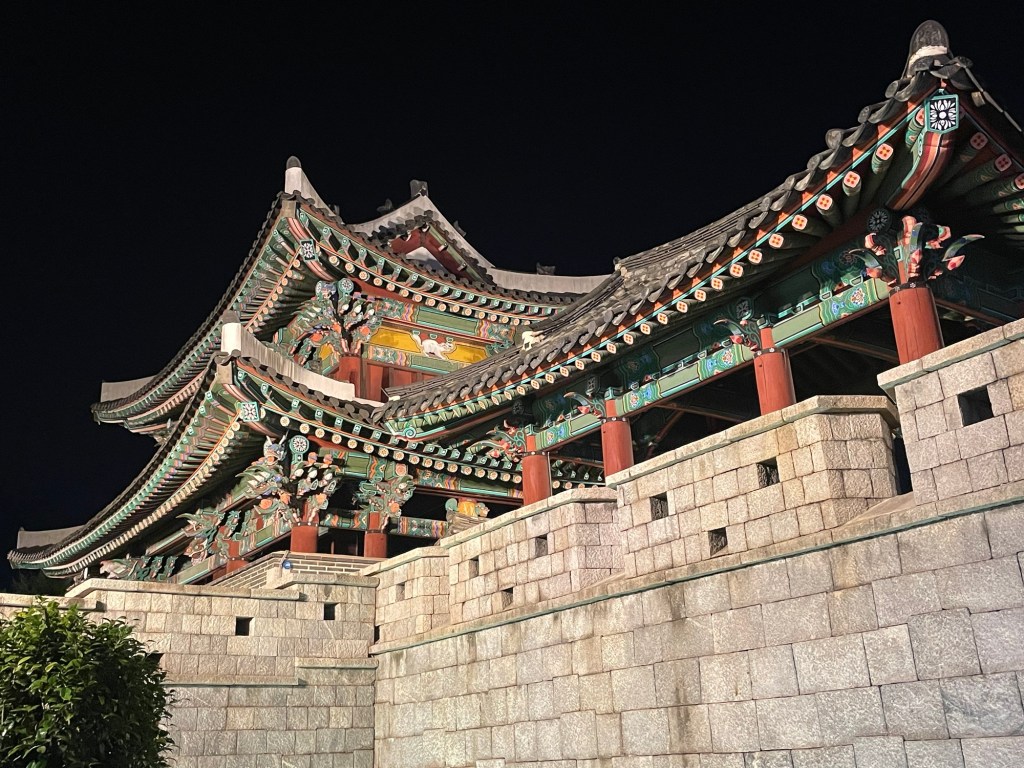
Time to work off some of this food so we take a walk around the streets and happen upon the gate again. It looks very nice lit up by night.
We head toward home and are stopped by a man with his wife and another couple who ask Shane if he speaks English. He says yes and they start talking to us, asking where we are from and if we are enjoying our trip. He is Korean but lives in California and he introduces us to the other man who is none other than the mayor of the county in which Jeonju resides. We shake hands and there’s lots of “beautiful place…. having a wonderful time” type conversation. The mayor is interested to know where we are staying and if we are happy with our accommodation. They tell us there’s a nice viewing platform around the corner and wish us a good holiday. How nice!!


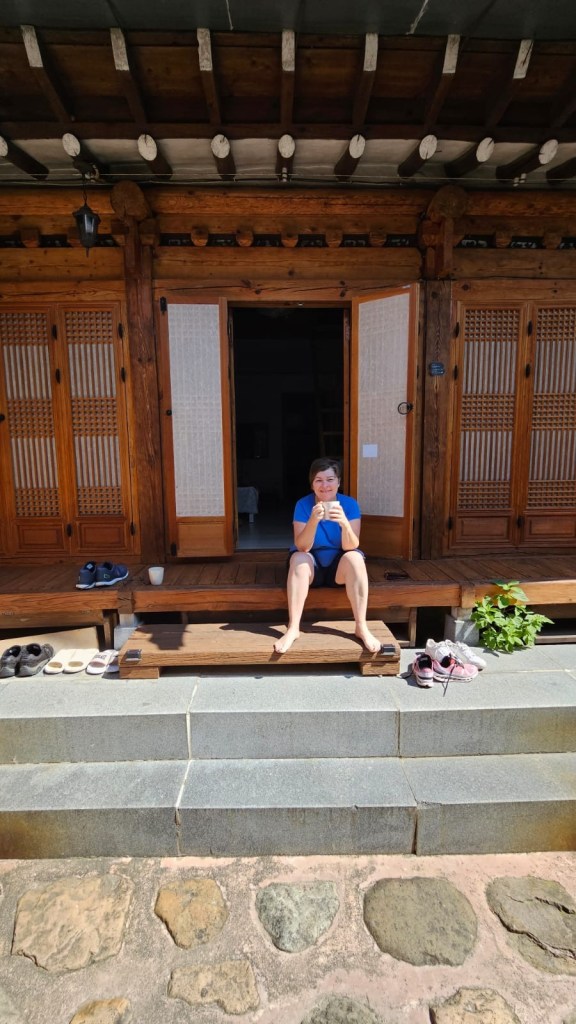
Next morning we have a leisurely cup of tea in this slow city, enjoying our hanok, before setting off to explore more of this beautiful place.
More rambling around the streets and exploring the different buildings.
Just like at the palaces in Seoul, visitors are very keen to play dress up so there are many many shops where you can hire the beautiful traditional outfits.

We visit Gyeonggijeon shrine, the main shrine in town and manage to be visiting on culture day so it’s free in! The shrine is a huge complex of buildings originally built in 1410 and remodelled in the 17th century after damage from the Imjin war.

We climb the narrow stairs in this small ornate building and see a large book which we learn is the only remaining copy of the Annals (that’s a recorded history) of the Joseon Dynasty. In 1592, when the Japanese invaded Korea, they destroyed many historic buildings, works of art, and important documents. Predicting the destruction some local heroes (as the exhibition calls them), managed to save one of the four annals that were kept in different locations around Korea. Had it not been for them, 200 years of Korean history would have been lost forever.
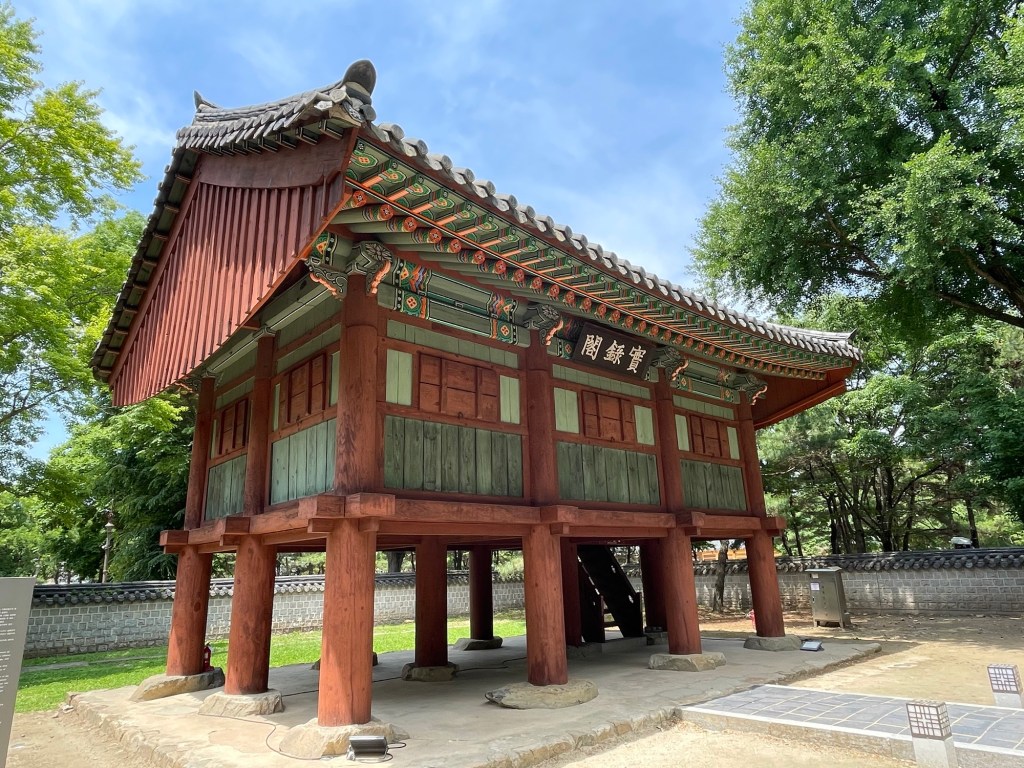
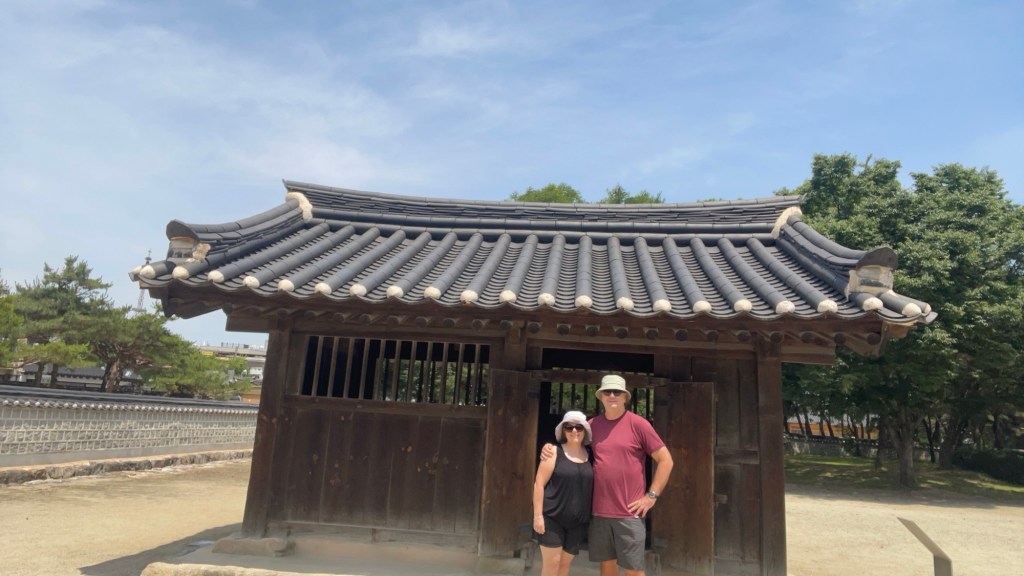
There is lots to explore on this beautiful sunny day.


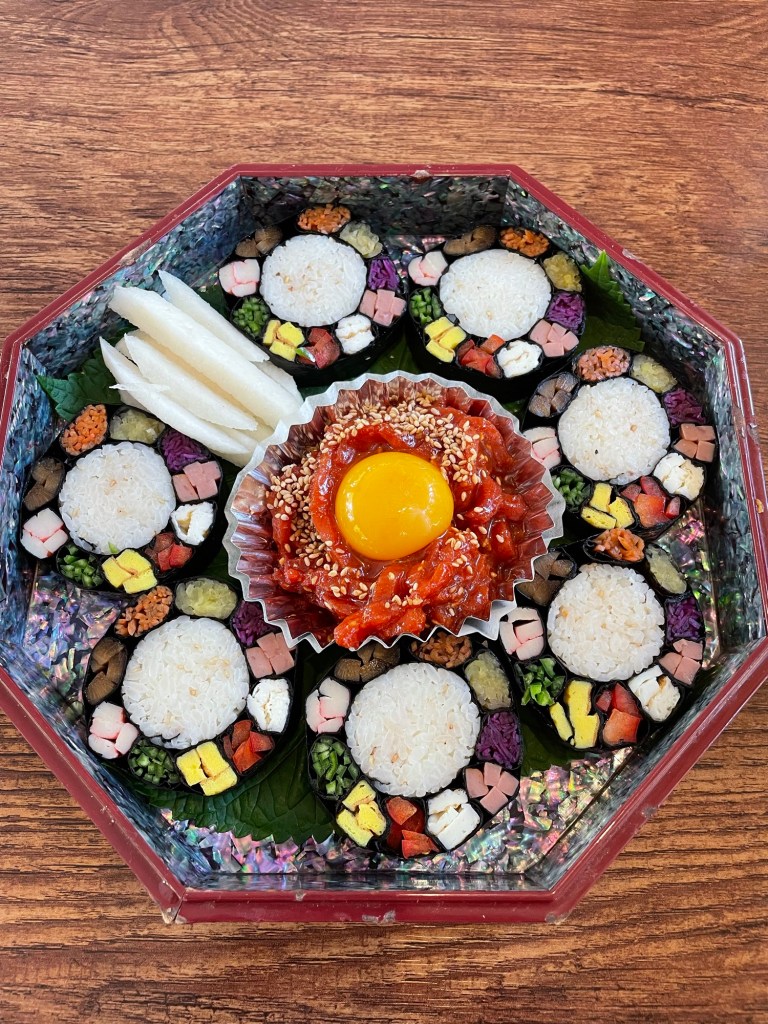
It’s time for lunch and this is definitely the prettiest looking food we’ve had. It’s described as resembling a jewel and can only be enjoyed in Jeonju. It has egg white, yoke, red cabbage, carrot, burdock, cucumber pepper, green pepper, meat (raw beef!), ham and pickled radish. A total of nine ingredients that allow you to experience the taste of Jeonju.
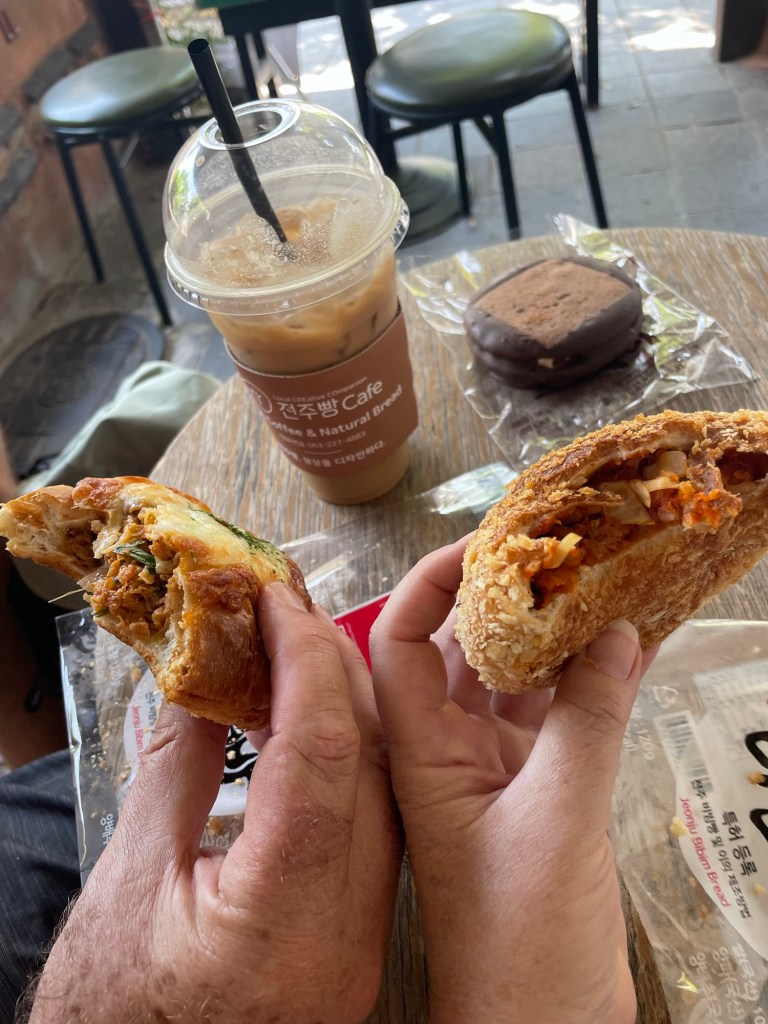
Following our gimbap starter we try the famous Jeonju bread – one filled with bibimbap and one bulgogi – I love it. A choco pie and some dodgy tasting peanut/bean tasting drink and we’re on the move again.
Well only as far as the option for dessert!!! I’ve seen these frozen fruit skewers all over and been dying to try them. They’re like toffee apples i.e. the grape and strawberry are covered with a thin glassy layer of toffee.

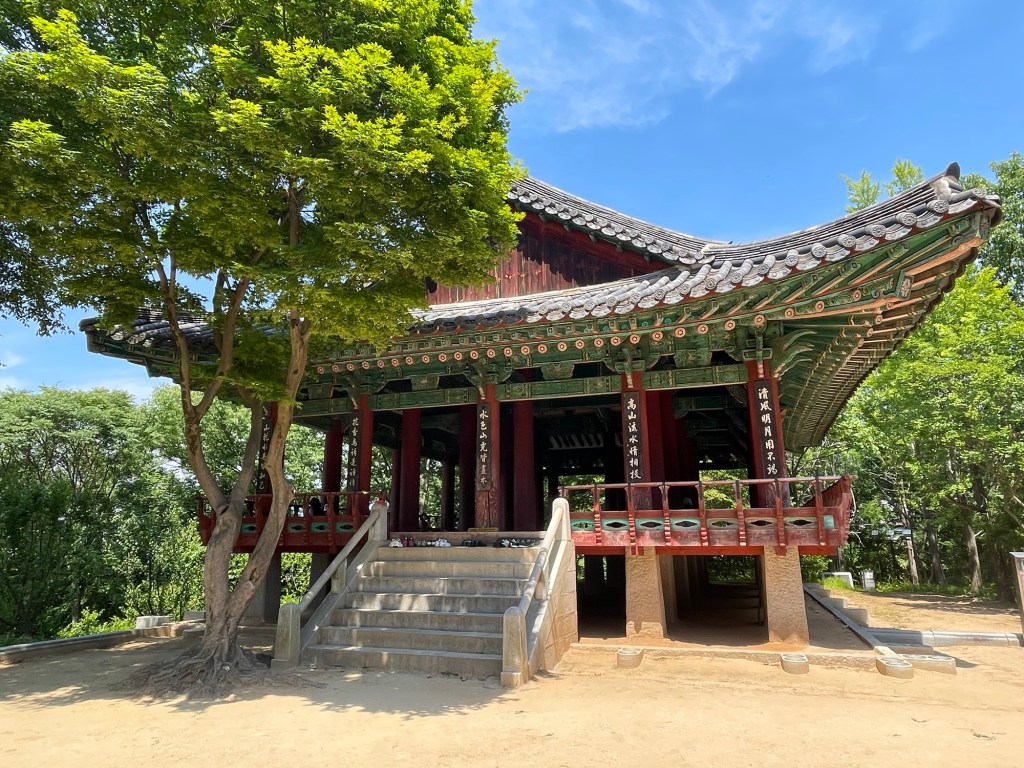
Time to get some steps in and walk off all that delicious lunch. We climb up to a pavilion where we can look out to the town. These platforms are places where locals gather and hang out in the shade – once you take off your shoes of course!
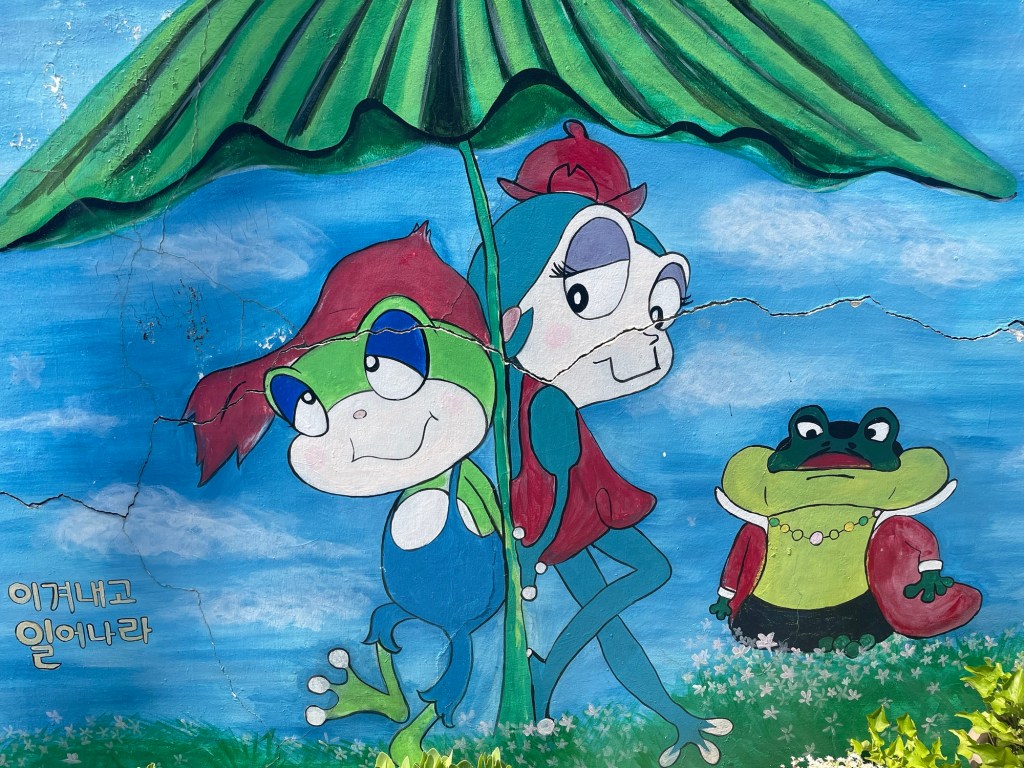
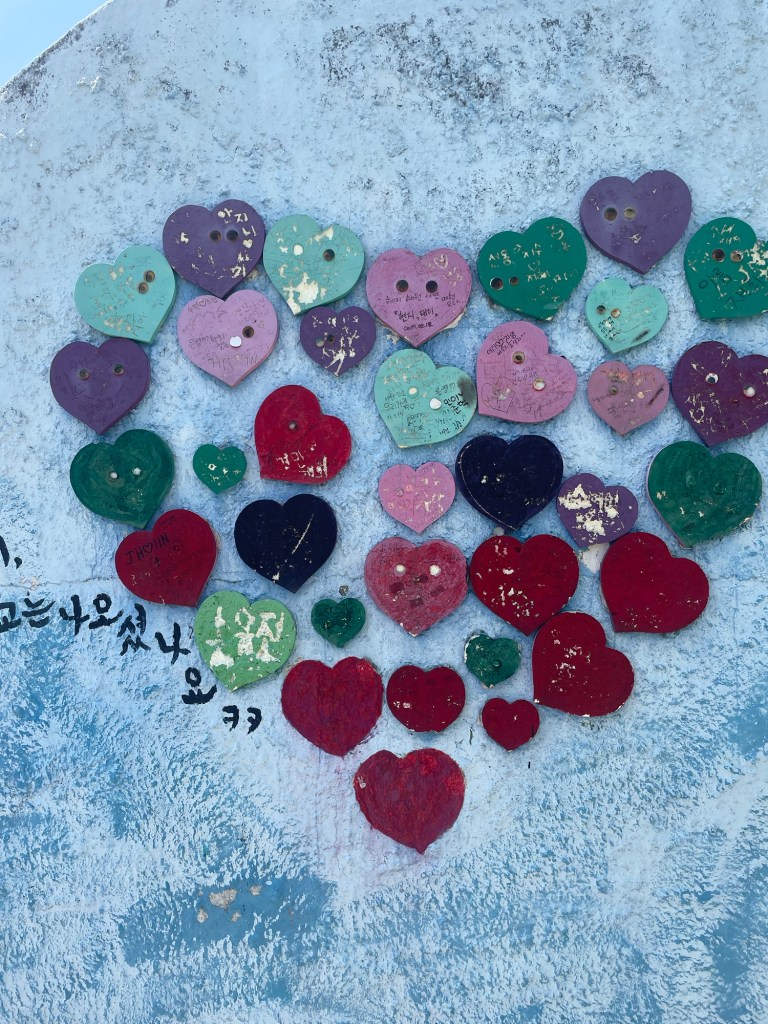
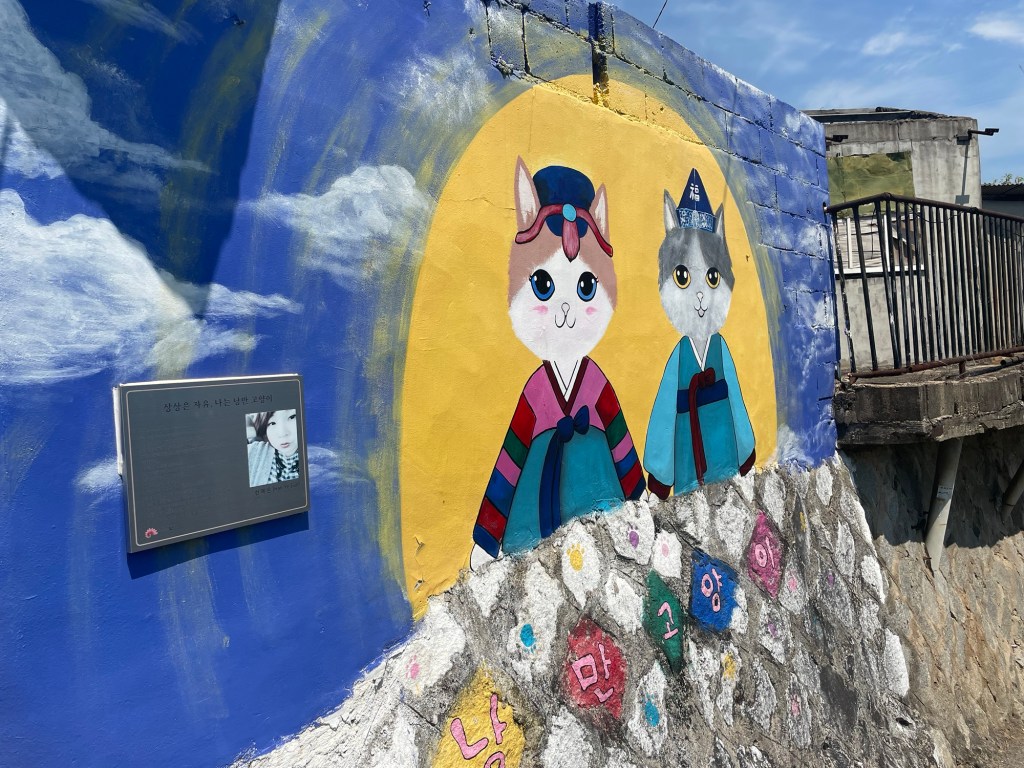
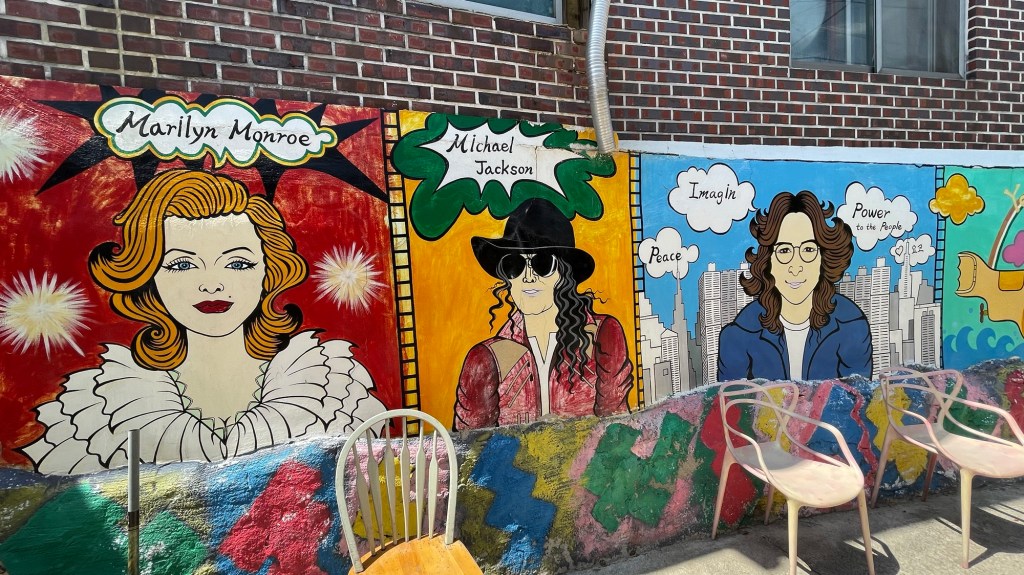
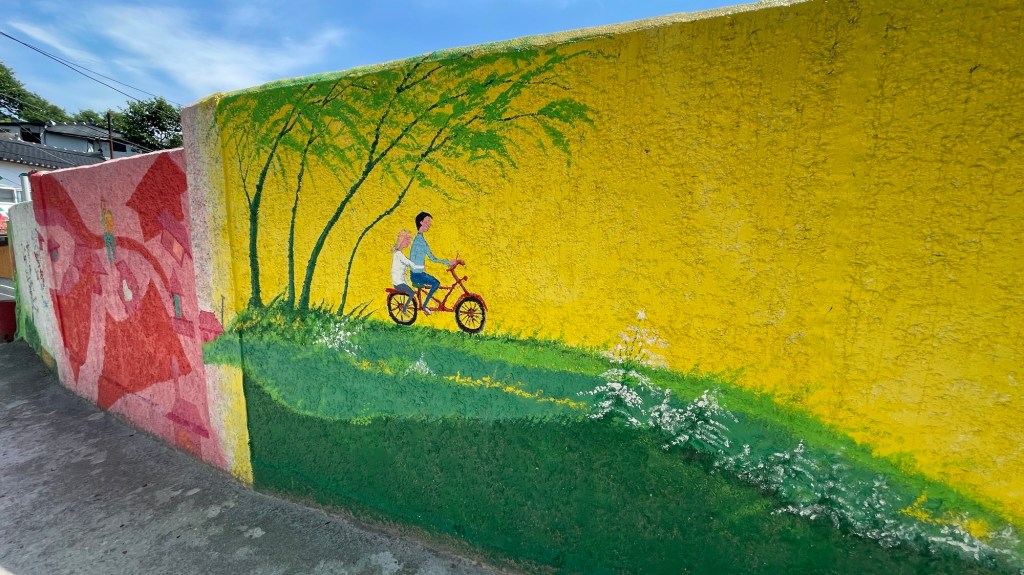
We continue to climb further to a mural village which, while it’s not the most exciting set of murals we’ve ever seen it’s very pleasant to ramble around.

Very bright and colourful…..

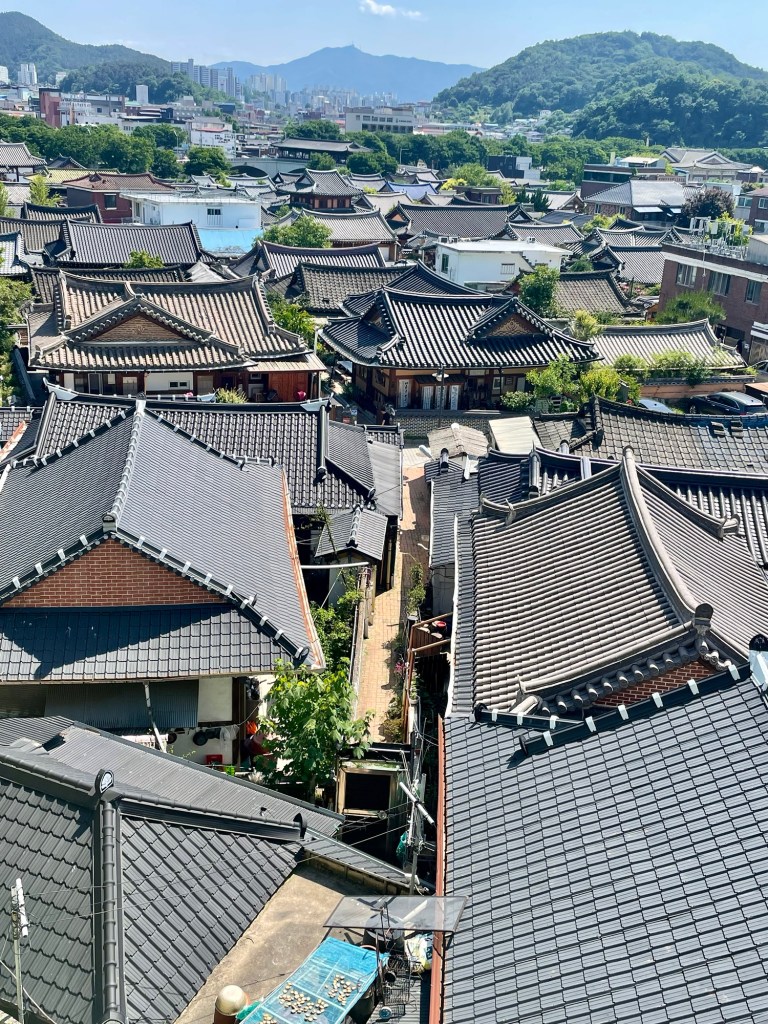
We climb further through some woods and there are nice views from up here looking out over the buildings. You gotta love those hanok roofs.
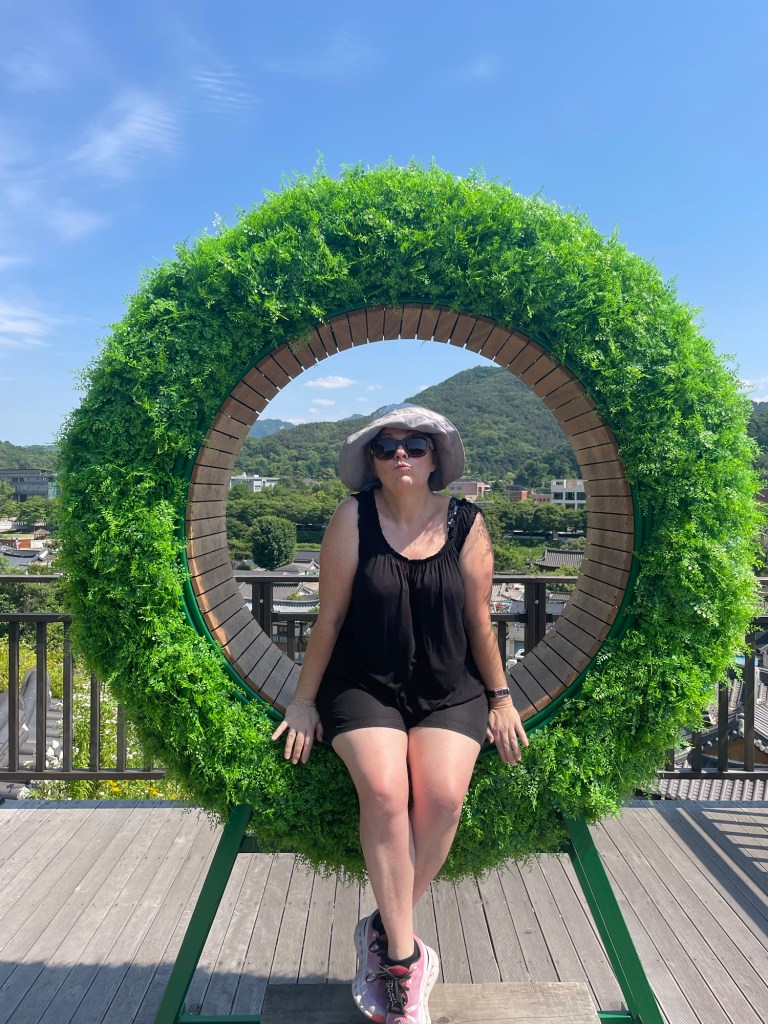
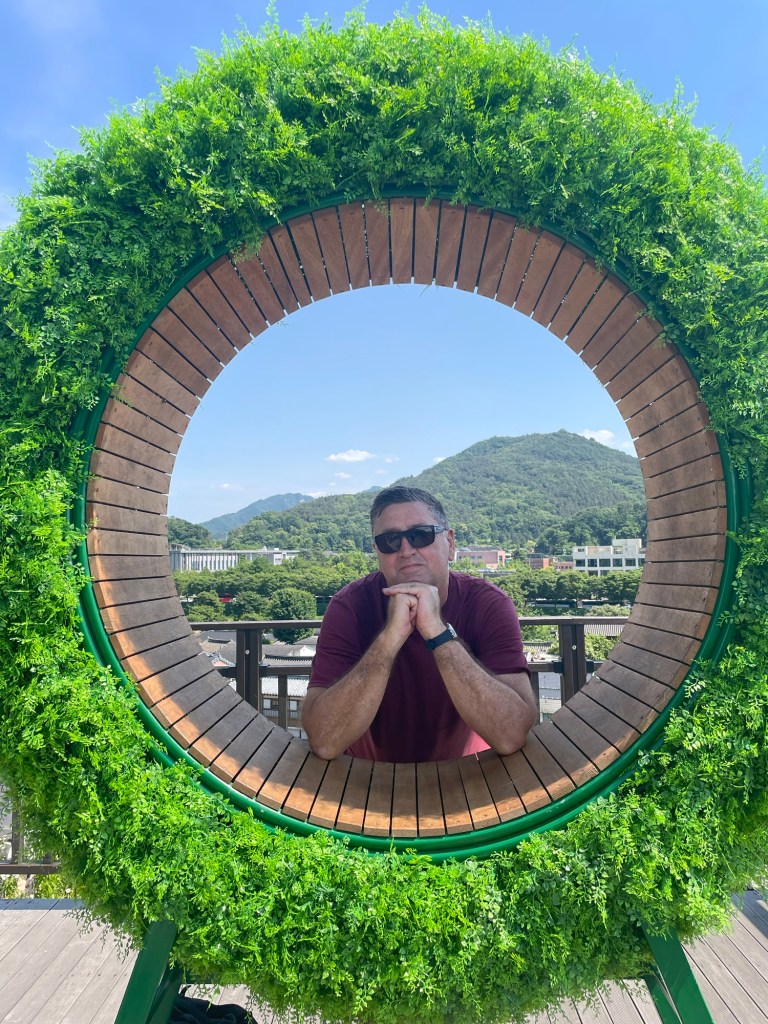
The things that are done for an insta shot. We just don’t go in for that nonsense!! 🤪
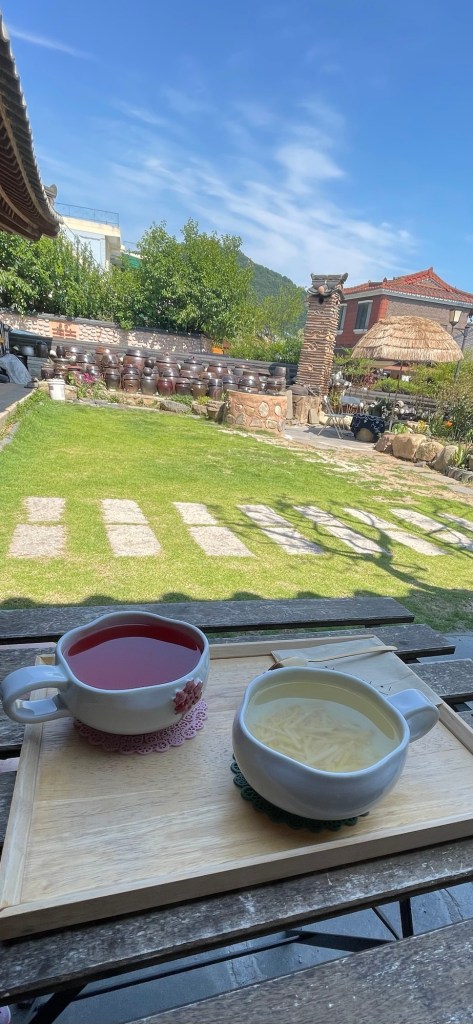
Making our way back down we stop at a beautiful tea garden for some traditional Korean tea. I’ve no idea what flavour we got but it’s fruity and lovely and we are glad to be out of the sun and enjoying some shade.
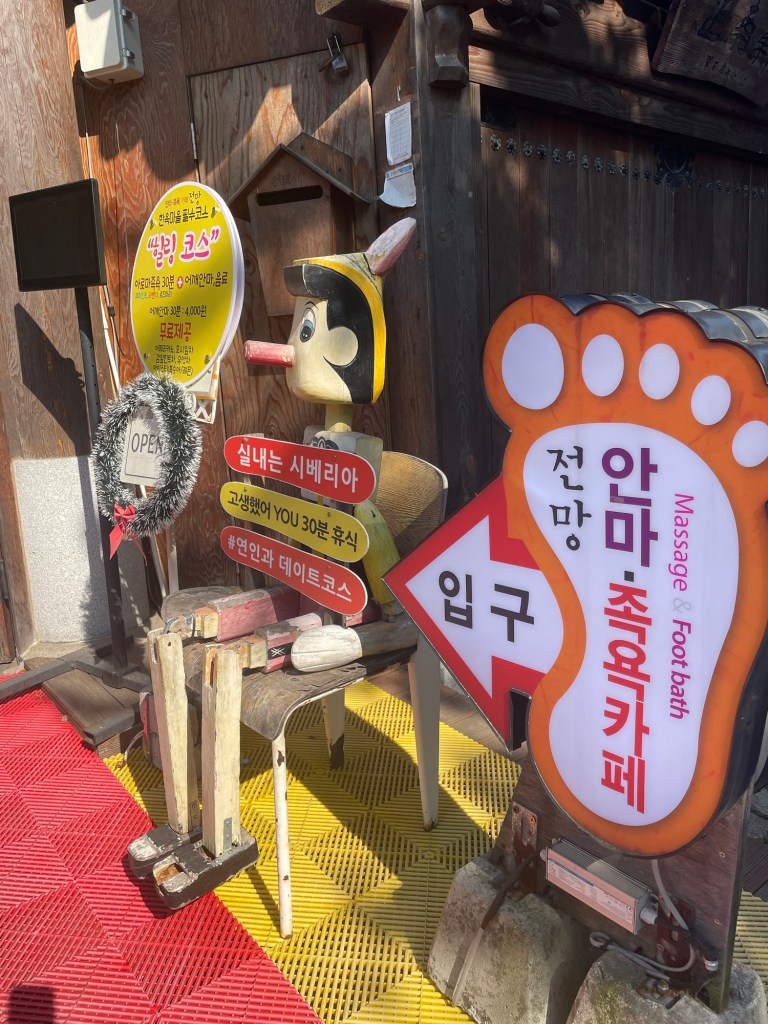
I’ve been hoping to get a Korean massage so when I see this foot massage sign I jump at the chance. It’s very cheap and I realise when I go in that it’s a “no hands” foot massage! Basically I get to relax with my feet in a foot spa and have an electric neck and shoulder massager placed on me. Not quite what I’d hoped for but relaxing all the same for less than €10.
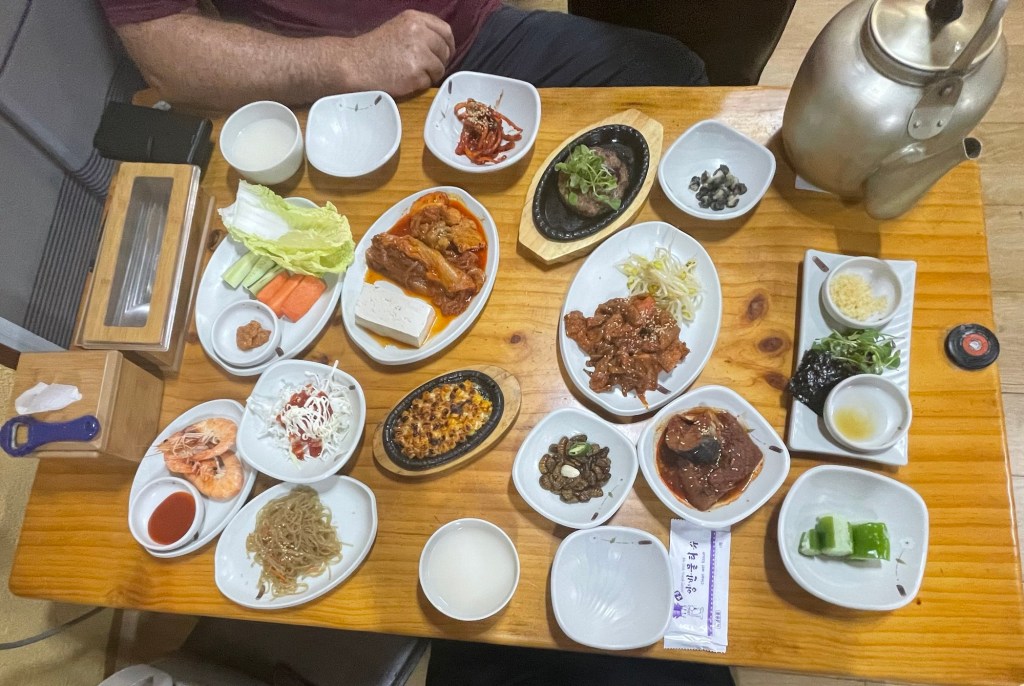
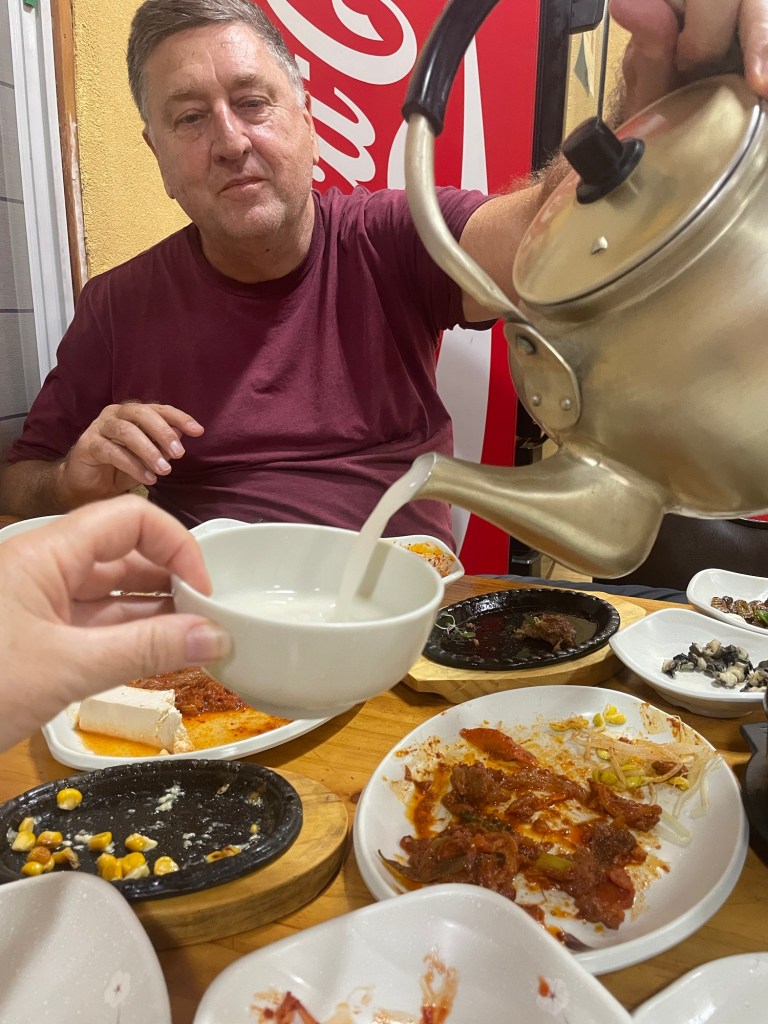
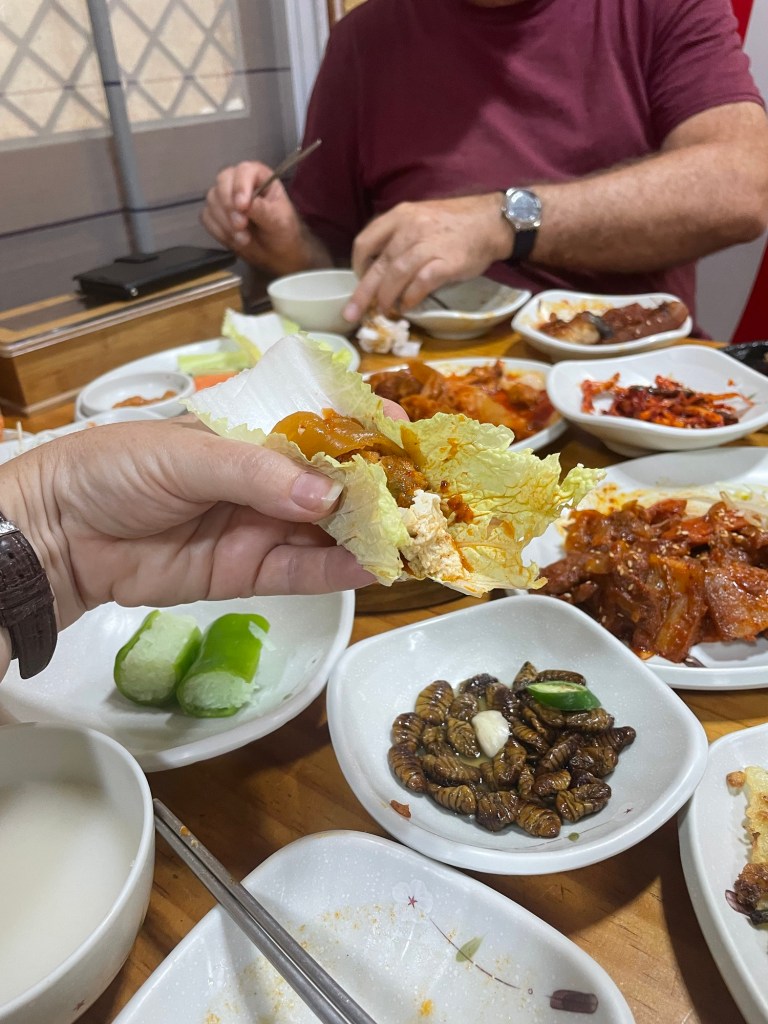
Later in the evening we head to a Makgeolli restaurant for dinner. We’ve heard about these places that serve makgeolli from a teapot but they’re not easy to find around town. We watch a travel blog on YouTube and are able to figure out where one might be nearby but there is no obvious sign from outside the building that it’s a bar or restaurant. It’s hard to even tell if it’s open, but we walk up to the door and are delighted to be ushered into a room where tables are set for the feast they’re about to serve us, the only downside is it’s shoes off and seats on the floor (and I wore a dress!!). What’s served up is amazing!
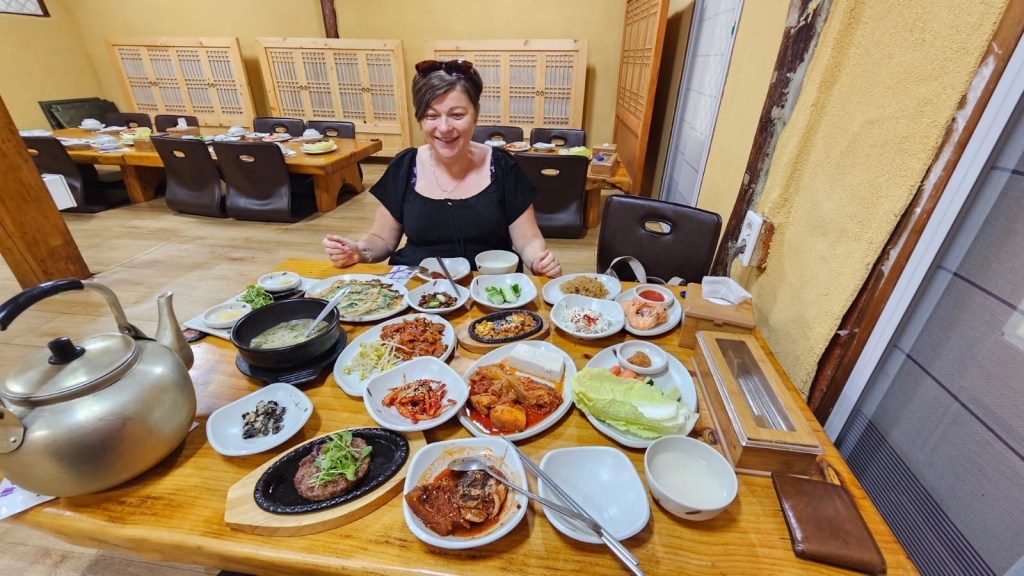
Makgeolli is a milky, off-white, lightly sparkling rice wine that has a slight viscosity, slightly sweet, tangy, bitter taste!
What an amazing experience and we were able to rise from the floor without injury, and fairly gracefully all things considered!! Although I enjoyed it all I wouldn’t be loving the makgeolli so I’m hoping for a “real” drink before the end of the evening. Have no fear, around the corner someone manages to find (guess what!!) a craft beer bar that serves wine – hooray. We sit at the bar surrounded by interesting art work (some of which are portraits of the lady who served us) and get chatting to the local dentist. A great final night in Jeonju.
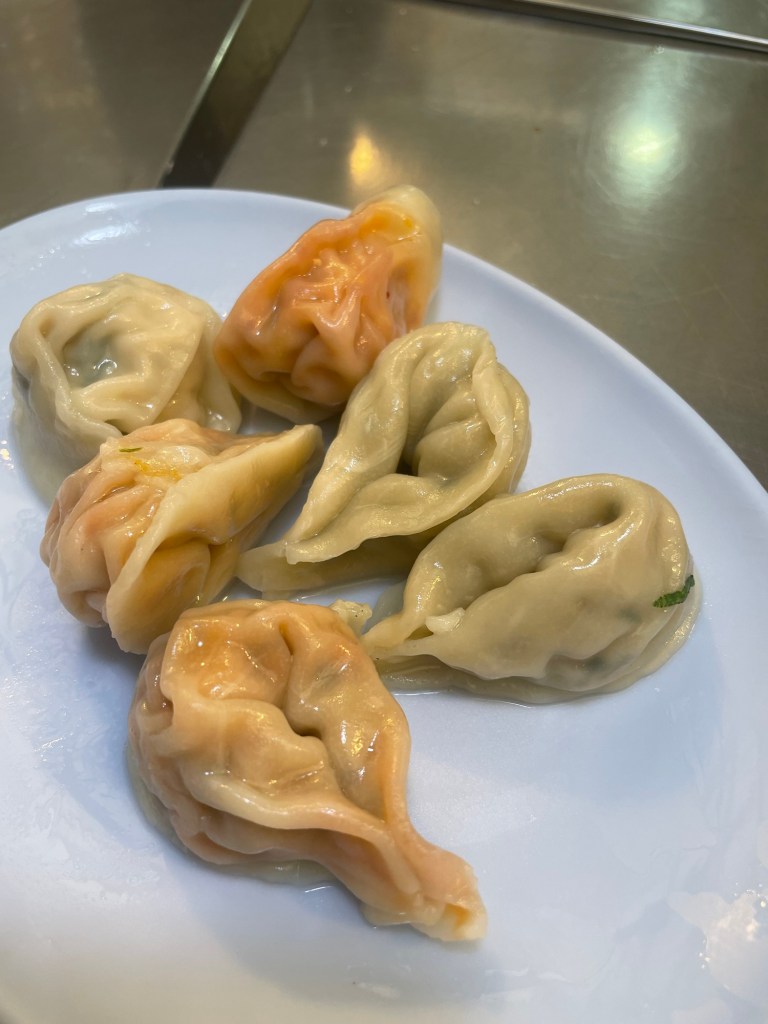
Next morning it’s time to head back to Seoul which is a pleasant couple of hours watching the scenery go by (and updating this blog) ! This time we’re staying in the Dongdaemun neighbourhood at the Nine Tree hotel which is really nice and I’d recommend. We arrive back at lunchtime so it’s straight to the Gwangjang market. We haven’t had any brekkie and I really want some mandu – that’s dumplings.

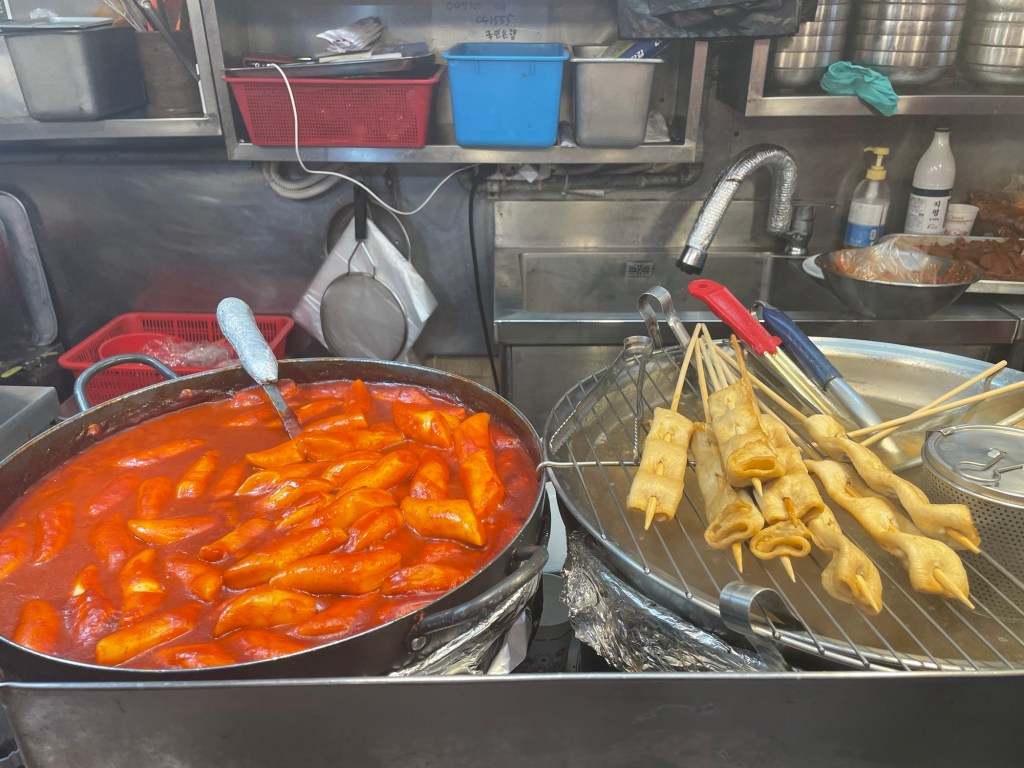
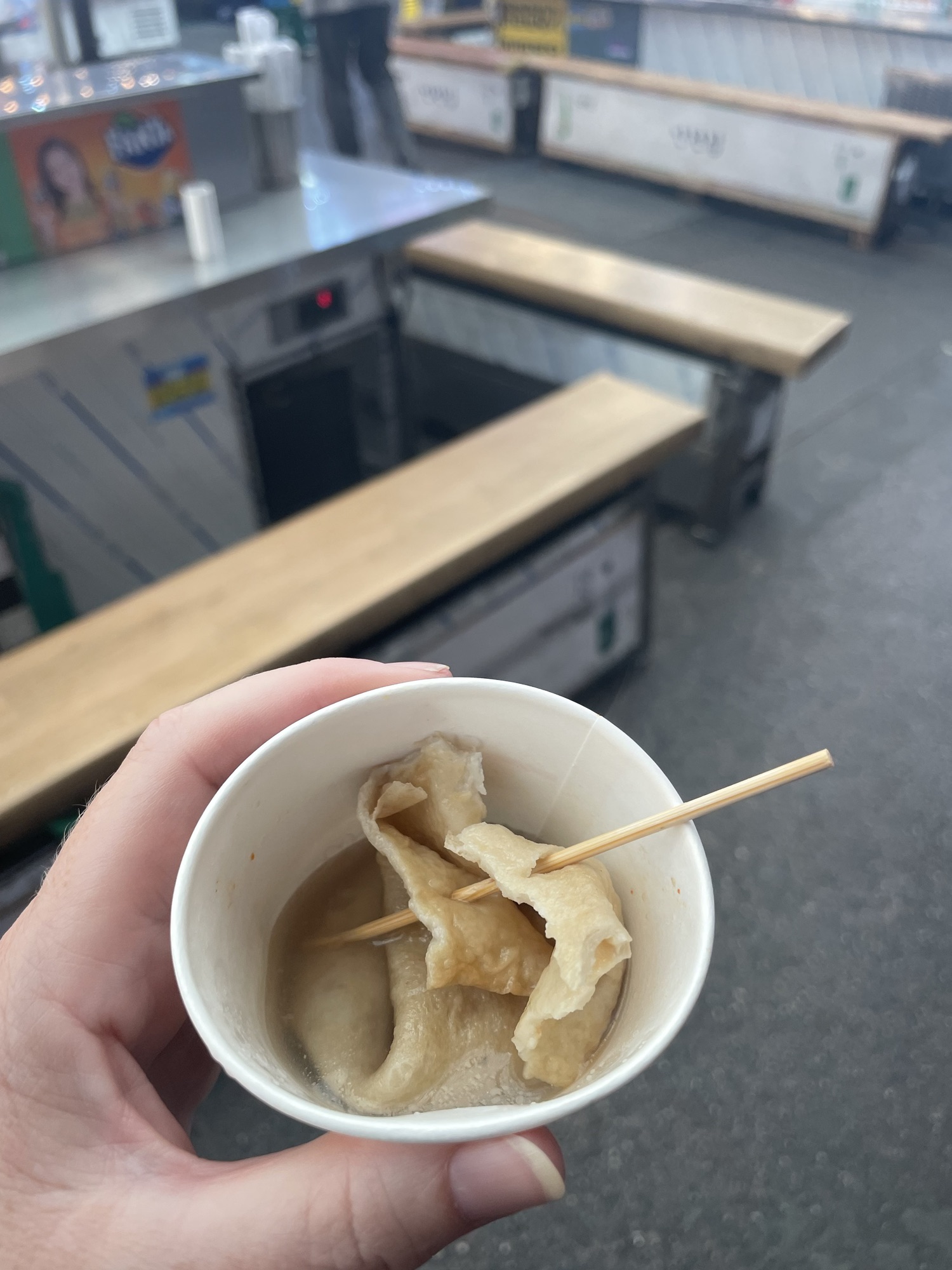
We’ve also wanted to try this fish on a stick served with soup thingy!! Very nice.
It’s called eumokkkochi and is a Korean fish cake boiled in broth.
And more importantly I really want a hotteok which is a pancake made with wheat dough stuffed with a sweet mixture of brown sugar, honey and cinnamon. This may be my favourite street food so far! 
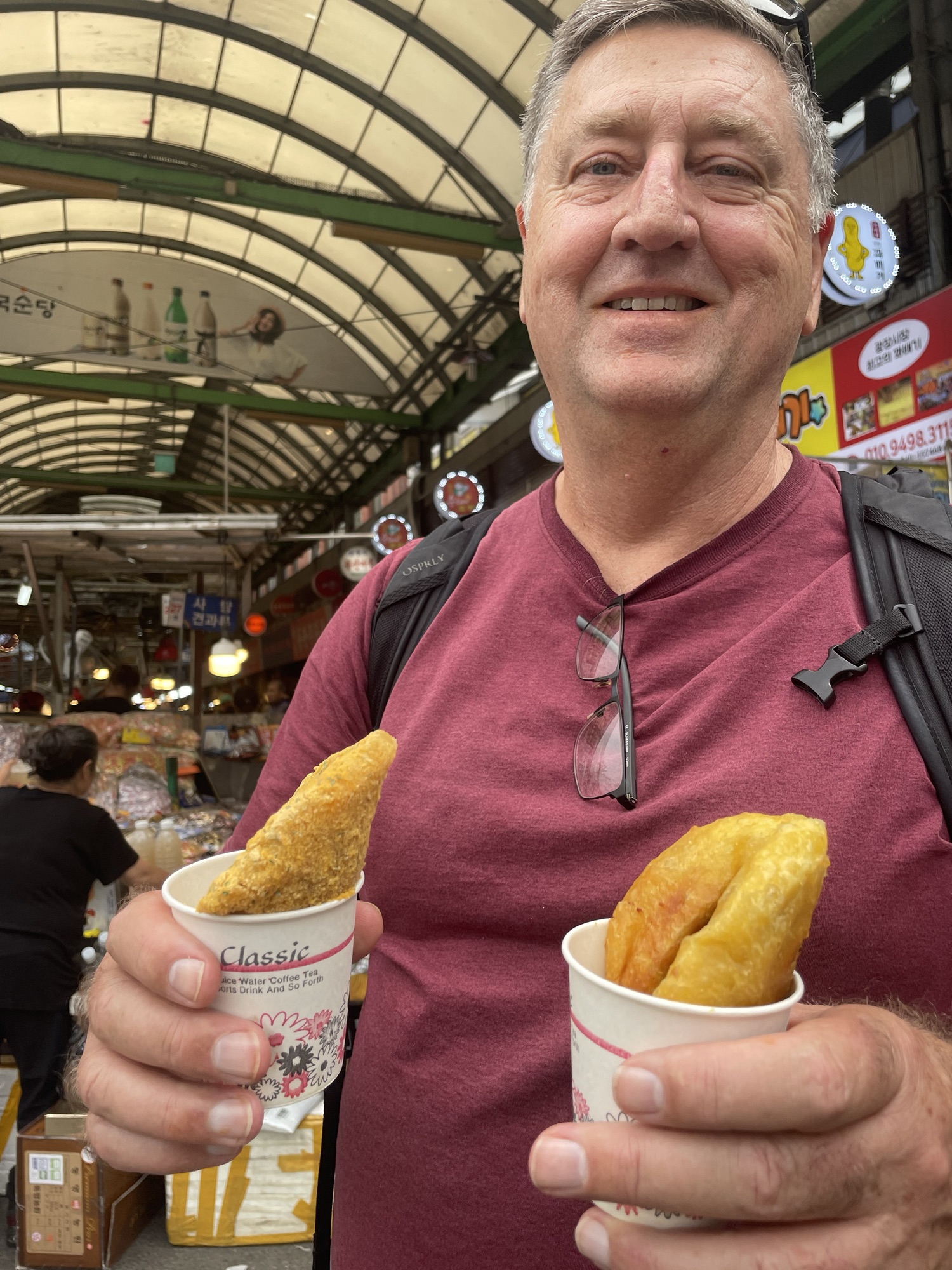
Happily fed, we take a walk around this old part of Seoul. Dongdaemun literally means “Great East Gate” and this is the gate in question – it dates back to 1398.
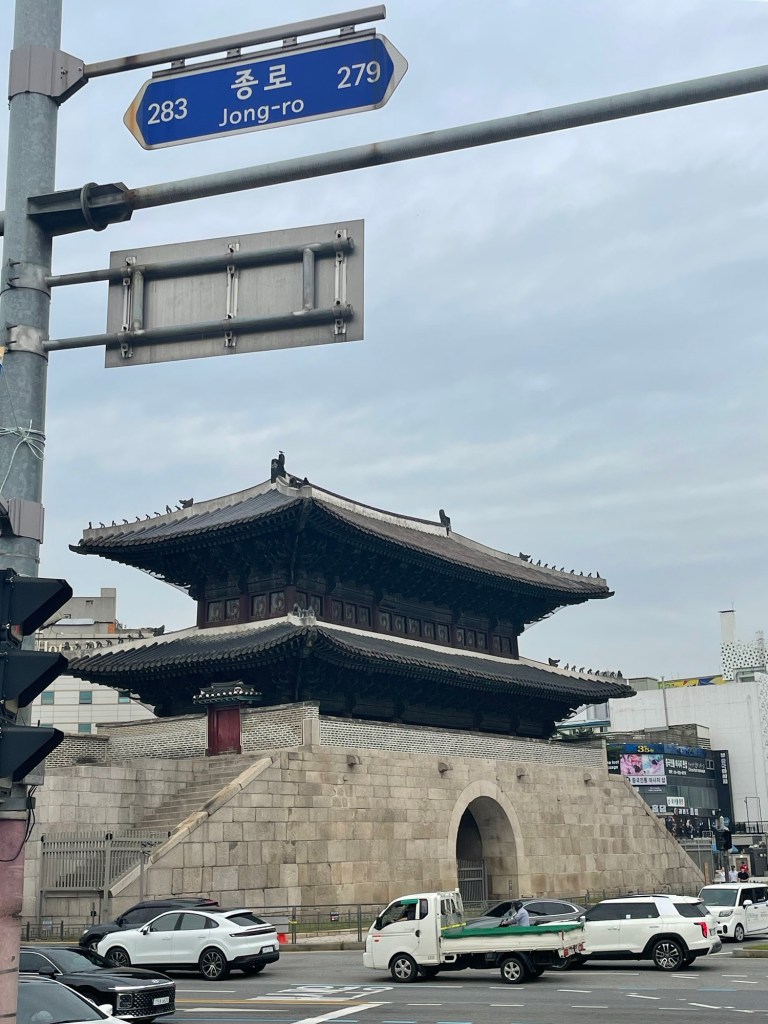
The giant gates were once part of the city walls known as Hanyangdoseong. They were built to safeguard Hanyang (present Seoul), which was the capital of the Joseon Dynasty, and to demark the city’s boundary. They served as the city walls for 514 years (1396-1910), longer than any other city walls in the world.


There are some good views of the city up here.
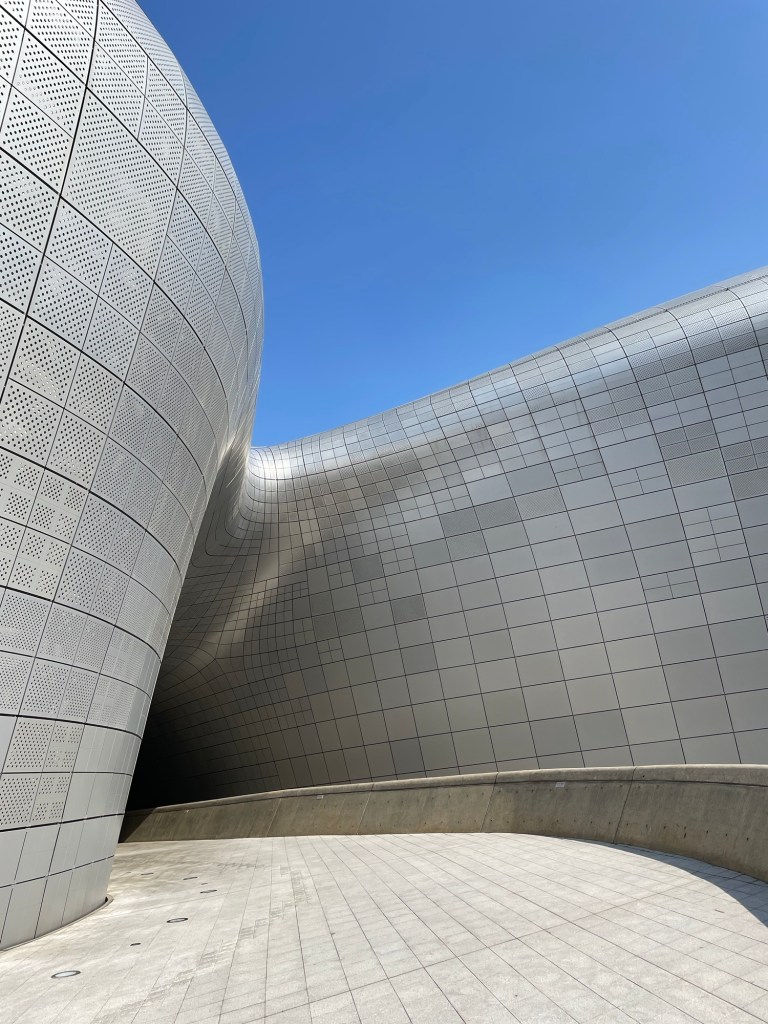
To the south of Dongdaemun gate there is a huge development project called Dongdaemun design Plaza, which was designed by the famous architect Zaha Hadid. It houses exhibition spaces, shopping and relaxation facilities. It’s a very interesting looking building vastly different to its surroundings.
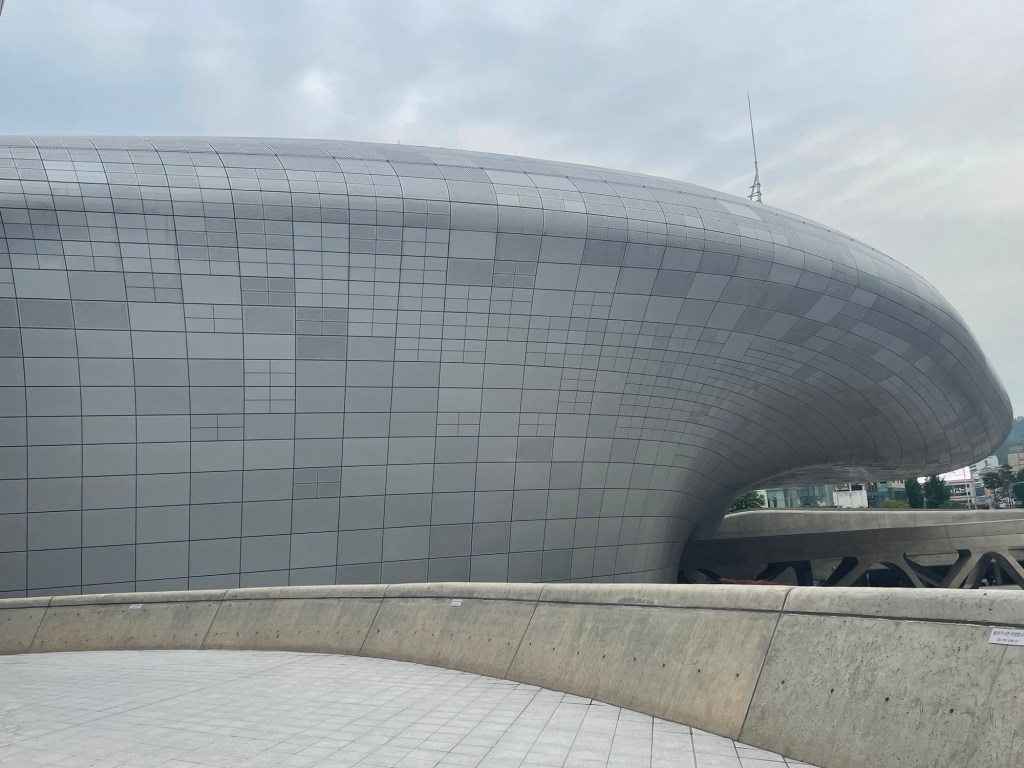
Earlier as we walked through the market, we scoped out a place for dinner. It’s essentially the fish section of the market and Shane is particularly keen to try. We choose a low-key, very local looking establishment and here’s what is put in front of us before our actual order arrives!!
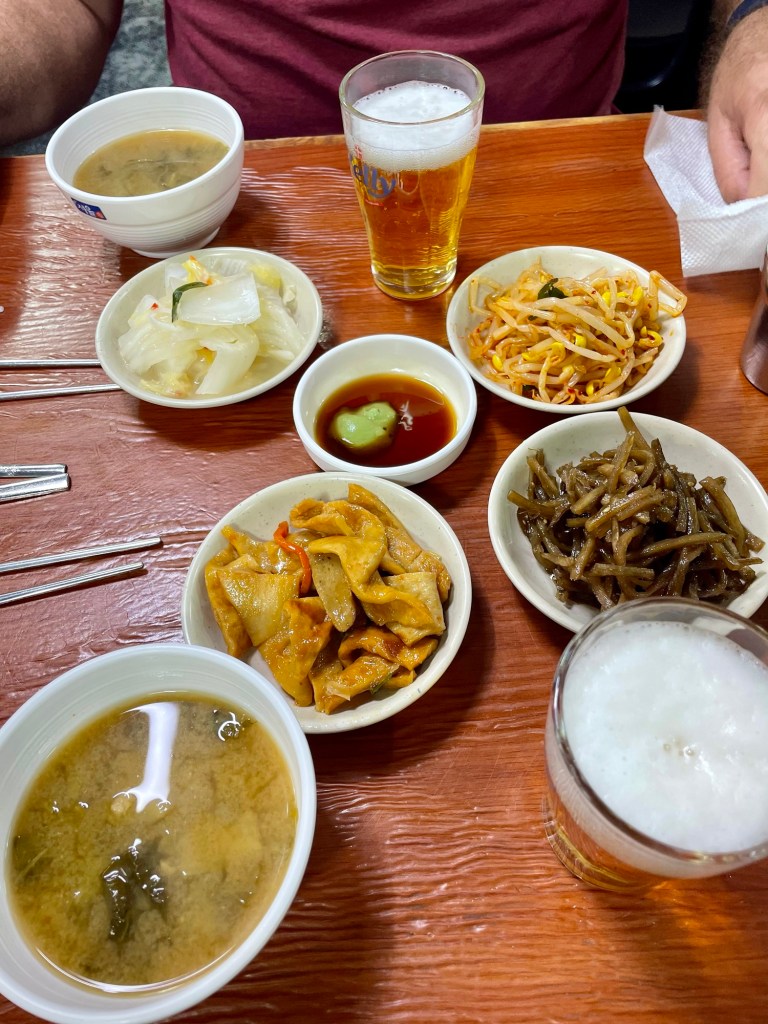

The fish and octopus we order is delicious!
It’s a 6am start next morning as our tour bus to the DMZ leaves at 7am. We arrive on time (even though others don’t!) and we’re off….
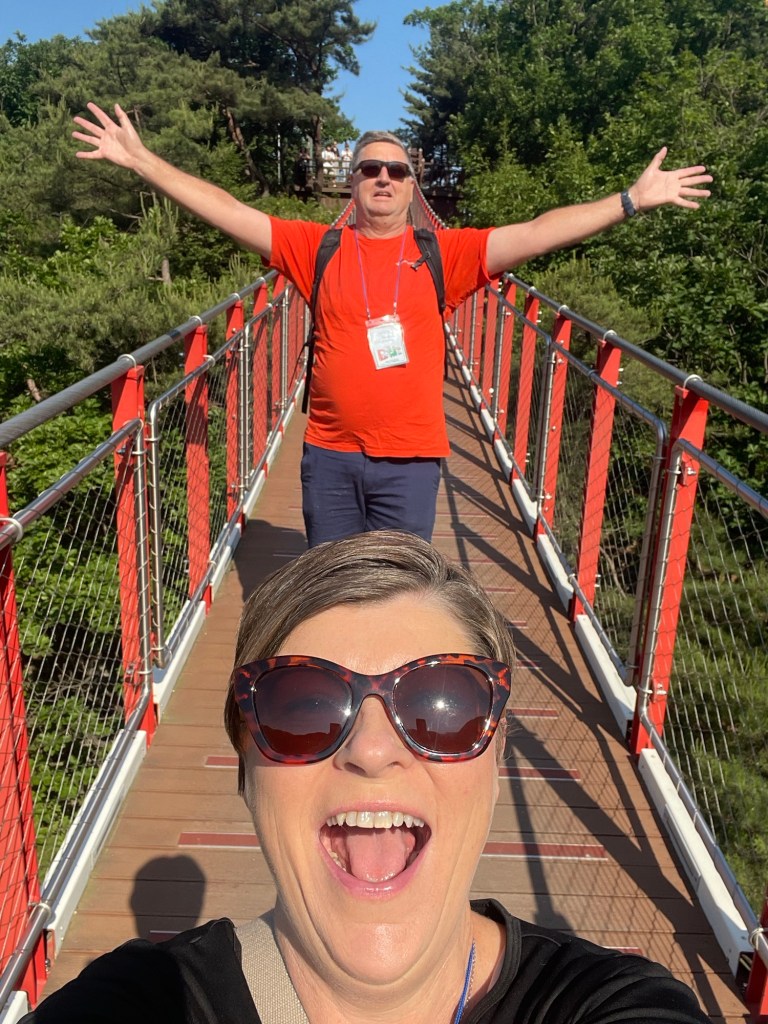
First off, we visit the Mt. Gamaksan suspension bridge. Gamaksan Suspension bridge is where the allied forces fought a fierce battle in the Korean War. We take a half hour hike and enjoy the stunning natural beauty at the top of the bridge.
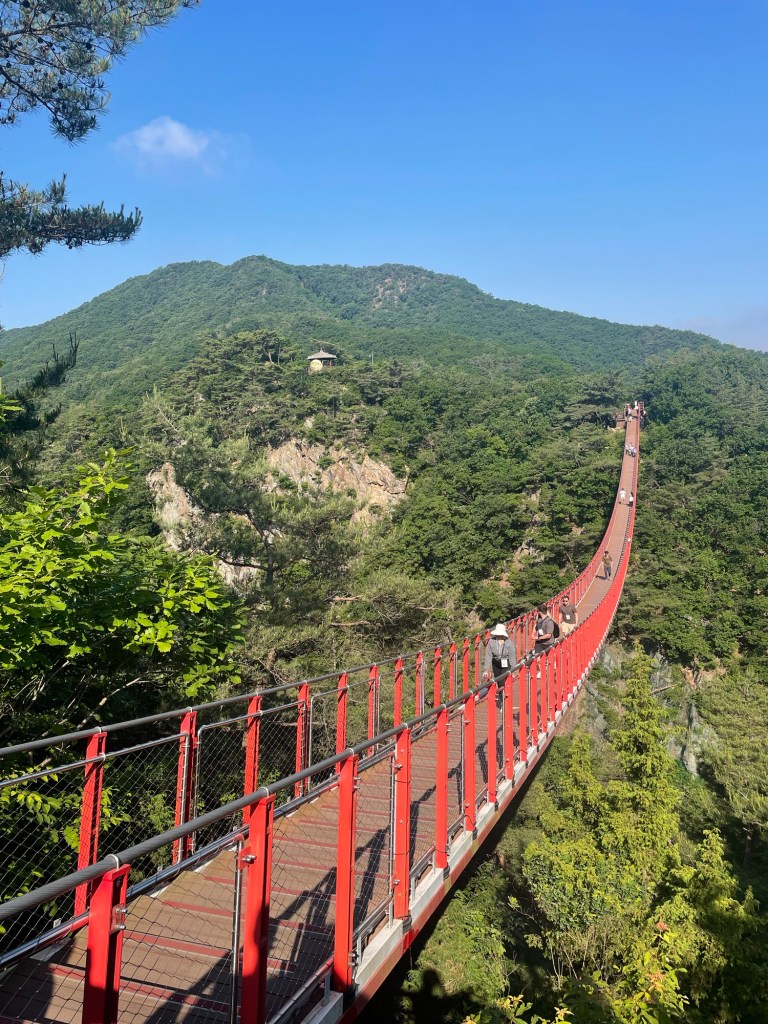
Enjoying life and feeling extremely lucky before we get into some of the sad history that South Korea has endured since it’s civil War.
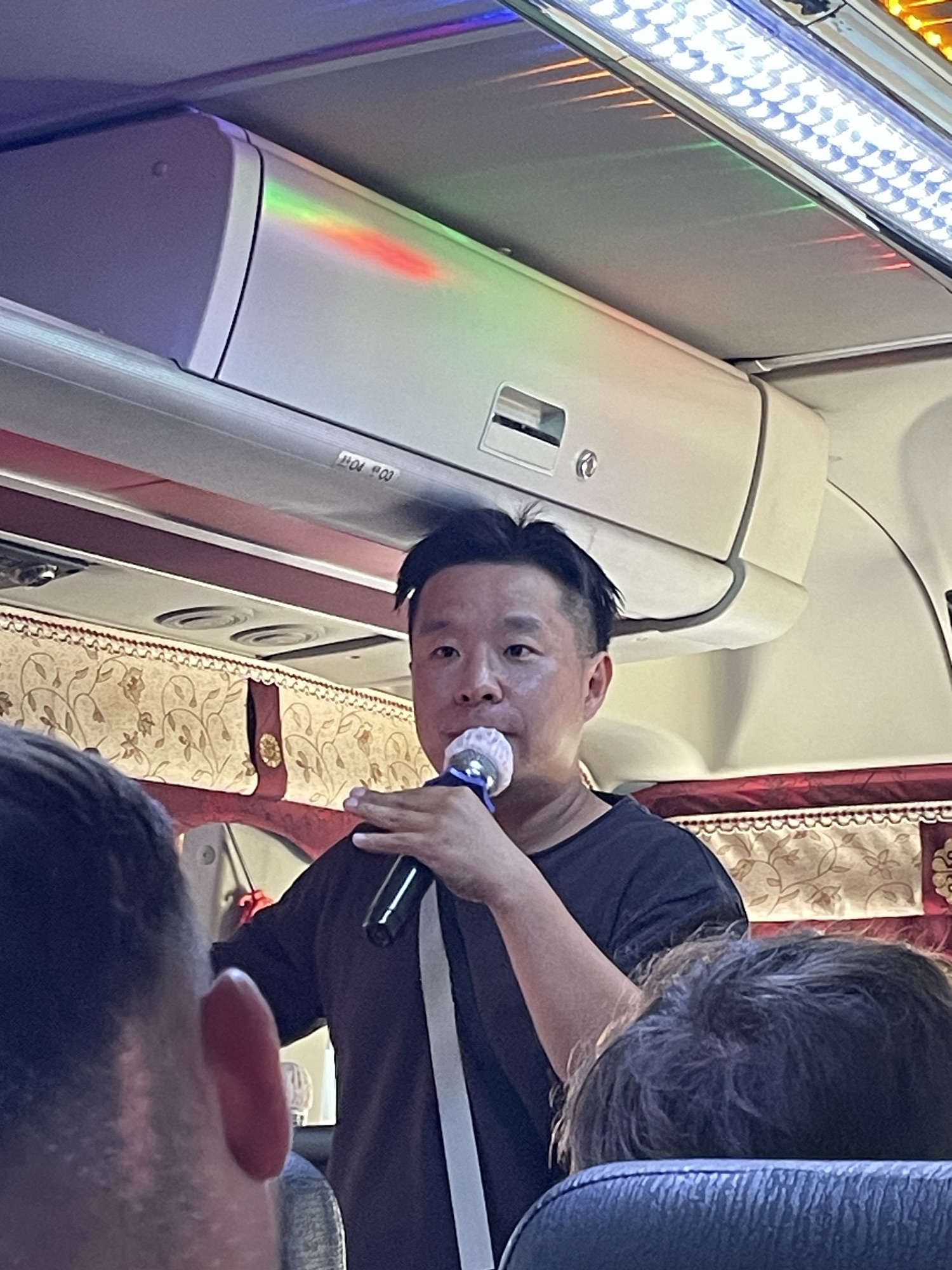
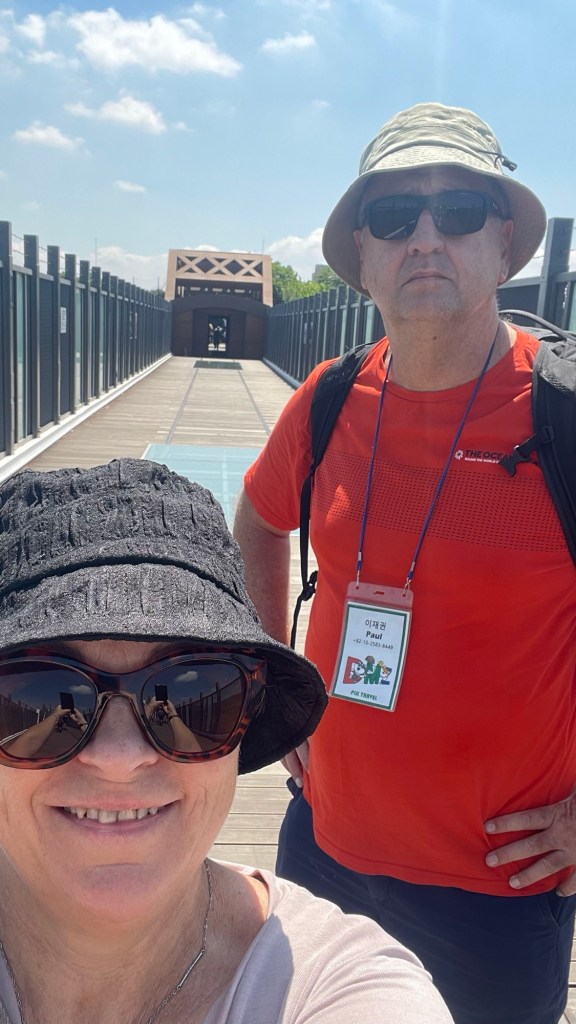
Our guide Paul Lee is fantastic. He gives us a very insightful summary of what happened to cause the split between north and south. He told us about his own family history and how his mother was from the south and his father from the north. He came from a wealthy family but when his parents, having settled in the north managed to make it south during wartime, they ended up with nothing.
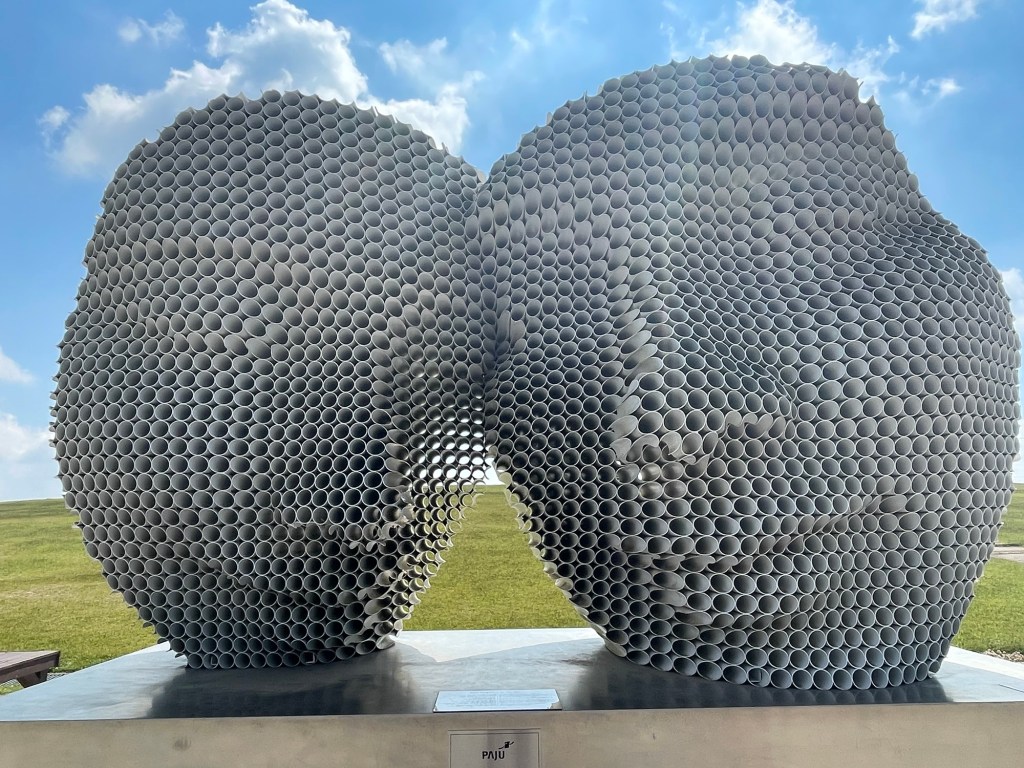
We arrive to Imjingak which is a park located on the banks of the Imjin river along the tracks of the former train line that went through the city of Paju connecting north and South Korea. It was built in 1972 as a place to console those from both sides who are unable to return to their hometown. The park, called Memorial park, has many statues and monuments regarding the Korean War and we walk around in the sunshine viewing as much as we can.
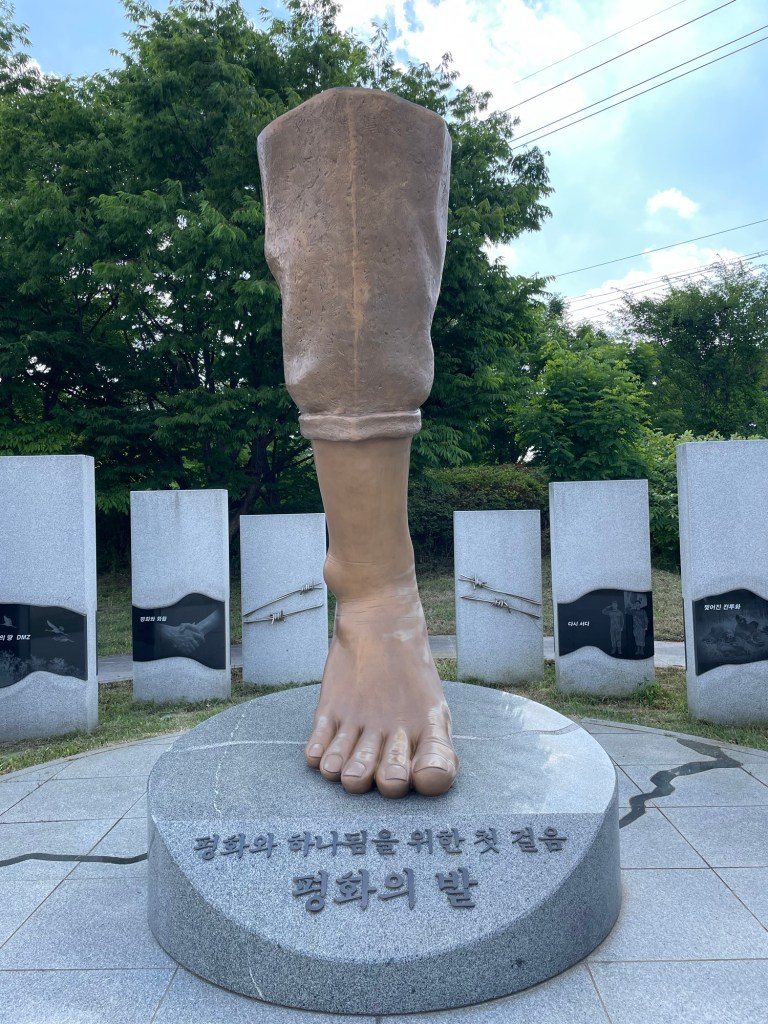
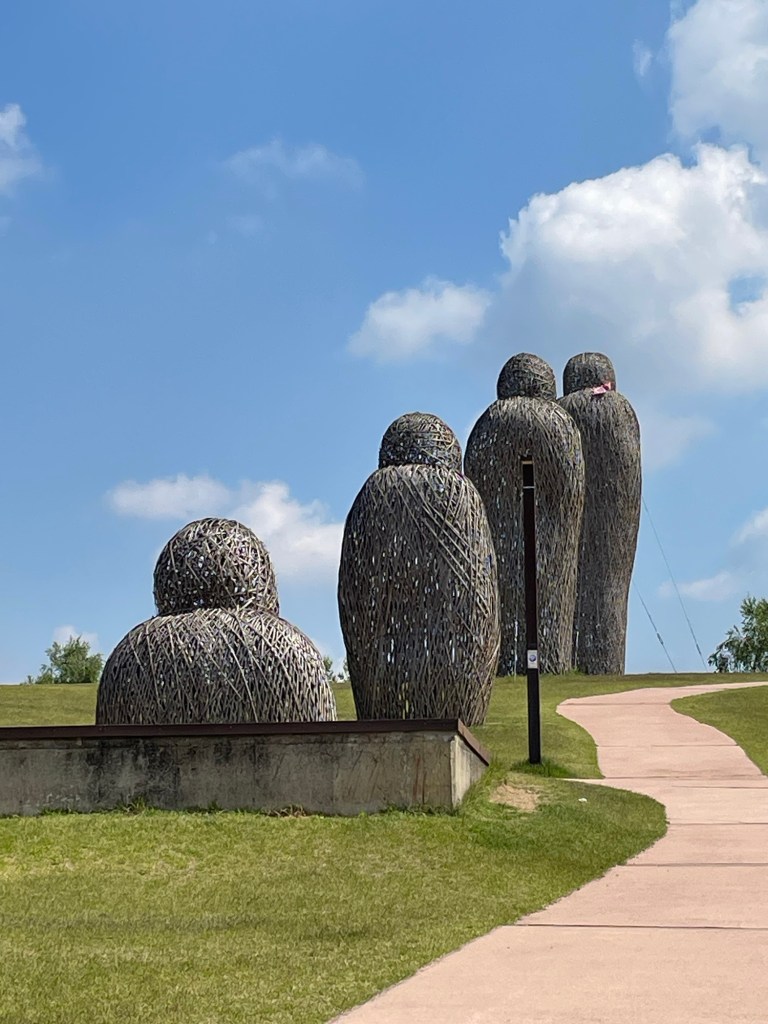
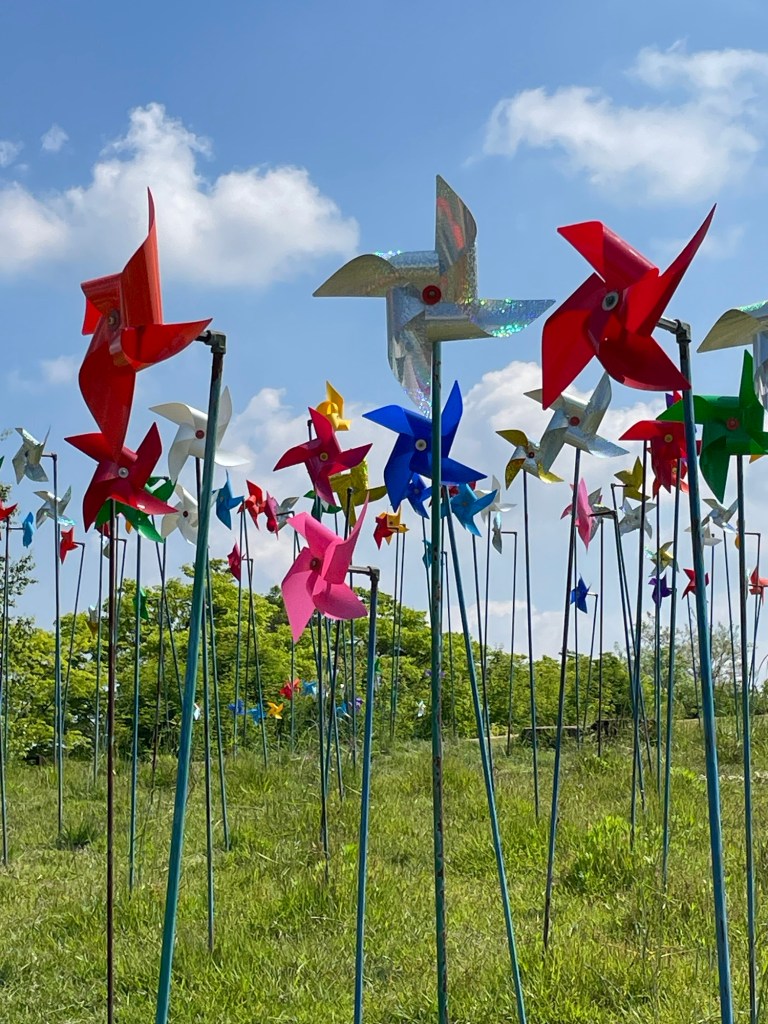
In July 1953, the Korean War ended with a cease-fire. Northern and Southern Limit Lines were created and each side moved their troops back 2km from the Military Demarcation Line. The line known as the 38th parallel was drawn by US military and is 248km in length. The area within 2km on both sides is designated as the DMZ. It is considered the most heavily militarized region in the world.
The CCL (Civilian Access Control Line) was designated within a distance of 5-20km from the Southern Limit Line of the DMZ to limit and control the entrance of civilians into the area to protect and maintain the security of military operations and facilities near the DMZ. It has since become a huge tourist attraction.
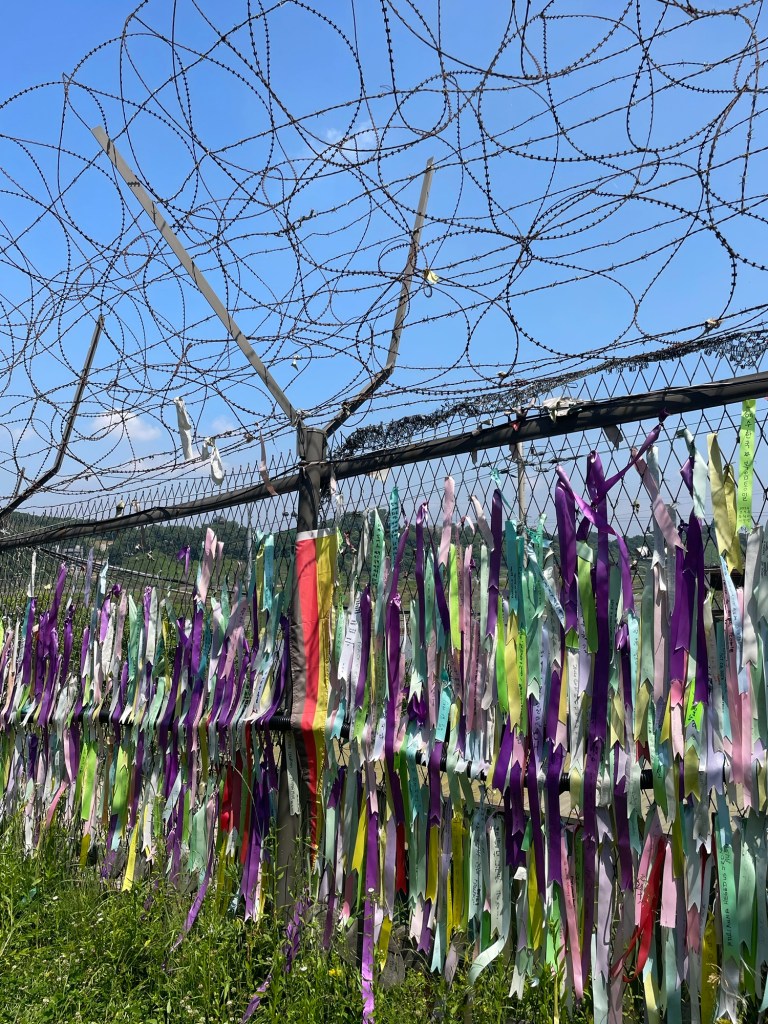
The Freedom Bridge, as it is called, is the former railroad bridge which used to repatriate POW/soldiers returning from the north. It now ends here and provides a photo opportunity across the DMZ.
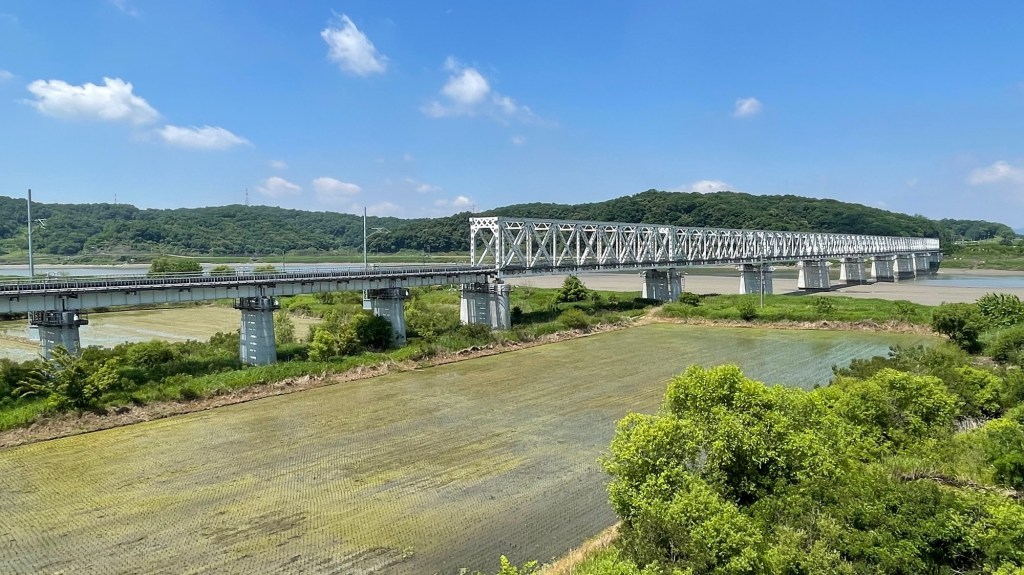
We leave the park and drive to the border control point where an officer boards our bus and checks everyone’s passport. There are two soldiers, both extremely young but taking their job very seriously. It’s serious business out here! Barbed wire trenches are mixed with rice paddies as we continue through the DMZ area.
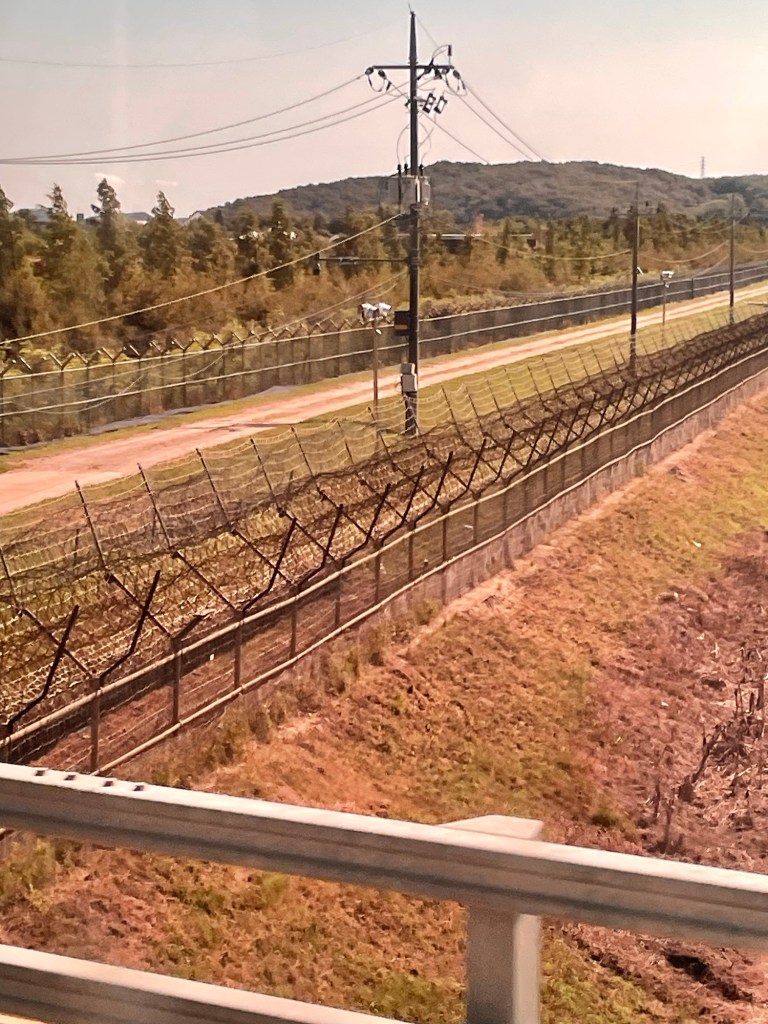
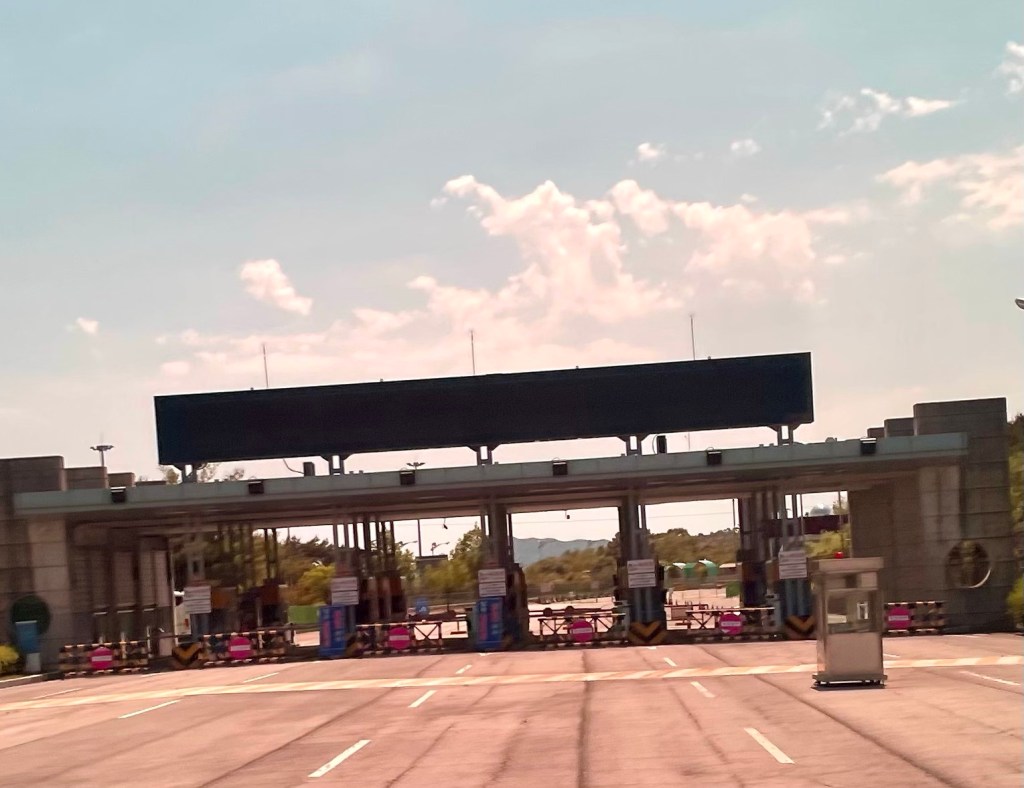
As we drive further through the DMZ there is an unused toll booth which one day could take you straight into North Korea.
Our next stop is the 3rd Infiltration Tunnel which was discovered in 1978 following an underground explosion, apparently caused by the North Korean tunnellers, who had progressed into the south via this mile long tunnel. This is one of four tunnels that were discovered around the border and the South Korean government believe there are many more.
There are no photos allowed, in fact you’re not allowed to bring anything inside. We put our bags in a locker and don a hard hat for the steep mile long journey toward North Korea. The tunnel is low especially for tall people, so the hard hats are essential. I get through the mile there and back unscathed but taller people I know don’t do so well… there is a lot of crouching and banging of helmets against the roof! At the turnaround point we see where the South Koreans blocked the military demarcation line with concrete barricades. Some North Korean greenery is visible through a small window a few metres away.
The one thing we were allowed to bring with us is our water bottle as there is fresh spring water that you can taste… cold and delicious fresh Korean water 😋. We’re glad of it after the long steep incline which we booted up without a rest along the way.. that’s just how we do things!
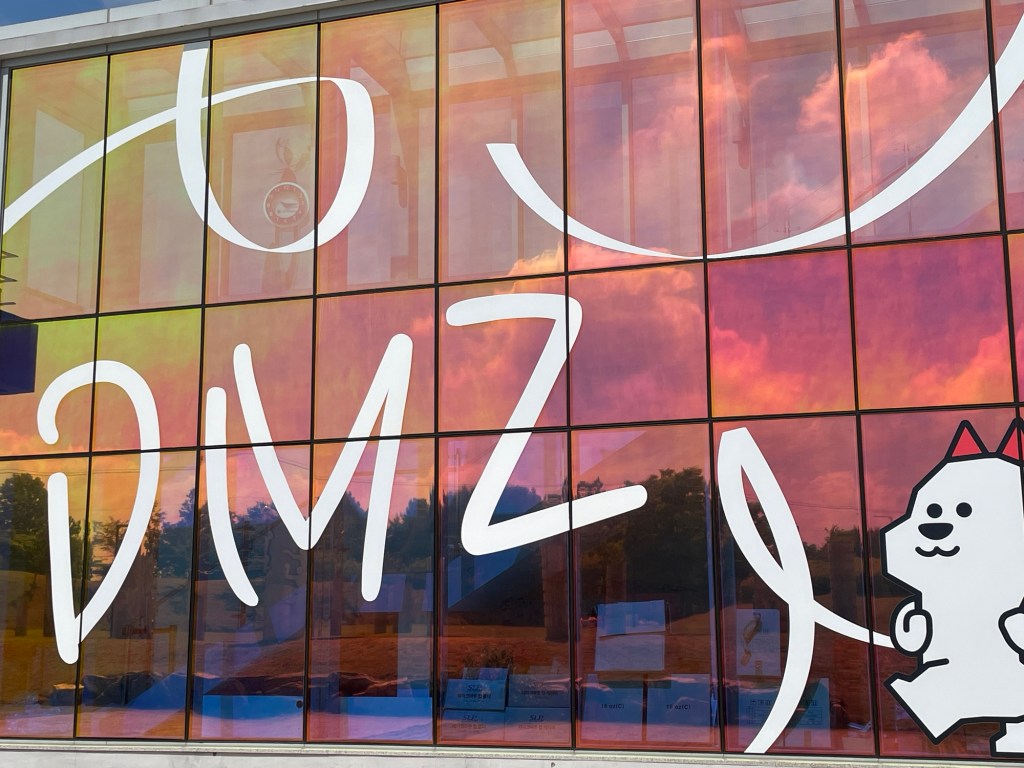
Outside the building where you can gain entry to this crazy long tunnel is this brightly coloured DMZ sign so everyone can get their insta shot!
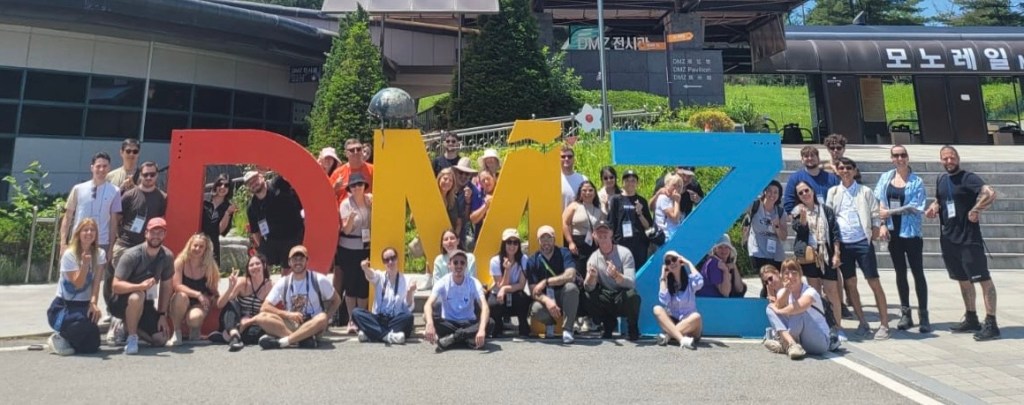
At the back of the tunnel building there is a beautiful peaceful garden which seems a little out of place and yet soothing all at the same time.

The final stop on the tour is the Dora Observatory, which is the northernmost observatory of North Korean territory.

At the Dora observatory we see the flag of North Korea and scenic views across the demilitarised zone through binoculars.
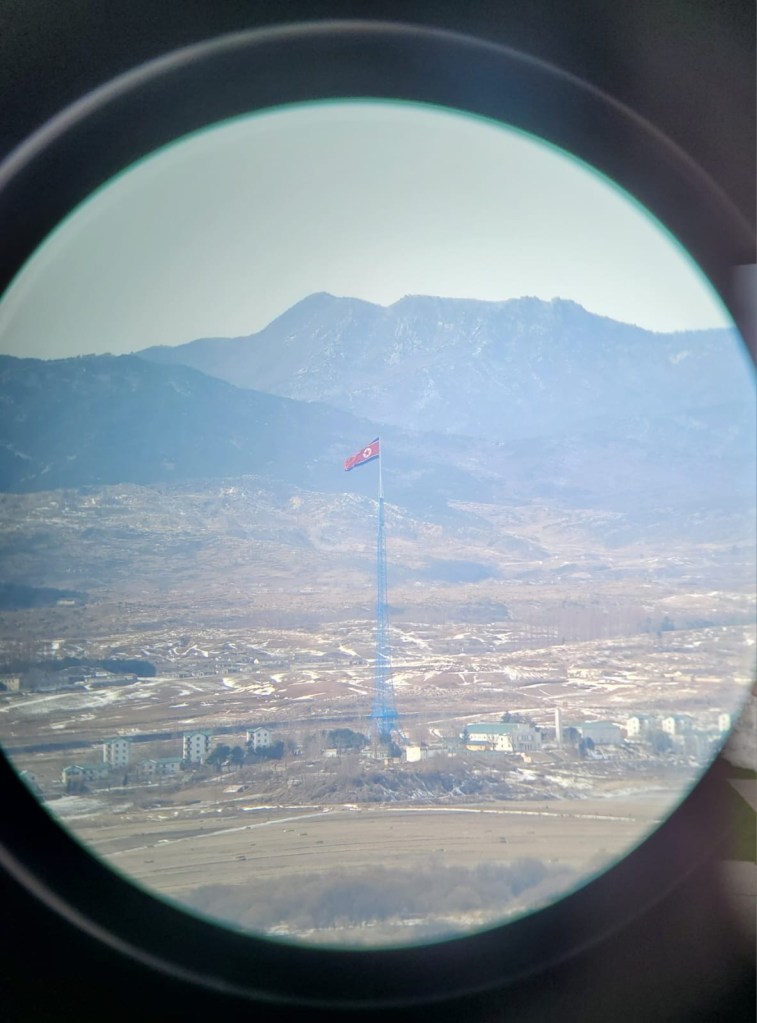
The North Korean town below is close enough to see people cycling and on monitor bikes and some walking in the field. It’s hard to capture a photo through the binoculars.

Finally we get some lunch and then it’s back on the bus for the hour plus drive back to Seoul. The sun is shining so we take another walk around Dongdaemun. As it’s sunnier today, the sky is blue and the gate, walls and design plaza, that we saw yesterday, all look better! I even sit on a bench and enjoy some sunshine while Shane takes some photos.

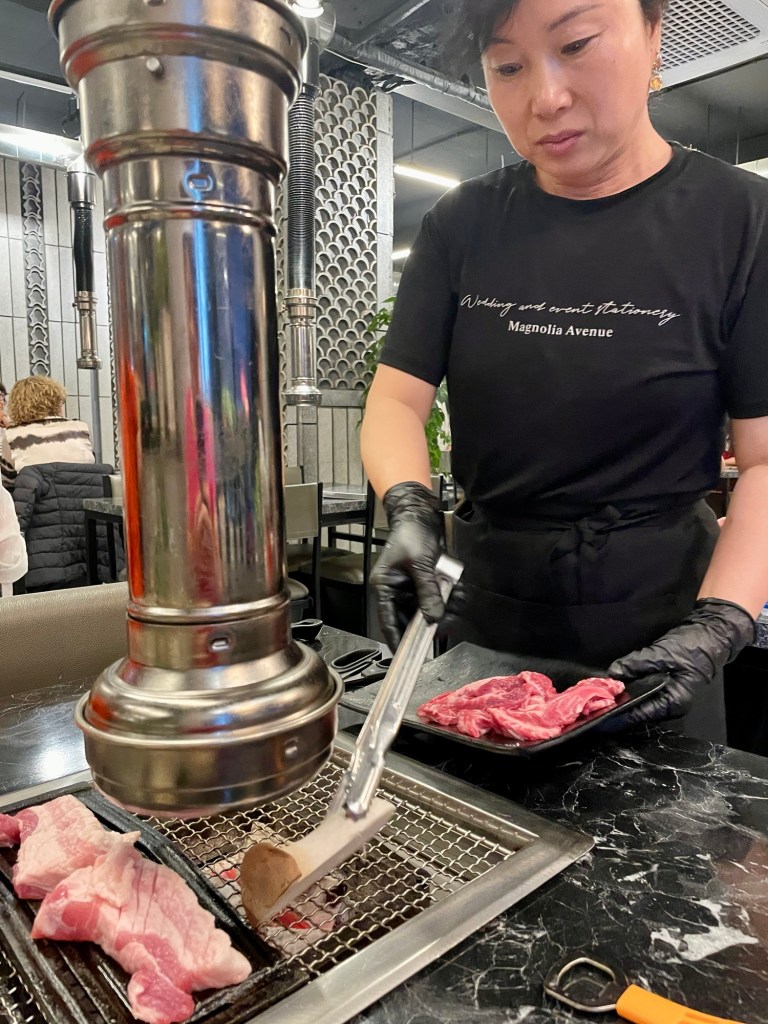
For dinner tonight we return to the Korean bbq, this time in a more upscale restaurant where someone cooks it for us at our table. It is really good and as usual, we enjoy all the side dishes.

It’s our final day in Seoul but we have lots of time as we both have late flights home tonight. We take advantage of the noon checkout and the hotel has lockers where we can store our stuff so we get organised and head out into the sunshine.
We start the day with some soup and mandu. I really do love these dumplings – an awful lot better than we had in Mongolia.
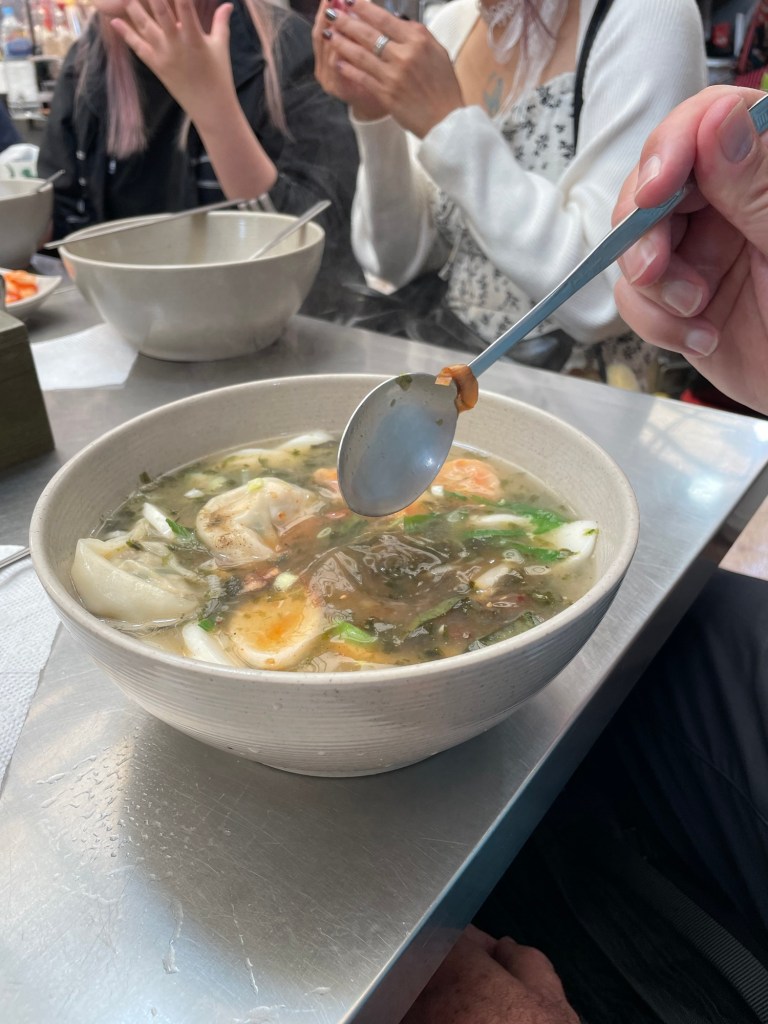
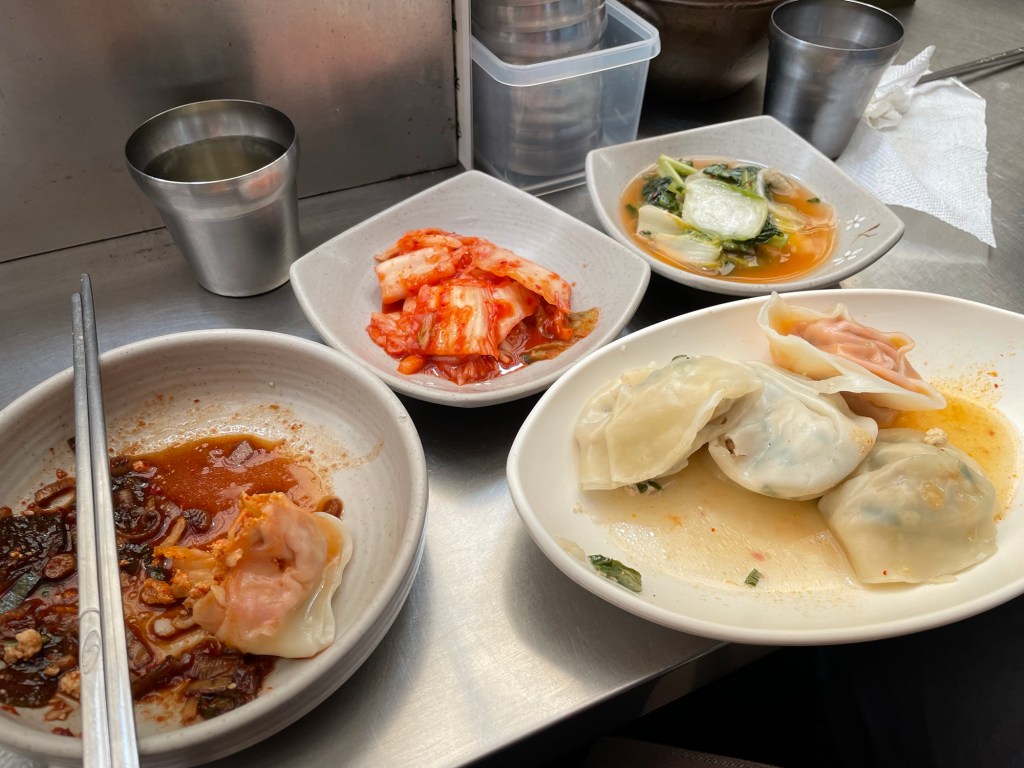
Then it’s off to explore another UNESCO World Heritage site – Jongmyo Shrine. Jongmyo is the supreme shrine of the state where the tablets of royal ancestors are enshrined and memorial services are performed for deceased kings and queens. King Taejo, founder of the Joseon Dynasty, started construction of Jongmyo Shrine when he named Hanyang (today’s Seoul) as capital of the newly founded dynasty. It was completed in 1395, and is therefore even older than Gyeongbokgung, (the main palace we visited on day 1 of this trip).
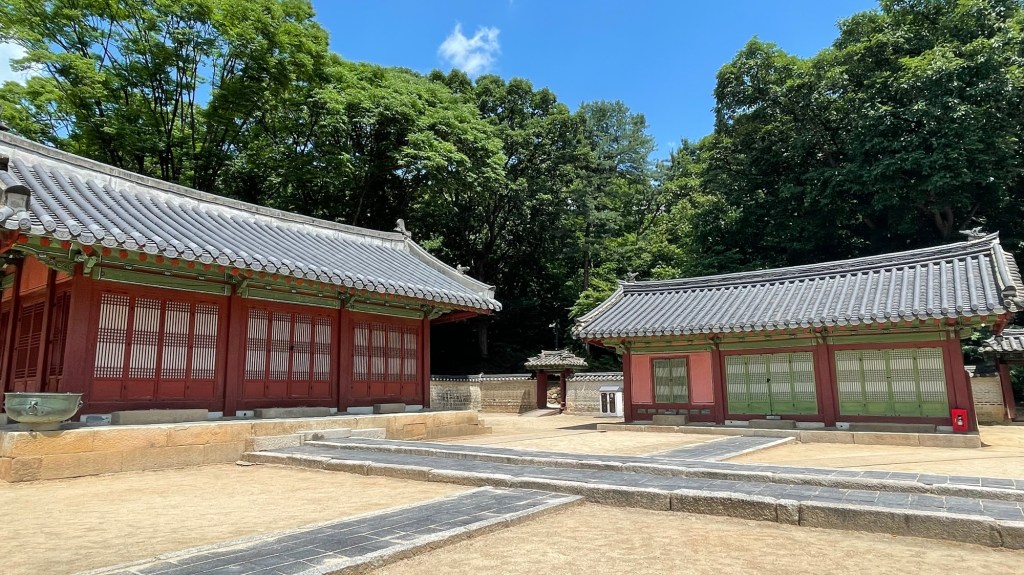
As more and more kings and queens were enshrined, the facilities were necessarily expanded to the huge complex we see today. When a king or a queen died, mourning at the palace would continue for three years after the death. After the three-year mourning period was over, memorial tablets of the deceased were moved here and enshrined.
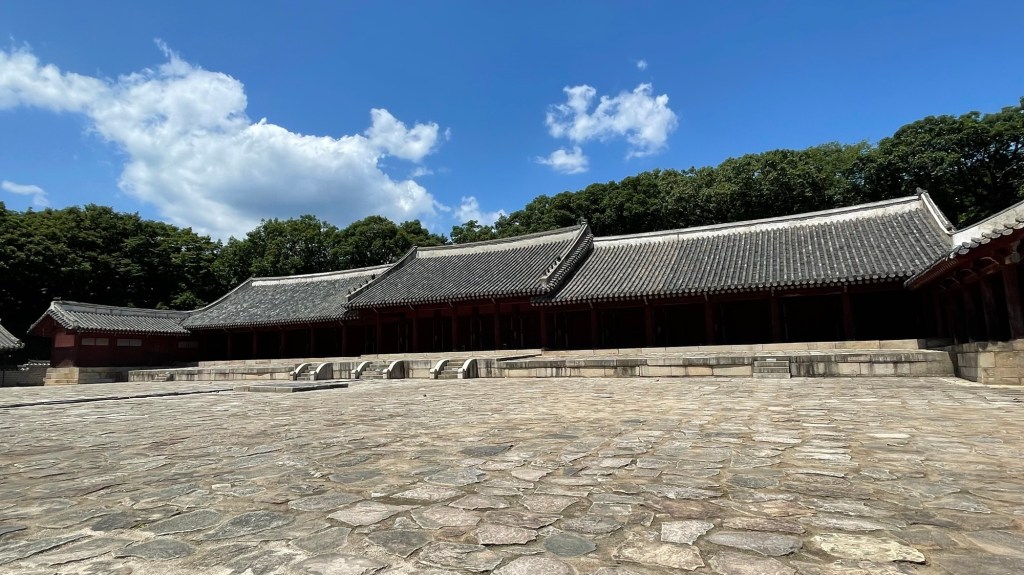
Korea alone has preserved its royal shrine and continues to conduct royal ancestral rites, every year. This is the main reason that Jongmyo Shrine was inscribed on the UNESCO World Heritage List in 1995. The grounds are beautiful and I love the walls.
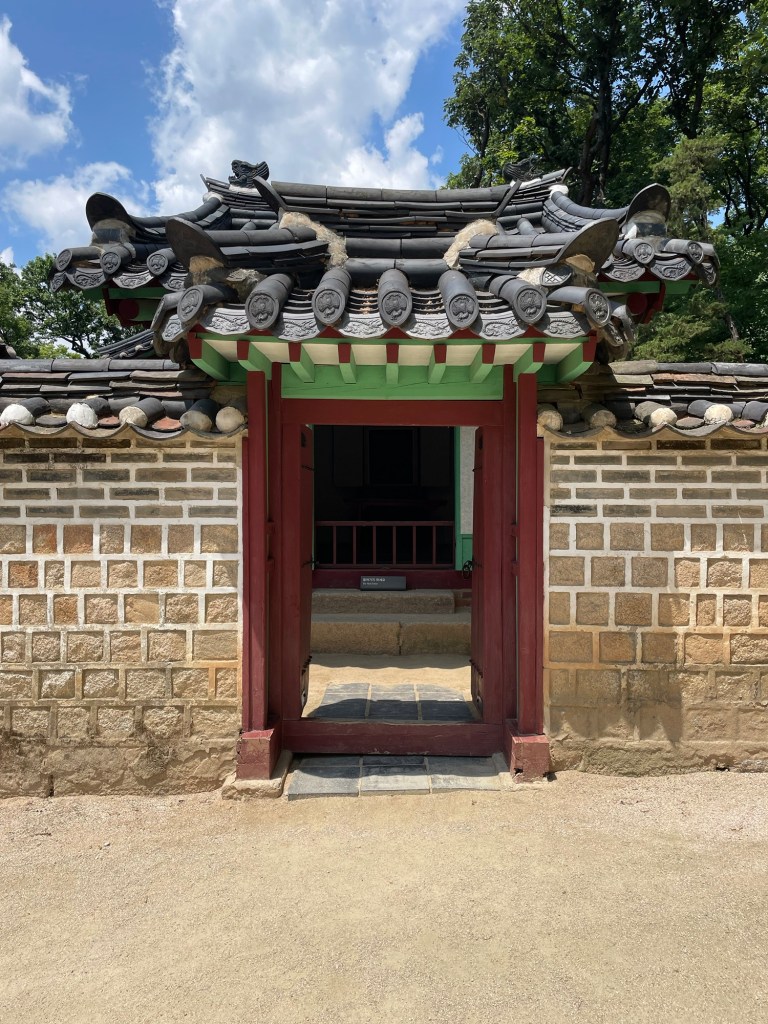
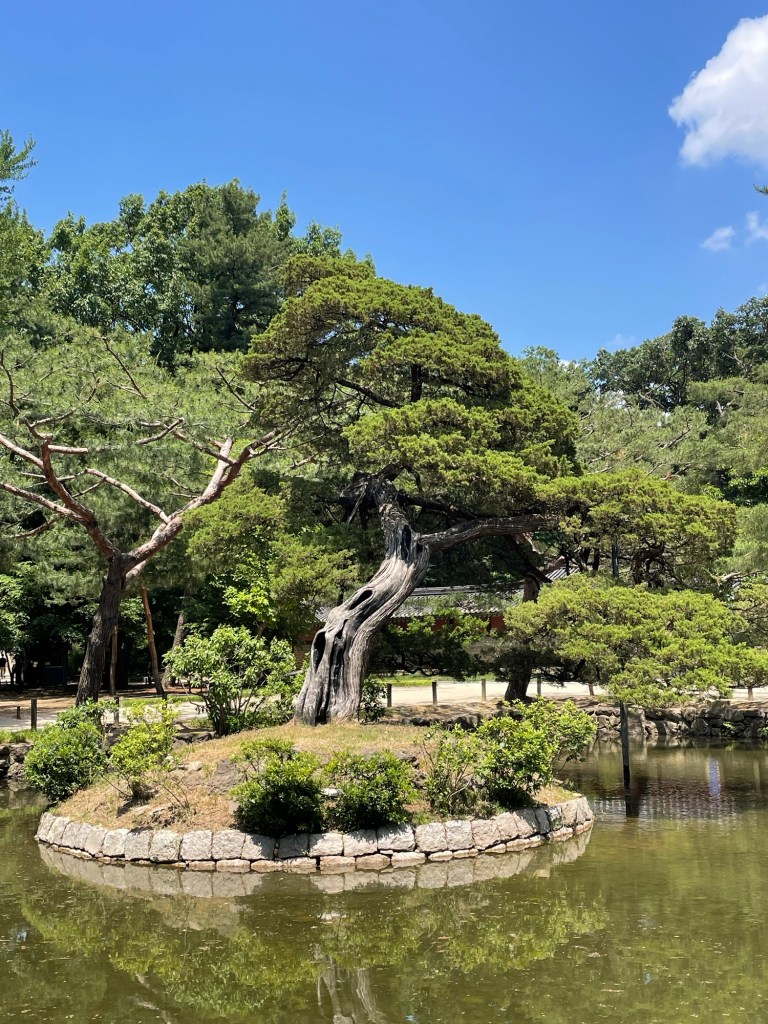

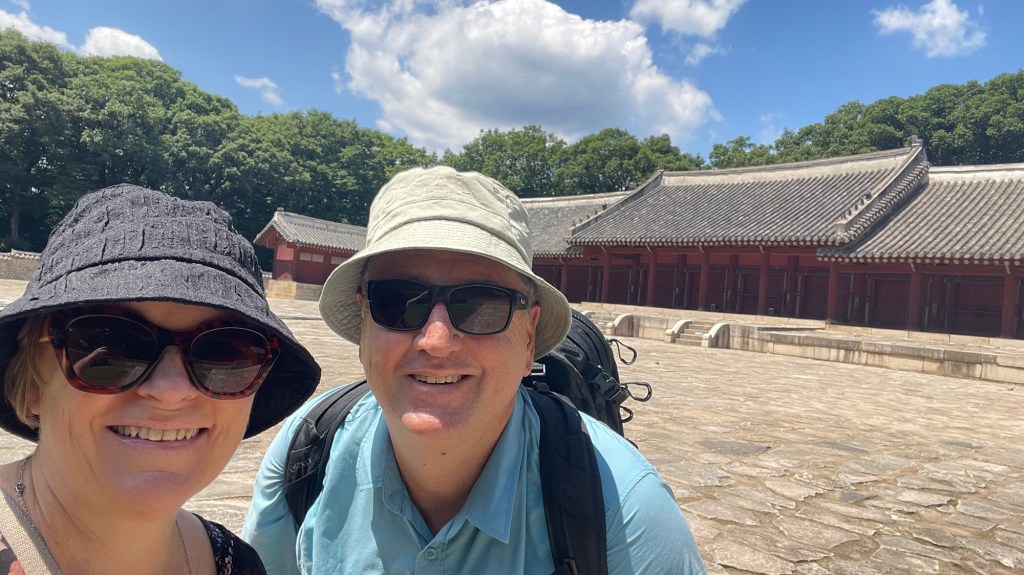
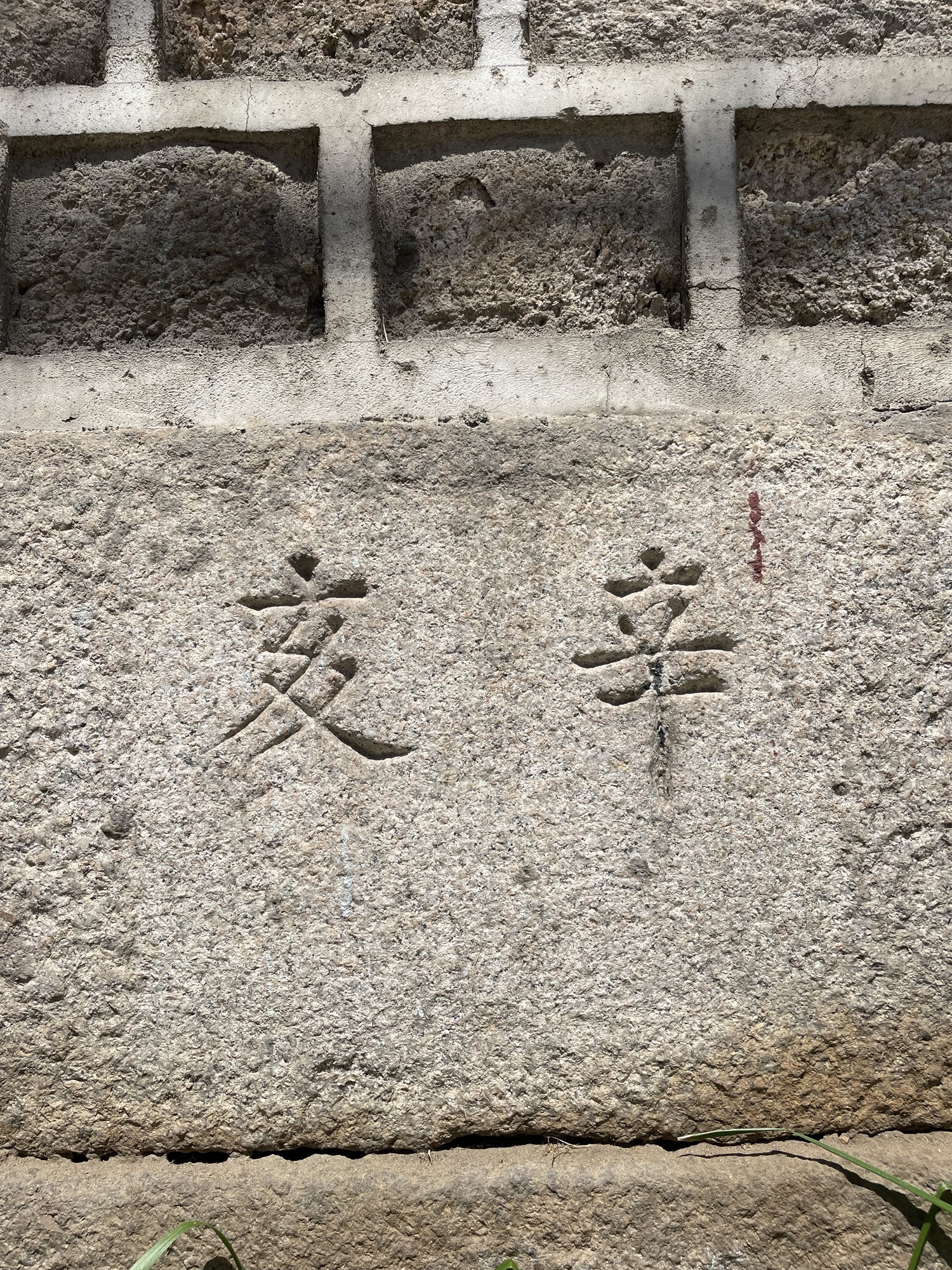
On the outer wall of Jongmy Shrine, there are 85 foundation stones indicating the years when repairs were made. 76 of them are carved following the traditional rules of the Joseon Dynasty, and 9 of them are carved with “Showa (1271),” the era name of Japanese emperor Hirohito.. Since these engraved stones are a remnant reflecting the dishonorable history of the Japanese colonial rule, the Korean authorities decided to leave them as an alarming lesson for future generations.
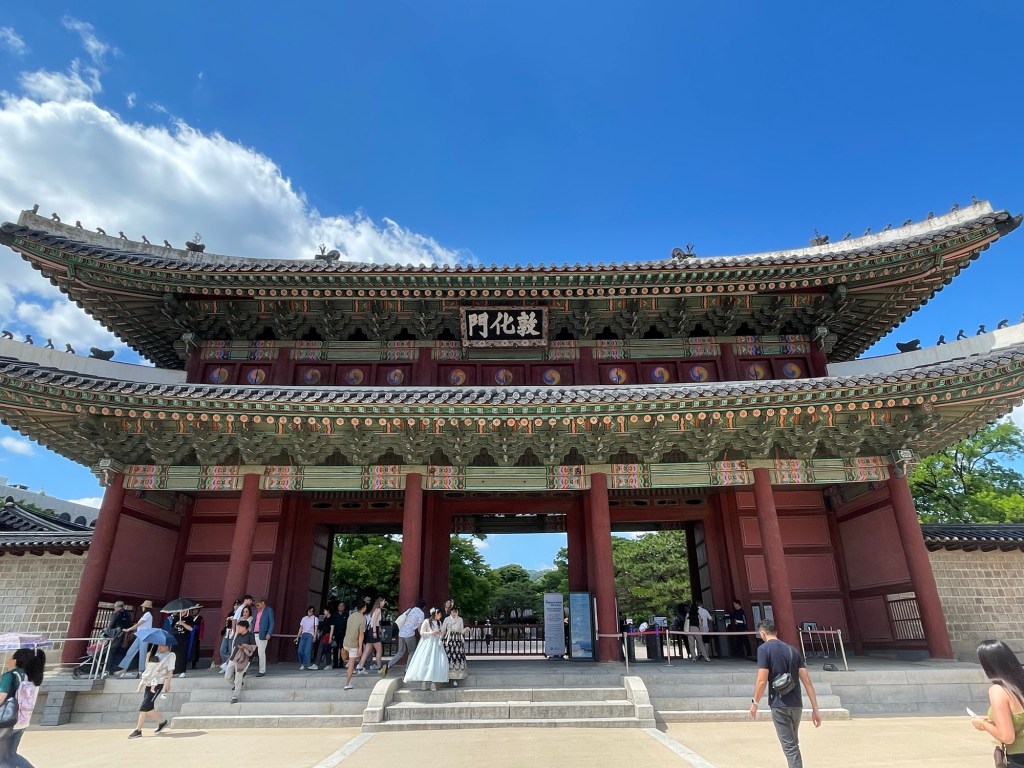
We walk to Changdeokgung palace which is close by and has a beautiful entrance. However, I don’t have the energy for another palace complex visit. I feel a bit bad but I can’t imagine there’ll be anything wildly different to what we’ve already seen. We admire the gate for a while, I take this beautiful picture and we continue on.
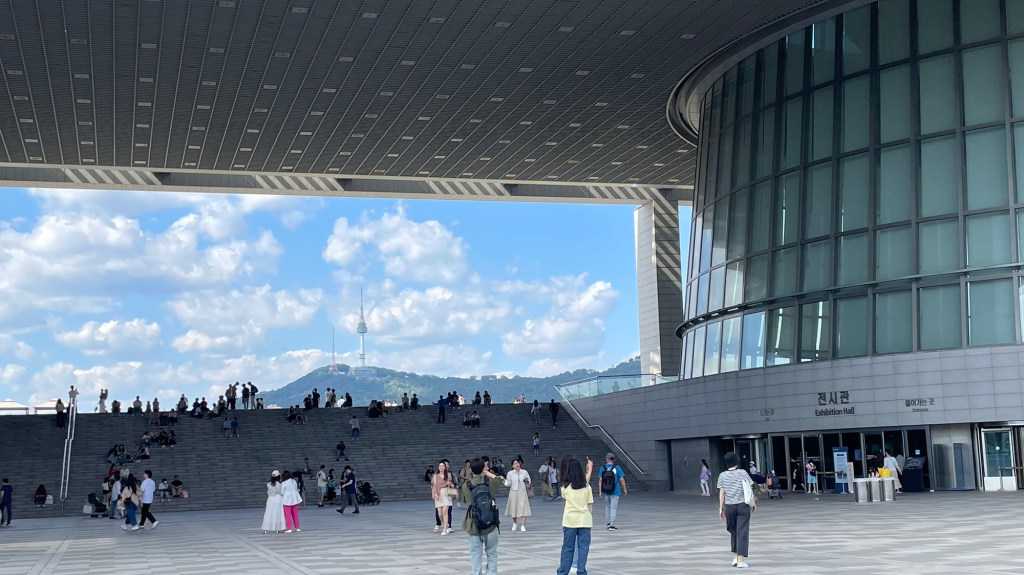
For a change of pace we get on the metro and head to the National Museum of Korea. It’s an impressive looking building with many exhibits across three floors. It has some nice views to the rear of the building and is certainly popular among the locals for a weekend excursion.
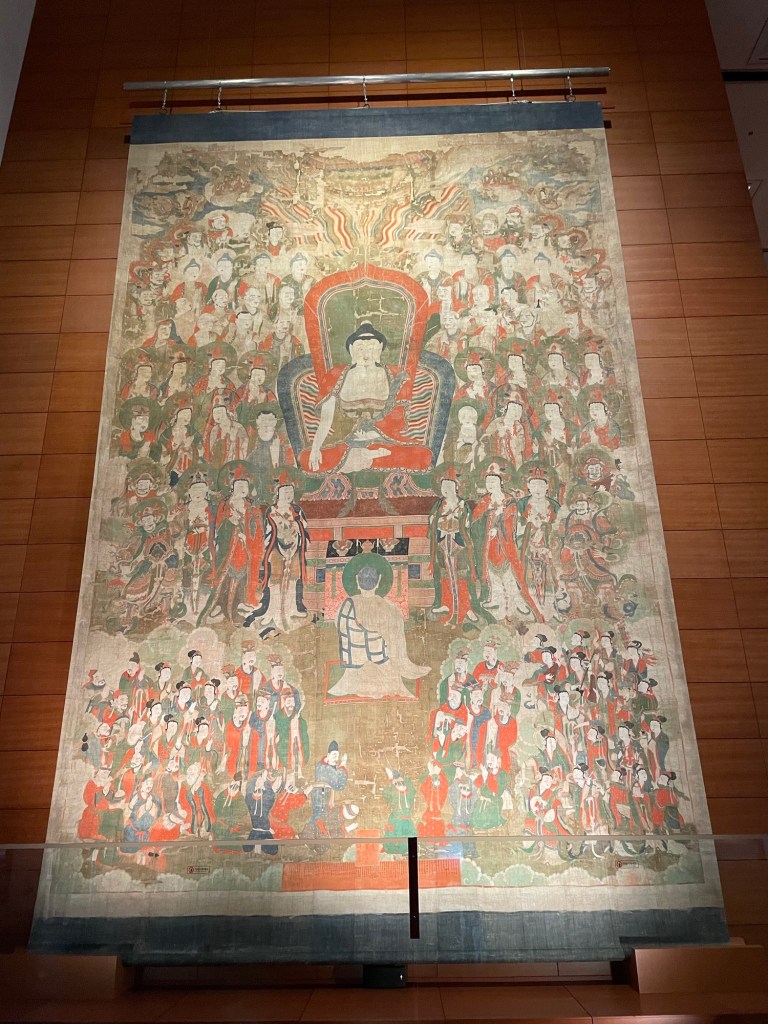
We see some interesting ancient Buddhist paintings along with colourful Buddhist scrolls.
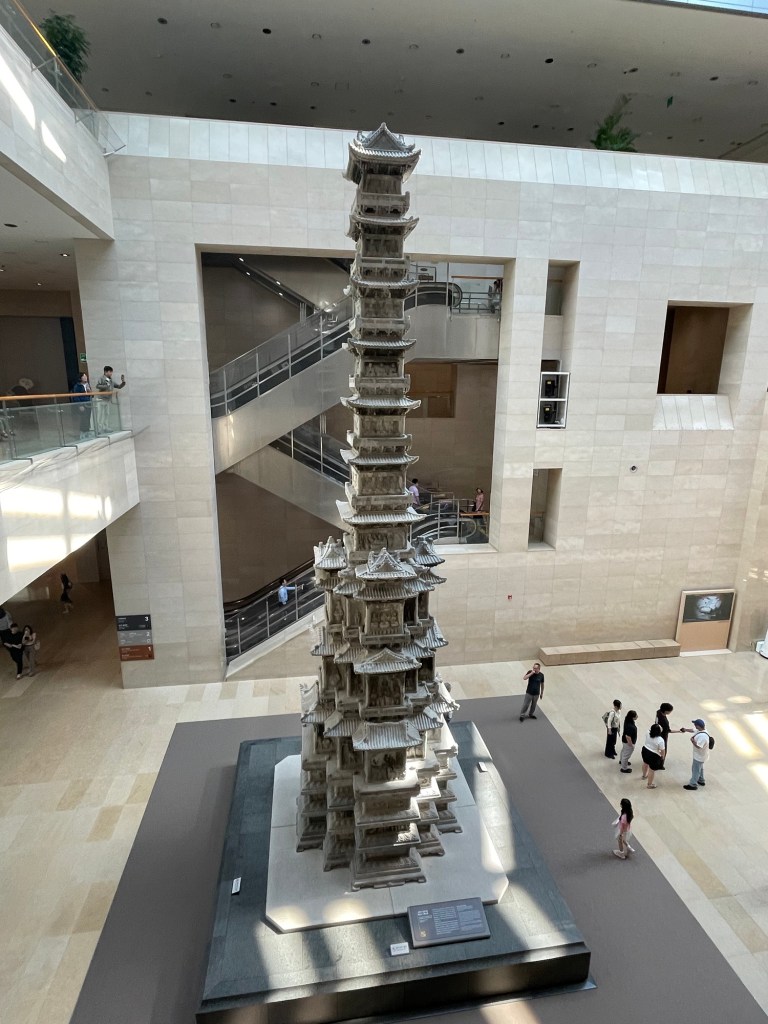
The undisputed centrepiece of the museum is this gigantic Buddhist pagoda first erected in 1348.
The visit to the museum has taken up most of the afternoon, so it’s time for a final meal before we go to the airport. Of course it’s back to the food market where I want to have one last pancake and hotteok.
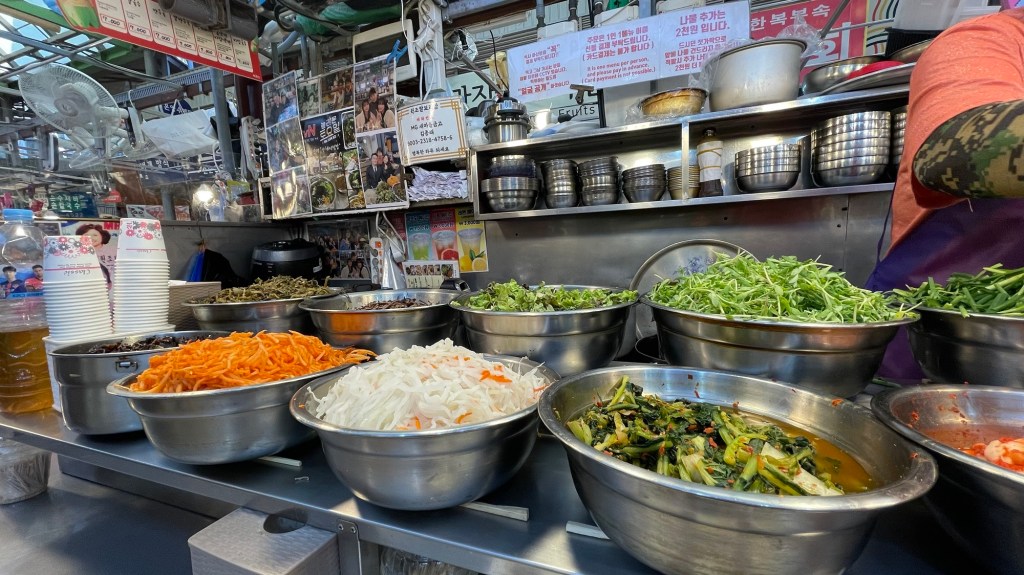
The food is absolutely amazing in this country and I am truly going to miss it. I had no tummy issues on this trip which is a huge win for me (I do think being able to drink the tap water was a big factor). The people were lovely, the history is amazing, all our accommodation was excellent. We just loved it. As we head to the airport to say our goodbyes I feel sure that I will come back again some day.
I will leave you with this:

 odohertyelaine
Will enjoy this
LikeLike