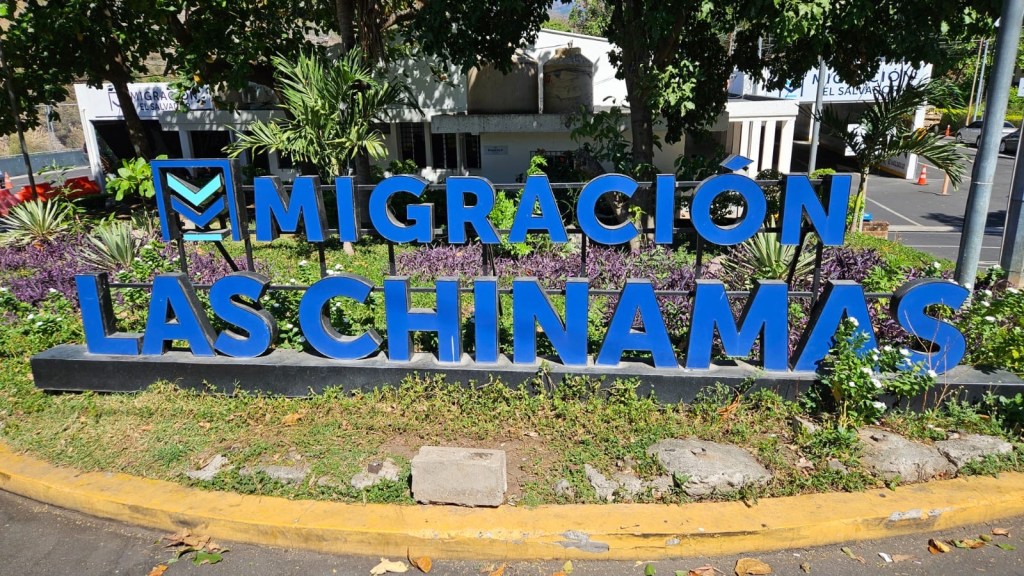
Today we are arriving to the last Central American country of our trip and it’s a first for us both – El Salvador. It’s another land border crossing as we are driving from Antigua, Guatemala which is about 3 hours to the border crossing at Las Chinamas.
We get out of the car and go into one building to exit Guatemala – a straightforward stamp out and there’s no queue so happy days. Then back into the car, drive over the bridge…..
….. and into another building to get stamped into El Salvador. We’ve just managed to get ahead of a group of about ten people so no wait time, and after answering a few questions, where are we staying, how long for etc we are stamped in. Shane has to pay $12 to get in and as I take out my purse the lady says no payment for you just him …. Haha, love my EU passport!!
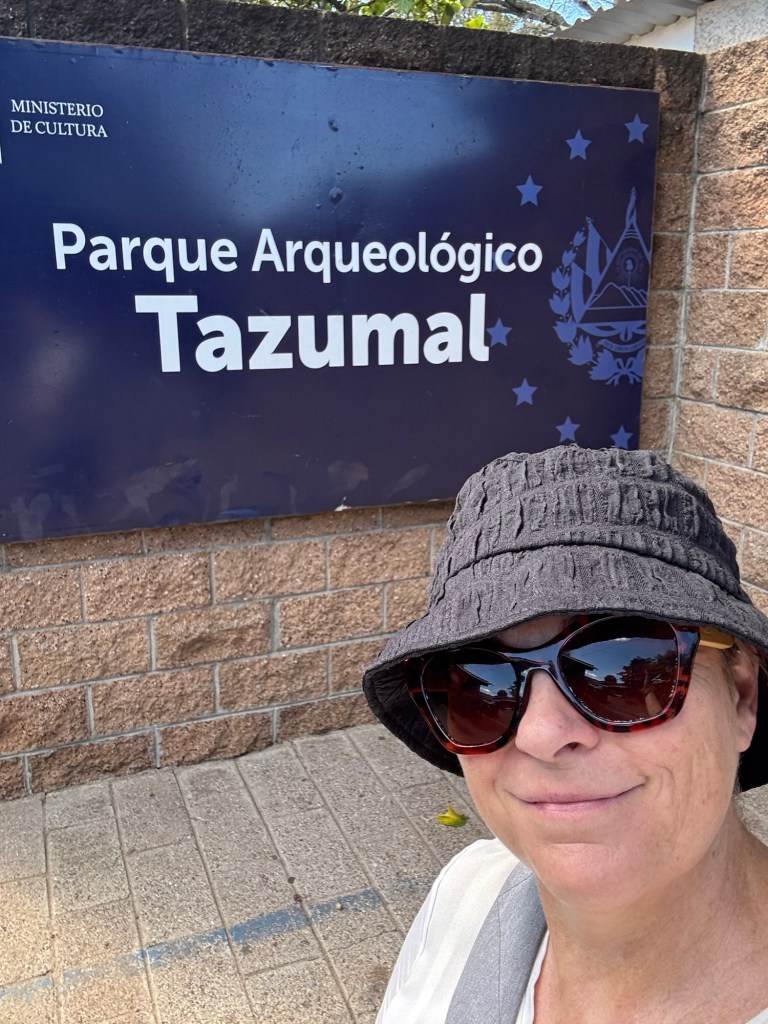
After about a 45 minute drive from the border we arrive at Tazumal, a Mayan city set in the Chalchuapa archaeological complex.
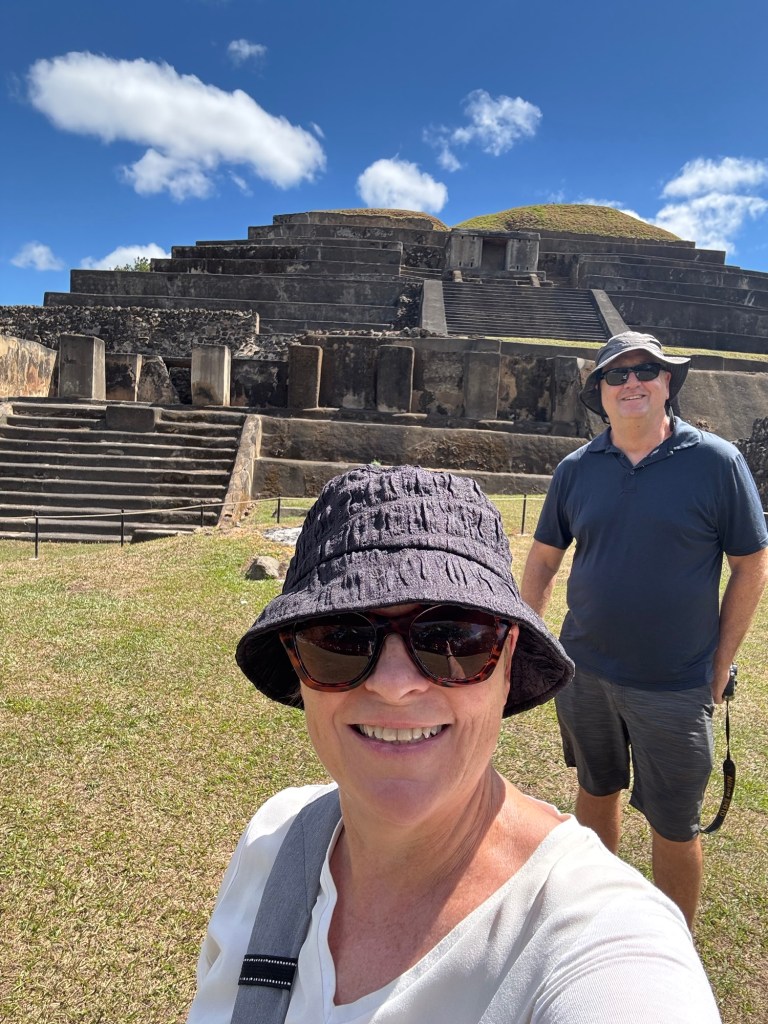
It’s a small enough area relative to the Mayan sites we’ve visited in other country’s, with one main pyramid to see.
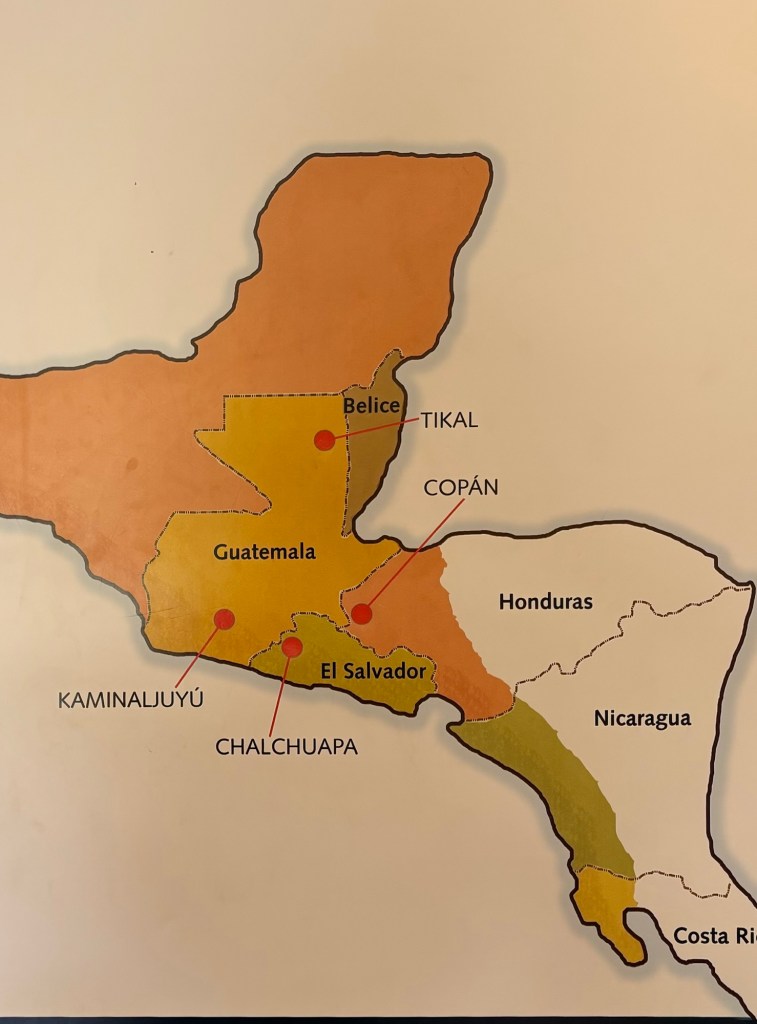
It has a small museum which we walk around and I learn something I’ve wondered about since I started this trip. I kept reading reference to meso America which I thought just meant middle America (aka Central America) but it actually refers to something a little different. It is defined geographically as “from the southern half of Mexico -Pánuco River-, including Guatemala, Belize, El Salvador and the western part of Honduras, the Pacific coast of Nicaragua and northwest Costa Rica- Nicoya province. So there you go!
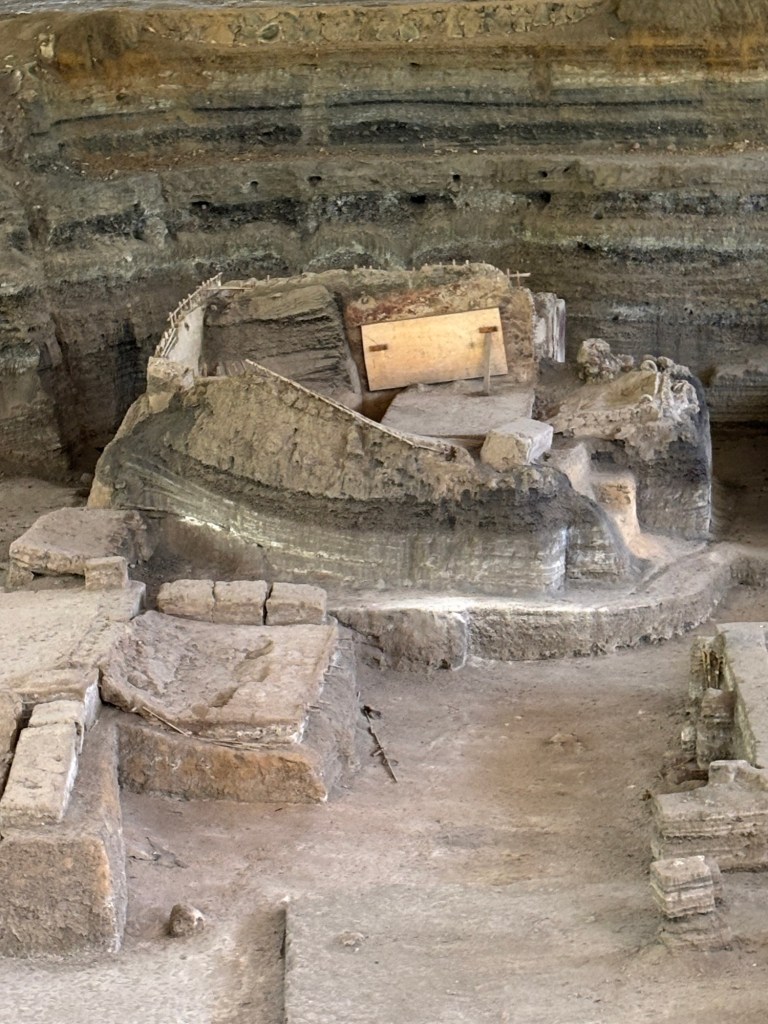
Back in the car we continue to Joya de Ceren. This archeological site has been nicknamed the Pompei of America. Unlike Pompei you don’t get to walk among the buried city, you walk around a couple of large covered areas and look down at the remains of the city that was covered in lava. There’s not a huge amount to see here but it’s interesting.
The eruption of the Loma caldera volcano in 535 AD covered the city in a 5-metre layer of ash. The burial preserved evidence of Mayan daily life and happily no bodies were found.
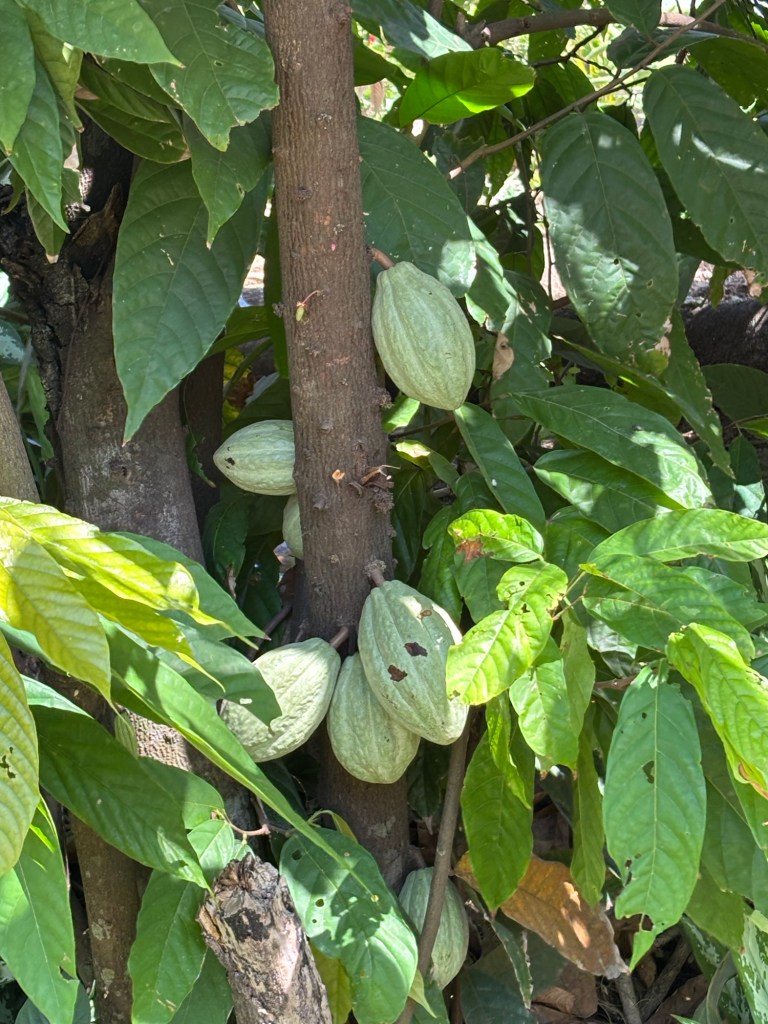
The park has lovely grounds and I see cocoa beans on a tree which is cool to see.
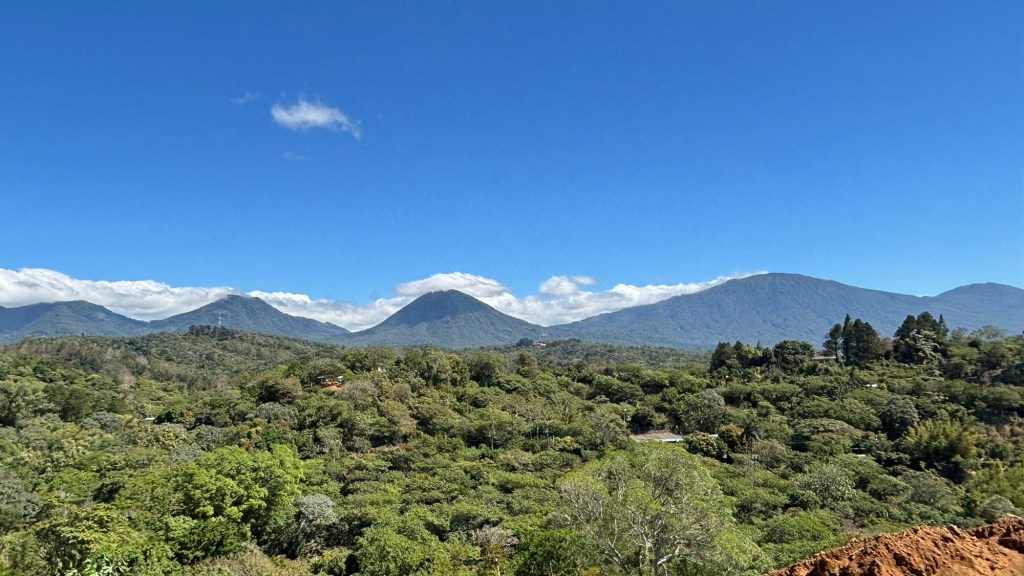
The Ruta de Las Flores is in the western highlands of El Salvador and it is a scenic destination that’s one of the most popular places in the country. There are long, winding roads with lush green hillsides and coffee plantations, connecting the colourful towns that dot the route and during spring, vibrant flowers bloom in every colour along the roads — giving la Ruta de las Flores its name.
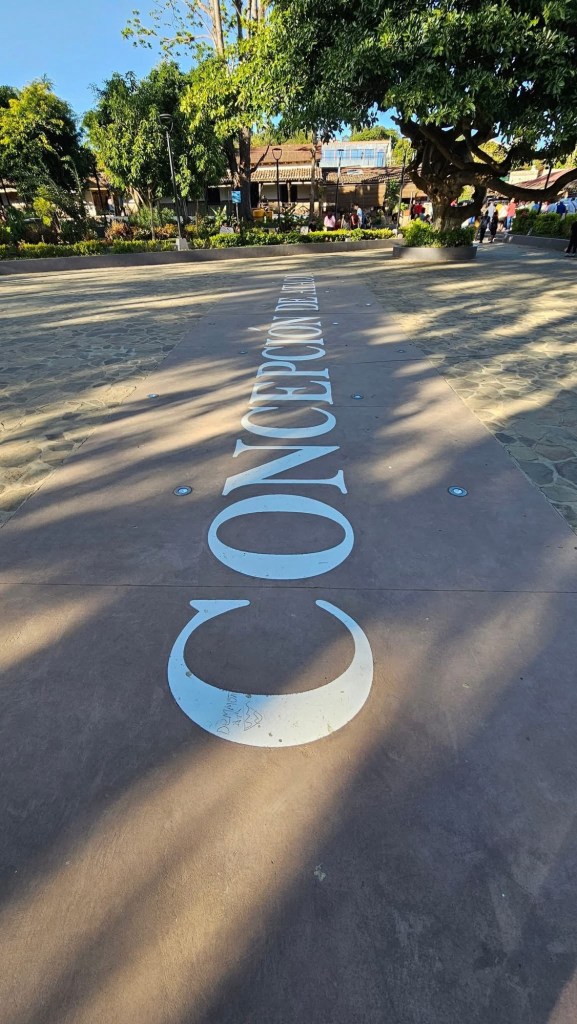
We arrive to Concepción de Ataco where we’ll spend the next couple of nights at Casa Degraciela which is a colonial home more than 200 years old and I think it could have been a convent as there’s so much religious memorabilia around.
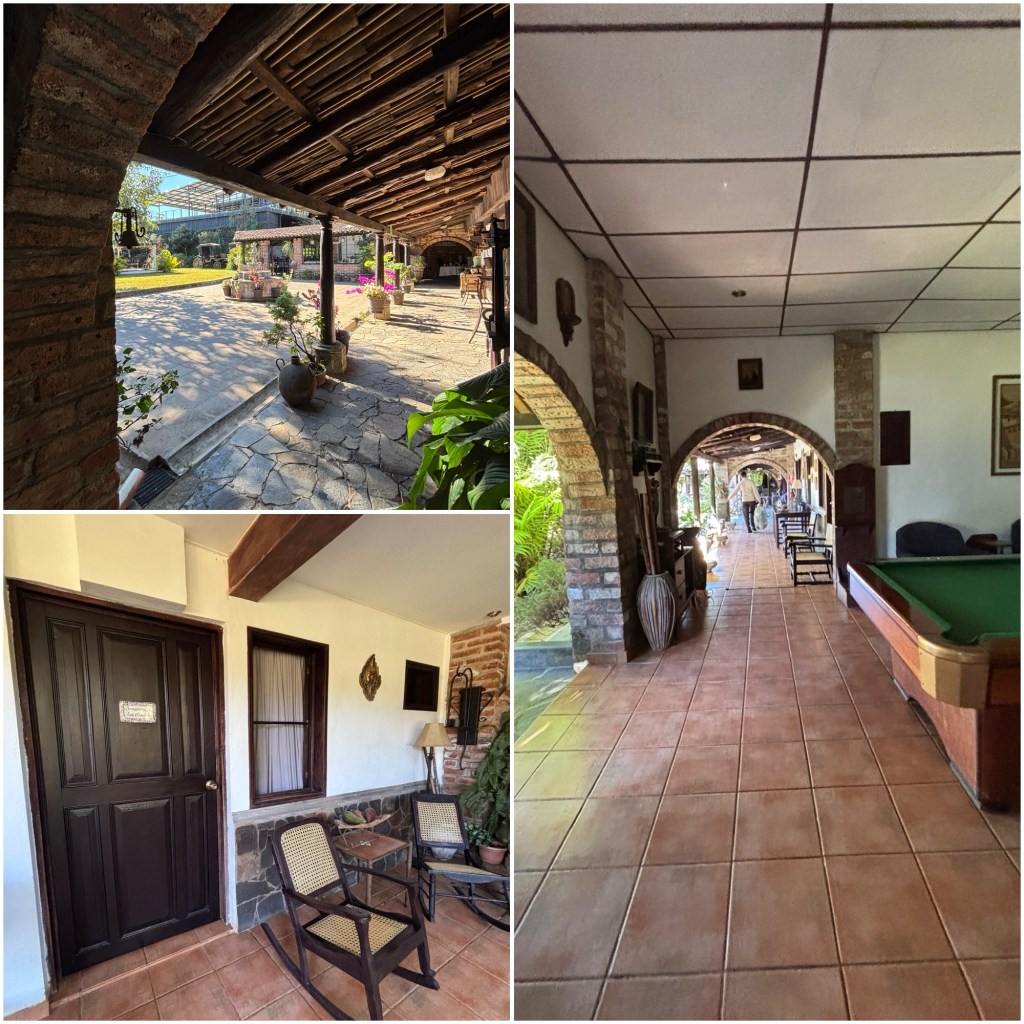
It’s still bright so we head out to explore this little town. It’s small so easily walked around in 20 minutes or so. We head to the main square, beside our hotel and it is very busy. It’s Sunday so all the locals must be out. It has a bit of a crazy feel to it as there’s really loud music coming from a few different sources. On the corner of the square there’s a guy with a microphone singing to backing tracks with his amp on full blast. There are also roadworks everywhere!
In the square we have, on one side a headcase dancing by him/herself to their very loud music via an amp and on the other side a couple streaming themselves dancing to their own music. Did I mention this square is quite small! It’s all a bit bizarre!!
We see there’s a large funeral coming from the main church and the hearse is a pick up truck!

Once the funeral clears out we go inside to see this very beautiful church.
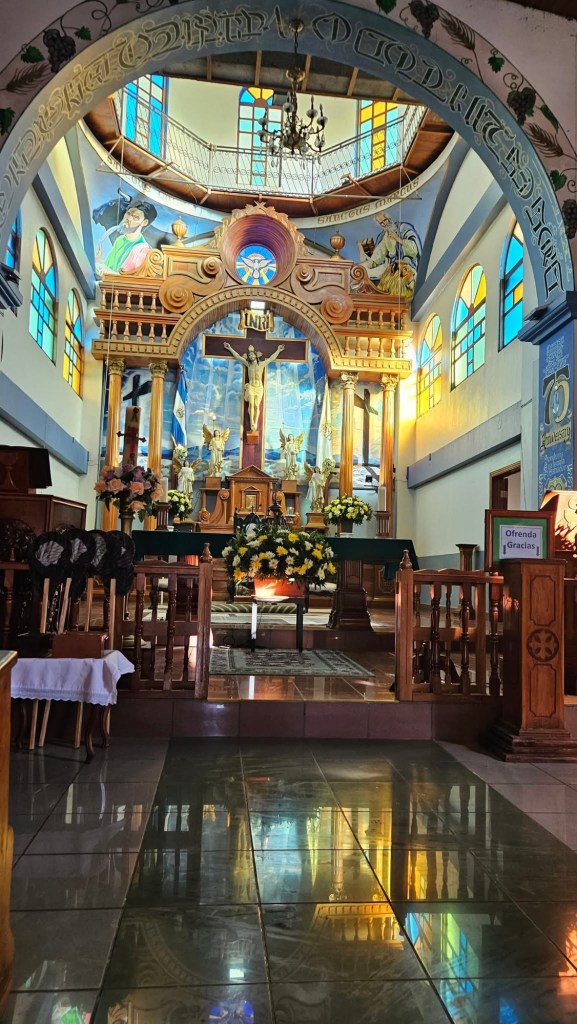
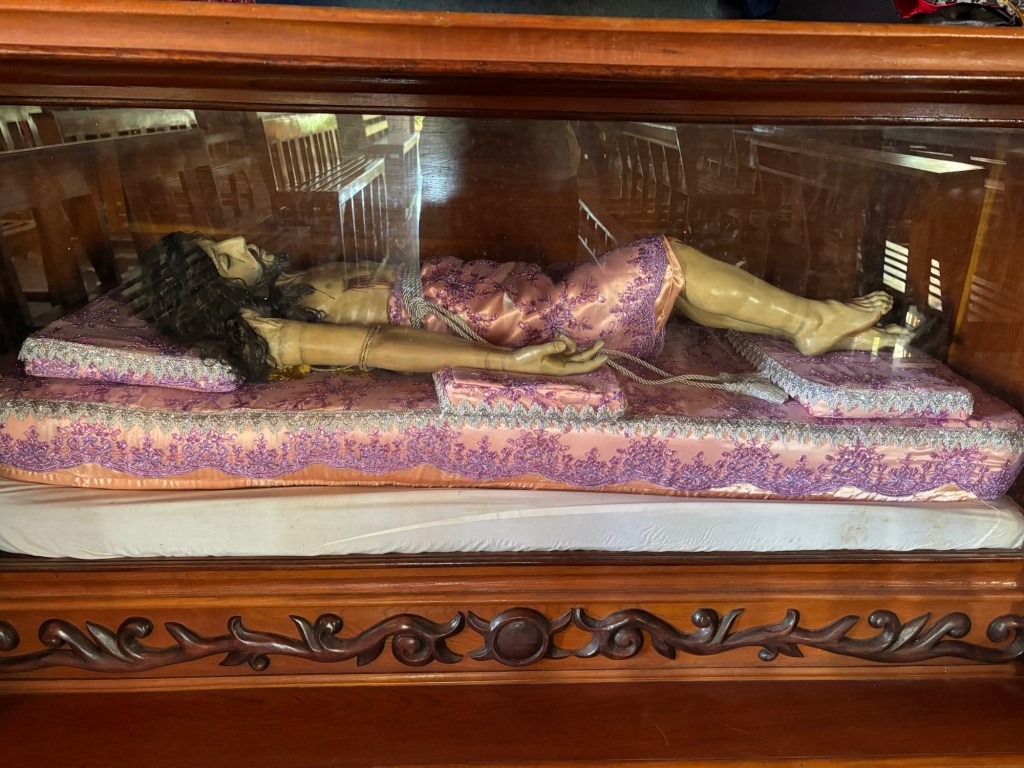
Now you know I’m fascinated with how they dress the statues in this part of the world. Check out this one… looks like Jesus may have been going to prom!! 😱
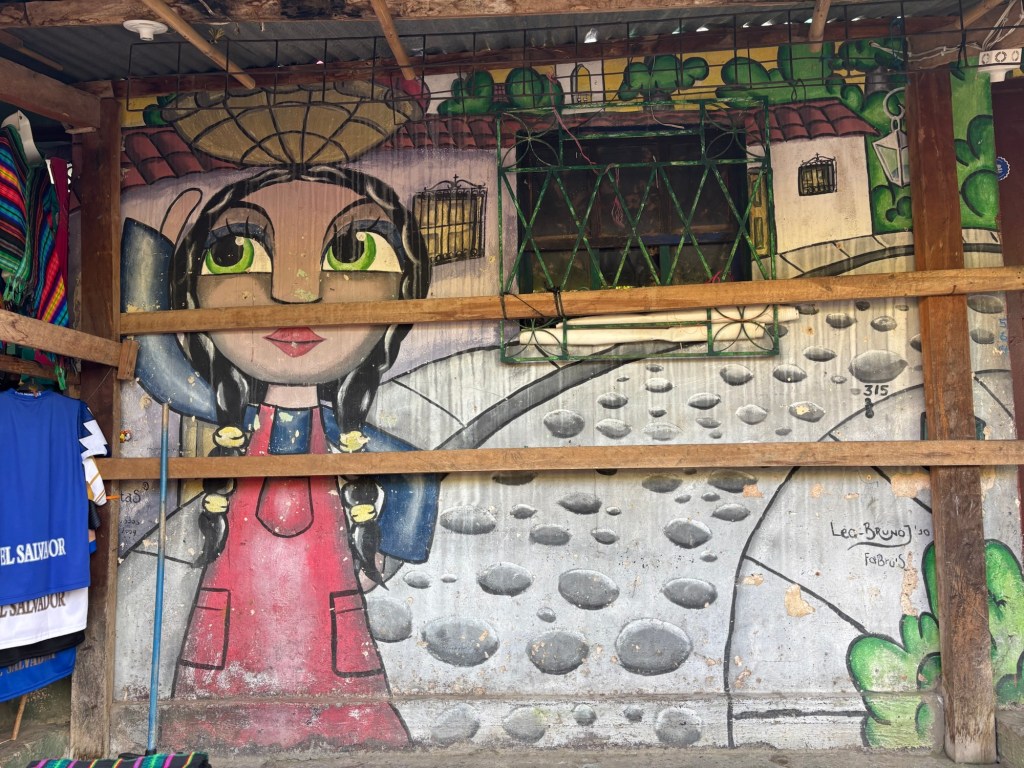
Around this small town are brightly painted murals which I love.
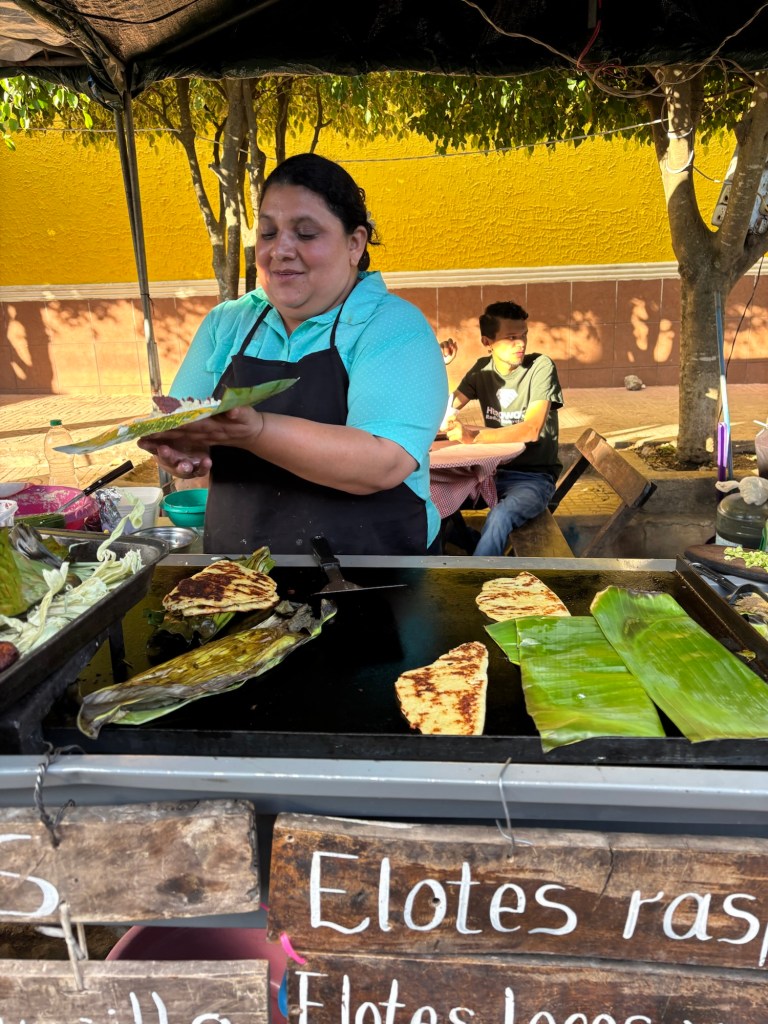
There are lots of food stalls and we spot something we’ve never had before – “Riguas”. They are soft, sweet, buttery pancakes made with fresh white corn, that can be eaten plain, or stuffed with beans, cheese and different types of protein. Riguas is a common street food in El Salvador and can be found being sold off a hot griddle cart. We opt for a cheese and lorocco (the green veg we had in Honduras) and it is really tasty.
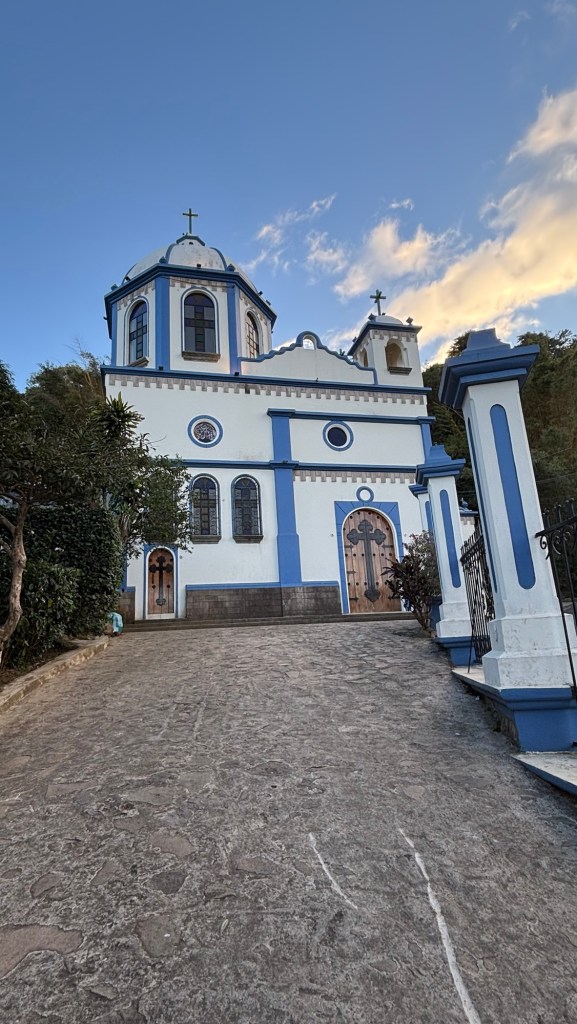
We walk to another smaller church that has the same colours as the other church in the town – there seem to be three and all uniform white and blue. This one is closed but it’s nice from the outside.
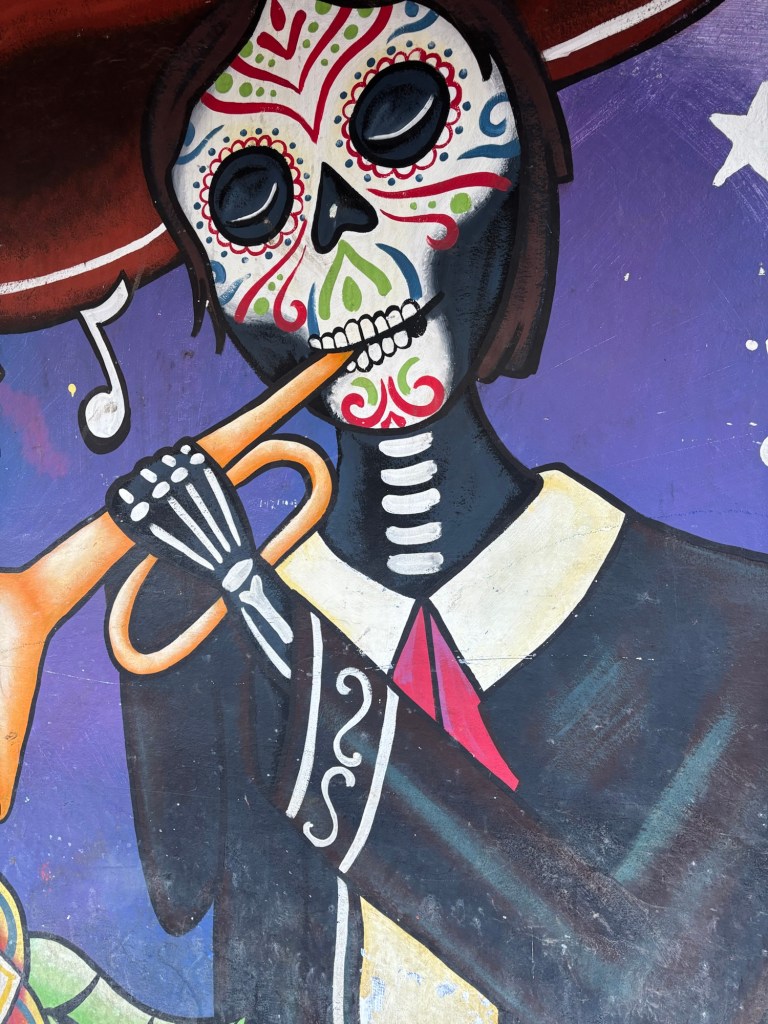
More cool murals as we walk around.
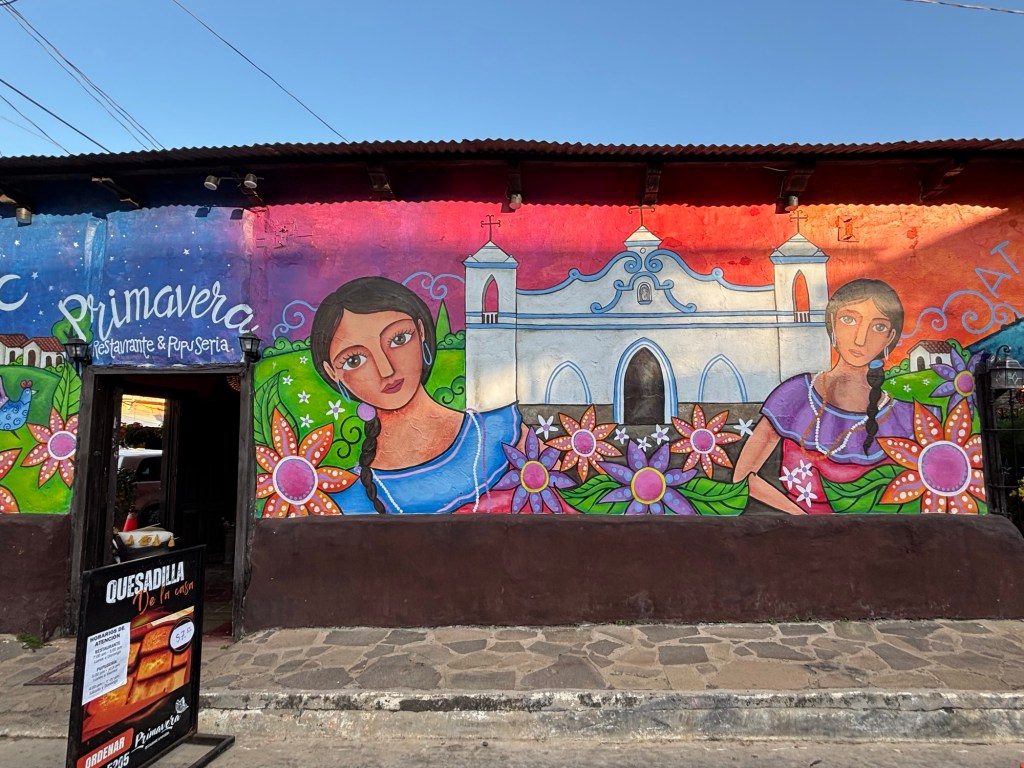
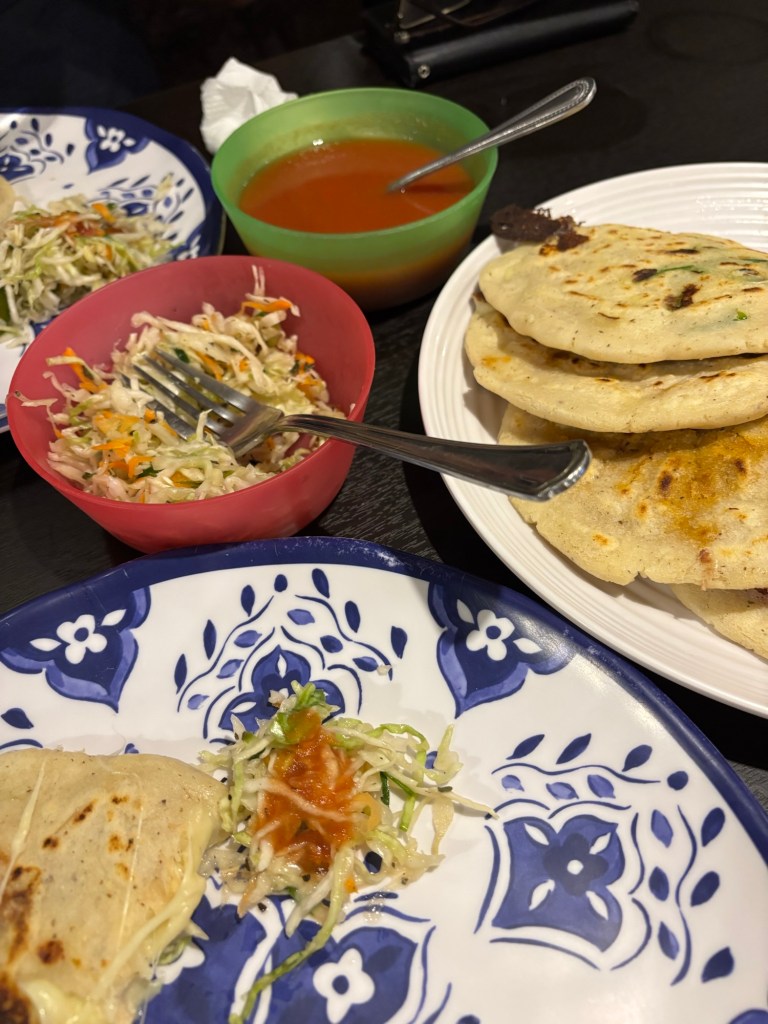
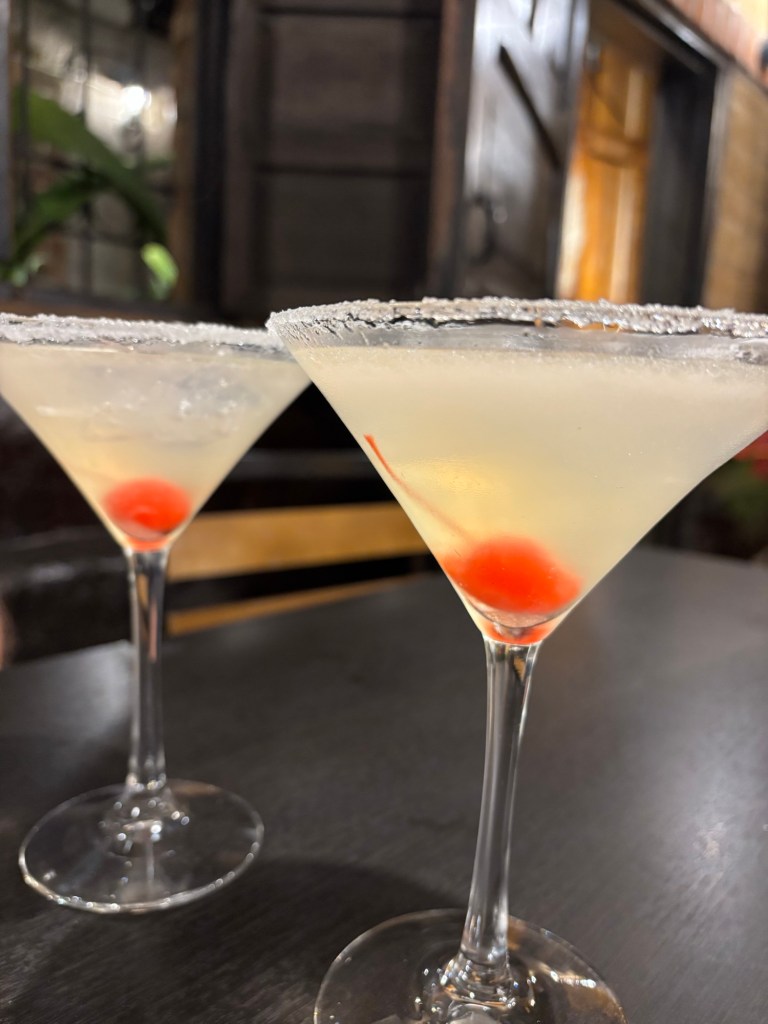
In El Salvador, the pupusa has been declared the national dish and has a specific day to celebrate it. It’s no surprise then that there are plenty of pupusa restaurants in this little town. So no surprise this is what we have for dinner tonight at “Primavera”. We also try a local margarita which is really good but surprisingly has a cherry in there!!
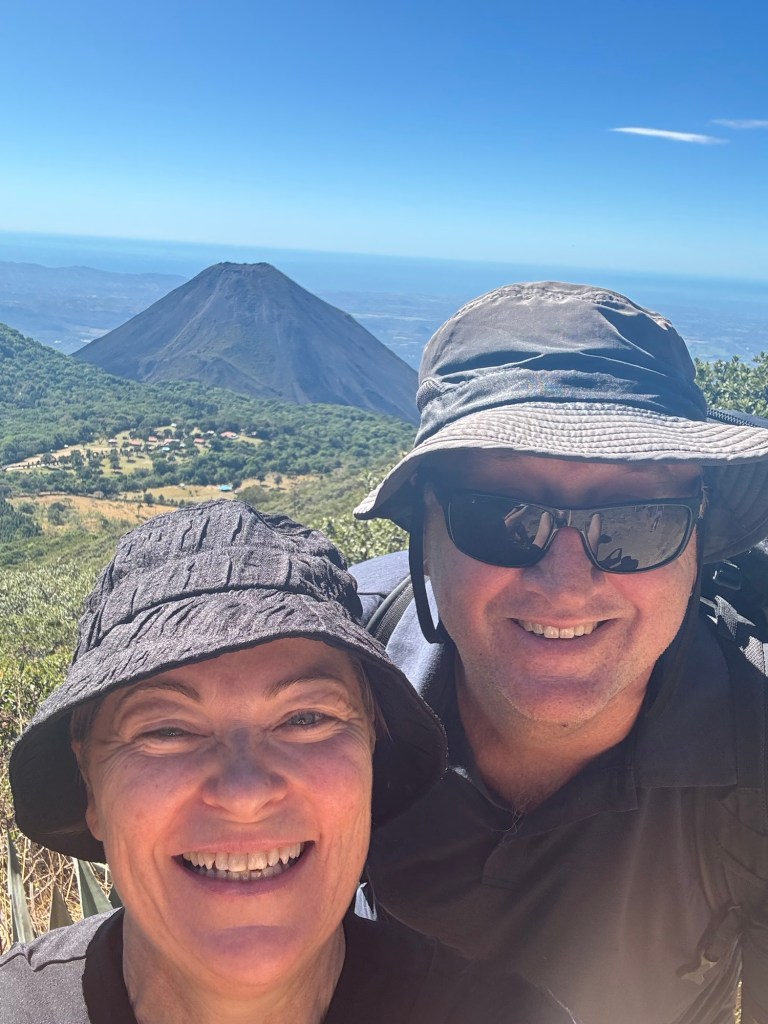
Next morning, we are up early to drive to Volcanoes National Park which is home to what is called the “three giants”: Izalco, Santa Ana and Cerro Verde. This is our second volcano climb in a few days (we just climbed Pacaya in Guatemala for anyone who hasn’t read the previous blog instalment!). This morning we climb Santa Ana and although the initial climb is not as steep, it’s a longer hike up and back. The weather is beautiful, there’s no cloud and the views on the way get better and better. This is the view of Izalco volcano behind us.
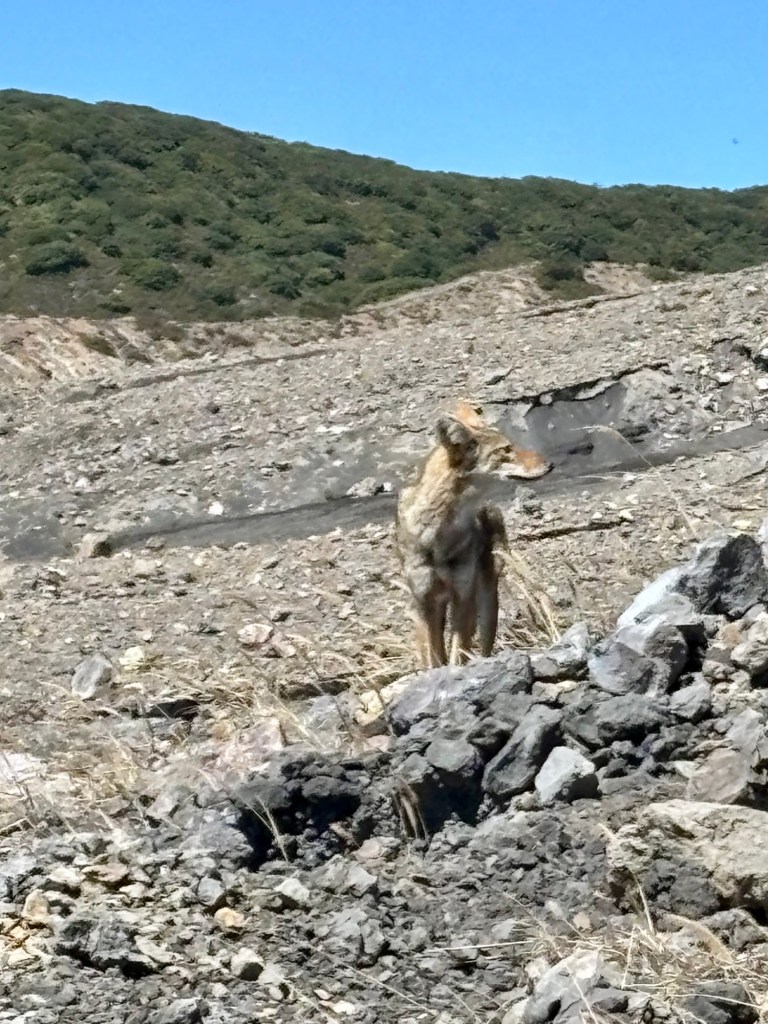
As we get close to the top we see a coyote – he’s close but not too close!
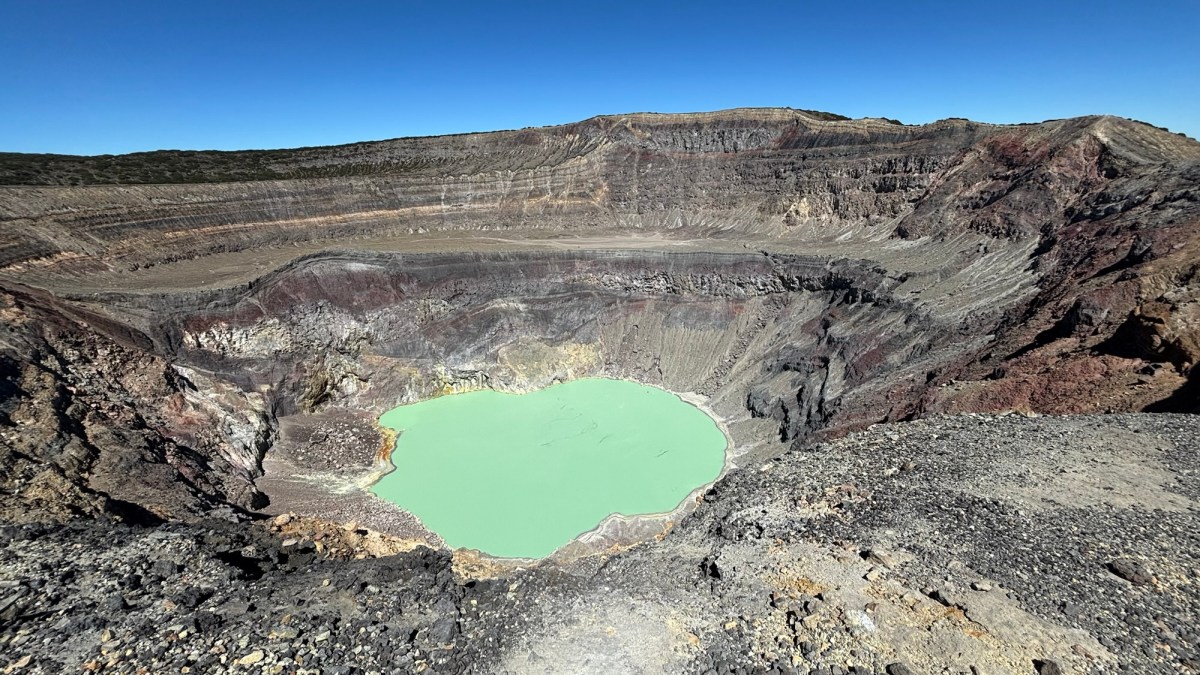
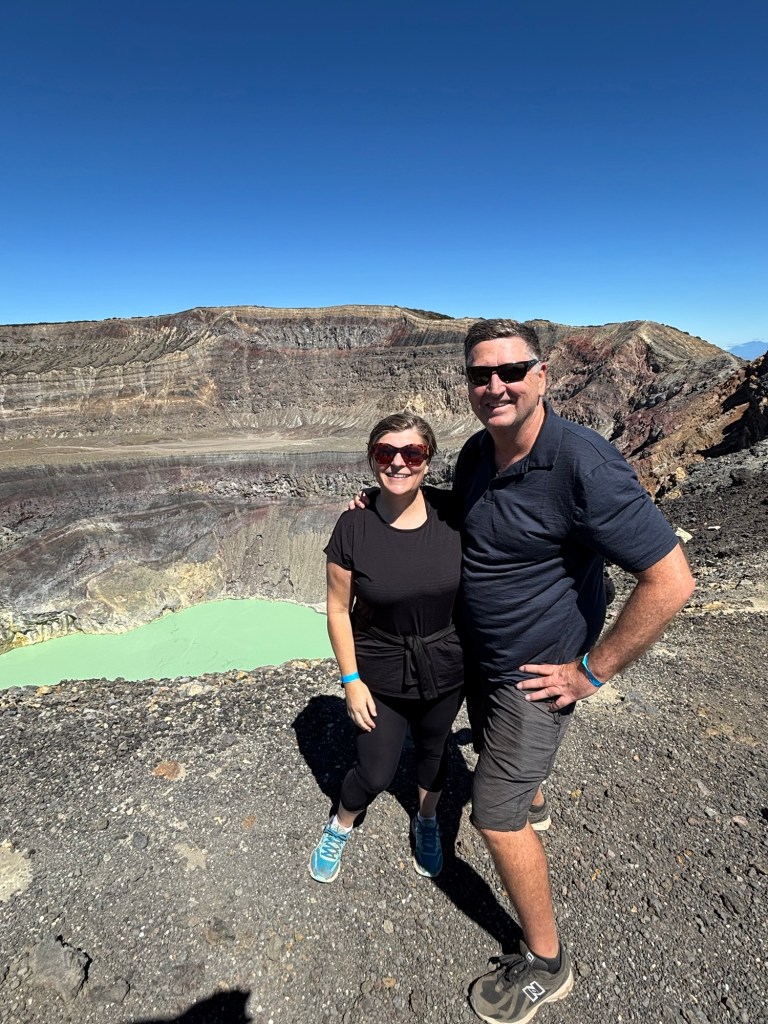
This volcano last erupted in 2005 and is the highest volcano in El Salvador at 2,381 metres. At the summit we have this magnificent view of a turquoise crater lake which is absolutely stunning.
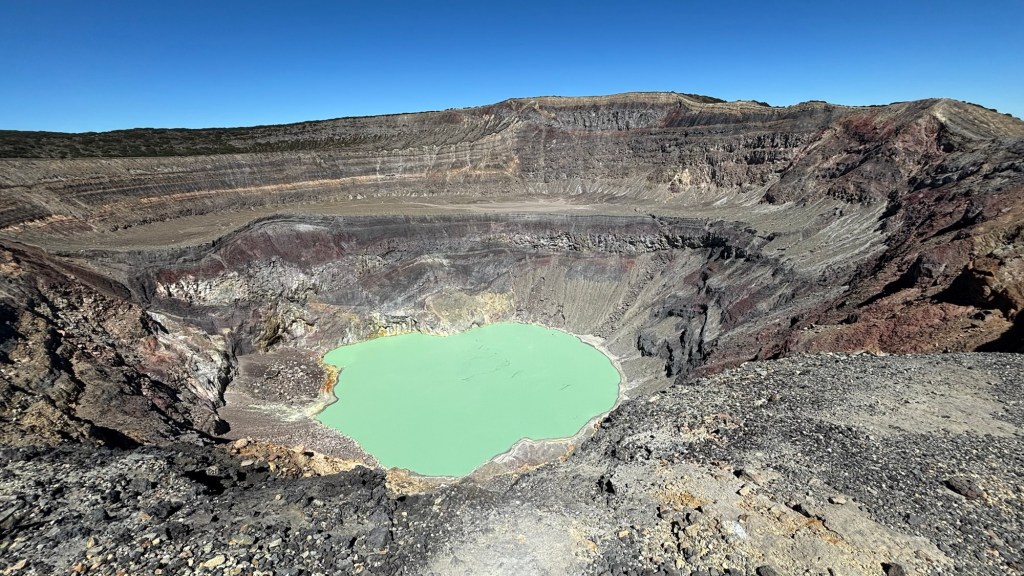
It is stunning up here…
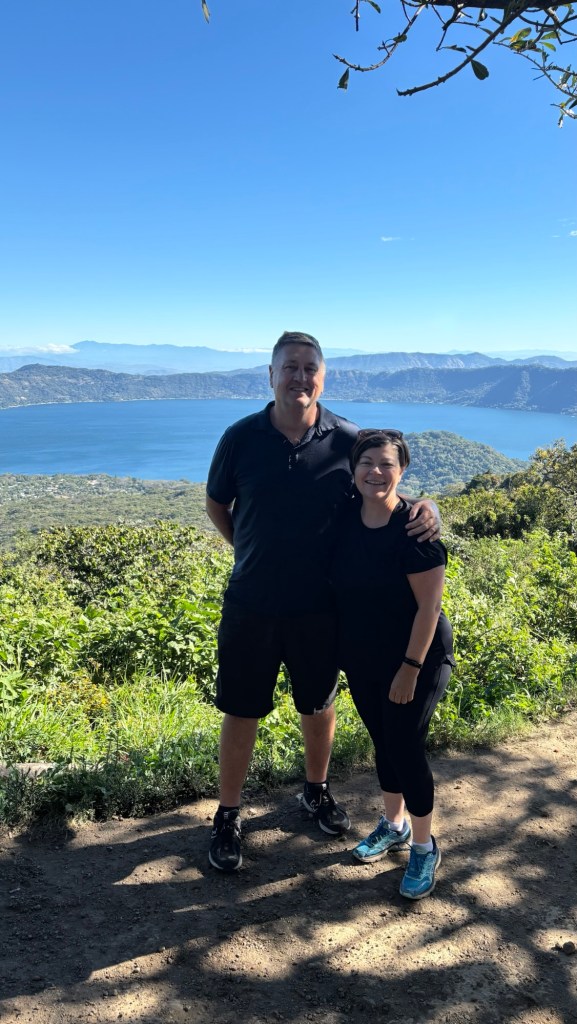
We leave the Park and drive downwards to Lake Coatepeque. Viewpoint (or mirador) halfway up/down.
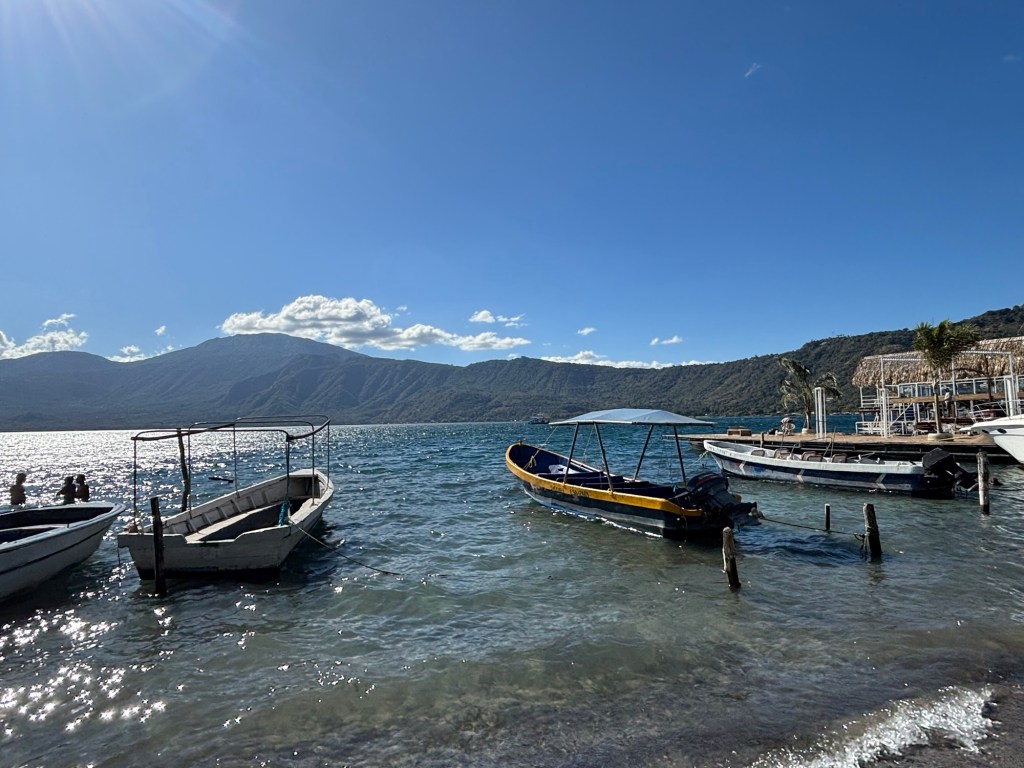
We have lunch looking out on the water at Restaurante Las Palmeras and then walk along the lake to get some other views. It’s roasting – 34 degrees!
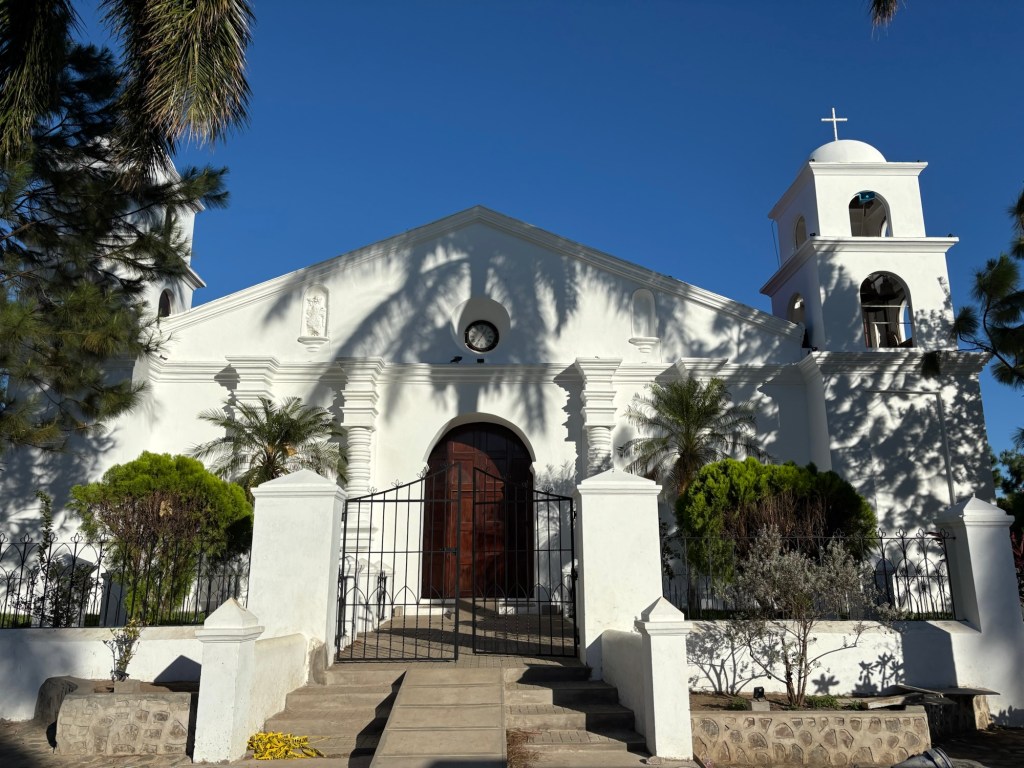
Tomorrow we will visit a number of towns on the “Ruta de las Flores” and now we will tick off another – Nahuizalco. This dusty little town is famous for it’s night market, although we are a bit early and it is only getting underway, plus we are knackered so after a short walk around and the obligatory photo of the church we head back to Ataco.
We have a well deserved restful evening as we are tired after such a busy day. Thankfully our lunch was substantial as we don’t even fancy dinner! An early night tonight and we’ll be full of beans for moving on to our next destination tomorrow.
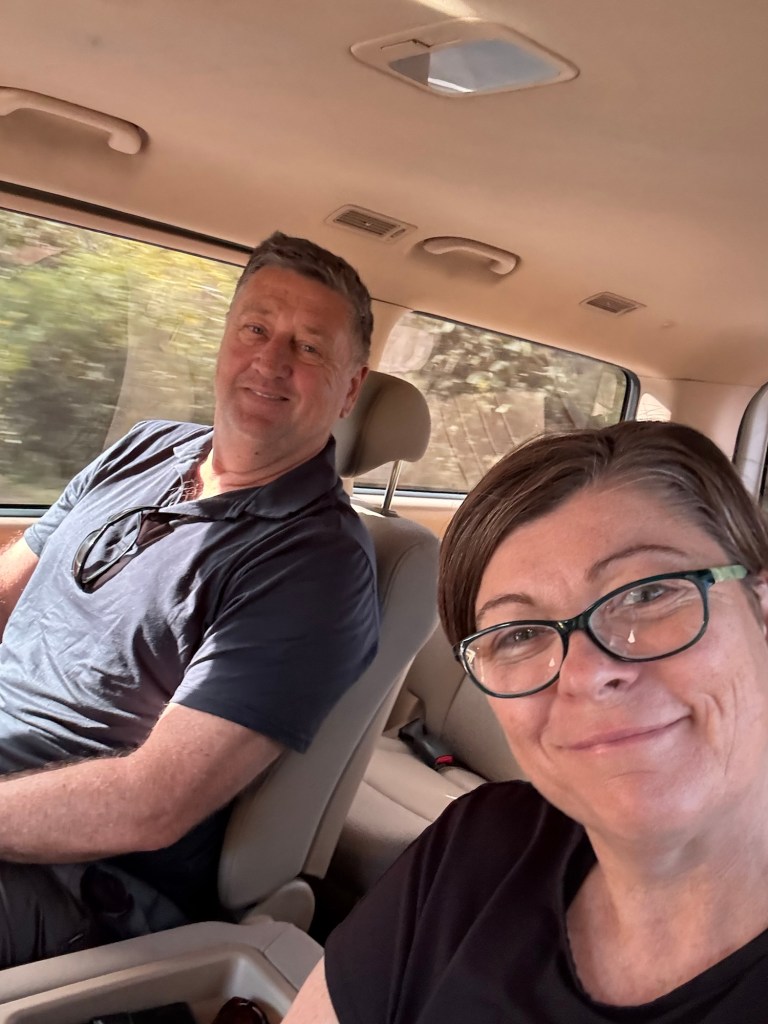
Feeling refreshed after a great rest and our “full Guatemalan” breakfast, we load up the van and get on the road with Cecil.
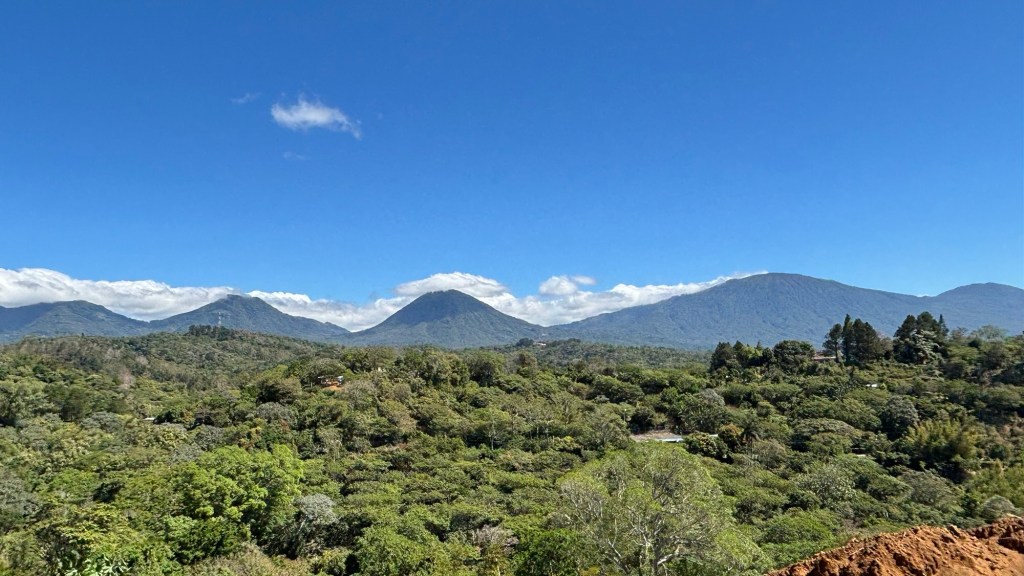
Today we continue driving the Ruta de las Flores as we make our way toward Suchitoto. There were some flowers but not a huge amount in bloom but the highlight for me were the volcanoes that stand ominously over the horizon at every turn. Stunning scenery and the roads were so much nicer to drive than the bad conditions in Guatemala. This view clearly shows the three giant volcanoes including Santa Ana which we climbed yesterday, I love it!
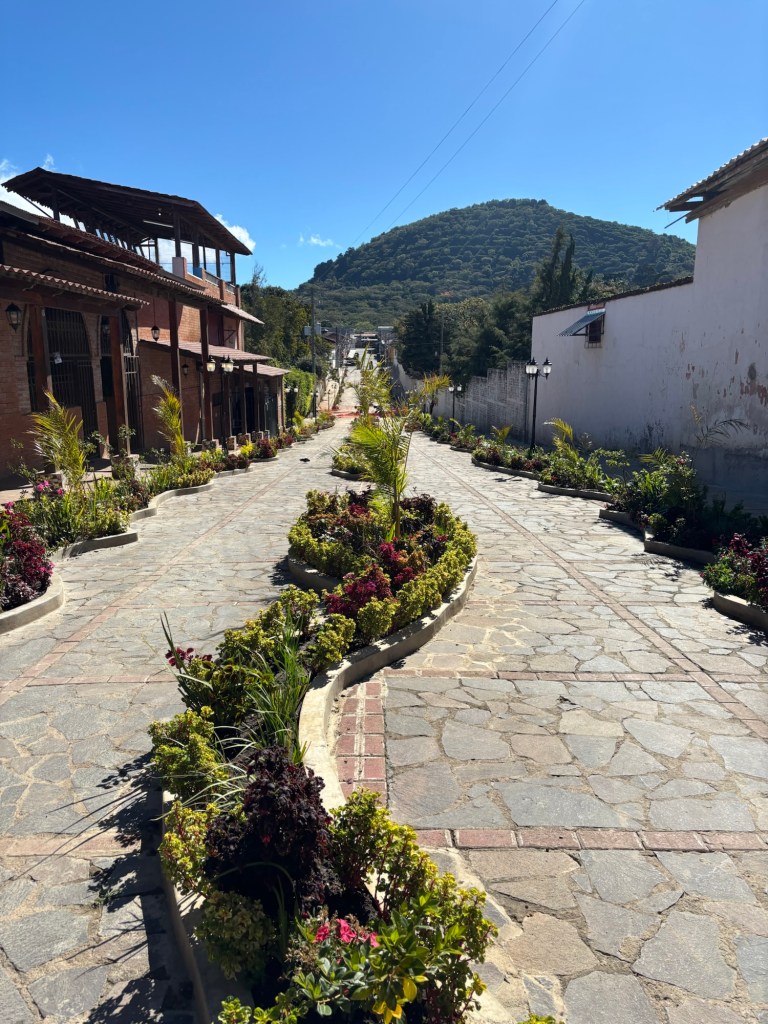
Our first little town or pueblo we visit is Apaneca. Apaneca means ‘river of the wind’ and this is El Salvador’s second-highest town (1450m). Considered one of the country’s prettiest places to visit, its cobbled streets and colorful adobe houses are largely untouched by tourism, while its cottage craft industry is highly revered. It’s cute and is clearly being looked after.
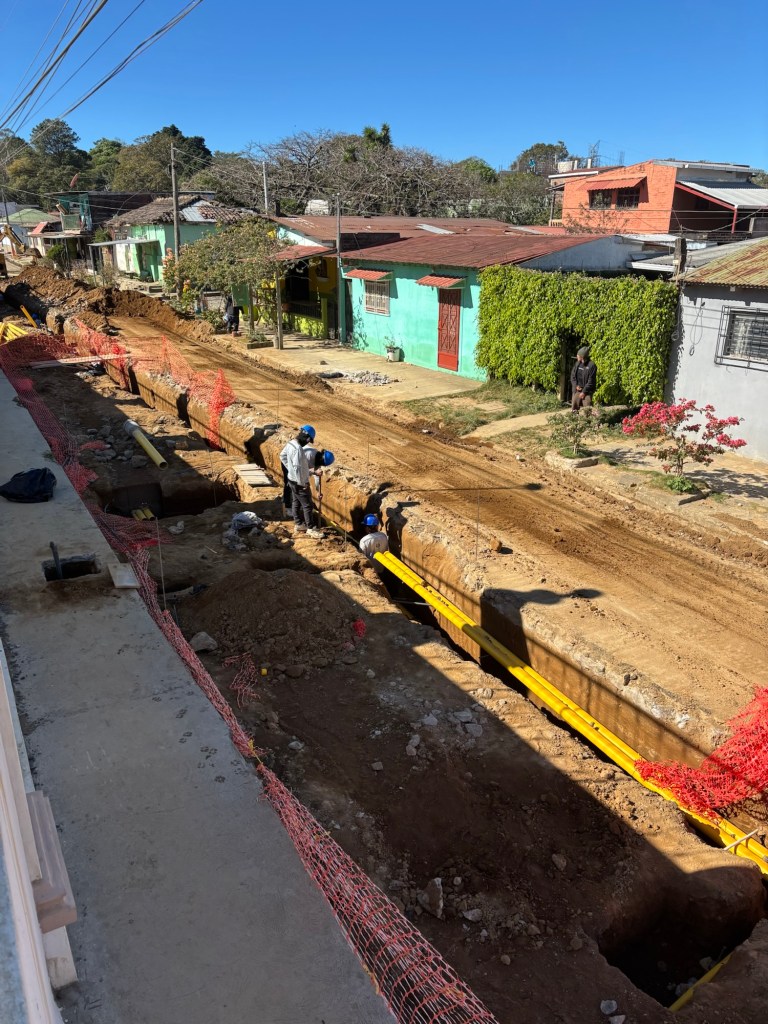
Did I mention there are roadworks everywhere. I think all of the villages are currently having new roads laid. This place looks like it’s also getting new drainage!
We drive through Ahuachapán but there’s not much to see here apparently, it does have some tragic history though. In 1932 this region witnessed the horrible Peasant Massacre, when mostly Nahuatl coffee farmers were slaughtered by government troops for an attempted insurrection and mass protest. The actual number of deaths still varies, but 30,000 people is a close estimate.
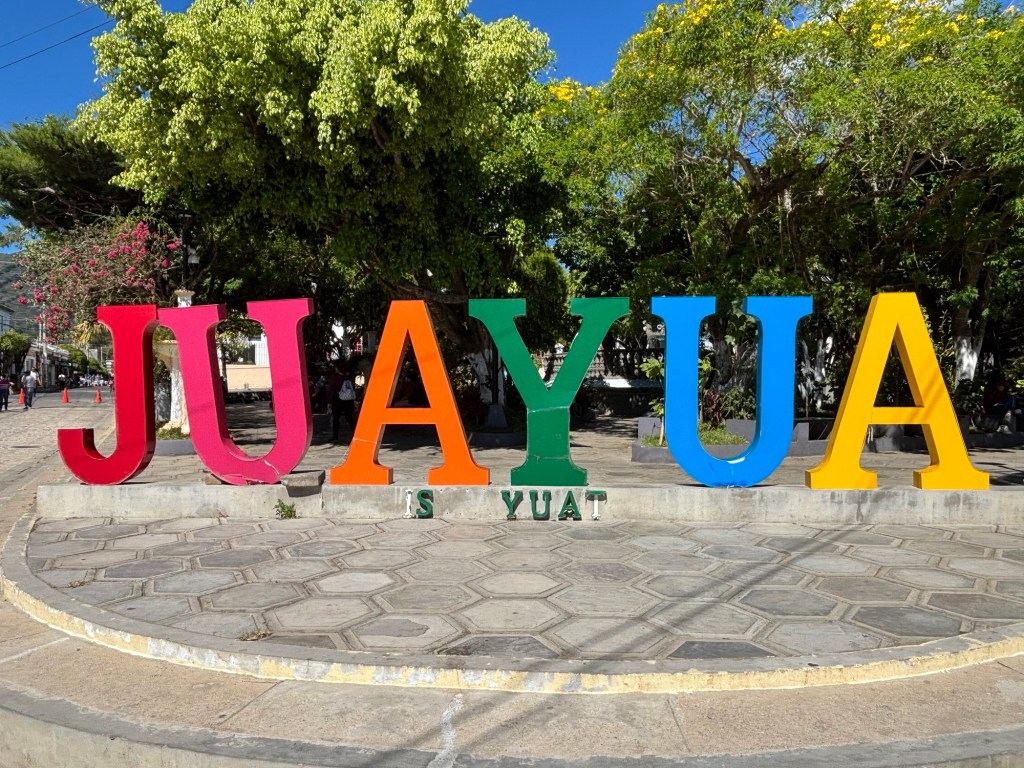
Next stop is Juayúa (why-ooh-ah), which is the most-visited town on Ruta de las Flores due to its attractive cobbled streets, weekend food fair, and nearby waterfalls and hot springs. Cristo Negro, or Black Christ is an important religious statue carved by Quirio Cataño in the late 16th century and housed in the church. We will definitely be checking that out!
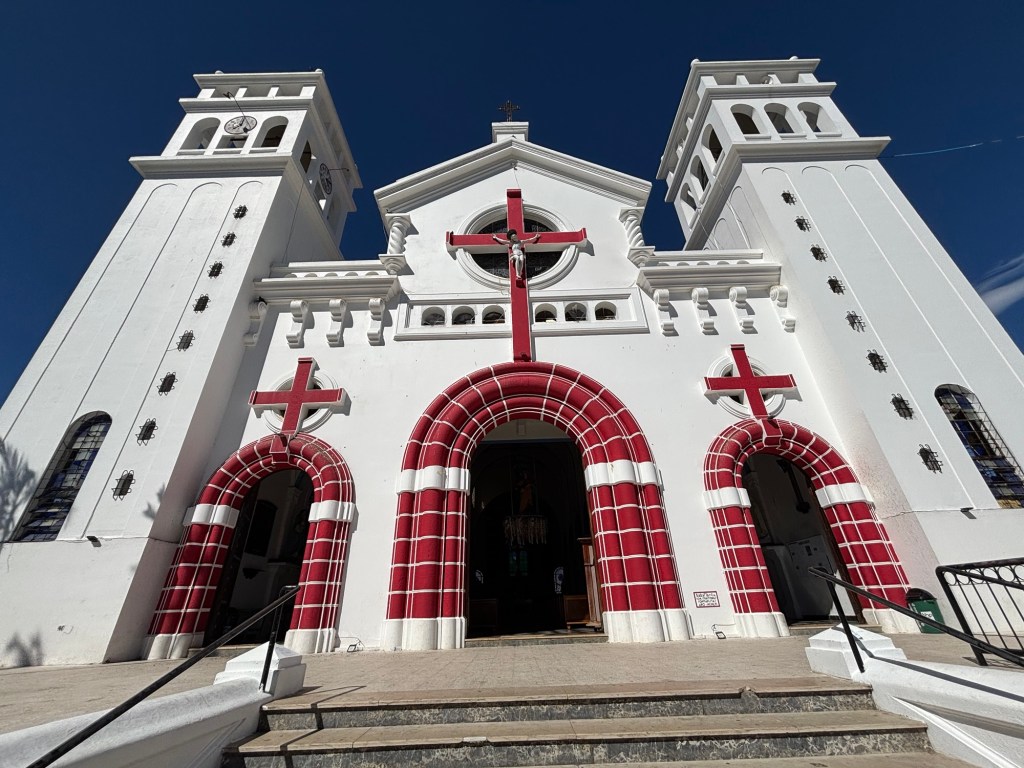
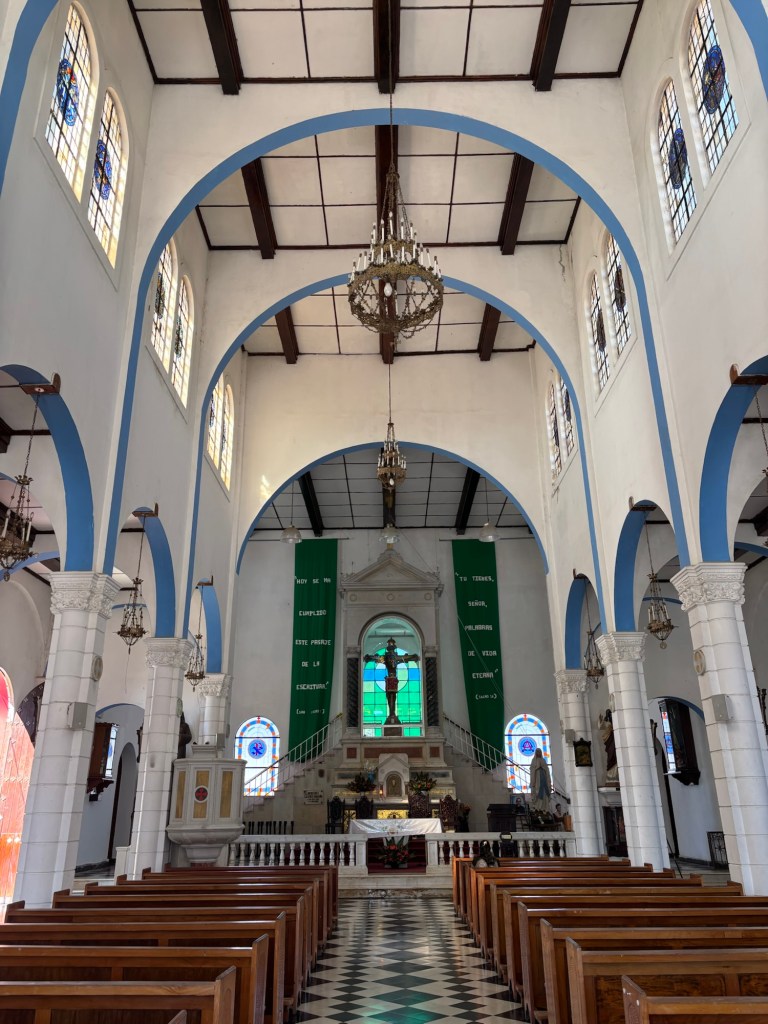
The church is beautiful- the prettiest we’ve seen in all the little towns.
Inside is also beautiful and we see a couple of black Jesus’s so not sure which is the original!!
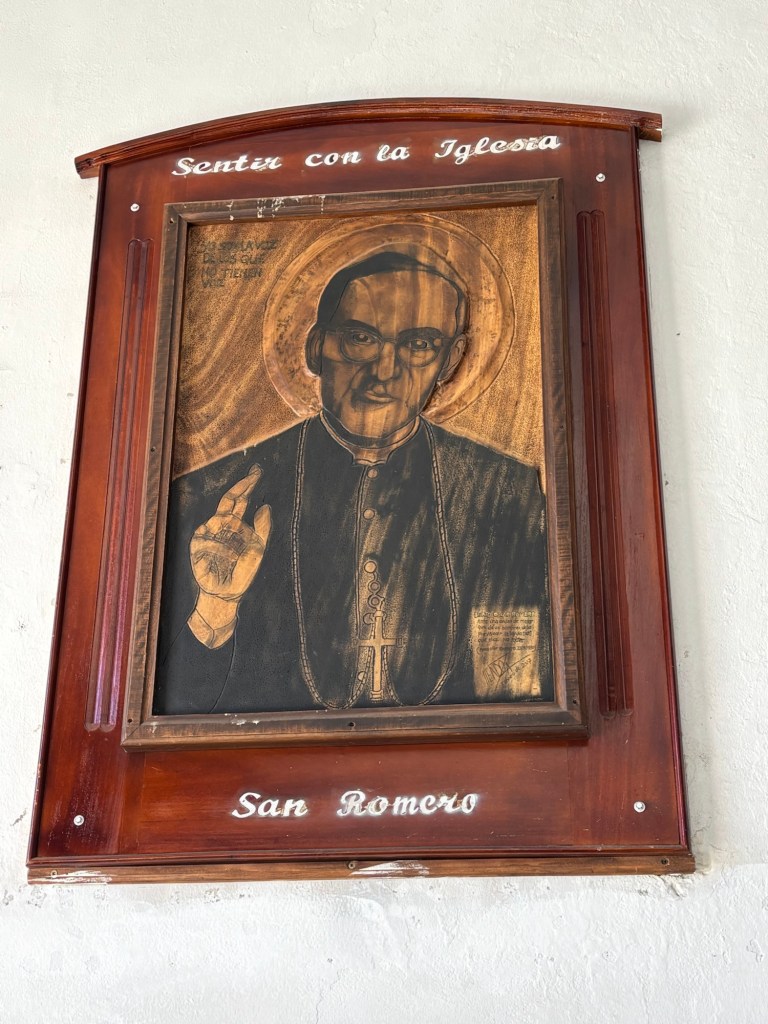
We also see this guy in every church we’ve been in so I need to do a bit of research on him.
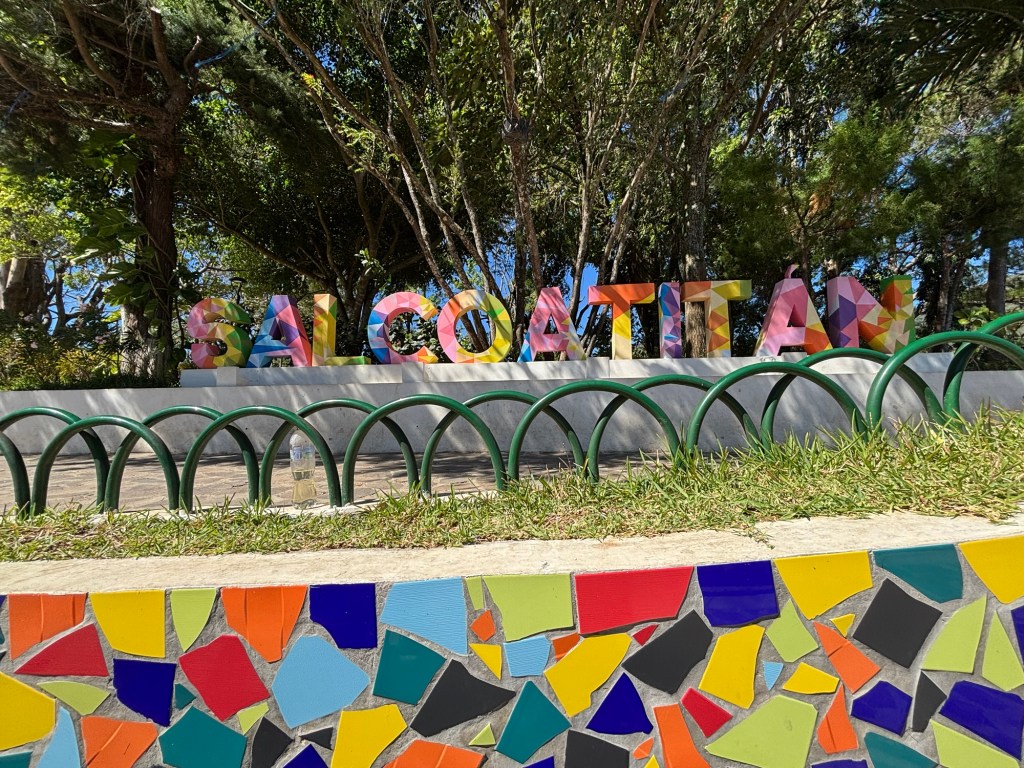
We stop in the tiny town of Salcoatitan which has a very colourful sign….
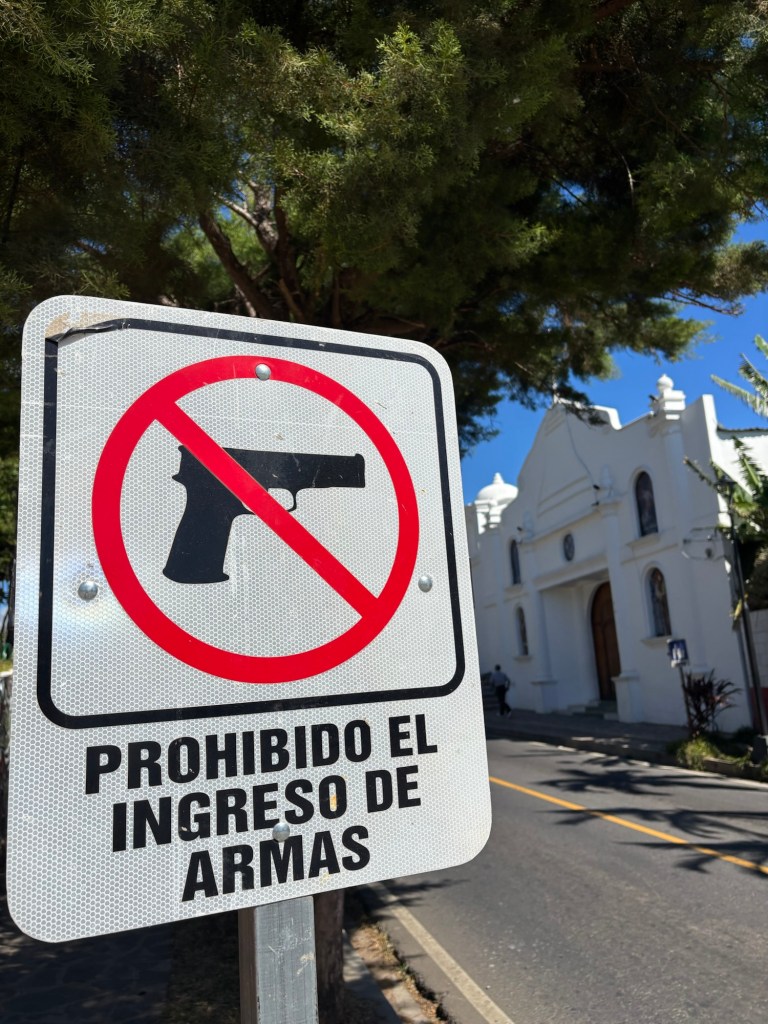
….. and another interesting sign as you enter the village…
We reach Suchitoto, the last place we will stay before we leave El Salvador and we are at a gorgeous hotel called El Tejado. This is in the Lonely Planet as a place to go to enjoy the food at the restaurant and the big pool. Oh I will definitely be checking that out but first it’s time for lunch which is delicious.
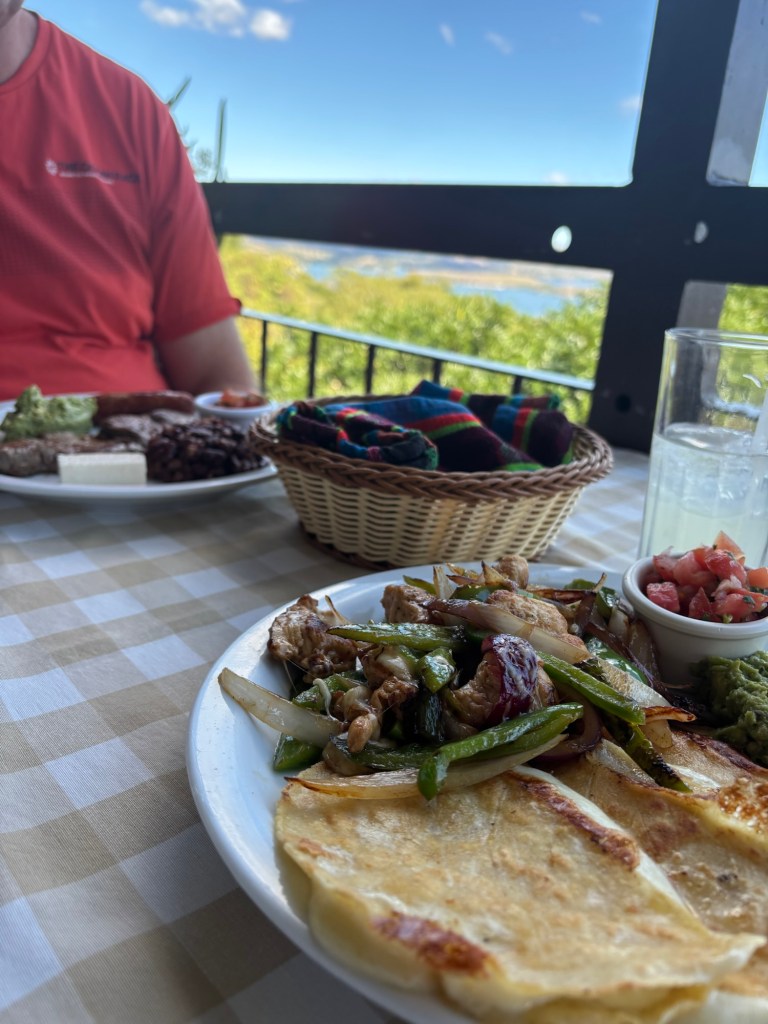
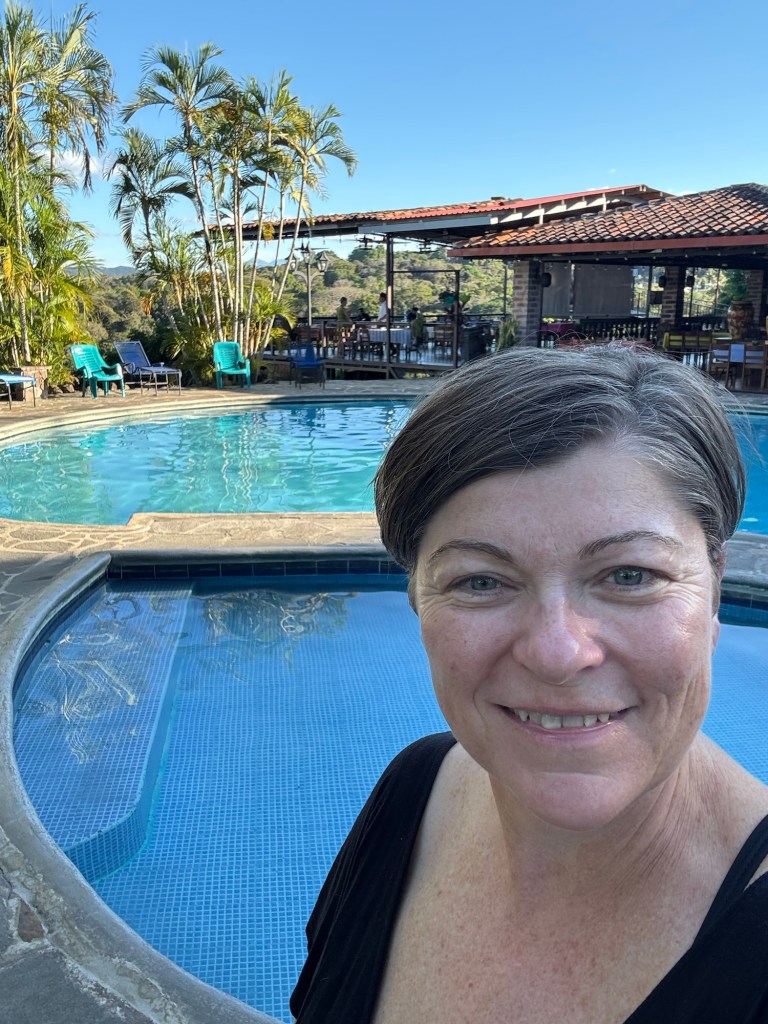
Here’s that pool…. Time for a dip as yes it’s still roasting!
Once the sun has gone down a bit we take a walk into town for a look around. We see this interesting sign on a lot of the houses and buildings.
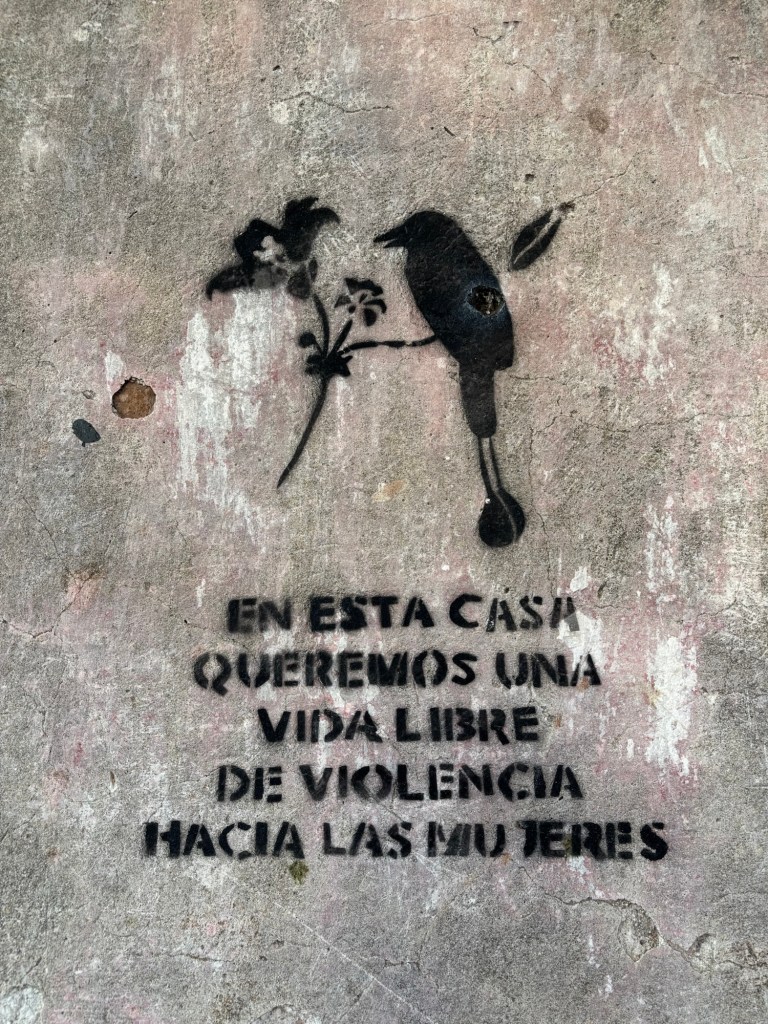
WE WANT A FREE LIFE
OF VIOLENCE
TOWARDS WOMEN
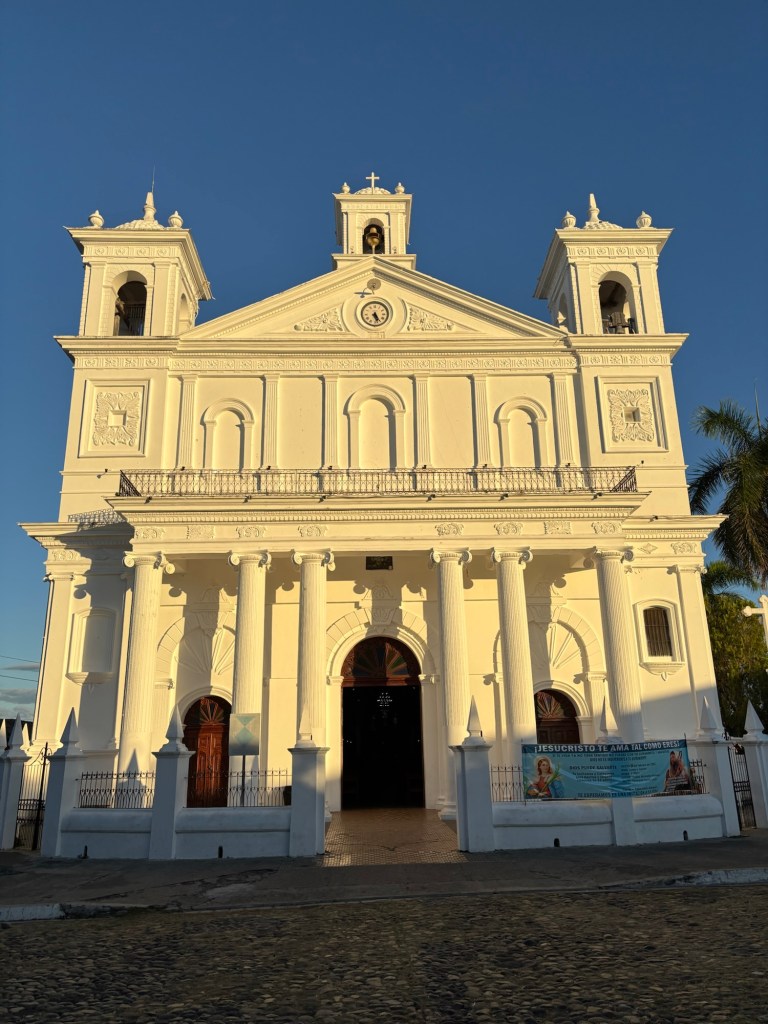
We walk to the main square and you’ll never guess what we check out… yep the church. Mass is on so I peep in and sit for a while. it’s a beautiful big church.
We have a beer in one of the bars on the square and grab a couple of pupusas before we head back to the hotel. Our pupusas cost all of .50 cent each which is crazy!!
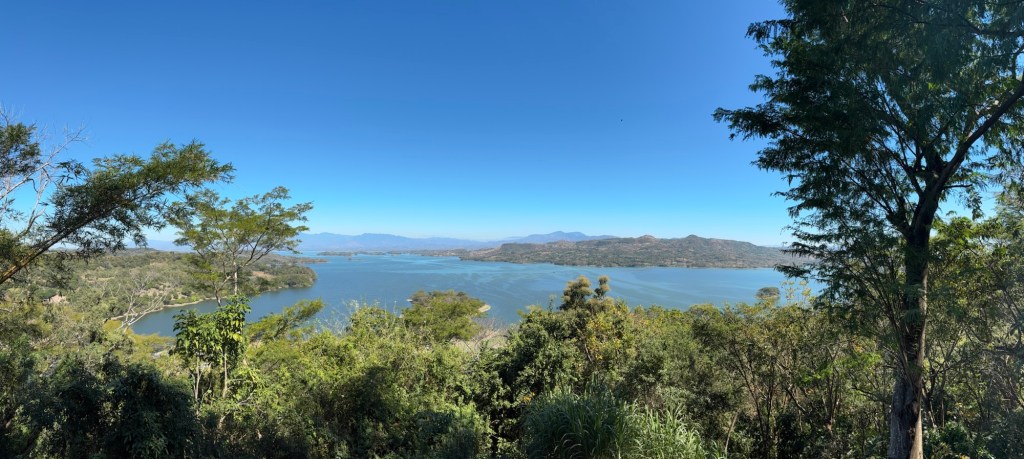
Next morning we visit the ALEJANDRO COTTO museum. We don’t know who he is but it’s listed as one of the things to do while we’re here so we’re intrigued. ALEJANDRO COTTO was a writer, poet, and film director. At 25 years old he organized the First Centennial of Suchitoto, which resulted in a grand cultural event with many famous attendees. We see photos of him when he was young with stars from around the world and there are stunning views from the gardens.
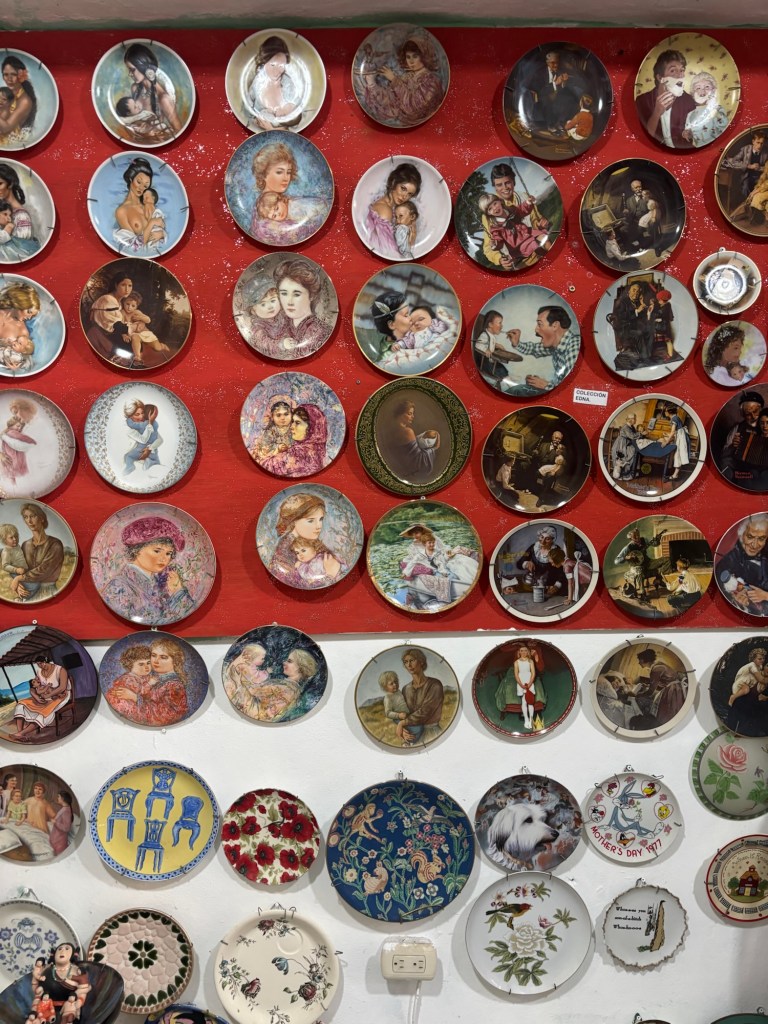
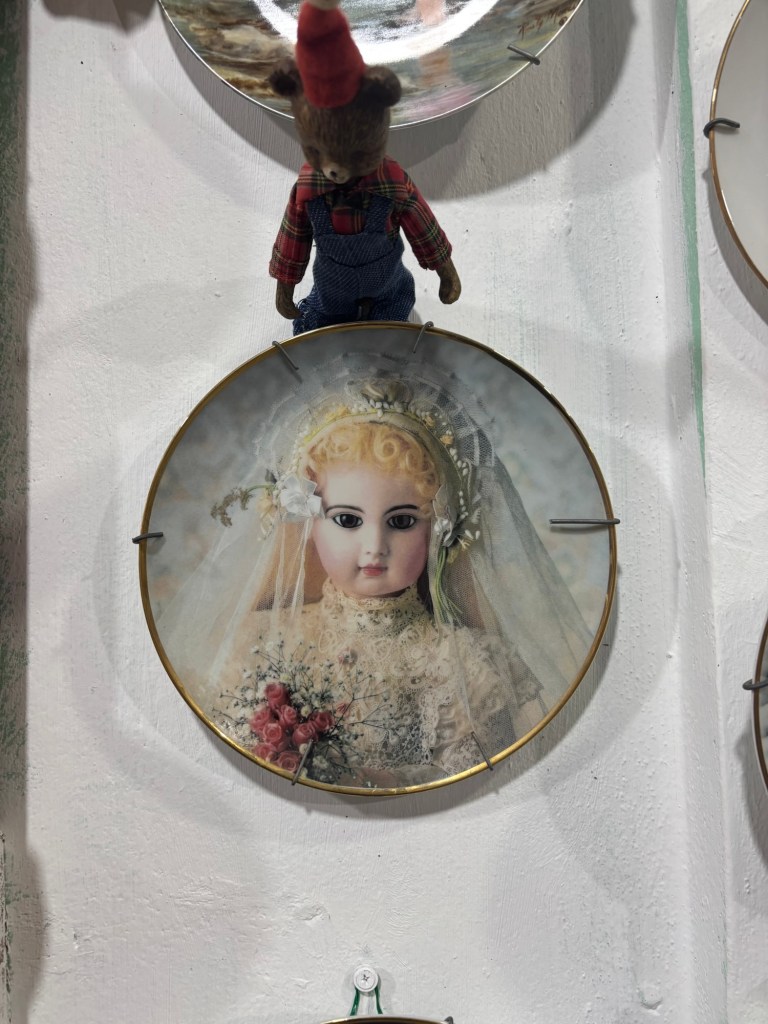
We explore more of the small town, visiting the market and having lunch at El Rinconcito del Sabor. There is another “museum” – Museum of the Thousand Plates and More that we decide to check it out and it is such a funny and odd experience – it was well worth the $3 admission. The small building houses this man’s collection of plates and other stuff from all over the world and a young girl points things out speaking in Spanish – I think she thinks I understand her!! After a while the owner (I’m pretty sure her Dad) comes over and takes over the explaining and then at the end his wife picks up the tour!! It’s quite bizarre!
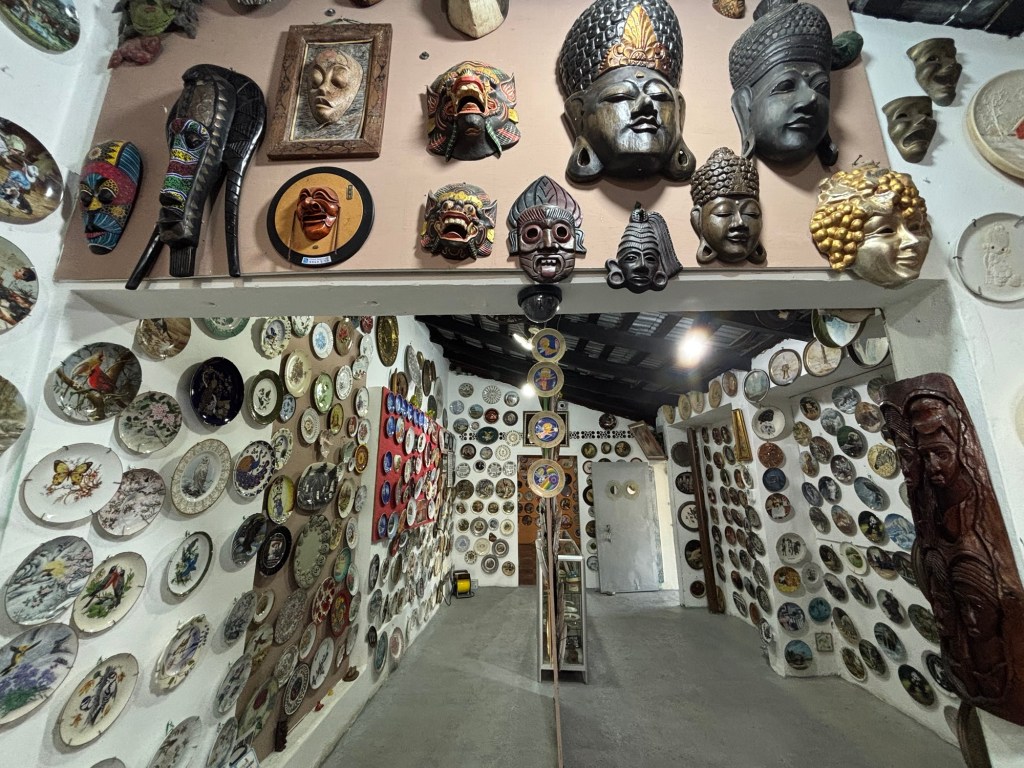
There were some interesting and scary looking plates on show!
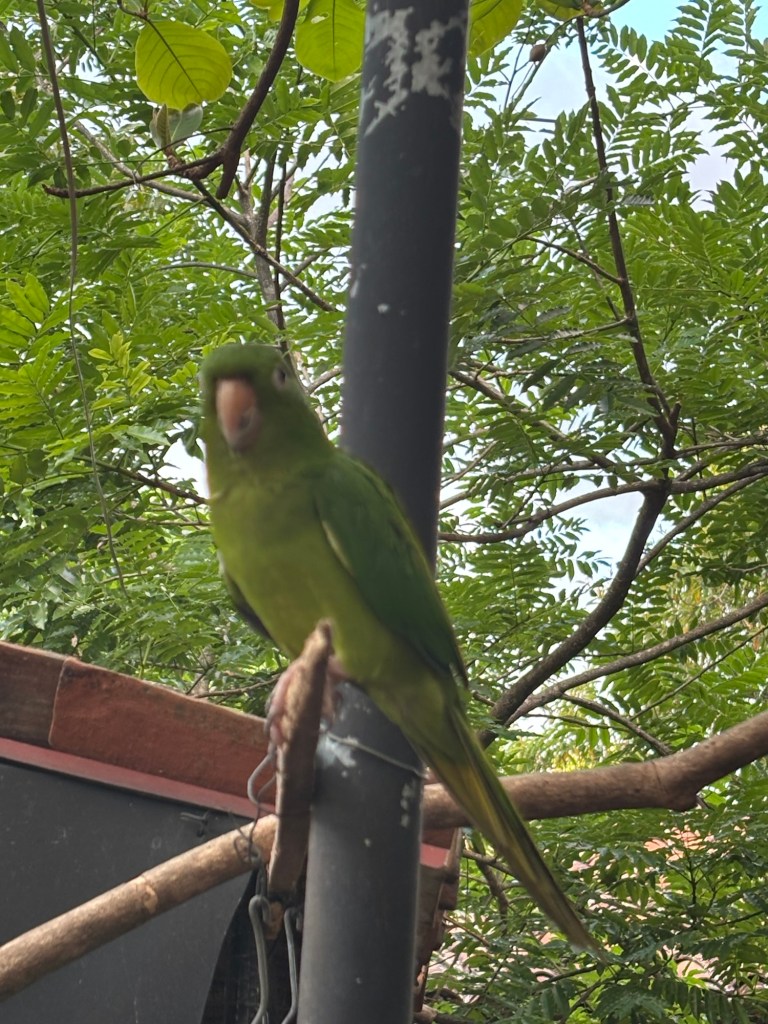
Back at the hotel we have more pool time and I have a chat with the parrot who I heard shouting at 6am this morning! I say hola, he says hola… he is a cheeky bird!
We decide to try a margarita at the hotel as this will likely be the last one of the trip and it is really good.

Time for our final evening on the streets of Suchitoto…..
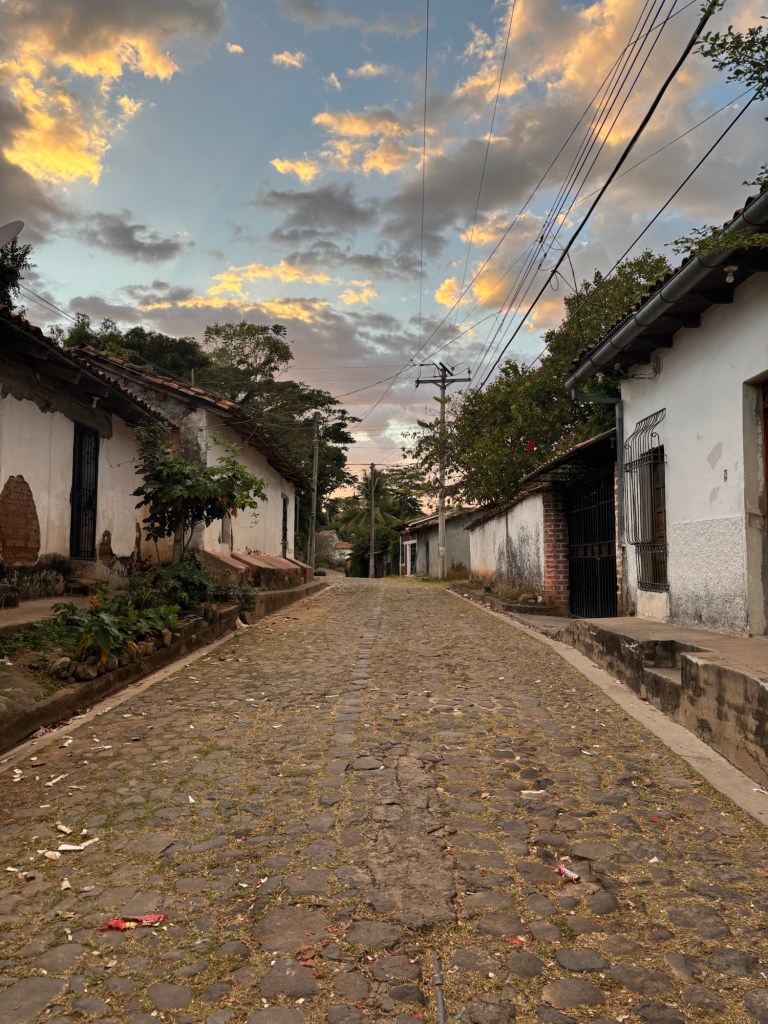
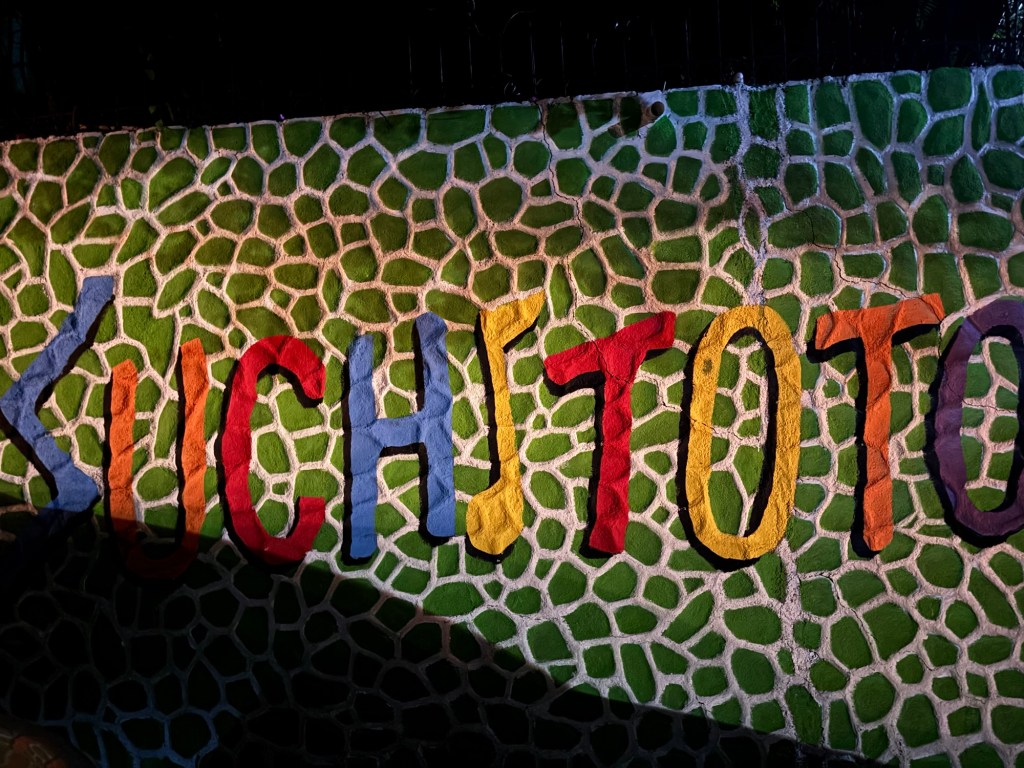
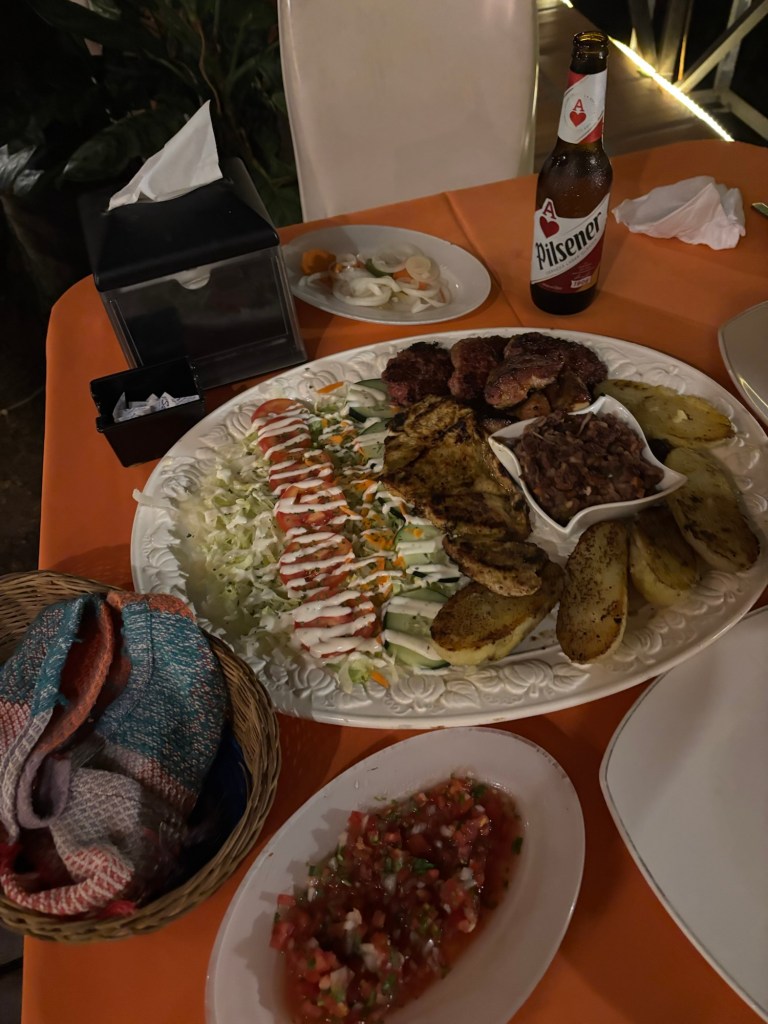
Our final meal is at a restaurant with a terrace overlooking the water (although it’s dark so we can’t admire the view) and we have a shared grilled plate which is delicious.
Next morning we have a final leisurely breakfast and then it’s off to San Salvador, the capital city of El Salvador. A city that was once very dangerous but since a huge number of criminals were locked up a few years back it is now apparently very safe for everyone including tourists. [side bar: In 2022 there were a series of murders and the Salvadoran government declared a state of emergency that suspended several constitutional rights and enabled the government to launch mass arrests of suspected gang members]
We only have a few hours before we head to the airport so we’ve done up a list of the places we want to see. We start at the main plaza
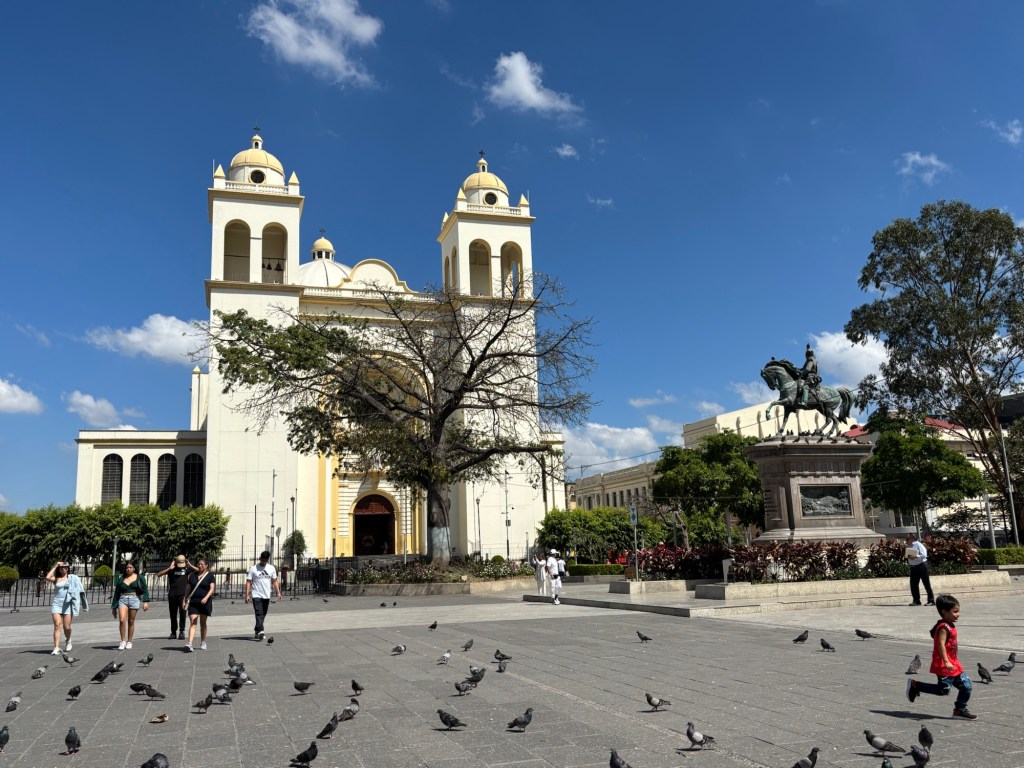
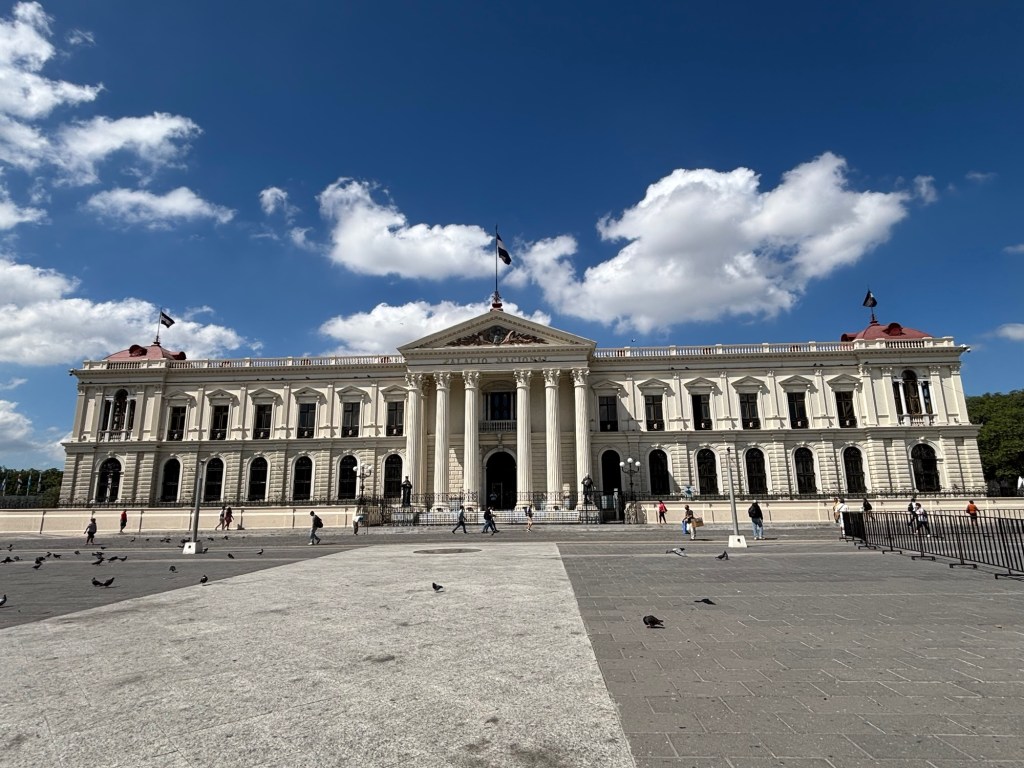
We see the palace. The government sat here until 1974 but are no longer in this government building.
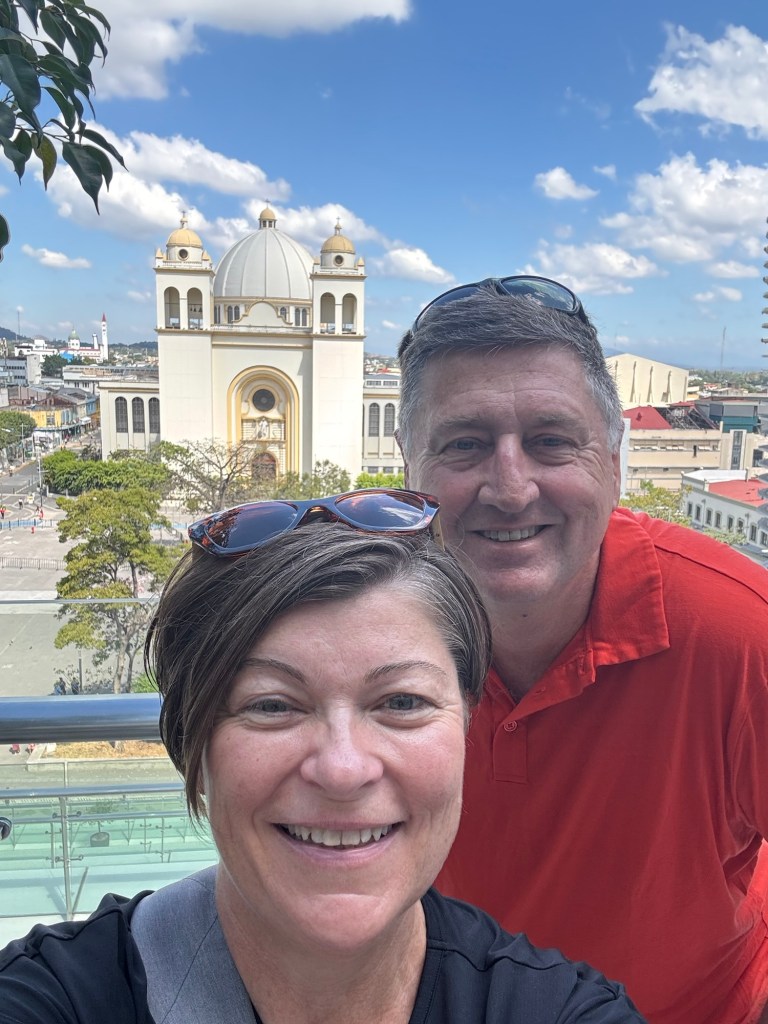
The library building is very modern. We go to the top and see some great views of the cathedral and palace, the square and further afield.
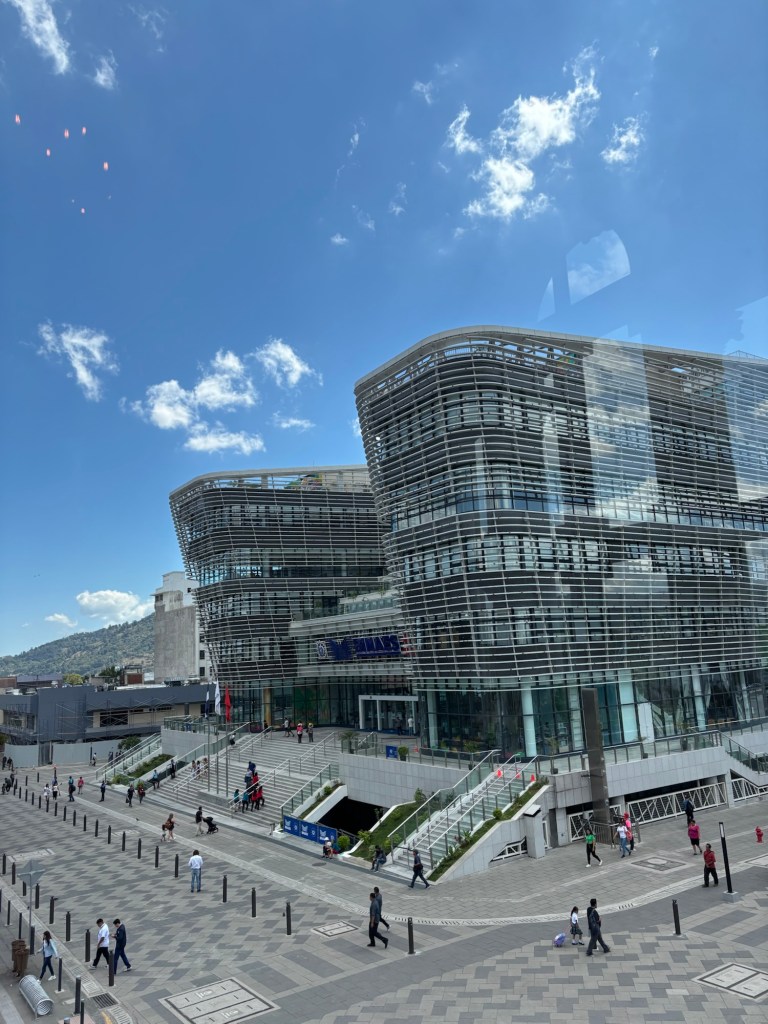
View from the outdoor terrace at the library.
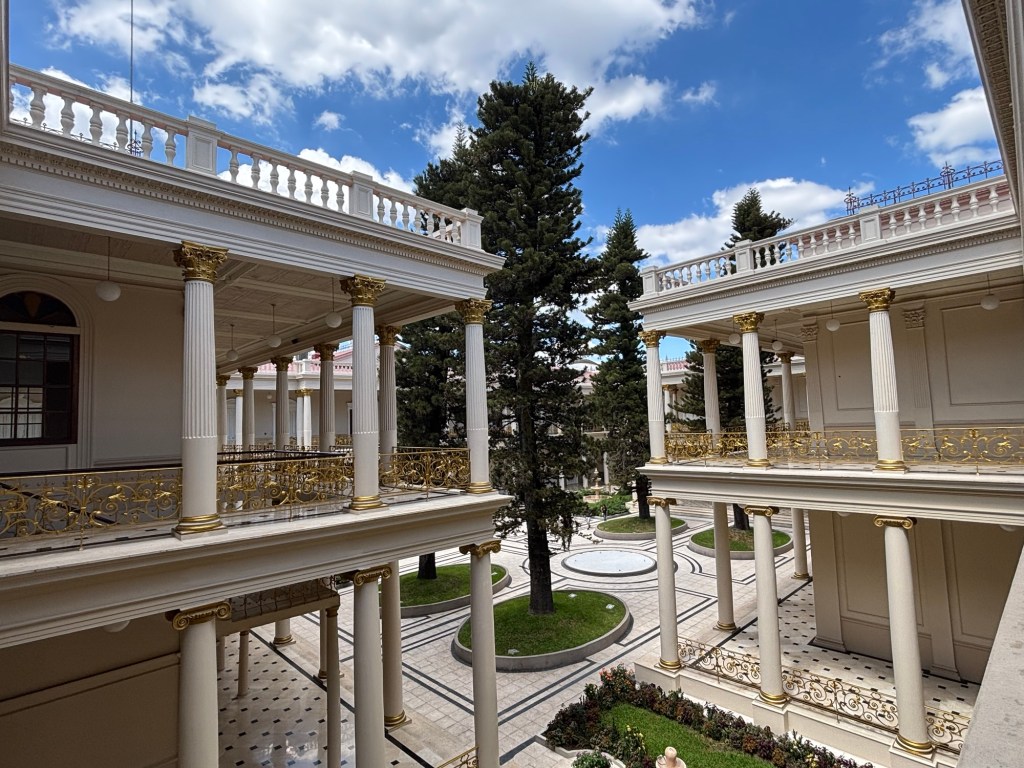
We decide to take a tour of the palace which thankfully is in English and we see lots of rooms which are painted in different colours. The courtyard is also beautiful with giant trees.
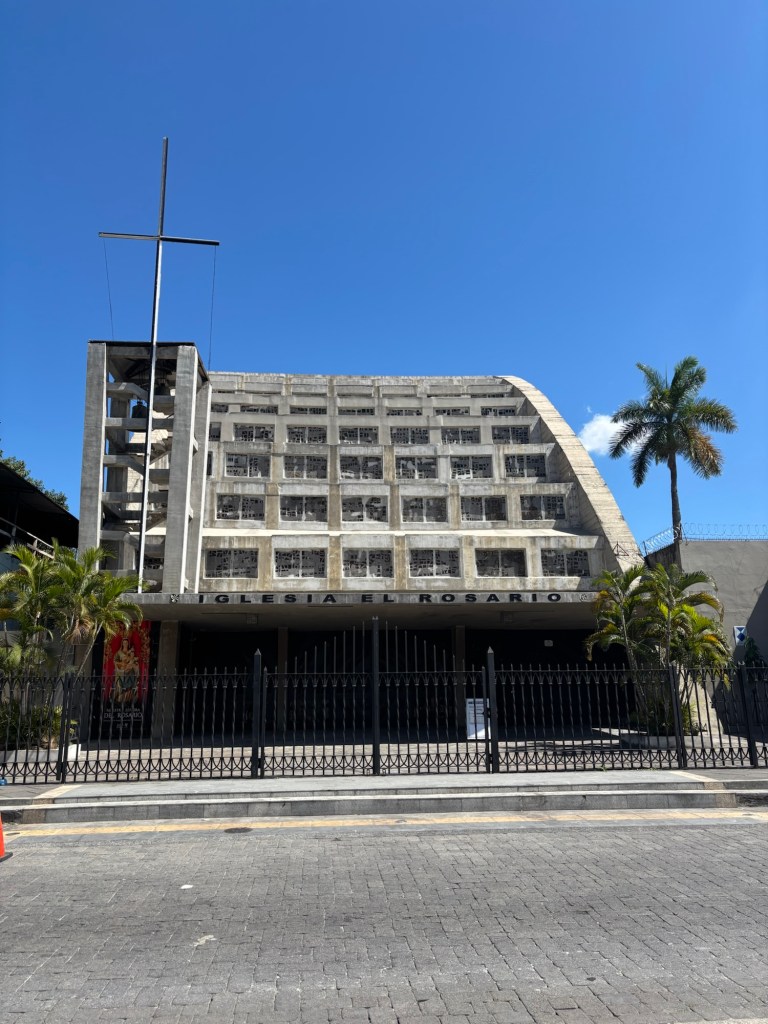
We visit Iglesia El Rosario which is an unusual looking church and from the inside is supposed to be amazing when the sun shines in through the stained glass windows. Unfortunately it’s closed so we don’t get to see it.
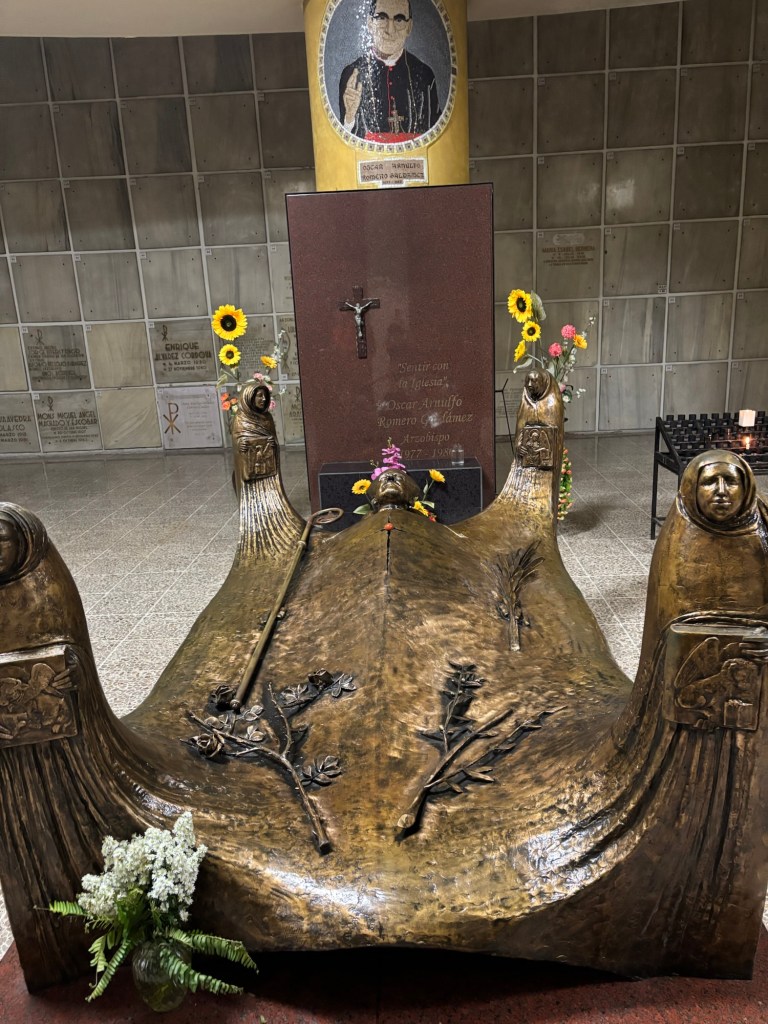
At the metropolitan cathedral of San Salvador we see the tomb of – Oscar Romario. This is the person we’ve seen in every church in El Salvador. He was a bishop who spoke out against social injustice and violence and was shot by an assassin while celebrating mass in 1980. He was declared a martyr in 2012 and canonised a saint in 2018.
It’s not the most beautiful capital city we’ve visited but it was interesting to see it. After a few hours it’s time to head back to the car and to the airport.
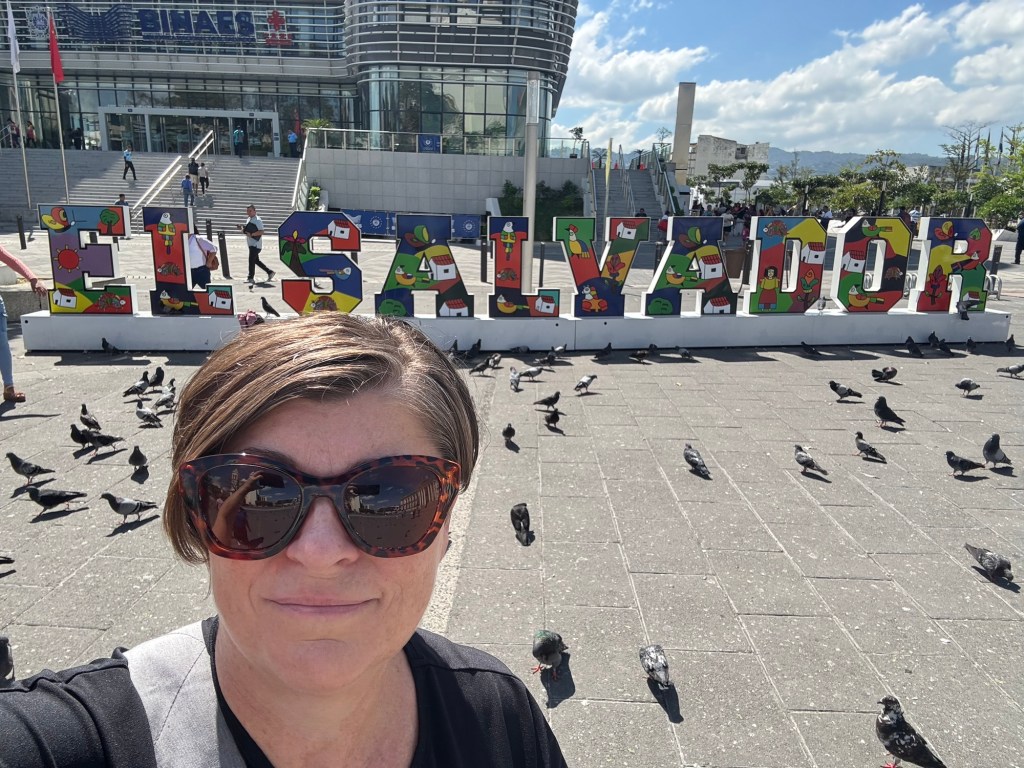
And that’s a wrap! Goodbye El Salvador and Central America, it has been the best January I think I’ve ever had!

 odohertyelaine