We are on our way from Latvia to Lithuania using the same transfer company as we did to get us to Riga. We cross the border a short while after visiting the Rundale palace and our first steps on Lithuanian soil is for lunch!
Lunch is at a restaurant called Audruvis that specialises in venison, although deer is not the main meat eaten by the Lithuanian people, it’s pork. I try venison soup and some venison filled dumplings. It’s a lot of food but very tasty. We eat outside and the grounds are lovely. All fed it’s time to visit the famous Hill of Crosses!
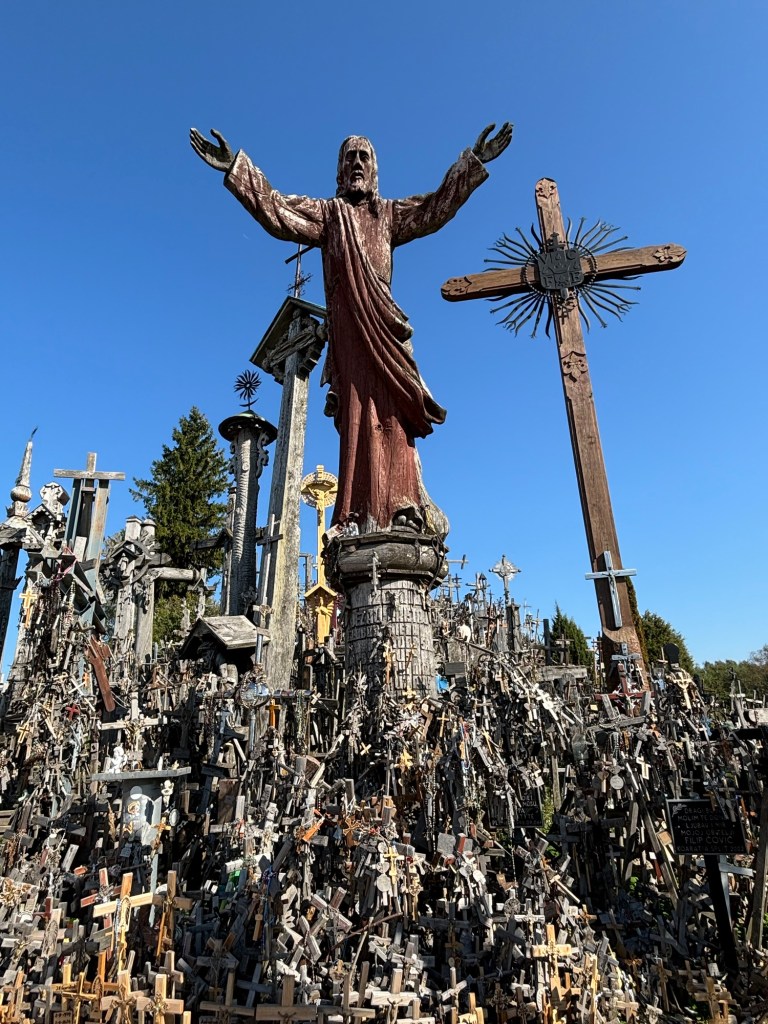
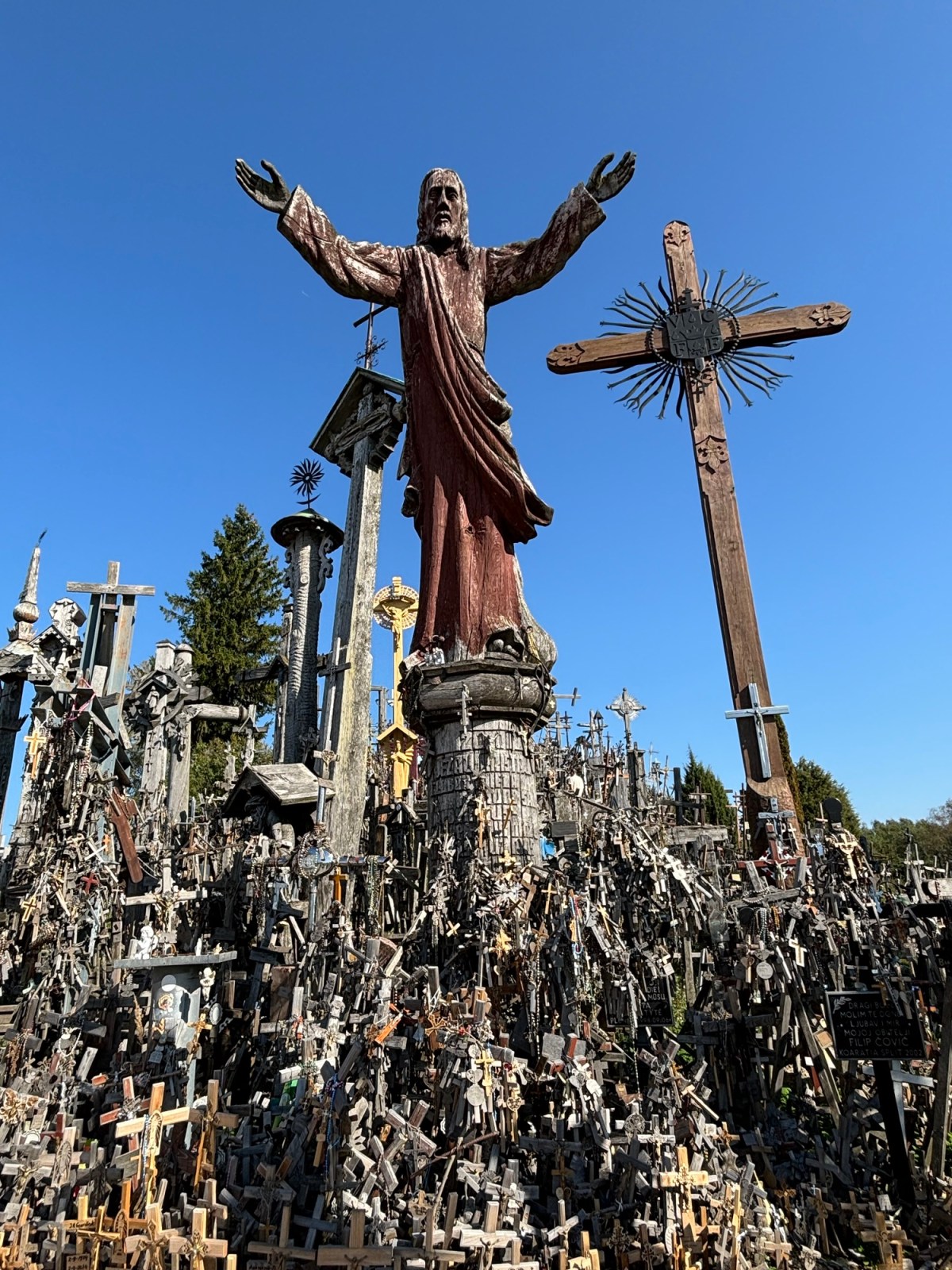
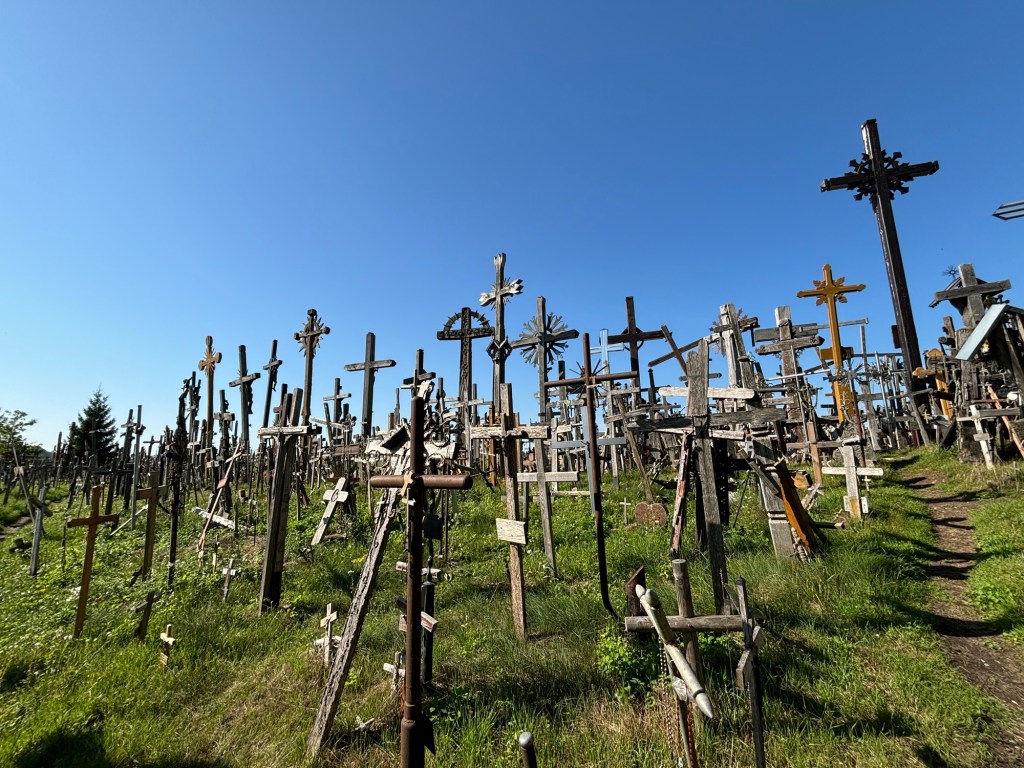
This really is a strange place…. The precise origin of the practice of leaving crosses on the hill is uncertain, but it is believed that the first crosses were placed on the former site of an uprising back in 1831. Over the generations, the place has come to signify the peaceful endurance of Lithuanian people despite the threats they faced throughout the multiple occupations.
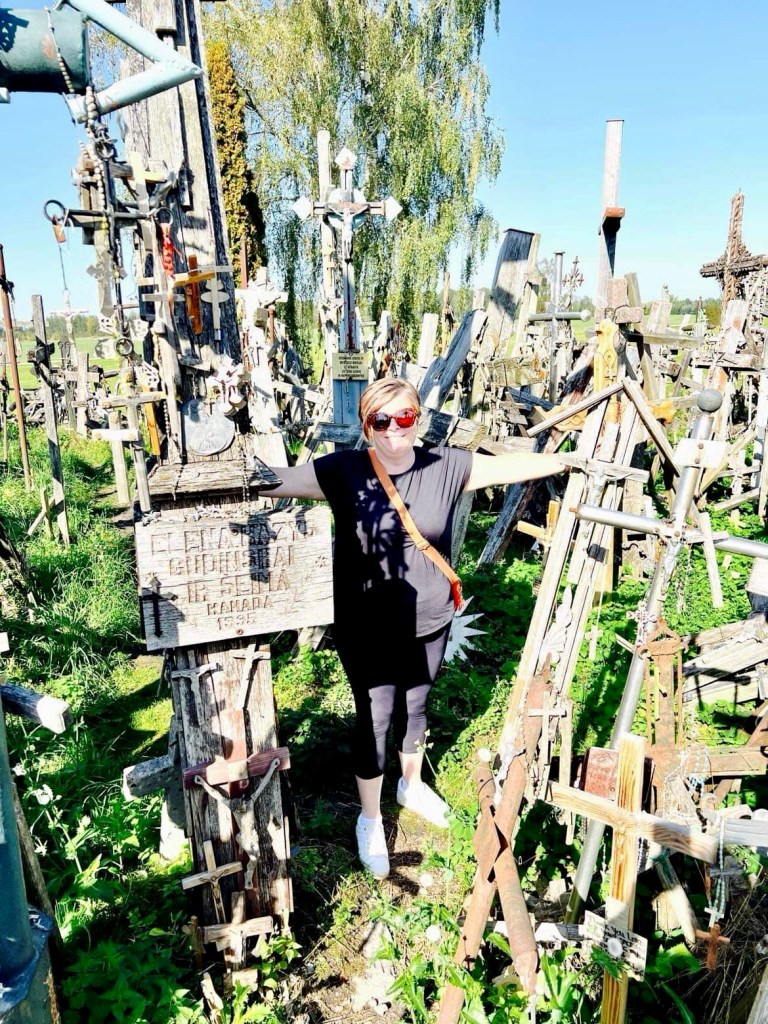
Hiding among the crosses!!!
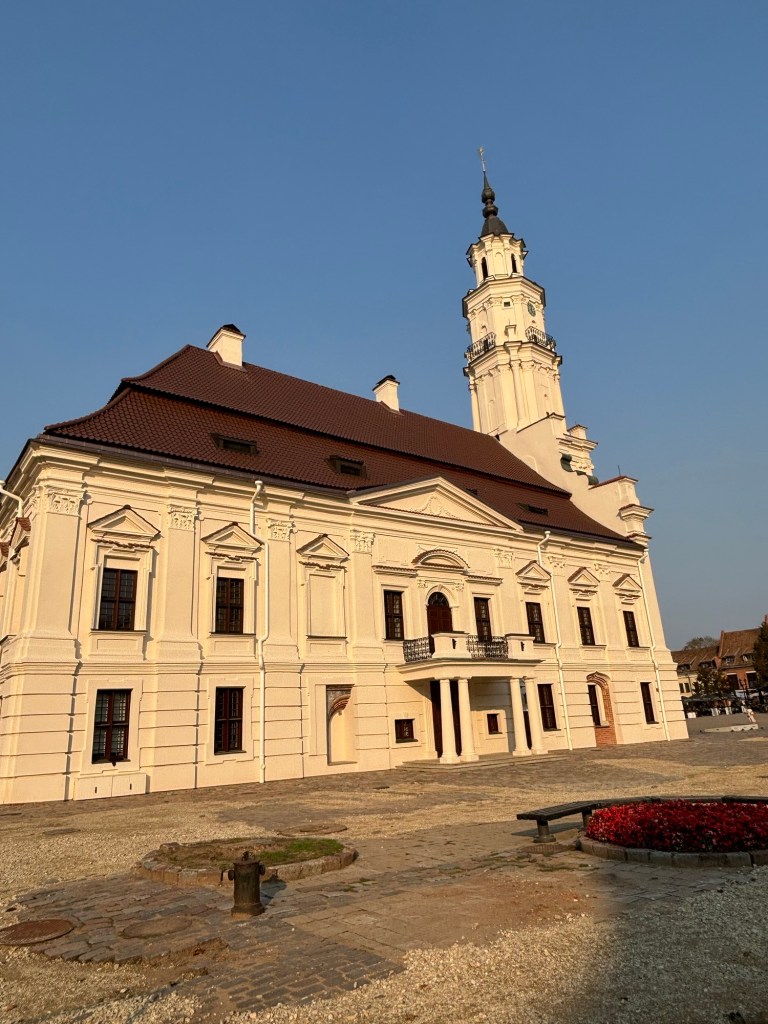
Next stop is Kaunas, the 2nd biggest city in Lithuania after Vilnius. It’s a pretty town for a stroll which we start in town hall square.
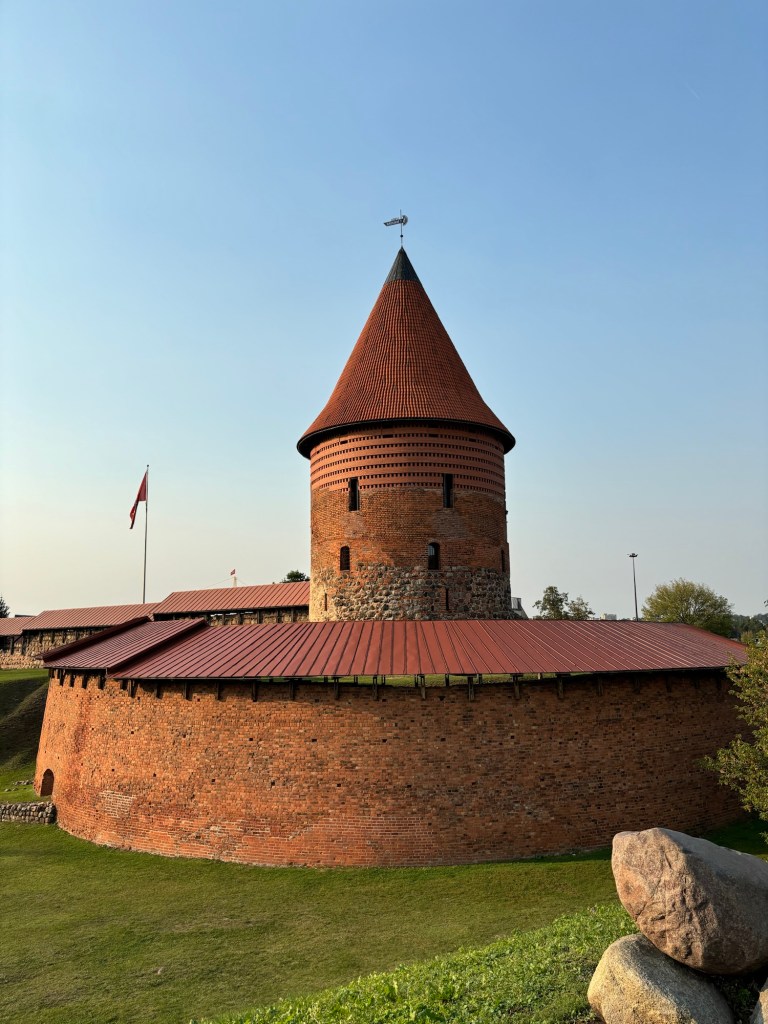
We continue on our stroll and see Kaunus castle, another medieval castle built in the 14th century.
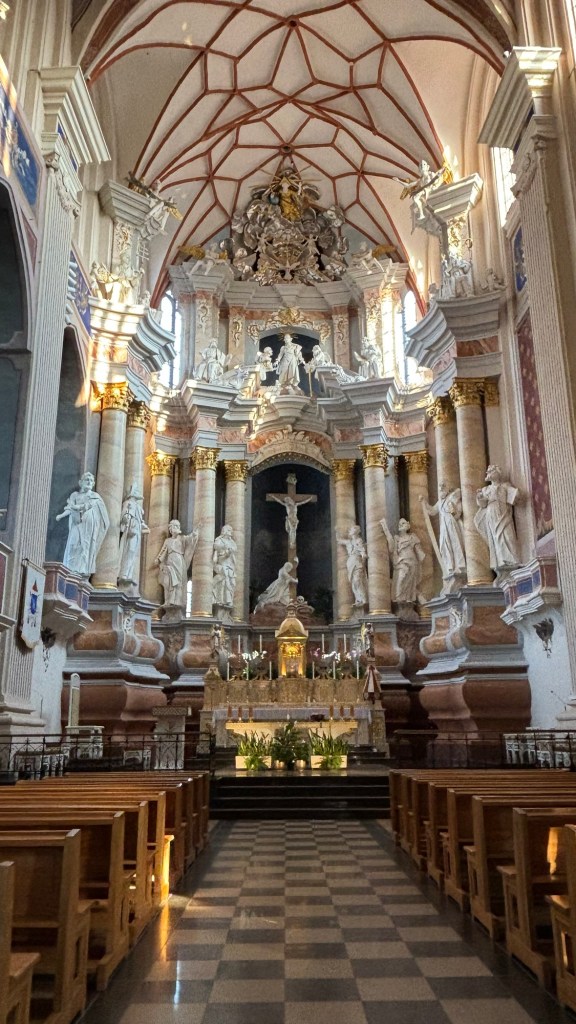
We see the beautiful Basilica of St. Peter and Paul, a Gothic style church and the biggest building of Gothic sacral type in Lithuania. Although the Cathedral was built in the 15th century it was reconstructed several times and has a mixture of architectural features.
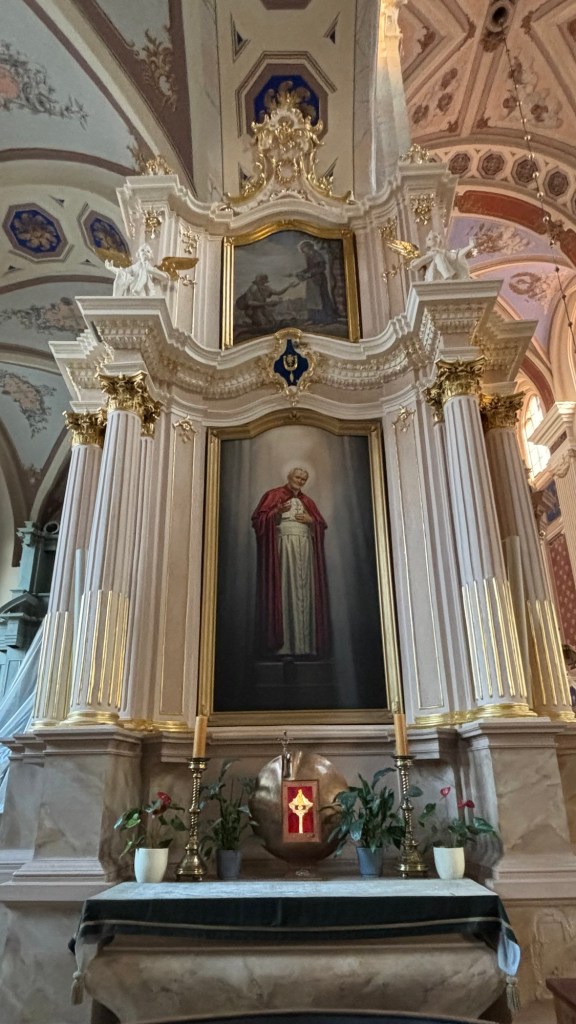
The Cathedral has 9 altars, the newest of which is that of Pope John Paul II with the saint’s relics and a very nice picture. John Paul II was the first pope to visit Lithuania in 1993.
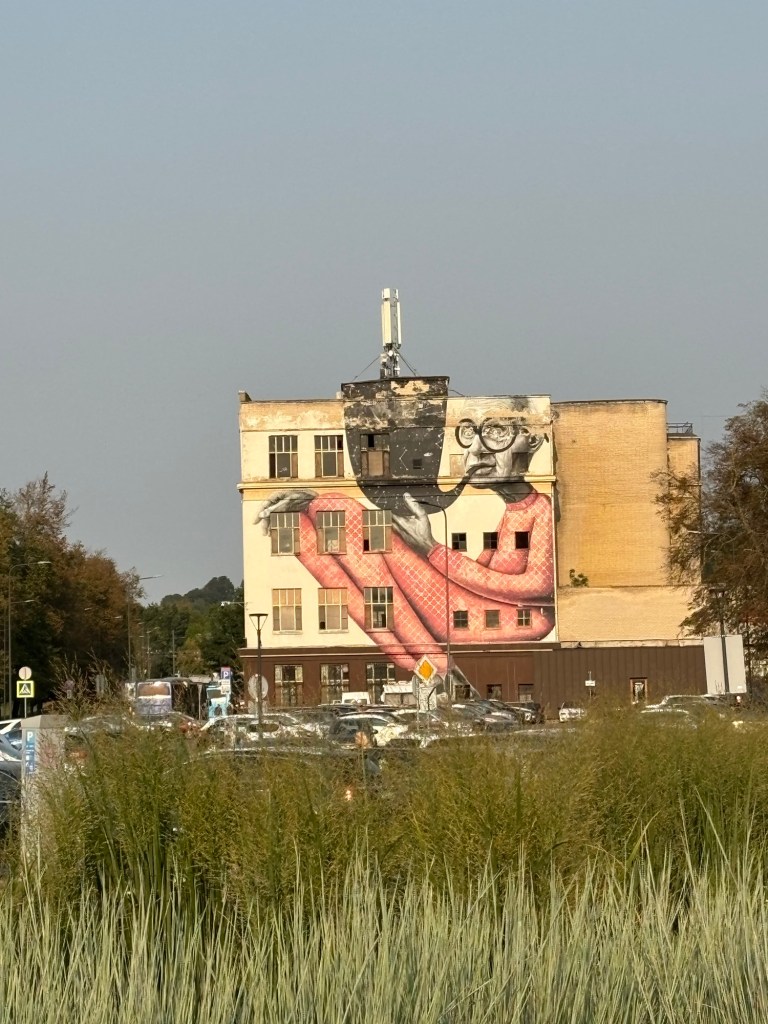
Back outside wandering around, there’s a really cute area with some cool shops and restaurants and I really like this mural on a building.
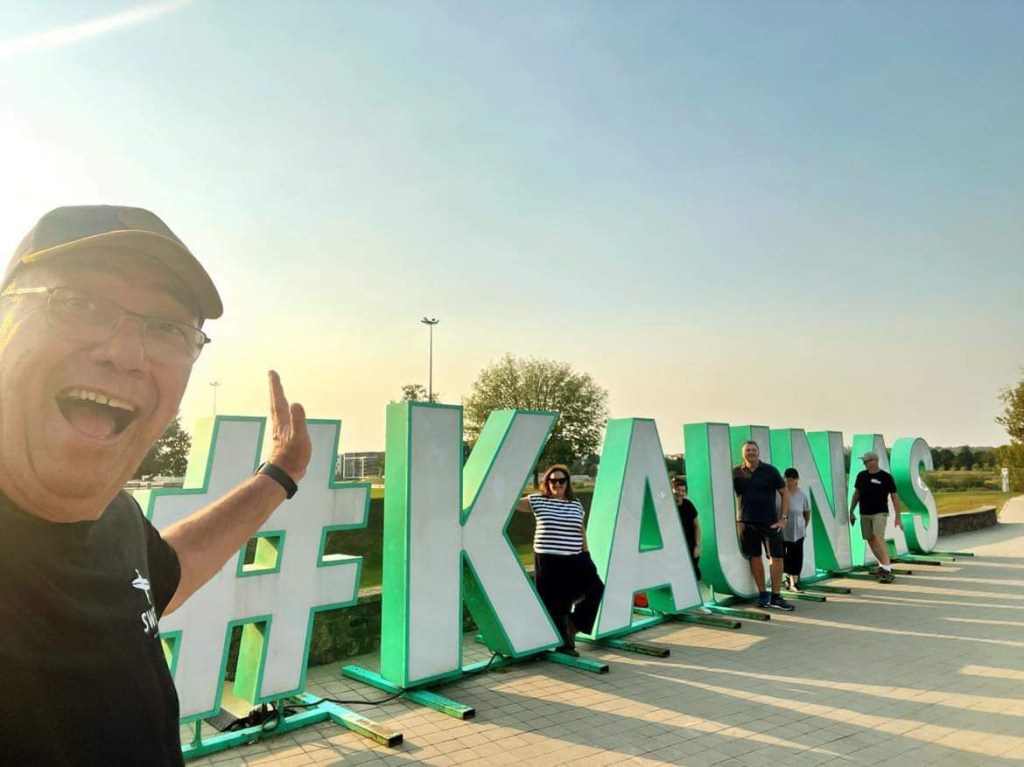
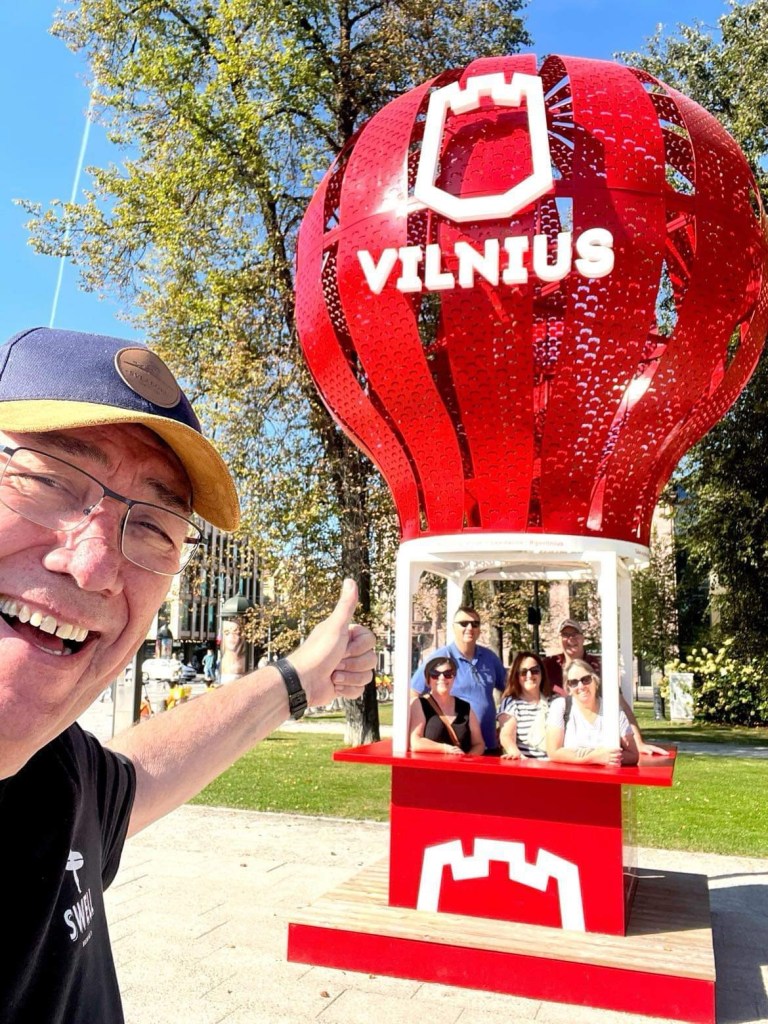
Look what we happened upon! Once we’ve taken the obligatory photo at the Kaunus sign we are off…
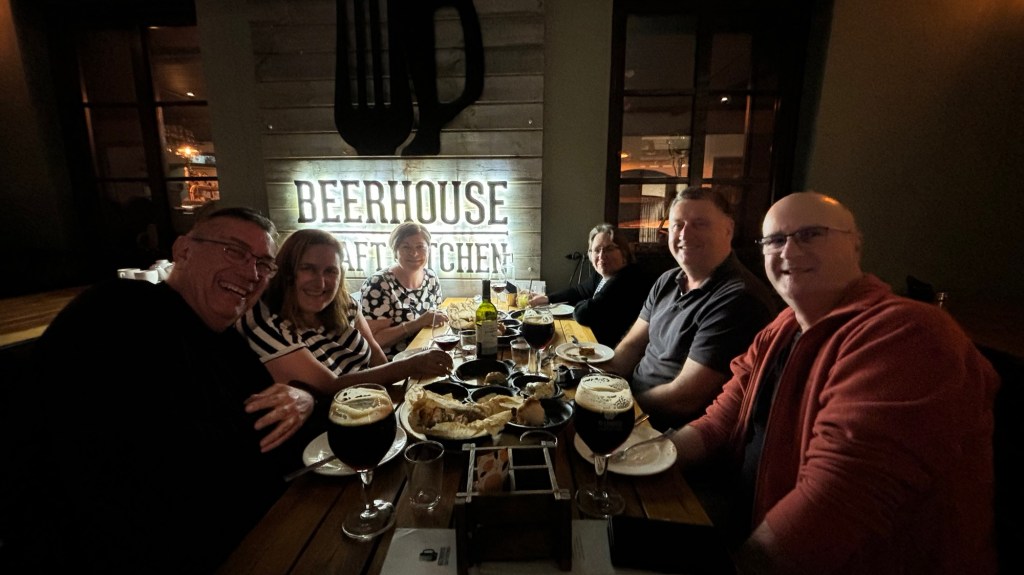
We head back to the car and drive for about an hour to the capital. Laura drops us off in Vilnius old town at an archway that leads to our final Airbnb of the trip. It’s fairly late in the evening when we arrive so we head out for some dinner and find a really great spot close by. Beerhouse not only has good beers and nice wine but the sharing platters we order are excellent.
Next day we are up and out to explore the last capital city of our Baltics trip – Vilnius. We start at Cathedral square. If you’ve read my Latvia blog, I talked about the event that happened in 1989 where approximately two million people joined hands to form a human chain spanning 690 kilometres across the three Baltic states. Well this square is where that chain ended or began (depending on how you look at it).
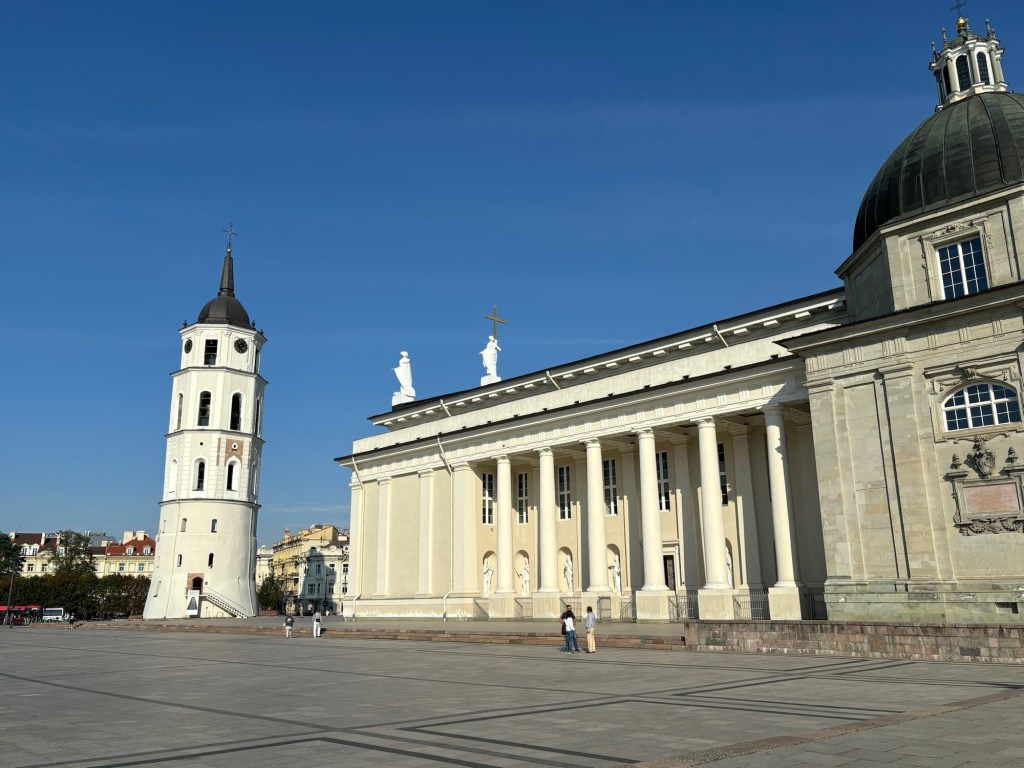
The cathedral itself is massive. It was built in the 13th century and surprise surprise there were many reconstructions after fires so it has changed significantly through the centuries. One of the most magnificent additions was the chapel of St Casimir. The frescoes at the top were painted by an Italian painter Michelangelo Palloni – not THE Italian Michelangelo!
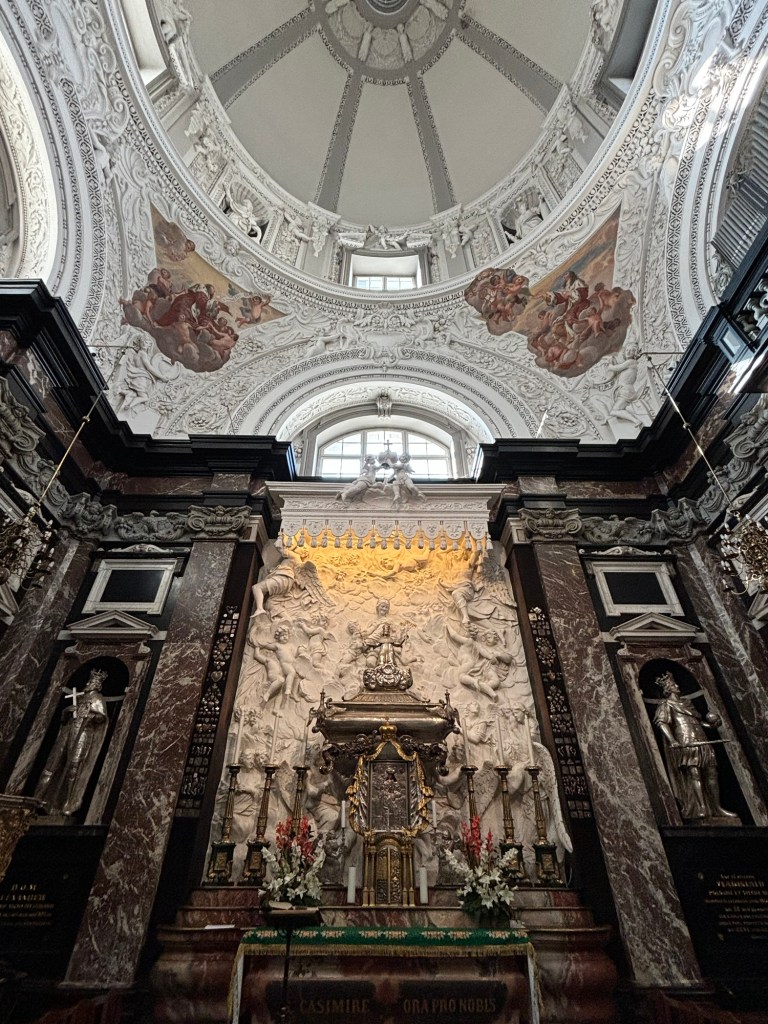
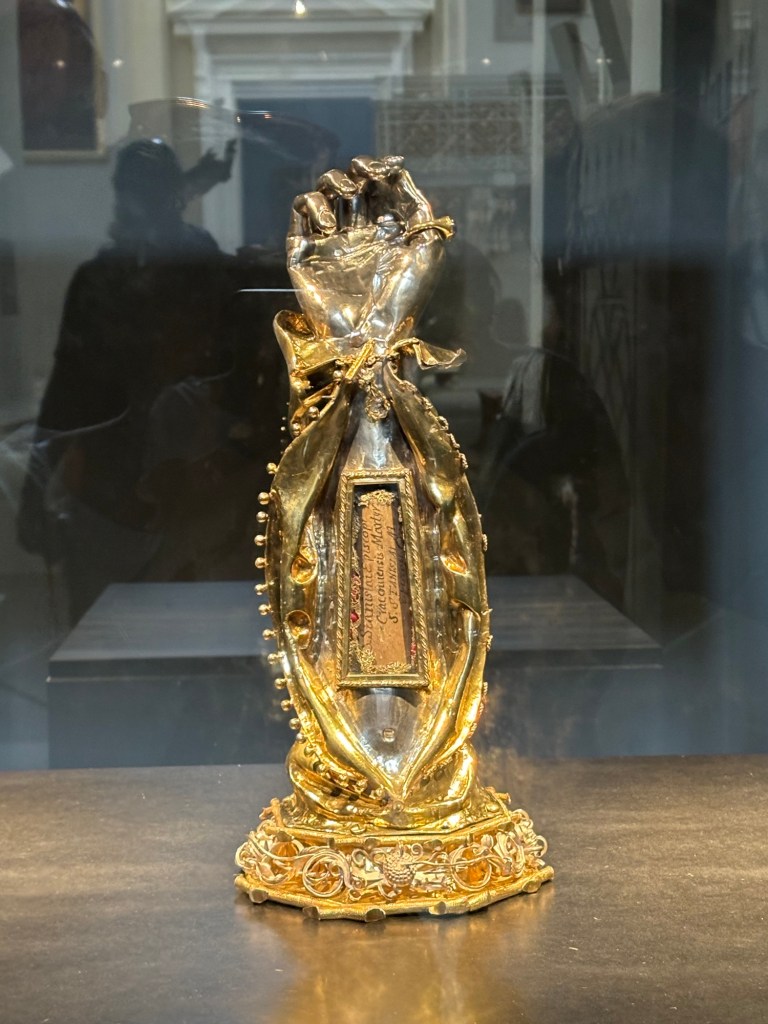
I knew there’d be some sort of relic in here! We see a piece of bone from a bishop, a small piece of cloth from Pope John Paul II And… we have the earliest surviving reliquary in Lithuania which is part of the forearm bone of the Bishop of Krakow – St. Stanislaus (whom the cathedral is named after).
We walk a little further and spot our next place on the list – we are heading up to Gediminas tower. Gediminas was the Grand Duke of Lithuania from 1315 until his death in 1341.
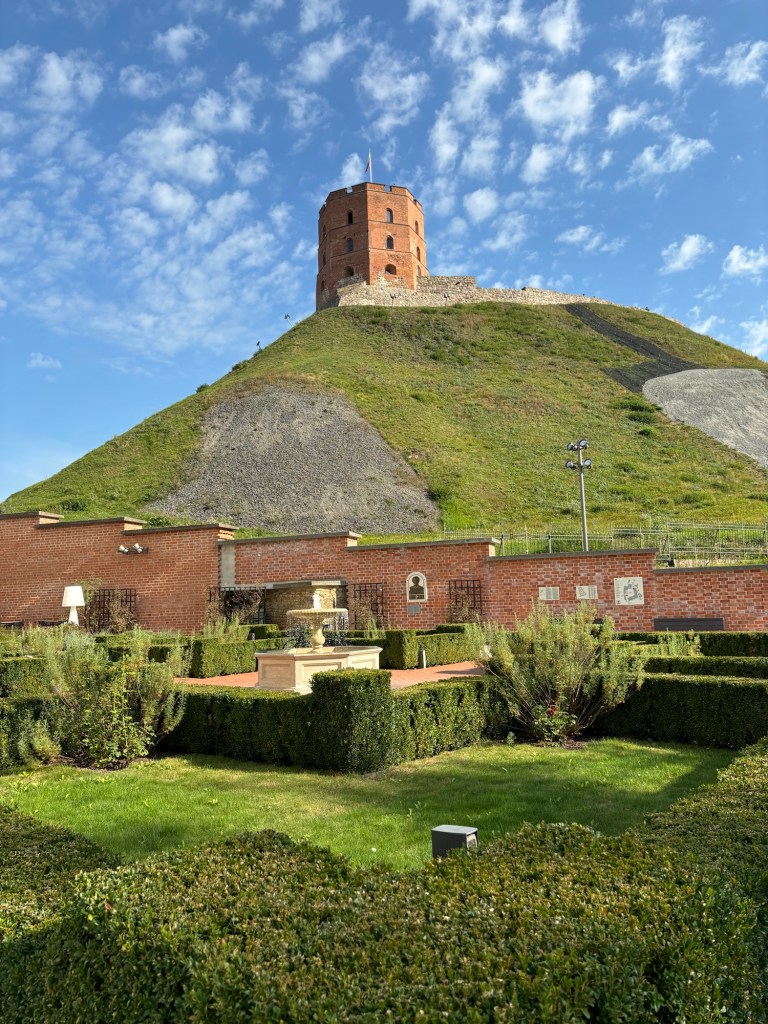
We take the funicular up to Gediminas castle to look at the lovely views, narrowly avoiding a large tourist group.
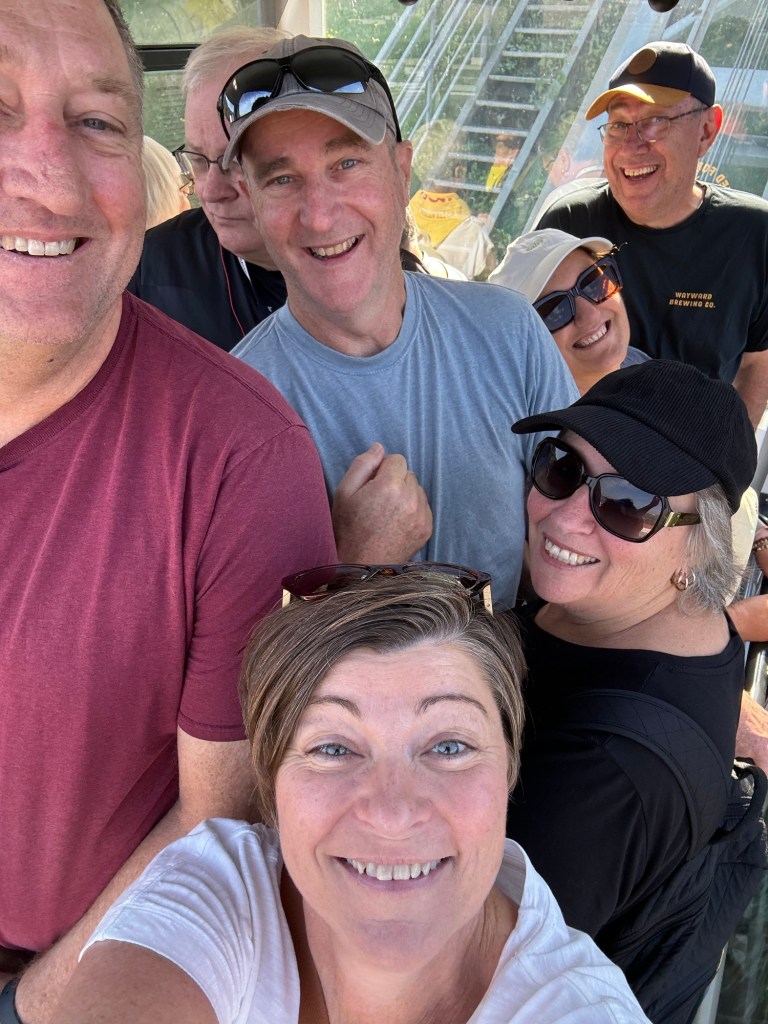
It’s lovely up here and we are roasting in the sunshine!
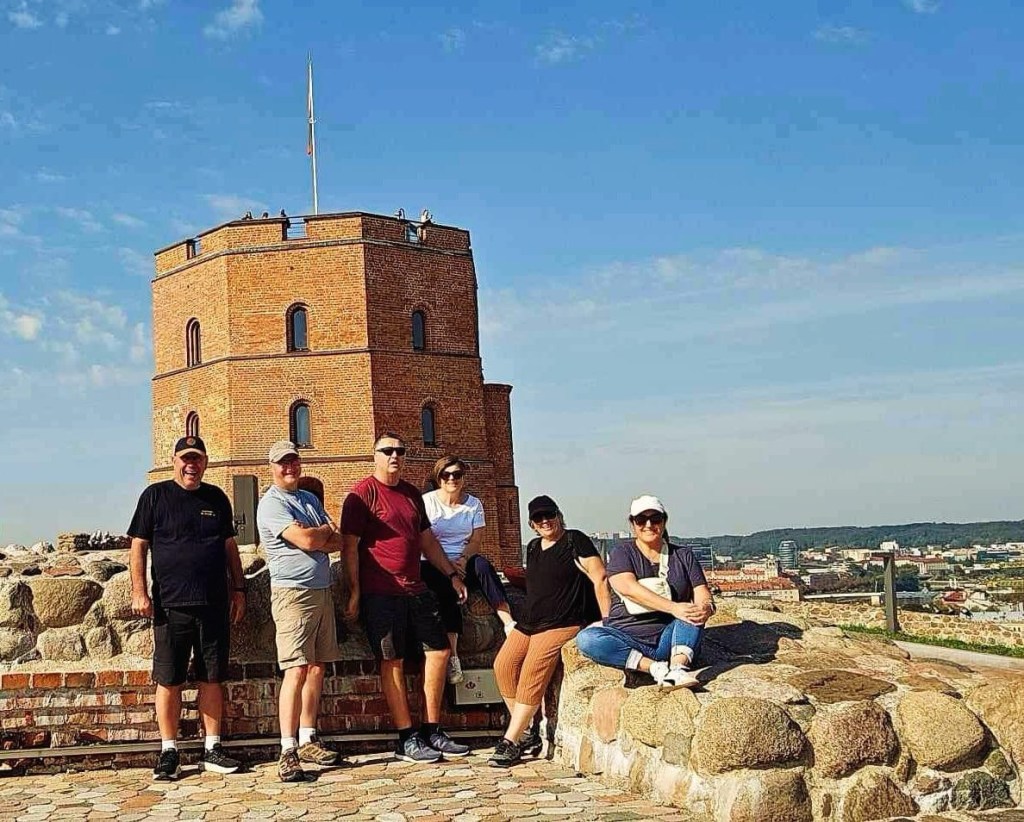
Having surveyed the town from up here, we walk down the hill and through a park where we stop for some tea and coffee in the sunshine. It’s so sunny I need a loan of someone’s hat!
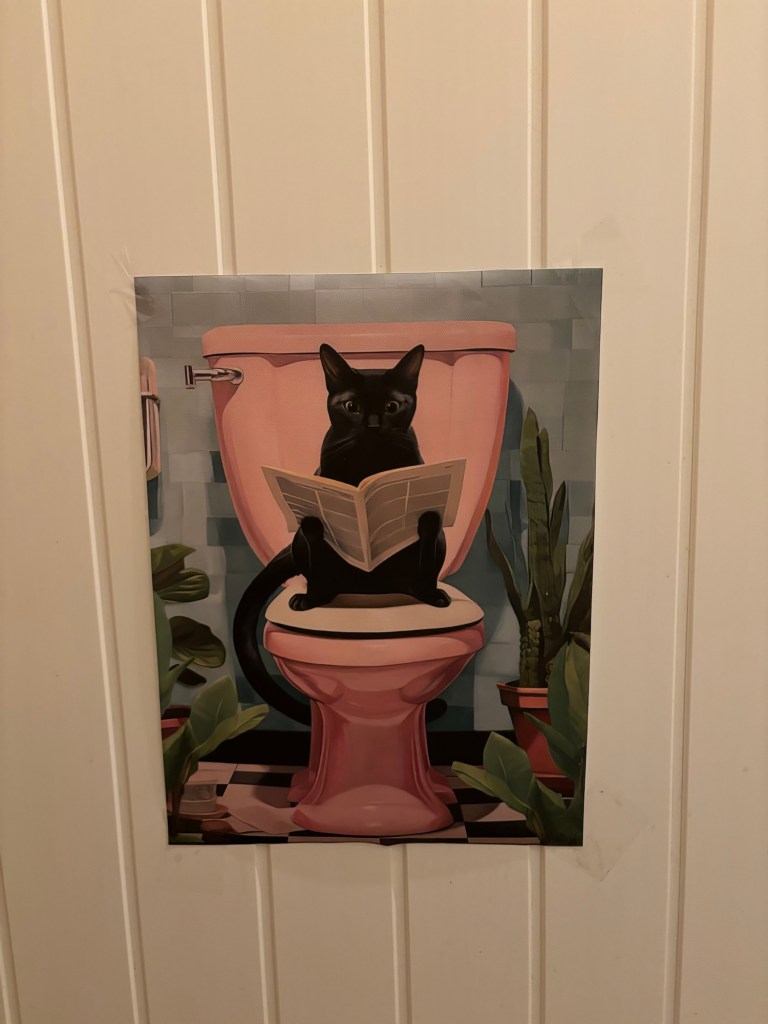
Side bar: “they’re eating the dogs, they’re eating the cats!” 🤣🤣 (I can’t get it out of my head!)

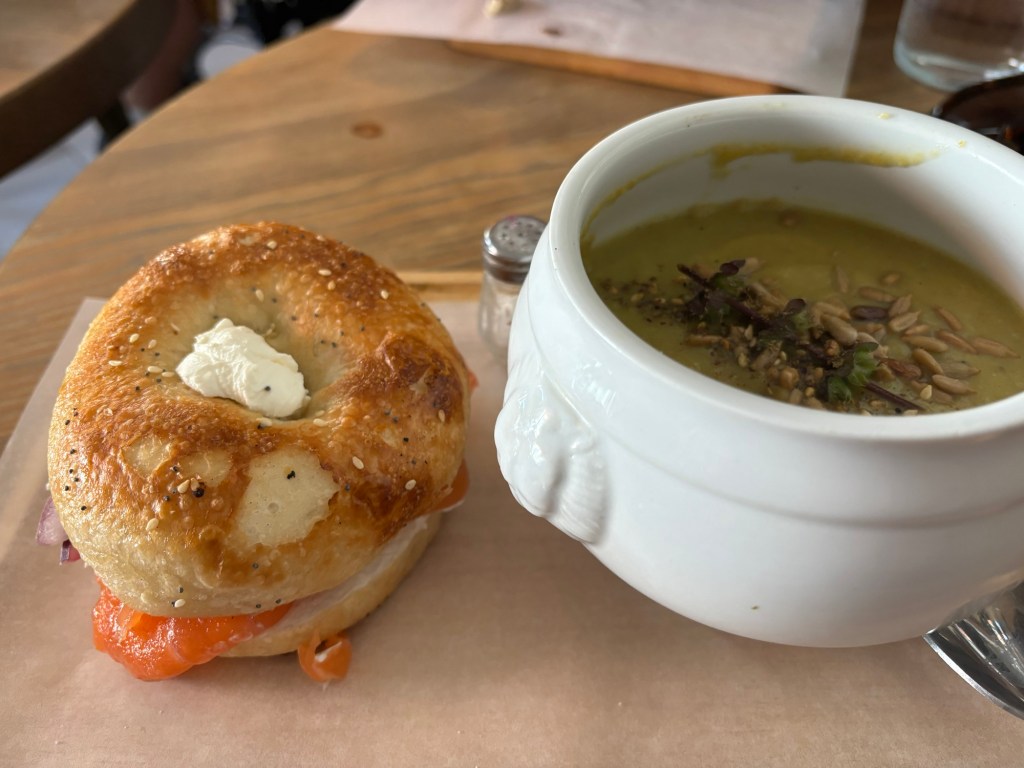
We have bagels for lunch as the Lithuanians claim they were invented here and they’re not wrong. Between 1569 and 1795 Poland and Lithuania were part of the same kingdom so yes Bagels do originate from Polish people but also kinda from Lithuania!
Next is a complex of churches – Ensemble of the Church of St Anne and the Bernardine Church.
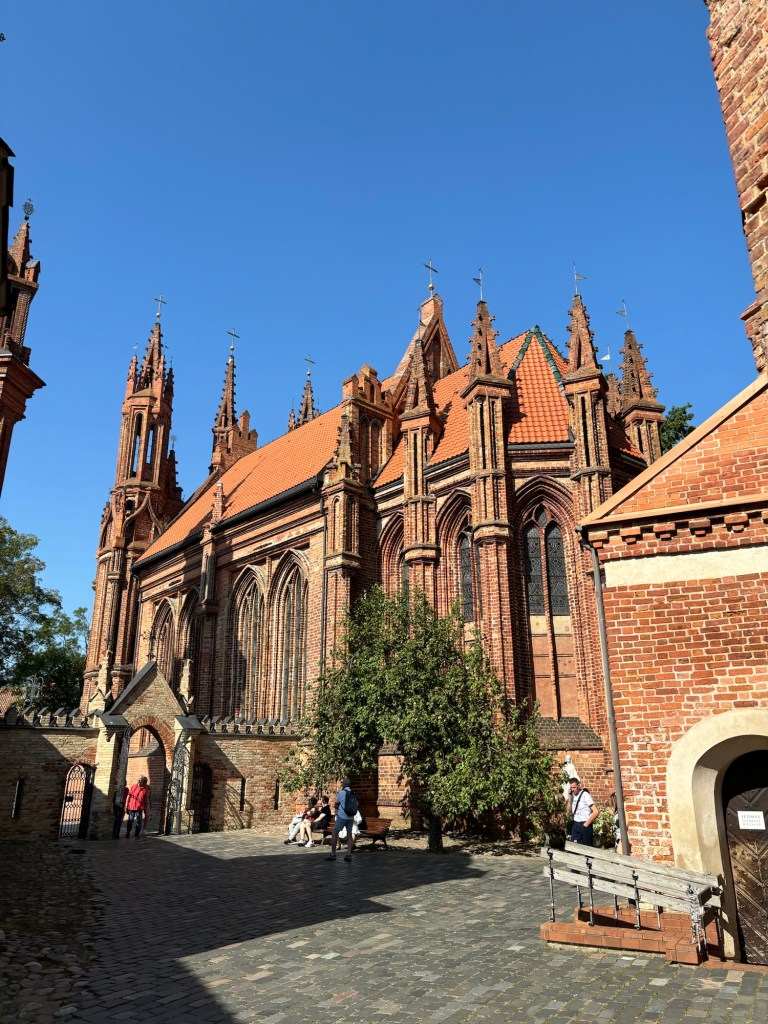
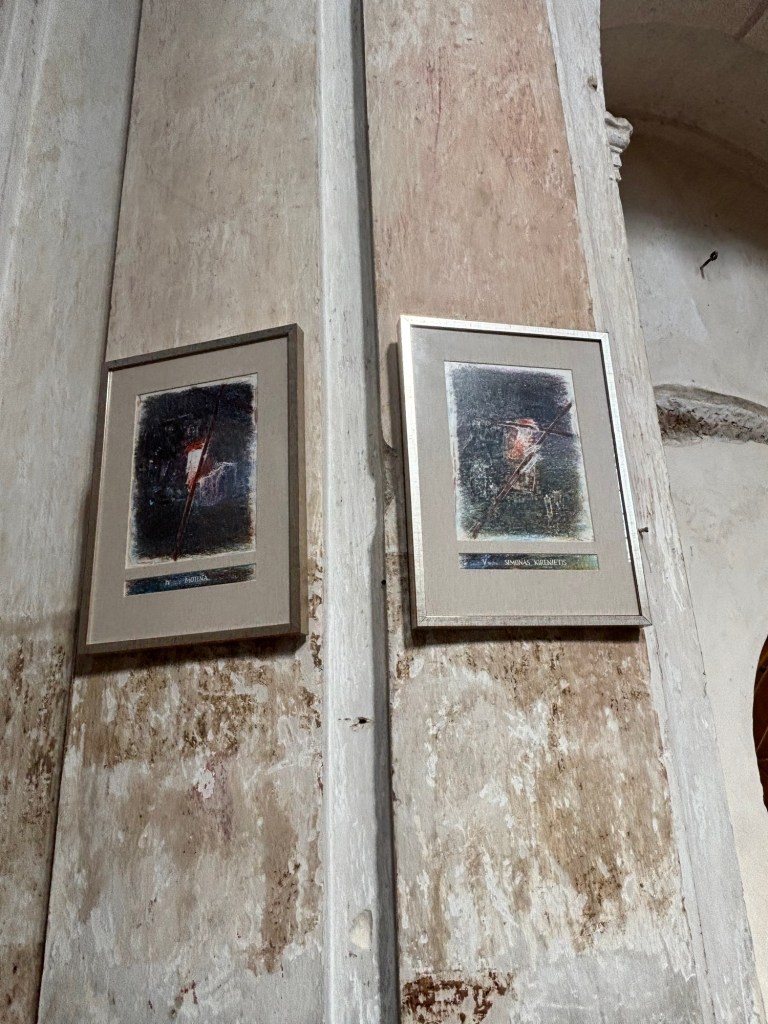
I always check out the stations of the cross when I’m in a Catholic Church and here I see the oddest looking stations of the cross I’ve ever seen. They are an unusual artistic interpretation.
Our next stop is a bit of a non event. There’s a beautiful book shop in the college grounds – it’s called Littera and it has paintings all over it (like a take on the Sistine Chapel but the characters are the college professors!). Unfortunately it’s closed 😩. It is nice to see the college grounds though.
We visit the republic of Uzupis which means “the other side of the river”. It is famous as a group of artists, on April 1st 1997 declared it a Republic, along with its own flag, unofficial currency, president, cabinet of ministers, and a constitution.
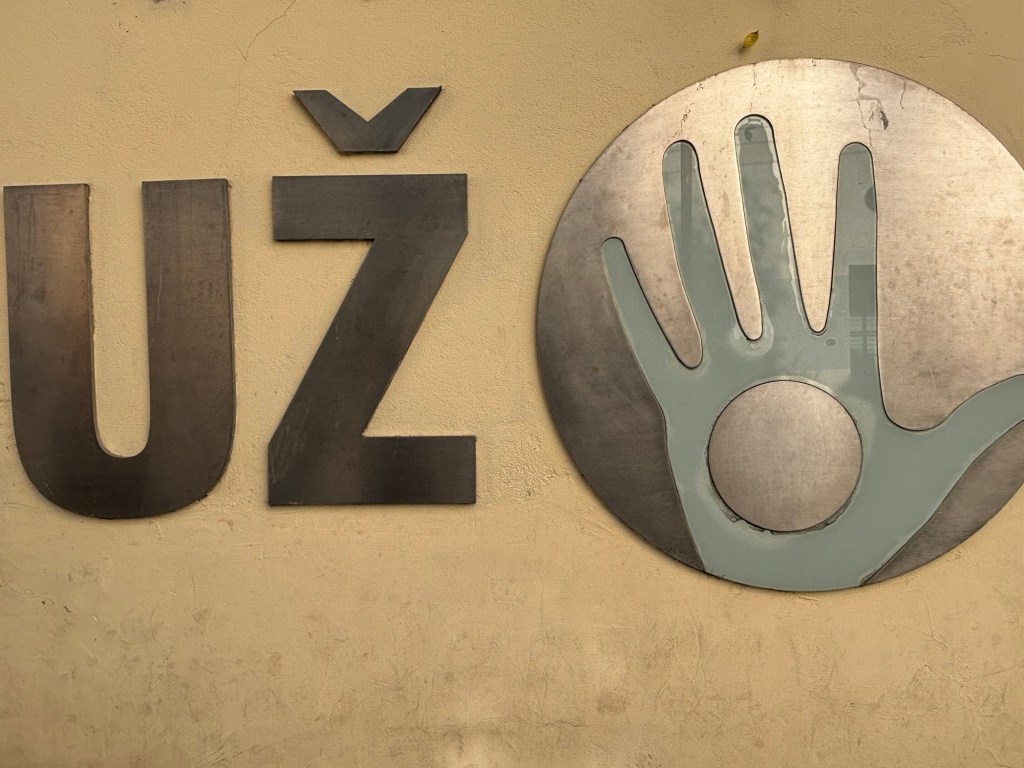
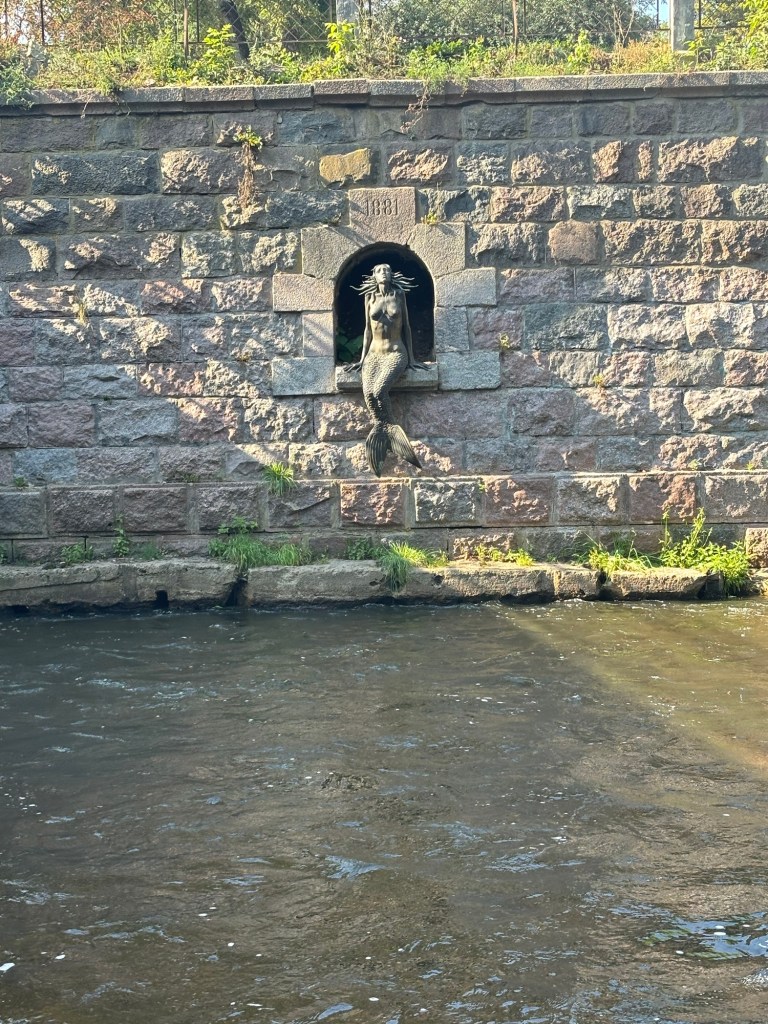
We pass the border control building where you can buy souvenirs and get your passport stamped (don’t do that!) and walk further along the river to see the famous mermaid statue.
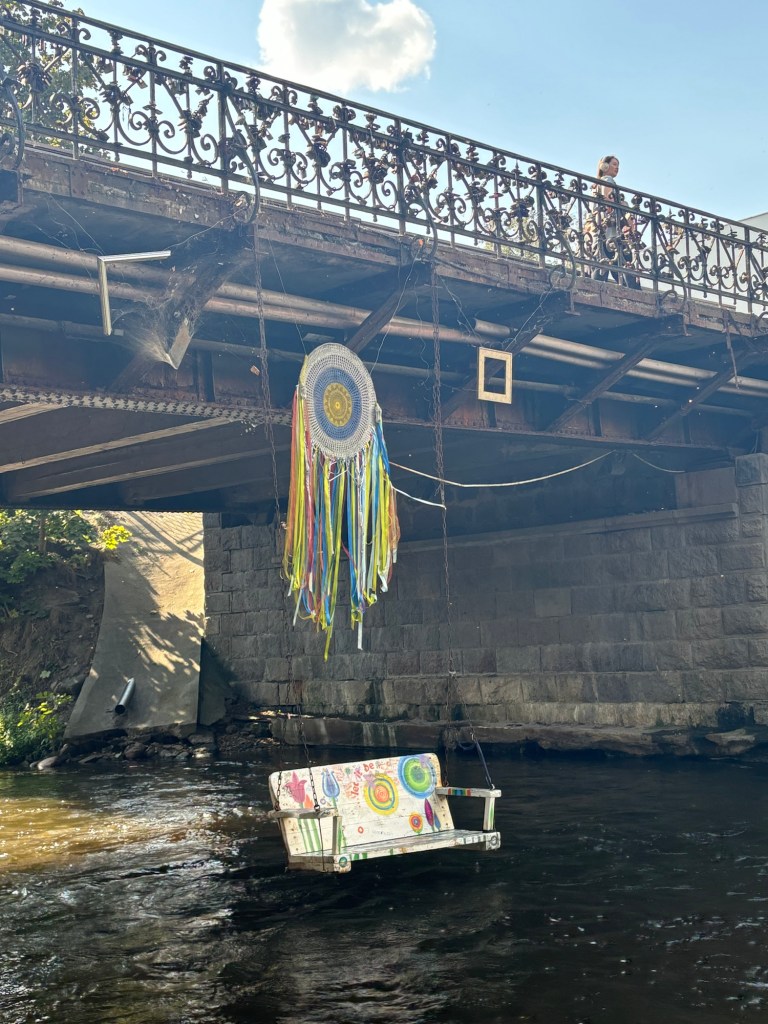
And the chair in the river for that Insta shot!
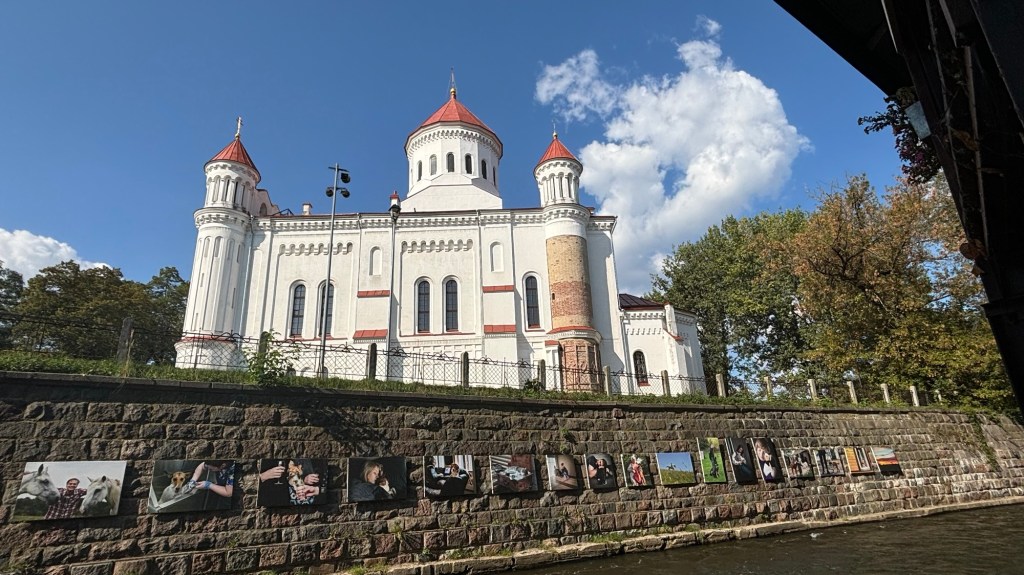
There’s a lovely view from down here to The Cathedral of the Theotokos, it is the main Orthodox Christian church of the Republic of Lithuania.
I’m a bit behind the gang as a couple of ladies stop me to ask directions and would you believe it they’re Irish!! They’re mad for a chat and God love them one had a terrible fall on the cobblestones in Riga and is covered in bruises. They take a selfie with me (presumably for posterity) so I do the same but I couldn’t post it here… the poor woman looked like she’d gone ten rounds with Mike Tyson.
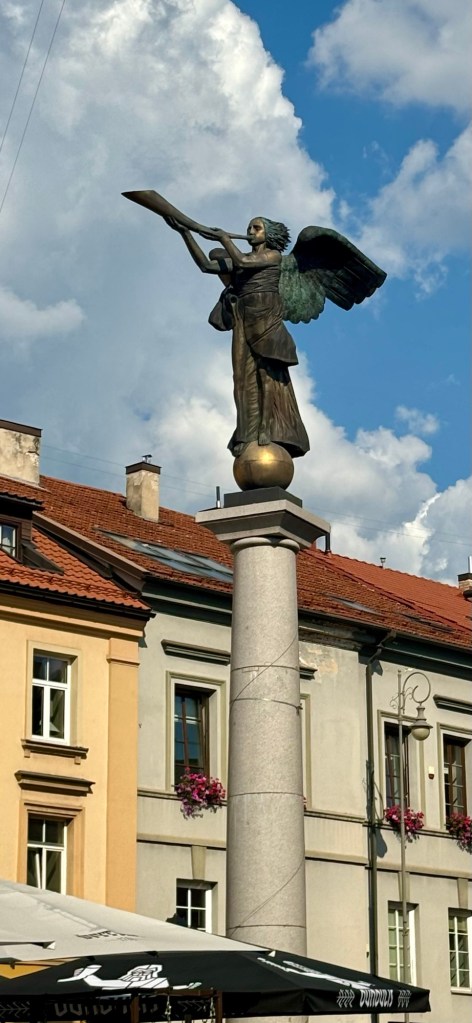
Walking inward from the river we see the “Angel of Uzupis”
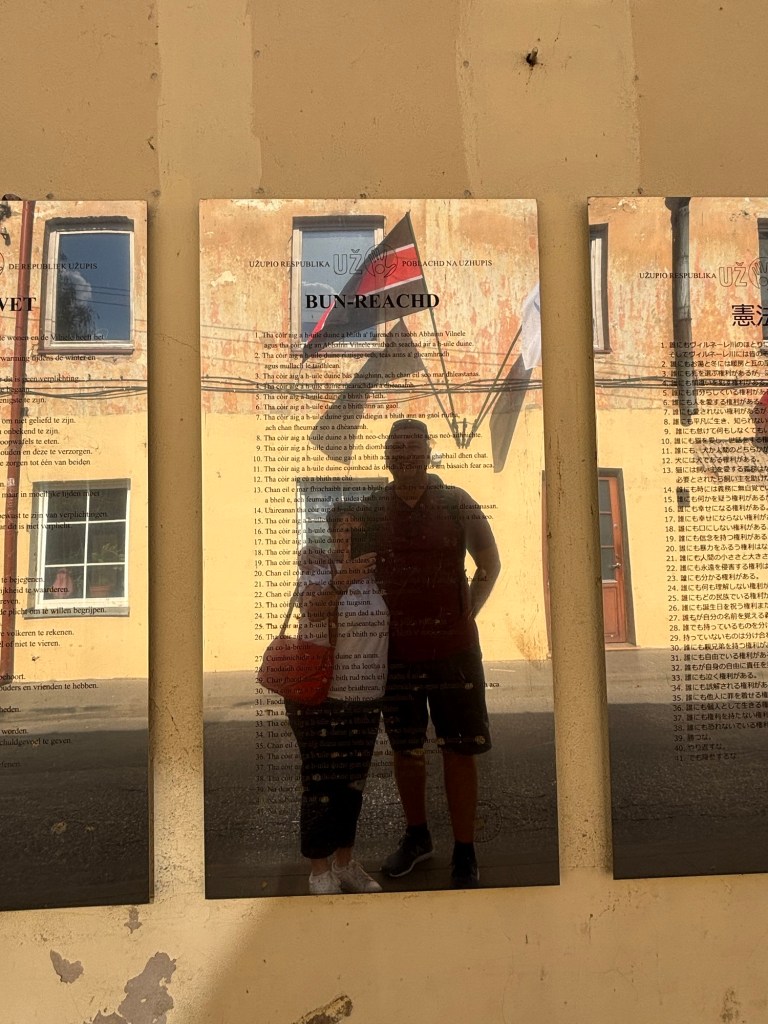
Along Paupio street we see the constitution in 23 languages and yes it’s in Irish! We read the 38 articles of the Republic’s constitution and 3 mottos – “Don’t Fight”, “Don’t Win”, “Don’t Surrender”.
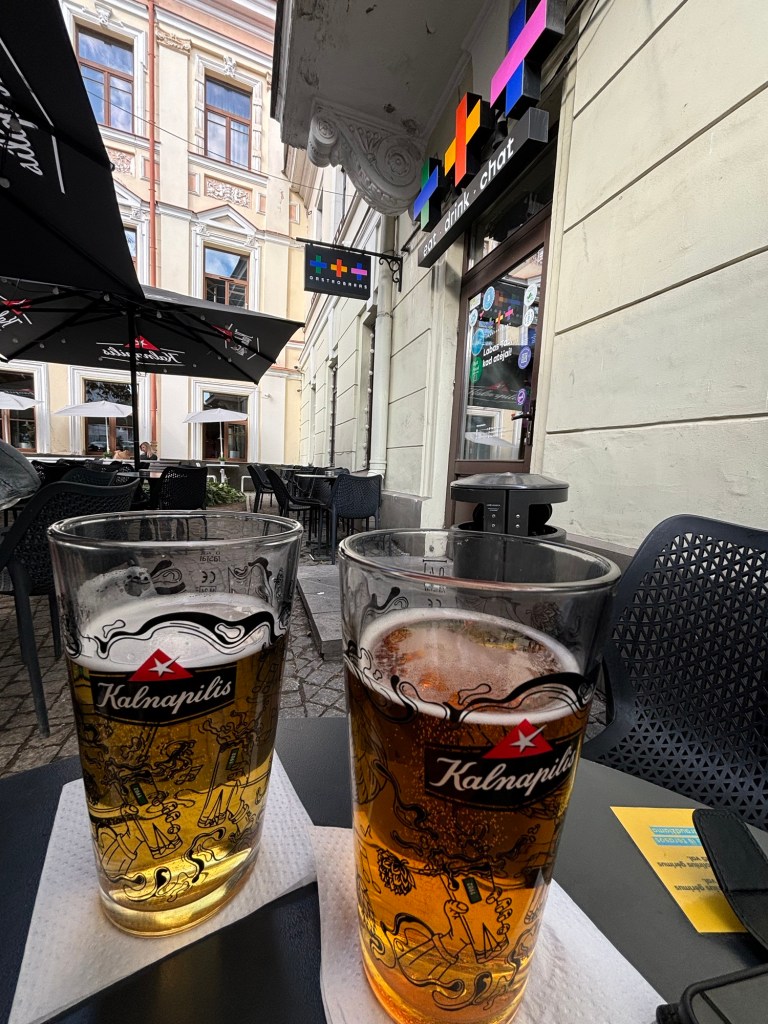
We’re all a bit tired from shlepping around so we hit +++ (that’s actually the name of it) for some refreshments. It appears to be the Weatherspoons of the Baltics and it has a delicious semi sweet cider.
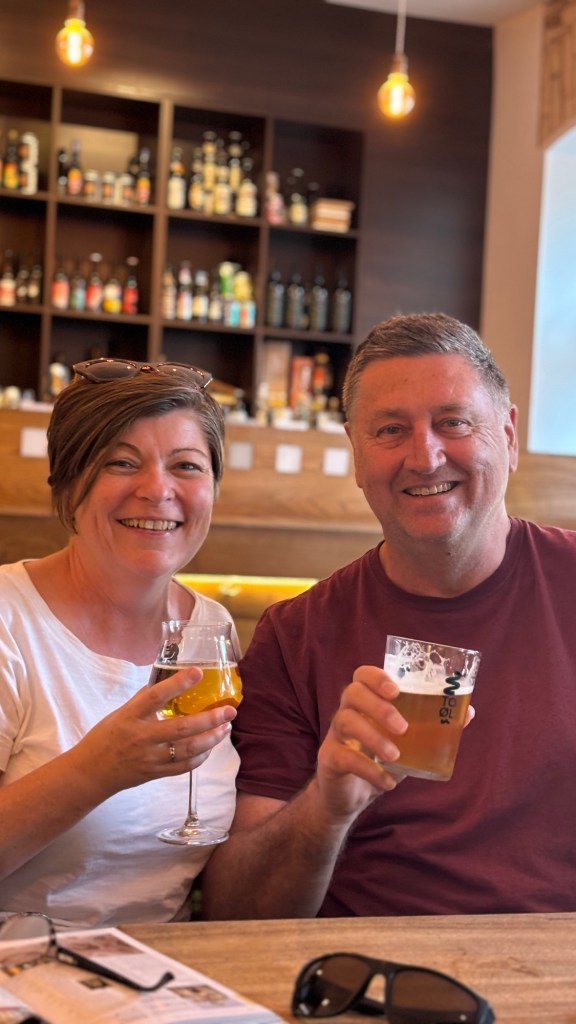
We move to another craft beer bar called Alaus Biblioteka, which is around the corner with a fine selection of beer but no cider or anything else – I’ll have to settle for water!! As we’re sitting there a delivery arrives and I joke about how maybe it’s a cider delivery. Would you believe the lady comes over and tells me they’ve had a delivery of 3 different ciders!! Now they’re not cold and she doesn’t have any ice (seriously!!) but I try one and it’s very good.
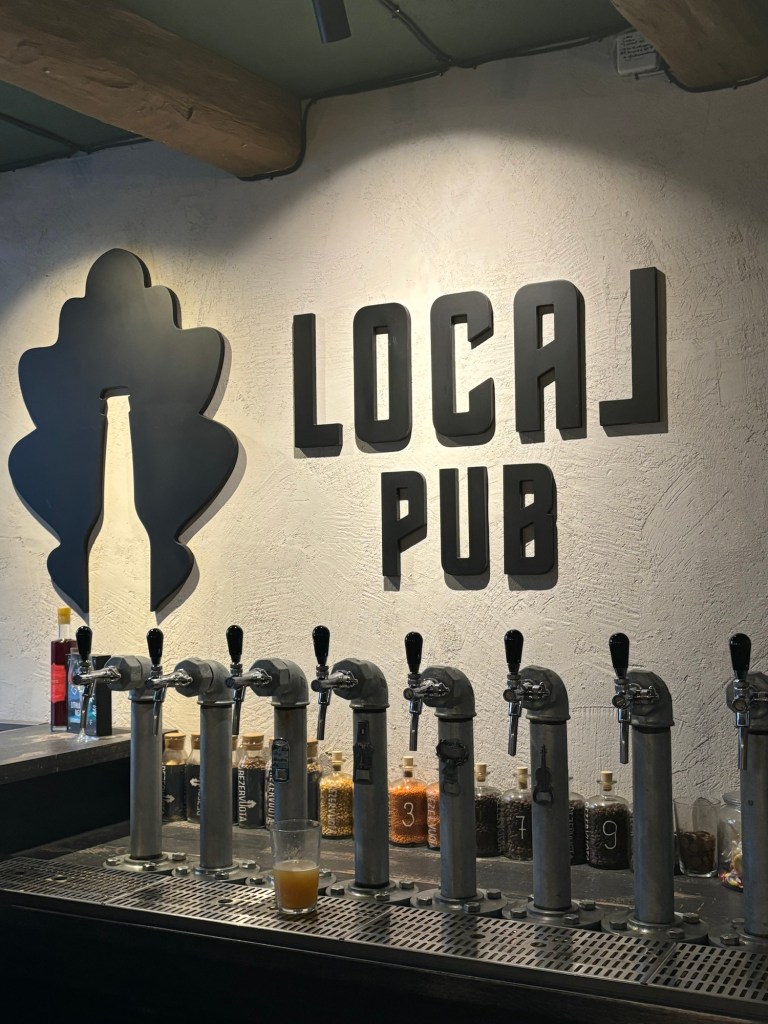
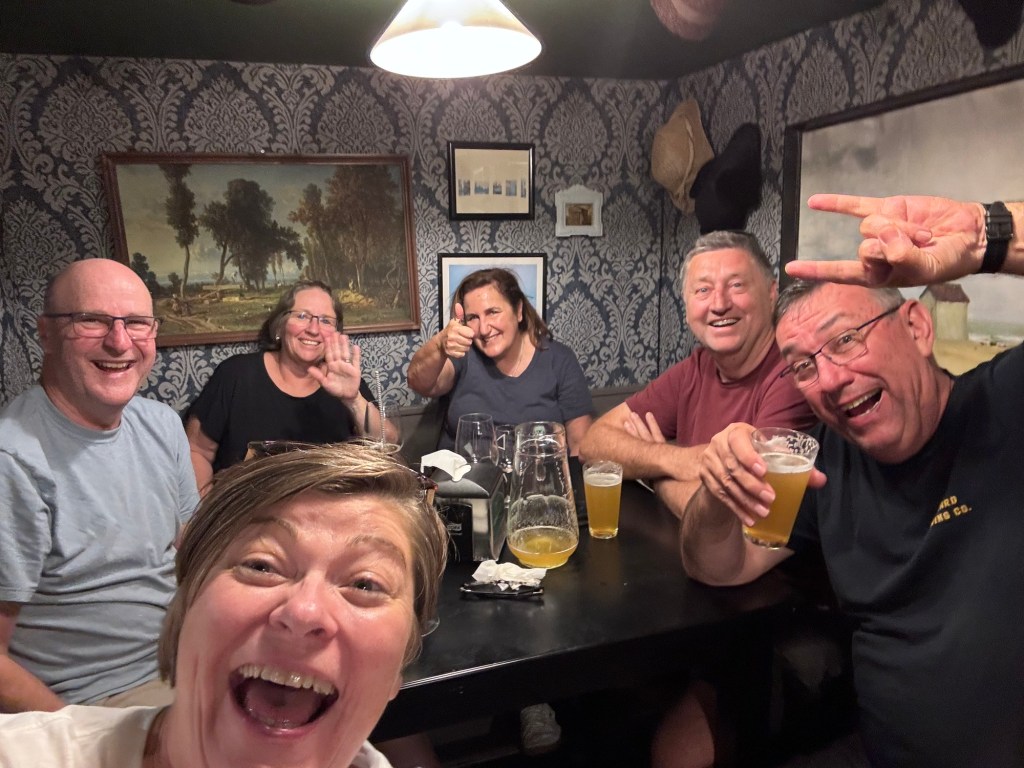
We move on to yet another craft beer bar that has a fine selection of ciders – it’s called Local Pub. I try a quince cider which is tart to say the least. The best part of this pub is that as we are ordering at the bar they play the Smiths “Heaven knows I’m miserable now”. I’m loving this place.
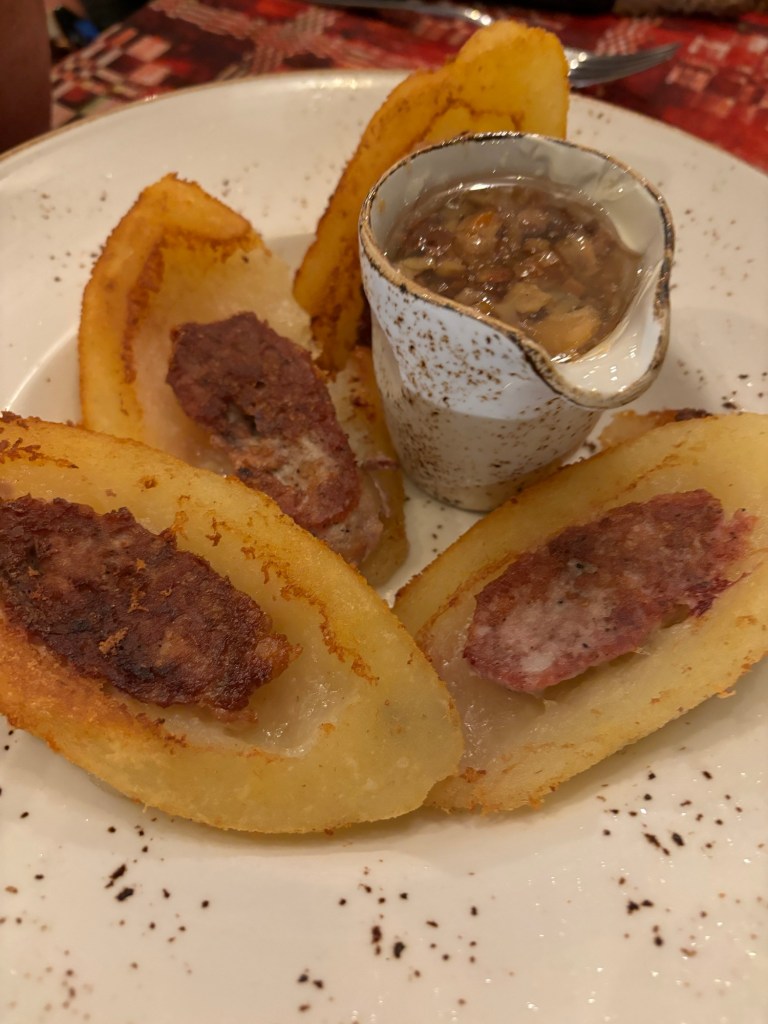
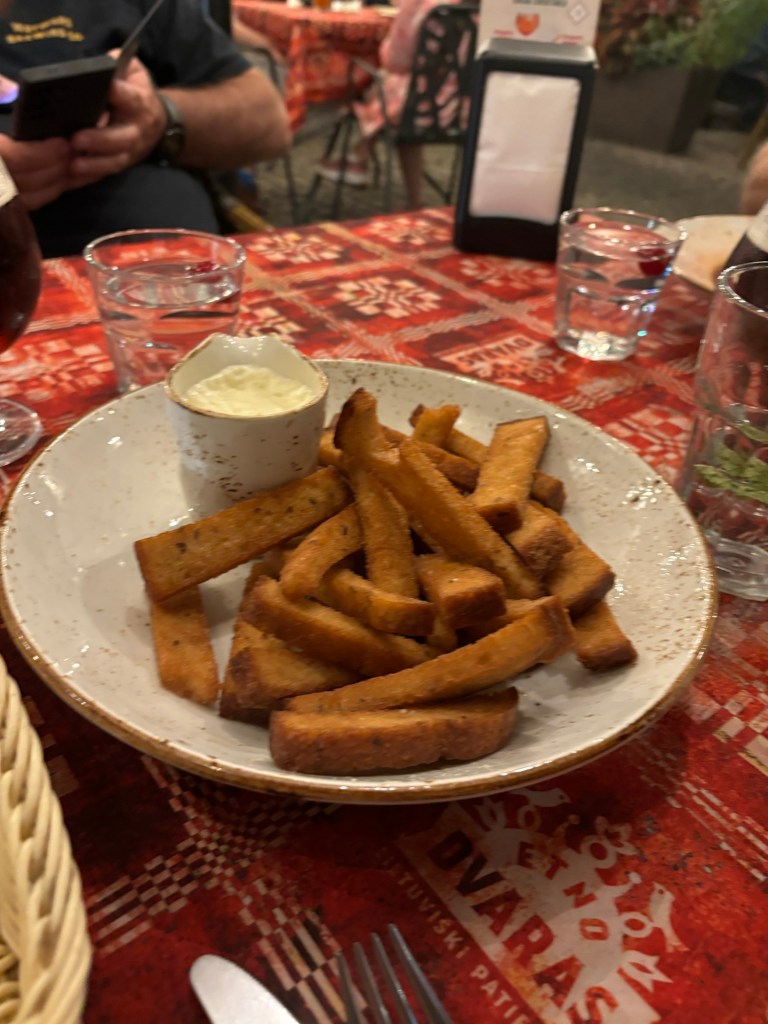
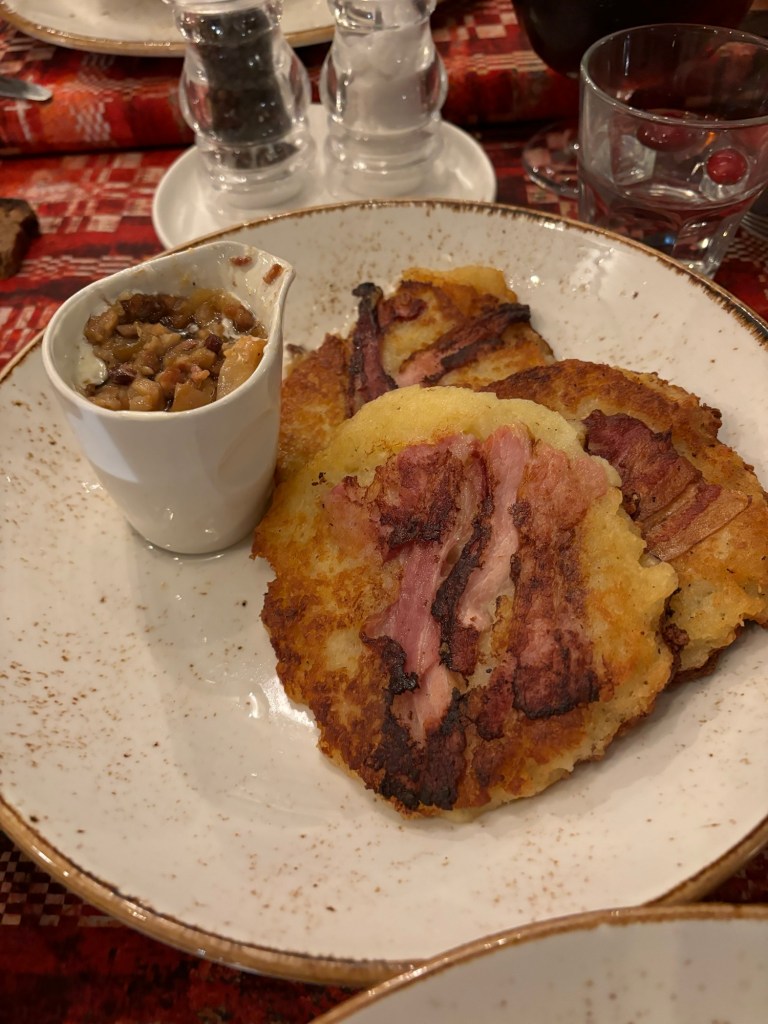
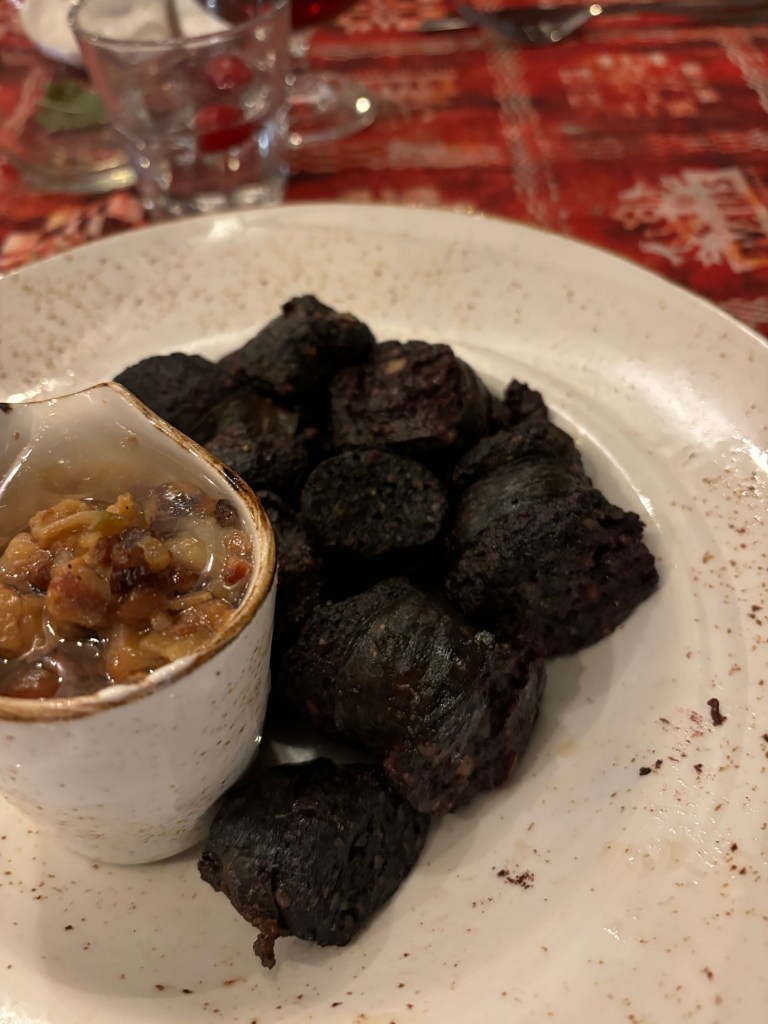
After quite the pub crawl we are ready for dinner so we eat at Etno Dvars which I had heard about in some blogs I read (and watched on YouTube). It’s a famous chain serving Lithuanian cuisine and it is really delicious. Nearly all the dishes we order come with a side of “sauce” which appears to be some sort of fattty bacon bits!! Soooo tasty!!
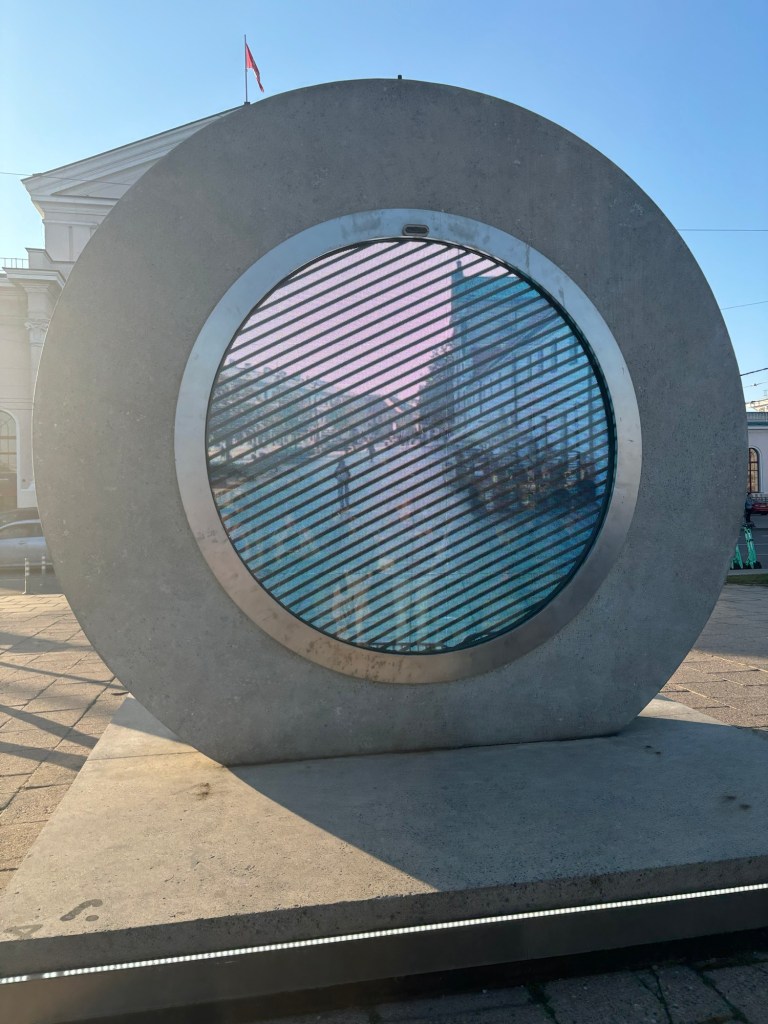
Next morning we walk to the train station. I’m interested to see the portal which has been set up between Vilnius and Lublin in Poland. It’s a bit early for our Polish neighbours so it’s quiet, we get a better chance of a wave when we return later in the afternoon.
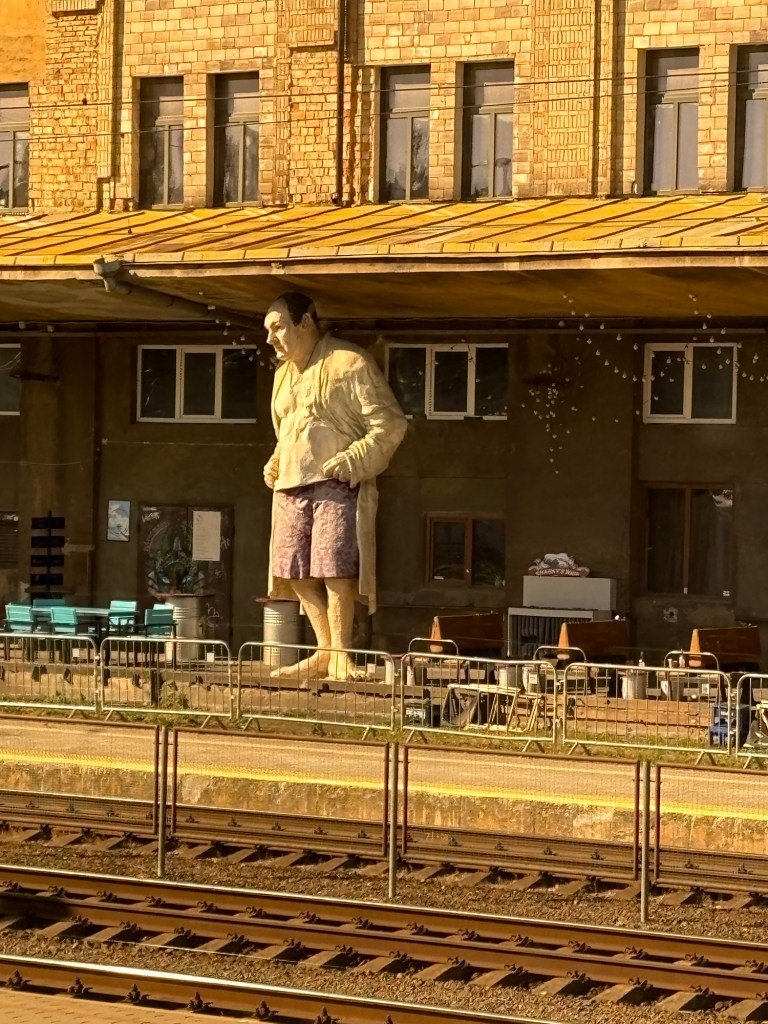
We take the train to Trakai, first class carriage of course and there’s a giant statue of Tony Soprano on the platform… seriously!!
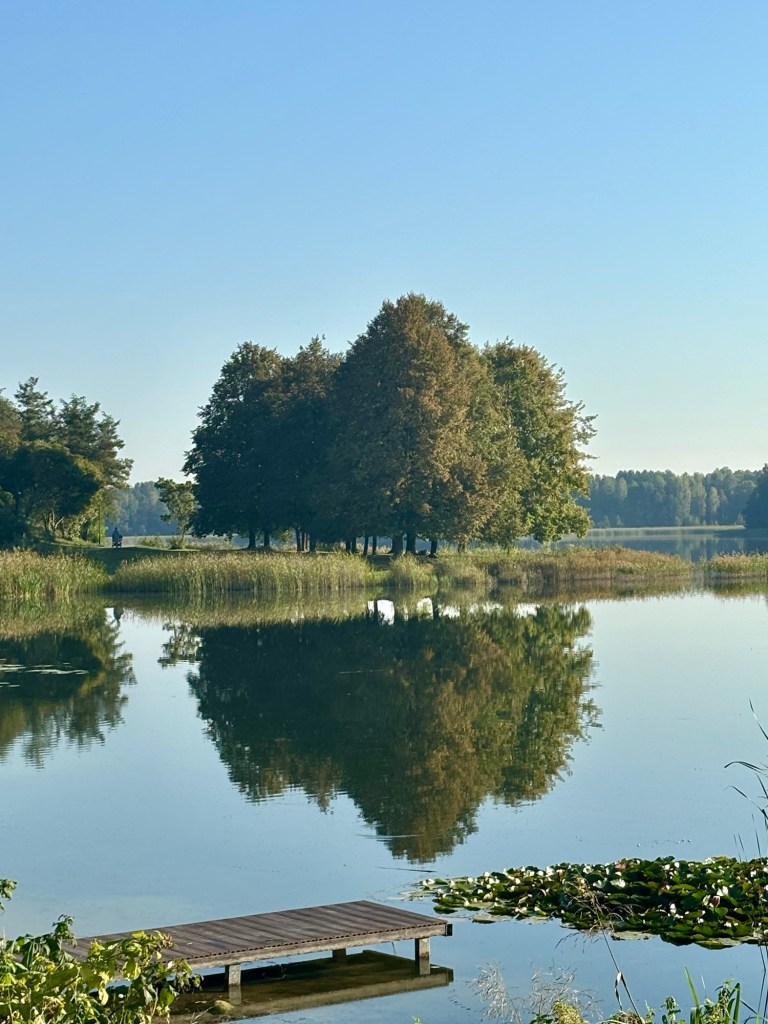
The train leaves us a couple of kilometres from the island of Trakai but it is a beautiful walk along the lake to get there.
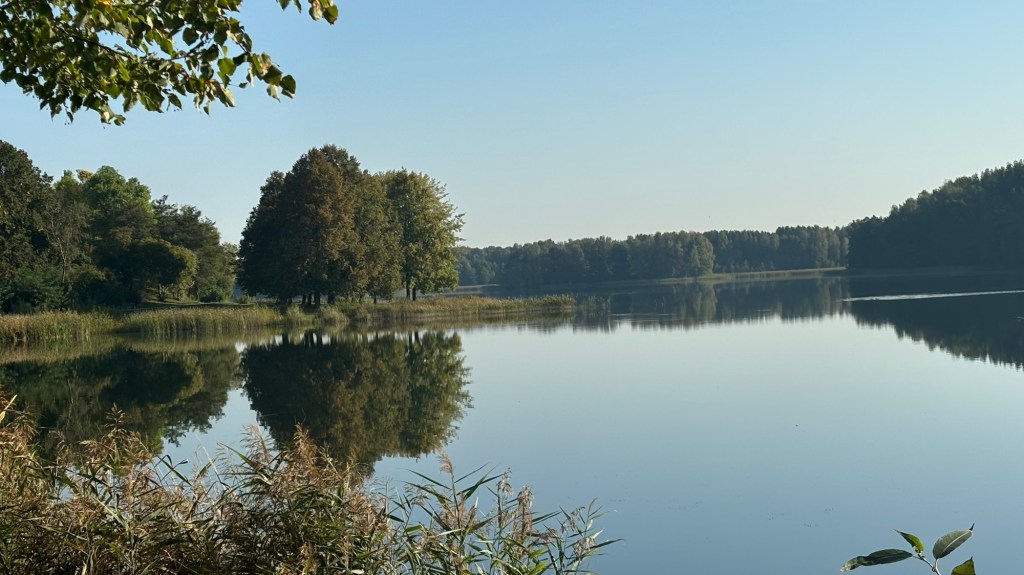
There are some beautiful reflections in the water.
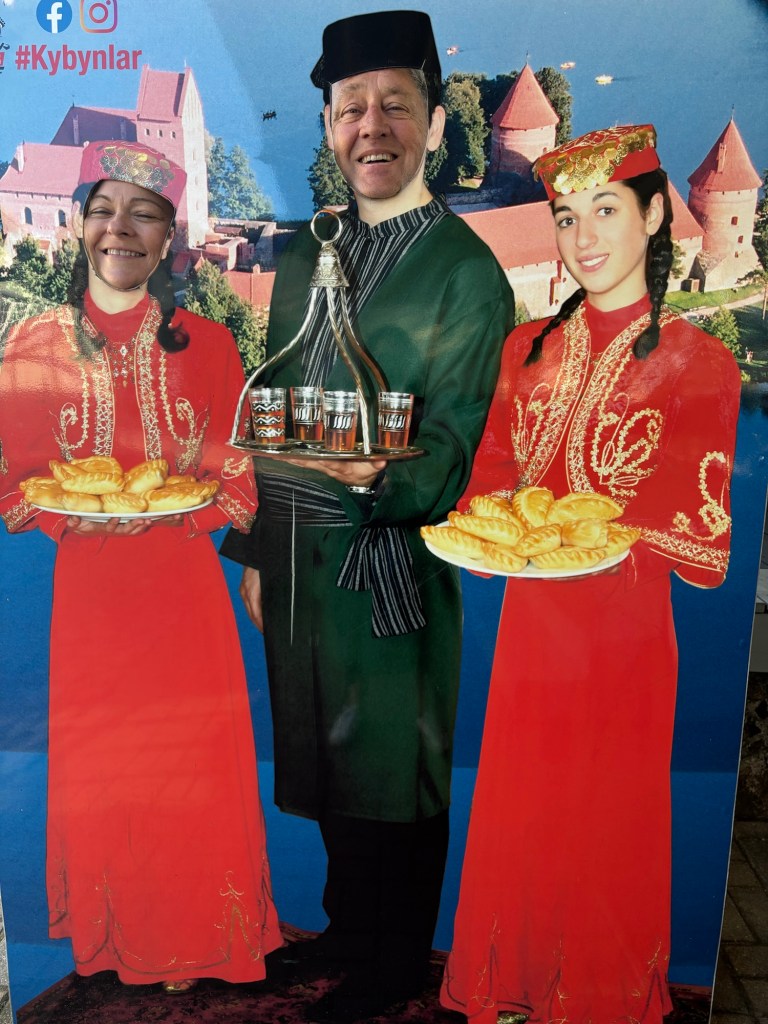
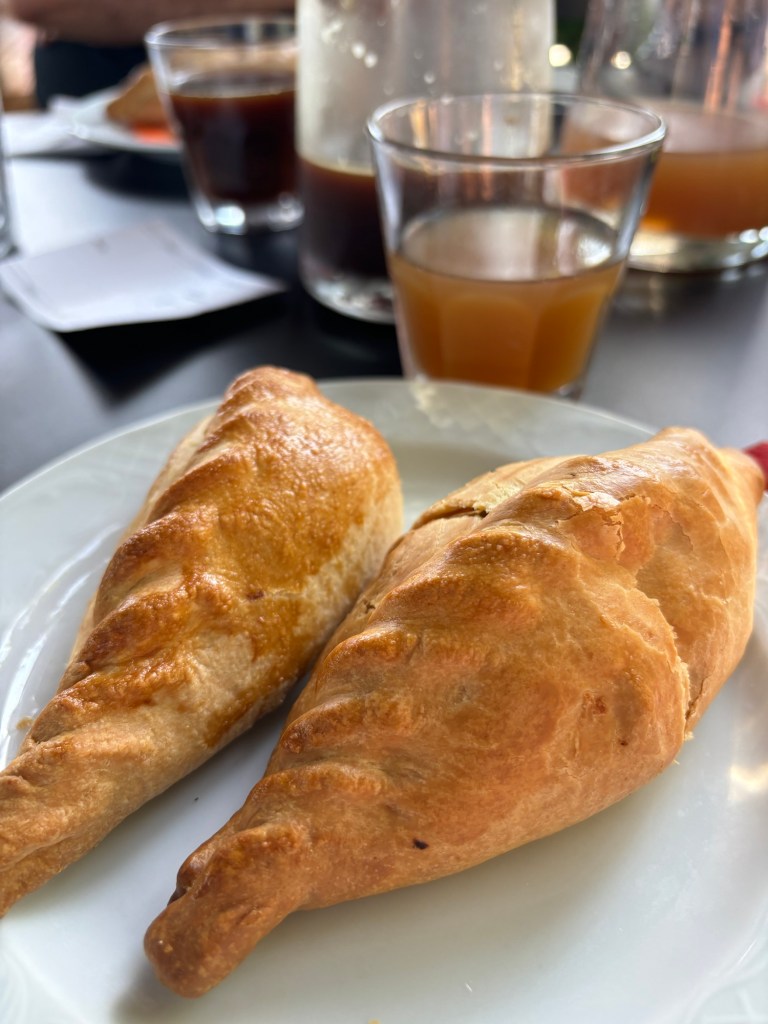
The small town of Trakai is home to a tribe of people known as the KARAIMS. They have their own religion which is based on the Old Testament and have lived in this town since the 12th century. They have specific traditions when it comes to their cuisine, in particular their famous kibinai, which is a savoury pastry filled with meat, onions, and spices. We stop at the KYBYNLAR for tea and coffee and we might even have a sneaky taste of these pastries.
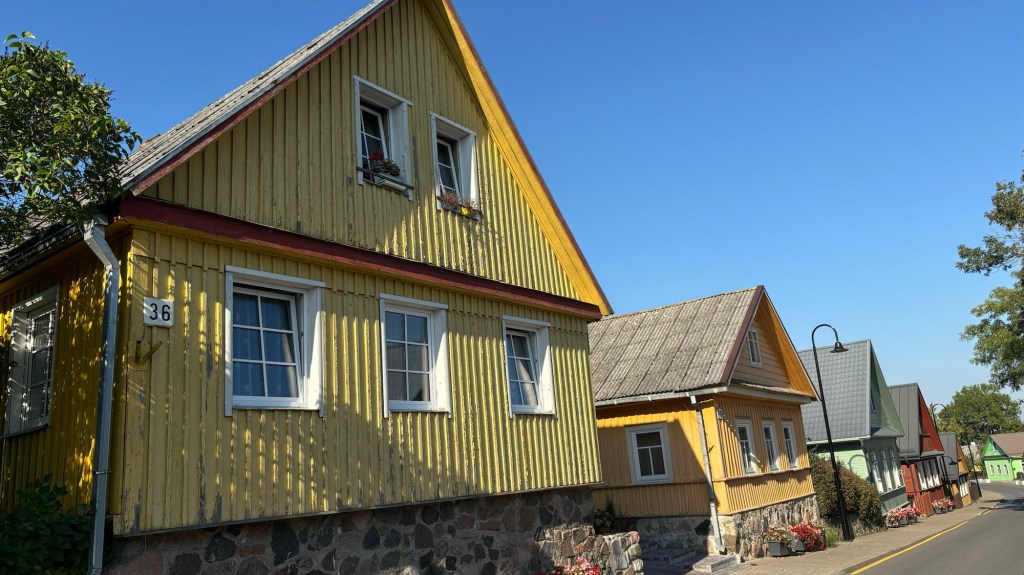
The small town of Trakai is picturesque, with painted wooden houses.
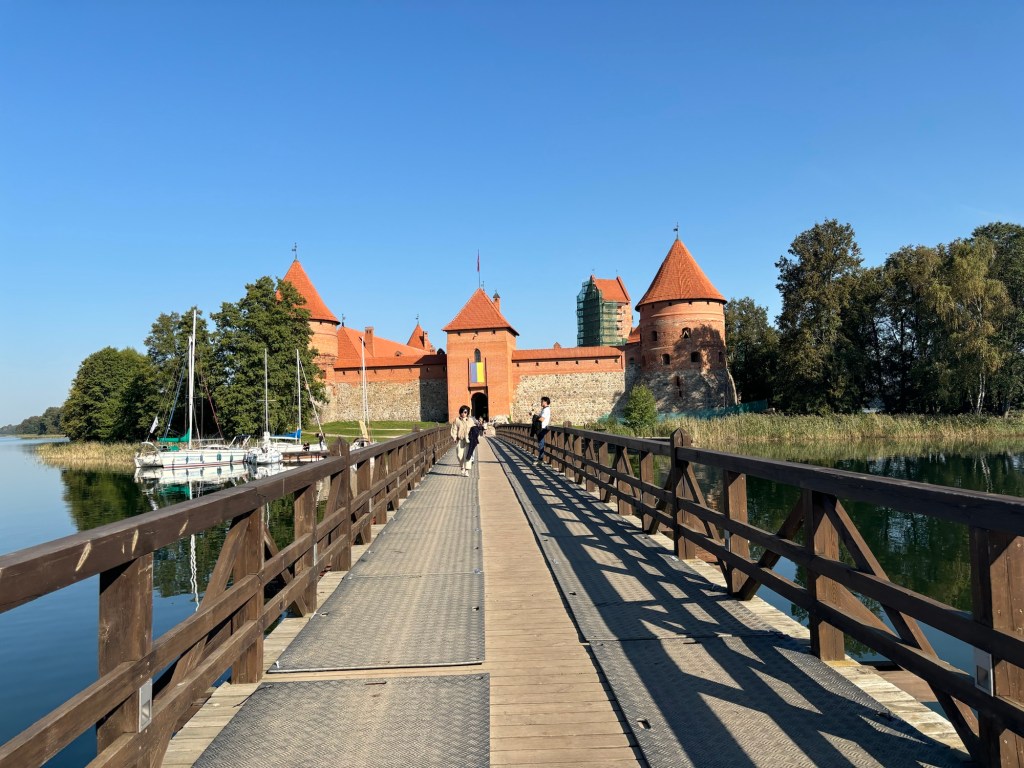
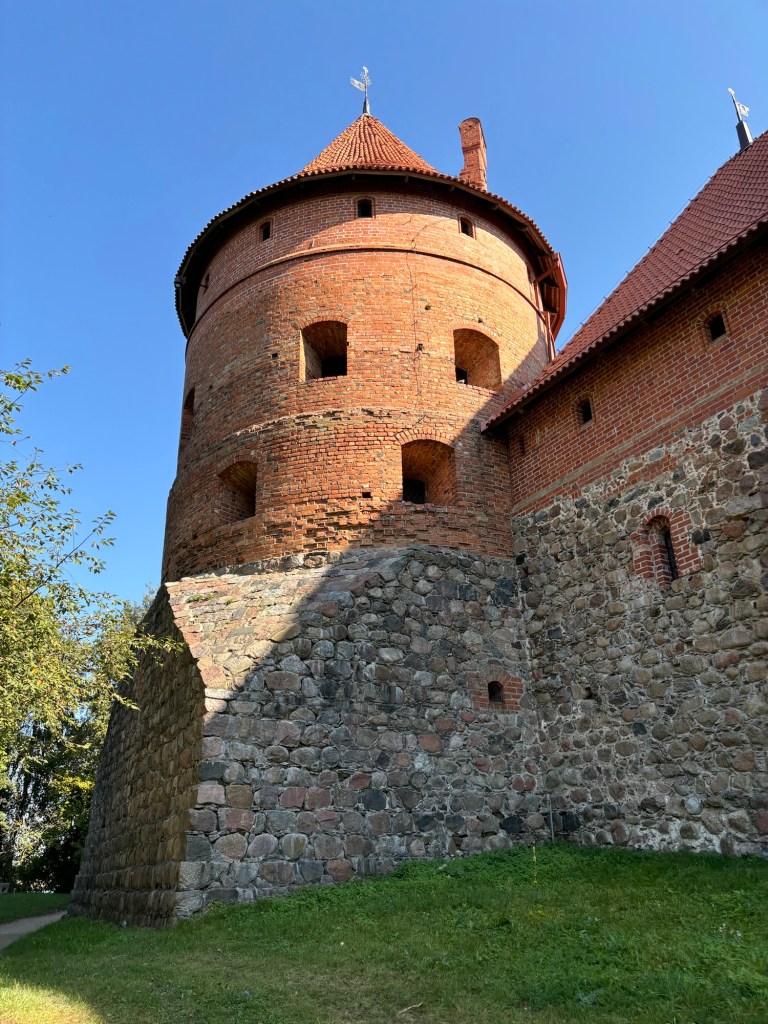
We arrive at the bridge and admire the castle in the distance before walking over to the tiny island.
We pay to go inside the castle and look at the exhibits. There’s some interesting silver and glassware and a lot of coins, some turned into trays and other decorative stuff! There’s a lot of construction going on so it’s not ideal and a bit underwhelming!
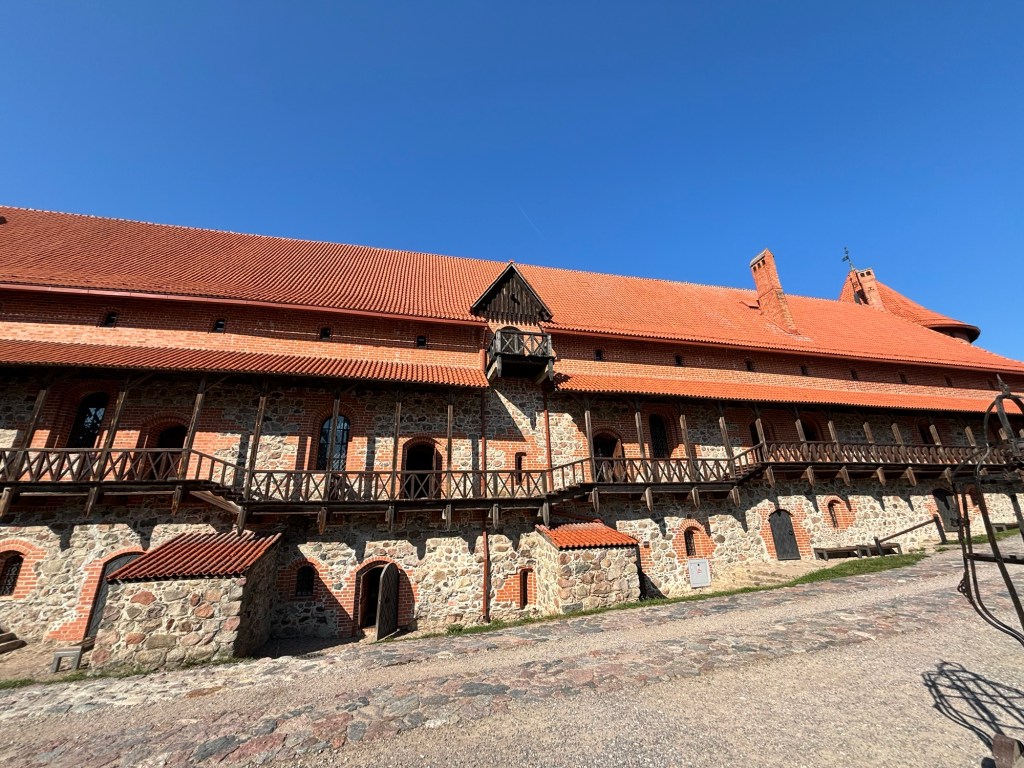
We walk around the entire island which takes all of about 10 minutes!
It’s lunchtime so we sit down and have the traditional pastries that we had a sneaky taste of earlier.
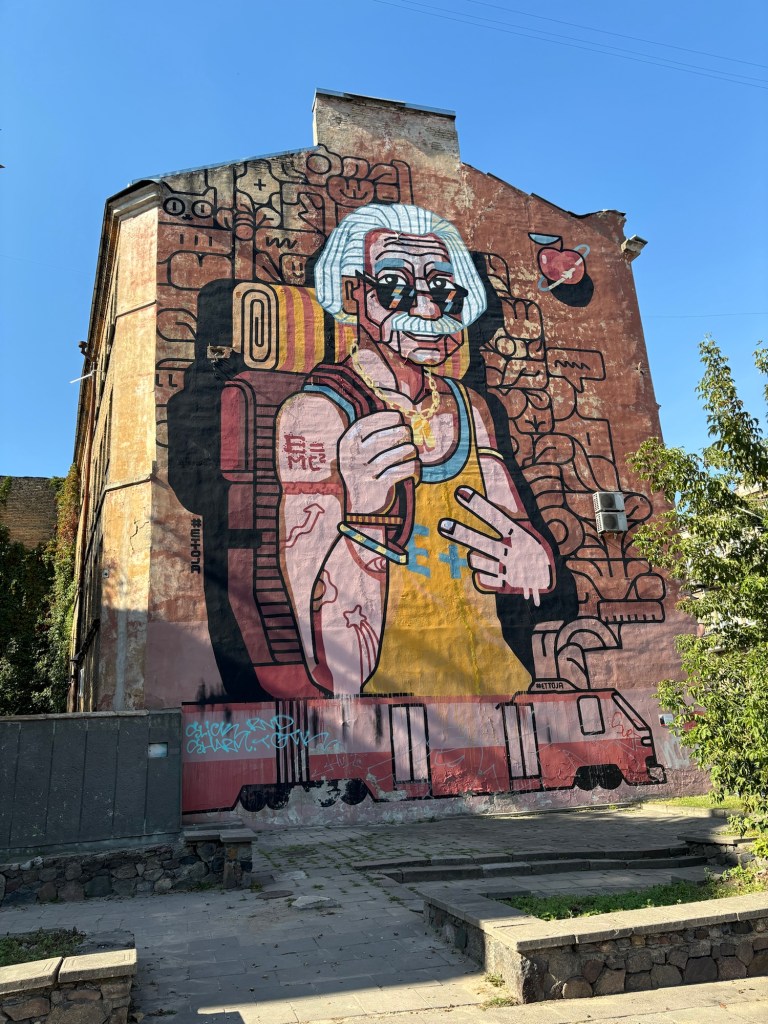
Time to walk back to the Trakai train station and then home for a short turnaround before the next item on our itinerary. As we exit Vilnius train station, we check out the portal again and get a wave from a few people this time. We take a different street back so we see more localness including this cool mural of a gangsta Einstein!
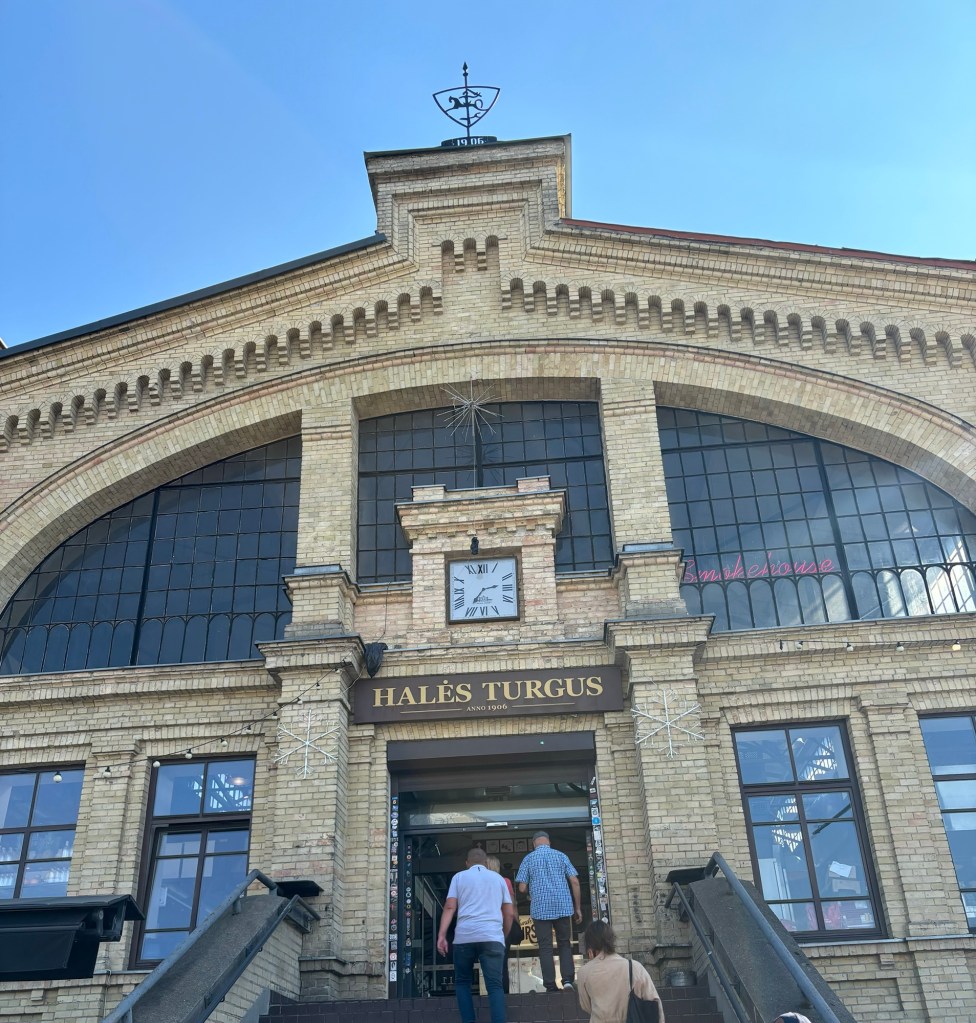
Before we hit the apartment we decide to nip into the market to pick up some dinner for later. We buy some meats and cheese and pickled cabbage so we can enjoy an easy snack later at home.
After a quick turnaround, we head back to Cathedral Square for our catacombs tour which we booked when we visited yesterday. It’s still lovely and sunny but we are heading underground.
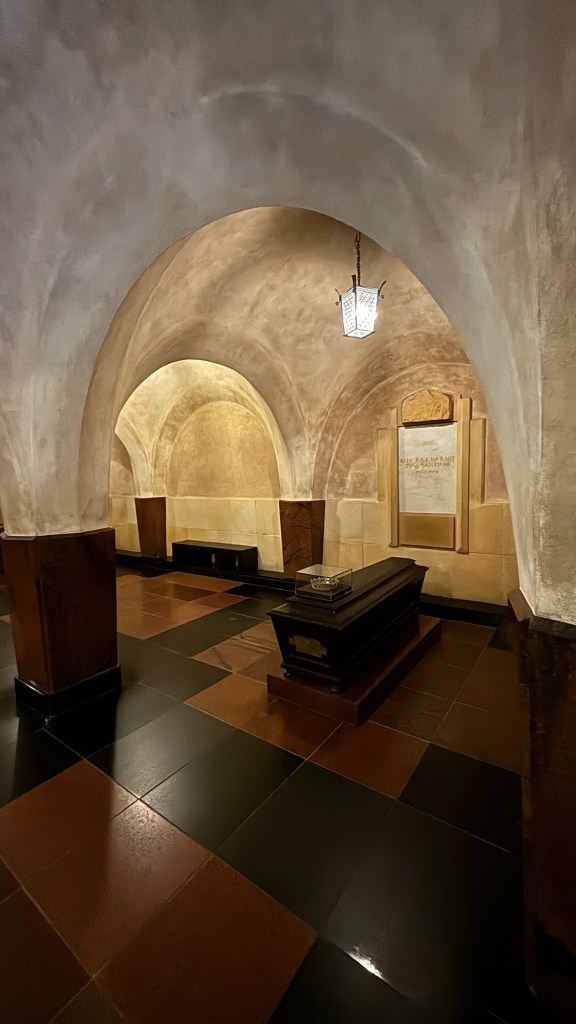
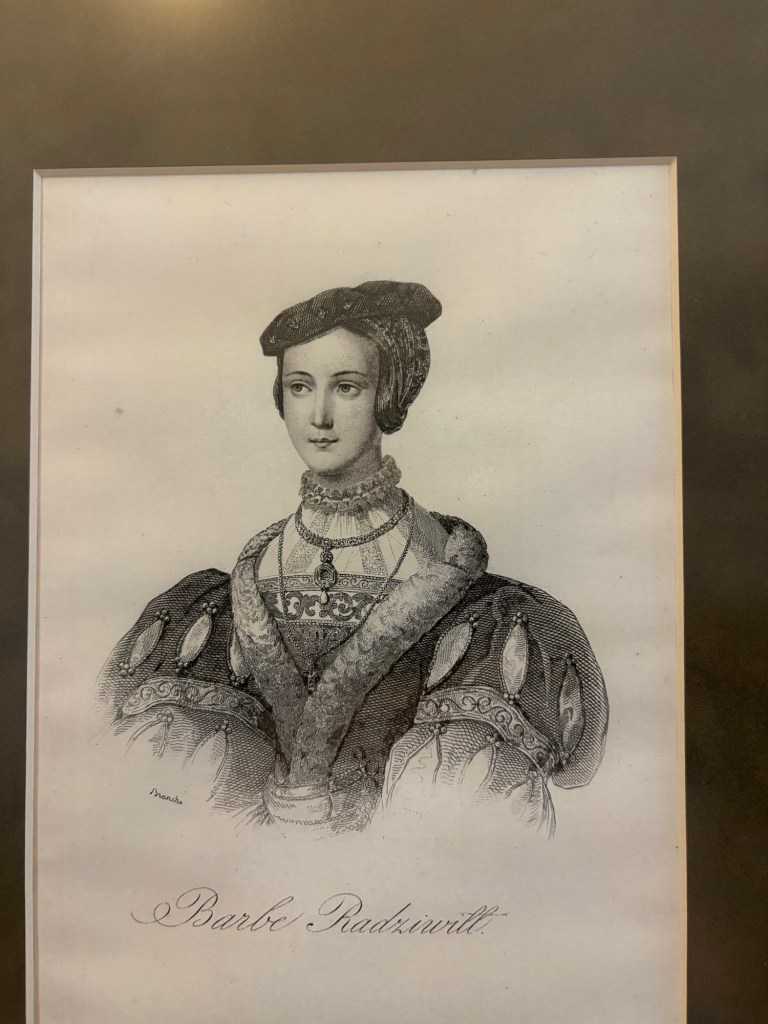
These crypts of the Lithuanian rulers that were buried underneath the cathedral were just recently discovered in 1984. Much of Lithuanian history was stolen, moved or lost because of the Soviet rule, so the fact that these survived detection is quite remarkable. We see the Royal burial chamber where Alexander Jagiellon, King of Poland and Grand Duke of Lithuania, along with the wives of Sigismund Augustus, Elisabeth of Austria and Barbara Radziwiłł, as well as the heart of ruler Władysław IV Vasa, find eternal rest. Our guide tells us the story of the 2 wives where legend has it that one was extremely plain but Barbara (or Babs as we like to call her) was quite a looker!
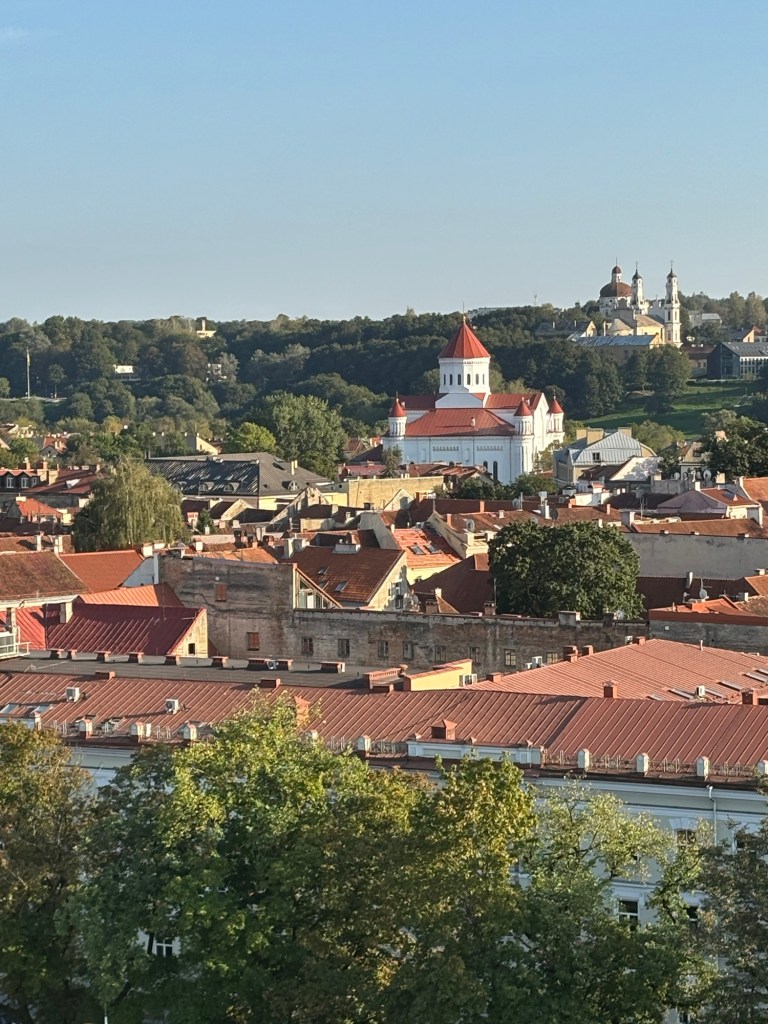
Once the tour ends we head for the Bell tower which is one of the most beautiful places to get a bird’s-eye view of the roofs of Vilnius Old Town.
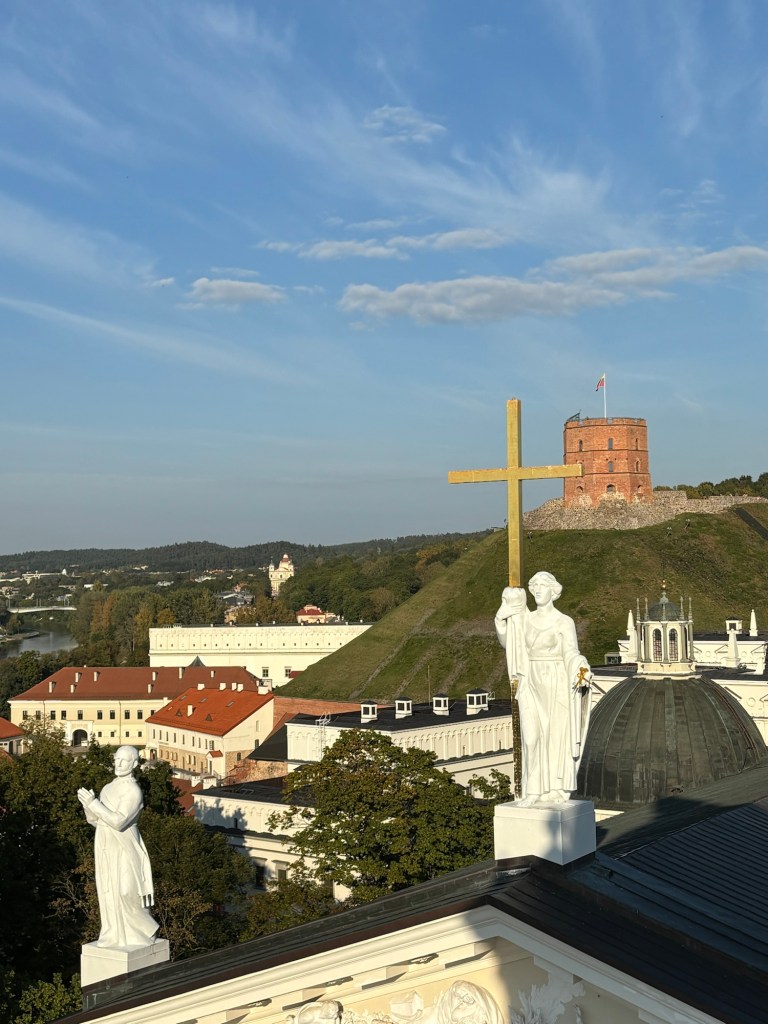
Built in the 17th century, the Bell Tower has 193 authentic wooden steps that take you up to the 45-metre high observation platform. No bother to us!
We stop for a quick refreshment at a bar called 7 Fridays where we sit in the beer garden. I enjoy a Chardonnay which is unusual but it’s one I recognise from the US and I’m delighted to see it on the menu. We also try the local garlic bread which is so garlicy and delicious but I think the Latvian rye garlic bread still beats it.
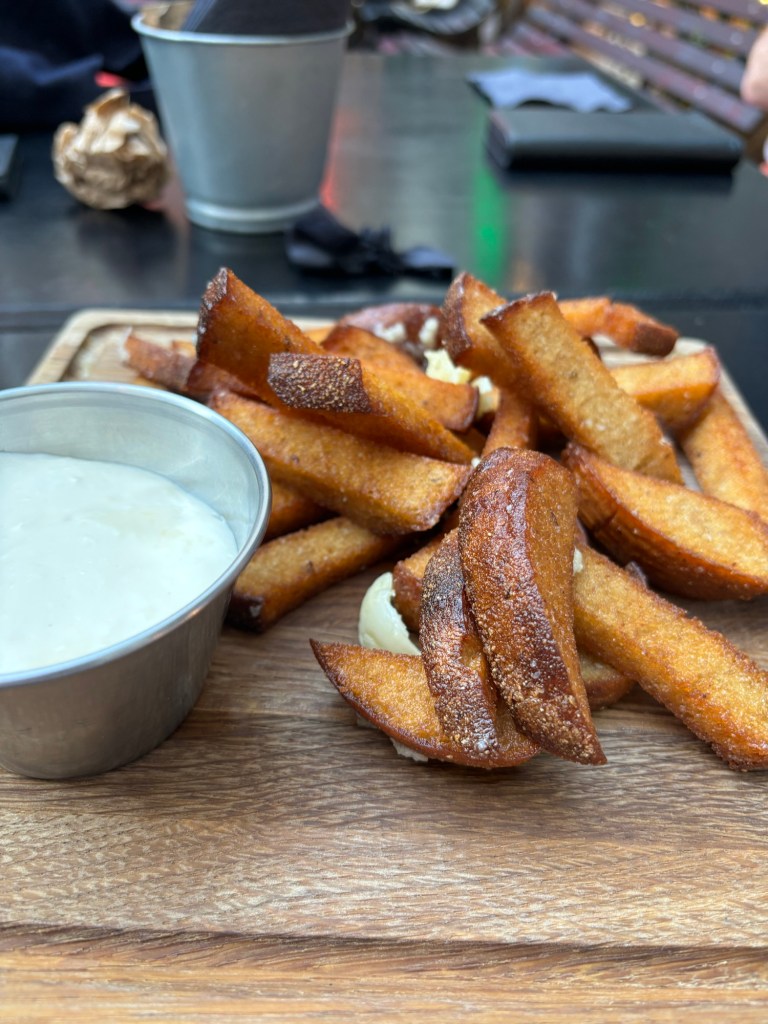
From here we walk back to the house to have a restful evening at home catching up on some Late Show Trump commentary and a glass of red wine from Georgia.
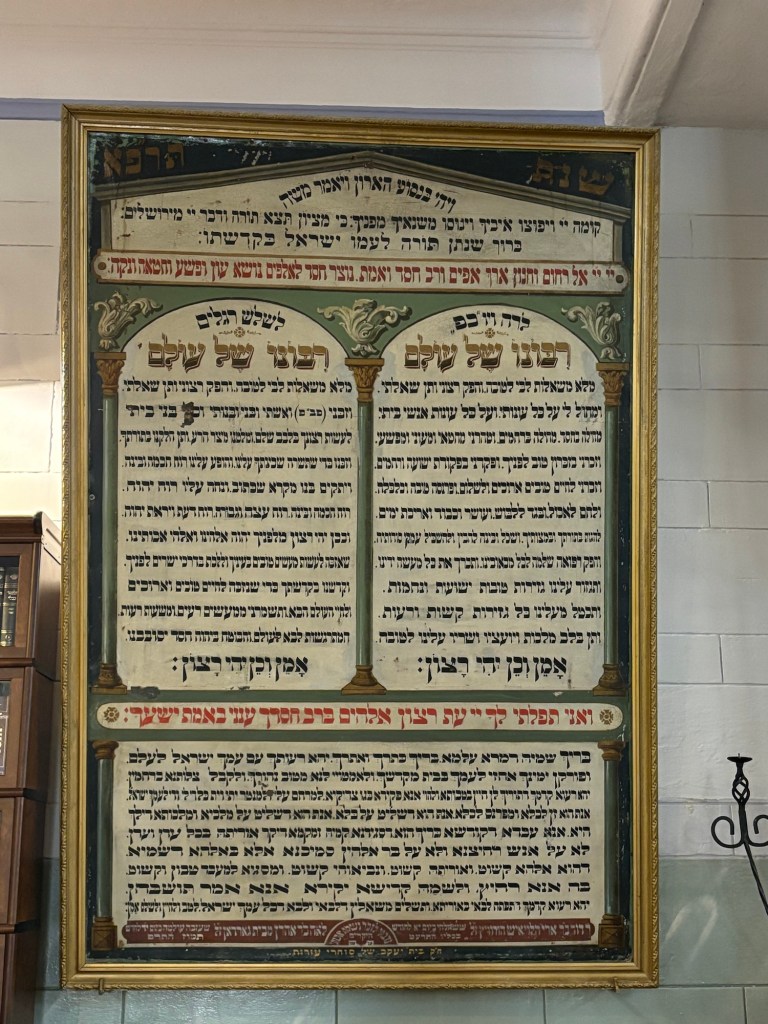
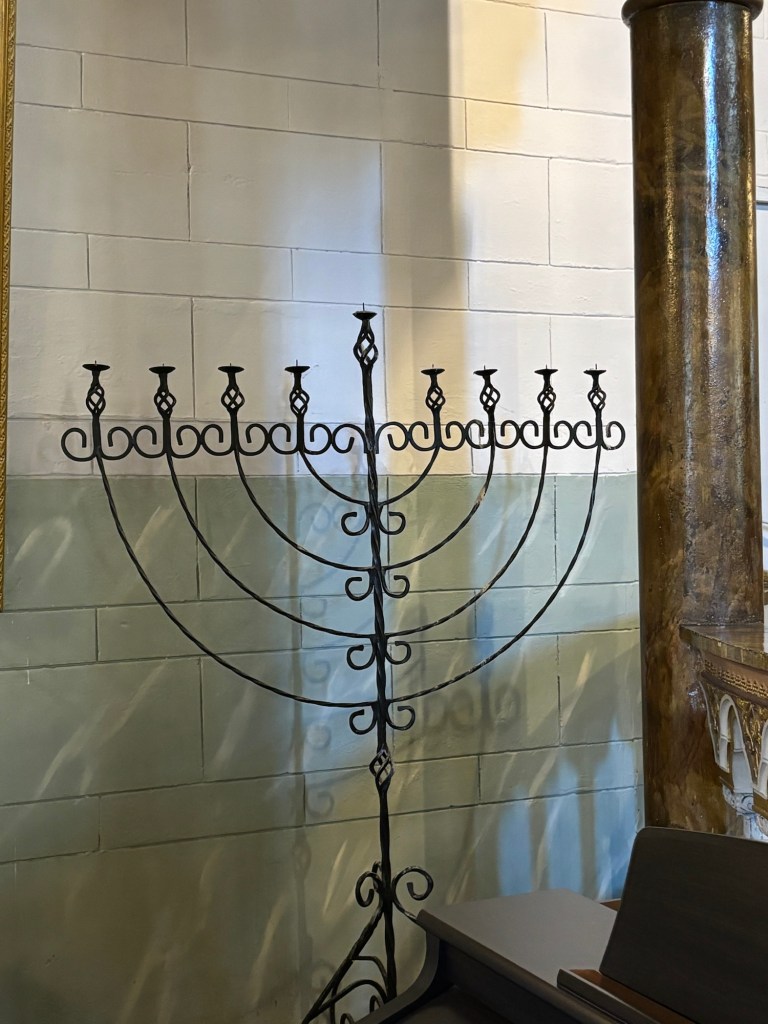
It’s our last full day in Vilnius so we have lots to tick off our list. We start by taking a walk to the Choral synagogue. I have to google what choral synagogues are – they were built in Eastern Europe, from Hungary to Russia and they represented the ideas of Jewish Enlightenment making certain reforms to the traditional Jewish customs. I’ve attempted to visit synagogues before and don’t recall ever actually having made it inside any. I’m so happy to get inside this one as it is beautiful.
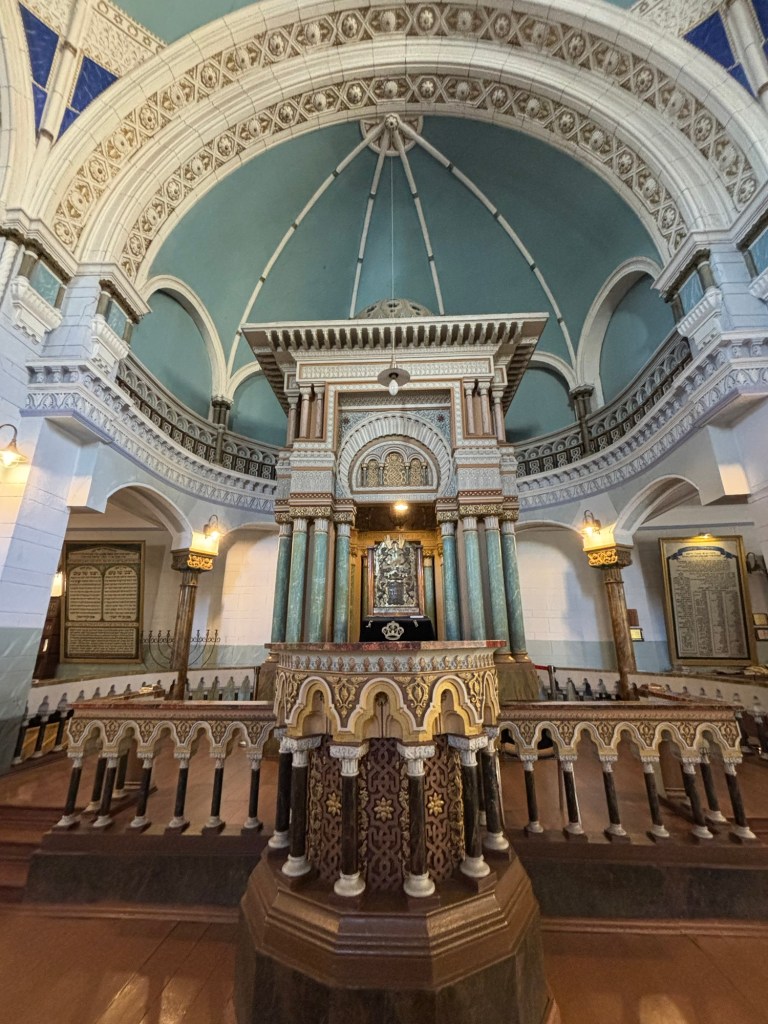
I love a good church as you know and I’m loving exploring this synagogue.
We continue on our way to the KGB Museum formally called The Museum of Occupations and Freedom Fights. The Museum is located in the former Vilnius courts building which was built in 1899. During the Soviet occupations (1940-1941 and 1944-1990), the building belonged to the Soviets and in between to the Nazis. This is where plans for the annihilation of the population and persecution of dissenters were created.
During the occupations there was a prison in the basement of the building and during the second soviet occupation there was a chamber for executing death sentences.
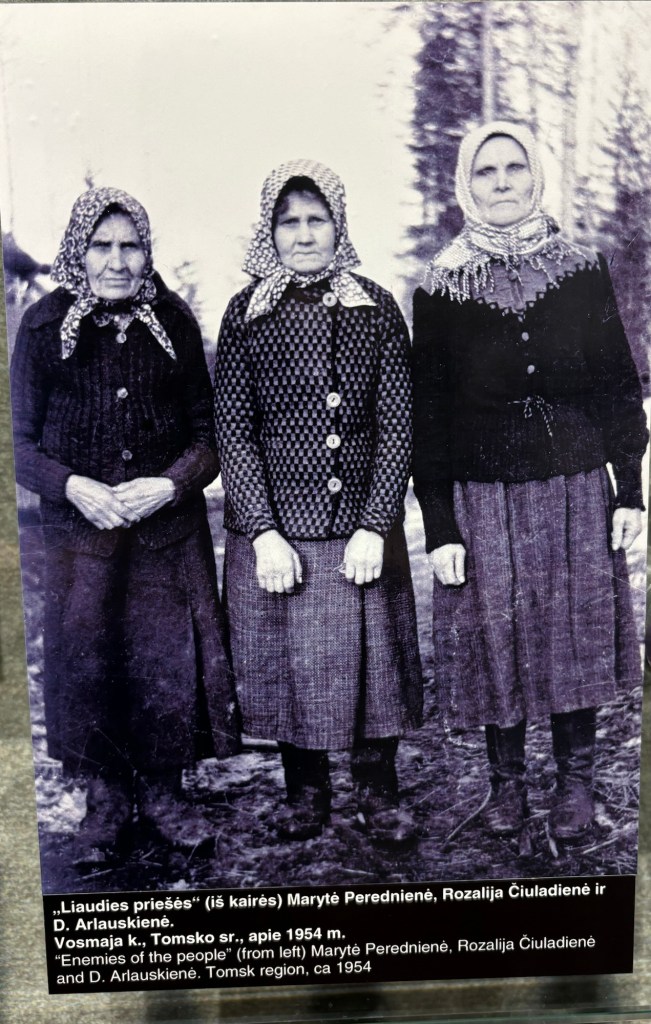
There are so many stories of people who were arrested and deported. Check out these three “enemies of the people” below….. seriously…. it’s hard to read a lot of this stuff..
One of the rooms displayed many of the freedom fighters – a lot of whom were women and there are a lot of disturbing photos of dead freedom fighters on view.

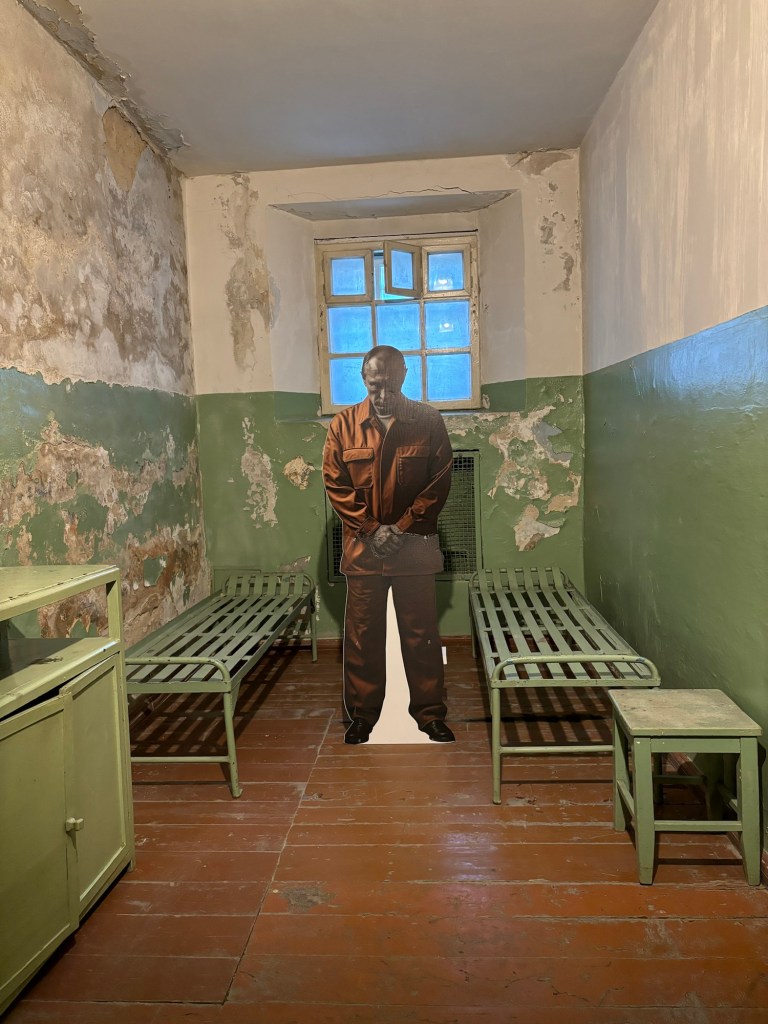
It’s a big building with a lot more in the basement than we were expecting. We look in the cells that housed so many prisoners over many years.
Coming outside, the weather is sunny and there’s a lovely park with fountains and just beyond another massive church… good for the soul after engaging with all the tragic history.
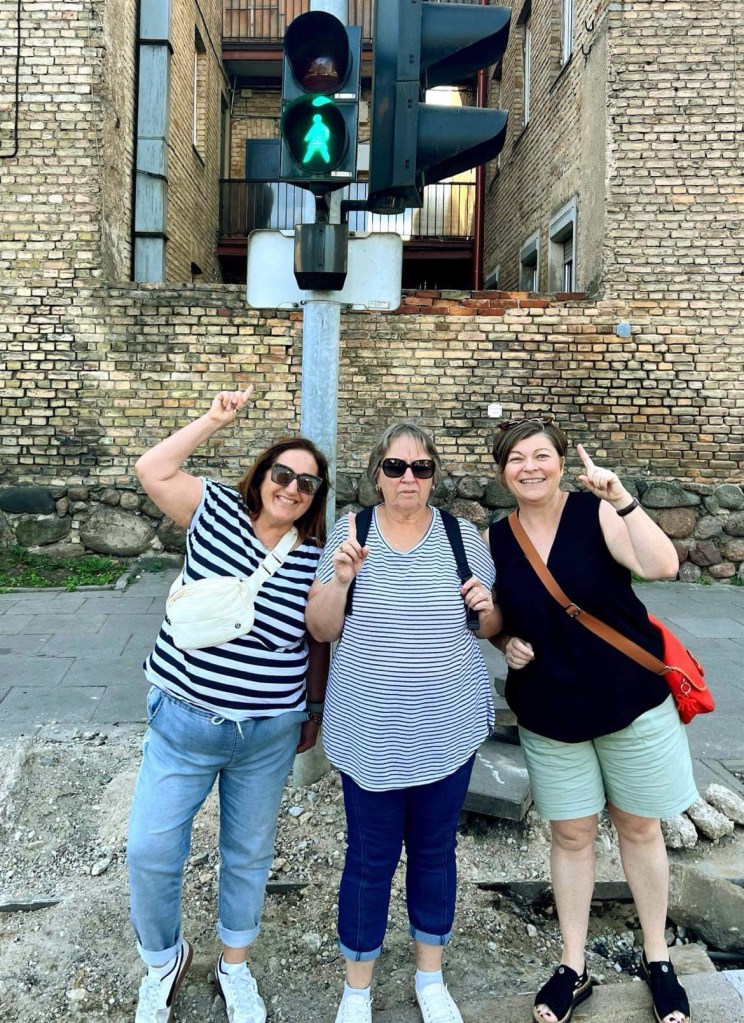
We continue exploring and walk over the river to find the traffic lights that don’t have a green man but have a green lady.
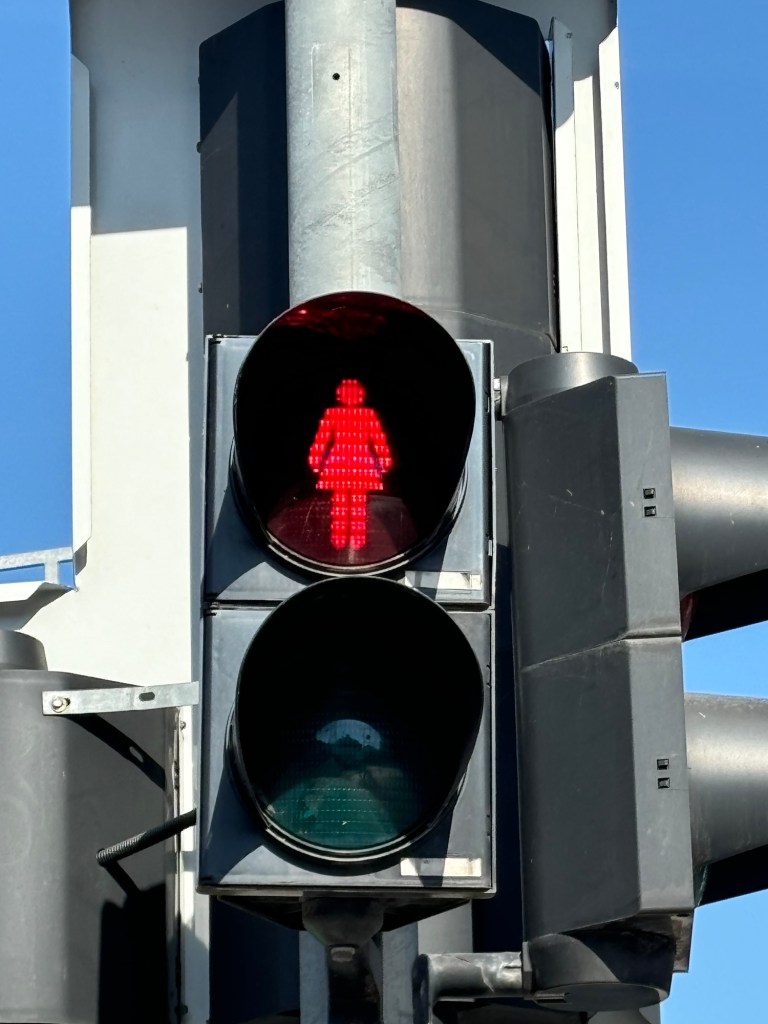
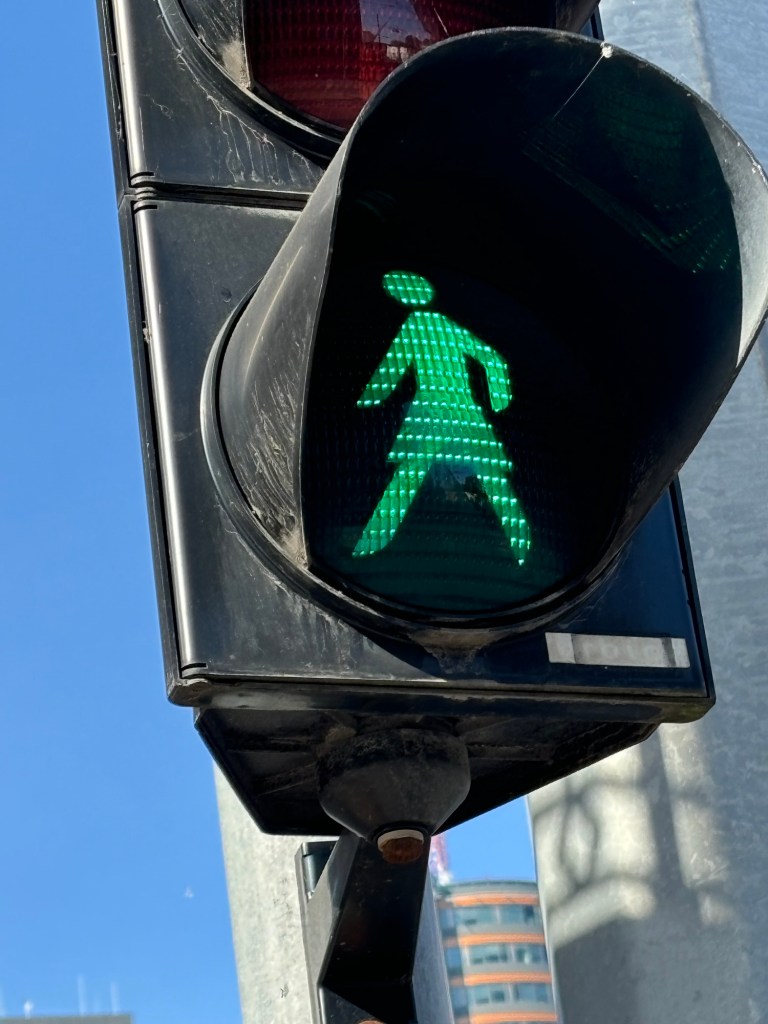
We ladies are very excited to see the green and red lady… well two out of three ain’t bad!! 🤣🤣
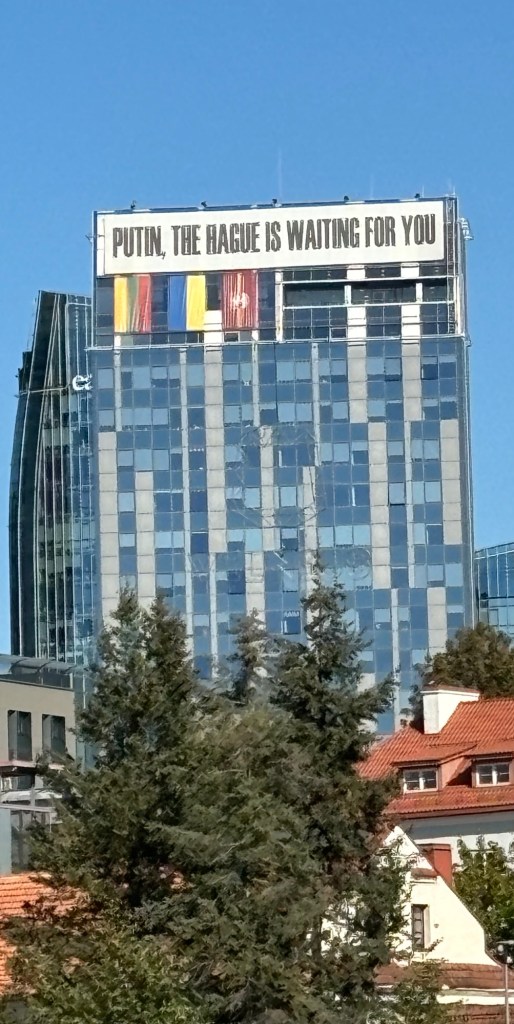
As we head for the river we spot this sign on a high rise building….. interesting.
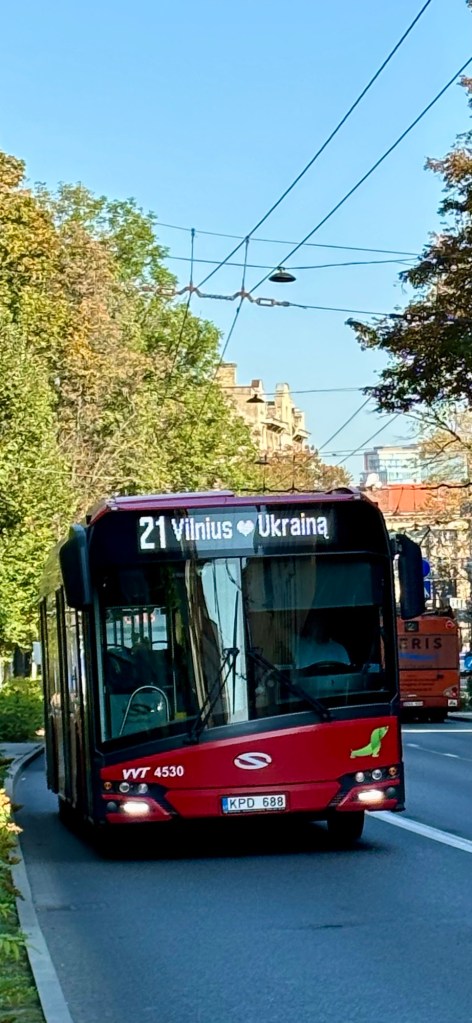
And all the buses have this on their display …
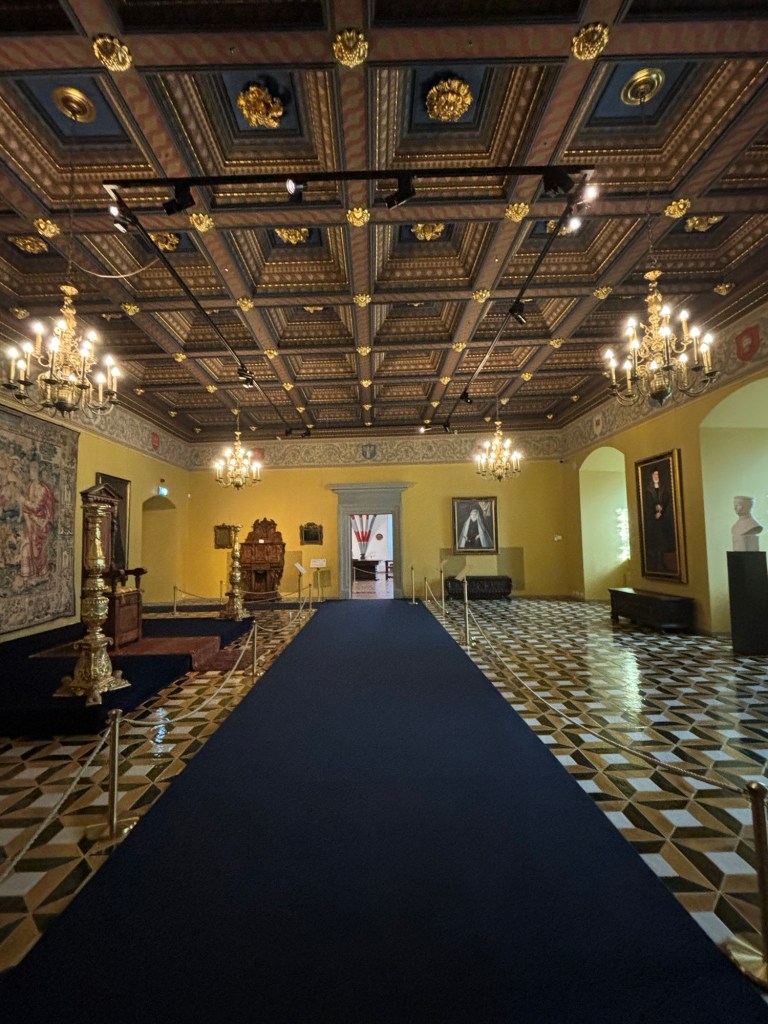
For lunch, we check out a Georgian restaurant in the food court of a nearby shopping mall. We have dumplings and salad and cheesy bread with a fried egg (I’m looking forward to eating this in Georgia at some point). After lunch it’s time to head back to the main square and visit the Grand Dukes palace. This is a huge museum and after doing a bit of research we establish that of the 4 routes you can do we are going to buy a ticket for route 1 which will take us through the rooms of the palace when it was a royal residence.

This was home to Sigismund Augustus who we learned about last night during our catacombs tour – he was the guy who had the ugly and the beautiful wife!! We get to see paintings of them and it’s pretty obvious which was which!!

The palace was built by Sigismund Augustus parents in the 15th century. There’s an interesting mix of history to read and rooms to view. There’s a massive family tree on the wall which is mind boggling but we do spot Bona Sforza and figure out the lineage, although I can’t remember it now and I’m sure you’re not all that interested! 🤣
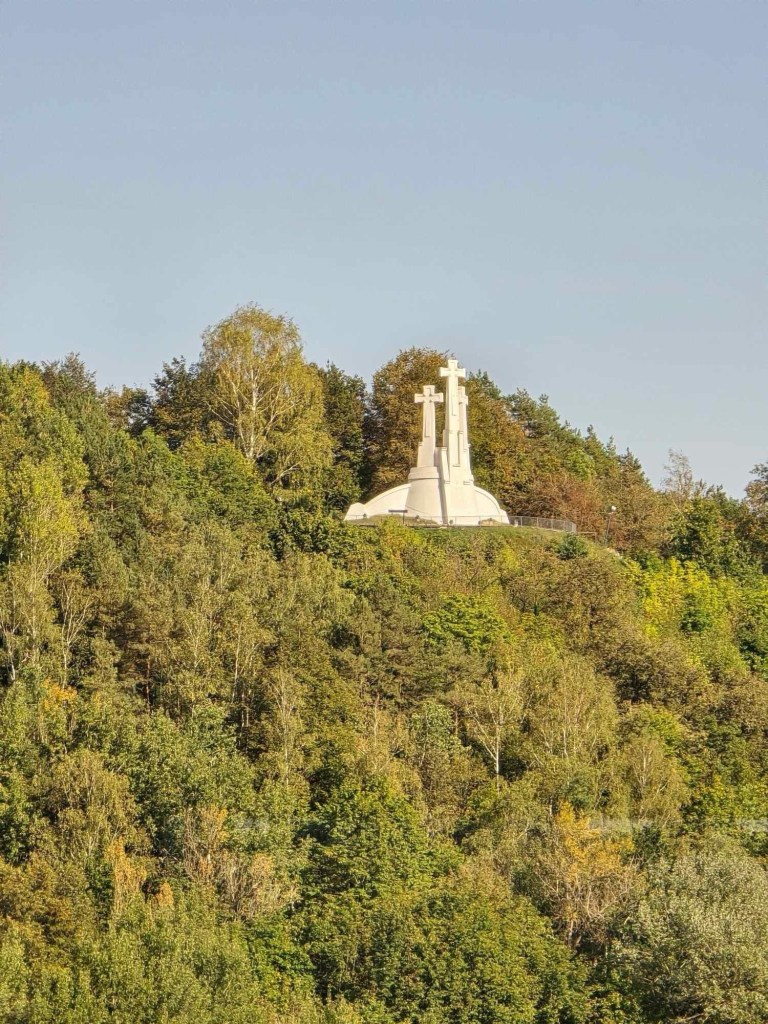
On the 6th floor we get some nice views of castle hill and the 3 crosses.
We make our way back to the apartment and I put my feet up with a cup of tea. Everyone is having a little rest but I’m not feeling so tired so I sneak out for a last look at some of the churches close by. I start with the Church of St Teresa. Mass has just started so I sit and listen for a few minutes while admiring the large church.
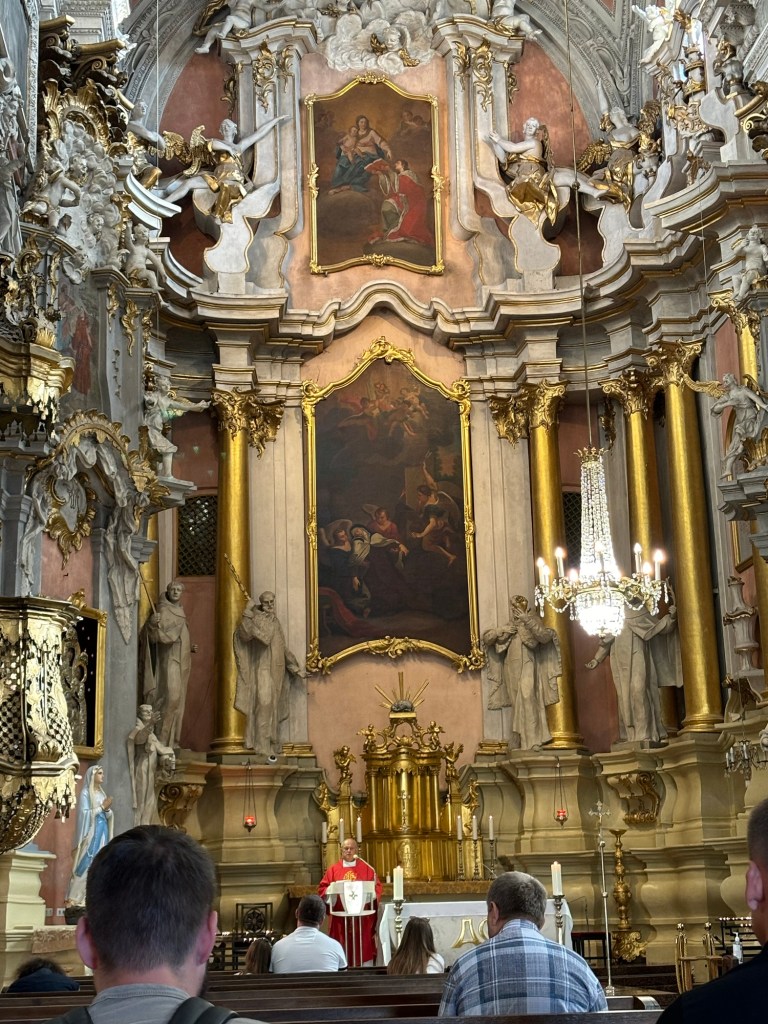
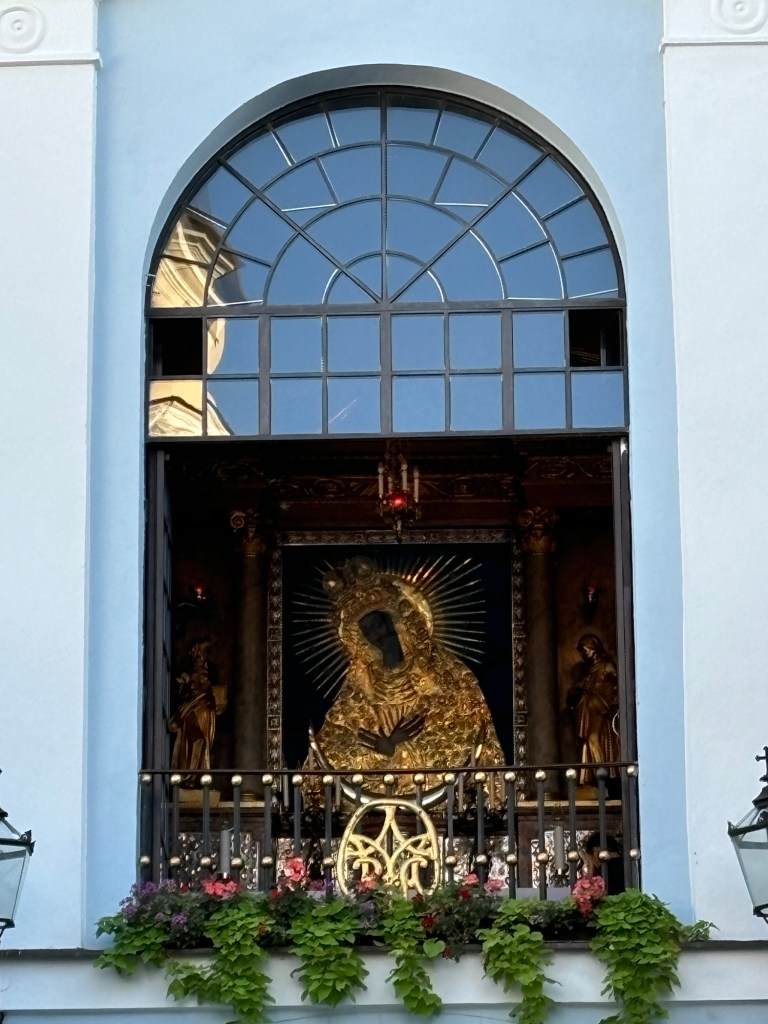
Part of St Teresa’s and placed above The Gates of Dawn is the chapel of Our Lady Mother of Mercy which houses the famous Renaissance painting of the Virgin Mary painted in the early 17th century. The painting is covered in a silver gilt setting and is believed to be miraculous. Pope John Paul Il prayed here in 1993, and Pope Francis in 2018.
Opposite our apartment is the Orthodox Church of the Holy Spirit and Monastery which has a distinctive architecture. In the 16th century a wooden church was built here with a school beside it. A Baroque church in the shape of a Latin cross was built in 1638 after which, having suffered a number of (you guessed it!) fires, it was rebuilt in the late 18th century.
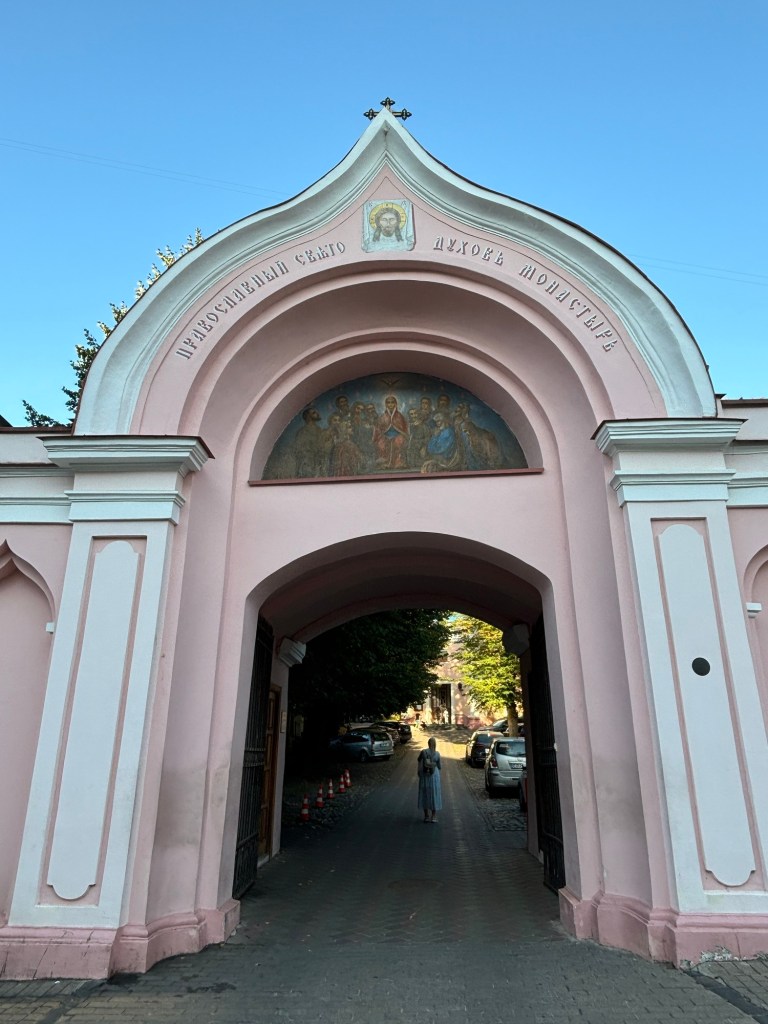
As I approach the church I can hear singing so I stand in the doorway to watch the service. All the women I see have headscarves so I don’t want to go inside without one in case it’s a massive boo boo. It’s a fascinating service. The music is beautiful and the priests are all in their finery.
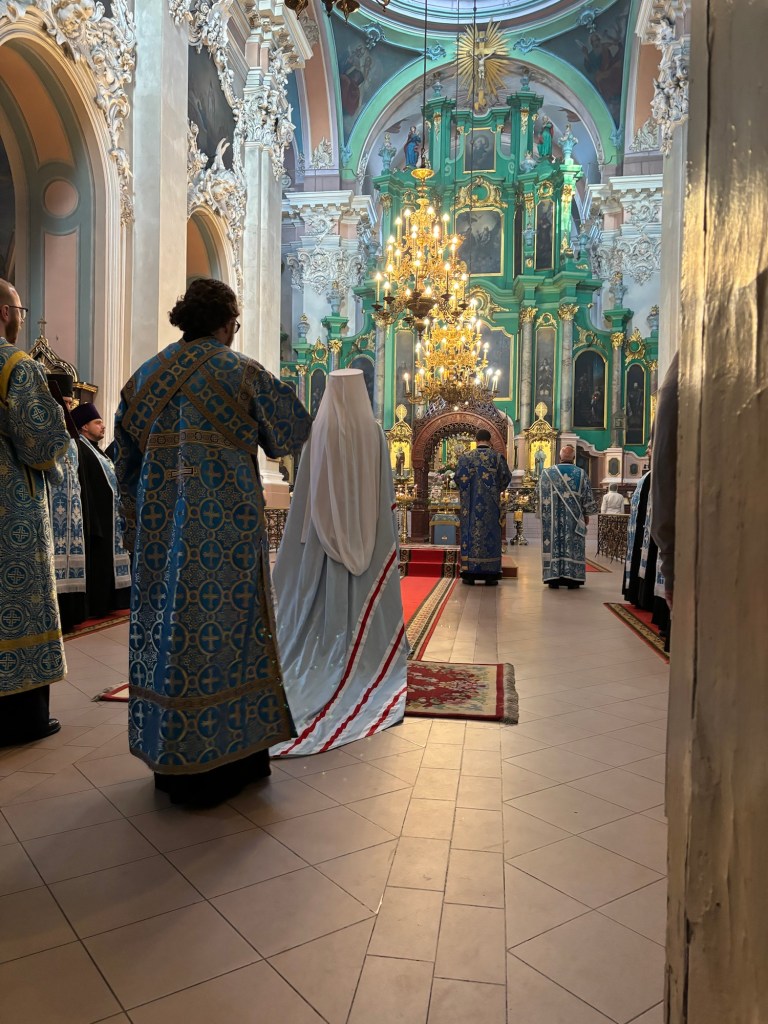
I assume this is the high priest with the veil! I stay and watch for about twenty minutes as I’m fascinated by what’s going on. I’ve never seen a full ceremony like this before. I shouldn’t be taking photos but I take a sneaky bit of footage after I see one of the priests (at the back in blue) check his iPhone for messages and the other one take a photo of the big kahuna and his veil… bizarre!! Also one of the ladies wearing a headscarf and blessing herself multiple times whips out her phone and takes a few photos too!!
At the back of our apartment is the entryway to another church and monastery – The Holy Trinity. When I walk into the church I get a bit of a shock as it is under renovation and it looks like I shouldn’t be in here! As I look toward the alter it looks suspiciously like an Orthodox Church but then I look up on the wall and there’s a picture of Pope John Paul II! I’m confused.
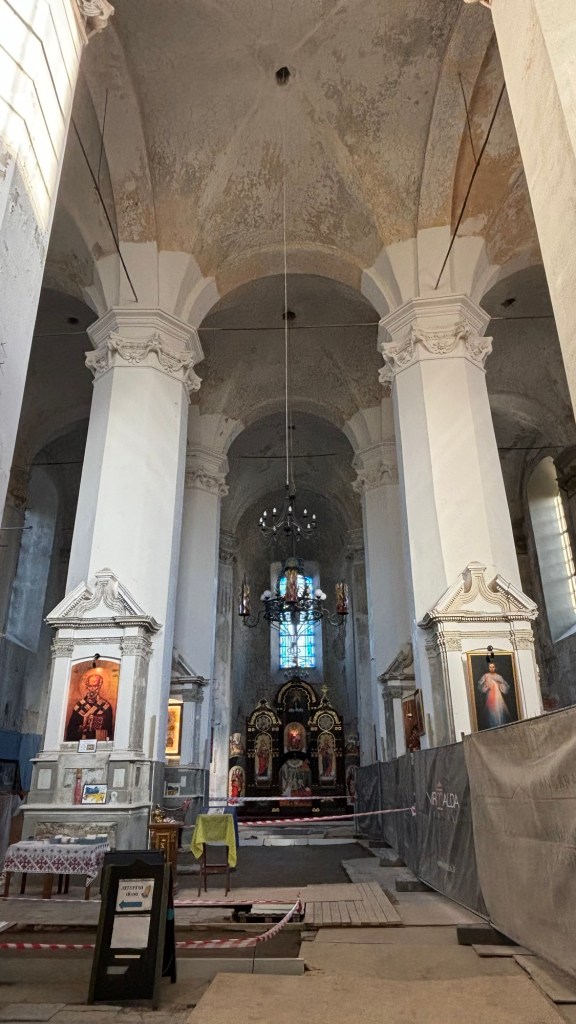
Outside I find a plaque in English and all is revealed. In 1595-1596, a church union between the Orthodox and the Roman Catholics of the Polish-Lithuanian Commonwealth was announced in Rome. This union created a new Christian denomination, the Greek-Rite Catholic, or Unitarian, Church, which recognized the jurisdiction of the Holy See in Rome, but followed the rites of the Eastern Church.
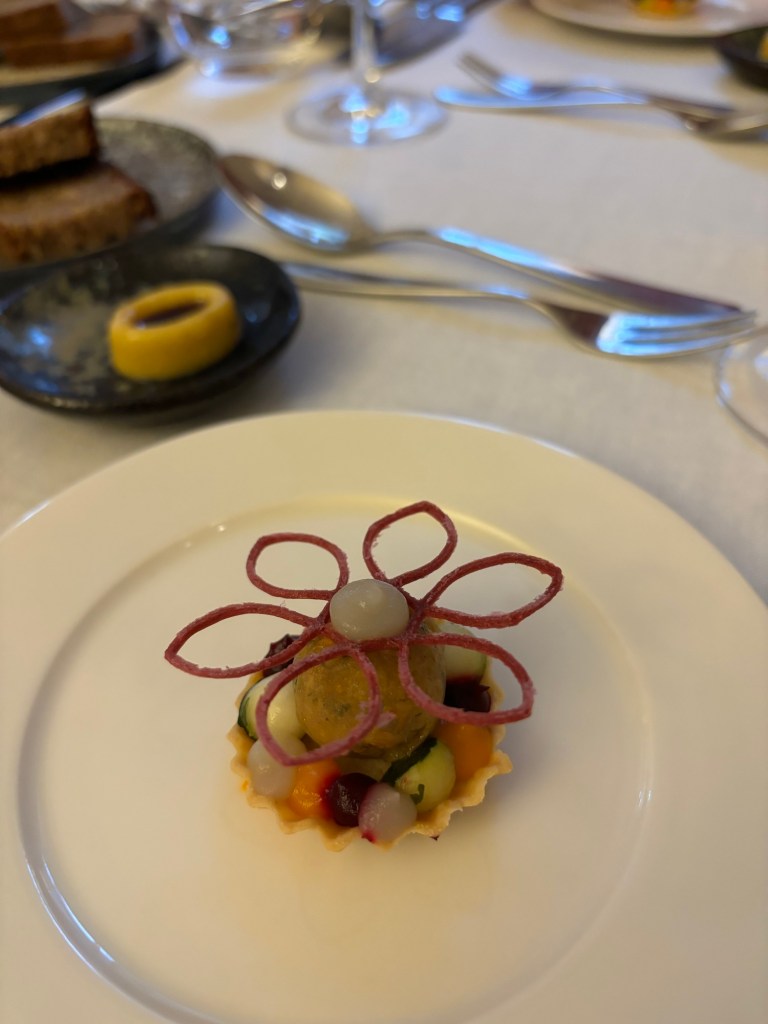
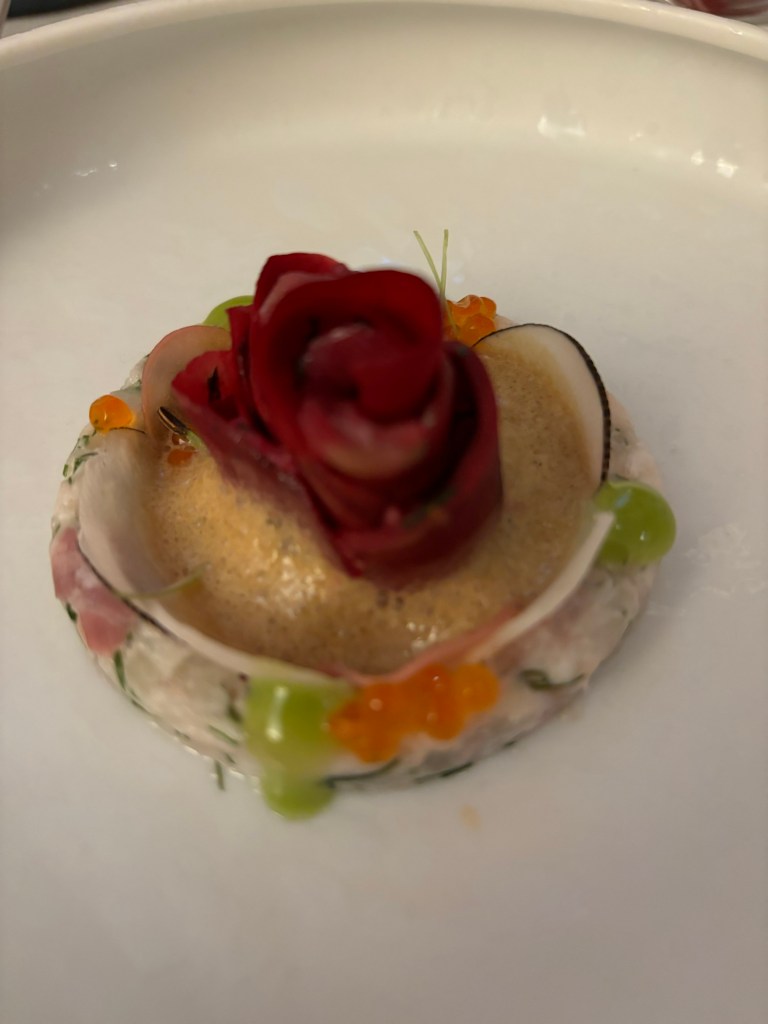
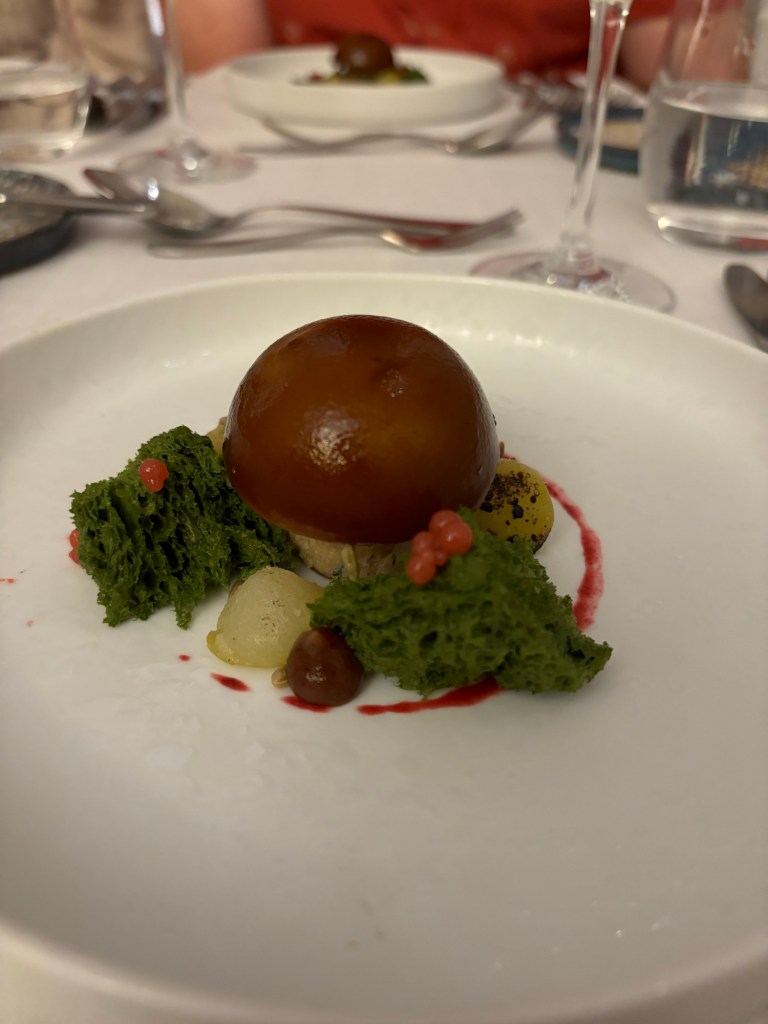
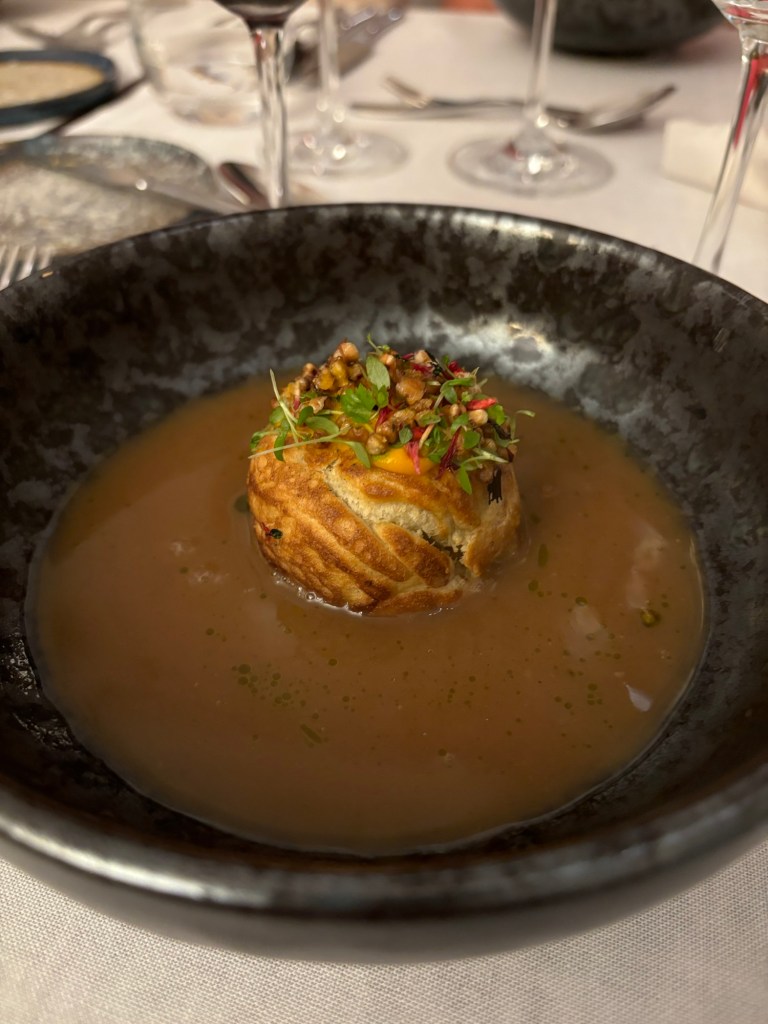
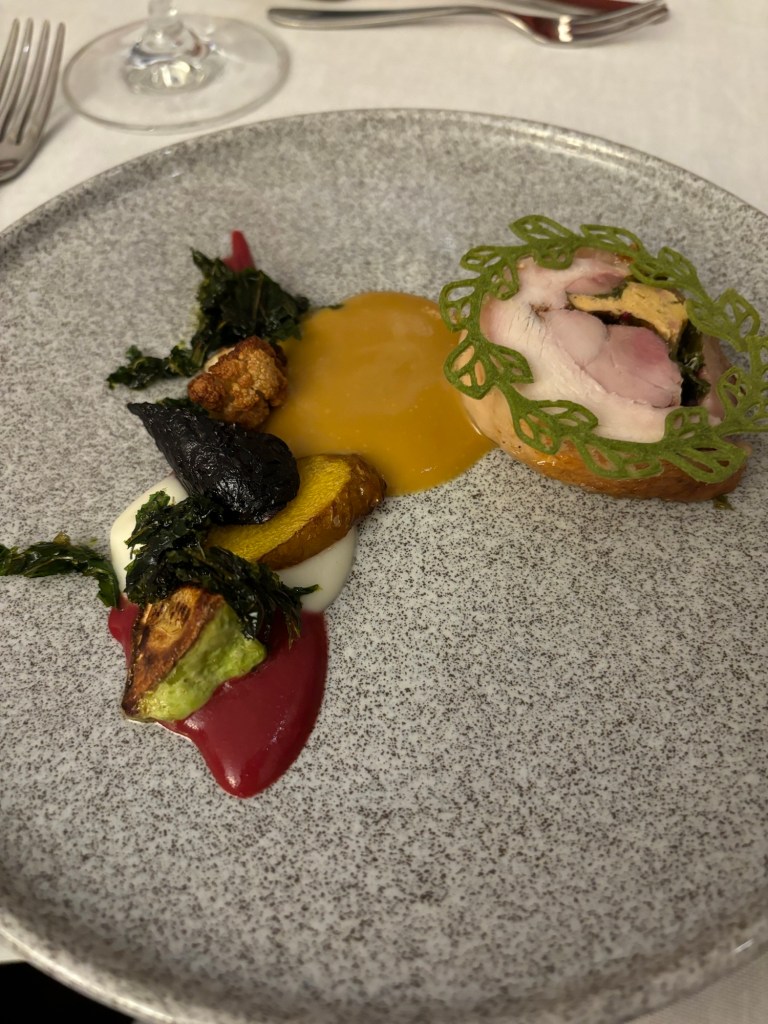
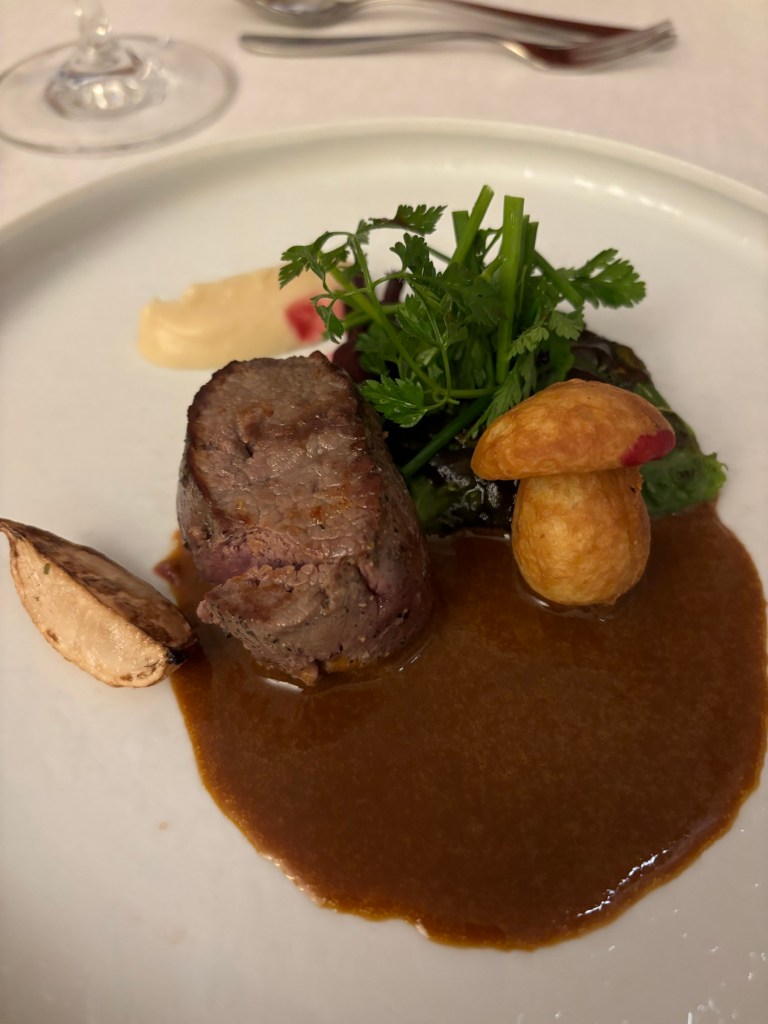
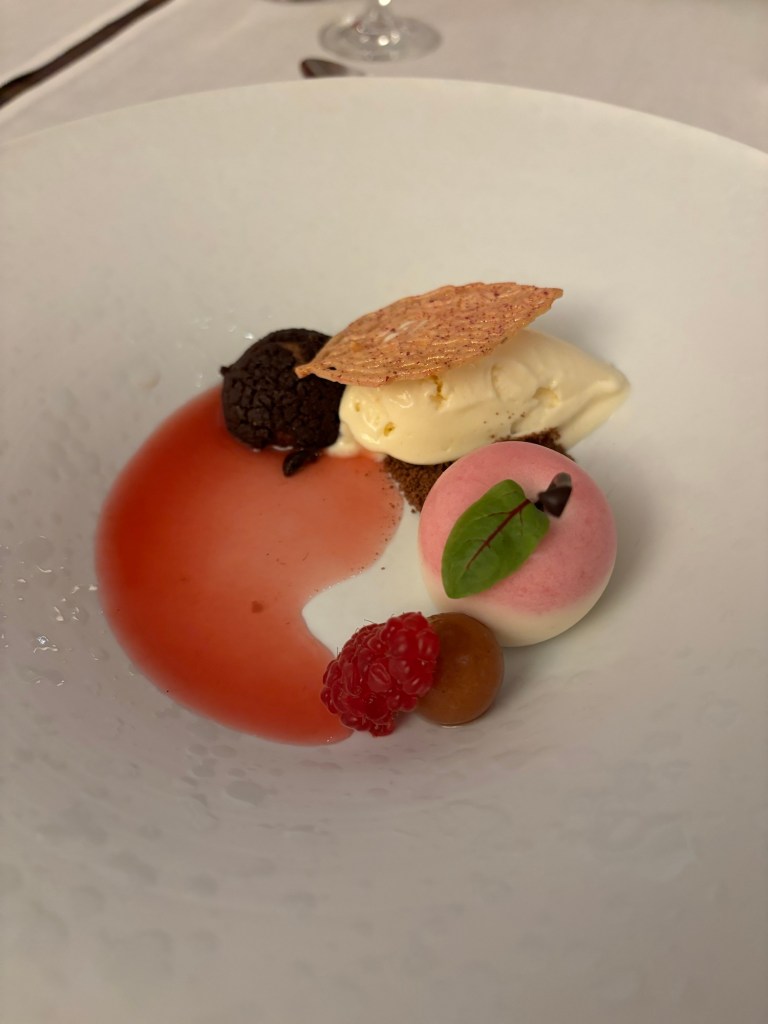
It’s time to get ready for our final meal of the holiday. We have a reservation at Ertlio Namas which is a fine dining restaurant where we’ll have the 6 course tasting menu. It’s three and a quarter hours of delicious food and excellent wine!
Next morning we’re up early for our flight to Finland where I’ll say goodbye to himself and head home to Dublin.
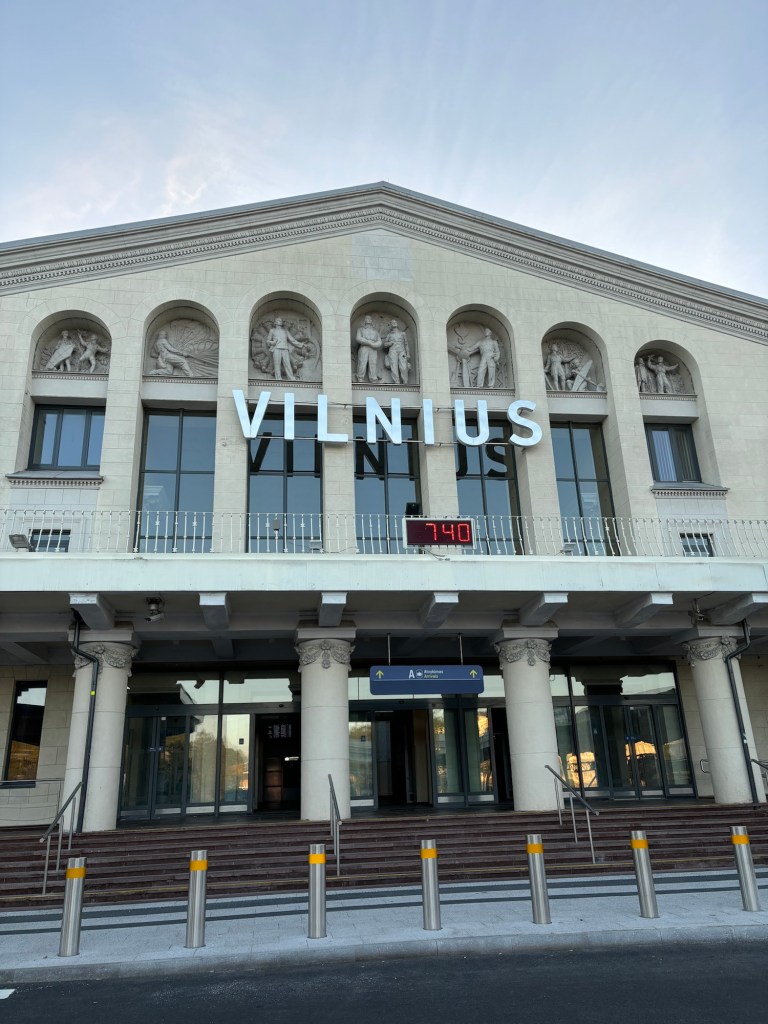
Goodbye Baltic countries, you have been extremely interesting to visit and I would happily come back one day.

 odohertyelaine