
The ferry journey from Helsinki to Tallinn, the capital of Estonia is a pleasant couple of hours. We booked in for breakfast which has an impressive buffet including herring and other Baltic delights!
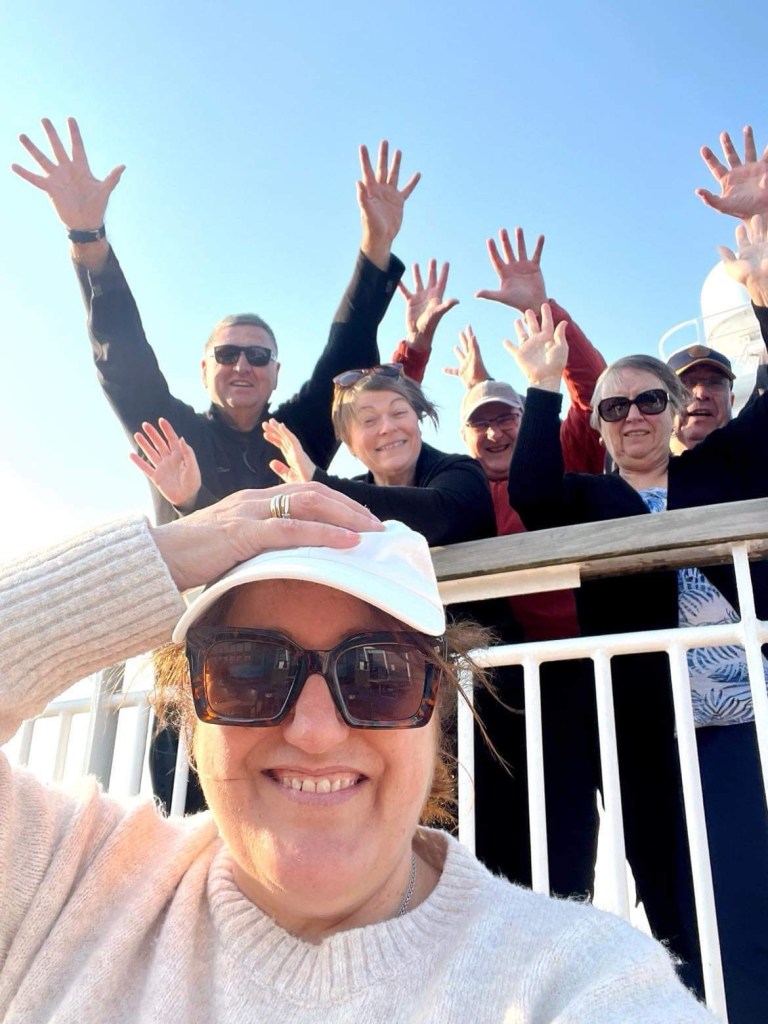
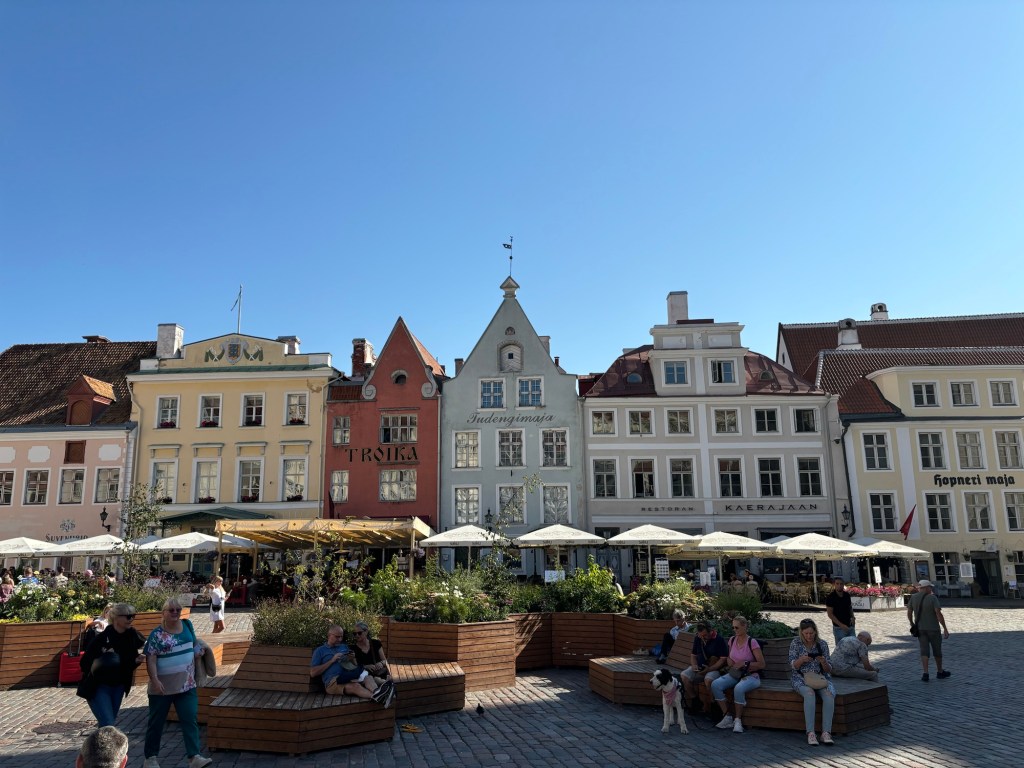
We take a taxi from the ferry building just a short distance to our apartment which is in the old town. It’s a lovely three bedroom apartment on the fourth floor and really well located close to town Square. We drop our bags and take a walk to the square just around the corner.
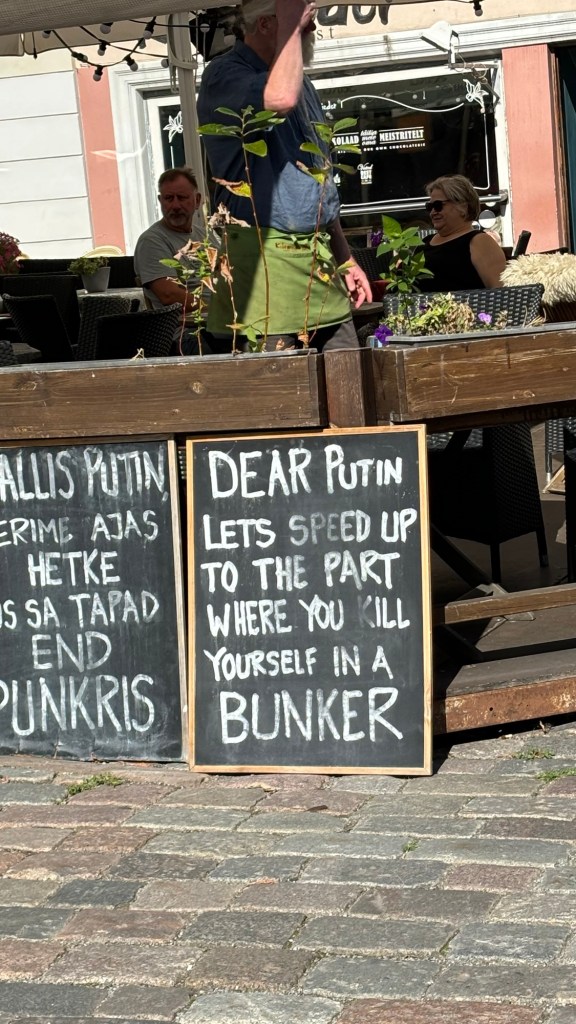
One of the first things that catches my eye, well except for the beautiful old buildings all around, is a sign outside of Mad Murphy’s (you guessed it an Irish bar!). That certainly sets the tone.
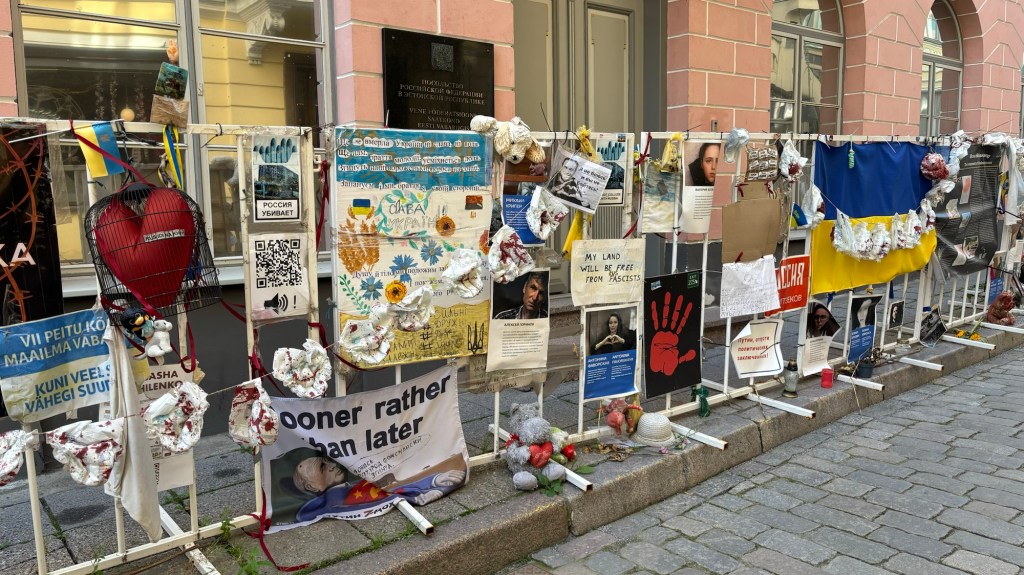
There are obviously some very strong feelings toward the Russian neighbours here and as we continue our walk, we happen upon the Russian embassy where there is a permanent guard on duty and the following material outside.
There are a lot of really interesting buildings on the streets surrounding the square which is the lower part of the old town.
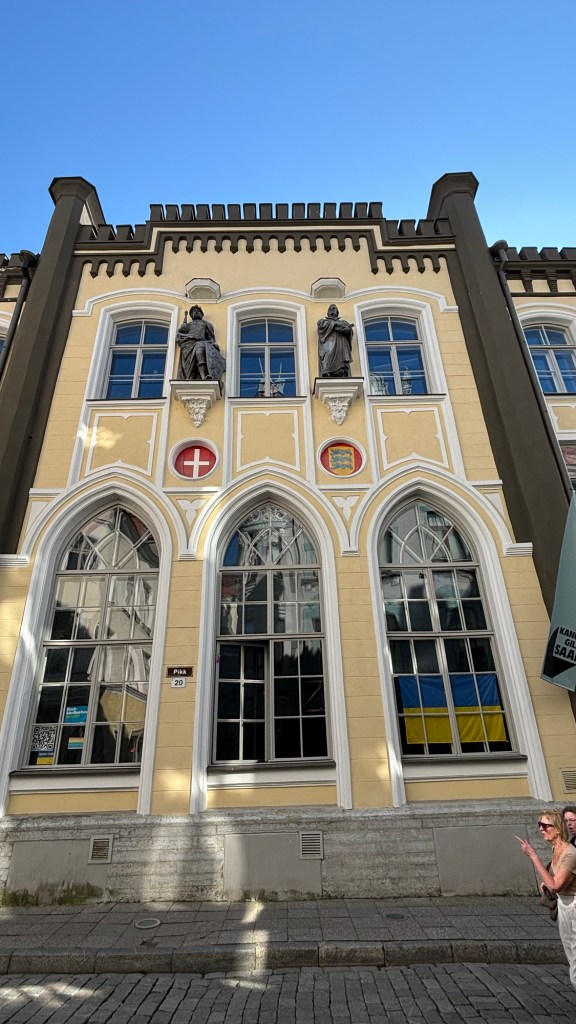
The whole town is UNESCO listed and most buildings have a plaque which gives you the history of the building. There are lots of ornate medieval doors too.
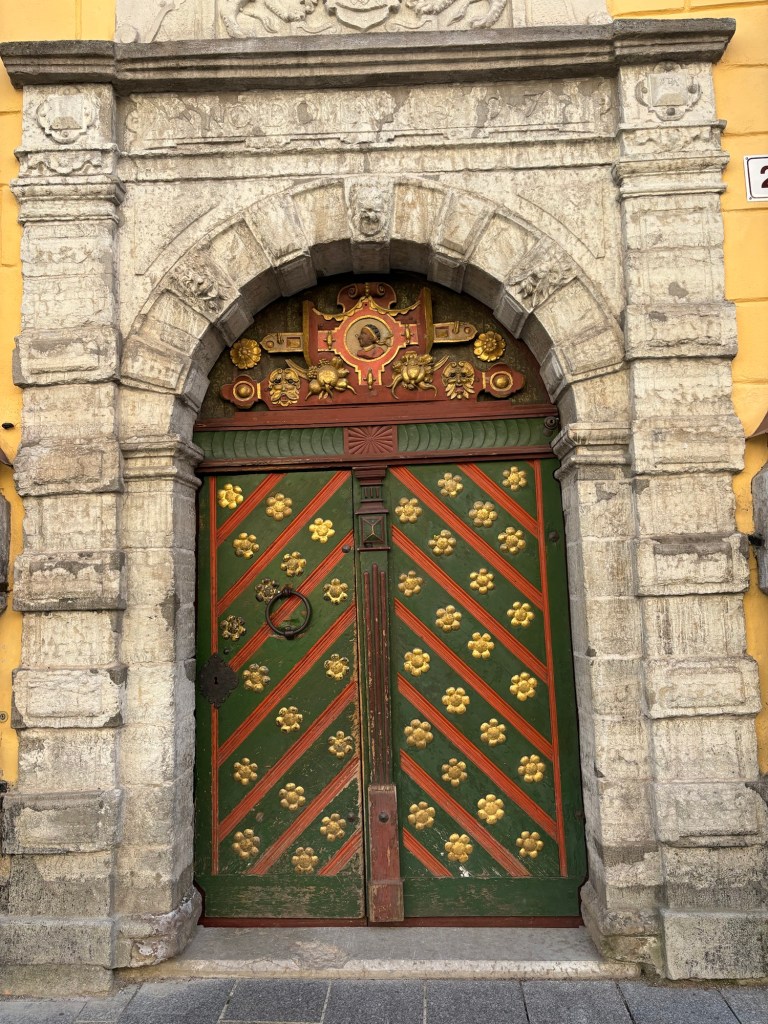
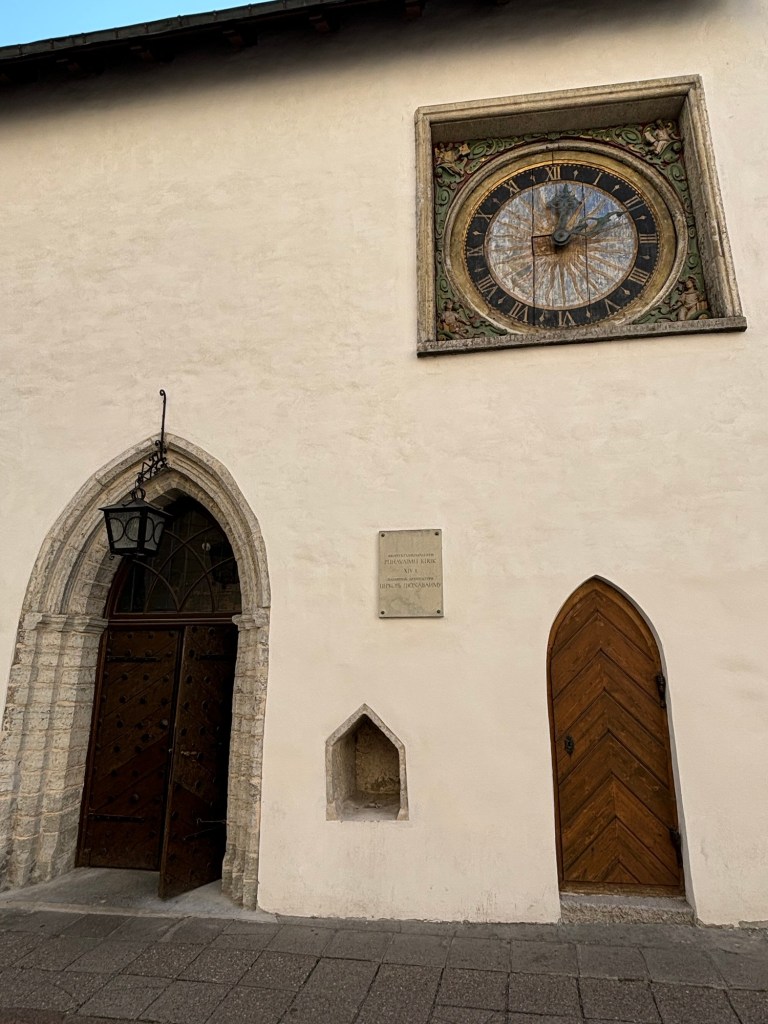
We stop for some refreshments in an outdoor cafe and then continue exploring the town. The church of the Holy Spirit is from the 13th century and is considered one of the most beautiful churches in Talinn. It has the oldest clock.
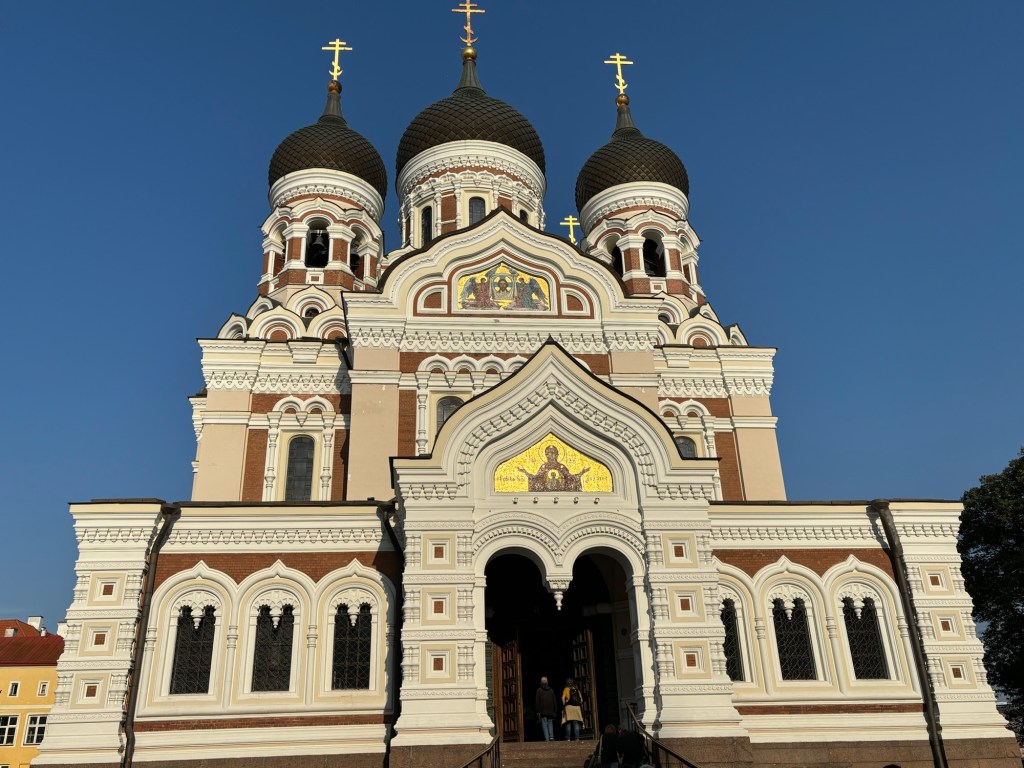
Moving to the upper old town we climb the hill to Tompea and admire the highlight – Alexander Nevsky Eastern Orthodox Cathedral. It was built between 1894 and 1900 when Estonia was part of the former Russian empire. It is stunning from every angle. We go inside (no photos inside) and it’s quite small but full of icons and extremely ornate.
Opposite the Nevsky church is the Tompea castle which is now the seat of the parliament of Estonia.
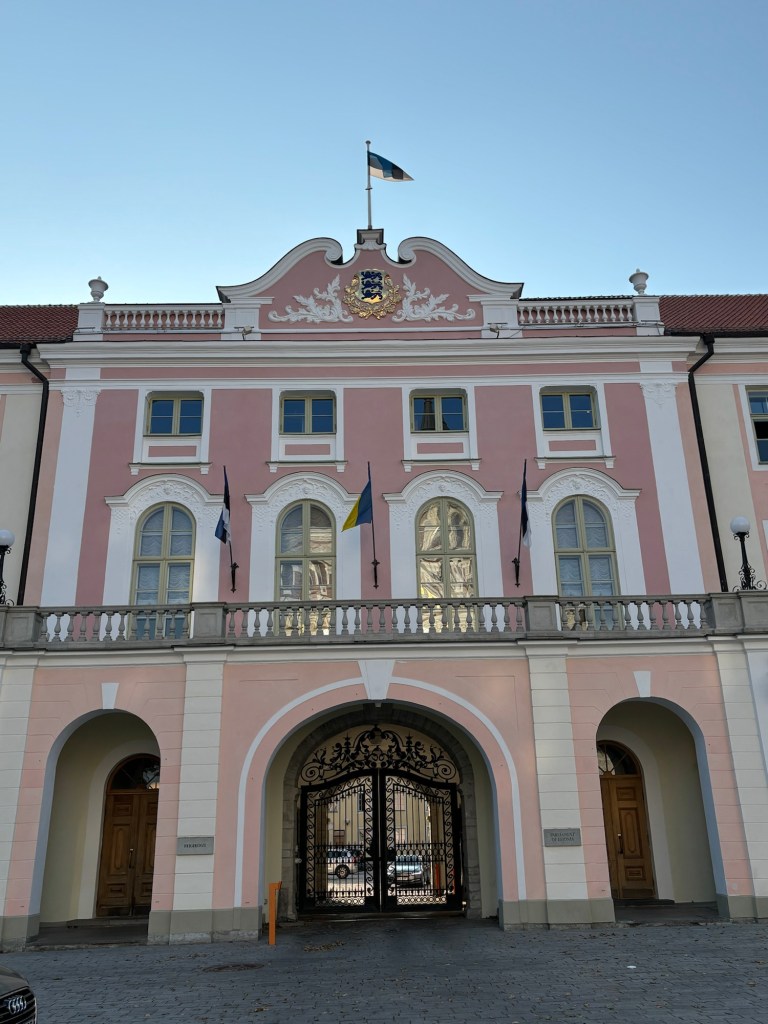
We continue climbing the hill and the narrow cobbled streets.
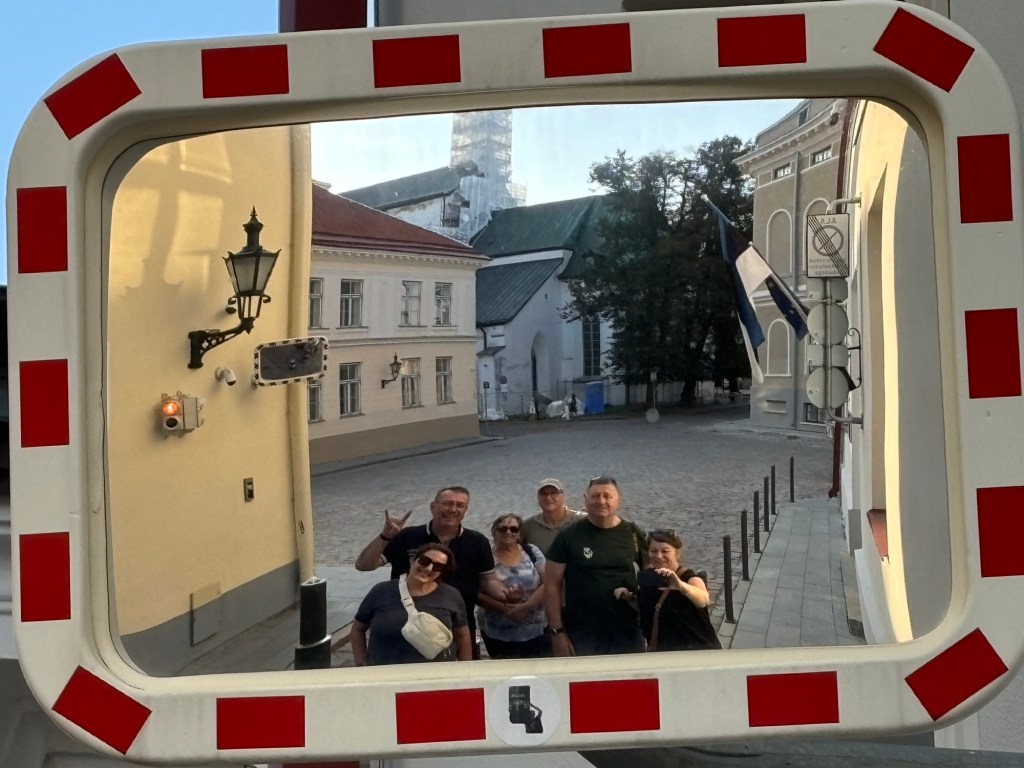
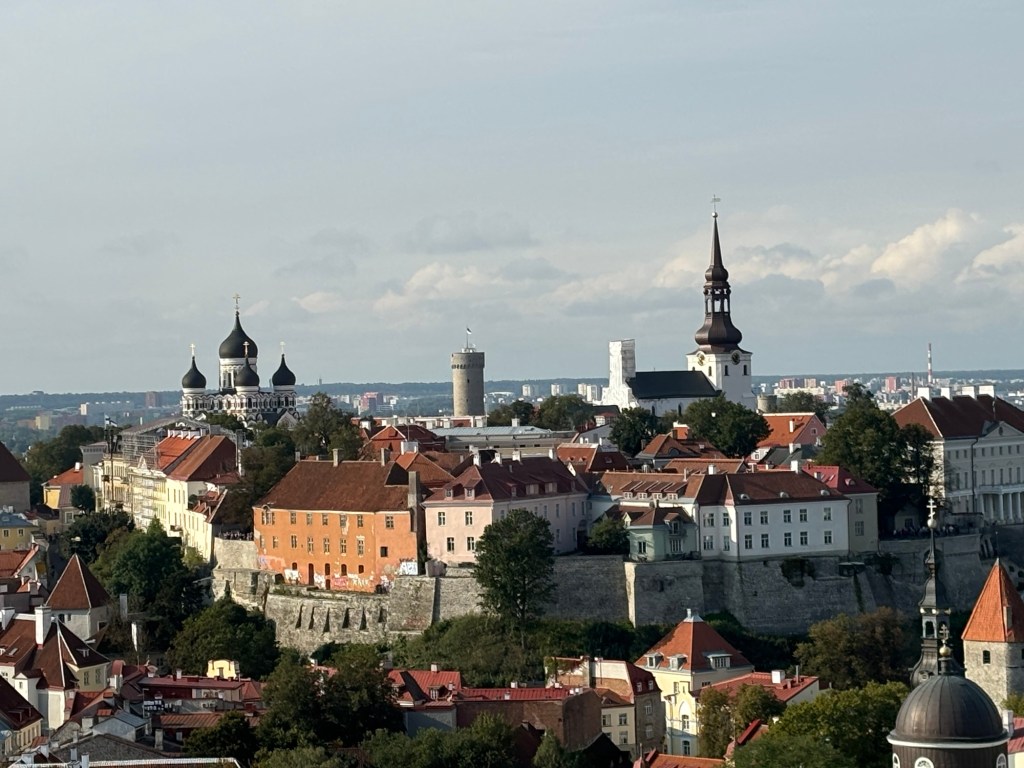
At the top there are a couple of viewpoints where we see the iconic view of the city.
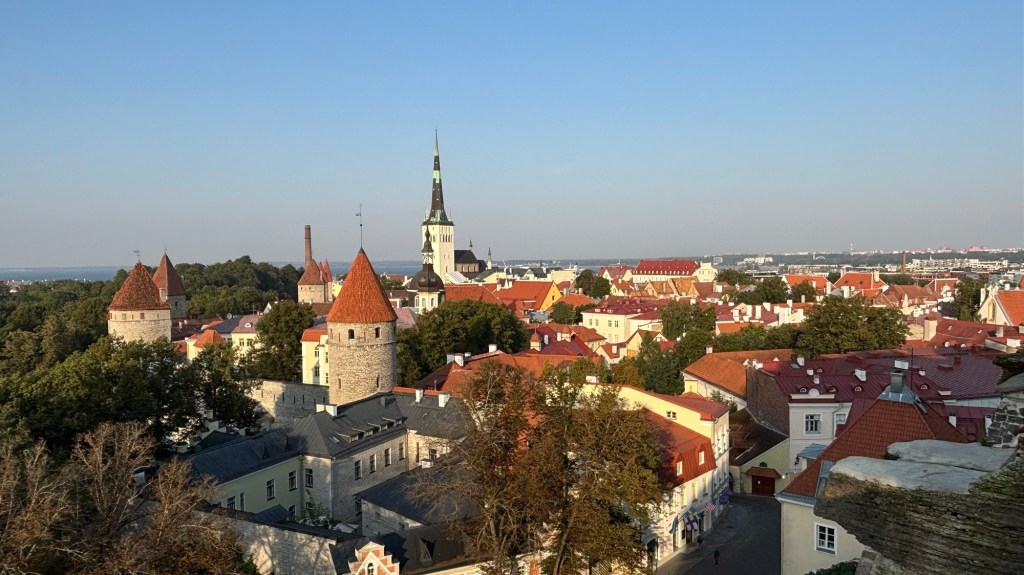
A different and maybe even better view at the next viewing point

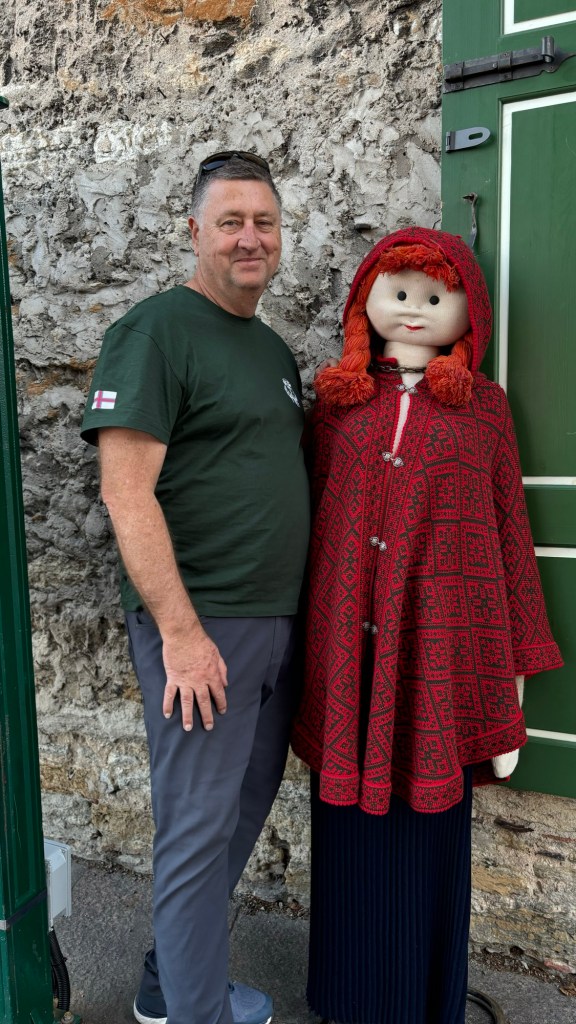
Shane with my mate Margi who we were surprised to bump into! 😍
We walk down the hill and see the old walls of the city….
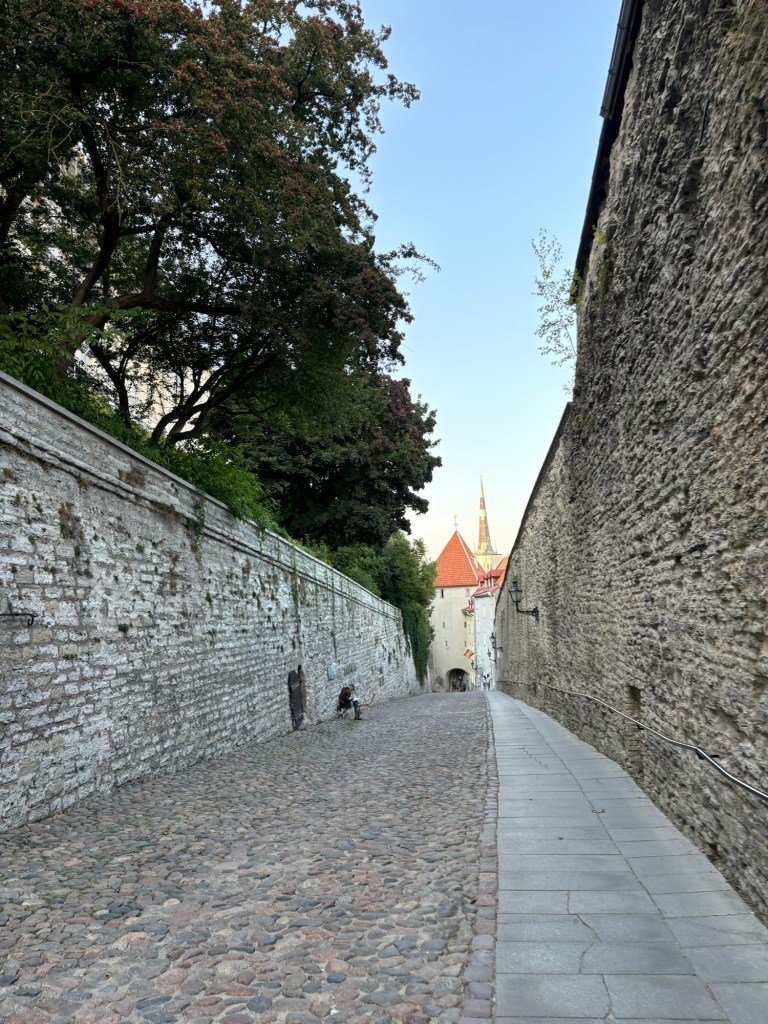
We are heading to a bar, not just any bar, a very special bar that I’m very excited about!
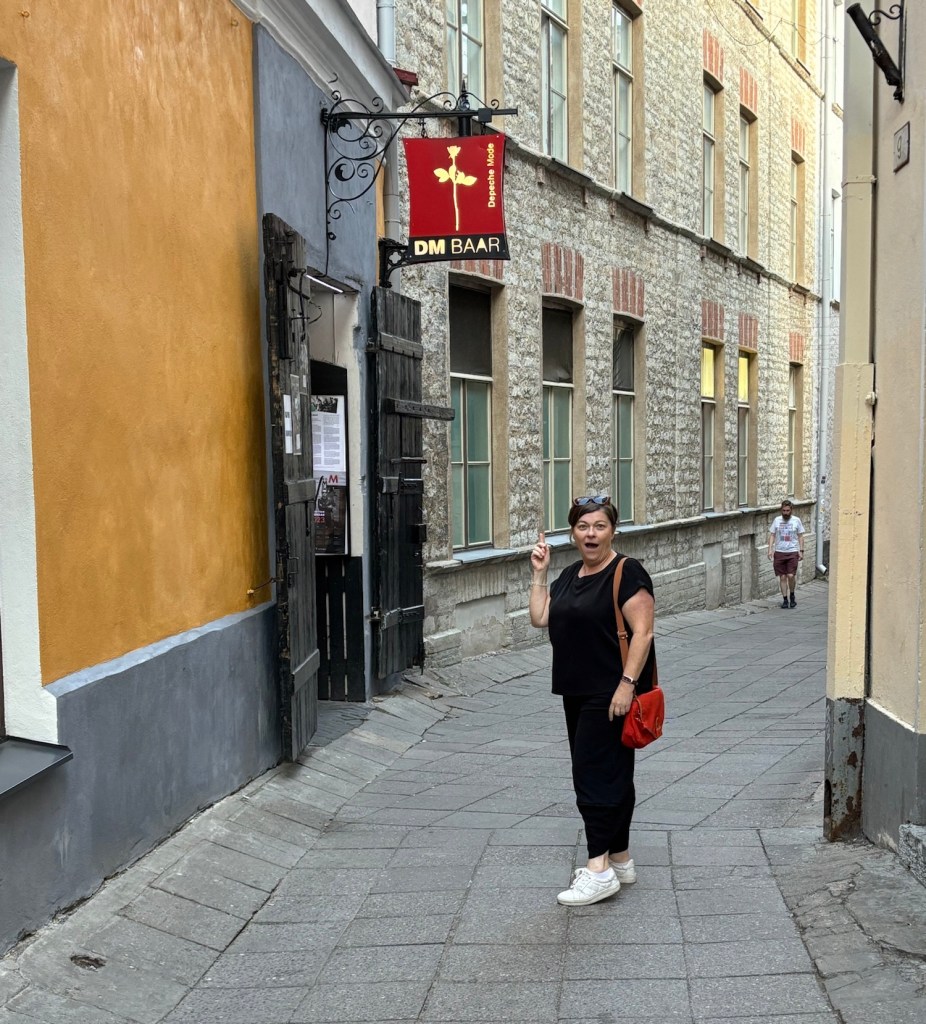
In the ex-Soviet states, Depeche Mode are apparently bigger than the map on Mikhail Gorbachev’s head. 🤣 This may explain the DM bar! Set up by a hardcore fan in 1999, the bar is festooned with Violator red flowers and serves cocktails with names like ‘just can’t get enough’ and ‘master and servant’. I am so excited to visit this really cool bar. In fairness to the gang, they stay way longer than I would’ve expected and we enjoy a full live concert on the big screen. We are treated to some old tunes that bring back quite a few memories..
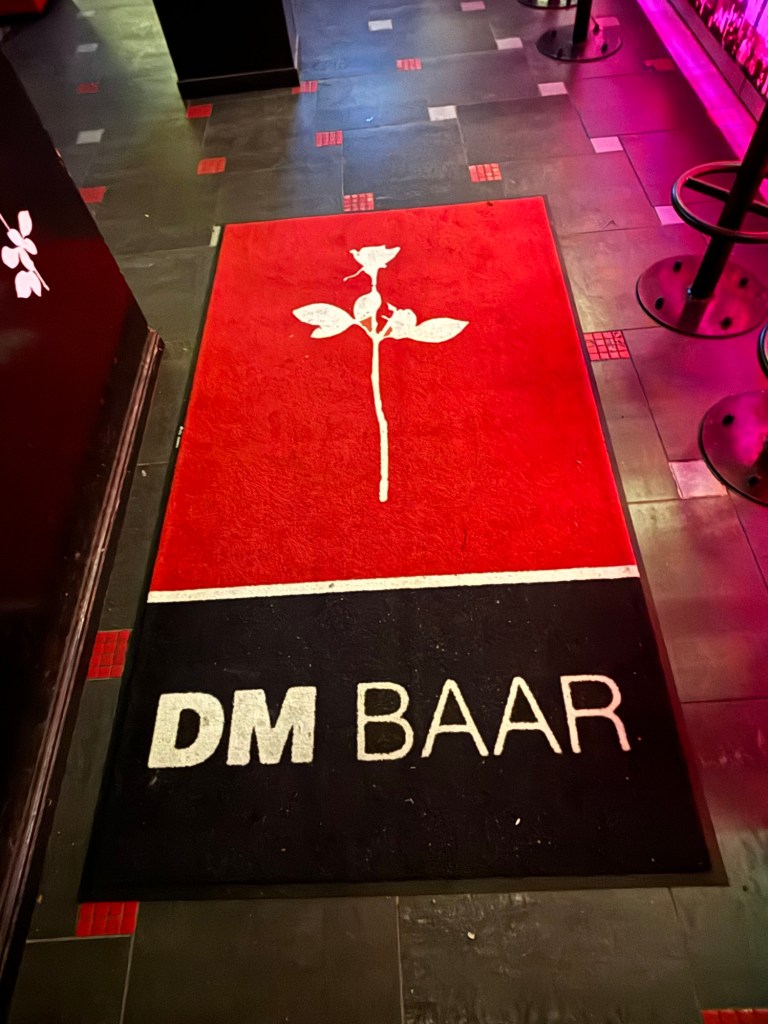
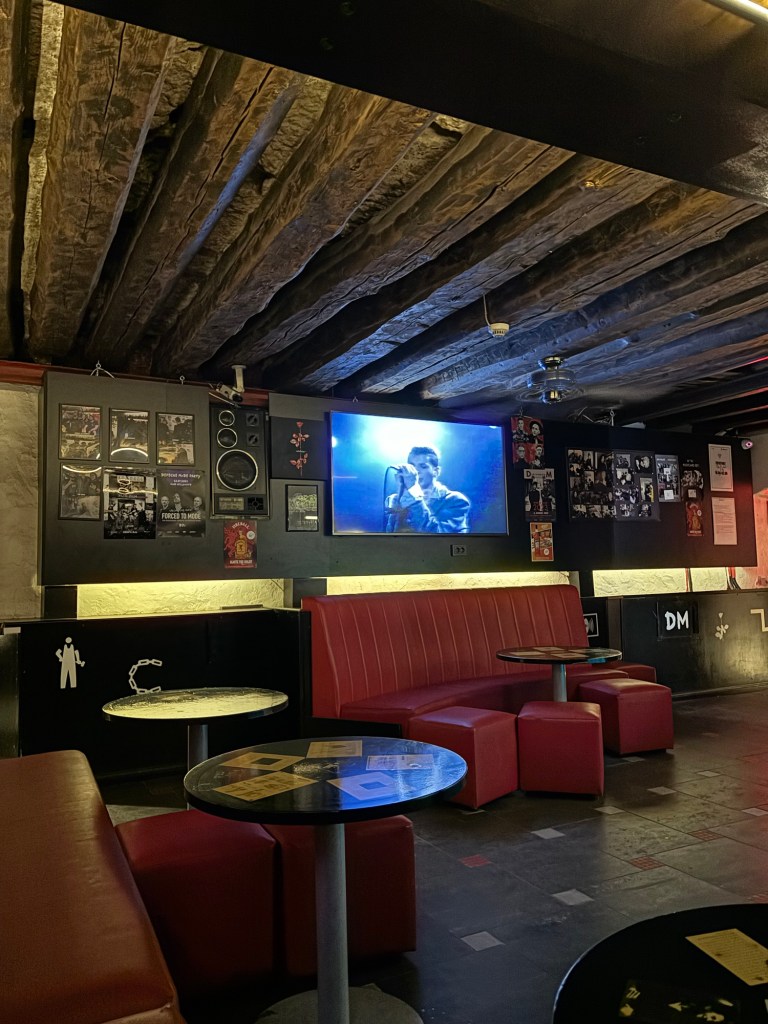
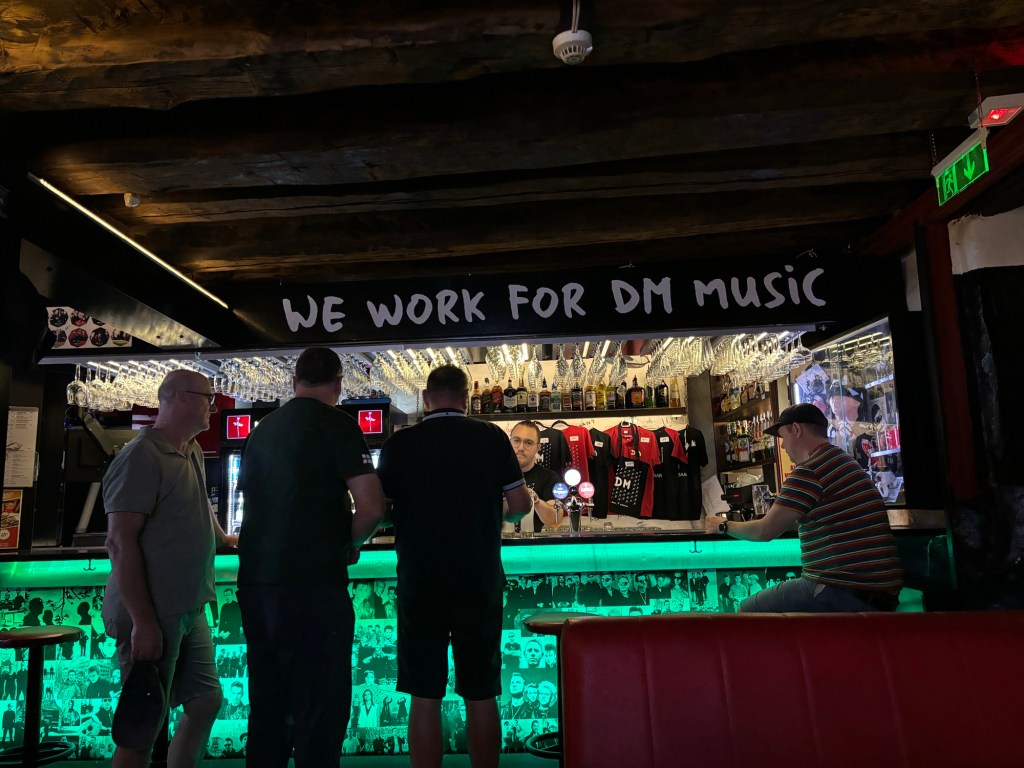
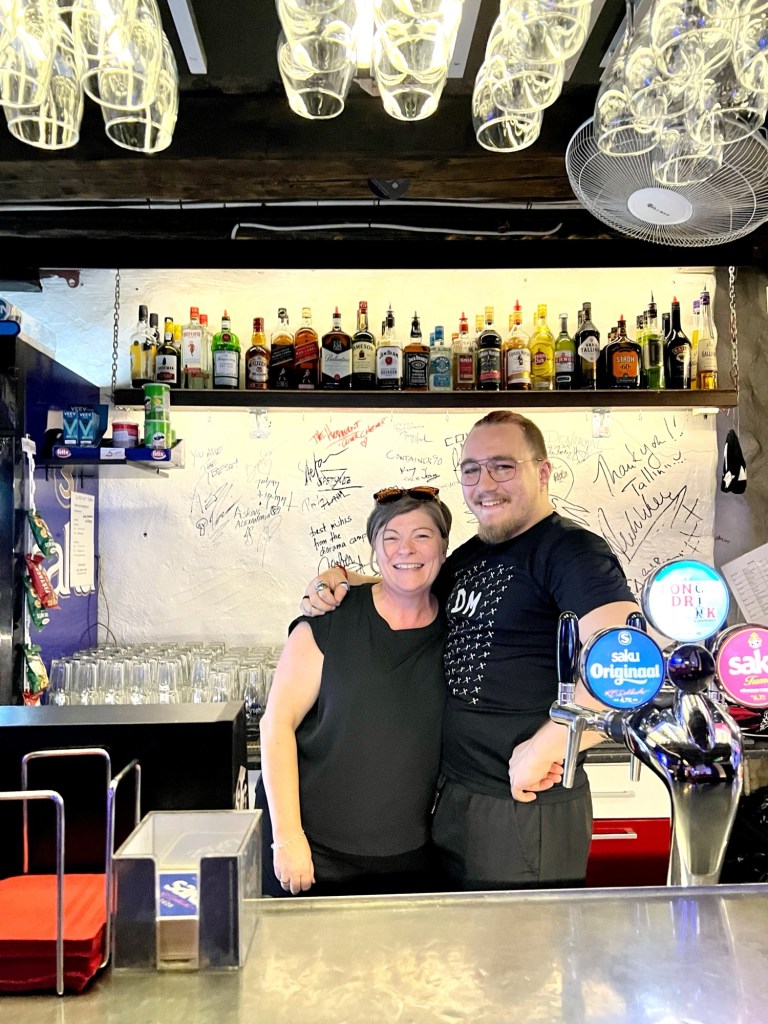
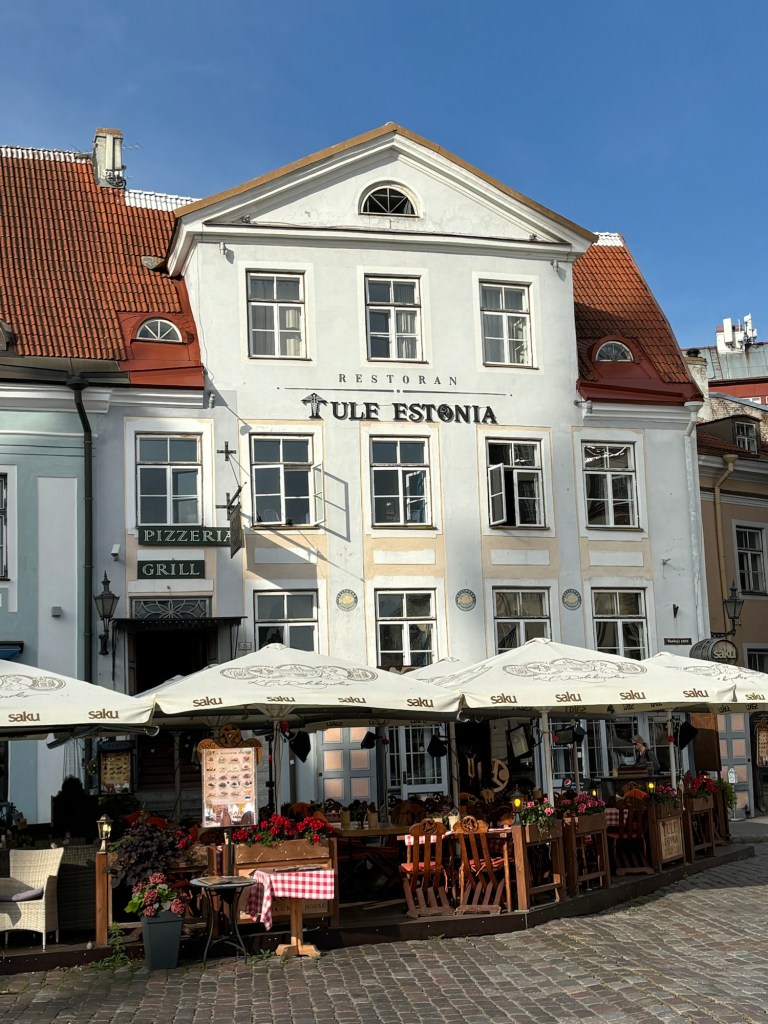
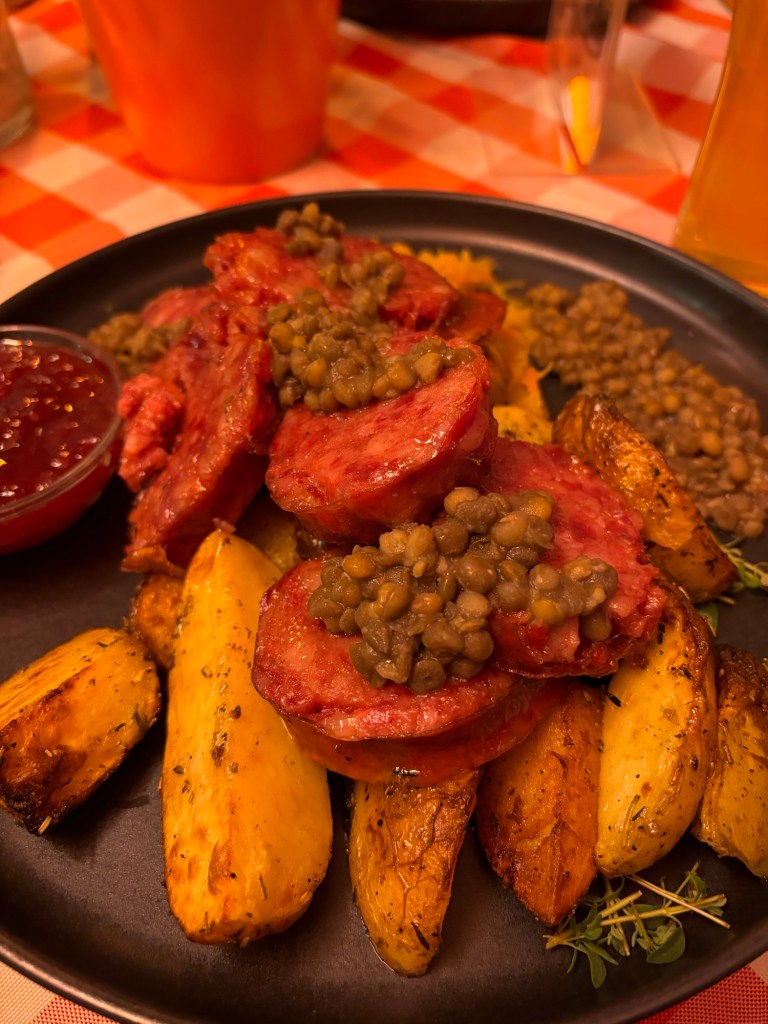
After purchasing a DM mug and taking the opportunity for a photo behind the bar, we leave to get dinner. We end up having our meal in the square in one of the popular tourist restaurants called Ule Estonia, that we wouldn’t have settled on if we weren’t all starving and enticed in by a man in costume!! That said, it’s surprisingly good and we’re happy out!
Next morning we’ve booked a walking tour of the city and we meet our guide at 10 am at town Hall Square. We have a small group of 11 people – a couple of Americans, two Latvians and a guy from Switzerland. A nice size group for walking around together and listening to the guide. She tells us her name is Svetlana O’Lana which I am super impressed with and record it so I won’t forget. When the gang tell me later she said “Svetlana or Lana” we get quite a laugh!
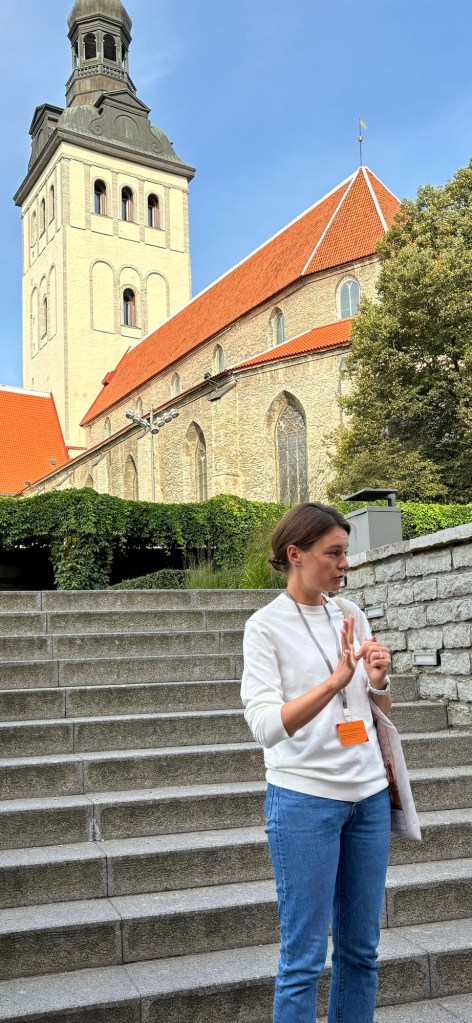
Svetlana is very knowledgeable and a really good speaker, although she talks quite fast so even though her English is excellent, I have to concentrate to hear everything she’s saying. She tells us a little about the history of Estonia and as we walk from the square we stop at a patch of land that has an agricultural truck parked on it. She tells an interesting story about the man who owns the land and would not sell to the authorities. He decided to grow potatoes there and often they were spread with manure which gave a terrible smell right in the centre of the old town and below the very important church of Saint Nicholas. There was uproar by town officials and ultimately he decided to park his truck there. At this stage it has been there so long, it looks a little like an art installation. What a funny and interesting story!
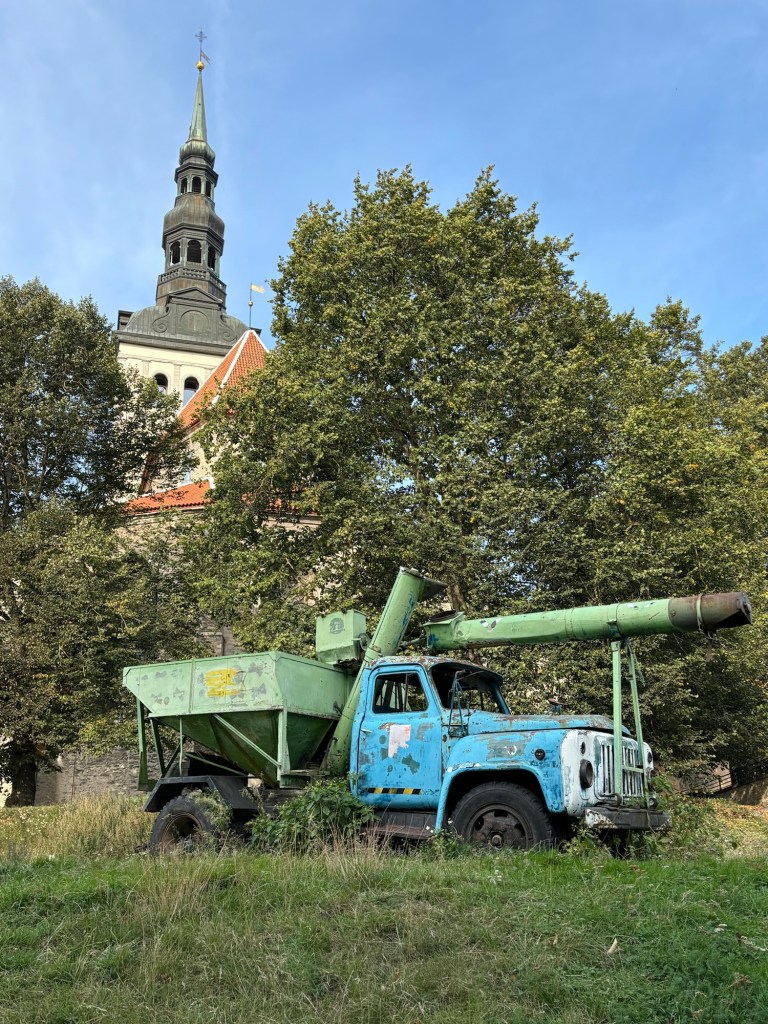
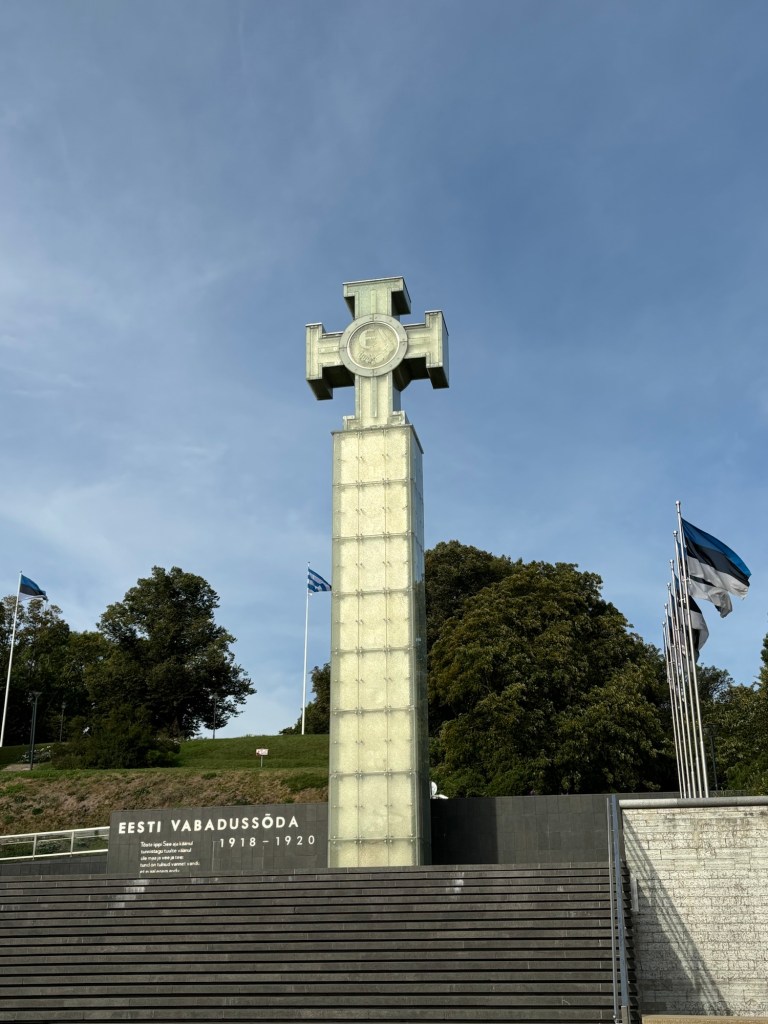
Svetlana recommends visiting Saint Nicholas Church which we will do later. For now we continue toward Freedom square where we see the The Cross of Liberty and the Monument to the War of Independence.
Continuing up Tompea Hill, we pass some of the landmarks which we visited last night. It is nice to revisit and hear some of the history from an expert. She takes us to the viewing points again where we took some photos last night, but they are nice to enjoy a second time.

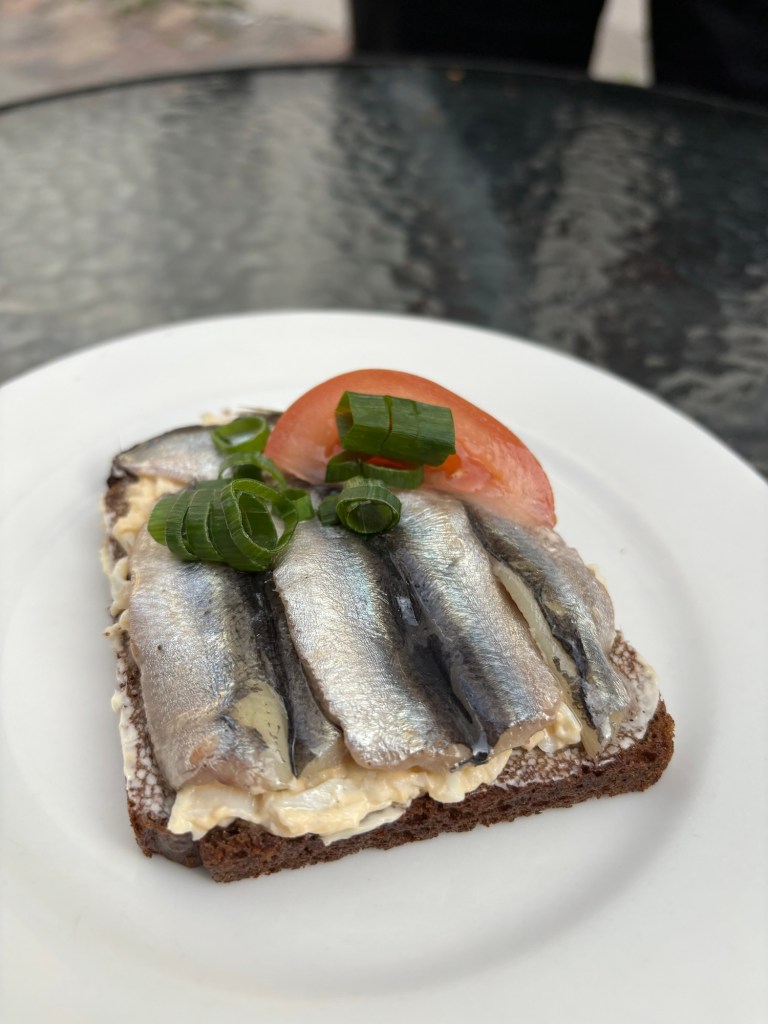
She gives us some recommendations for food and particular things to try which we are keen to hear about. When we finish the tour we go to the café where she’s recommended we will get a traditional Estonian sandwich of rye bread with herring and egg. We get three of the small sandwiches to share amongst us so that we have enough room to taste the fish pie that she mentions we can get in another café around the corner.
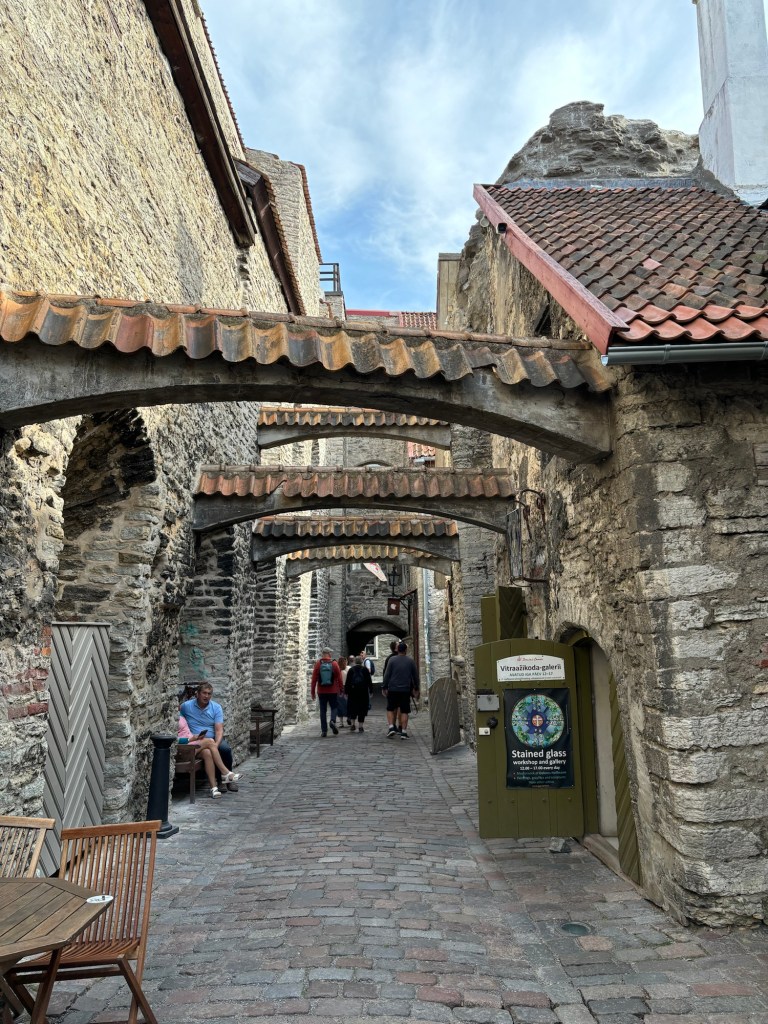
We find the very old St Catherine’s passage
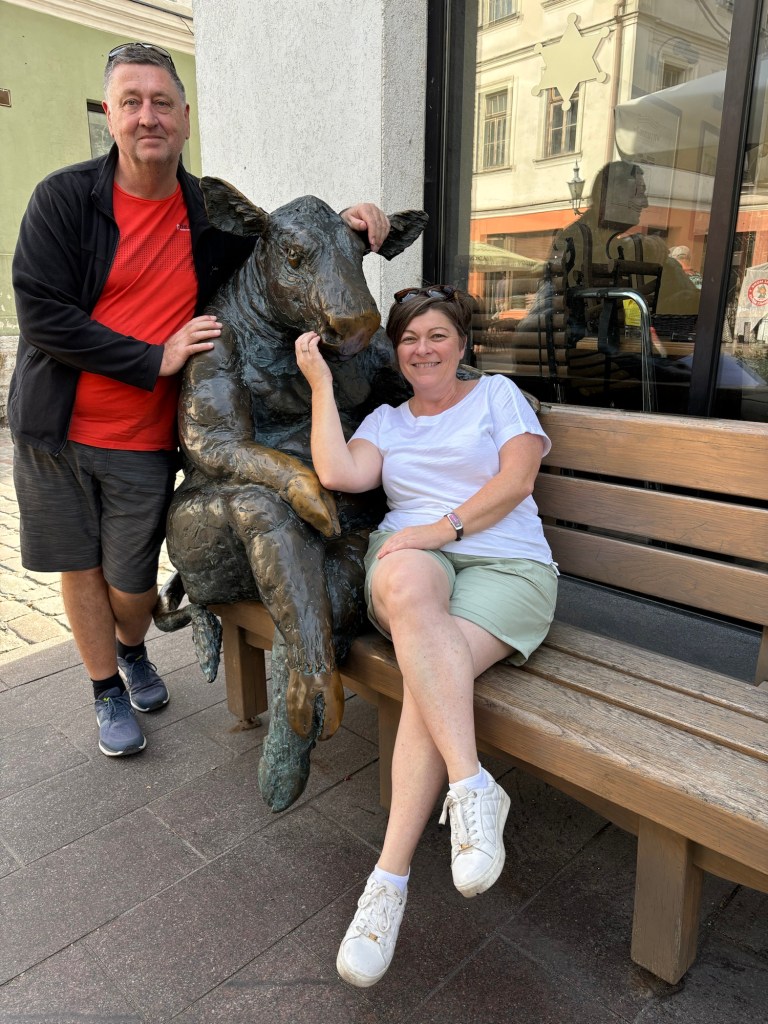
There are interesting statues everywhere…
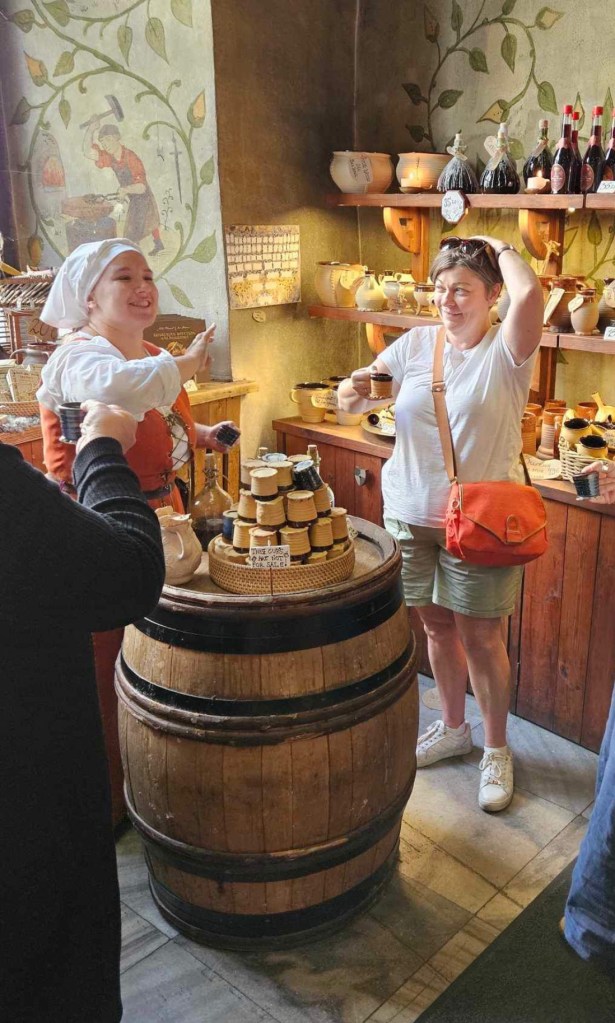
We stop for a taste of the ancient local fire water at Olde Hansa. They have a number of flavours of aquavit and we try a strong one with pepper, another with caraway seed and a wild forest berry schnapps. The aptly dressed lady gives us a bit of history of the booze and makes us follow an old ritual involving shouting very loudly before downing the beverage (which I obviously sip!!)
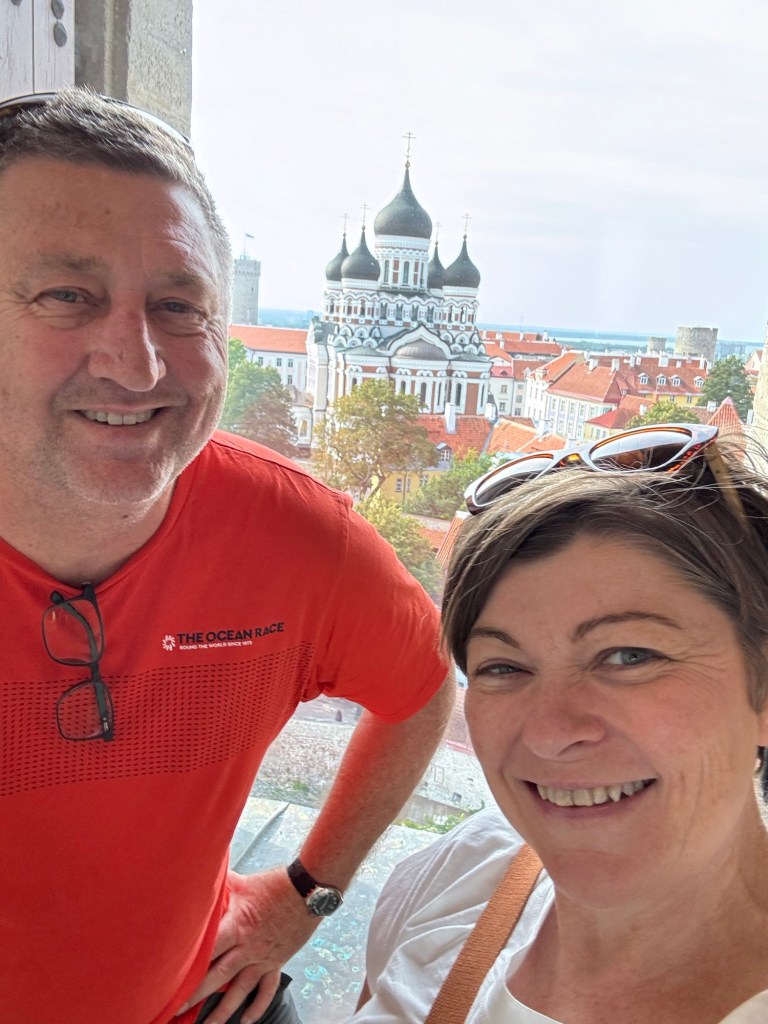
It’s time to visit St Nicholas’ (also called Niguliste) church and museum. There’s a glass lift to the bell tower and the 360 degree views make you feel like you’re in the middle of the town. The view across to Nevsky is awesome.
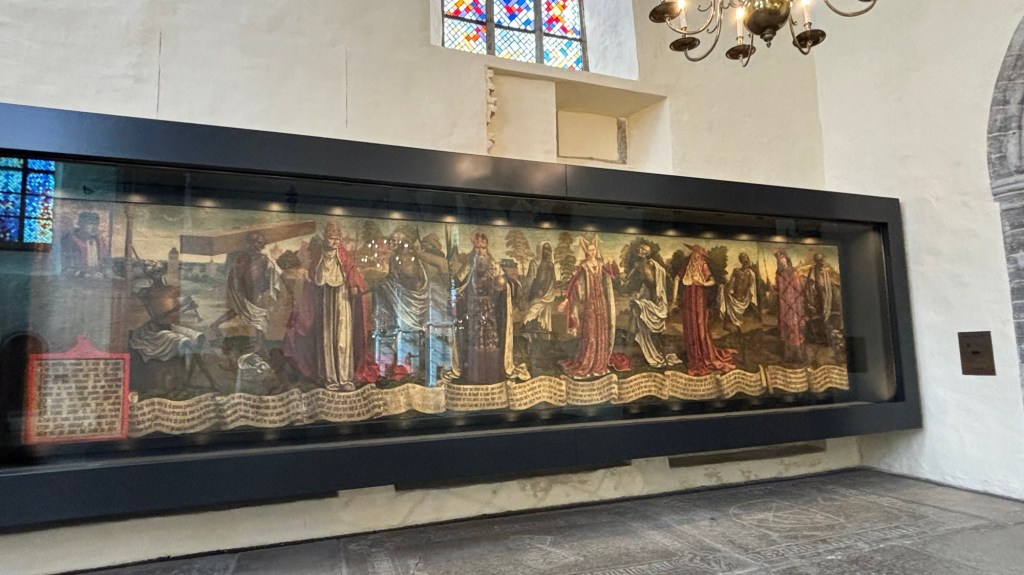
The church itself has some amazing artwork including a fantastic painting called “Dance of Death”. The Dance of Death (Danse Macabre), developed in the Middle Ages, invites one to contemplate the transience of life. The topic, emphasising the universality of death, first arose in medieval literature and art and received great attention due to the Black Death plague that devastated Europe in the 14th century. The dance is performed by mortals lined up according to their social status dancing with skeletal figures of Death. The sequence begins with the mightiest, such as the pope or emperor, and ends with either a peasant, a jester or a child.
I read in Atlas Obscura that there’s a “Chopin bench” in the small park at Freedom square and when you sit on it it plays Chopin, so Rav and I head off to find it. We’re delighted when we spot it but alas there’s no music… maybe it’s out of batteries!!

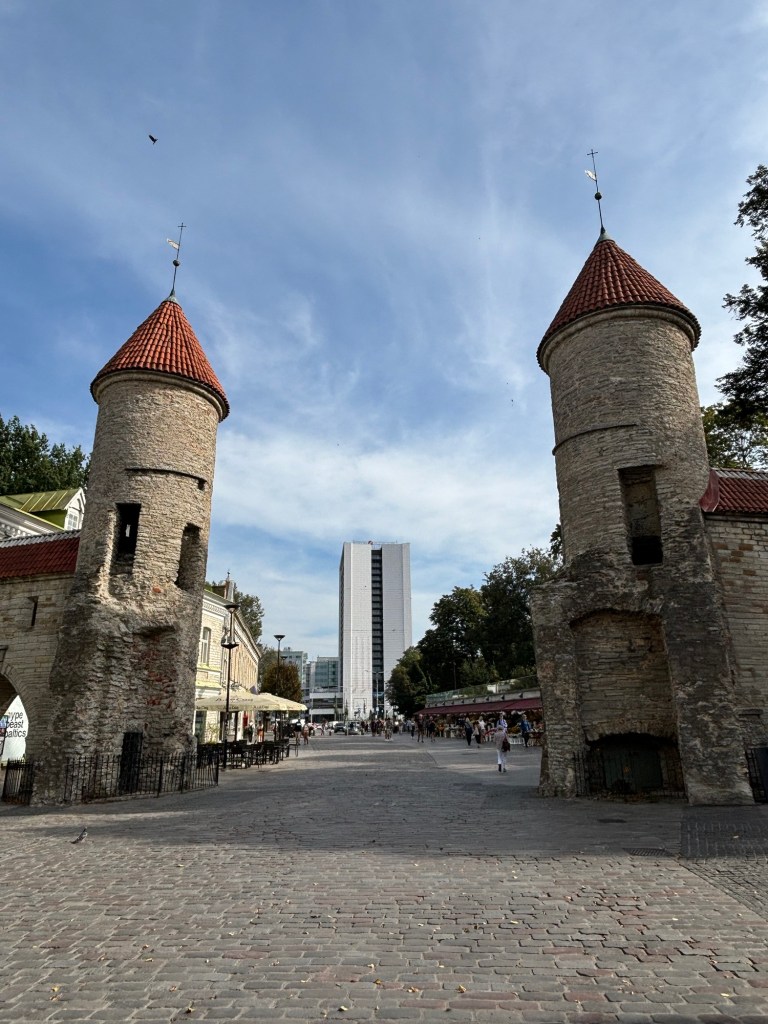
We’ve booked a tour of the KGB museum which is in the Viru hotel outside of the old city gates. Walking over gives us a chance to see and walk through the very old Gates of Viru.
The guide tells us stories of how the KGB bugged all of the rooms in the Viru hotel and listened in to conversations of visitors from other countries. The hotel has 22 floors and the 23rd floor was the KGB floor which, to everyone else l, did not exist. We see the rooms where they operated, listened in and recorded conversations. It all seems ridiculous and futile and when I ask the guide if they ever got really good info to act upon he told me most of it was useless rubbish! That said, it didn’t stop them making plenty of arrests.
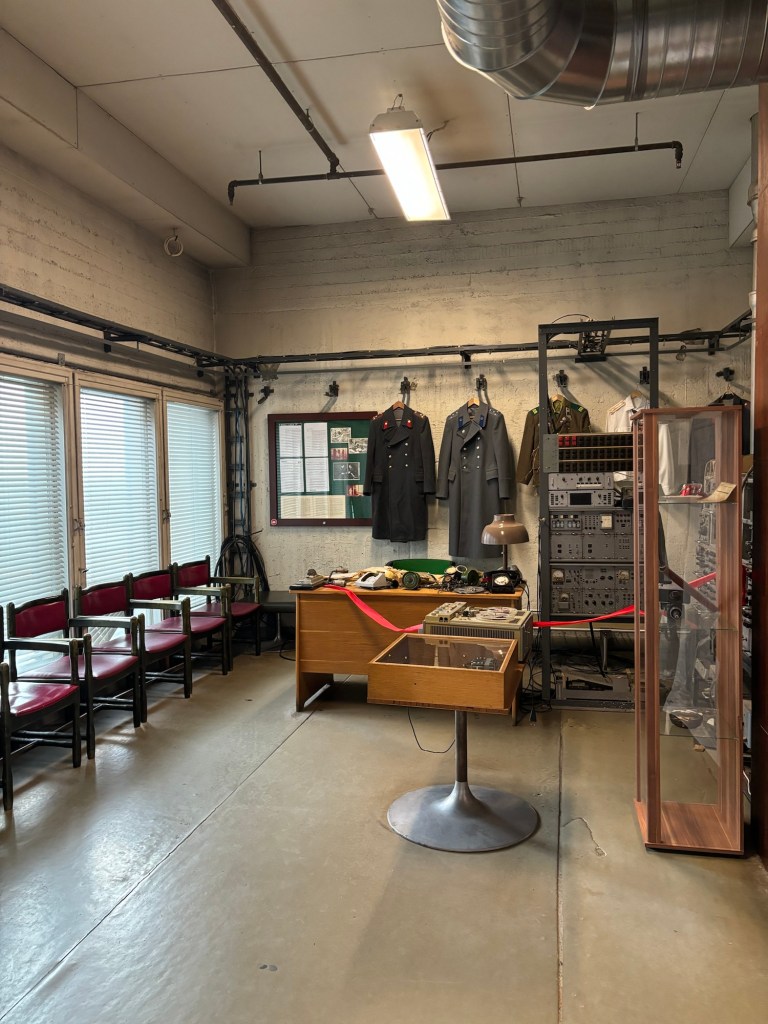
During the Soviet era, many things were forbidden or illegal and the least infringement could get you in trouble and possibly thrown into jail. The tour is about an hour long and interesting in itself, but it’s a bit gimicky. The roof top bar where we were hoping to have a drink afterwards is closed as it is officially no longer Summer. We are here the second week in September so we have just missed out on a number of things that no longer open, after the summer season. We are always happy to be away during the “shoulder” season though and not when there are hoards around. There are definitely not a lot of tourists and it’s very comfortable walking around the city.

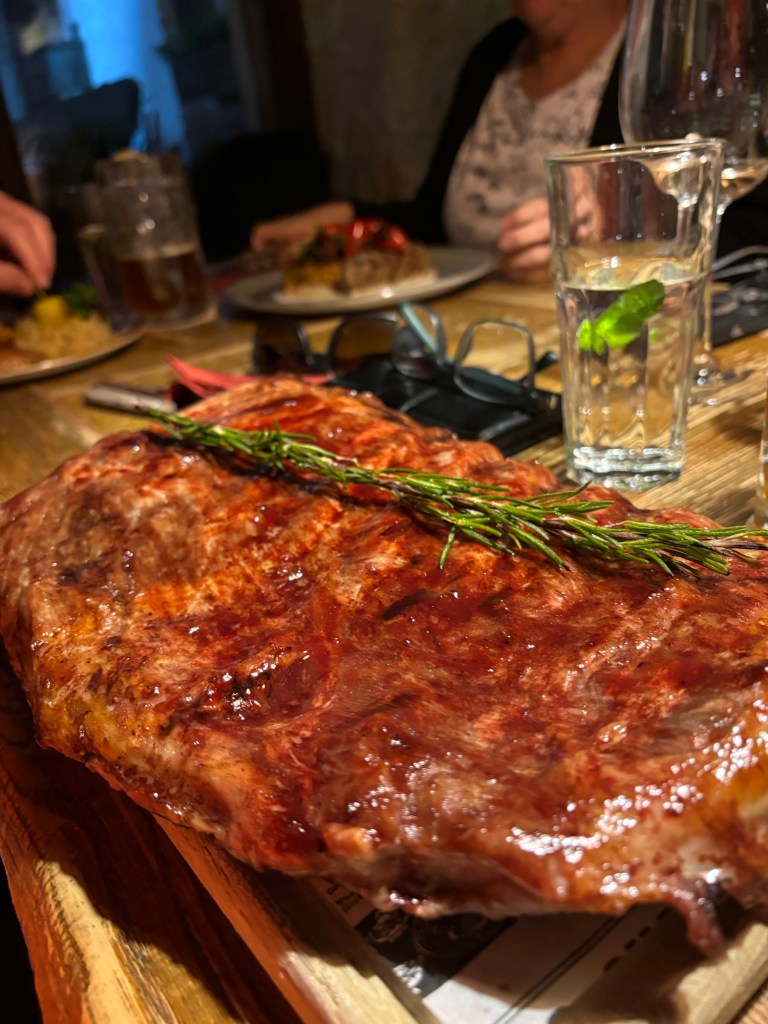
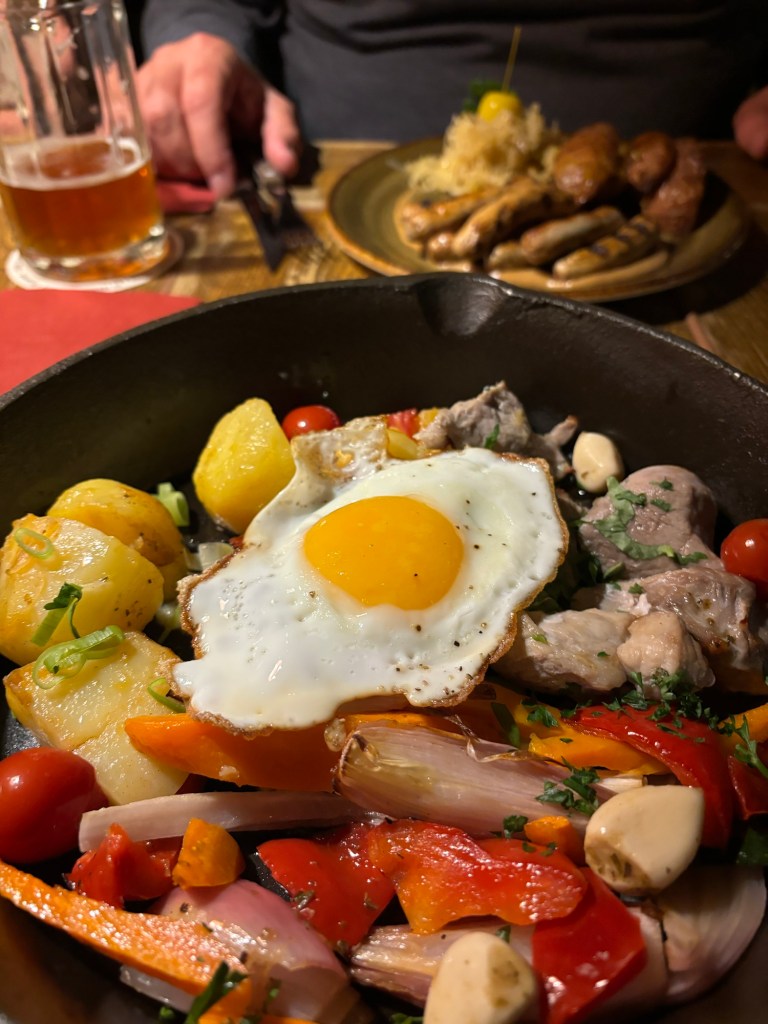
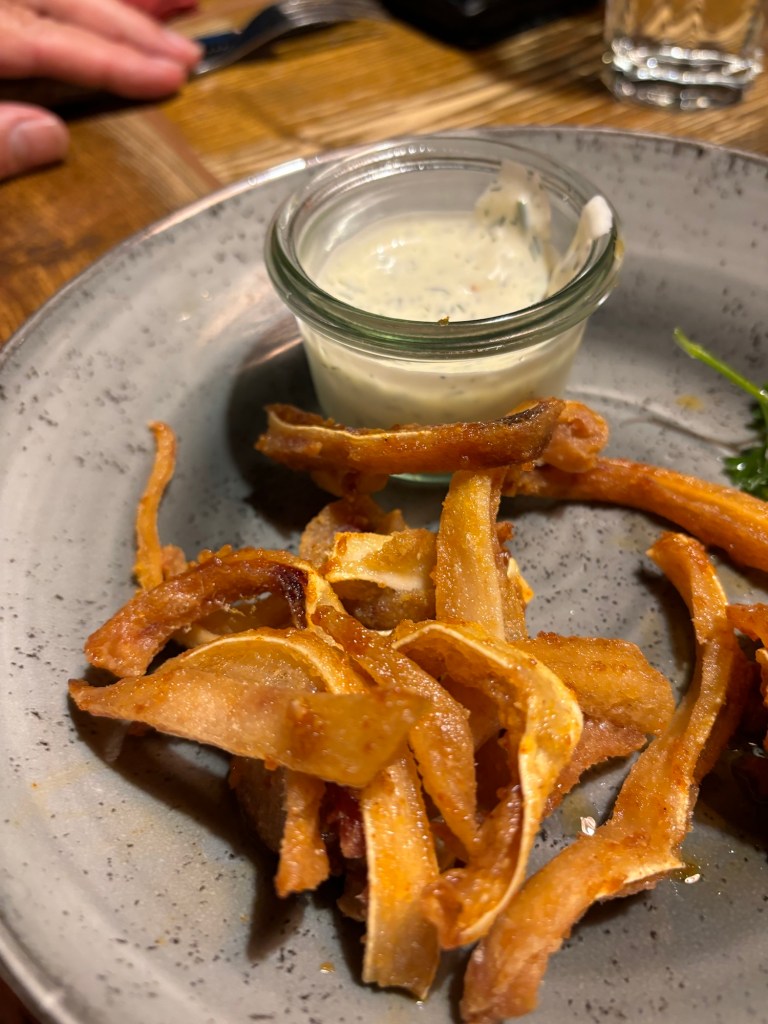
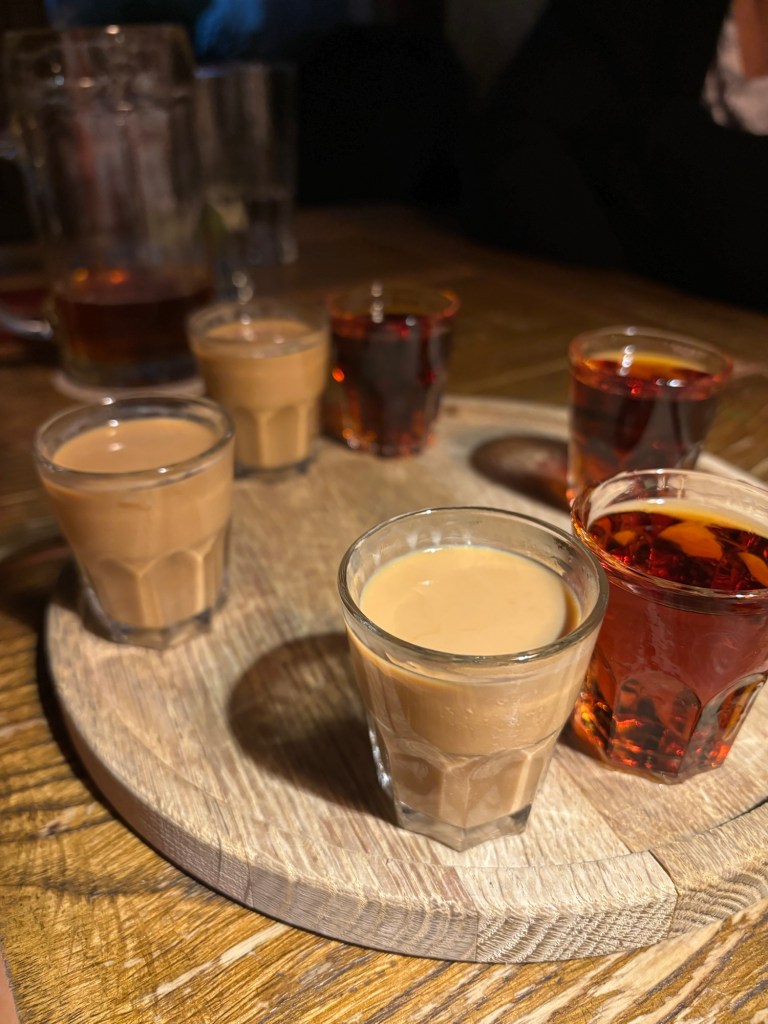
We have dinner tonight at Bier House and I order Gröstl which is essentially pork served with a bacon, onion, and potato fry-up and topped off with a fried egg. Shane ordered the ribs and we share half and half – it’s really good. We finish our meal with the quite tasty “Vana Tallin”- the creamy one is a little like Baileys.
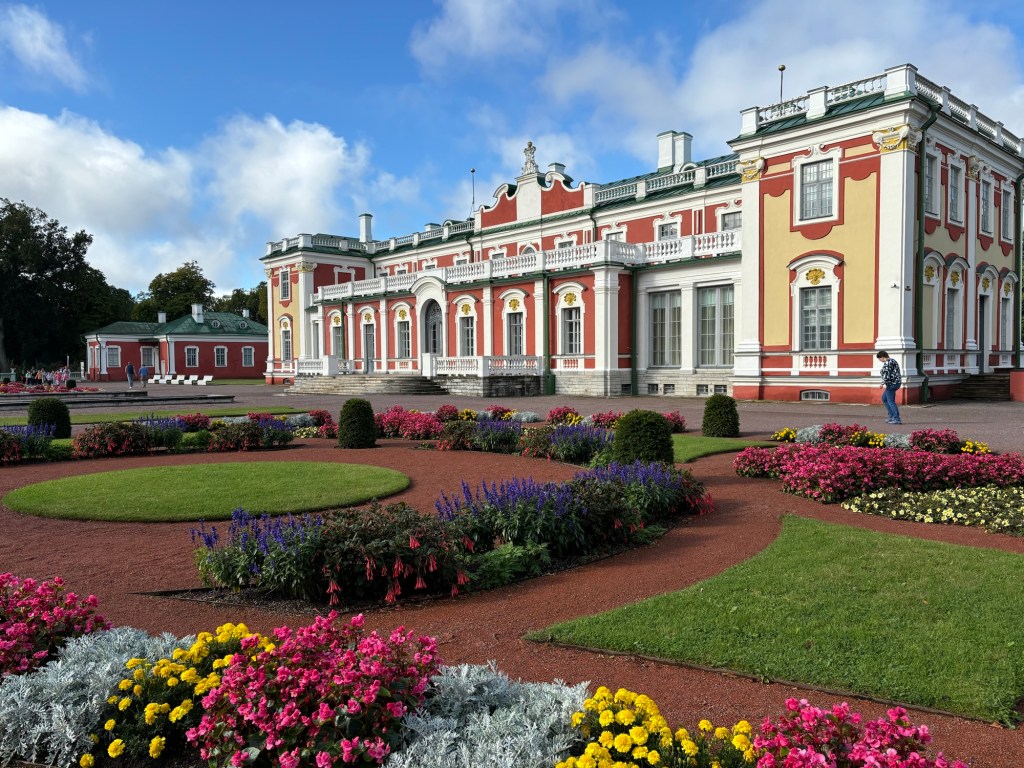
Next day we take the bus a little further afield to Kadriong park which was built by Peter the Great in 1718. This beautiful home was essentially his summer palace which he built for his wife Catherine the 1st. The building houses the art gallery but we don’t go in, just admire from outside and the beautiful gardens surrounding it. The flowers are really colourful and it’s very pictureesque.
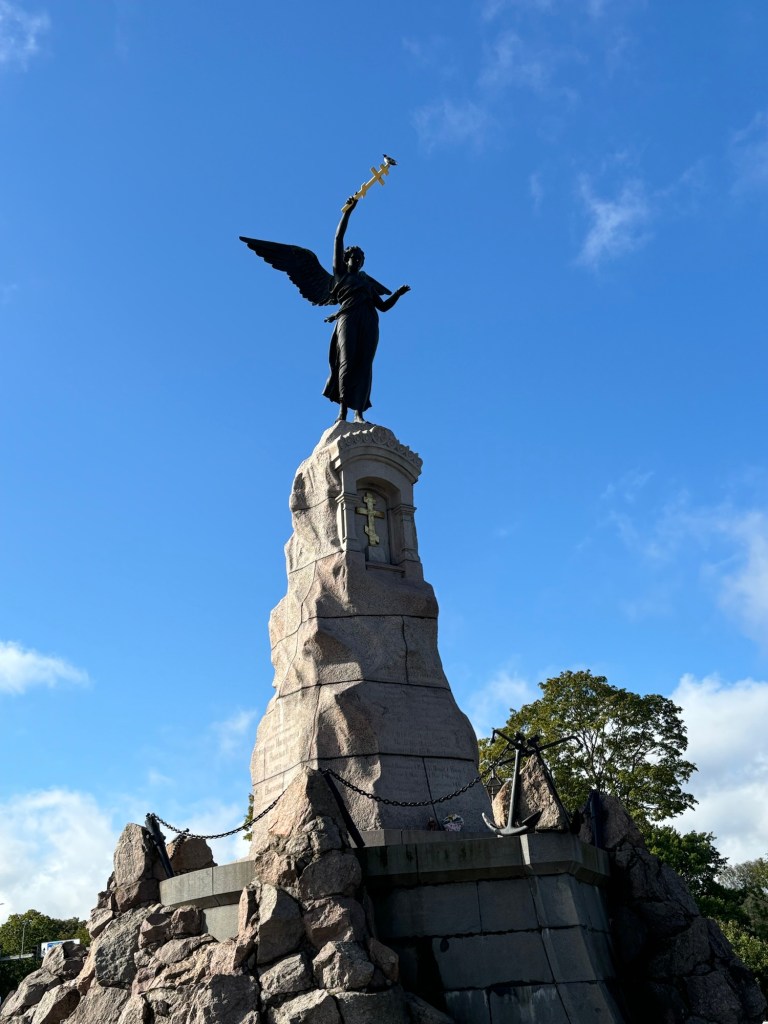
From there we carry on to the Russalka Memorial and see the angel pointing toward the sea where the Russian warship “mermaid” sunk en route to Finland in 1893.
Continuing further along the coastline, we find the Tallinn sign – you know that means an obligatory timer shot!!!

Further on we arrive at Maarjamae memorial, dedicated to those who lost their lives defending the Soviet Union in WWII. This is a very strange complex of memorials that appear to be somewhat abandoned. The centre part of the memorial is an obelisk which was erected in 1960 and beside the obelisk, the palm of the hand-prints and bronze seagulls named “Perishing seagulls” are also erected.
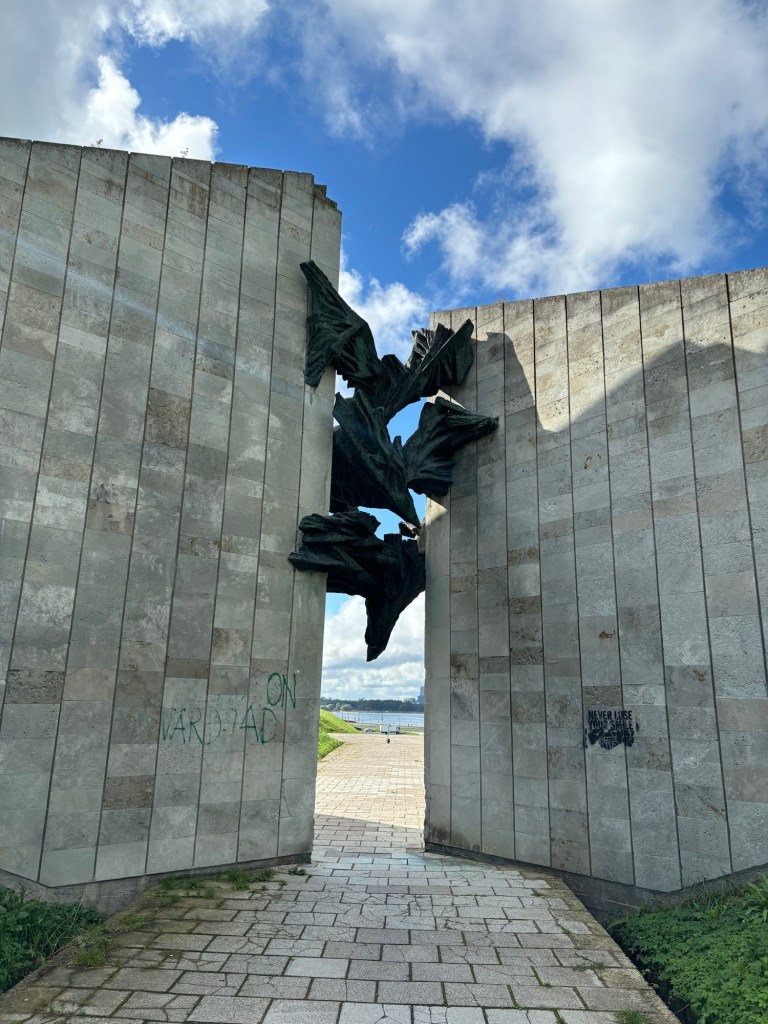
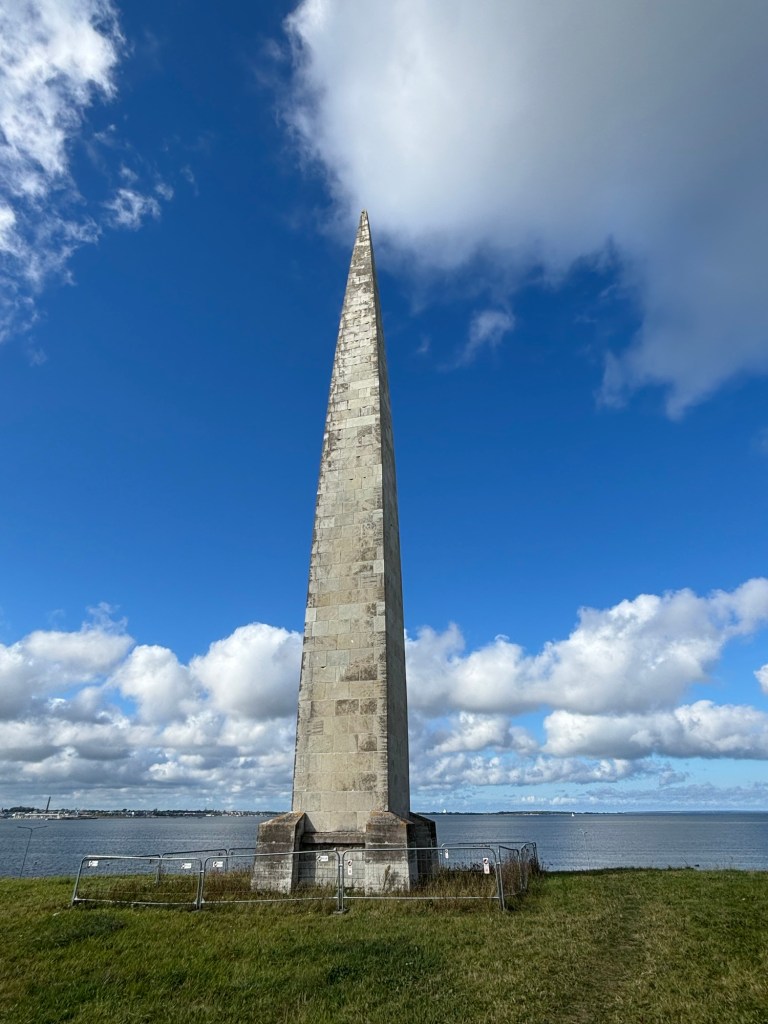
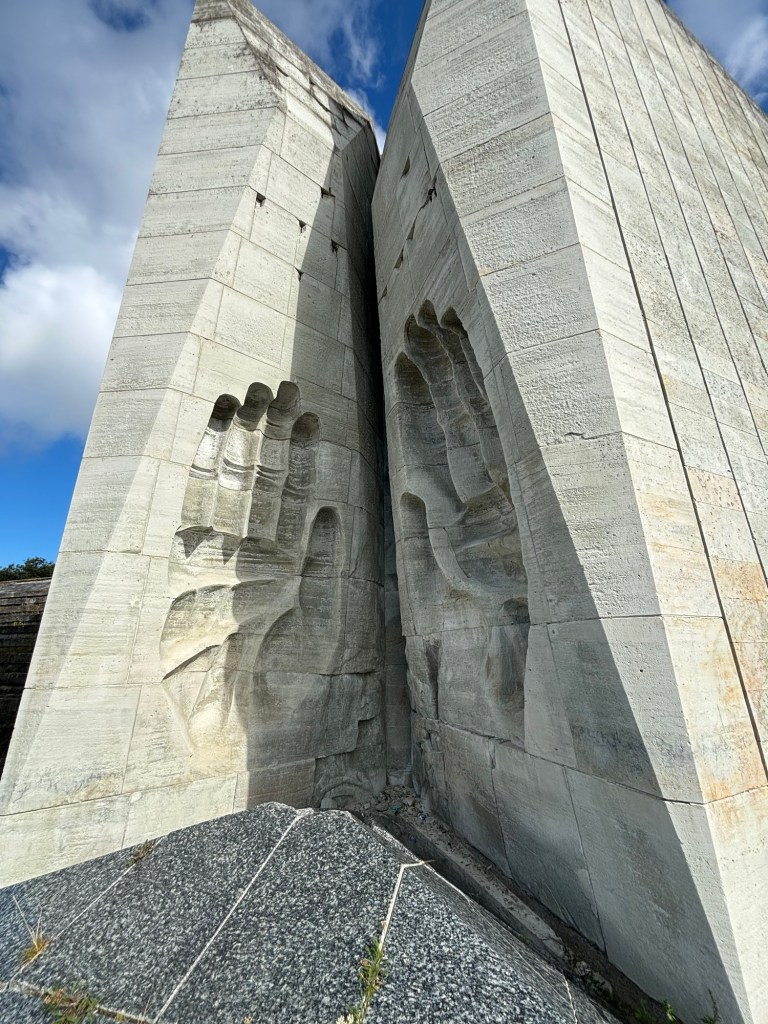
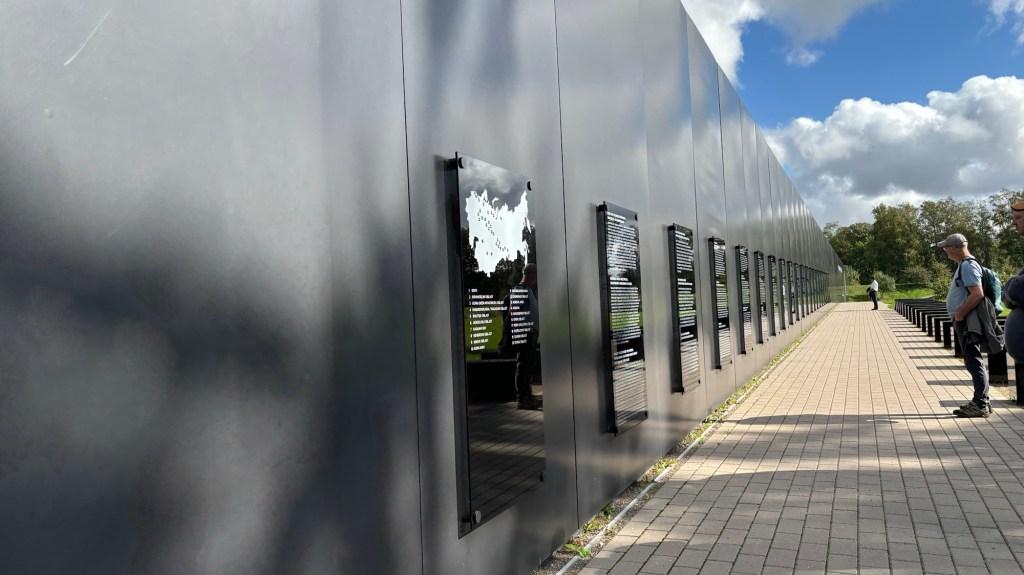
There is no-one around, there’s barbed wire around parts of it and the area is overgrown – very eerie! Further along we see a much newer, shinier memorial to those who lost their lives during Soviet occupation.
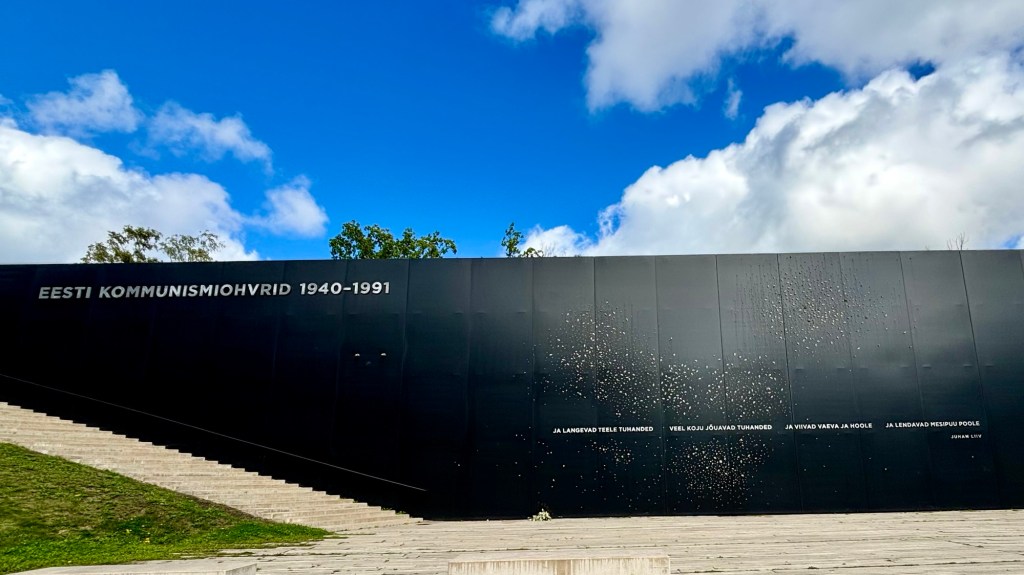
THIS MONUMENT COMMEMORATES OFFICERS OF THE REPUBLIC OF ESTONIA WHO FOUGHT IN THE WAR OF INDEPENDENCE OR SERVED IN THE ESTONIAN ARMED FORCES, BORDER GUARD OR DEFENCE LEAGUE, AND BECAUSE OF THIS WERE MURDERED BY THE OCCUPYING SOVIET REGIME OR PERISHED IN IMPRISONMENT.
ESTONIA’S MILITARY ELITE AND HEROES OF THE WAR OF INDEPENDENCE WERE AMONG THE FIRST TO FALL VICTIM TO THE WAVE OF TERROR IN THE SUMMER OF 1940. THE TERROR CONTINUED WHILE ESTONIA WAS OCCUPIED BY GERMANY DURING WORLD WAR II AND IN ESTONIA AFTER THE WAR. A TOTAL OF 801 OFFICERS AND MILITARY OFFICIALS FELL VICTIM TO THE SOVIET TERROR.
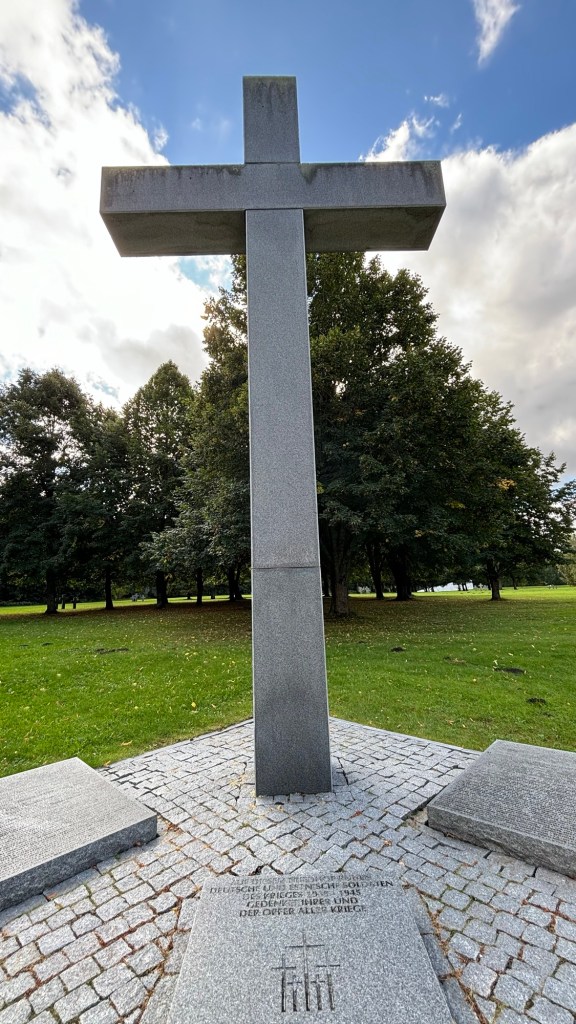
Onwards again through the park area, there is a cemetery for German soldiers – seems peculiar alongside a memorial to those who lost their lives fighting these soldiers….
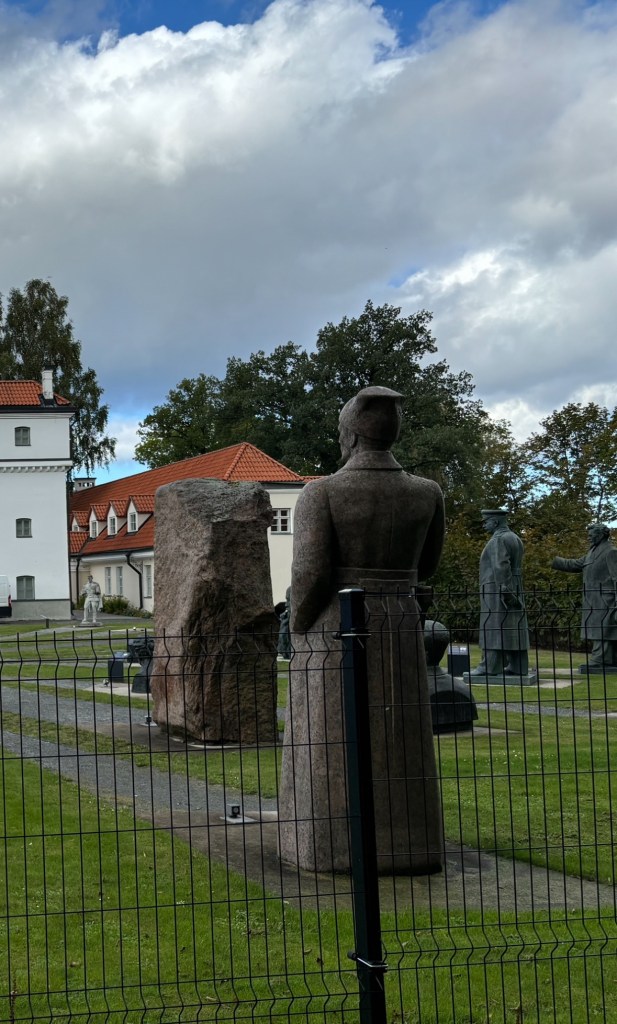
I’ve read that there’s a “cemetery of soviet statues”, which I’m keen to visit but having walked all around the Soviet memorial complex we arrive at the back of the history museum (in Maarmajae castle) and are not able to gain entrance. Other than climbing over the gate we have to follow the path which takes us away from the statues. I don’t get to go in and see them up close but they were all very nasty men so this view is quite enough.
We’ve had enough misery for one day so we get the bus back into the city and visit the market – Balti Jaama. There are lots of options for lunch and we all choose different things. I choose some pelmini which are dumplings filled with salmon and shrimp. They’re really tasty. We also do a bit of food shopping so we can eat in tonight.
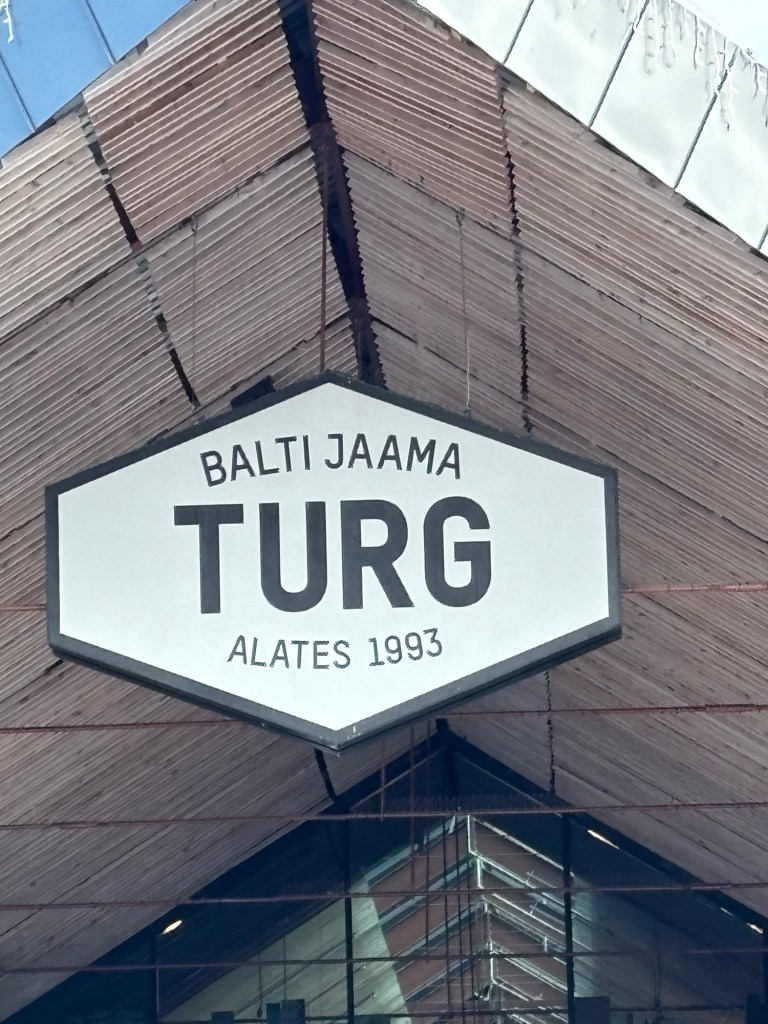
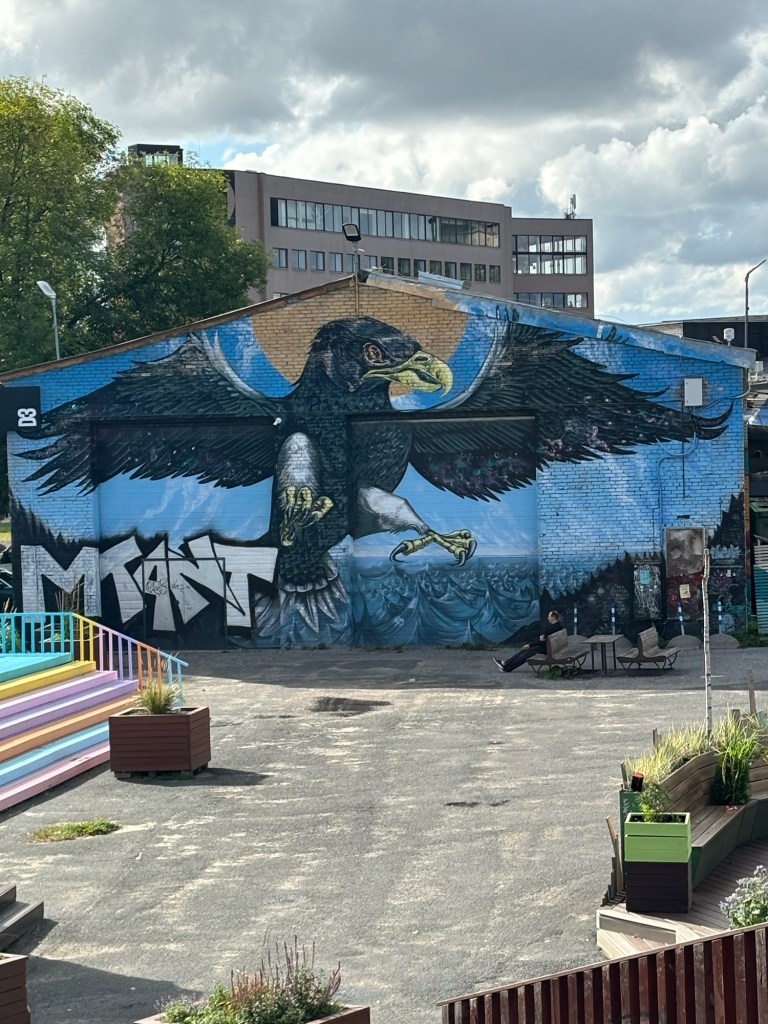
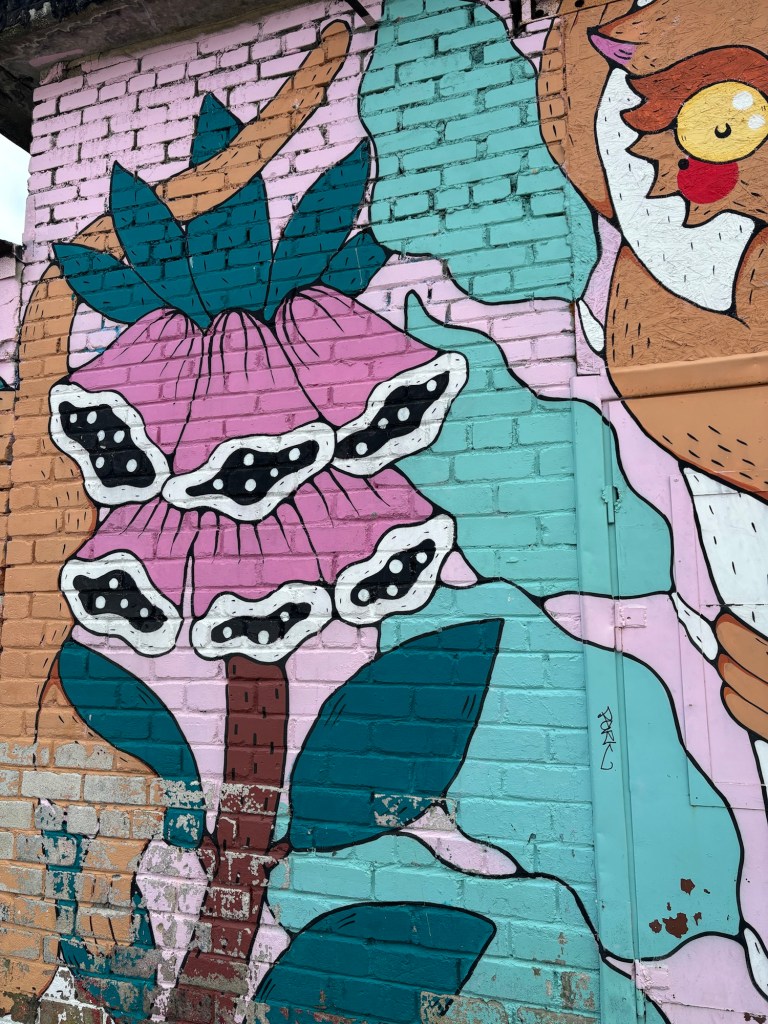
We have a drink at the brewery in the market, sitting outside enjoying the nice weather and then we take a walk around the area close by called Telliskivi, which has lots of food stalls and murals on the wall. This may be somewhere we explore further tomorrow as there are lots of old wooden houses and cool things to see.
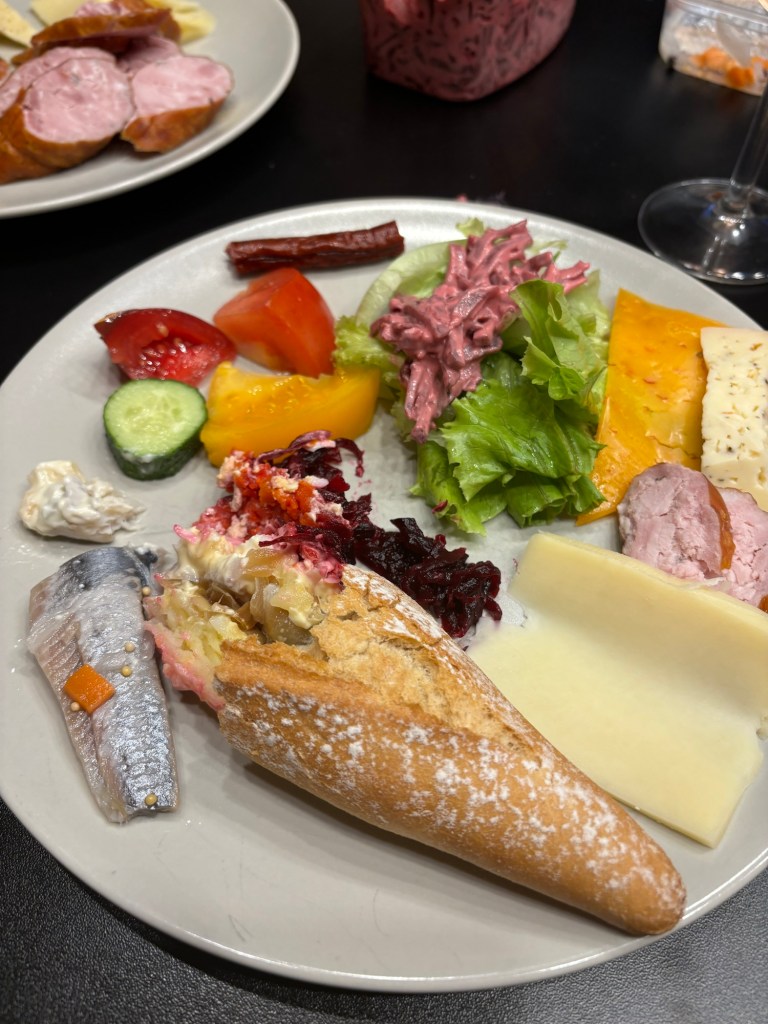
We head back to the apartment after a busy day and later have a delicious dinner of sausage, cheese salad, herring, beetroot peppers filled with meat cabbage fresh bread all bought from the market today and it is really delicious.
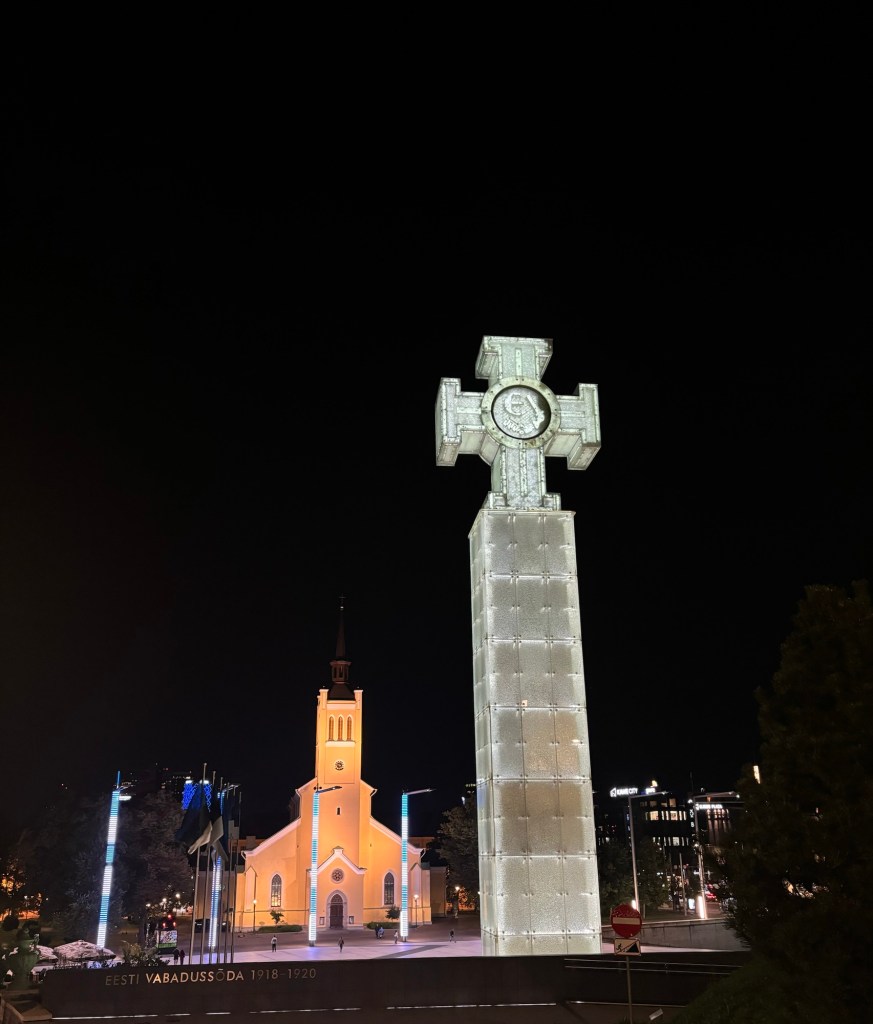
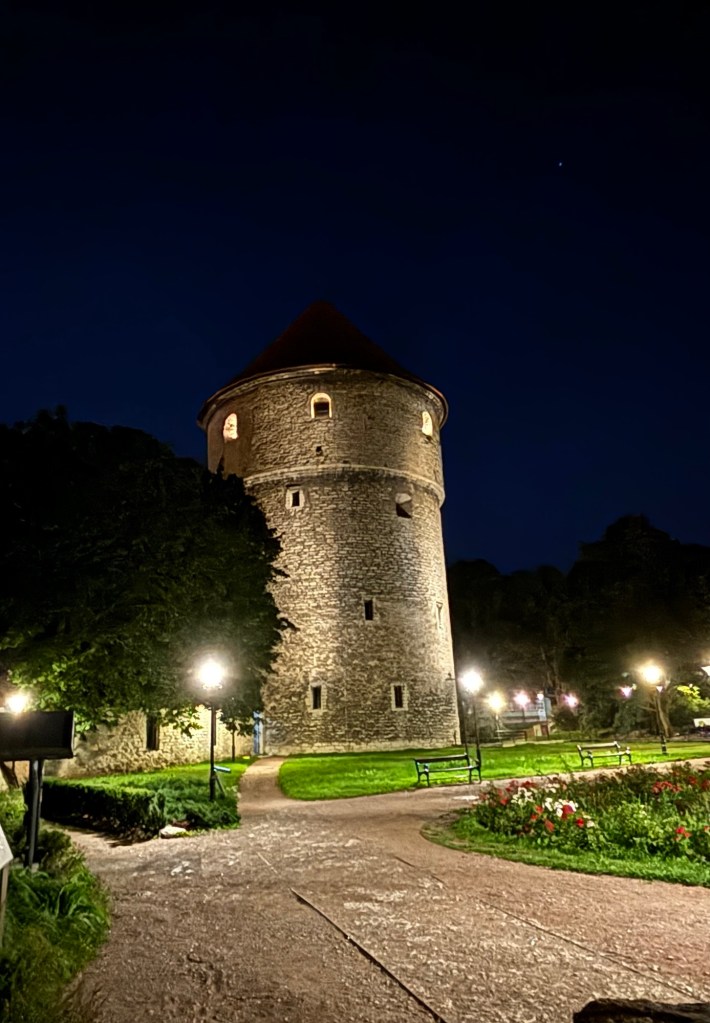
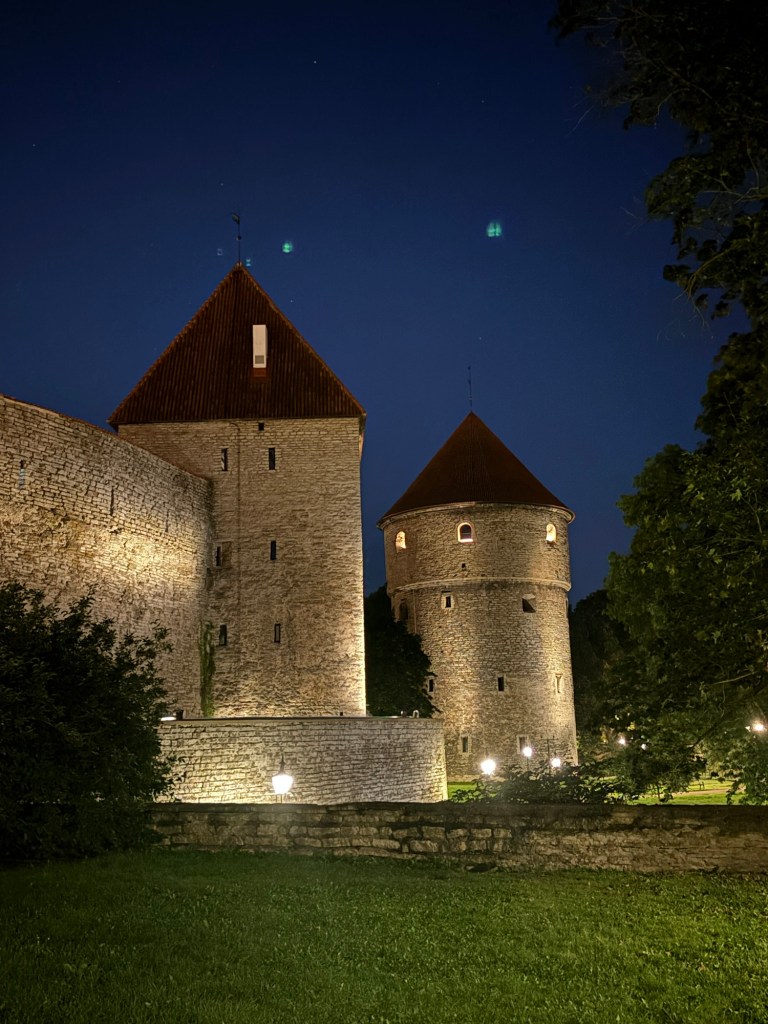
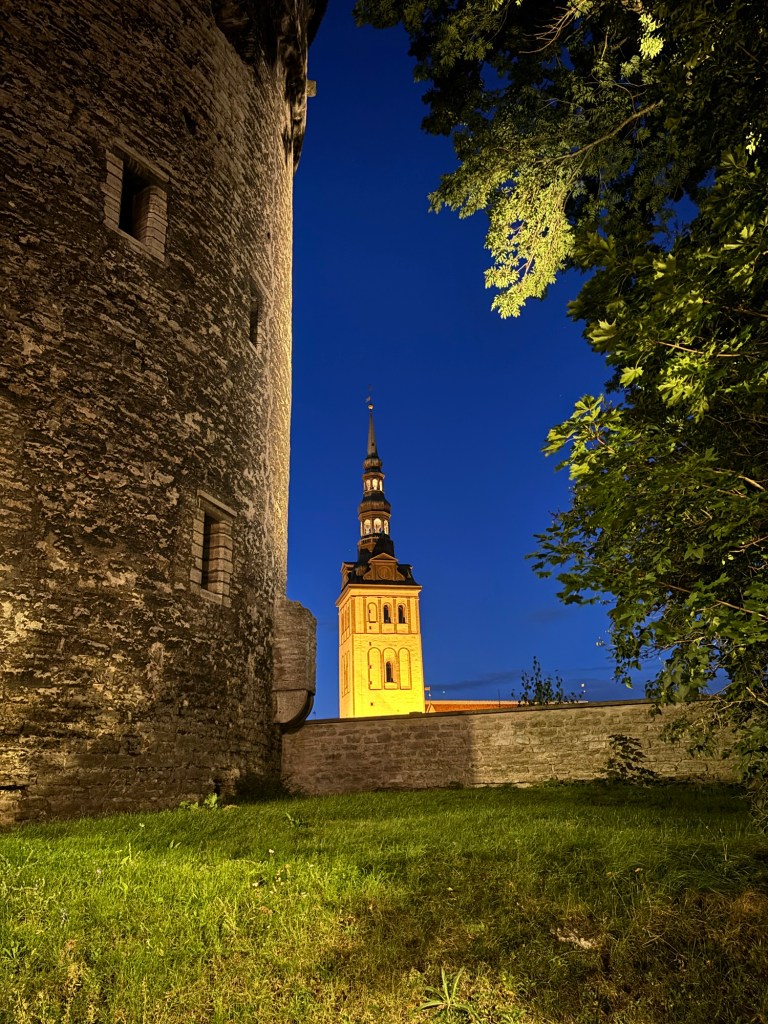
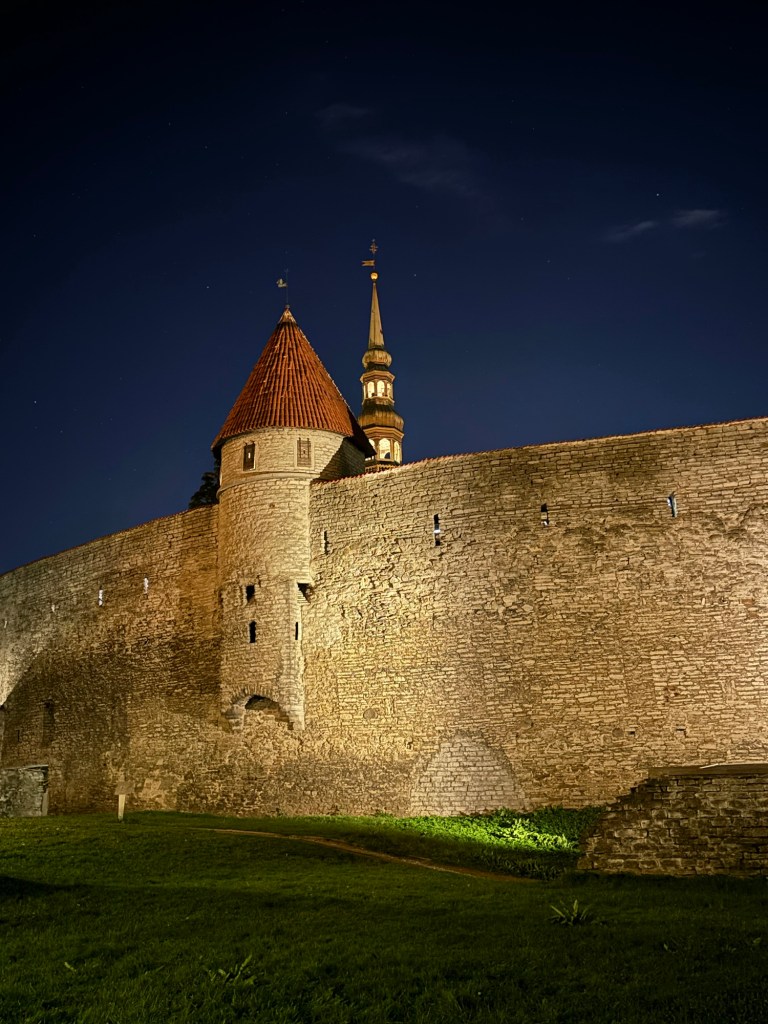
After dinner I take a little walk around to see the town by night. Everywhere you look, there is a tower or castle or church that is lit up beautifully.
It’s our last full day in Tallinn so after a quick brekkie we head out to tick off the last few things on our list. We head to the three sisters building. We see these lovely buildings ….
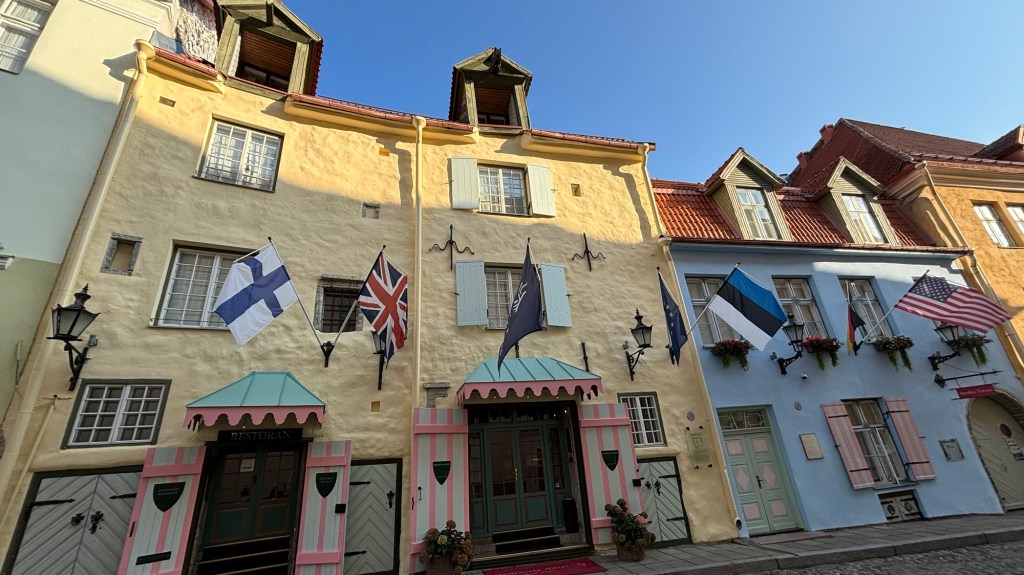
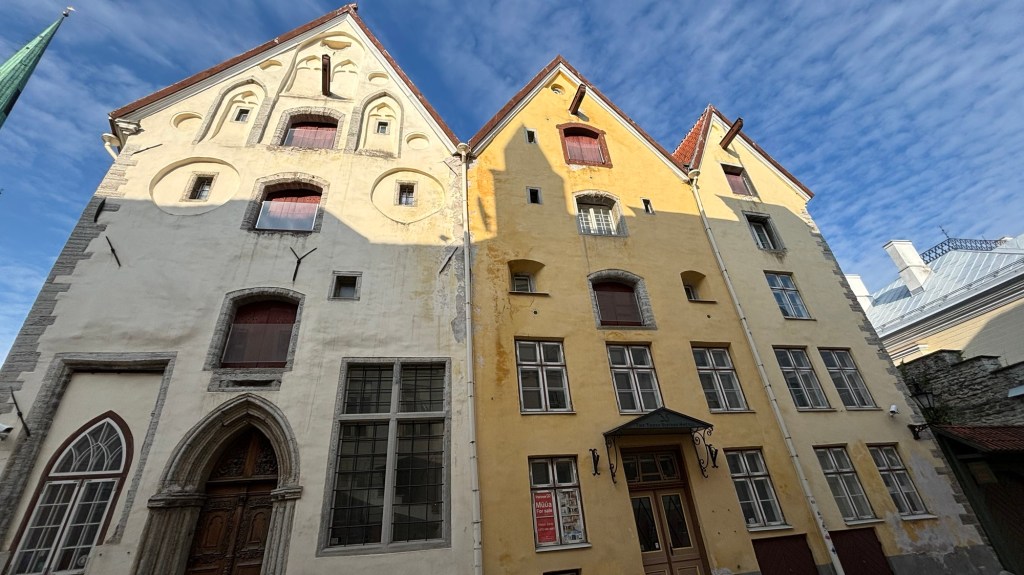
….and realise, lovely as they are they’re not the 3 sisters…. These are:
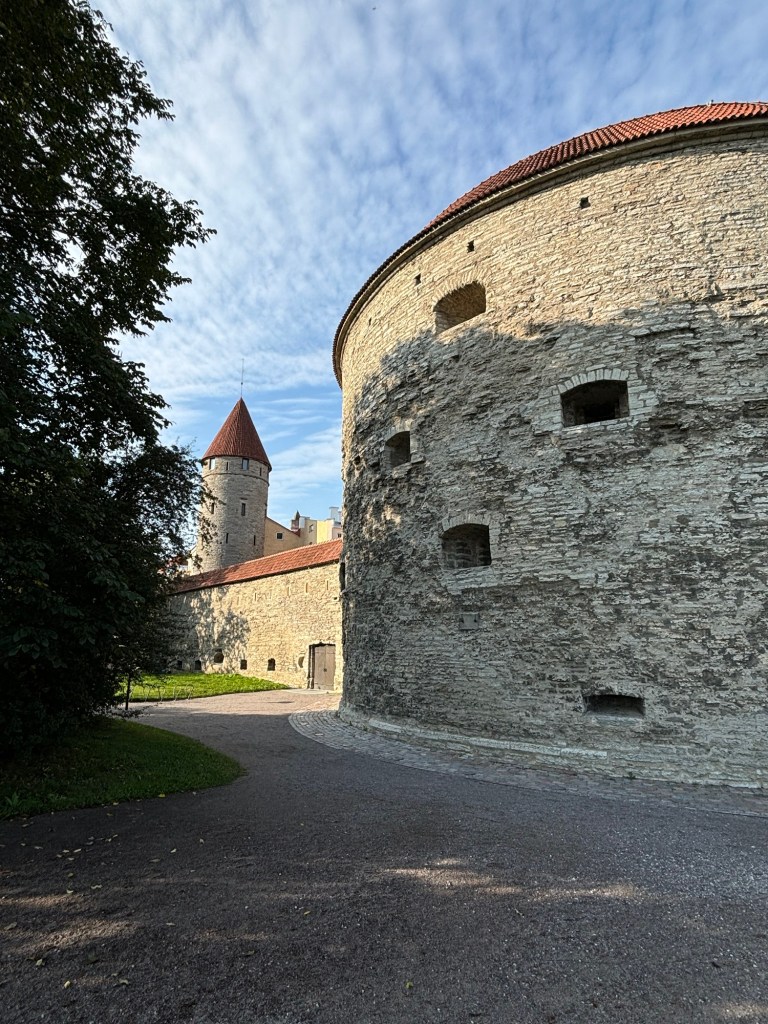
Then we walk further to see “Fat Margaret” which is a huge tower flanking another entrance into the city.
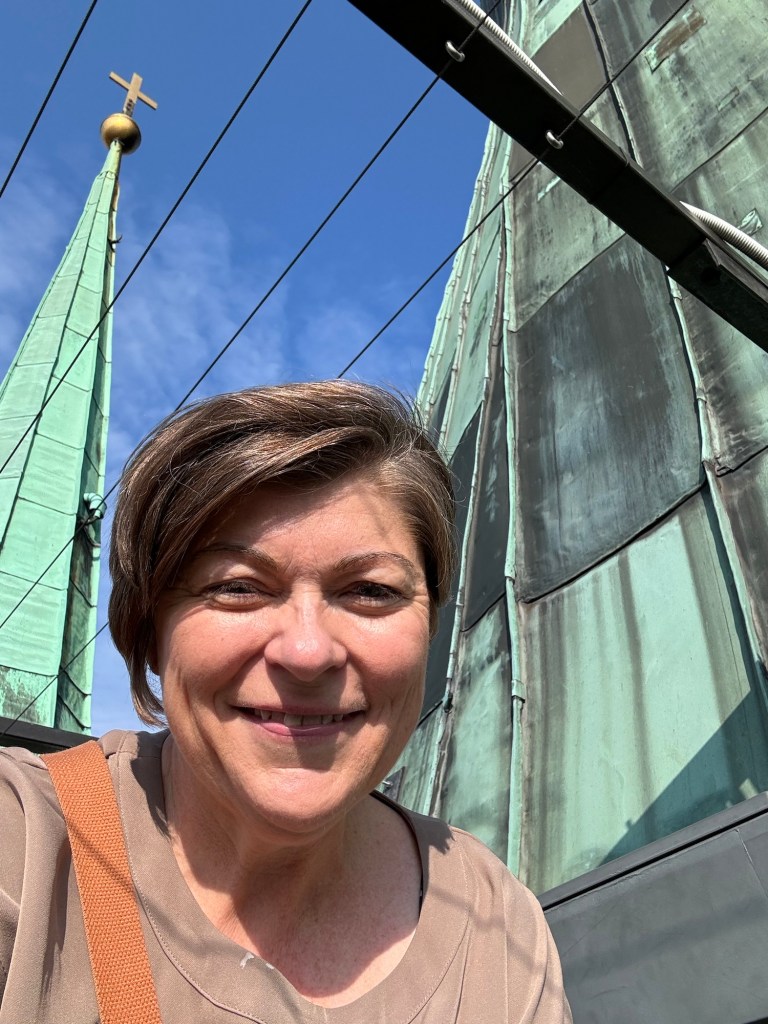
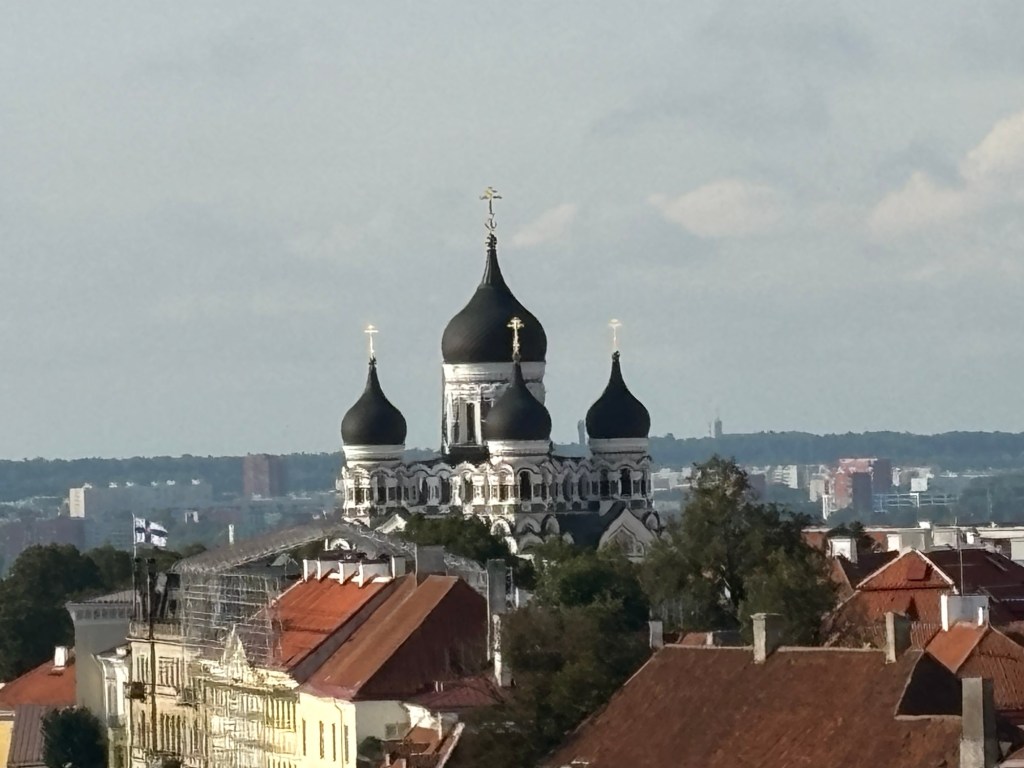
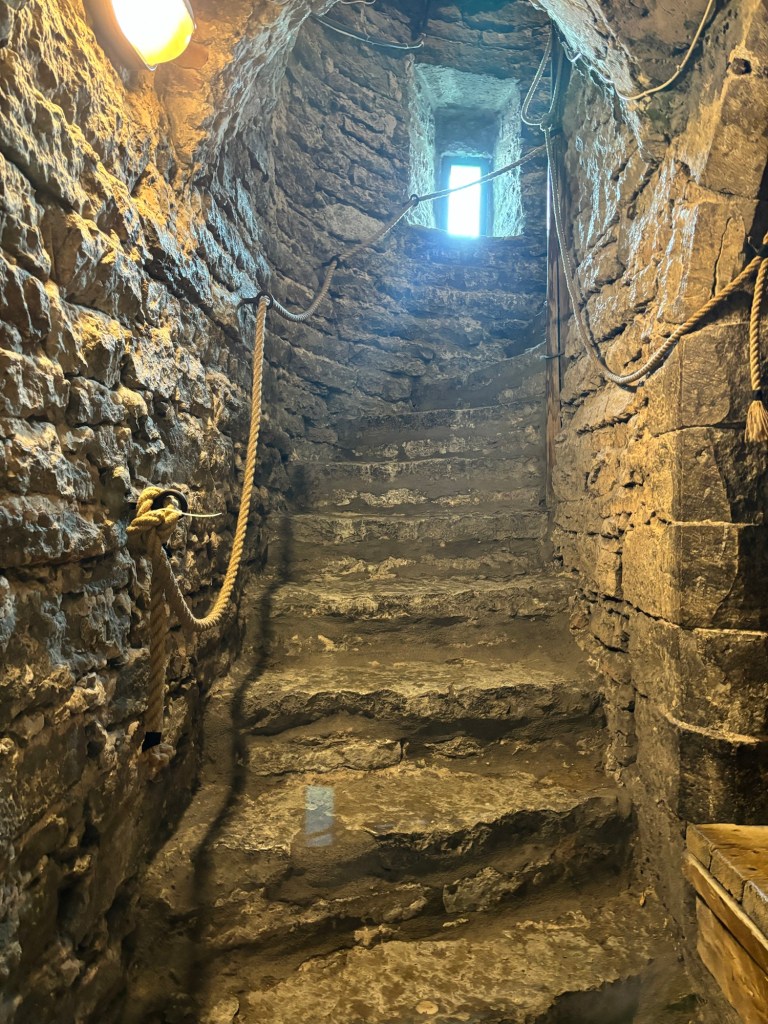
We arrive back at Saint Olav‘s which we visited on our first day. Now it’s time to climb the tower. It’s 238 steps to the top and the views are really nice across the whole town. I have to say I preferred the views from Saint Nicholas Tower as you felt like you were in the middle of the city.
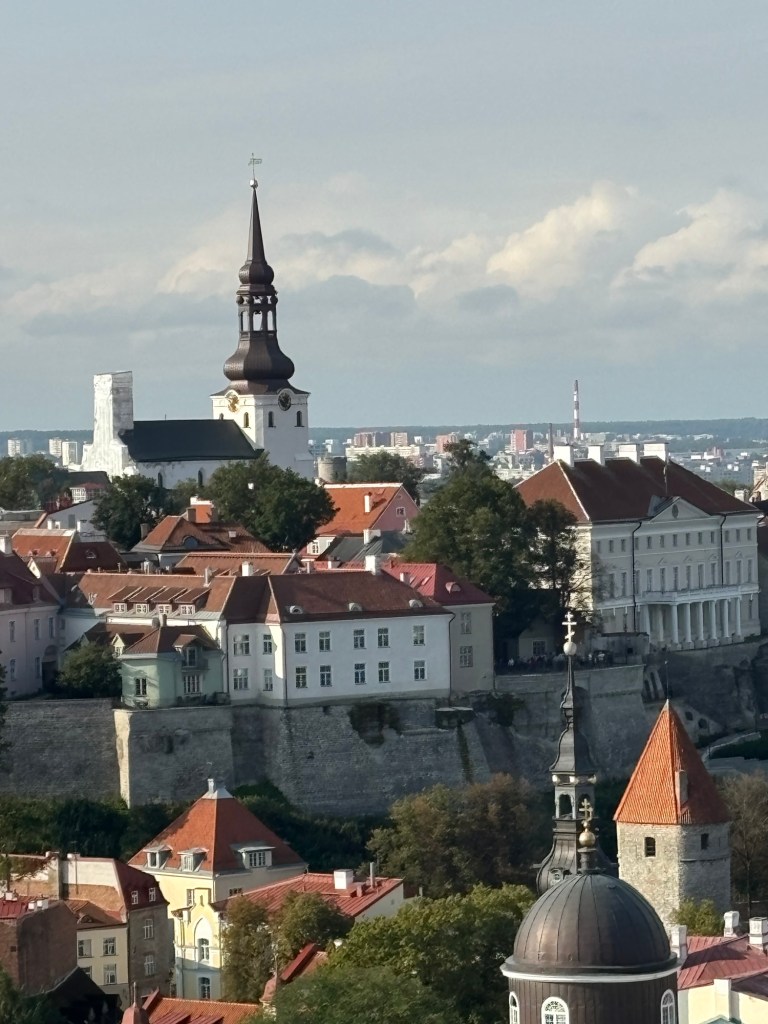
There’s a great view looking across to the walled upper town from up here.
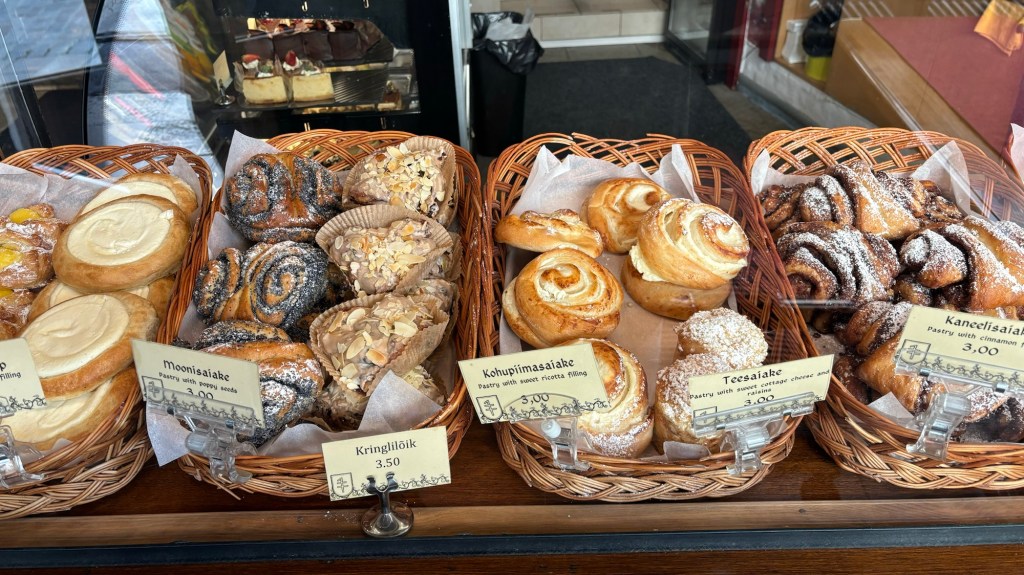
I’m the lone tower climber, so once I’m done I head to “Peppersack”, a medieval café, to meet up with the gang and try out some of their popular pastries.
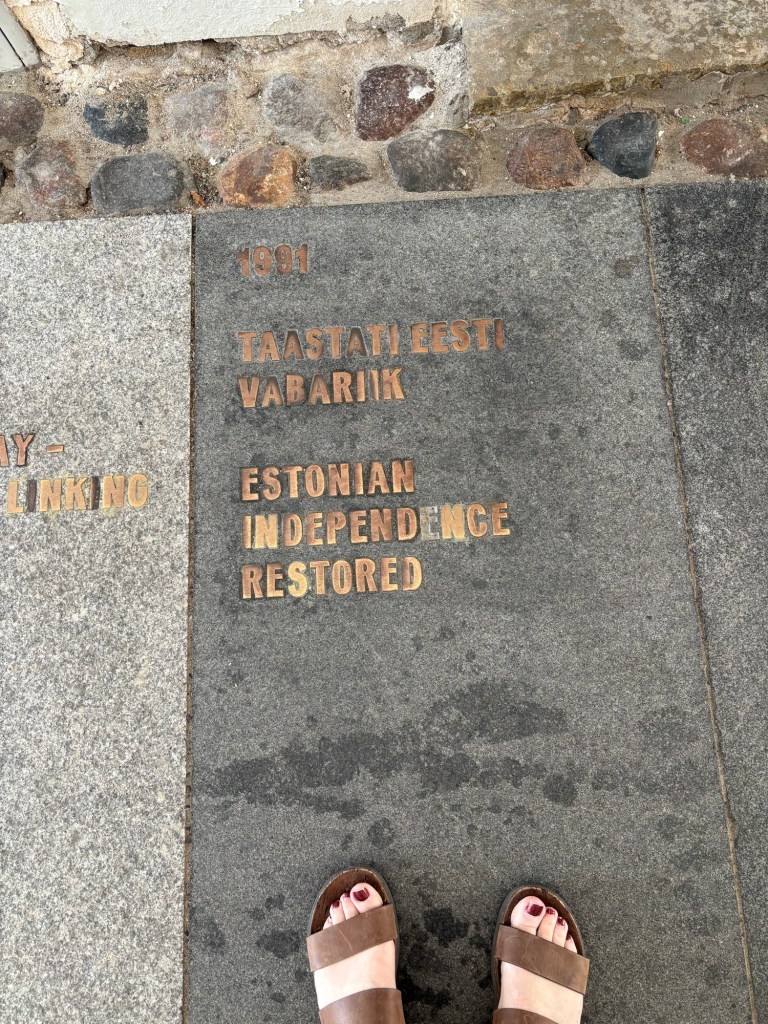
On the way I cut through a lane and come across “The Path of History” where important dates and events are marked on the pavement of Börsi käik (the Stock Exchange Passage) providing a quick overview of the complicated and exciting history of Estonia.
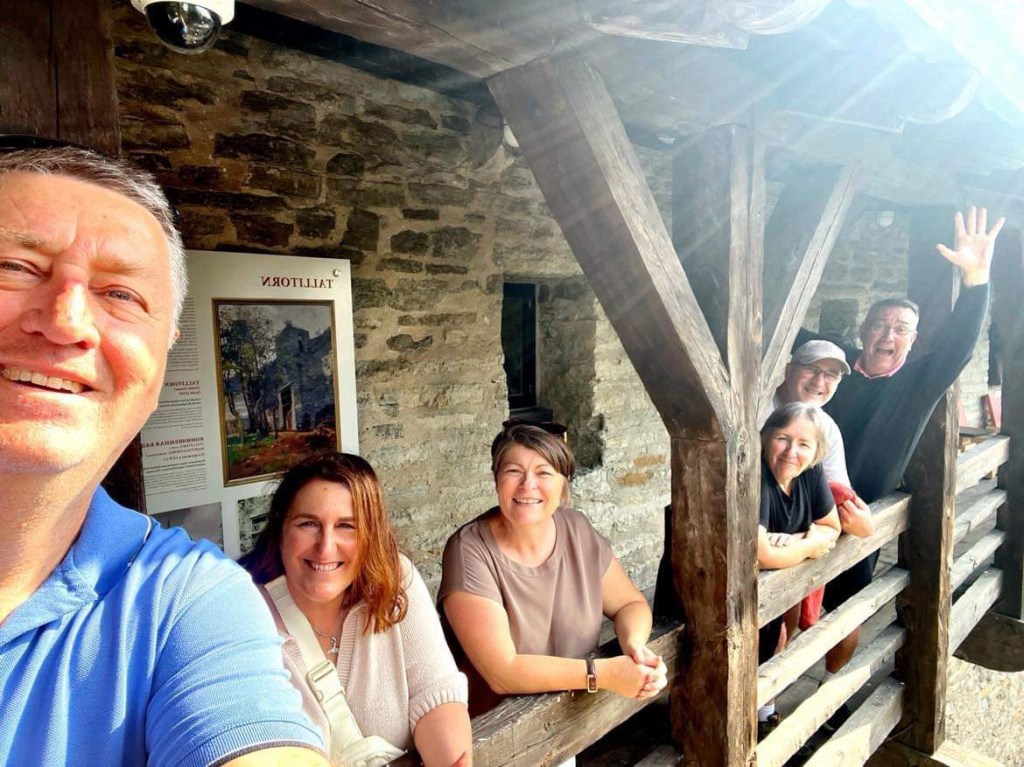
Next we visit “Kiek in da Kok”, (yes it is a funny sounding name 🤣), which is the largest medieval artillery tower in the Baltic states. There is a lot of ground to cover and a lot of stuff to see here.
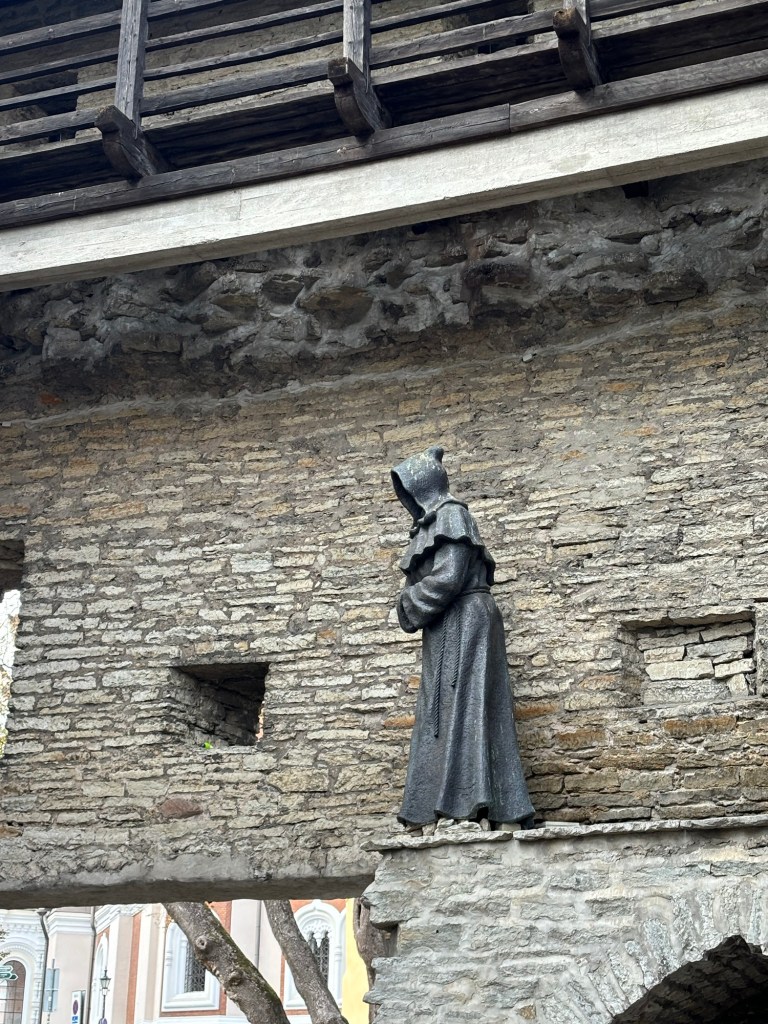
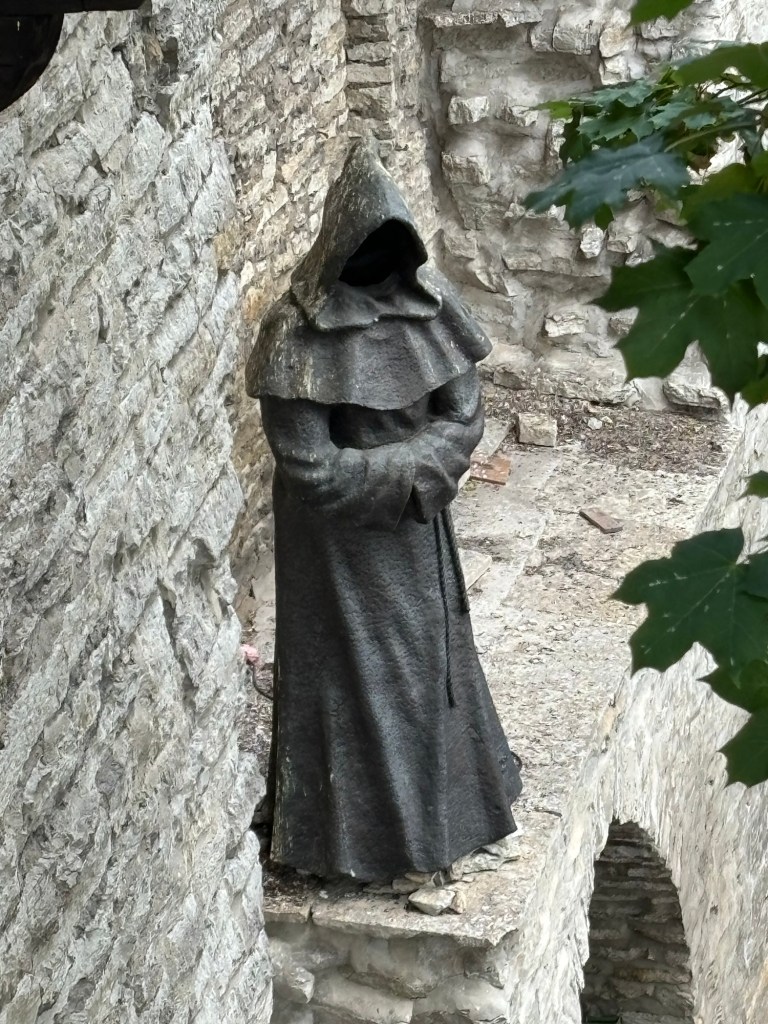
We see the faceless monks of which there are three spread around the courtyard.
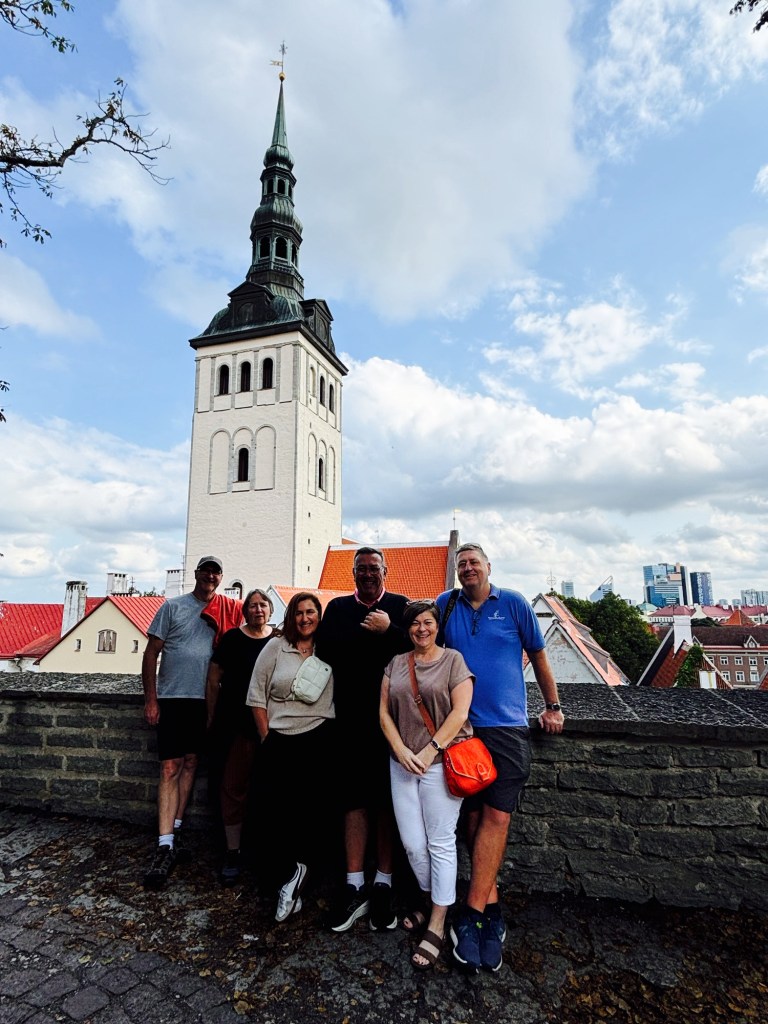
We enjoy more views of the town…
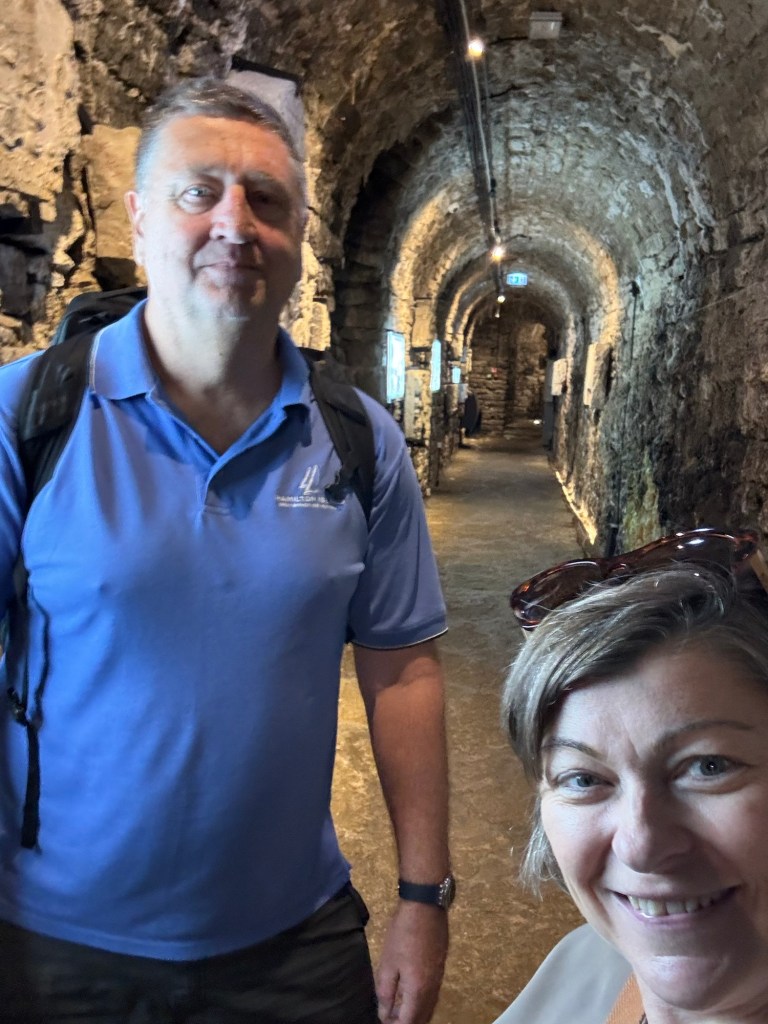
The last part of the museum complex allows us to explore underground tunnels called the bastion passages.
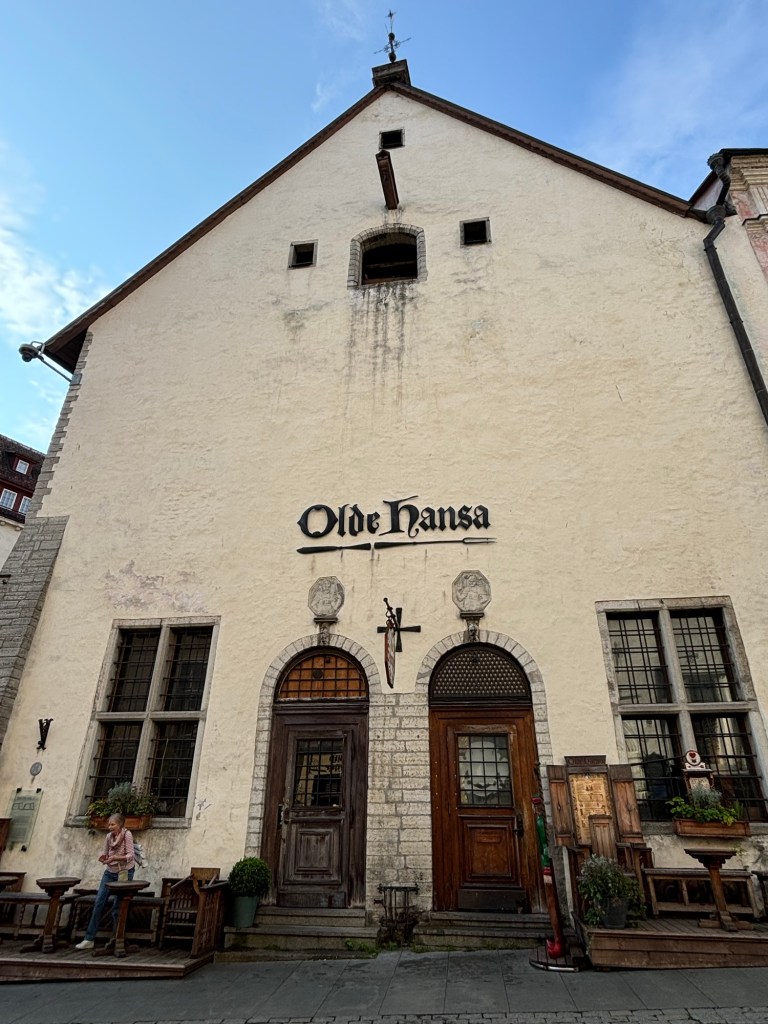
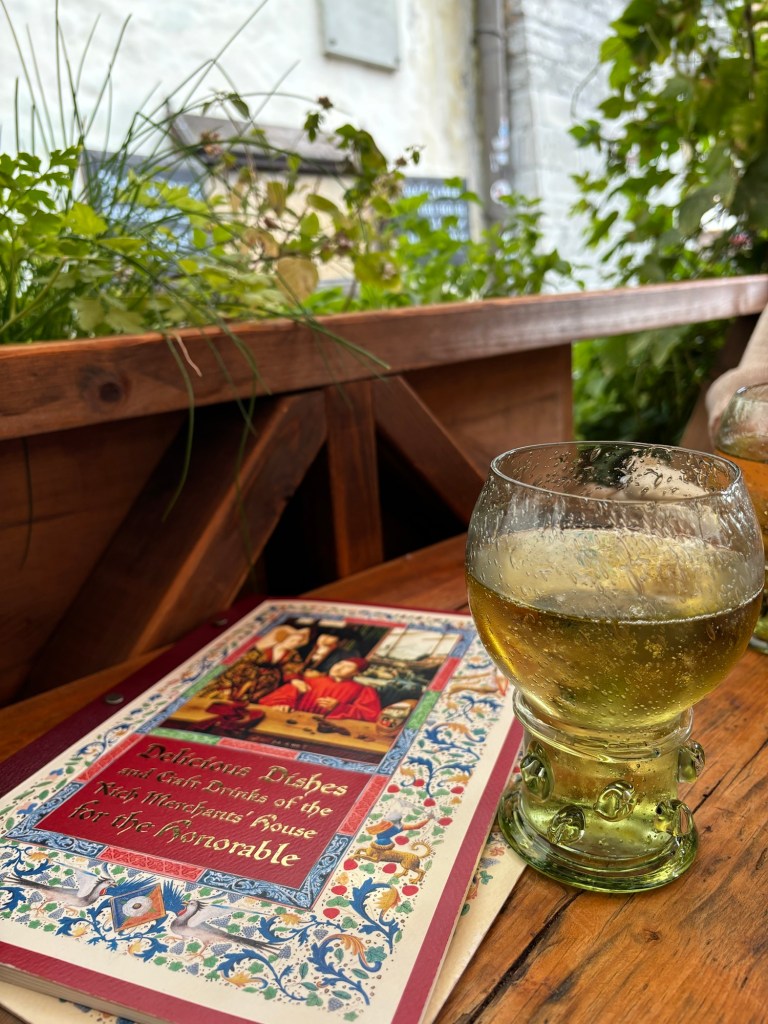
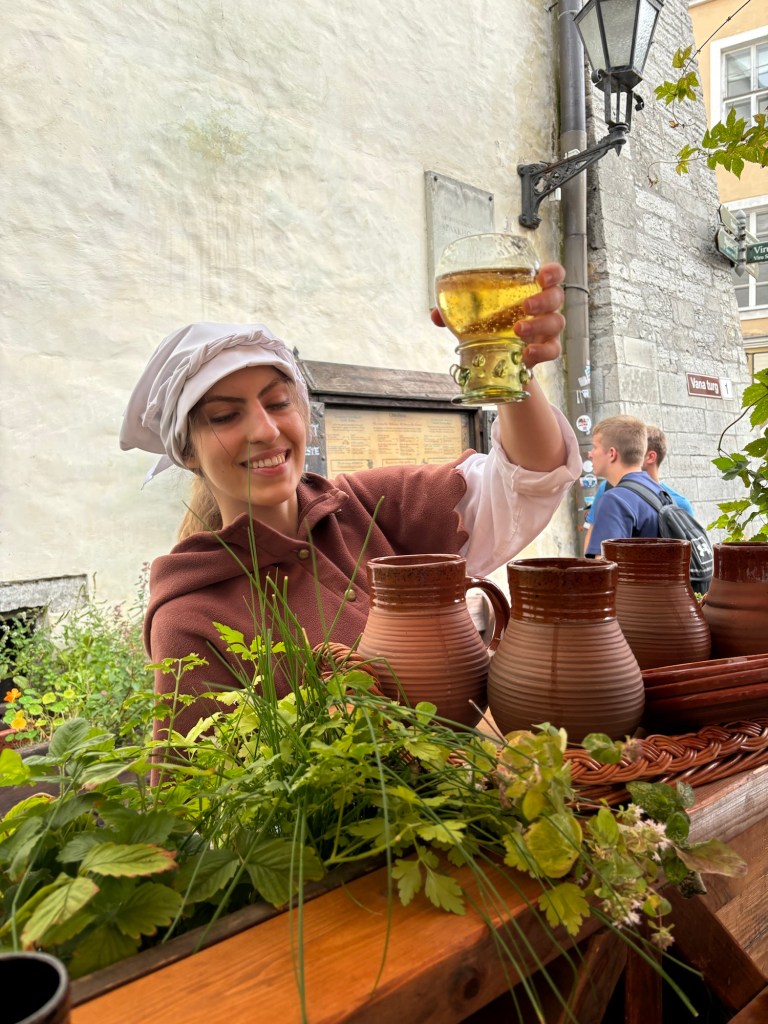
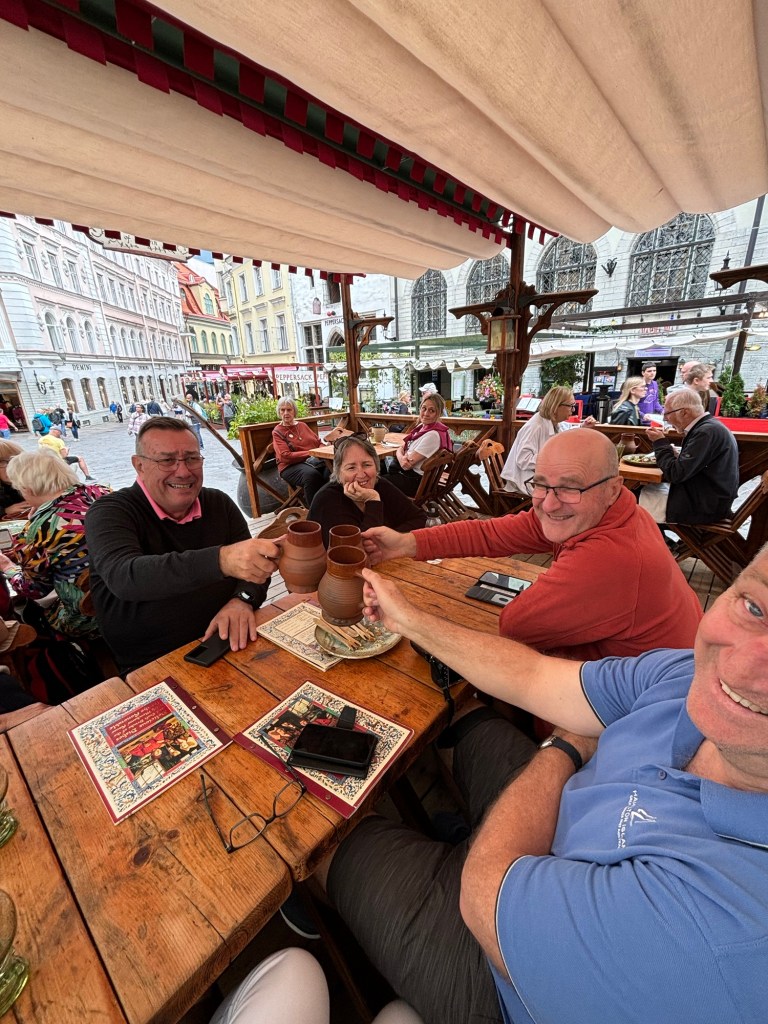
It’s time for a little rest after that huge museum so we decide to stop at Olde Hansa, off town square. This is a famous establishment that you see in most travel programs about Talinnn. The “wenches”, as the host who seats us calls them, dress in traditional clothing and serve our drinks in some very cool old tankards and glasses.
Now it’s time to hit the Banned Books museum. I came across this in my research (it’s an Atlas Obscura recommendation) but it hasn’t been open since we arrived. I’m very keen to check it out.
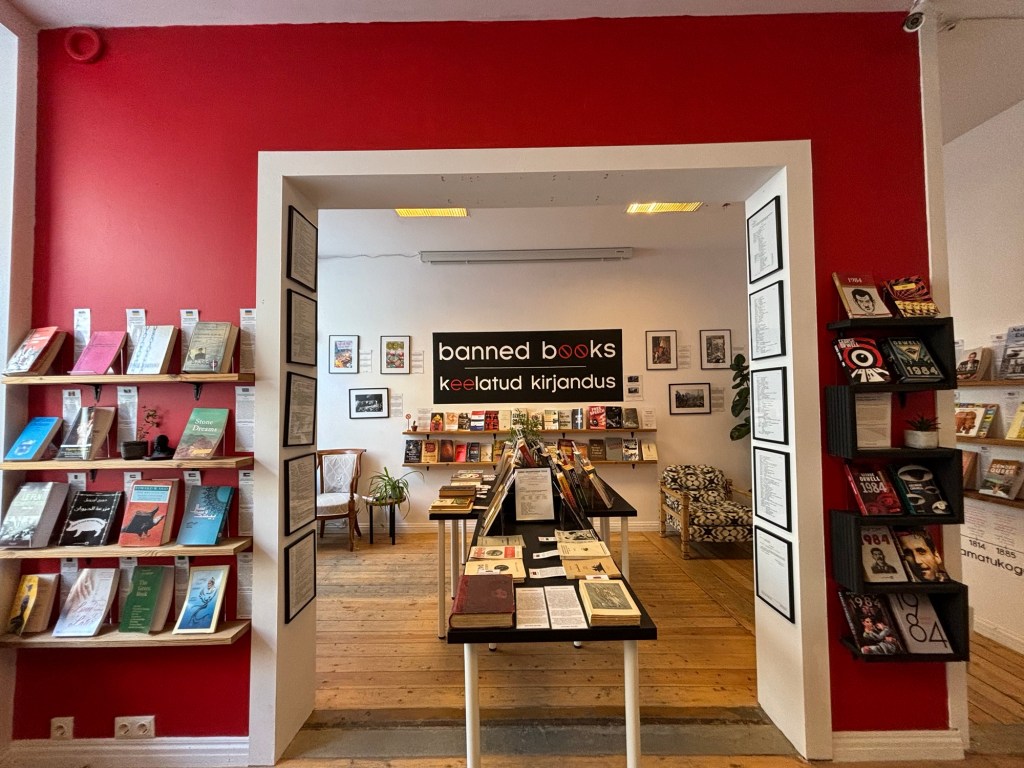
The Banned Books Museum collects and preserves banned, burned, and censored books from around the world. It is as politically neutral as possible, and they do not condone or condemn the content of the books in the collection. We chat to the museum director whose name is Justin, from Scotland and he tells us that they build the collection mostly from donations. I ask him if he is aware of, or has a copy of Edna O’Briens “Country Girls” and he knows it but doesn’t have a copy. I’m pretty sure I have a copy at home and he said he’d be delighted if I post it to him. How cool is that I may have something in the exhibit.
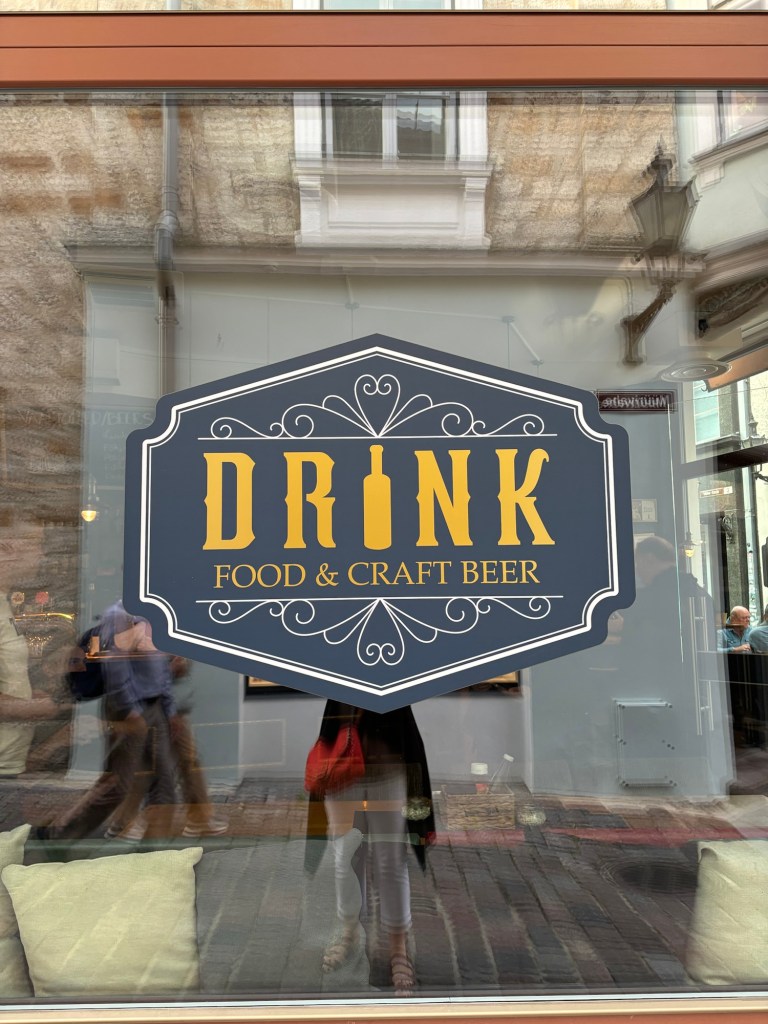
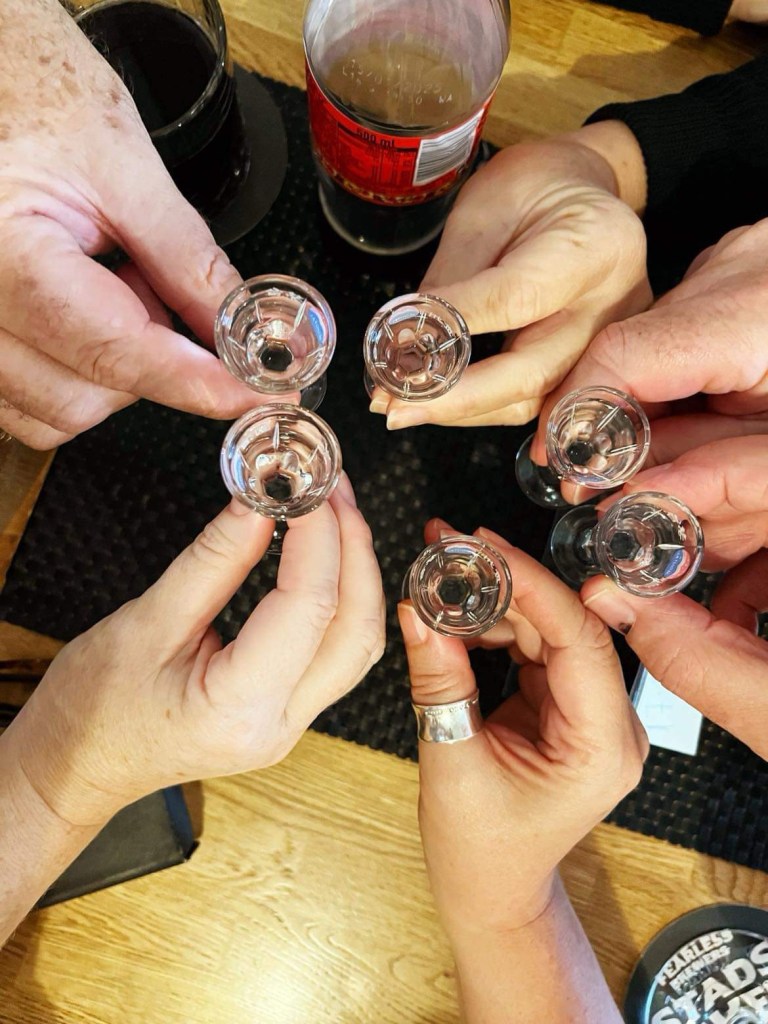
We find a craft beer bar simply called “Drink” and spend the rest of the afternoon drinking beer and cider with a light lunch of a spratt sandwich and Hungarian lard on rye bread. The lunch is served with a tiny glass of vodka!

This evening we have an easy dinner in a trendy diner type place, with plenty of youngsters! Were happy to rest up with an early night ahead of our big travel day tomorrow.
Next morning we leave Talinn and visit more of Estonia on the way to Riga. An energetic lady called Laura (pronounced Laauu-ra) picks us up in an 8-seater van and we set off for Viljandi which is about a 2 hour drive. We visit the remains of Viljandi Castle of the Teutonic Order. The main castle was actually a convent building which was conquered by the German crusaders in 1223.
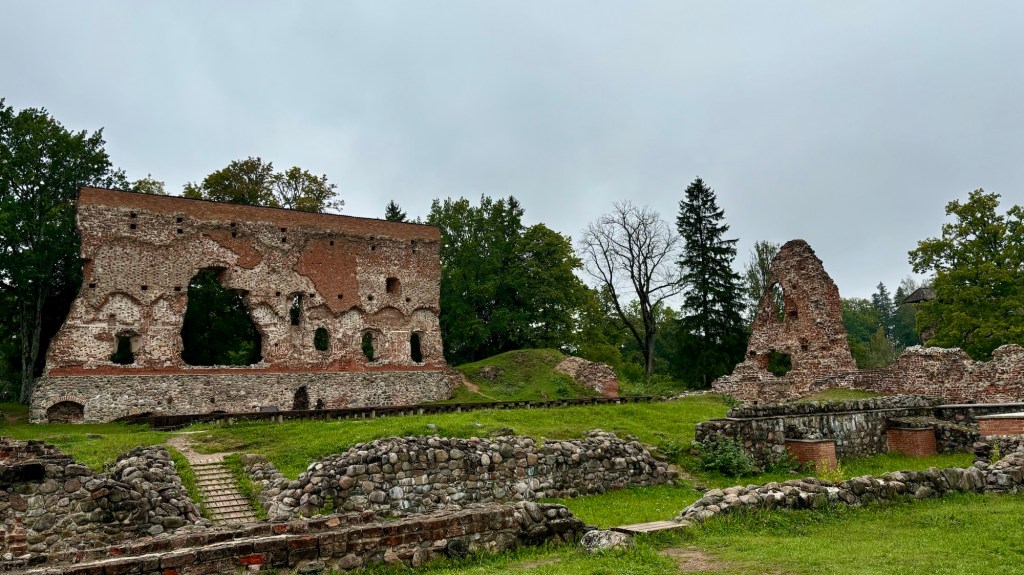
It was badly damaged in the Livonian war (between 1558-1583) and the Polish-Swedish wars (from 1600 to 1622/23) and it lost its remains of military importance in the Northern War (from 1700-1710). What a lot of wars!!
We walk around the picturesque grounds.

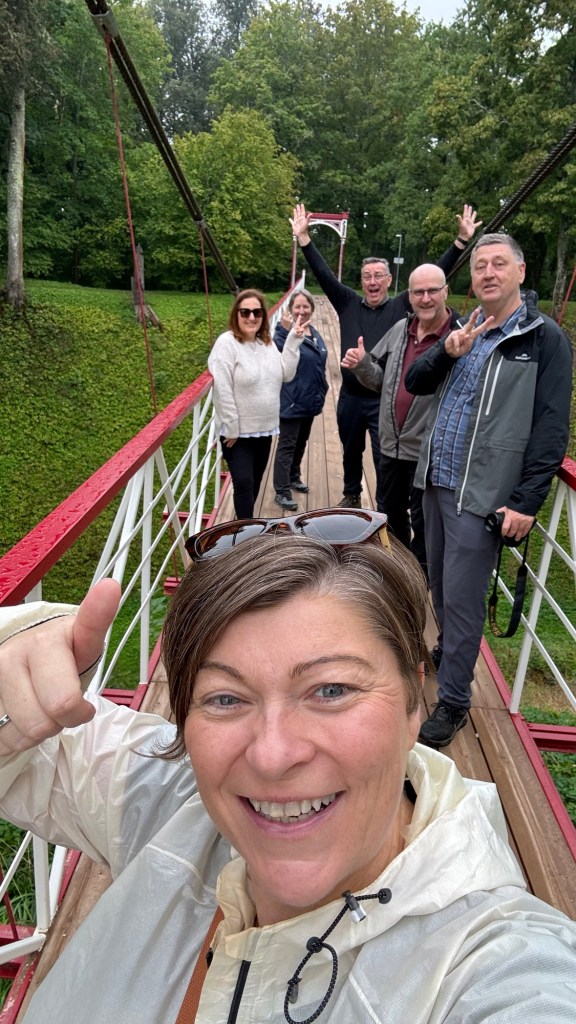
There is a suspension bridge which was built in 1879, originally on the moat of Tarvastu (a town not too far away). In 1930 the bridge was given as a gift to the town of Viljandi.
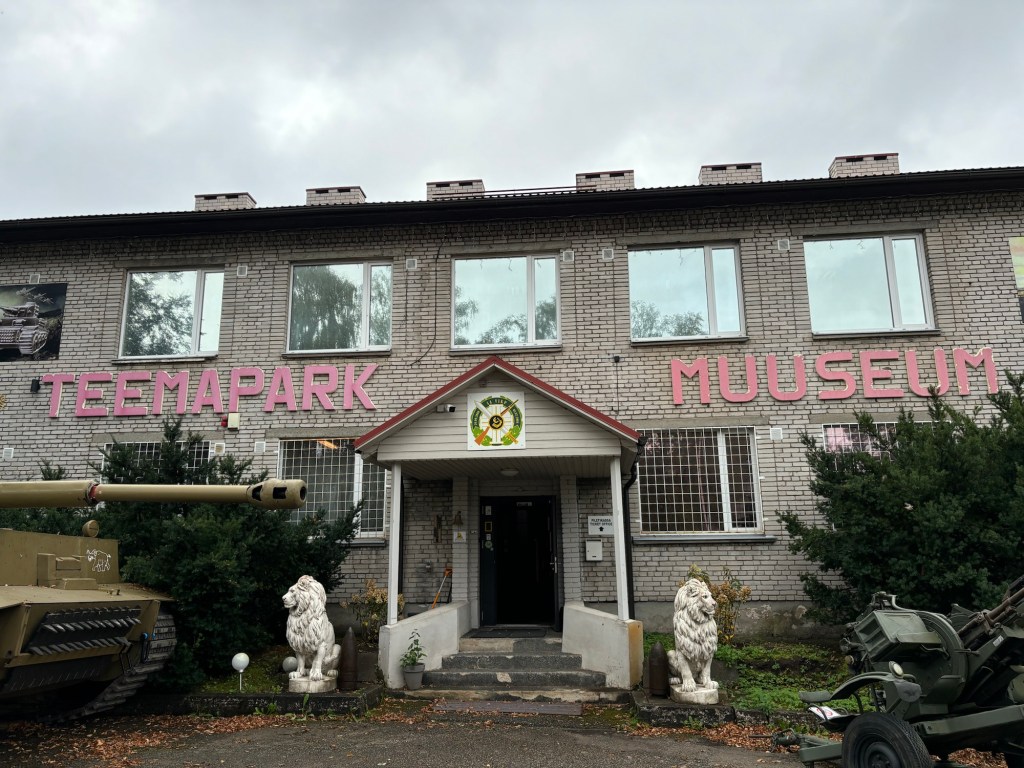
Back in the van, we travel another hour to Valga. Here we visit the military museum and see various memorabilia from the time of the Nazi occupation and the Soviet occupation.
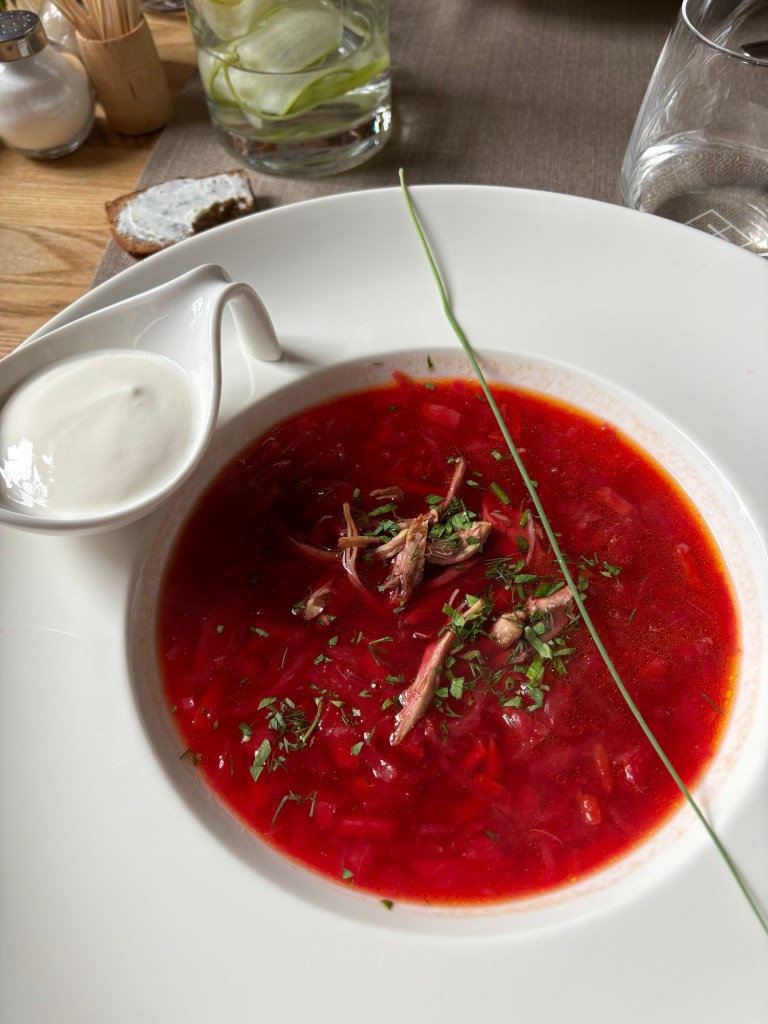
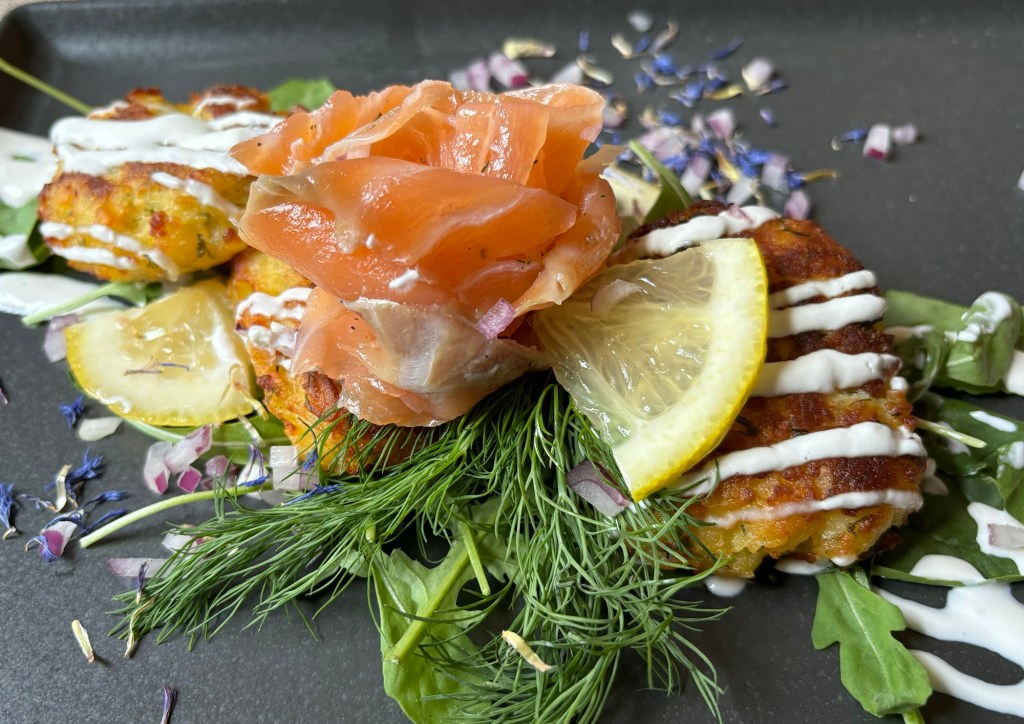
Valga is a border town so we have our last Estonian meal before crossing the border into Latvia… that will be in the next instalment of the blog.
So long Estonia, you’ve been fabulous!

 odohertyelaine
Hello! Estonia looks like a nice place to visit. Thanks for sharing.
LikeLike