Day 5: We leave Samarkand and it’s about a four hour drive west to Bukhara. En route we stop in Gijduvan, which is famous for its ceramic pottery. We visit a ceramic pottery workshop which has been in existence through six generations. We see some antique pottery in the small museum which has some great old photos of the master Potters over the years and we witness the pottery process from throwing to firing to decoration.

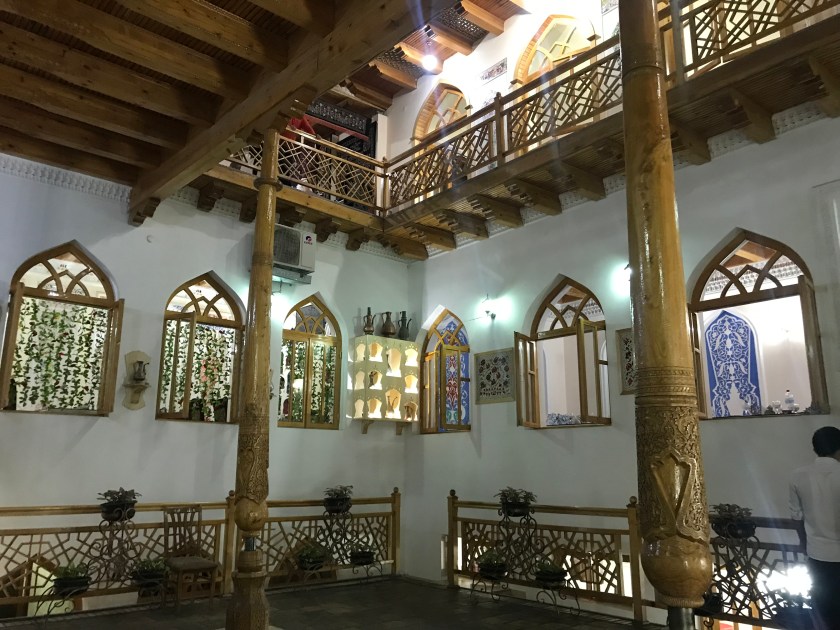
It’s already 8pm by the time we reach Bukhara but we have three nights here so two full days to see everything… and it looks like there’s a lot to see. After a quick drop of the bags to the hotel we go to a restaurant called Chayxana Chinar where we have more meat, salad and dumplings. I’m getting used to this Uzbek red wine and we enjoy our first Bukhara meal at this unusual terraced building.
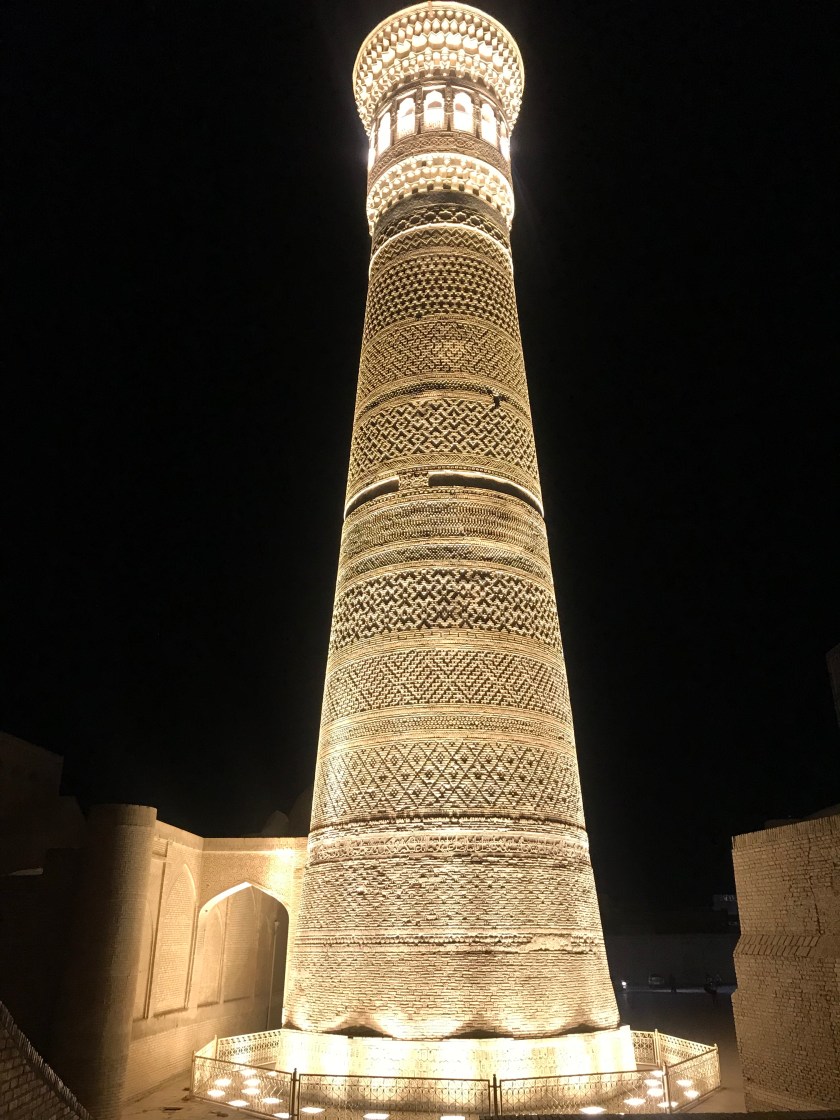
After dinner we take a walk around and come upon the “Golden” Minaret aka Kalyan minaret. It is stunning by night. It’s on our tour for tomorrow but it’s awesome to just happen upon it when lit up. You can see why they call it golden – it’s magnificent.
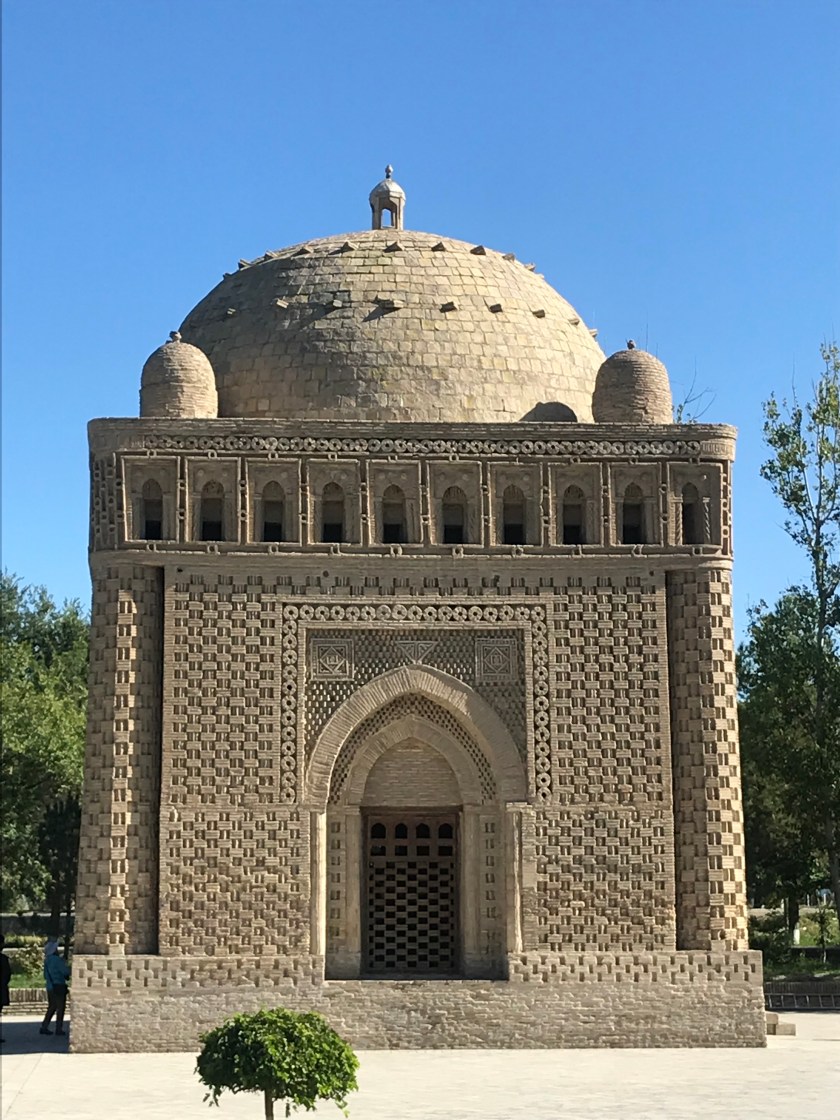
Day 6: Bukhara is considered the holiest of cities in Uzbekistan. It has many historic buildings dating from the 8th to the 18th century, some in ruins, some meticulously restored and some in mid restoration. We start our first day of site seeing by visiting, yes you’ve guessed it, a mosque and a mausoleum! The Ismail Samani mausoleum is the oldest Muslim monument in Bukhara, dating back to the 10th century. It survived the centuries of invasion as it was covered in sand. It’s oddly situated within an amusement park with rides and a Ferris wheel!
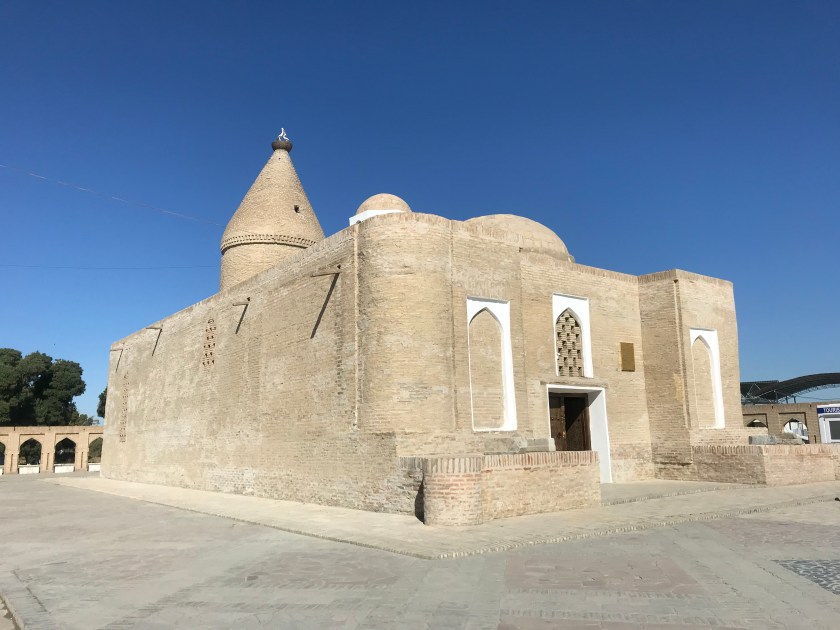
The Chashma Ayub Mausoleum is famous for its alleged healing water. Its name means Spring of Job and legend is that the prophet Job stuck is staff in the ground and a spring appeared, who’s water then cured him of his many boils and ulcers. There are taps and some people drink a sip of the water but I’m content just to take a bit in my hands (not chancing a dodgy belly).
Walking between mosques we see a local cooking samsa in the large clay ovens. He shapes them and sticks them to the sides… love it!
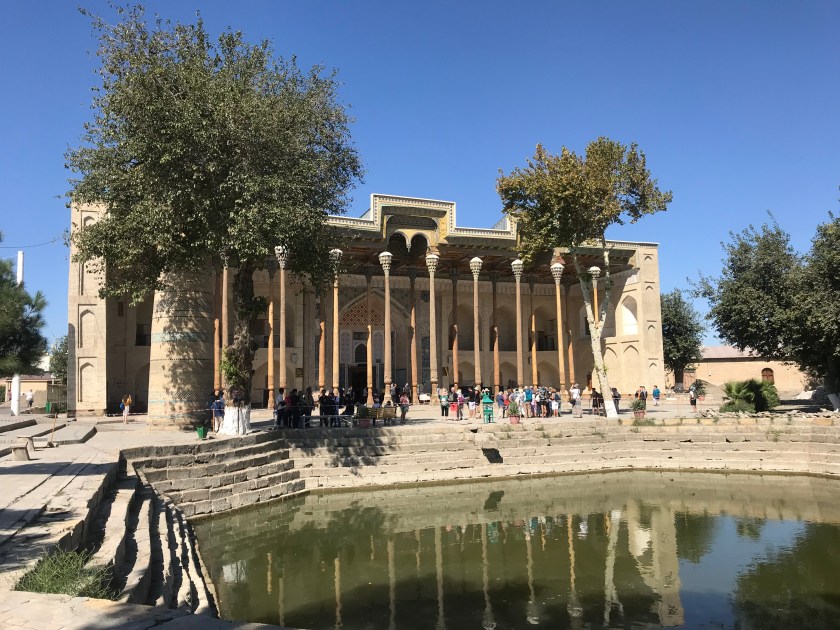
The Bolo-Khauz Mosque was built in 1718 and as it sits opposite the Ark (home to the Emirs) it was the official place of worship for these leaders. Most of the painted wood and carved columns are original.
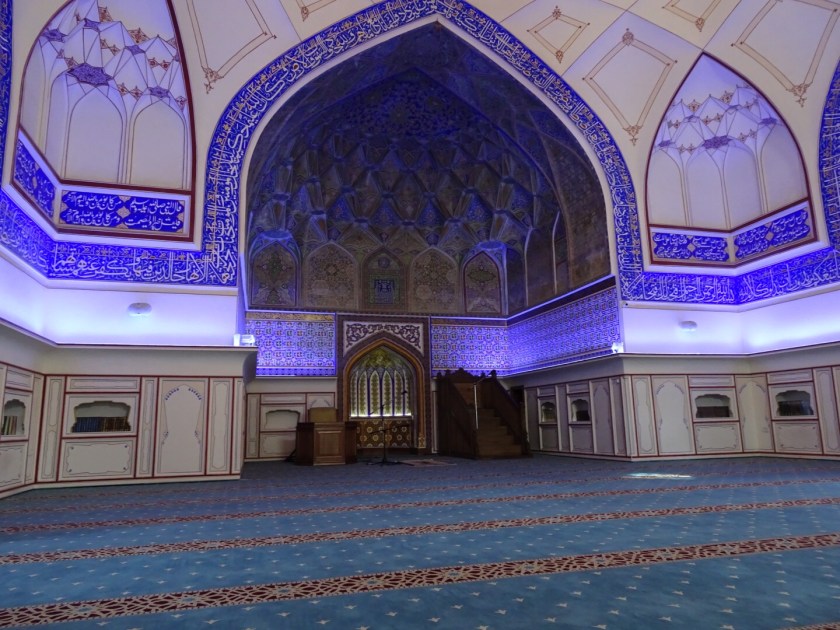
Inside we sit on beautiful silk carpet and look at the ornate blue decorations
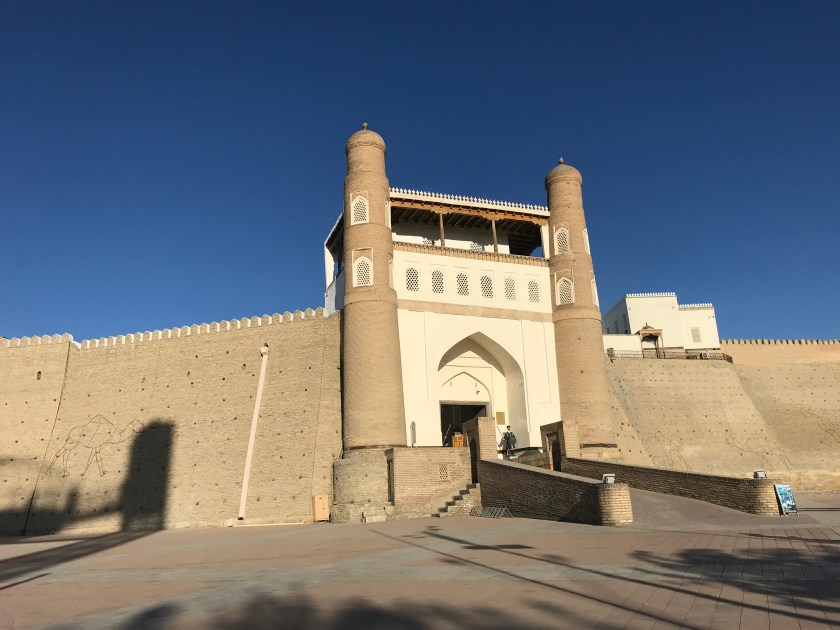
From here it’s a short walk to the 5th century Ark fortress which is the ancient heart of the city and home to the Emirs of Bukhara. Later this evening, with some free time, we will walk around the entire building but for now we go inside and view the many museum sections detailing the history of the ruling Emirs.
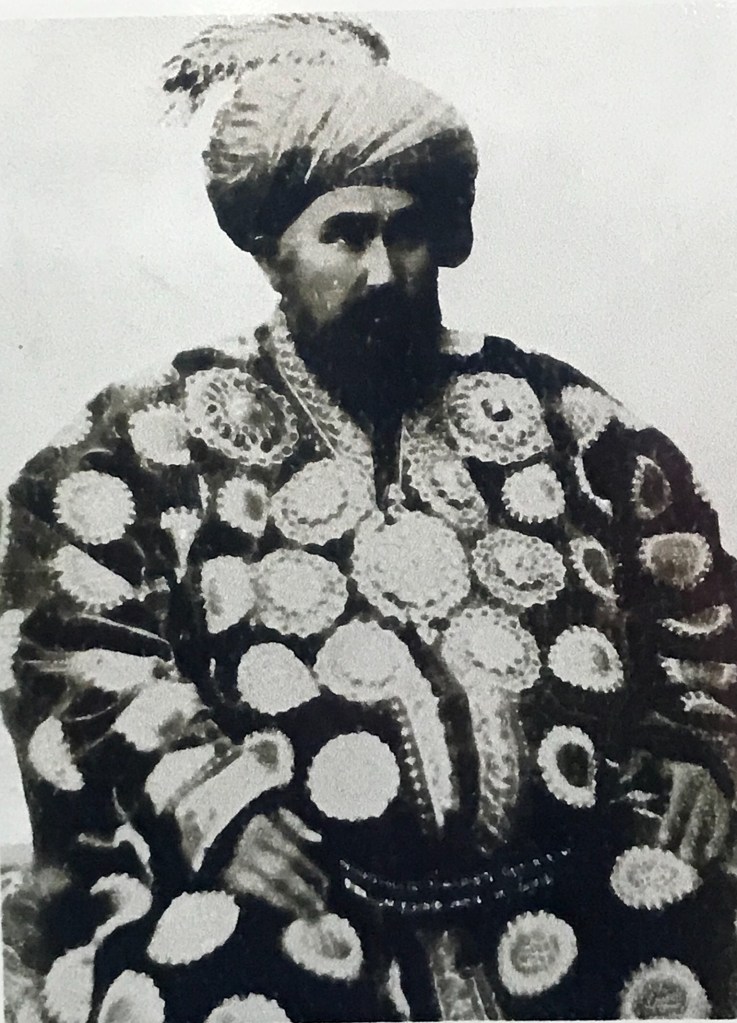
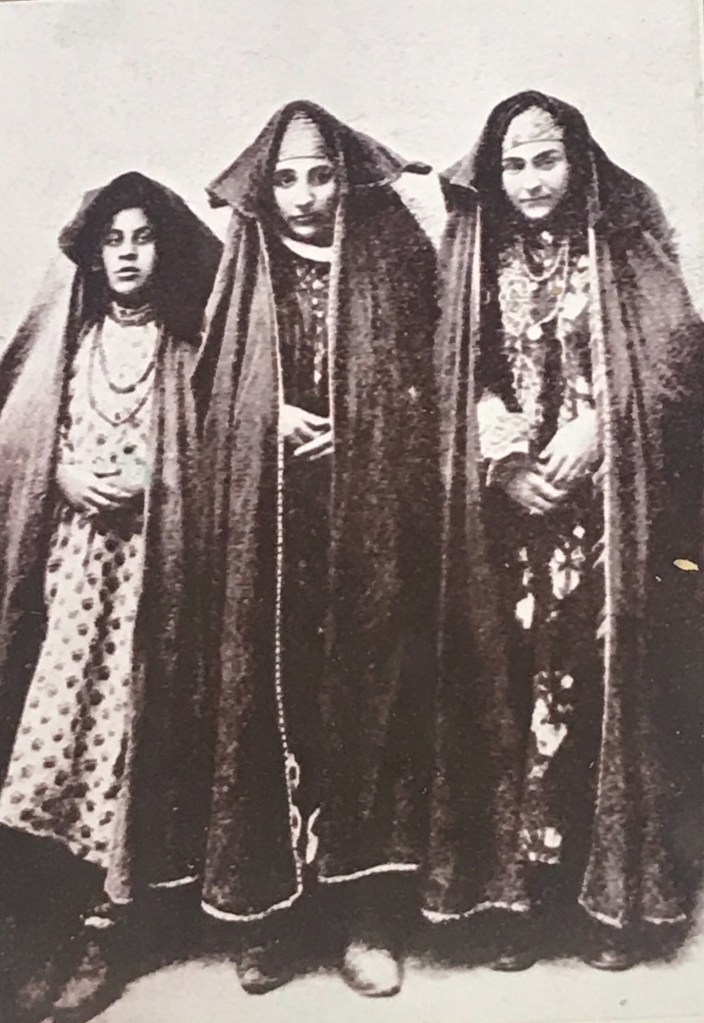
The Ark was inhabited right up until 1920 when the Bolsheviks invaded from Russia. There are some great exhibits of clothes and old photos. This Emir – Muzaffar (1861-1885) is definitely my favourite:
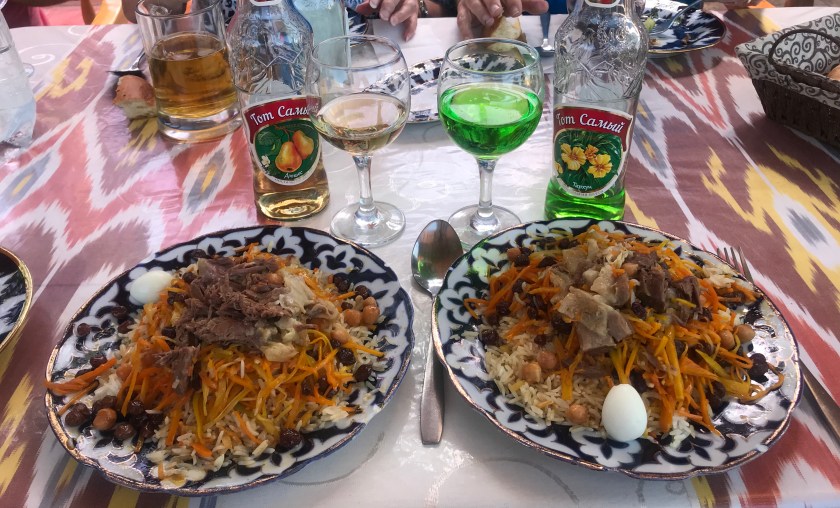
The guide has chosen the restaurant that we visited last night for lunch but we don’t mind as apparently they do a great plov. It is indeed a good one, served with a quail egg and washed doing with some interesting lemonade.
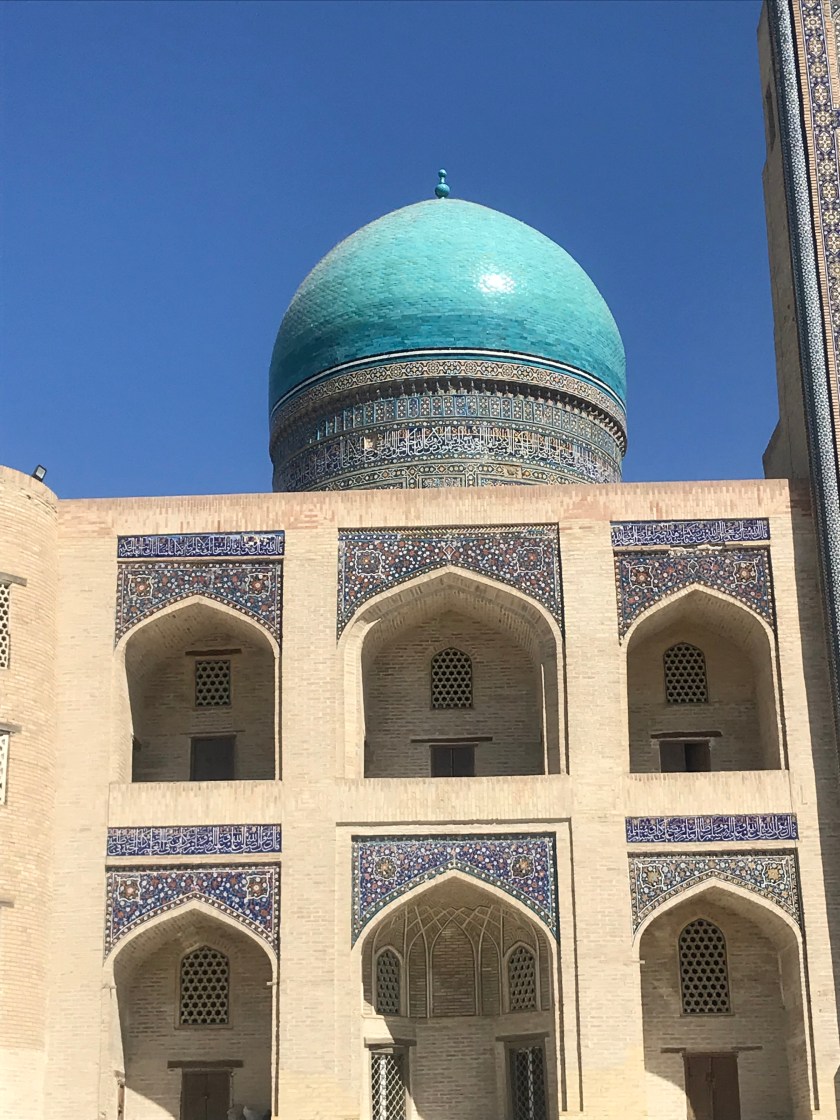
After lunch we visit the Poikalon complex, comprising the Kalon Minaret (the golden one we saw last night), the Kalon Mosque and Mir-i-Arab Medressa. It’s all about the m’s – mosques, mausoleums, museums and minarets! Again we admire the beautiful architecture of the buildings.
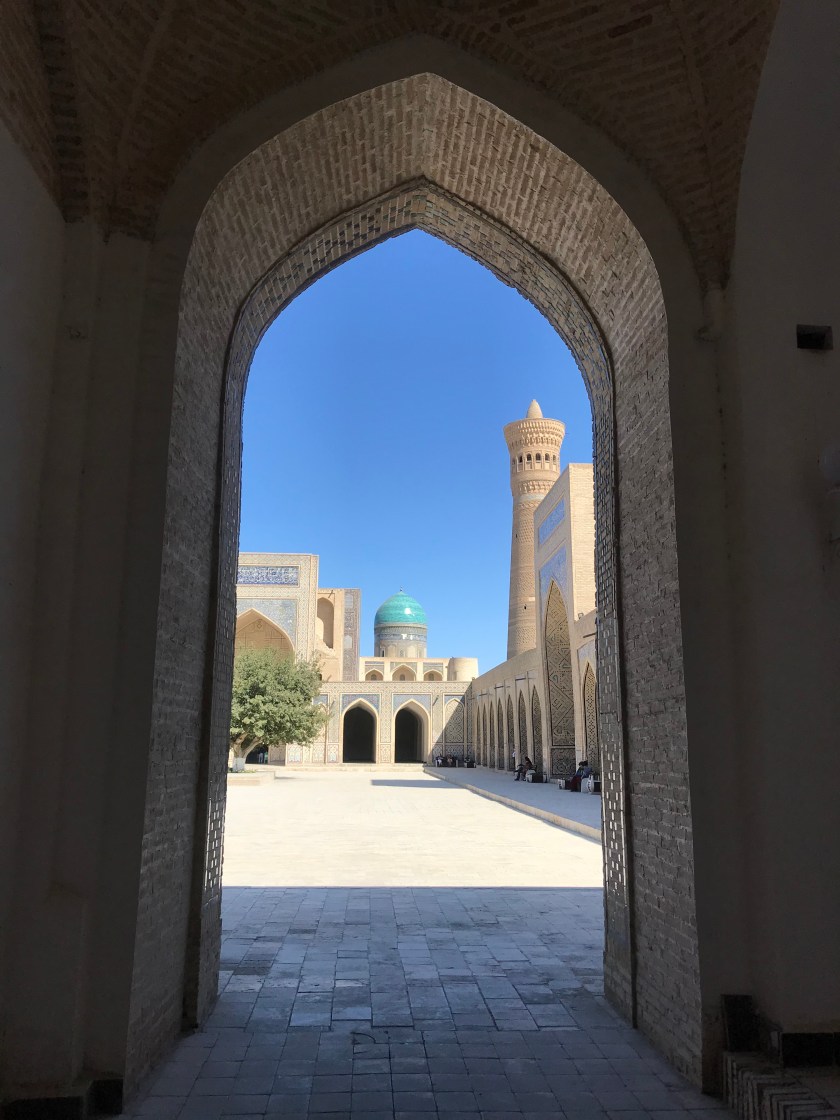
I’m starting to figure out how to tell the buildings apart. The mosques always have a dome which sits over the area where people pray and a minaret which is where the call to prayer occurs. The medrasas (the place for teaching the quaran) have individual rooms which were for the students.
We skip the next tour activity which is to go to the carpet and textiles workshop and instead we wander through the streets, taking in a few more of the local buildings and sussing out where the locals live. The homes are very basic on the small side streets:
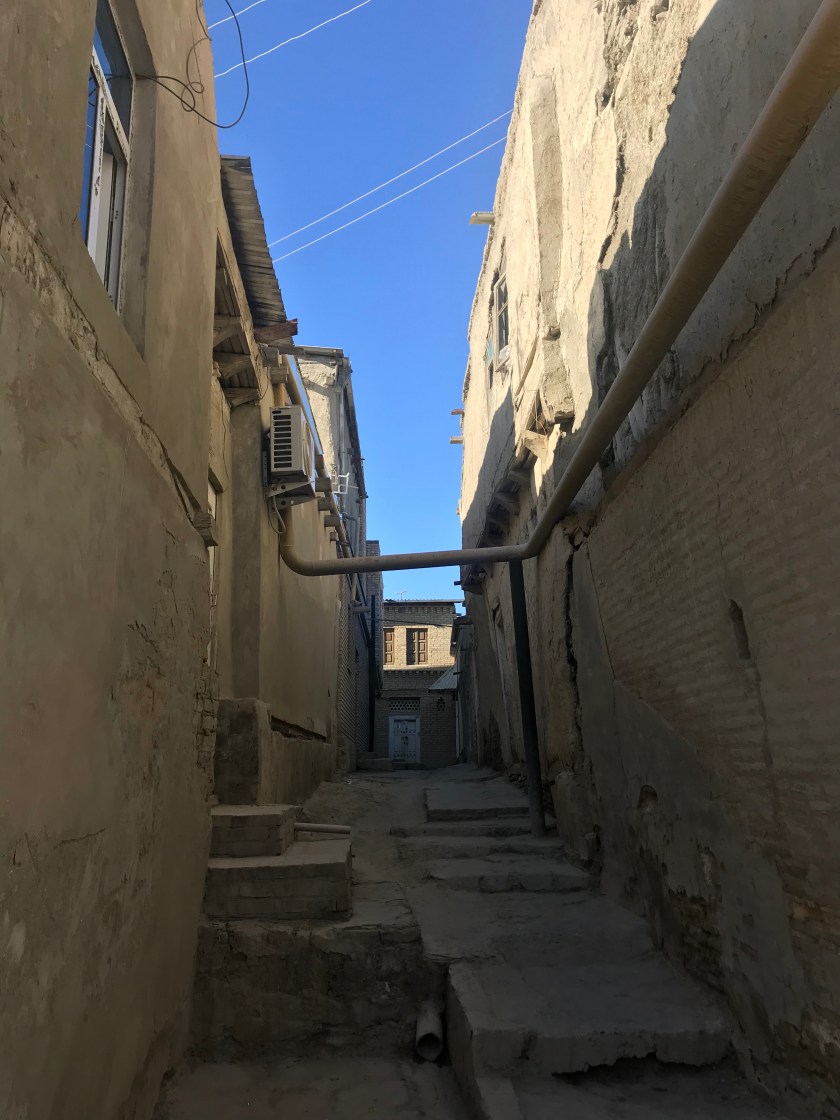
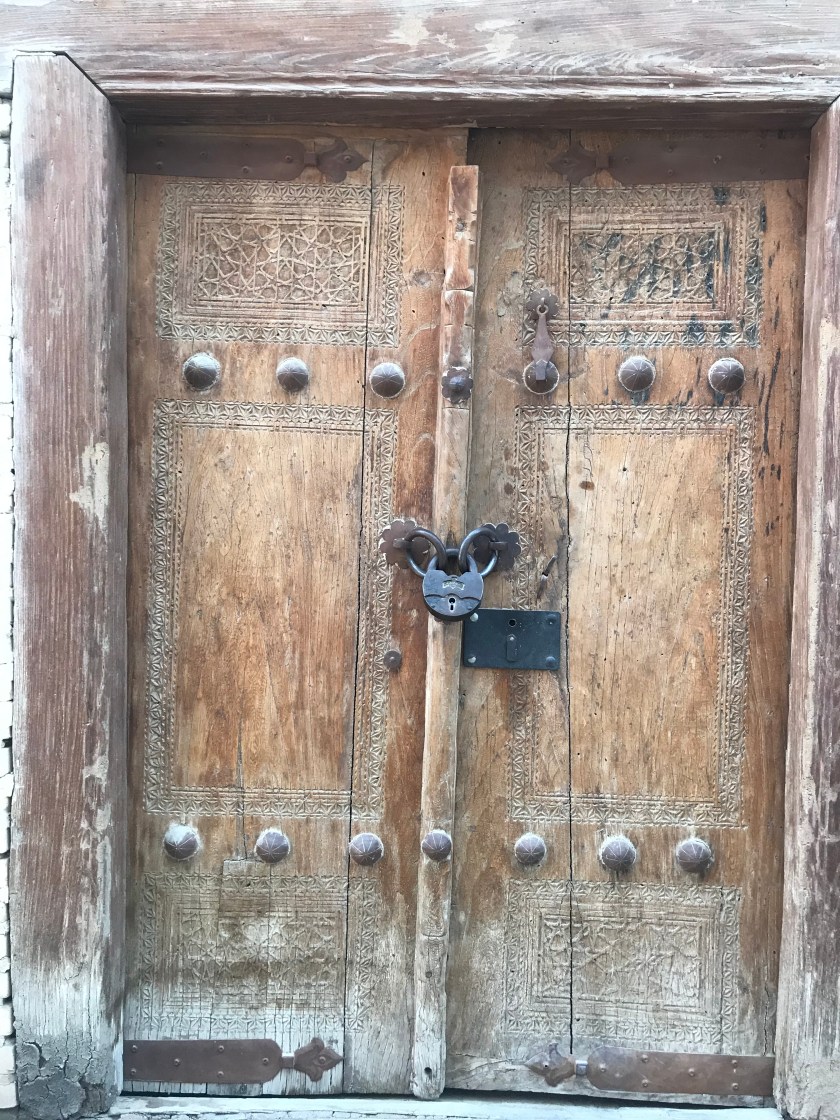
Many of the homes are behind large doors which open onto a courtyard.
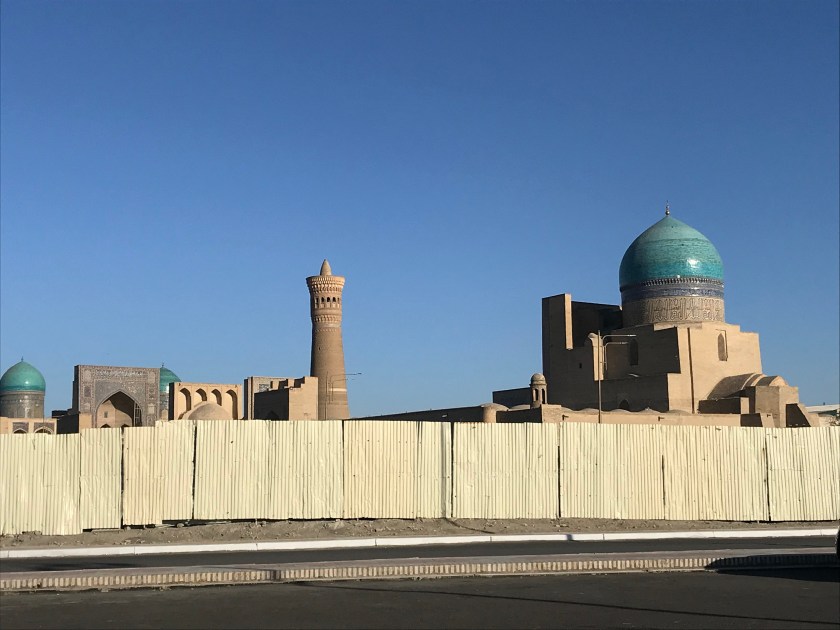
Here, similar to Samarkand, they are separating the historic area from the local homes.. this sheeting is so ugly… hopefully in time when they’ve restored buildings and built some better infrastructure they’ll take them down.
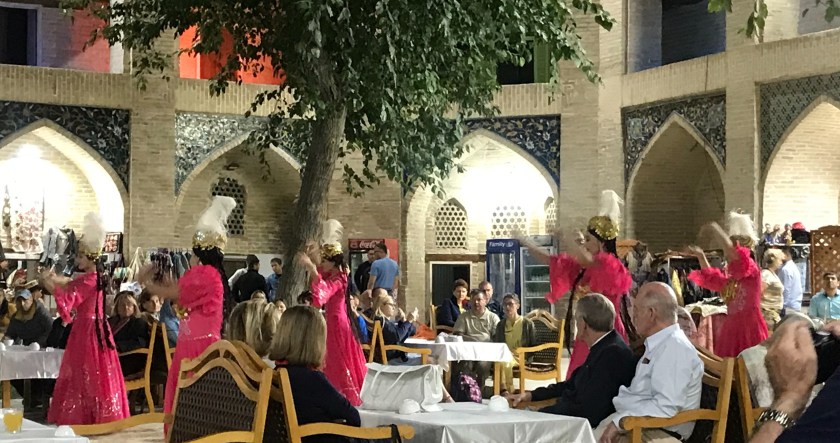
We have a group dinner with a folklore and music performance tonight. It’s in one of the old domes where trading on the Silk Road took place. There’s a mixture of traditional dancing and fashion show….
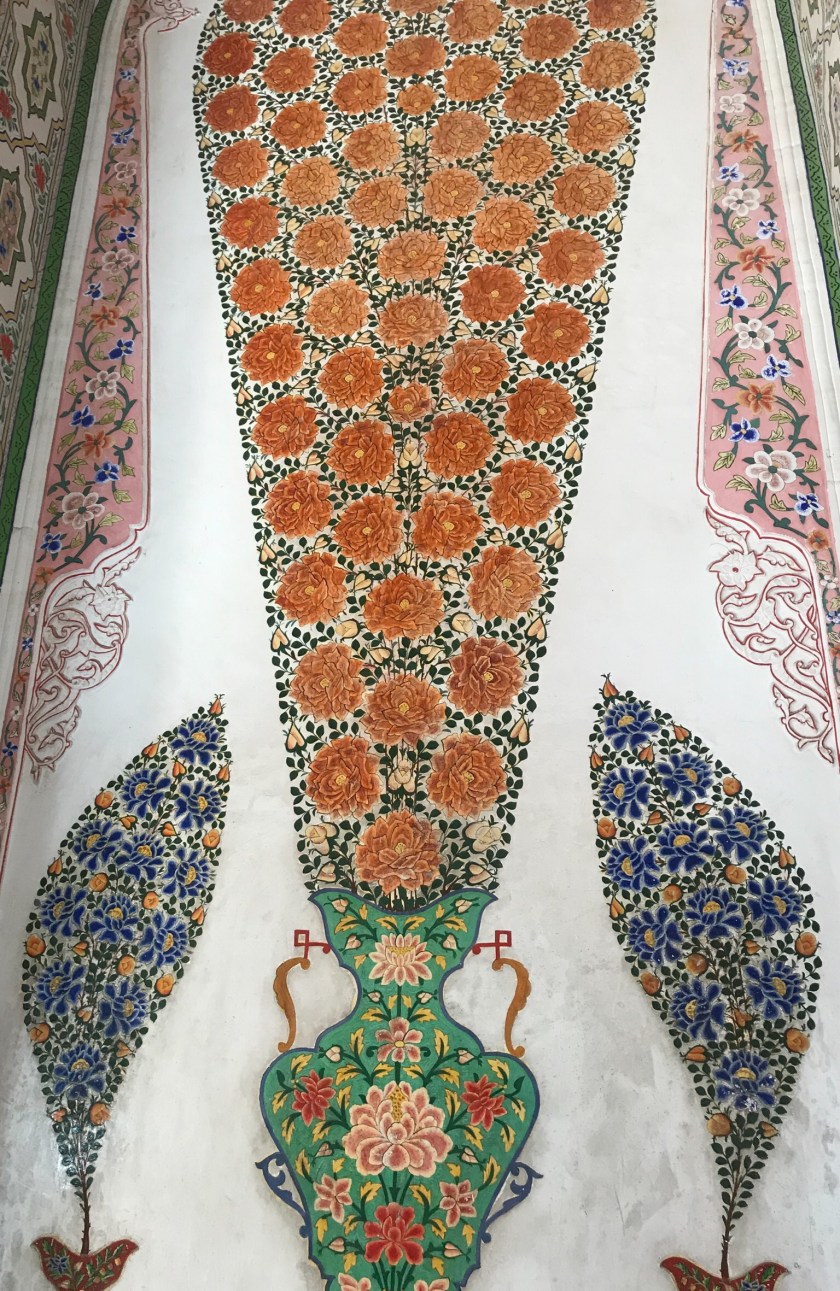
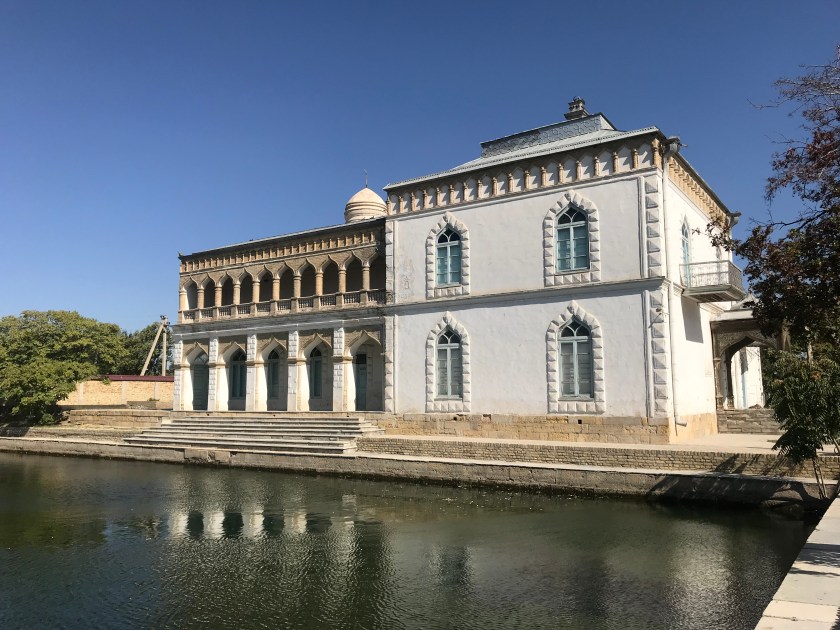
Day 7: We start with a visit to Sitorai Mohi Hosa (Star and garnet garden), which was the summer palace of the last emir. Its opulence is reflected in the combination of local and European influences in its designs and furnishings. The halls are richly decorated with carpets and paintings and I particularly like the coloured flowers on the walls.
He had four wives and forty concubines who lived in this harem. The pool in front of the harem, where allegedly the women “frolicked” is overlooked by a wooden pavilion from which the Emir supposedly tossed an apple to his chosen bedmate… the state of him!
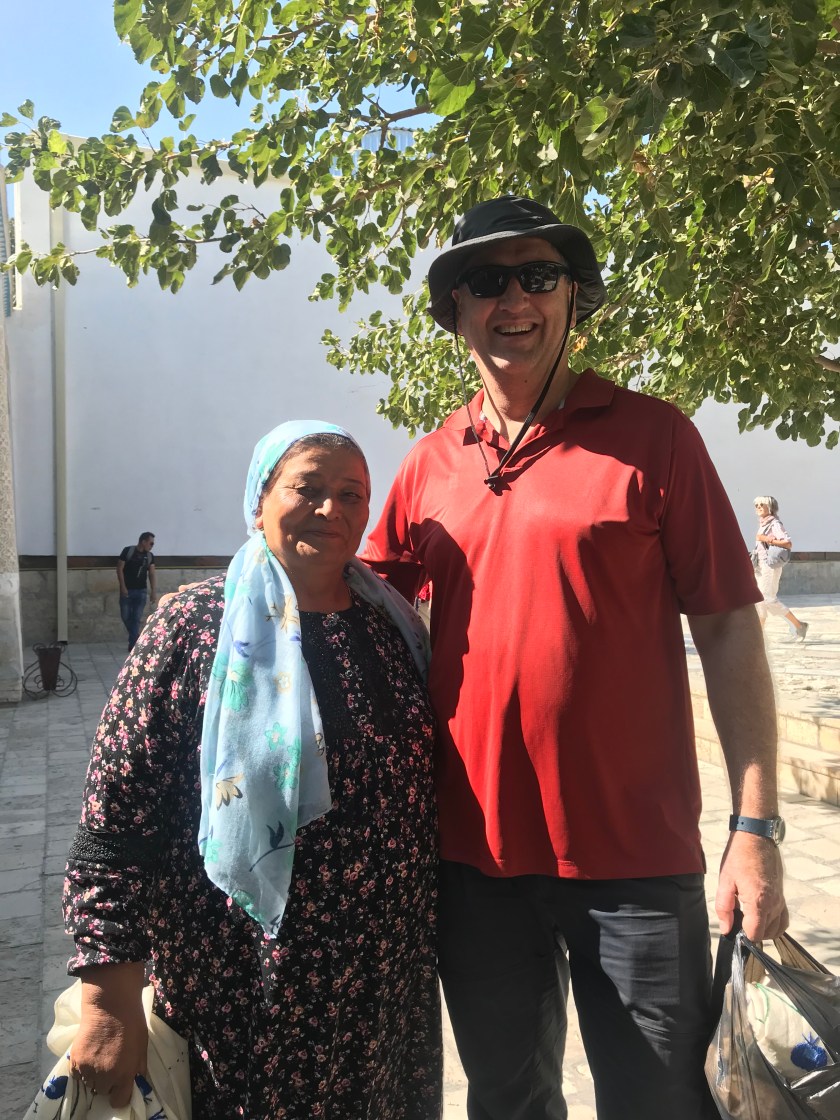
Leaving the palace I buy a couple of hand embroidered tablecloths from a lady. I point to my camera to ask if I can take a picture with her and she smiles and seems only too delighted to. Like a flash she’s moved beside Shane and put her arm around him! We have a giggle with her and she runs back to her shop to get a small purse as a gift for me and she blows me a kiss!
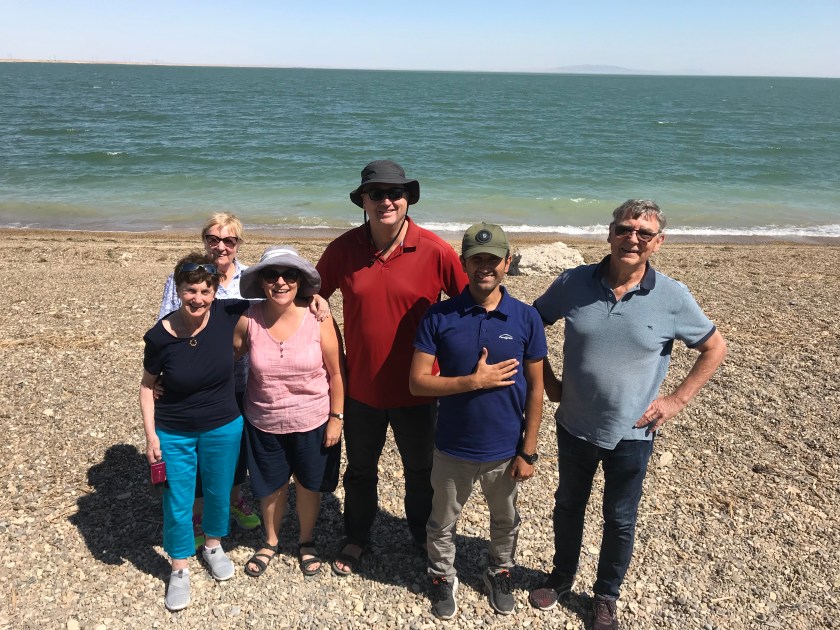
Next there’s an opportunity to visit lake Tudakul which is a huge lake measuring 427 hectares that looks more like a sea in this double landlocked country. [side note: Uzbekistan along with Liechtenstein are the only double landlocked countries in the world]. There are even waves and we have a little paddle.
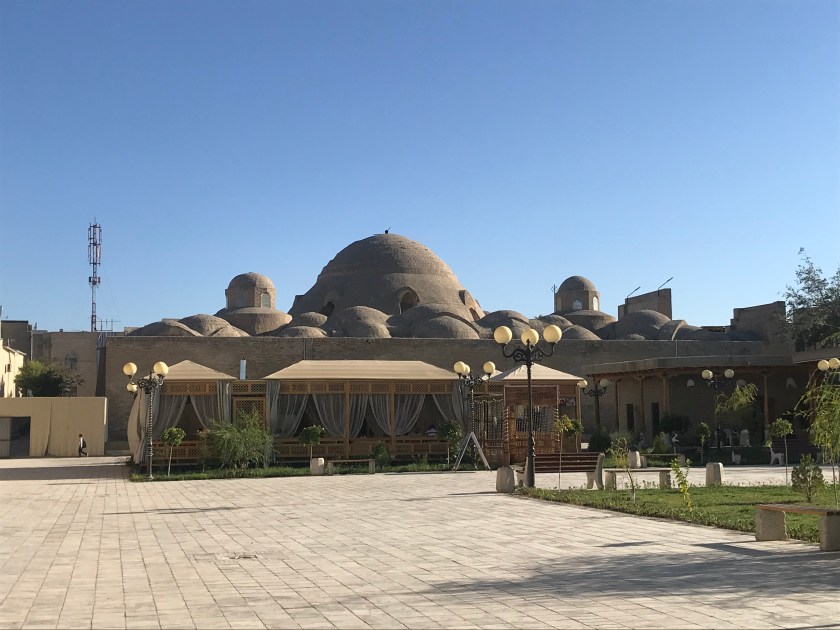
Back in town, after another great lunch, we visit the city’s trading domes (covered bazaars) which still offer an intriguing and colourful array of goods including embroideries, jewellery, spices and handicrafts. In the 16th century Bukhara was a major trade, craft, and administration centre on the Great Silk Road. The city was famous for its bazaars, places of trade, meeting and entertainment. The reigning dynasty built a great dome over the main crossroads and smaller domes over the side streets. At its peak, as one of the richest cities along the route, there are estimated to have been 50 bazaars and 75 caravans. Now there are only three of these domes left, but they still buzz with activity and give a glimpse of how things would have been.
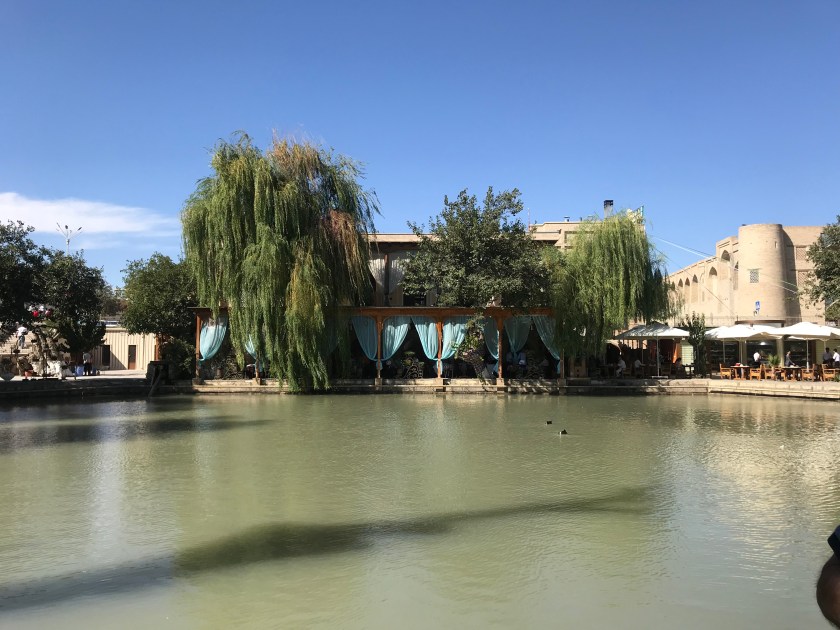
Our hotel (Maliki) is just off Lyabi Hauz – a pool of water surrounded by ancient mulberry trees, in the Old Town’s centre. We see ruins of the caravans – accommodation where the traders stayed when the caravans came through.
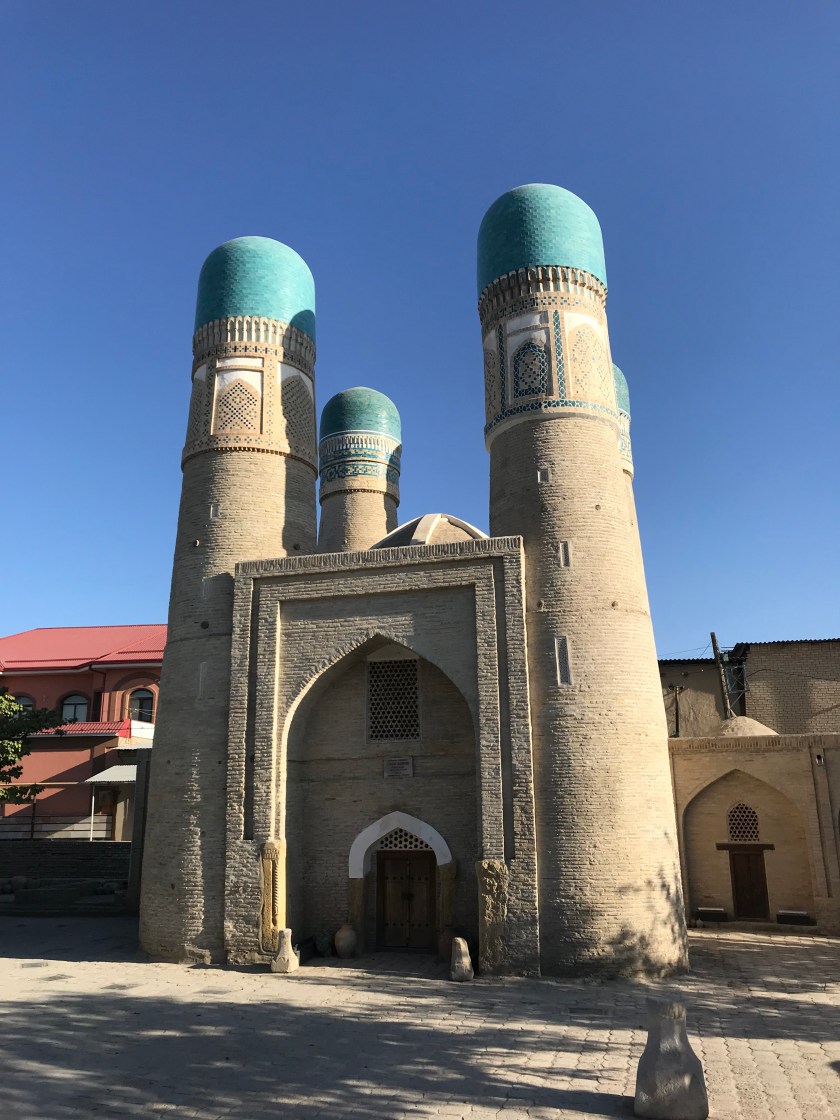
Next morning as we leave Bukhara, we do a quick stop at the unusual four minareted Chor Minor. From the road we walk through a maze of alleys and as it’s only just past 8am there are no other tourists around. It’s a small, photogenic building and a nice end to our tour of Bukhara.

 odohertyelaine