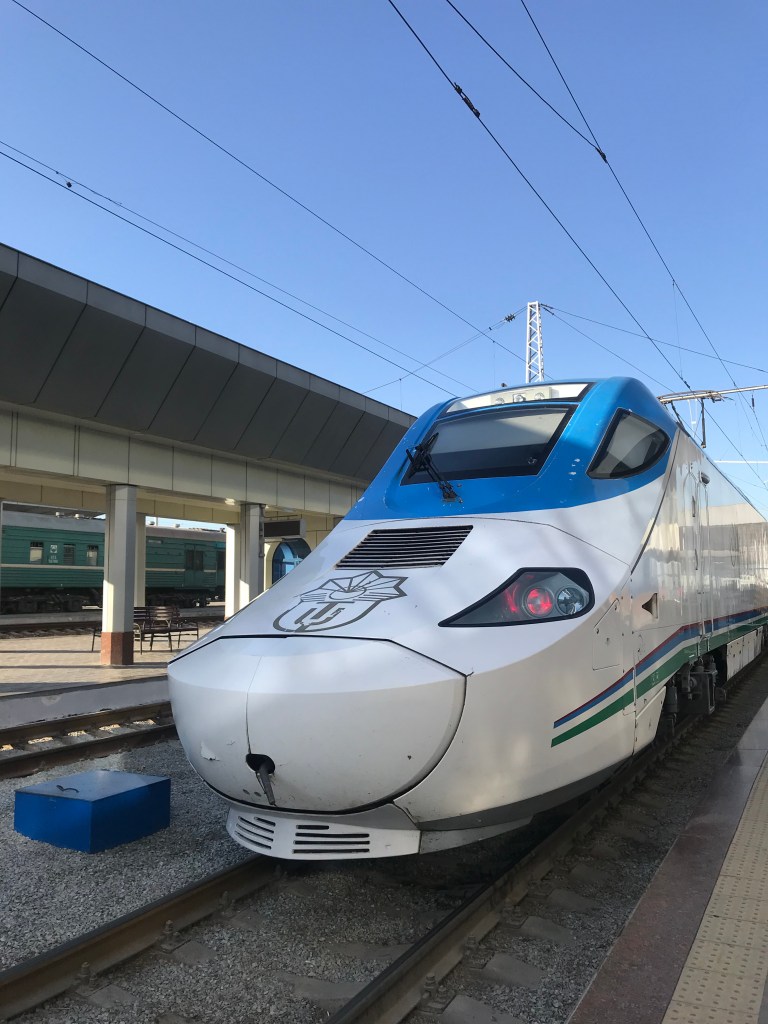
Day 3: This morning we have an early start as we are taking the high speed “Afrosiab” train to Samarkand. It takes just over 2 hours and is a fairly smooth comfortable ride in a business class seat! The landscape is flat and there’s not much of note along the way.
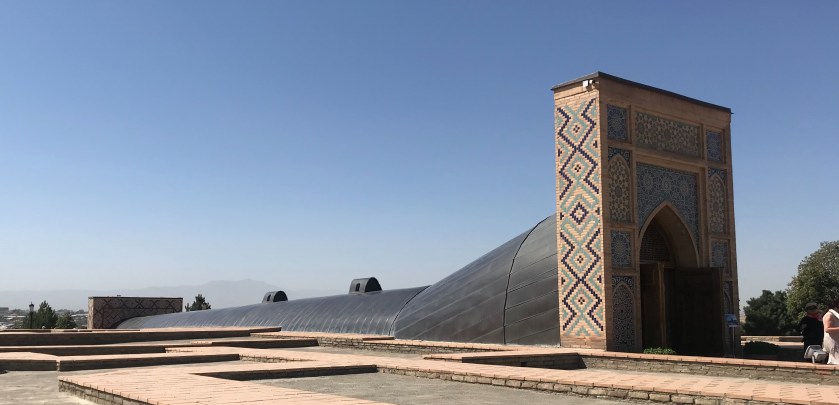
Samarkand has a rich history and been ruled by many including Alexander the Great who stormed its walls in 329 BC, Genghis Khan, Timur (who we heard about in Tashkent) and the Soviets, who declared it the original capital of the Uzbek SSR in 1924. We head to the Ulugbek Observatory, built in the 1420s by the astronomer Mirzo Ulugbek. He was actually a grandson of Timur and this observatory is considered to have been one of the finest observatories in the Islamic world, before it was destroyed in 1449. It was used to observe the sun, moon and other celestial bodies and he used this to determine the length of the solar year and determine noon time each day.
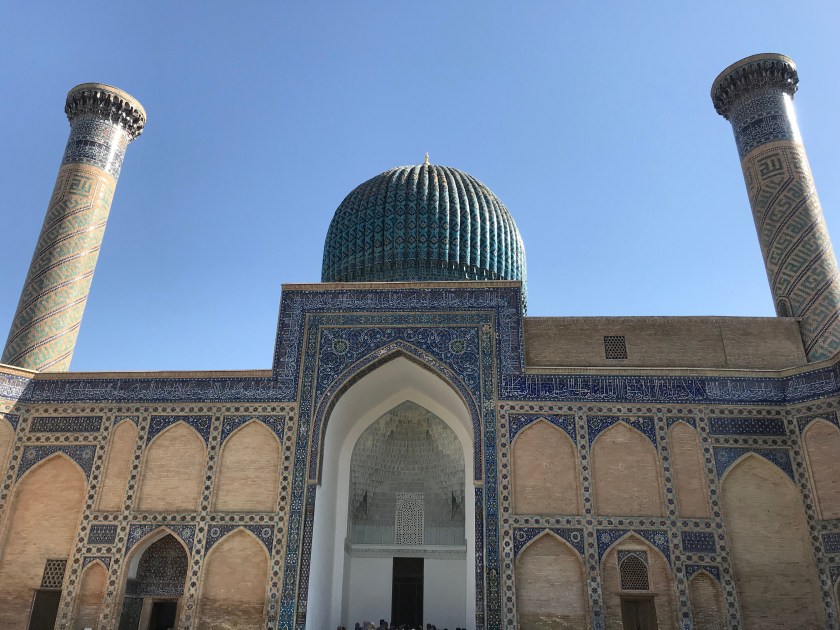
Next we visit the Gur Amir Mausoleum – the final resting place of the mighty Timur and his sons and grandsons. The city flourished under his rule in the 14th century. For a man of his stature, it is considered quite a simple tomb but it looks amazing to me! Ulugbek is also buried here.
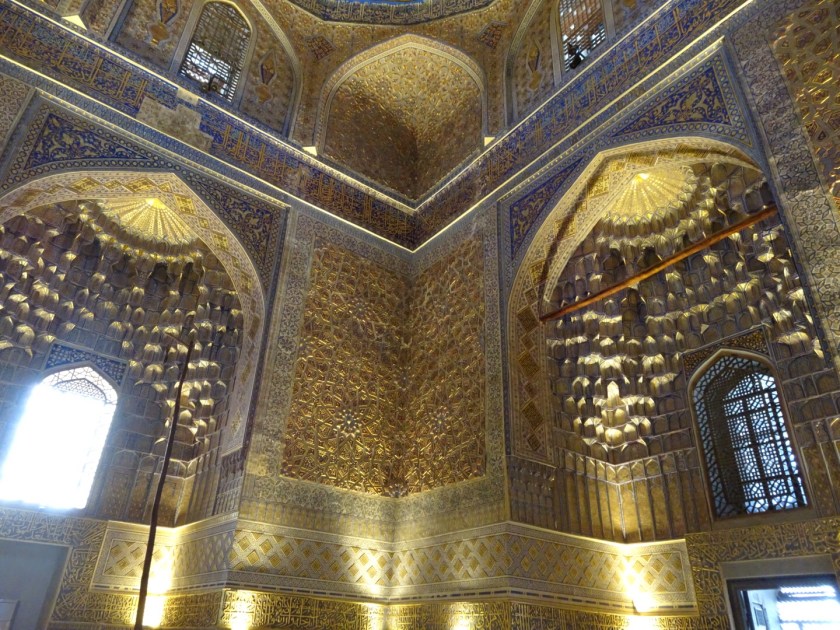
The tiling and gold design on the inside is very impressive:
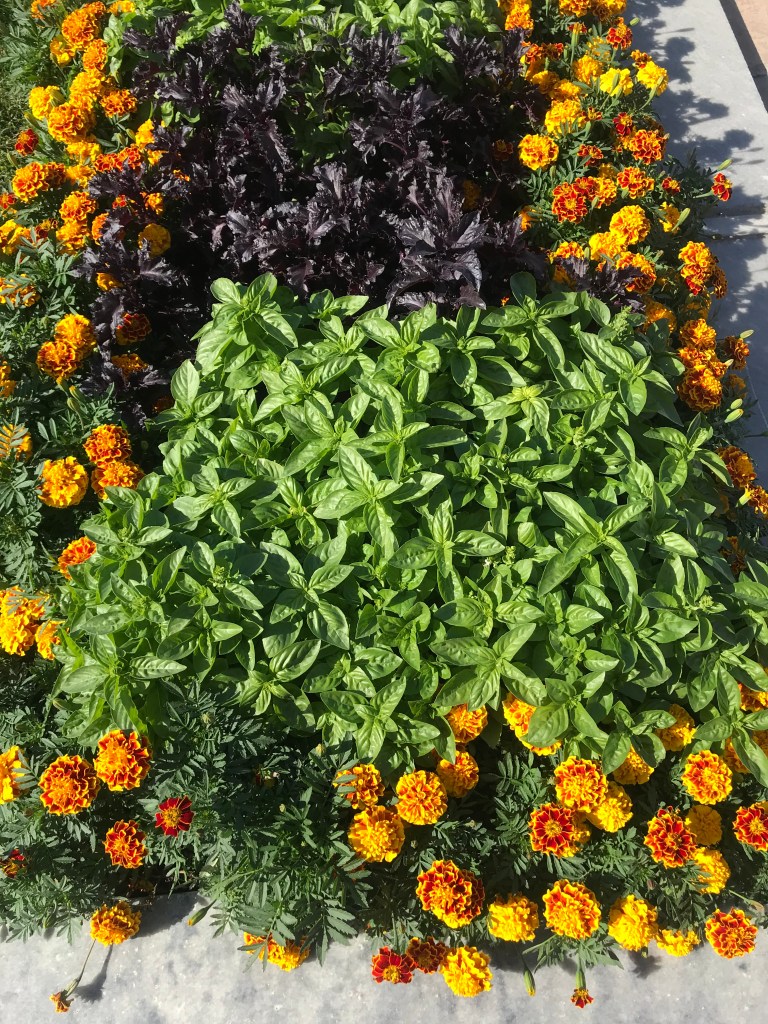
We notice there is basil planted decoratively everywhere. I would definitely be picking some of that if I was at home!
We finish the day’s tour with a stop in the Afrosiab Museum. Afrosiab is the name of the hill close by and we see where excavation works unearthed many artefacts.
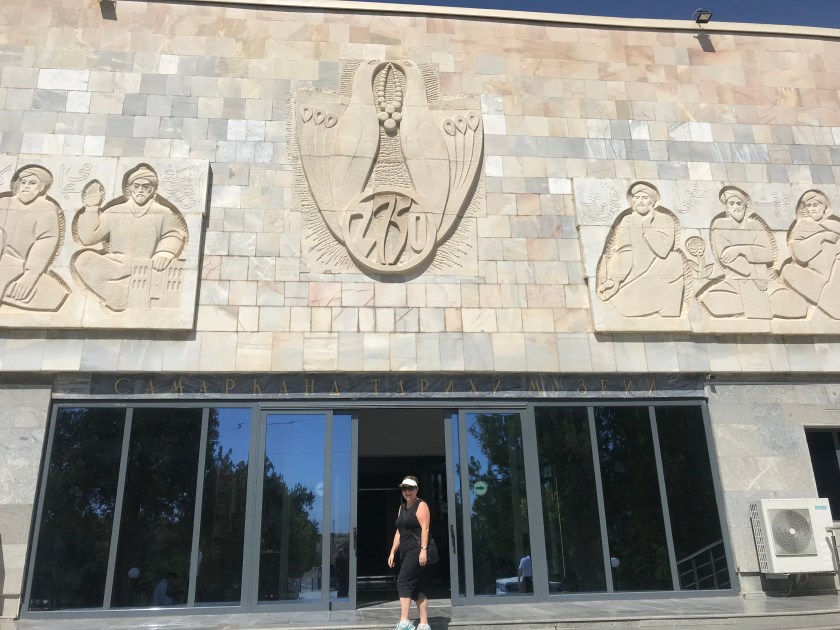
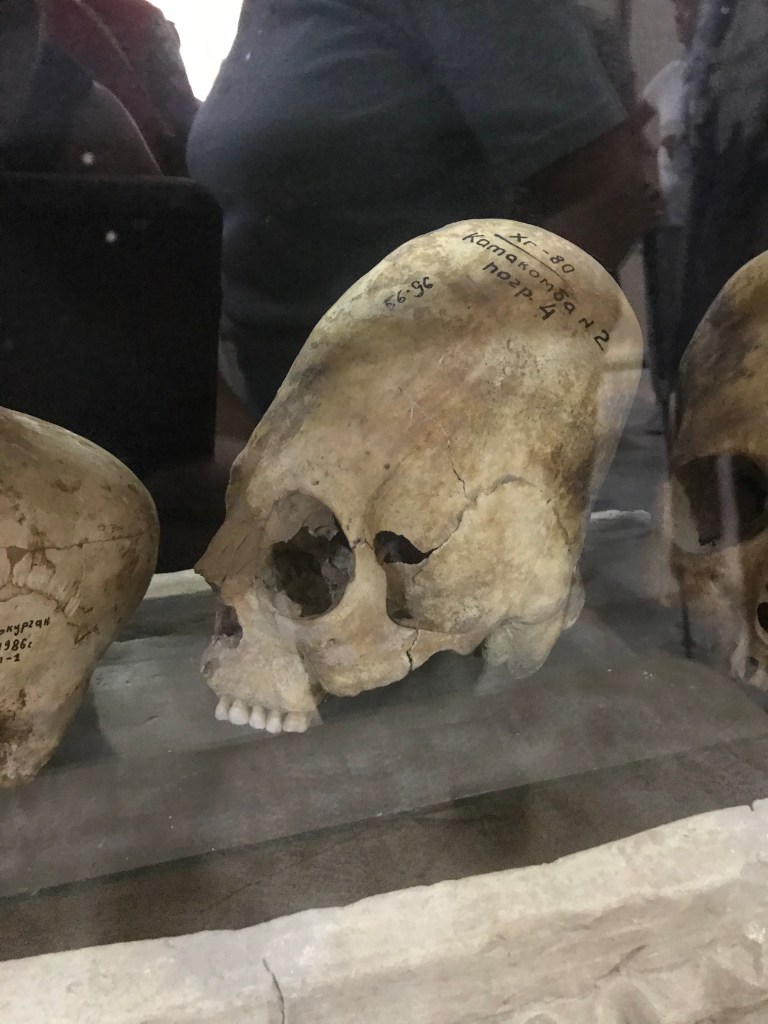
I recently watched Joanna Lumley on her Silk Road adventure and she came to this museum to find out about the Sogdian kingdom which was in existence around the 7th century. The Sogdian kingdom was very powerful and they distinguished themselves from other tribes by binding their heads so the skull took on an elongated shape.
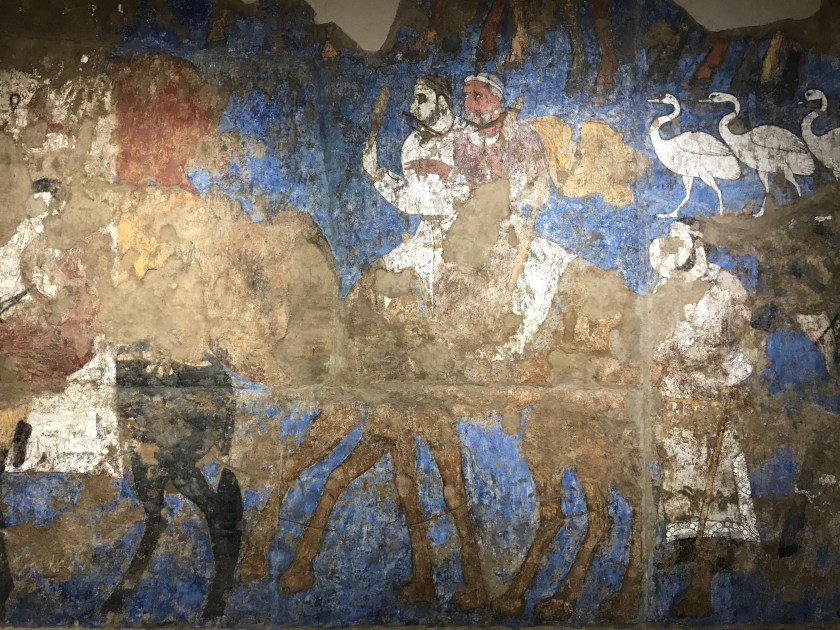
We see some original 7th century frescoes of the Sogdian King Varkhouman which depict people from other countries bearing gifts – it shows how powerful they were.
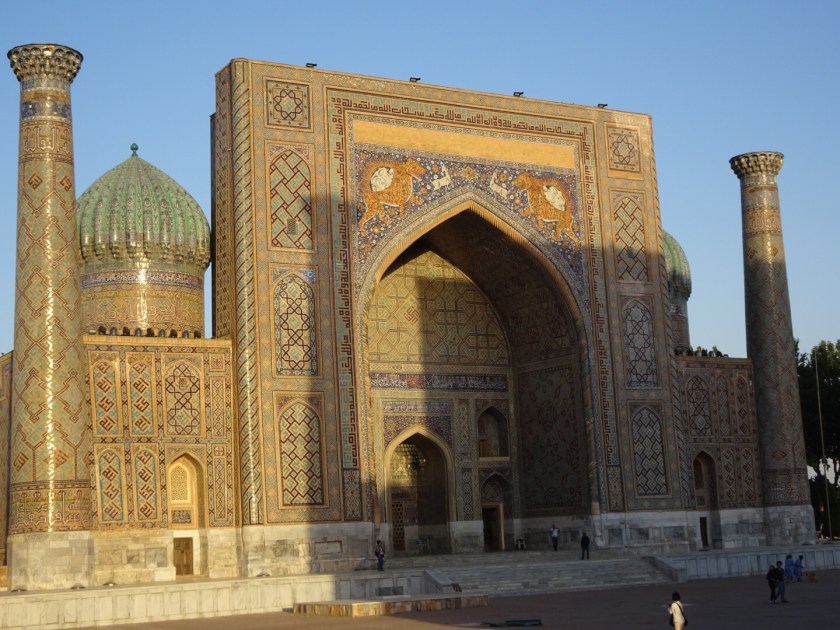
The big draw in Samarkand is The Registan. It’s on our tour for tomorrow but it’s walking distance from out hotel so we decide to check it out on our way to dinner…it’s very impressive but unfortunately the powers that be have decided to wall off the surrounding areas so there are walls and metal sheets separating the historical tourist area from the locals housing. Hopefully in time, as tourism grows, they’ll integrate the local surroundings with the tourist attractions.
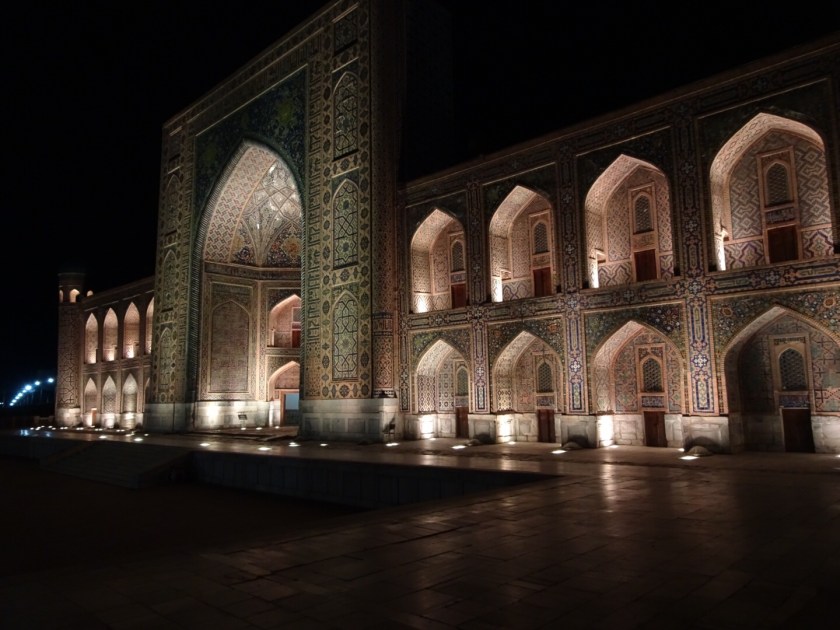
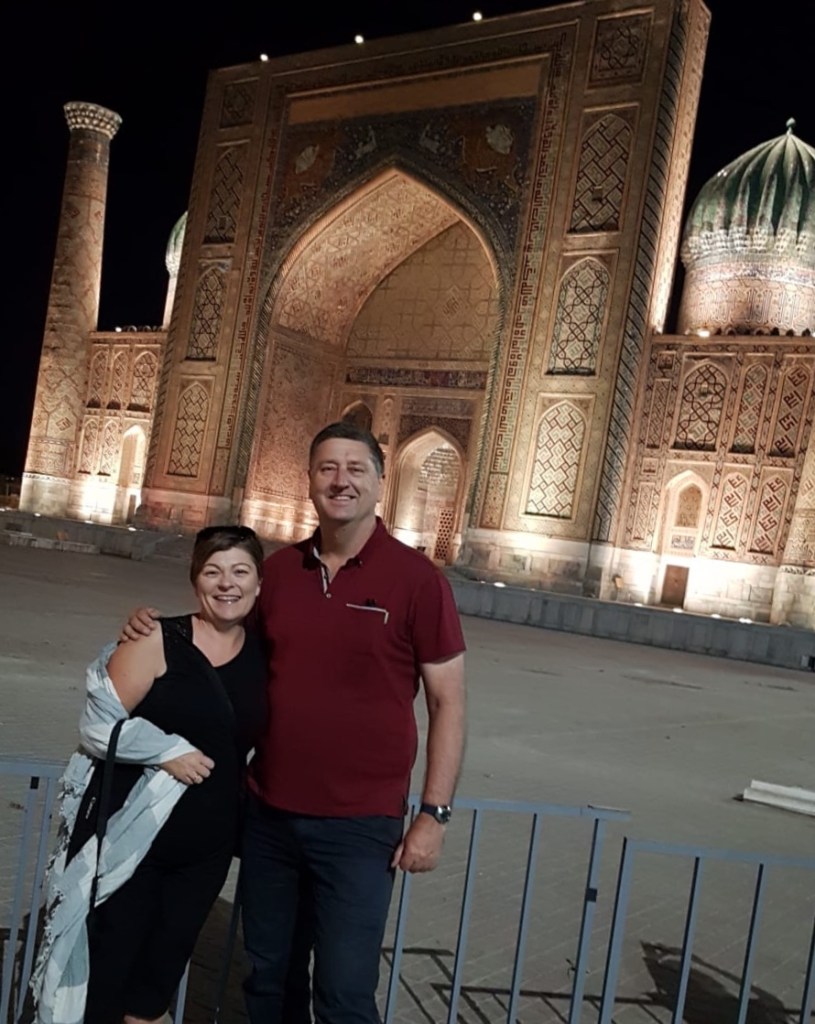
We find a restaurant with a beer garden where we sit outside and have a great meal of shashlik (meat on a stick), salad, bread and a bottle of local wine. We check out the Registan again after dinner so we can see it lit up at night.
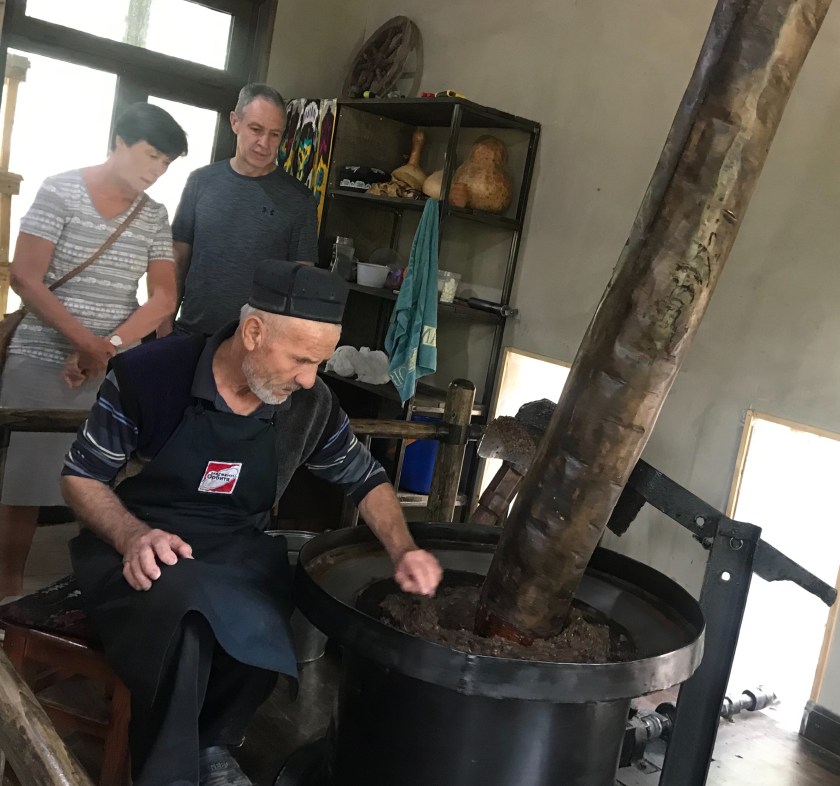
Day 4: We start our second full day with a visit to a paper making workshop where they continue the art of making paper by hand. (It’s a similar process to what I saw earlier this year in Myanmar but the finished product is quite different.) We also get to see the sesame oil being produced and taste some “wine” made by this man!
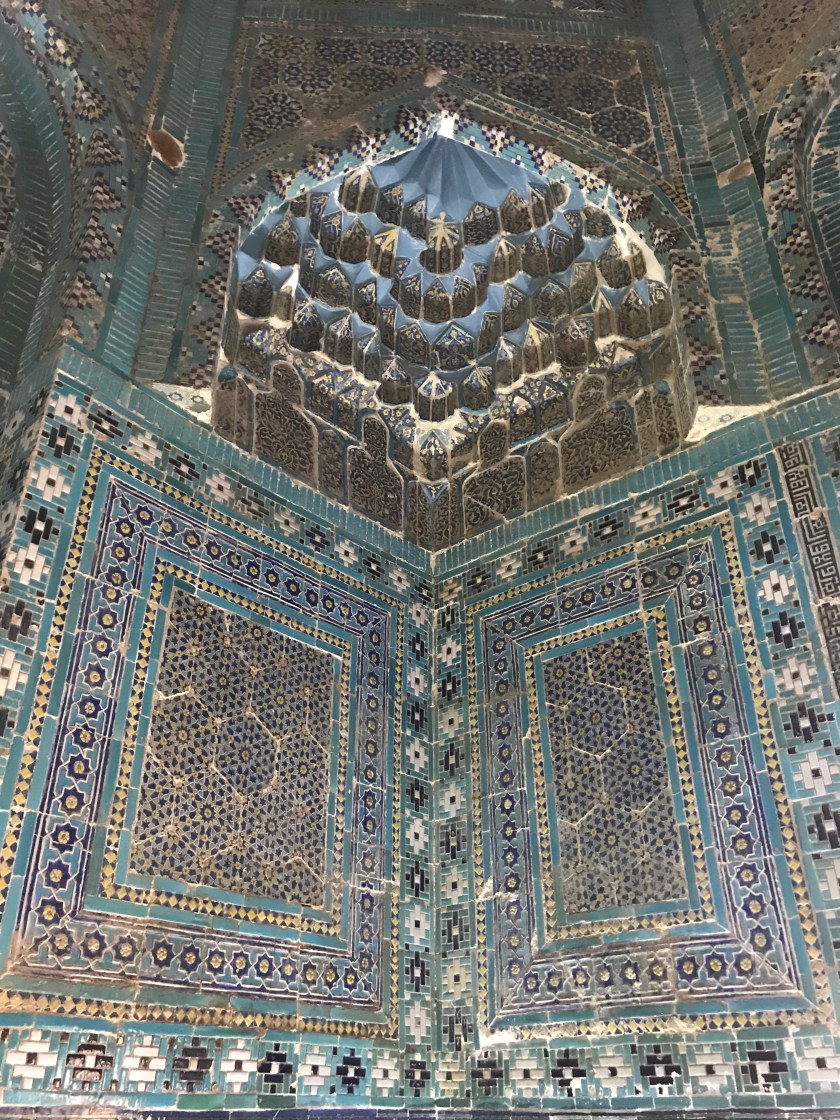
Next stop is a highlight of the tour for me – the official name is the Shah-i-Zinda complex but it’s known as the necropolis. It has more than 20 beautifully decorated unique buildings. It’s a holy site for local Muslims and is where the Prophet Mohammed’s cousin is buried.

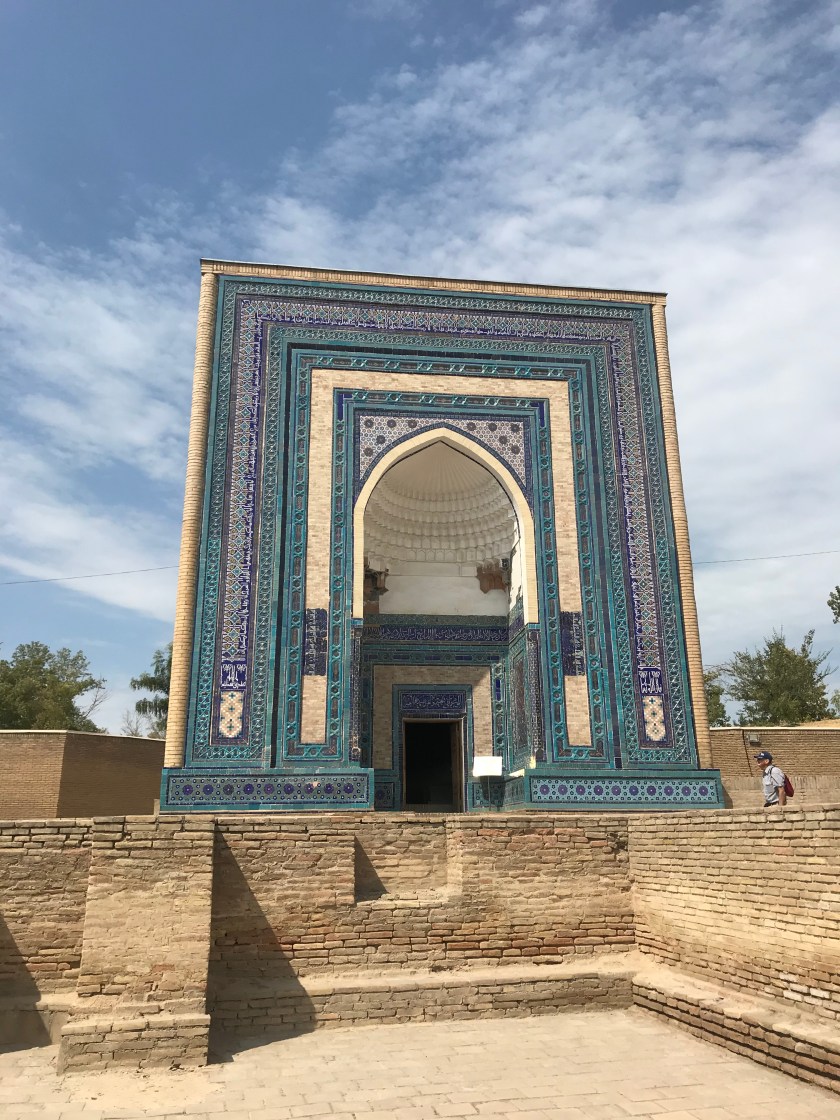
The decoration inside the temples is amazing
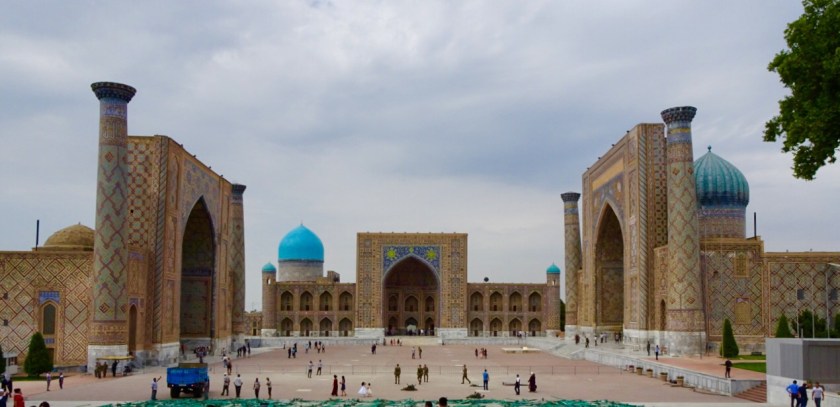
After lunch it’s time to see what is generally the highlight of a trip to this city – the iconic Registan Square. It’s a bit cloudy so we’re delighted we got to see it last night before and after sunset. It has three medressas (Ulugbek, Sher Dor and Tilla-Kari) towering over you. The facades of the two medressas facing the central square are decorated in elaborate mosaic, tiles and intricate geometric brickwork, flanked by towering minarets and topped by azure-hued domes.
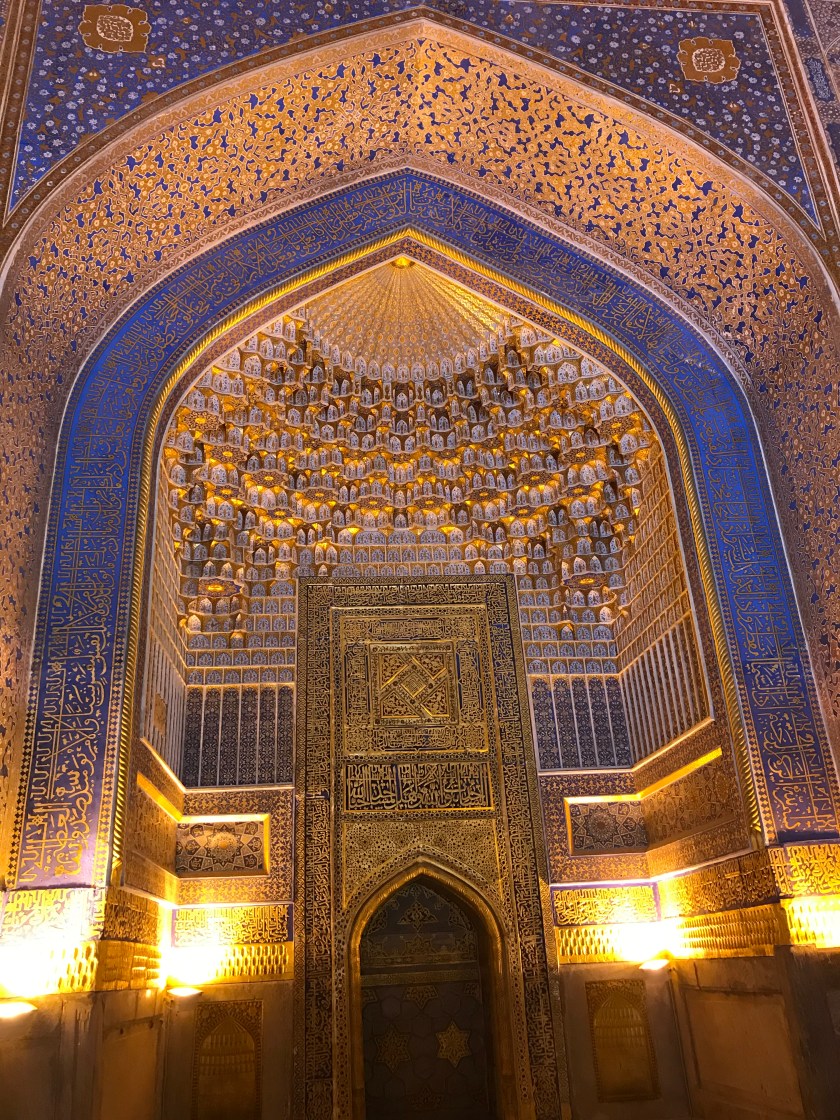
The interiors are just as impressive, in particular the gold work:
There are handicraft and souvenir stalls in the courtyards and back in the day the Silk Road traders would congregate in the main square.
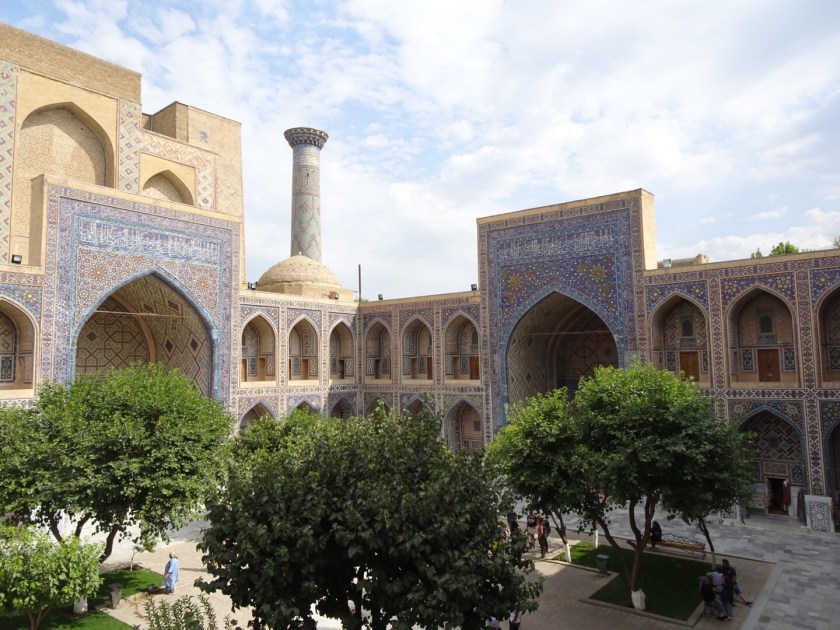
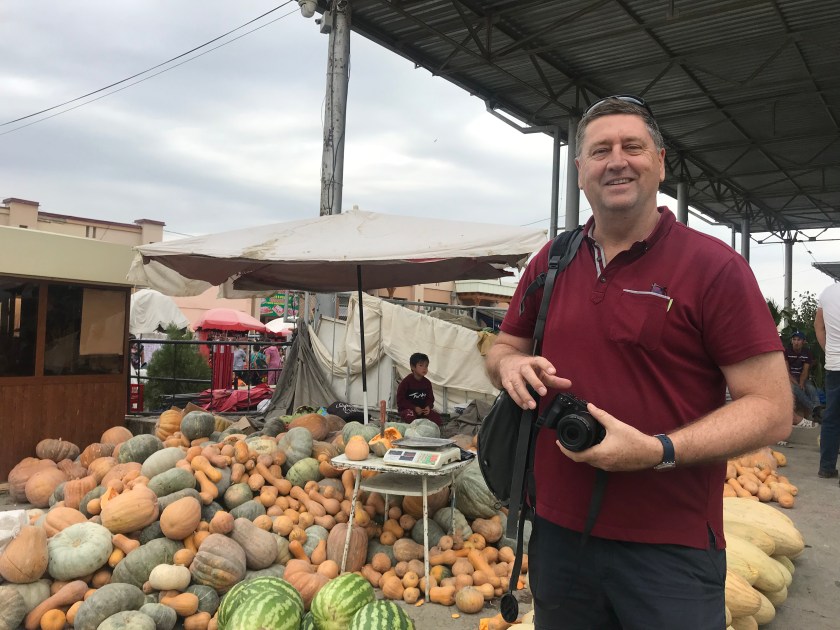
Speaking of the silk road….. Samarkand was established as a city in the 5th century BC, and was a key trading centre along the Silk Road. It was not only a centre for traders but also artisans. We hit the Siob Bazaar close by the Registan with bustling stalls and a huge array of produce. You can imagine this place hundreds of years ago trading in spices and exotic goods.
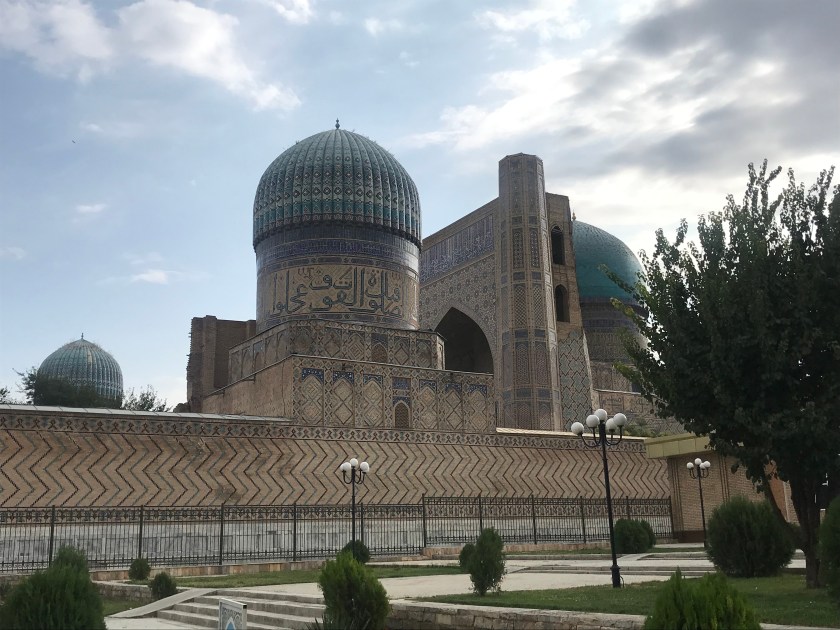
The bazaar is beside the Bibi-Khanym Mosque which was built by Timur for his wife. As such it is often compared to the Taj Mahal. We get in trouble (by another guide) for laughing too loud at the story Fazli is telling us about the builder who wanted a kiss from the queen. I can’t remember all the details but we were definitely embellishing them and giggled just a bit too loud for the other (all male and clearly sensitive!) tour group.
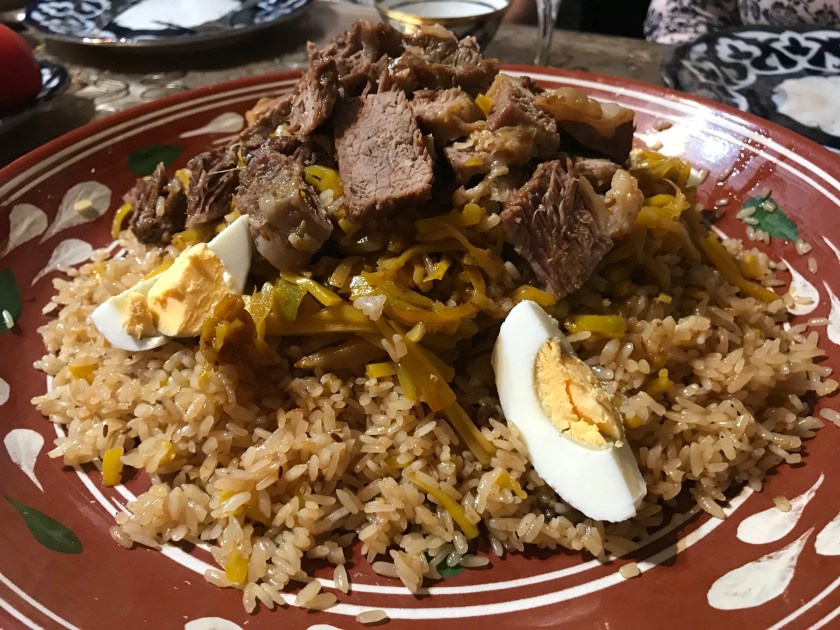
Tonight for dinner we are going to a local family for a cooking class on the traditional meal Uzbek meal – plov. Uzbek men pride themselves on their ability to prepare the most unique and scrumptious plov. This dish is cooked over an open flame in a cauldron and is a combination of rice with fried and boiled meat, carrots, raisins and spices.
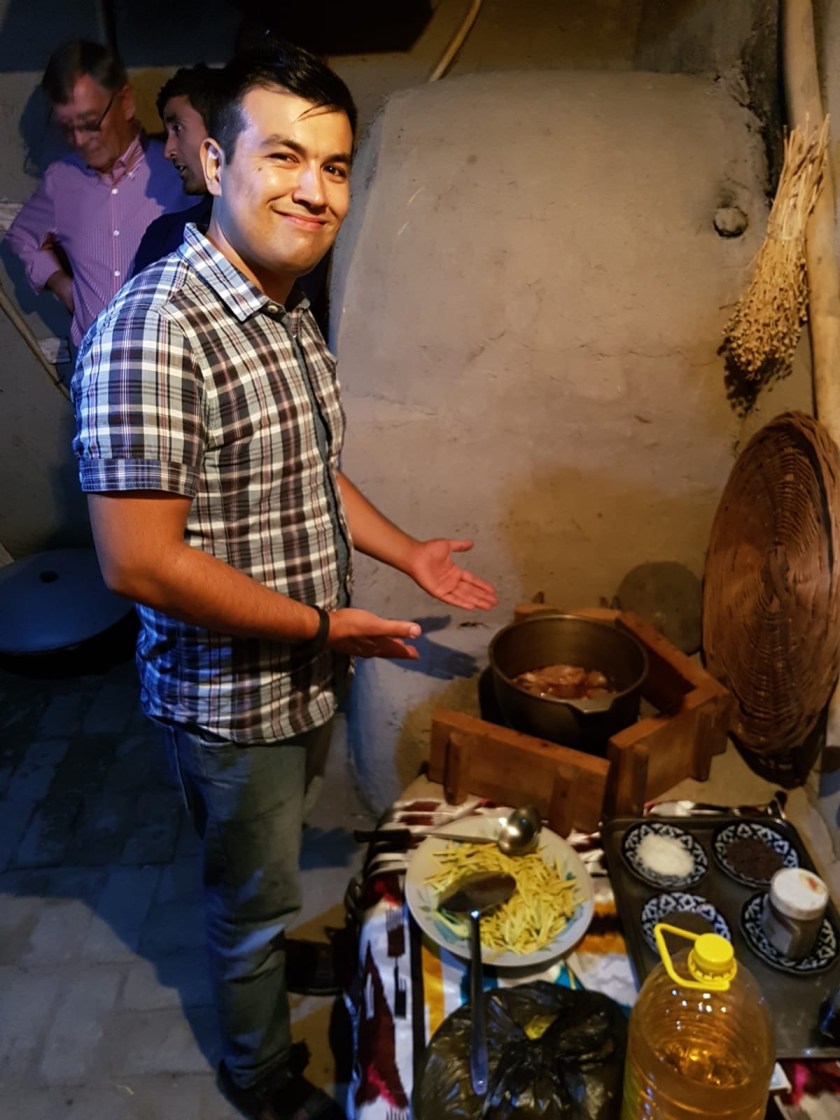
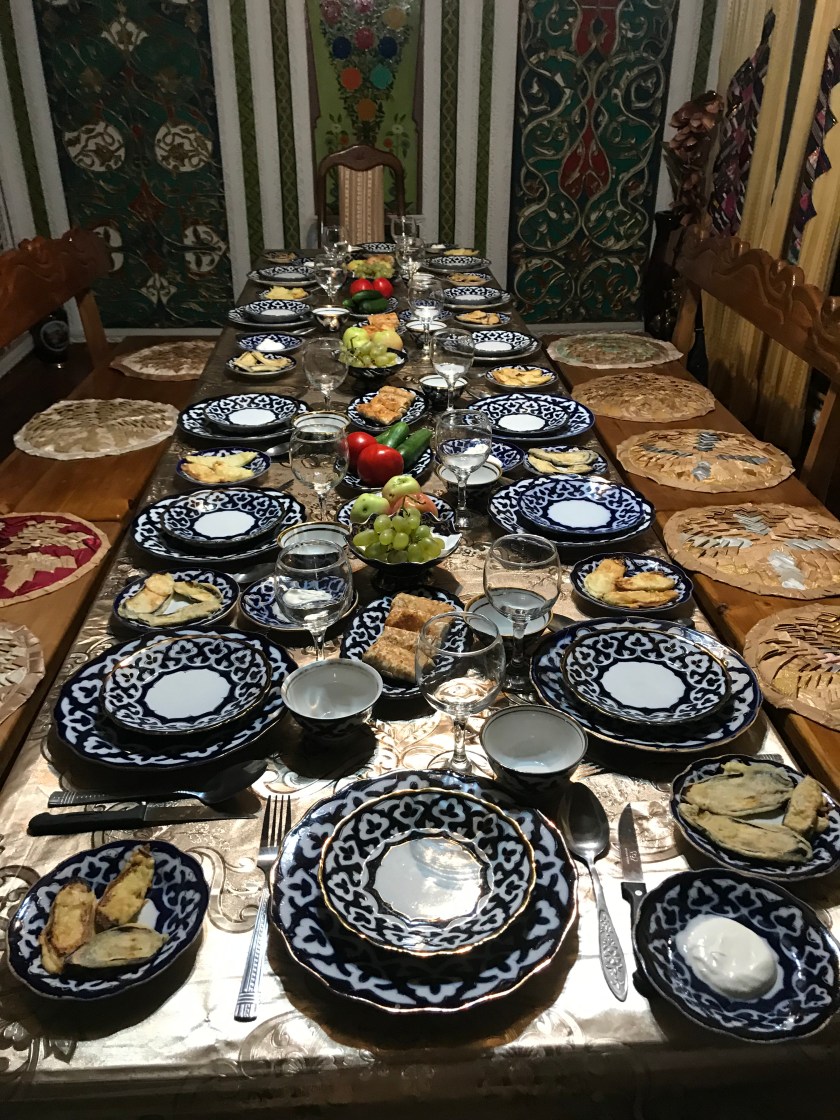
There’s not a huge amount of spices and it’s not spicey hot – it has caraway seeds, salt and pepper. It’s very tasty though…
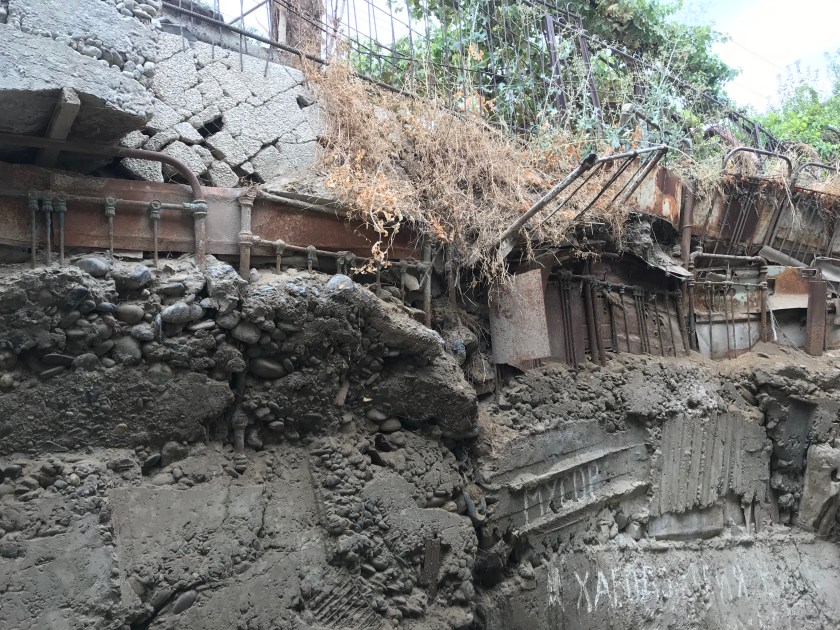
The next morning we have some free time so we take a walk around the Jewish quarter and among some of the streets were the locals live. Check out how recycling conscious they are with this retaining wall!
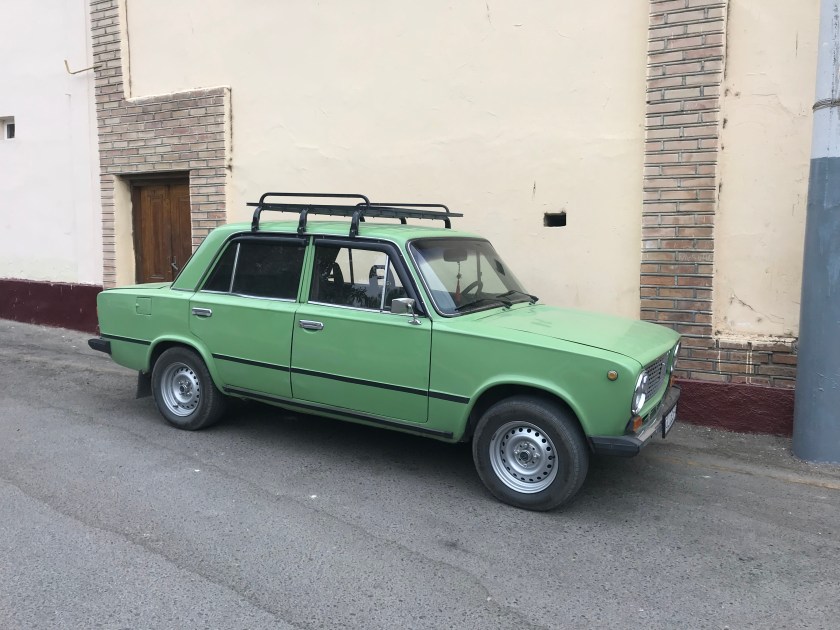
There are a lot of old ladas on the road..
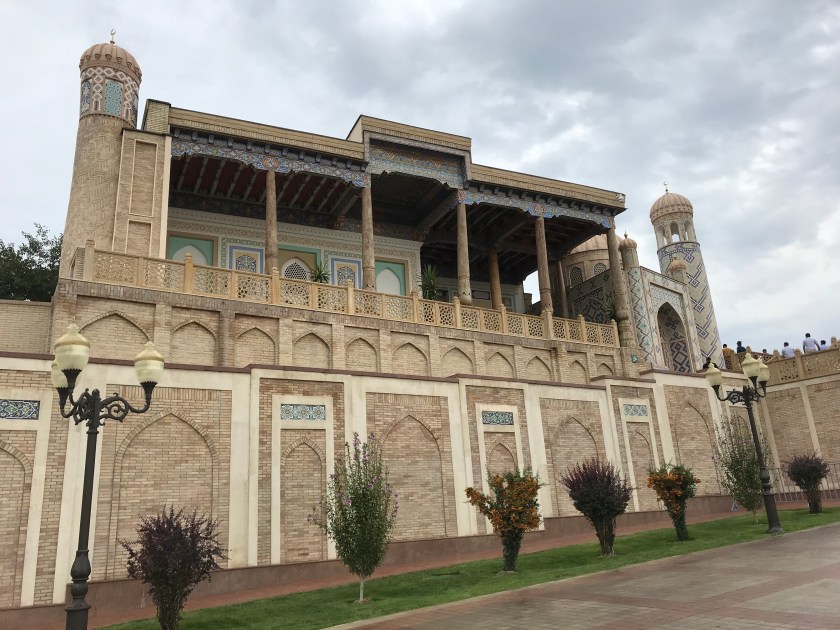
We visit a newly built mosque
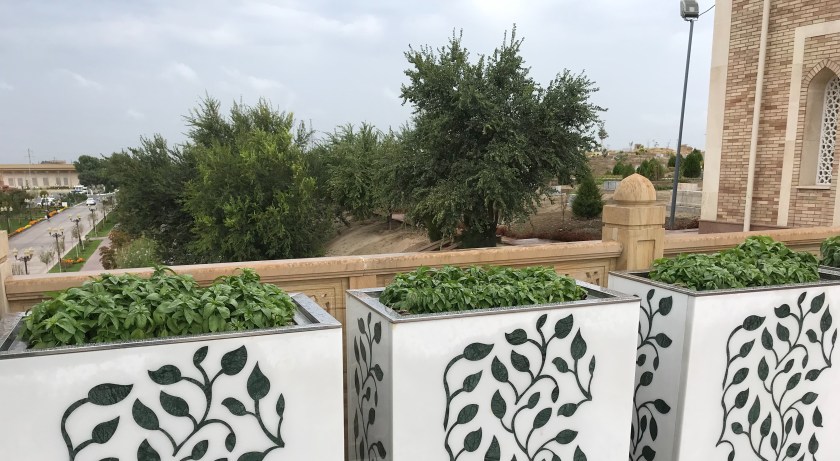
More basil..
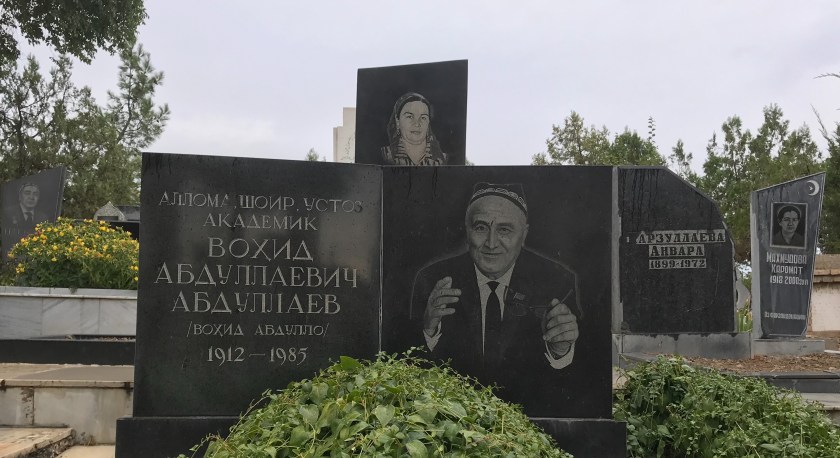
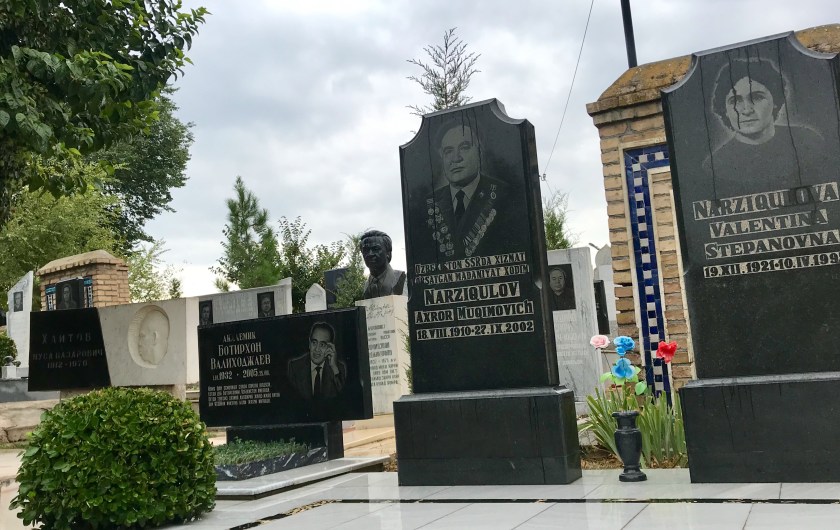
It starts to rain a bit but we explore the local graveyard which is very interesting
After another traditional Uzbek lunch we board the bus and set out for Bukhara.

 odohertyelaine