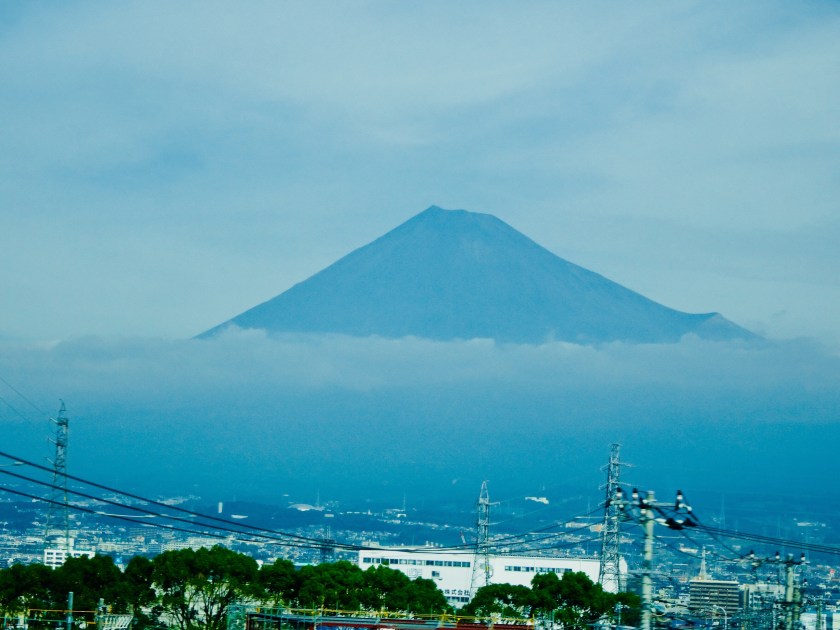
We take the 365 km journey from Tokyo to Kyoto on the Super Express Shinkansen train. It takes just two and a half hours going at speeds of up to 300km per hour. It’s a comfortable train that you could easily nap on but lucky for us we’ve had our best nights sleep so far so we happily watch the scenery whizz by. Although it’s a bit overcast we do get to see Mt Fuji :
We spend the afternoon sussing out our neighborhood which is beside a massive shopping area called Shingyogoku. There are some really cool shops here and great food places. Every so often a temple will pop up among the shops too!
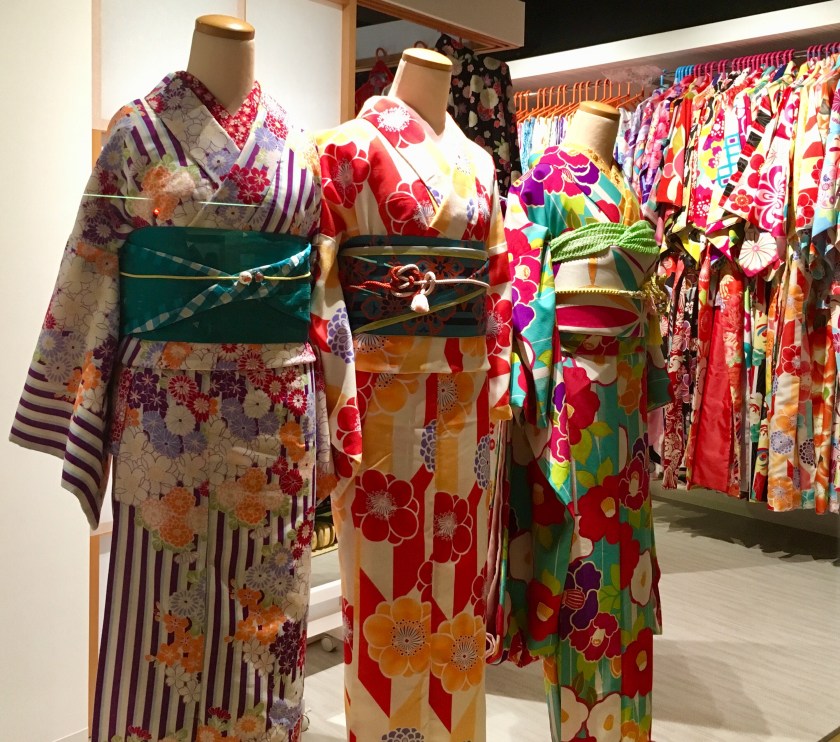
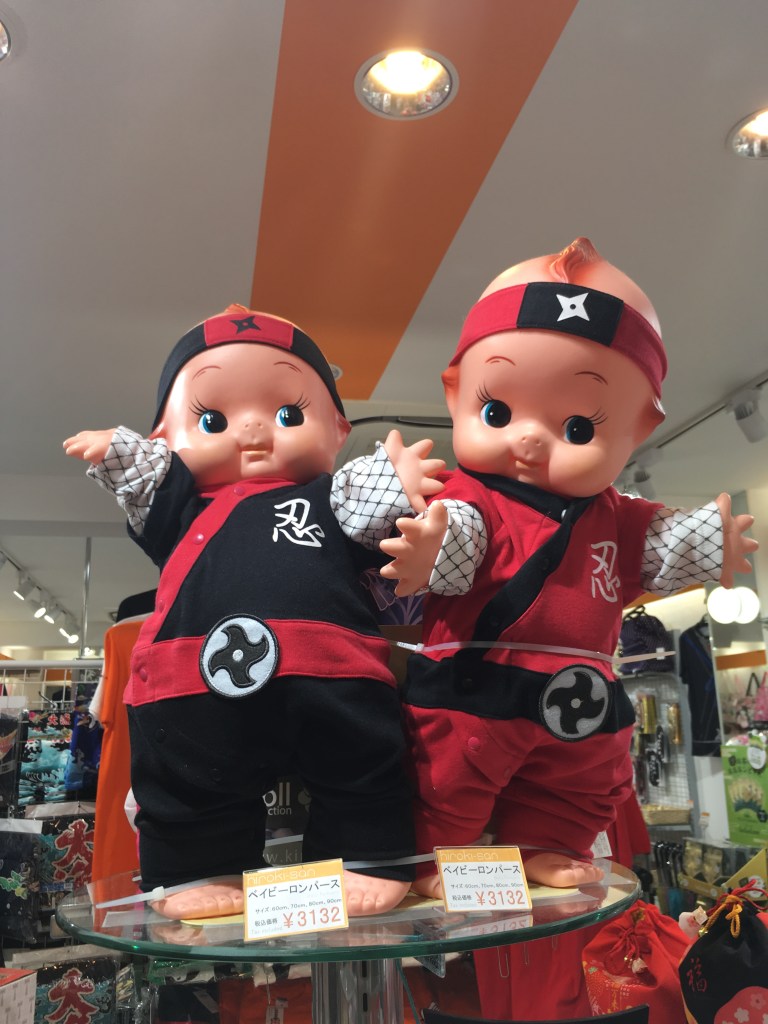
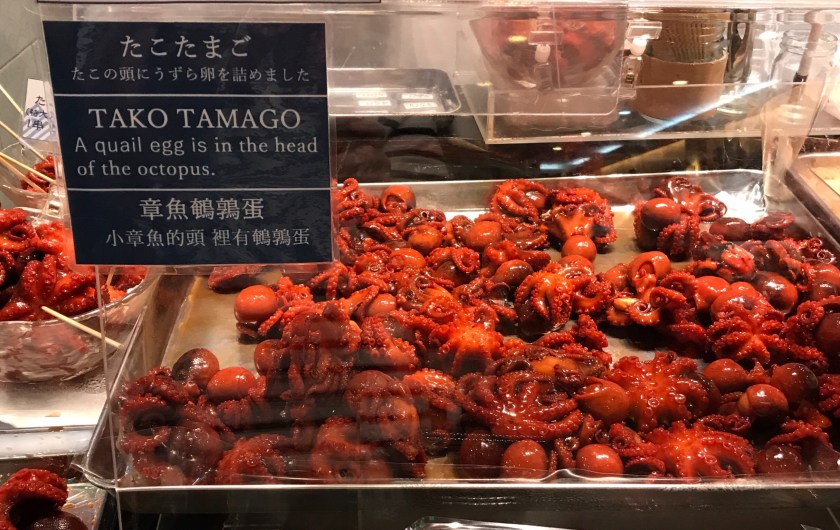
We also walk through Nishiki market with so many food stalls with weird and wonderful things to try.

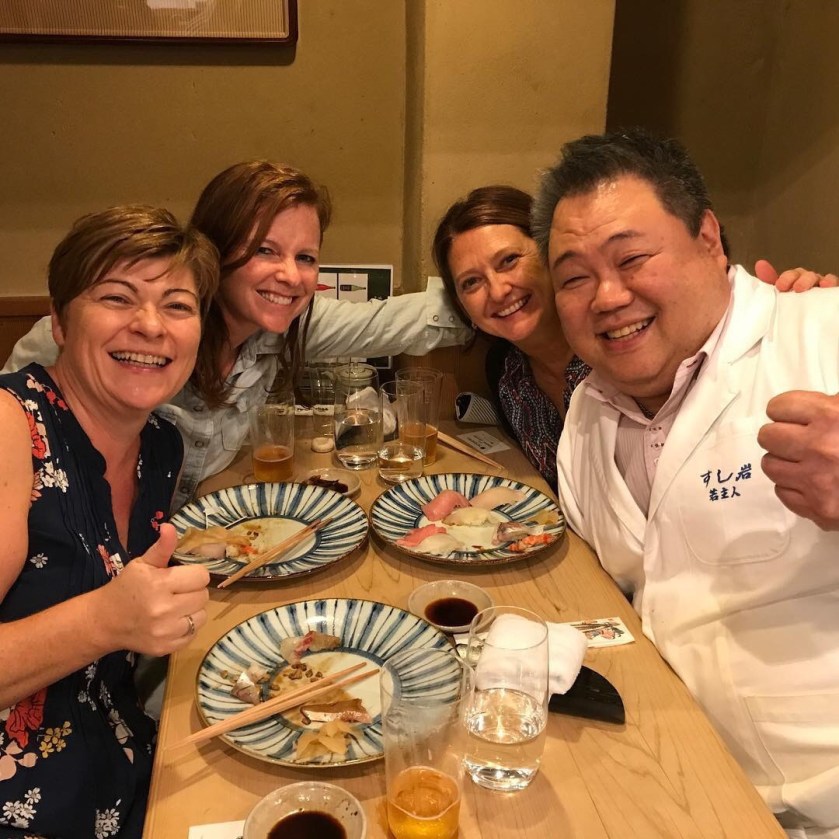
Later in the evening we head to what was apparently Steve Jobs favorite sushi restaurant called Sushiiwa. We do a “courses” menu which involves eating the chefs recommendations and it’s all very tasty. Although the courses start very small we end with a large plate of sushi and we even get to meet the chef who’s very friendly and chats to us for ages. In fact as we’re leaving the restaurant, the long goodbye feels very Irish with repeated goodbyes and thank you’s. The staff mention there’s another typhoon coming this weekend but hopefully that just means a little rain!!
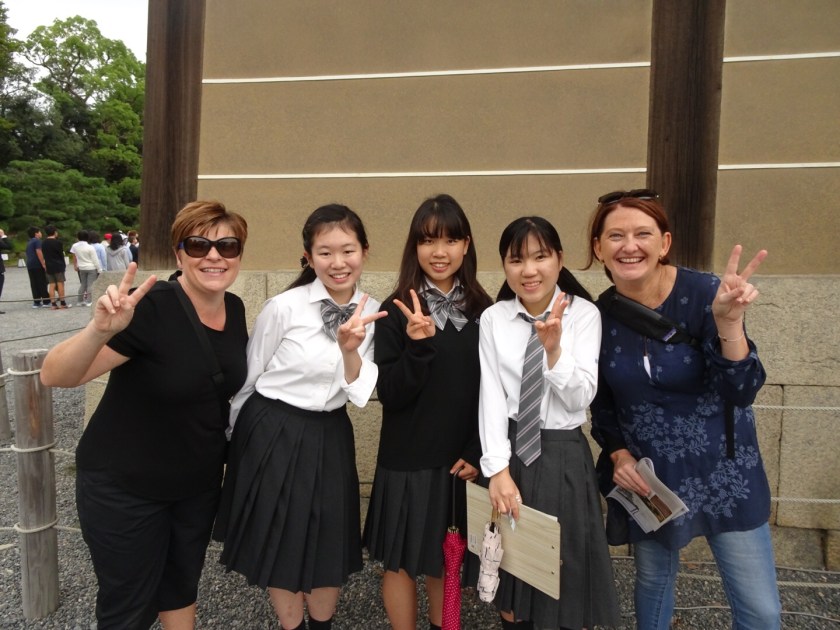
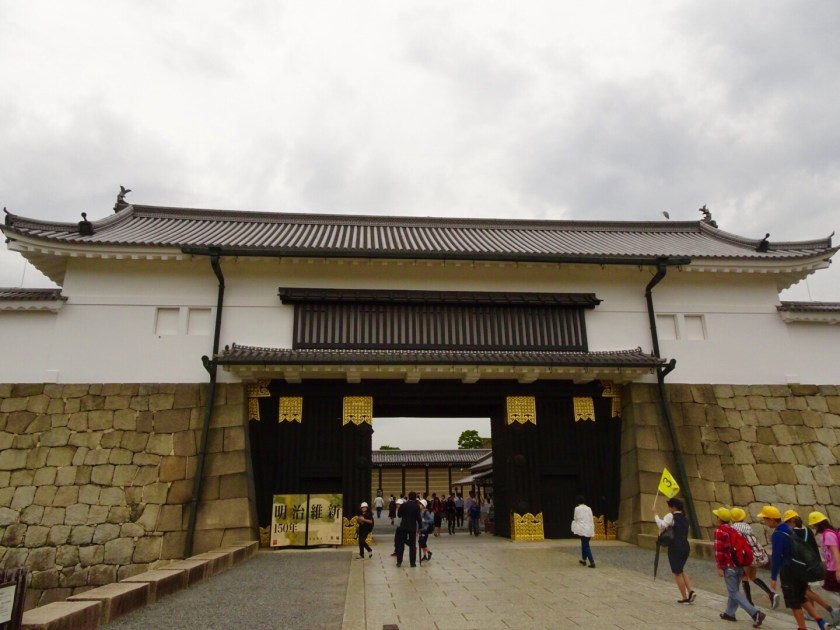
Day 2 we have a guide to take us to some of the UNESCO world heritage sites that Kyoto is famous for… lots of temples! We meet our guide Umi and set out for Nijo Castle. This was built in the early 1600’s by the shogun Tokugawa. On the way in, Molly got interviewed by the cutest school girls practicing their English:
The castle is huge and consists of a lot of waiting rooms where the politicians and nobles would wait to meet the shogun. There were always samurai close at hand to draw their swords as needed. The rooms are mostly bare but with beautiful paintings on the walls and ornate wooden ceilings. The wooden floor that we walk along is original to the castle and it’s famously known as the nightingale floor as it chirps as you walk on it. The myth is that this was intentional, so intruders would be heard, but apparently it’s just the noise from the joints used to keep the floor together.
From Nijo Castle we head for the golden pavilion which originally was a retirement villa for the shogun but after his death became a Buddhist temple. It’s set by a lake in beautiful surroundings and we’re lucky to see it on a calm day when we can see the reflection in the water:
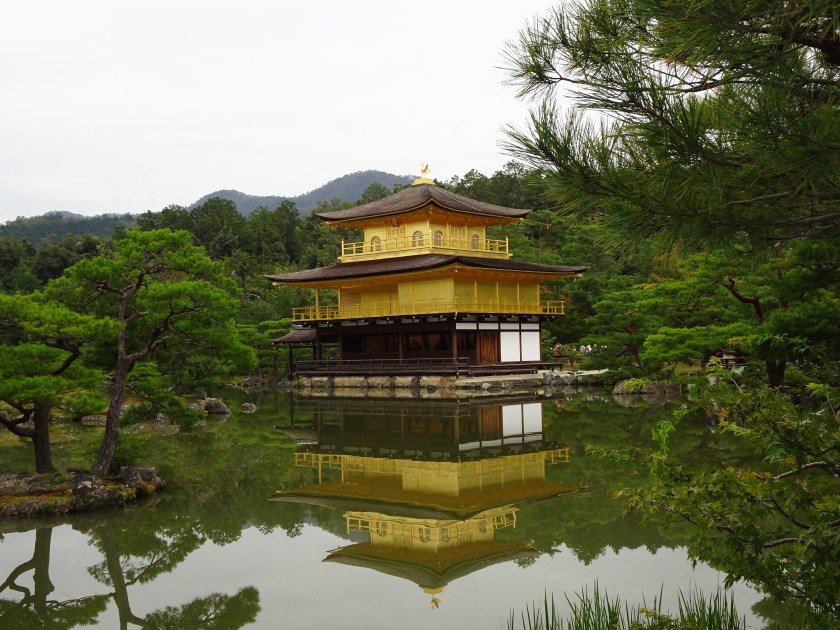
We walk around the beautiful gardens and can imagine the Emperor enjoying the views from the beautiful golden pavilion.
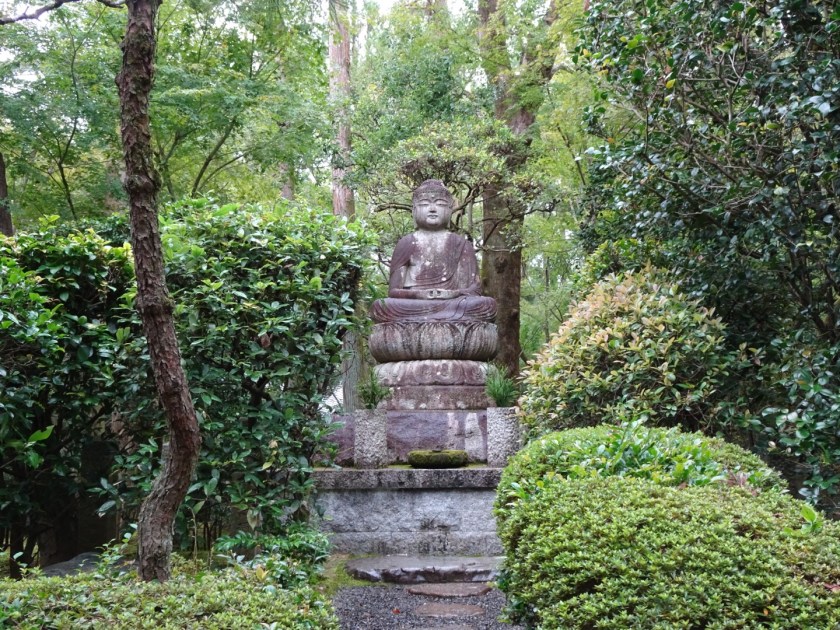
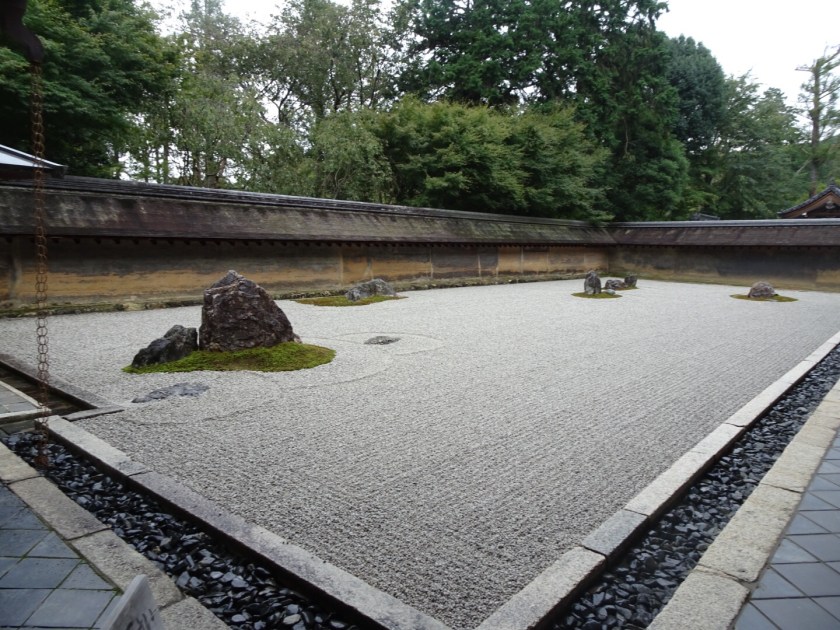
Next we visit the Ryoanji zen temple with its famous rock garden. There are fifteen rocks in the garden but from any spot you cannot see all fifteen and the lesson here is that you can never see everything i.e. you need to be content with what you have. It’s nice to sit here and contemplate that for a bit.
Next it’s a quick stop at Tenryu-ji temple which was built in 1339 but has a modern painting on the ceiling of a cloud dragon. The painting was completed in 1997 and kinda looks like anime, which is probably not all that surprising. The eyes of the dragon appear to follow you around the temple wherever you walk. (No photos allowed).
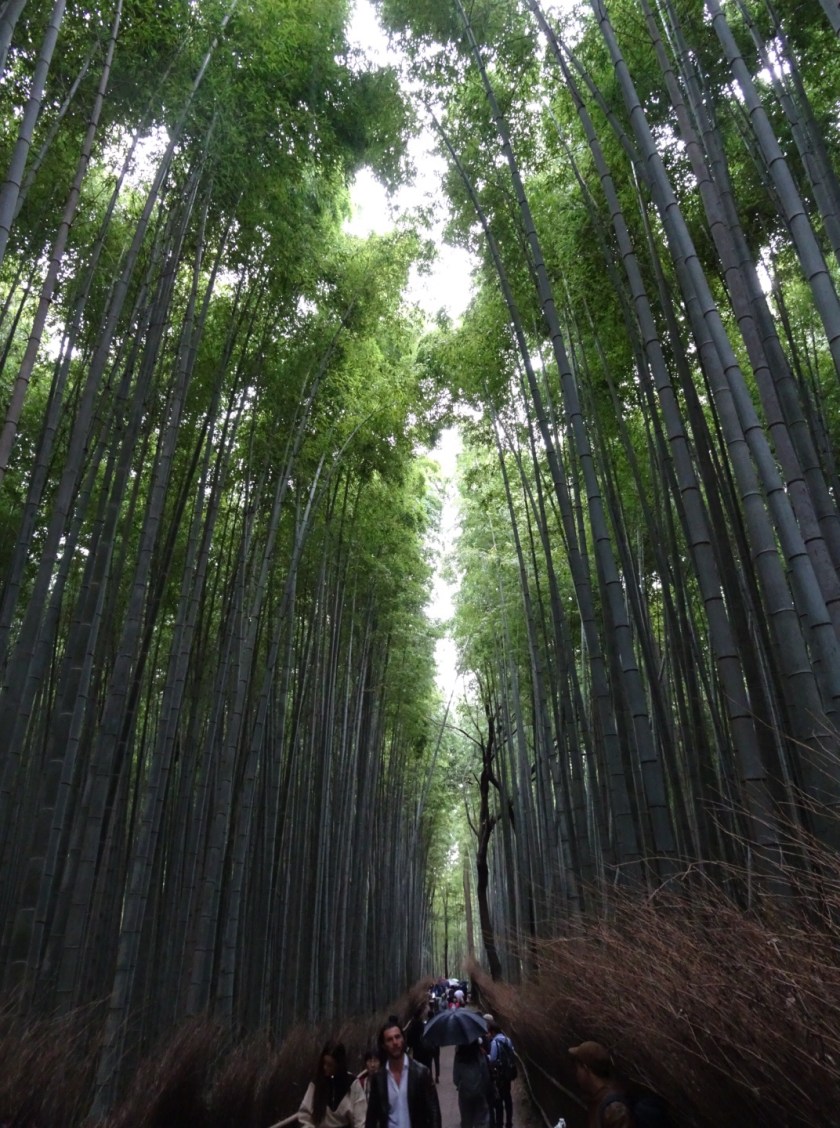
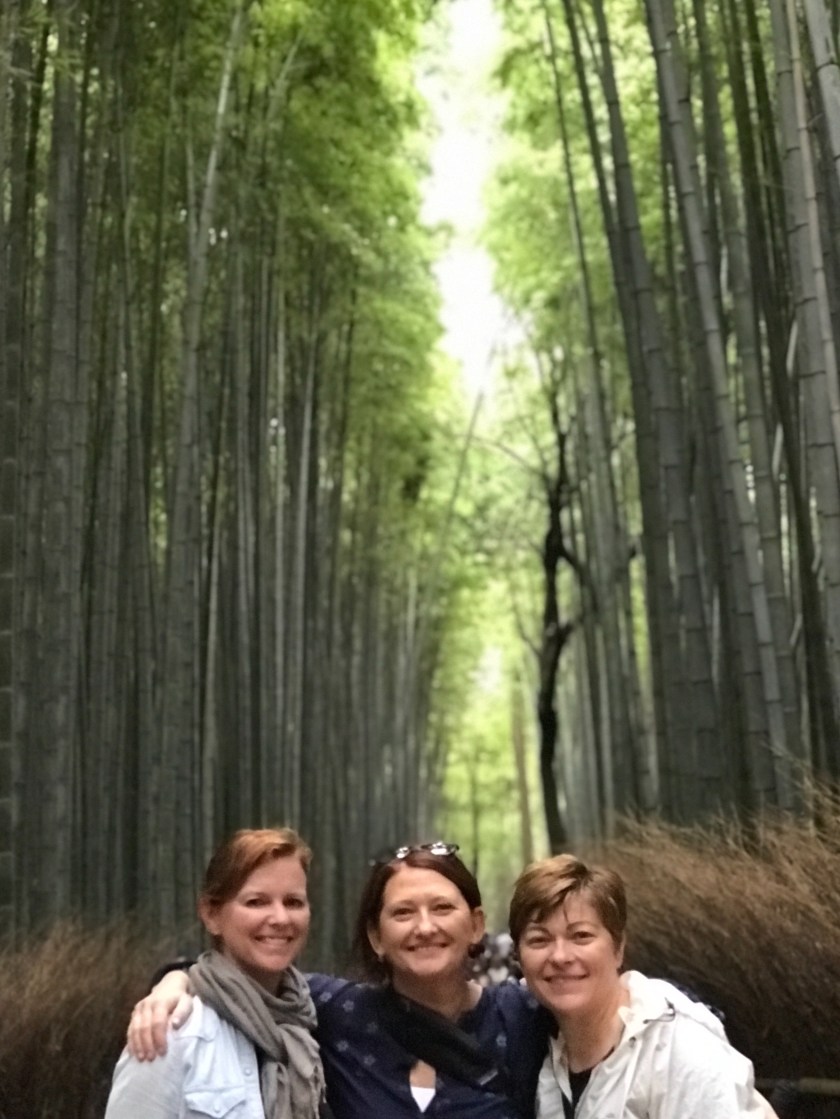
After a full on cultural heritage morning we fill up on udon and soba noodles before heading to Arashiyama and the bamboo forest. There are pathways through the bamboo groves and it’s a lovely change of scenery from the city and it’s multitude of temples.
We end our tour in Gian. Gian is the area famous for the Geisha or gecko as the Japanese call them. A senior or experienced geisha is called a miko. They essentially are hired\paid to dance, play musical instruments and serve tea and they are trained by and employed by agencies with a “mother” in charge. [it’s all a bit peculiar]. There are very few agencies still running in Gian compared to a hundred years ago but there are still a few and about two hundred actual geisha. Most of the buildings along the narrow streets of Gian are now restaurants but you can tell an agency by the sign outside which holds the names of each geisha. If you’re lucky, you might spot one on their way to dinner or a show. We were very lucky and managed to see two.
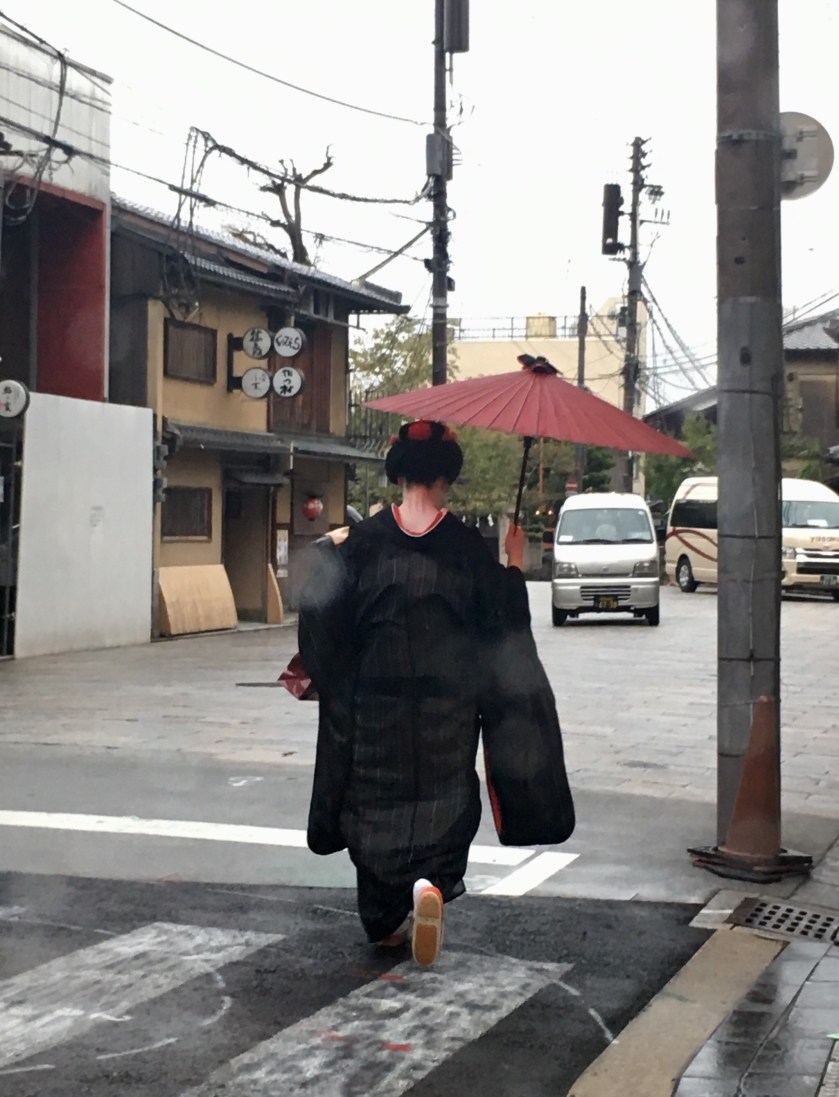
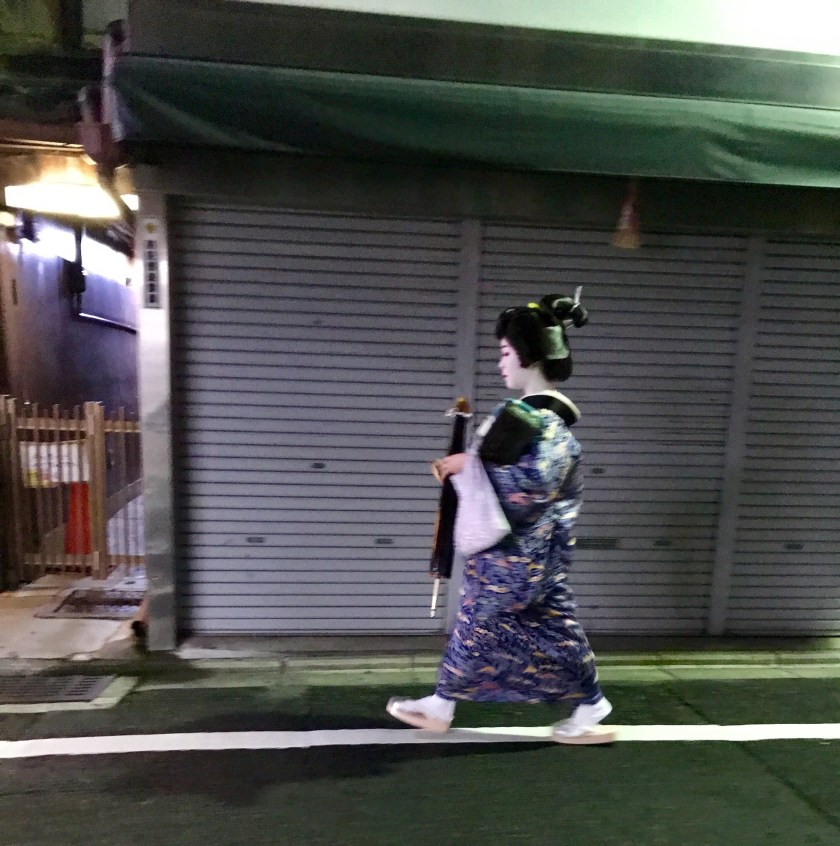
She is flying along in those crazy shoes:
Happy that we’ve successfully completed our geisha spotting mission we relax in a sake bar where we try sparkling sake. Megan and I also try some blowfish which apparently is ok to eat once prepared correctly by the chef. The waiter told me “we’re licensed to serve it” when I asked if there was any chance of it killing us!! Disappointingly it tasted just like a fish finger!!
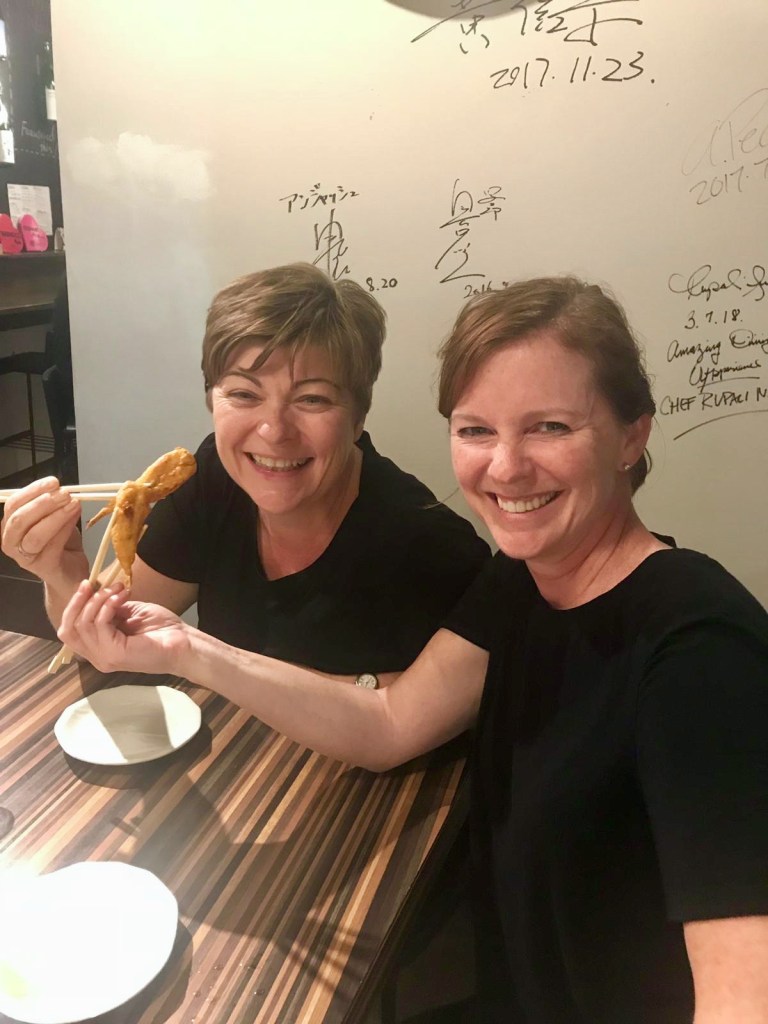
After our nibbles and sake, (ok and wine too!!) we decide to move on, but not too far as across the road we see a chef making Okonomiyaki which is a pancake made of cabbage and filled with a range of meat, vegetables and egg. We head in for a shochu, which is a popular liquor drank in Japan, and an “everything in it, only one menu” pancake. It’s delicious! Feeling particularly satisfied in our bellies and maybe a little bit drunk [side note: sake is strong!] we head back to the hotel.
On our last day in Kyoto we set off early to visit the Fushimi-Inari shrine and famous Torii Gates. Even though we get there fairly early it’s not early enough to avoid the crowds but we climb higher through more gates and finally get some good photo opportunities with no people around.
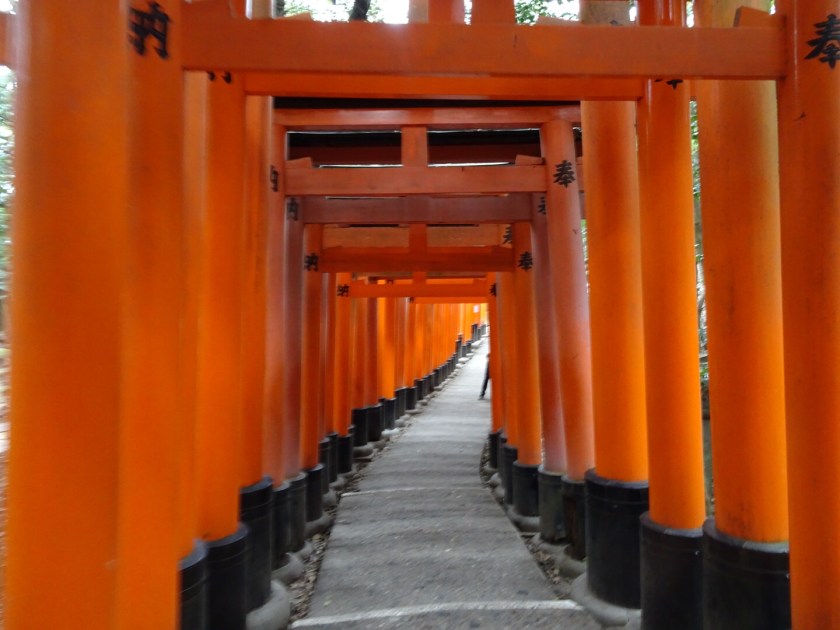

It’s a beautiful place to walk through and there are many shrines along the way. I think this could be the highlight of the trip so far.
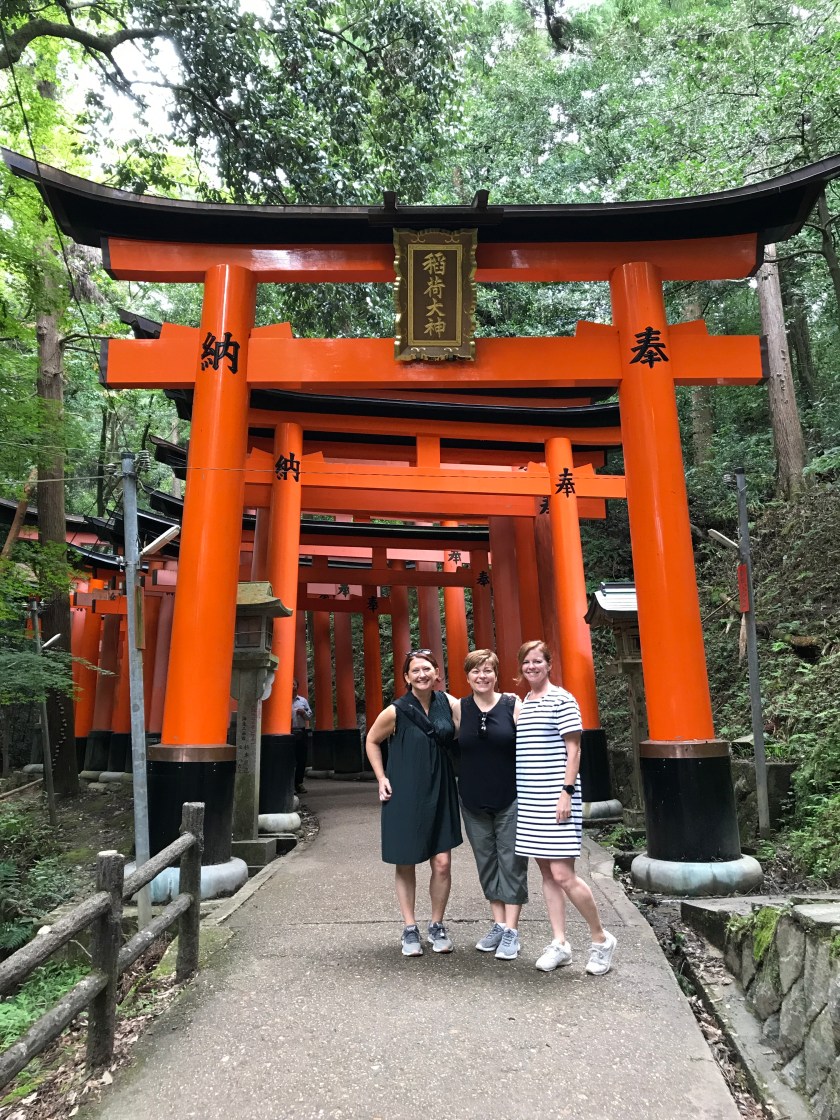
We see monks praying and they appear to be going to every shrine. Check out their shoes:

There are literally thousands of gates… apparently three thousand and I can’t get enough of them but it’s time to go.. a few more quick pics..


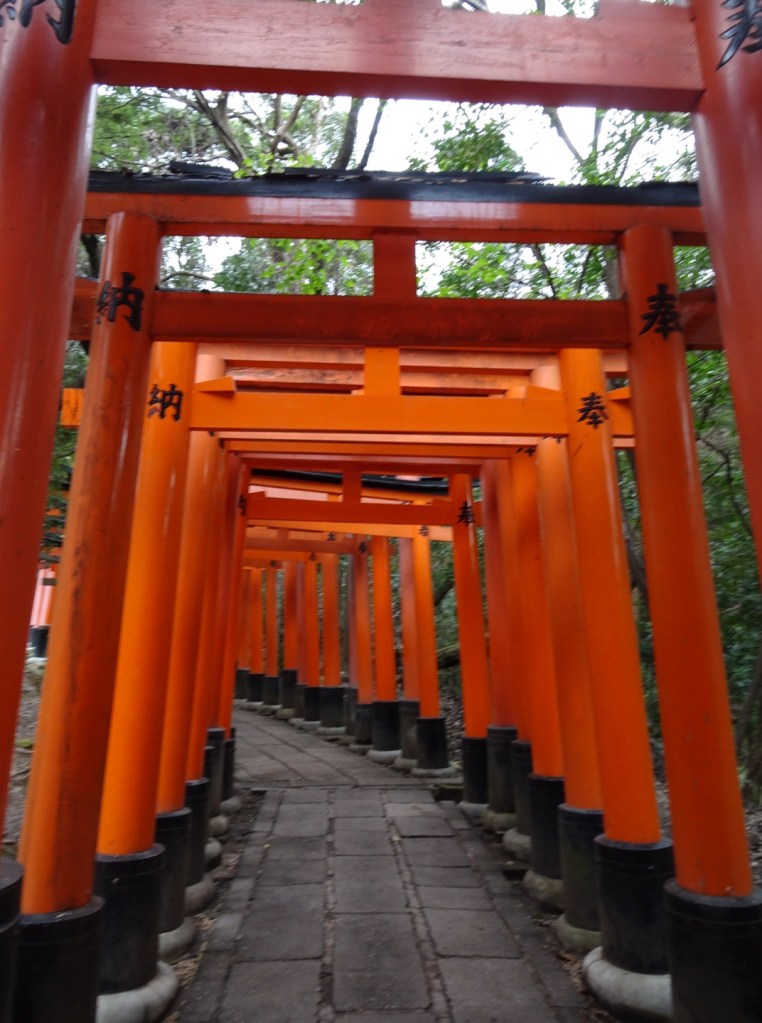
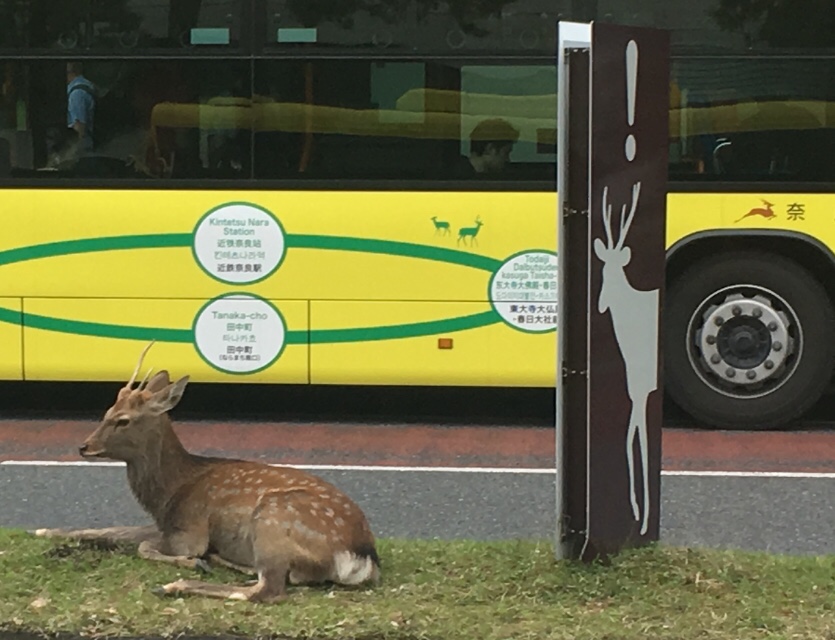
From here I get the train to Nara which was one of Japan’s former capitals. It was the centre of Japanese culture and civilization from the 8th century so it’s steeped in history. It wasn’t bombed during WWII so it’s got lots of historic buildings still in tact. I’ve been warned about deer being everywhere but I didn’t realize they’d be in the middle of the road. I particularly like this fella sitting beside the “beware of deer” sign:
First I head for the Kasuga Taisha shrine which houses a thousand hanging lanterns. They are really pretty and not too many people have actually bought a ticket to go inside so it’s lovely and peaceful walking around the grounds and seeing the hanging lanterns:


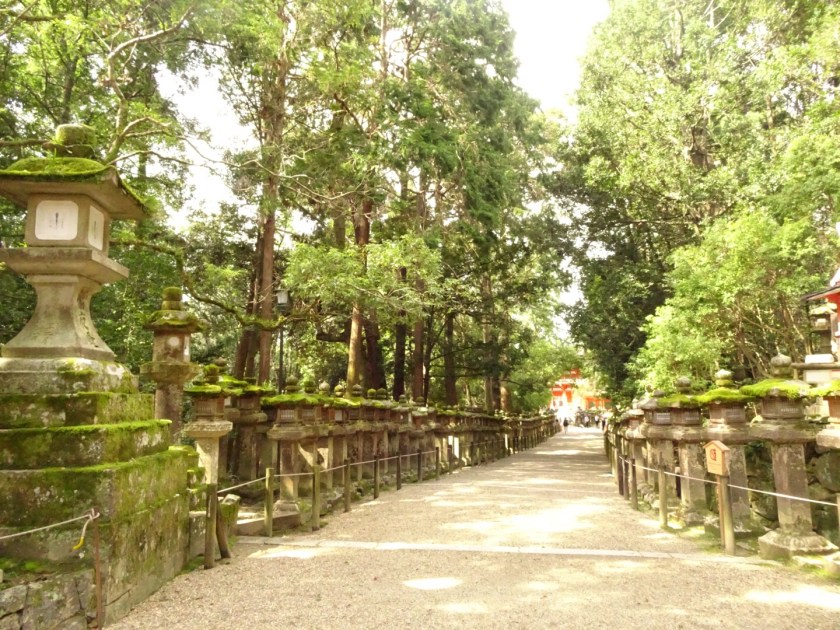
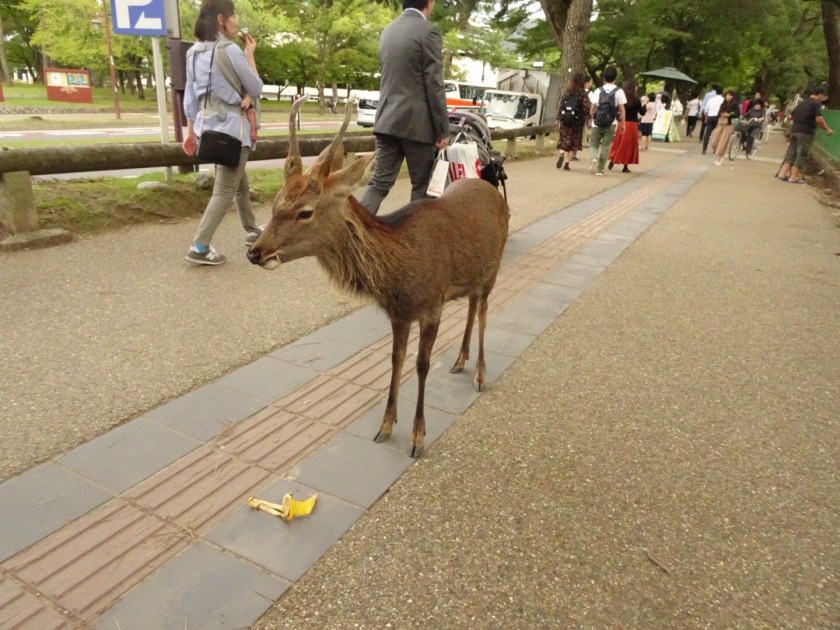
The shrine was built in 768 but has had some further rebuilds over the centuries. It feels old as I walk around. On the way to the shrine, and from the shrine in the surrounding forest, are two thousand stone lanterns. On the approach to Kasuga it’s busy, not only with people but with deer! They peep out from the stone lanterns looking for food and visitors are only too happy to feed them and get a chase off them!
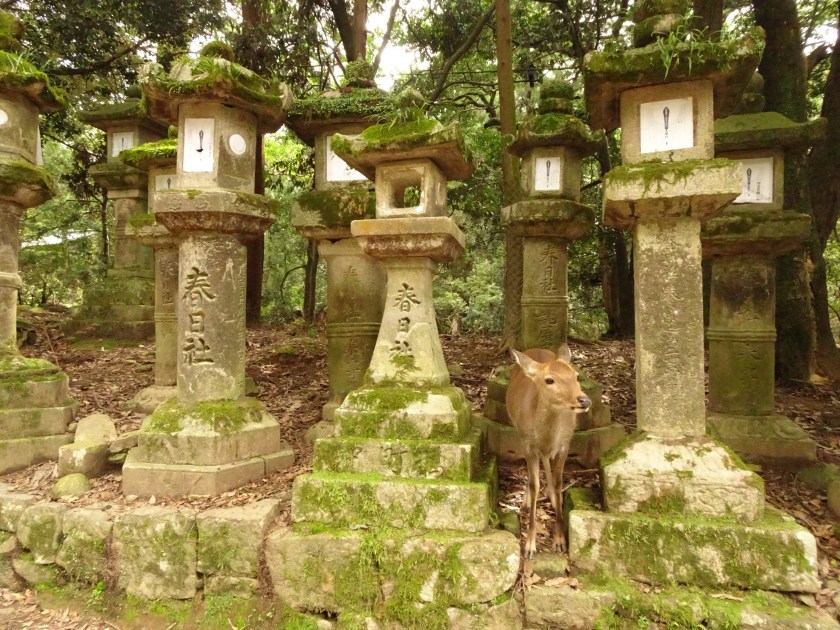
The walkway with the surrounding lanterns is spectacular :
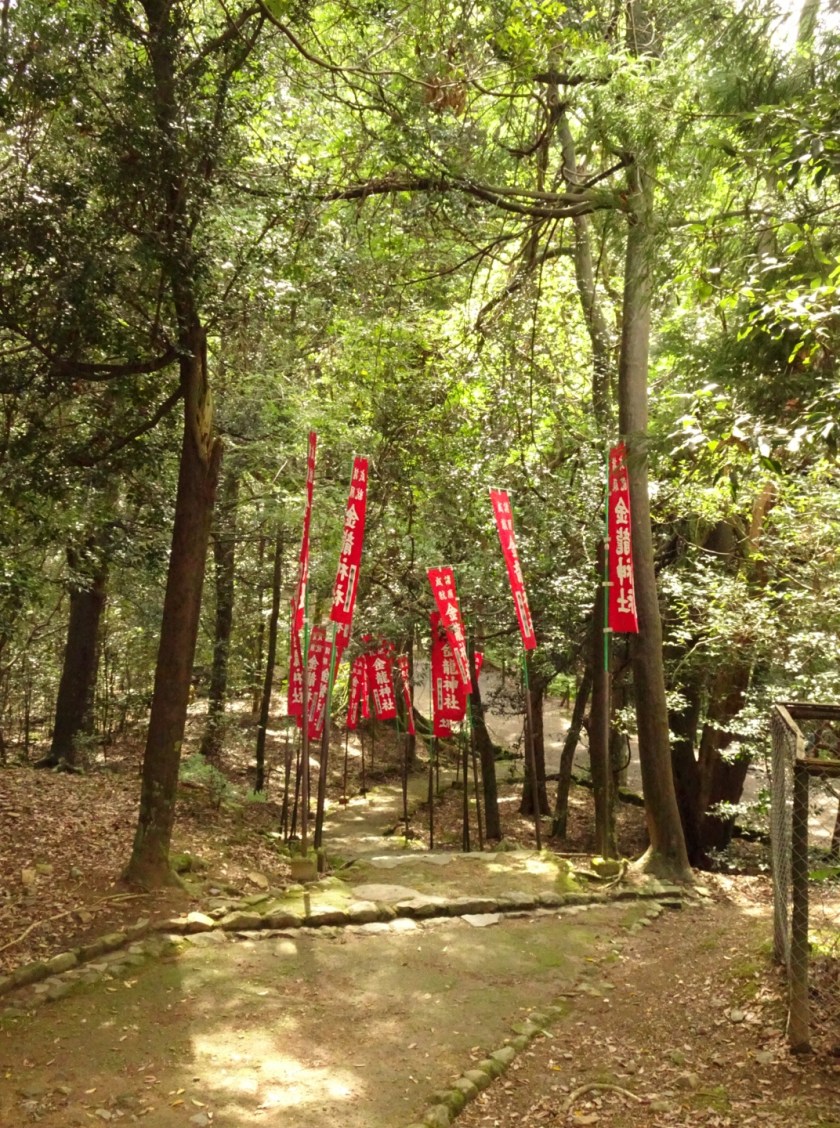
After visiting the shrine I take a little detour to the Kasagayama Primeval forest. I don’t have a lot of time here but I manage a wander through the trees where it’s tranquil and quiet.
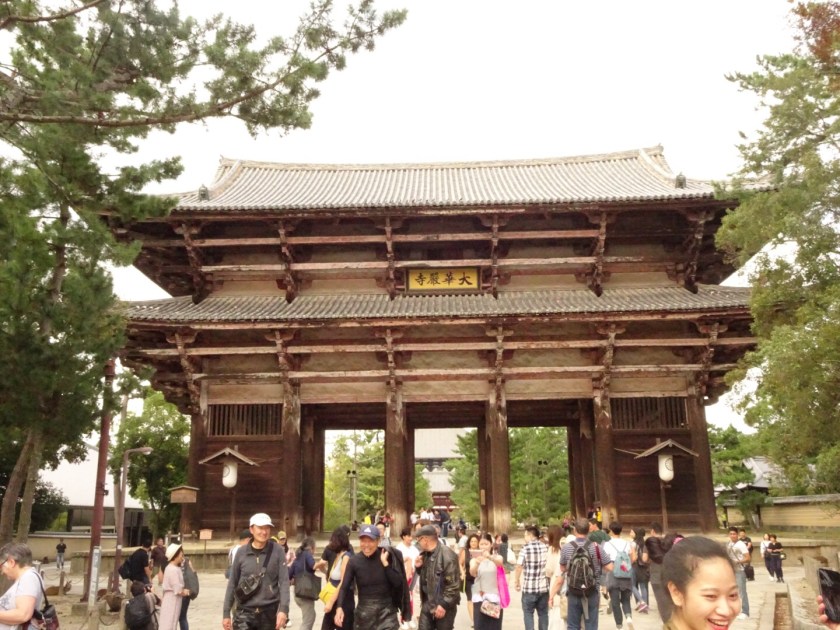
Next it’s on to Todaji temple and the big Buddha. The approach to the temple has a beautiful ancient looking wooden gate:
In Japanese the Buddha is known as Daibutsu and the hall that houses the Buddha is called the Daibutsuden. As you’d expect, it’s another beautiful Japanese style building and apparently the largest wooden building in the world:
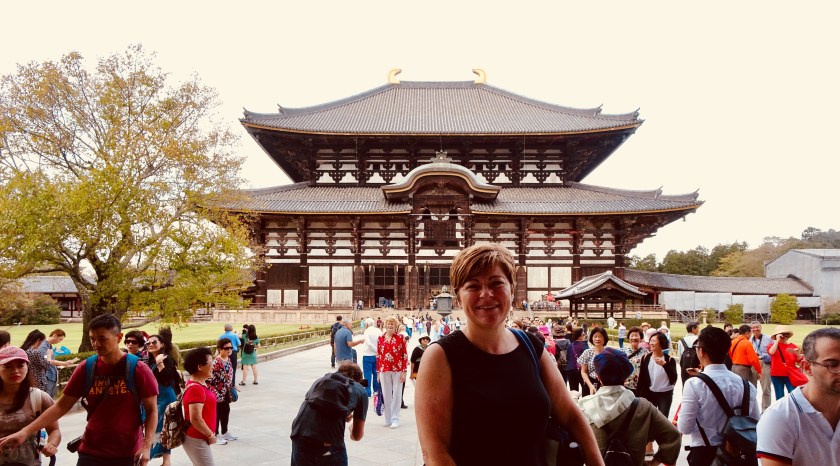
I do love a big Buddha and this one is allegedly the biggest bronze one in the world. It did not disappoint:
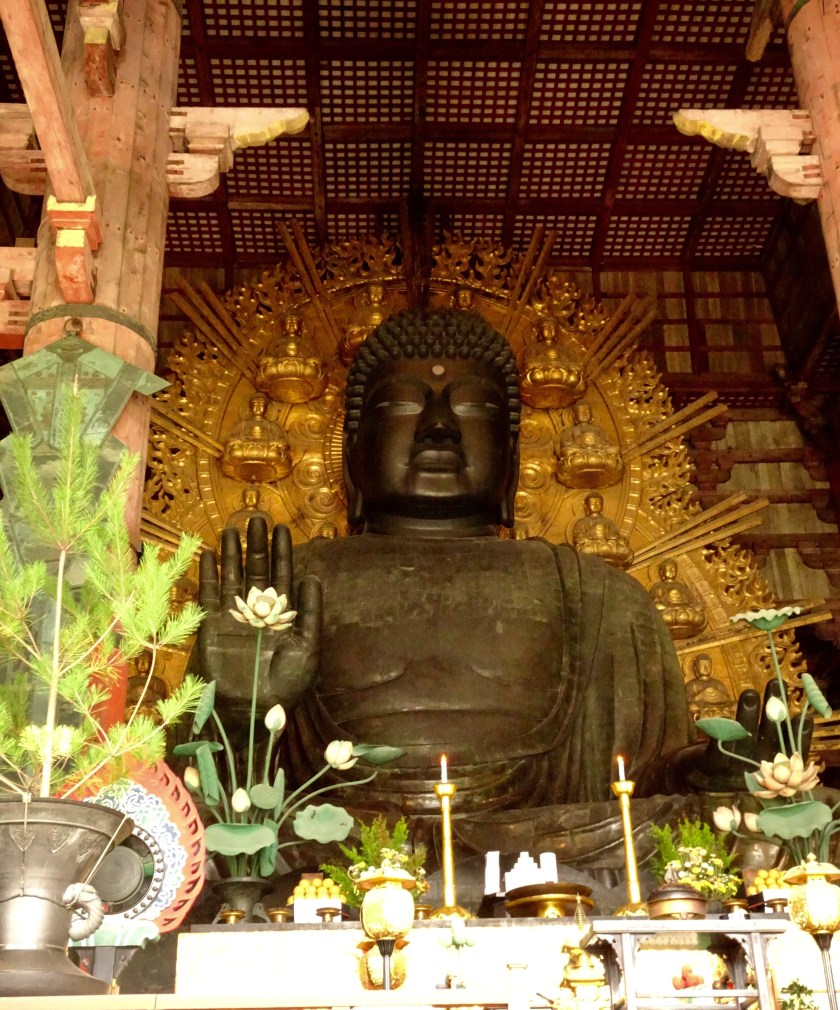
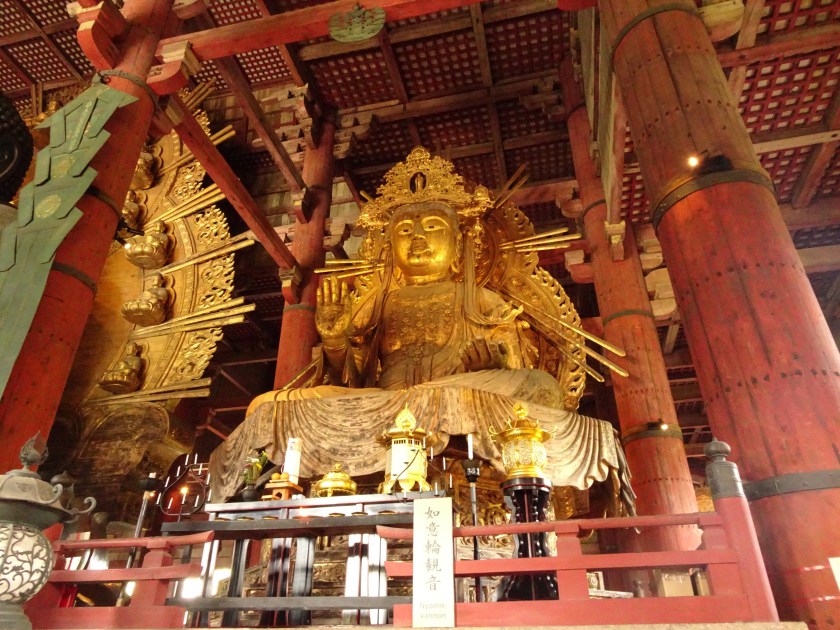
He’s also got a giant golden Buddha on each side of him. They’re not quite so big but still impressive. You can walk around the statues and see them from the side and back. There are a couple of other statues in the corners (protectors I’m sure) but other than that the giant hall is pretty much empty other than a few shops.
From here I head back toward the train encountering a lot of deer en route. They really are everywhere
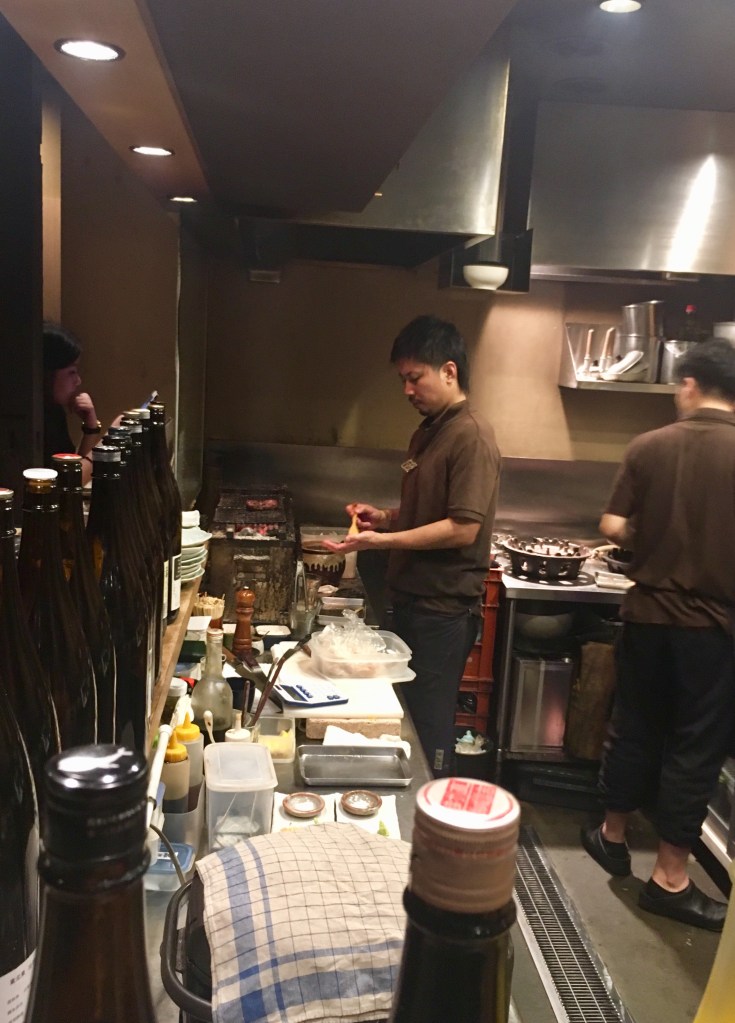
Back in Kyoto it’s time for drinks with the girls and then we find another great tepanyaki restaurant where we have a delicious meal of beef and chicken cooked tepanyaki style.
Kyoto has been fabulous and I’d happily return to see more of the city and it’s numerous historical buildings. Tomorrow it’s time to head south to Koyasan, so for now it’s sayonara.

 odohertyelaine
Thanks for the travelogue. We are are really enjoying them as we sit on our patio. Sort of happy that we are not lugging our suitcases around. It’s funny about the deer everywhere. Reminds me of the Monkey Temple in Kathmandu. But I’d rather be around deer than monkeys! Keep writing and posting!
LikeLike