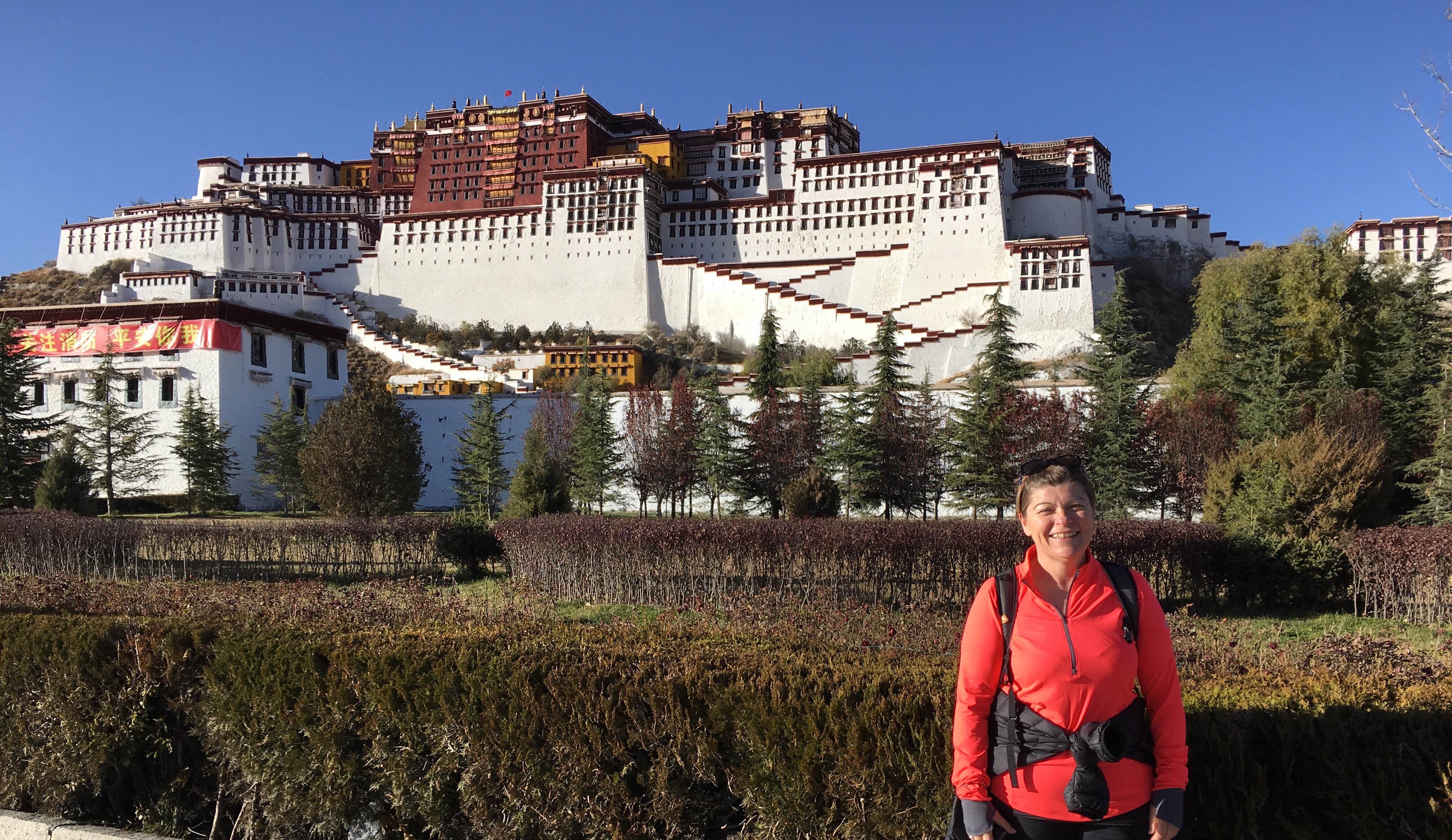
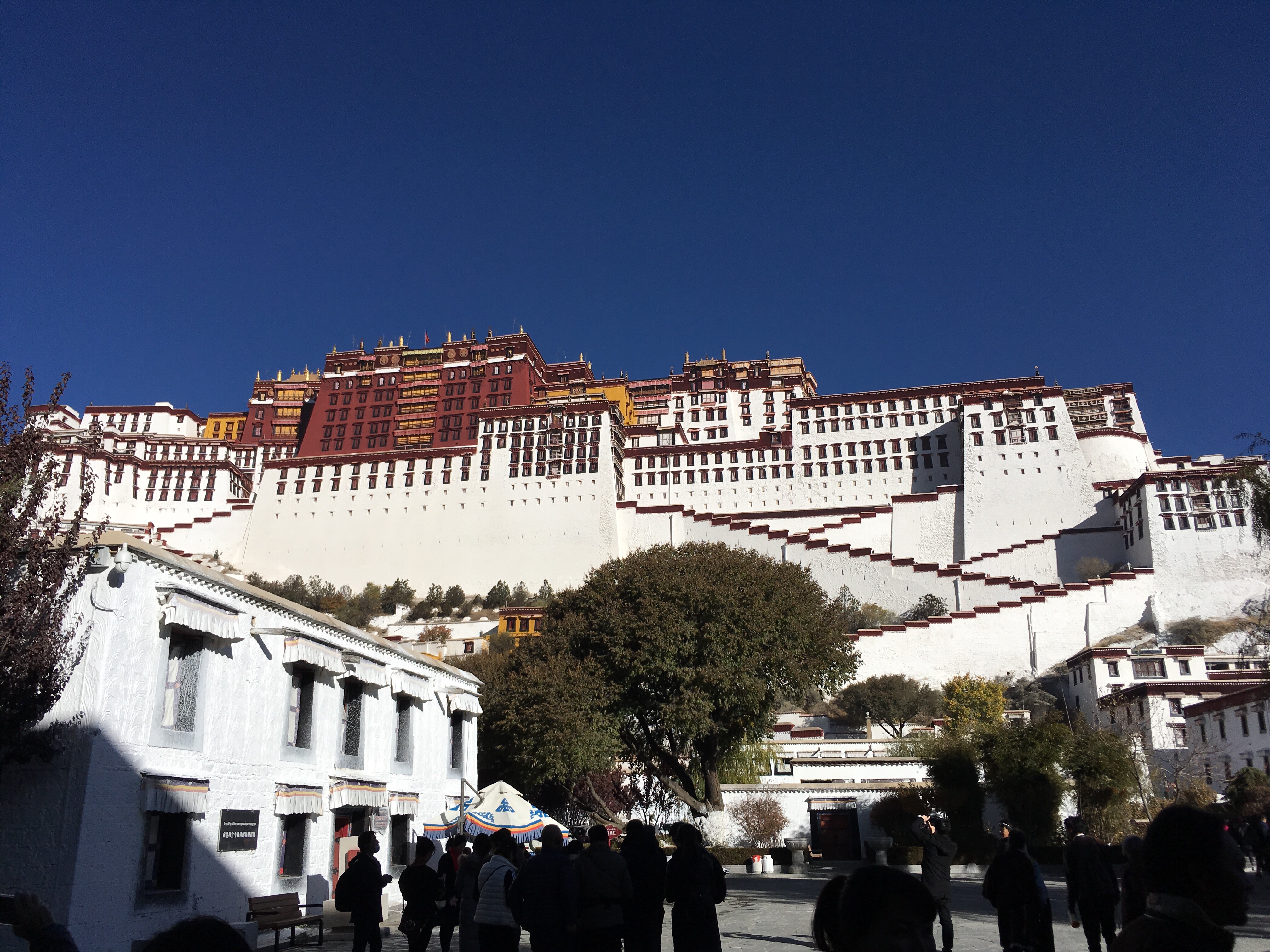
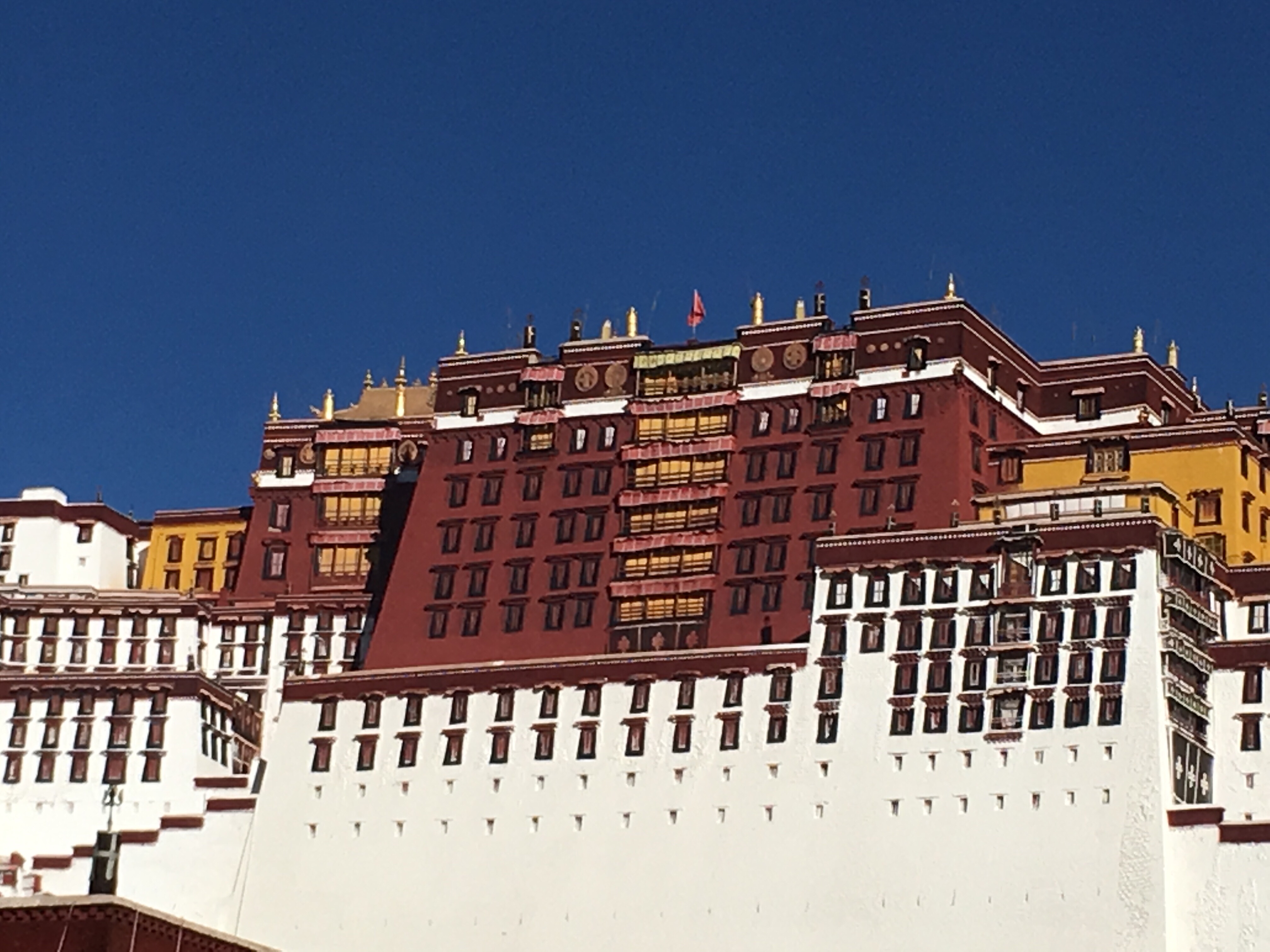
Sick with excitement and still sick from the altitude we set off for a second day in Tibet… Walking toward the entrance of the Potala palace reminded me of visiting Egypt years ago.. I felt like I was in a Discovery Channel documentary. I’ve seen it so many times on tv and in photos but it was just magical to actually see it there in front of me. Considered one of the great wonders of world architecture it did not disappoint. The palace is built into the side of the mountain and is white and red.. the red parts house the religious temples/chapels and the white parts the political offices. Many of the >1,000 rooms are now closed to the public so we could only see a limited amount and you are not allowed to take photos inside. There are a lot of steps to get to the top and once you’re “inside” there’s still lots more steps to go.
Back in Kathmandu, when we had got our visas, the guide from Tibetan tours gave us 2 tips : firstly don’t drink alcohol til you figure out how the altitude affects you or not at all (I ended up not being able to drink at all) and secondly don’t mention the Dalai Lama.. don’t talk about him, don’t ask about him and don’t have any kind of picture of him!! I initially thought the later might be a bit of a joke but it really isn’t. All reference to his holiness the 14th (i.e. current) Dalai Lama has been removed – it is quite bizarre!
Our guide seemed to be bursting to talk about the situation but she’s not allowed. She told us at the outset that she can answer questions “about the religious but not the politics”. For those of you not familiar with the situation the current Dalai Lama who is the 14th, fled Tibet in 1959 when the Chinese invaded and he has never returned as the Chinese will not agree to his leadership over the Tibetan region. In their minds this is Chinese Territory. You can see reference to previous Dalai Llamas but not the current one. [Sidenote : the Dalai Lama is a reincarnation of Chenresig who is the compassion Buddha. This makes total sense as he refuses to resort to violence to take back power. He preaches peace and prayers for peace across the world]
It was an amazing experience to see the palace (of which I took so many photos from every angle I viewed it) and to walk around some of the chapels inside (where no photographs are allowed).
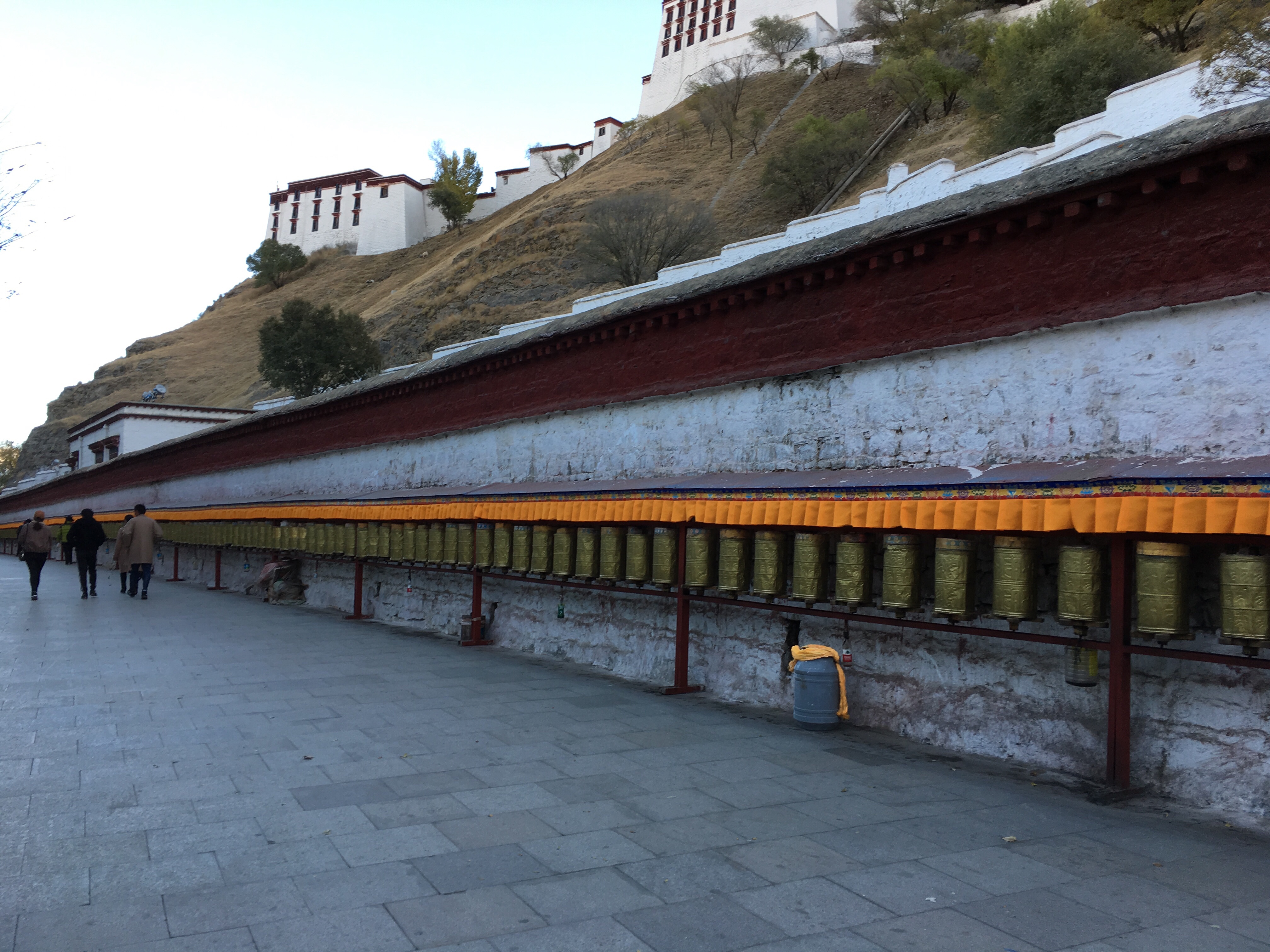
Later in the afternoon we came back and walked the periphery as the pilgrims do – they call it kora. There appears to always be someone doing the kora. The palace is surrounded by prayer wheels on every side so we swung those and prayed for our specific intentions or just world peace as the buddhists do.

Later after dinner we made our third trip back to see it at night time as it is beautifully lit up. It was lovely walking around in the evening and seeing this fabulous structure.

The last place we visited on our tour is considered the most religious structure in Tibet. Pilgrims visit the Jokhang temple and not only circle it doing their kora but also prostrate themselves in prayer outside. The temple was built around 650 AD by King Songtsen Gampo and houses some really old statues and buddhas.
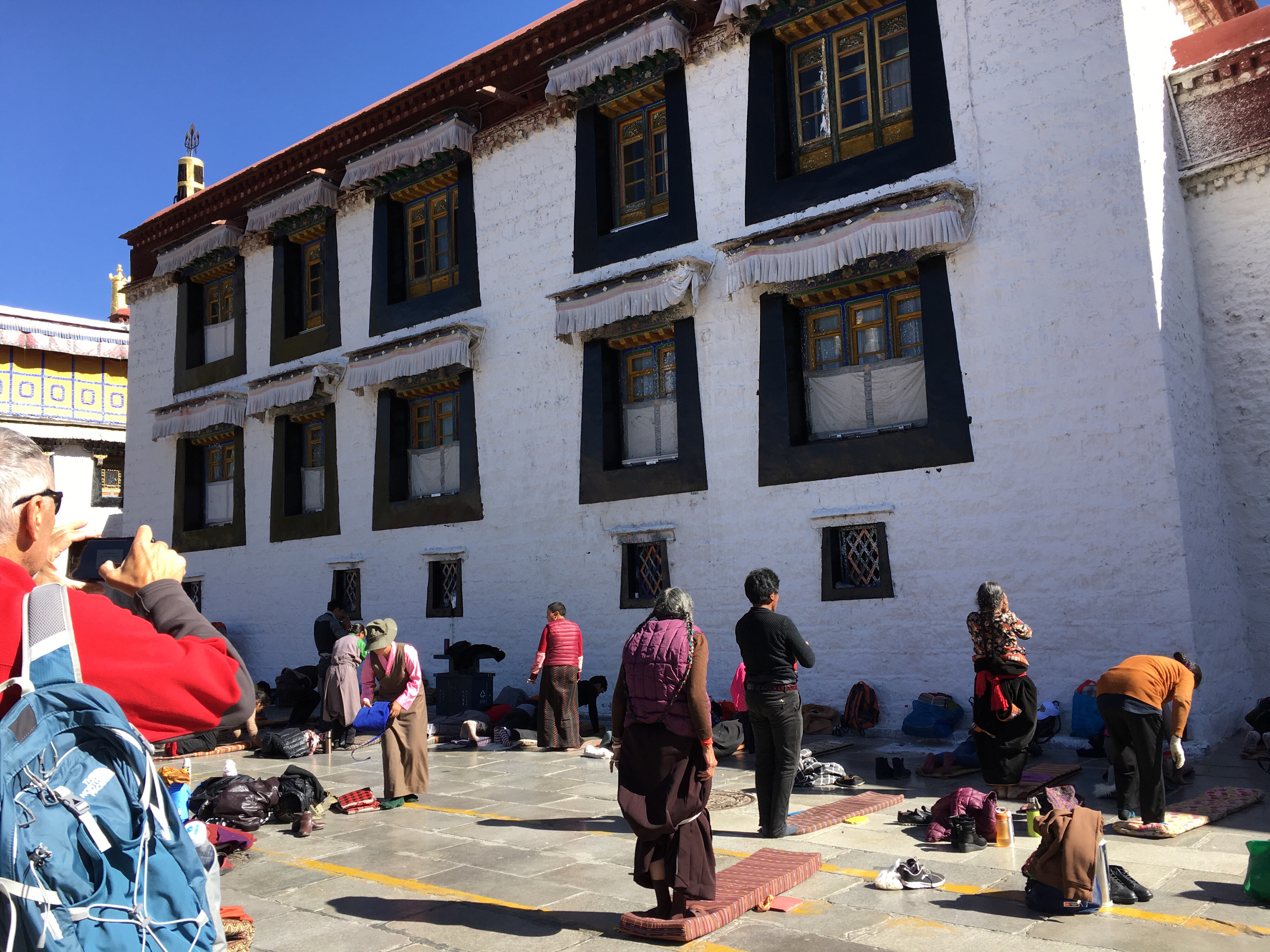
After doing a kora three times around the temple we had our shopping complete (I bought a beautiful statue of future Buddha) and headed off to find some local food.

 odohertyelaine